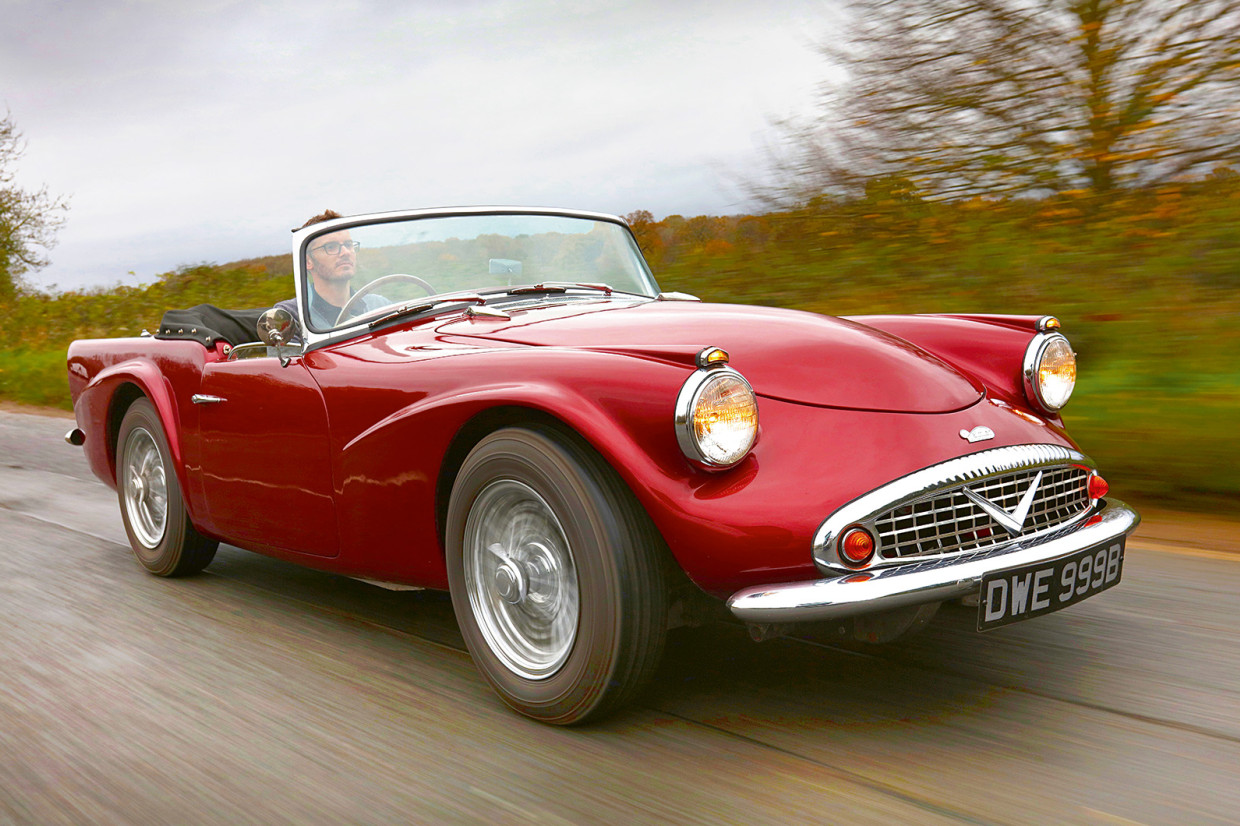
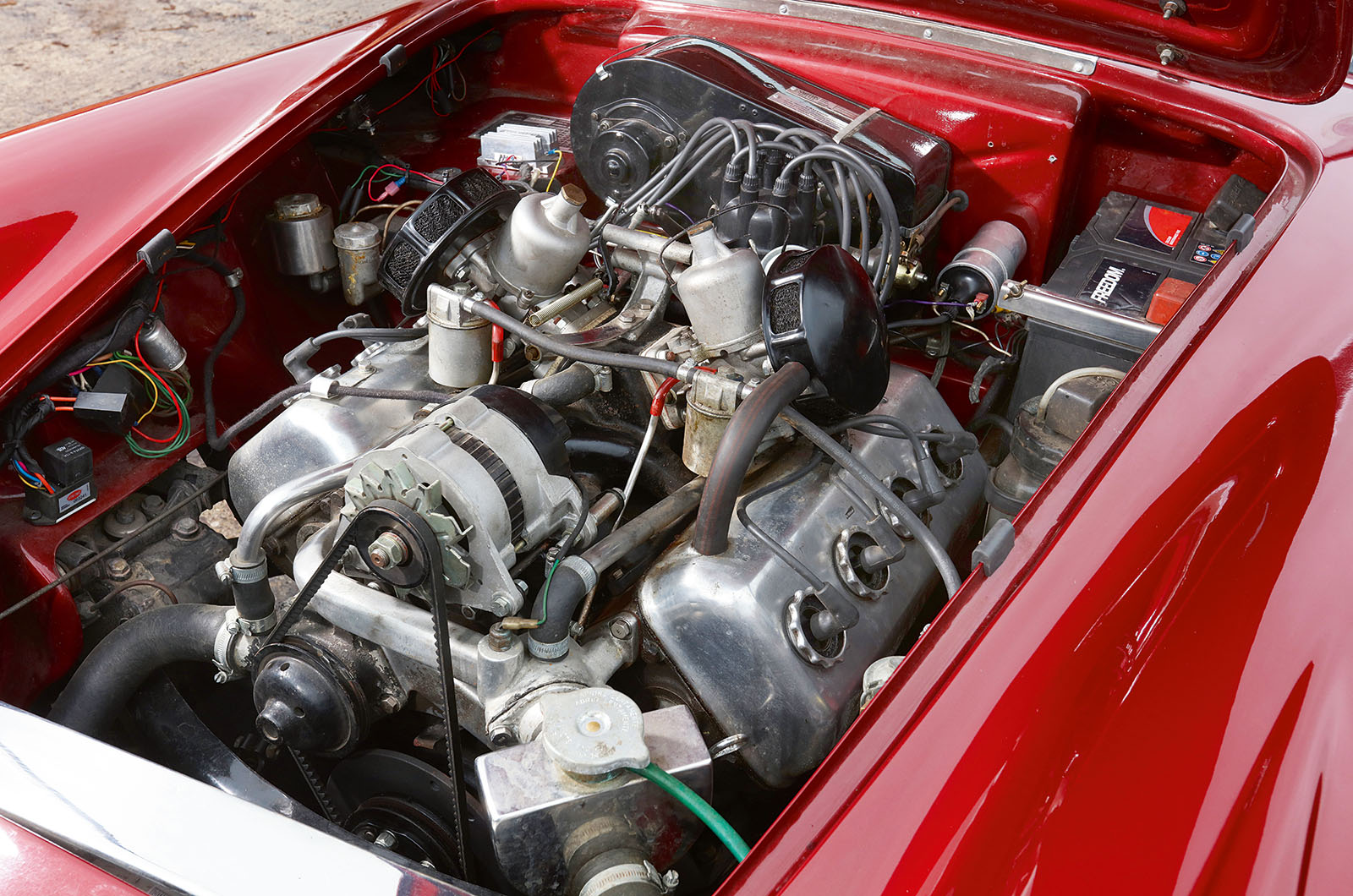
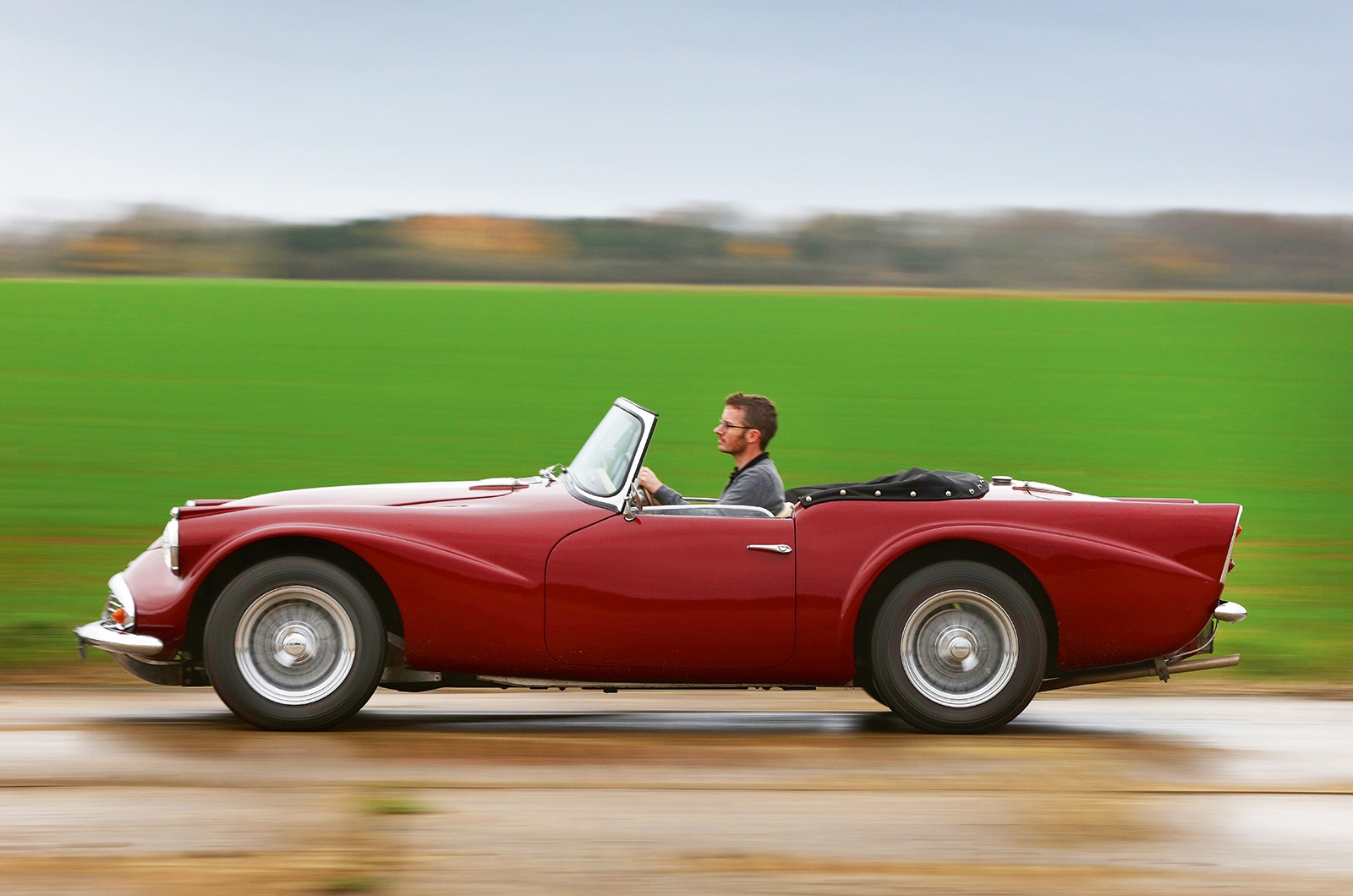
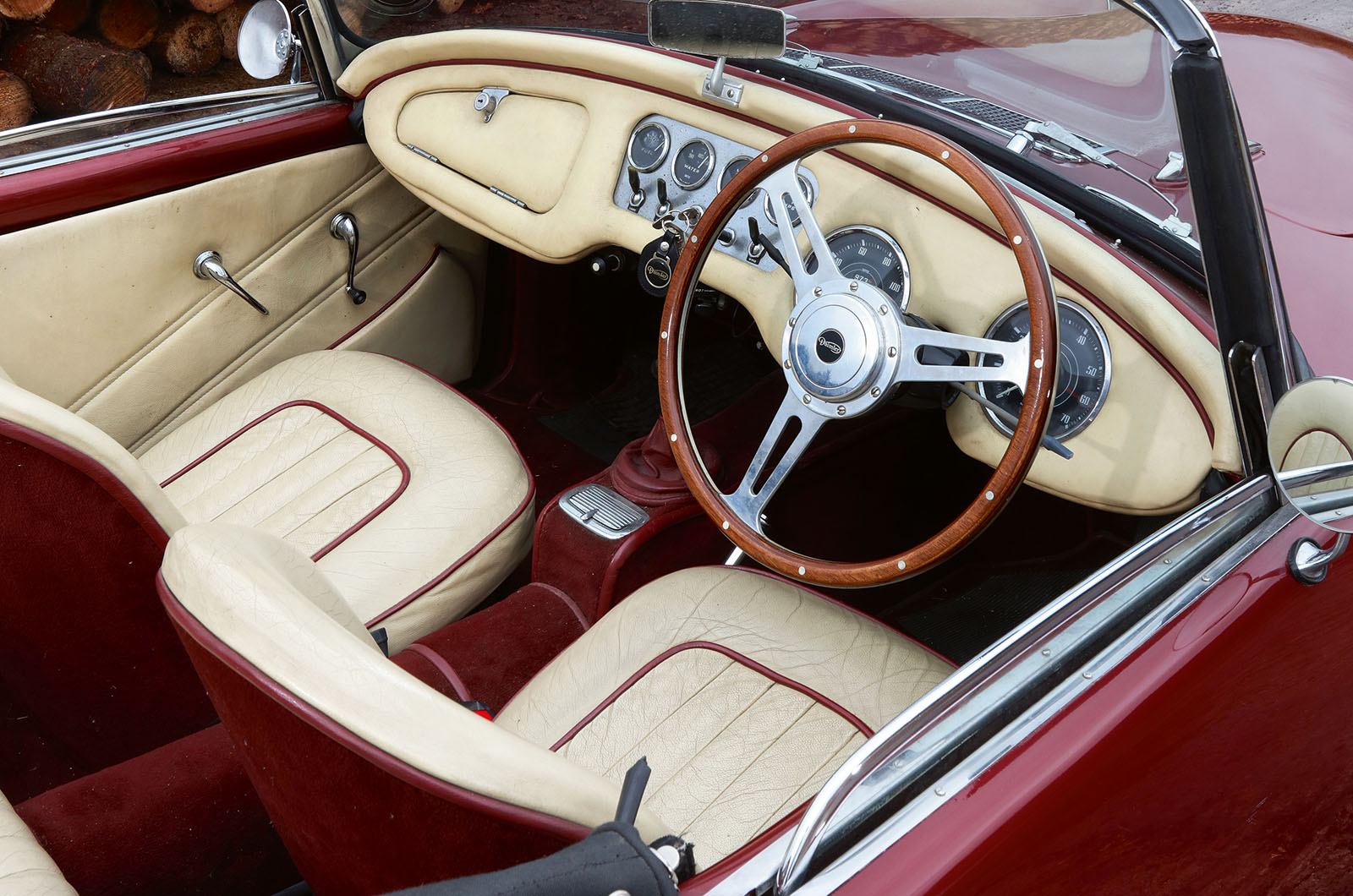
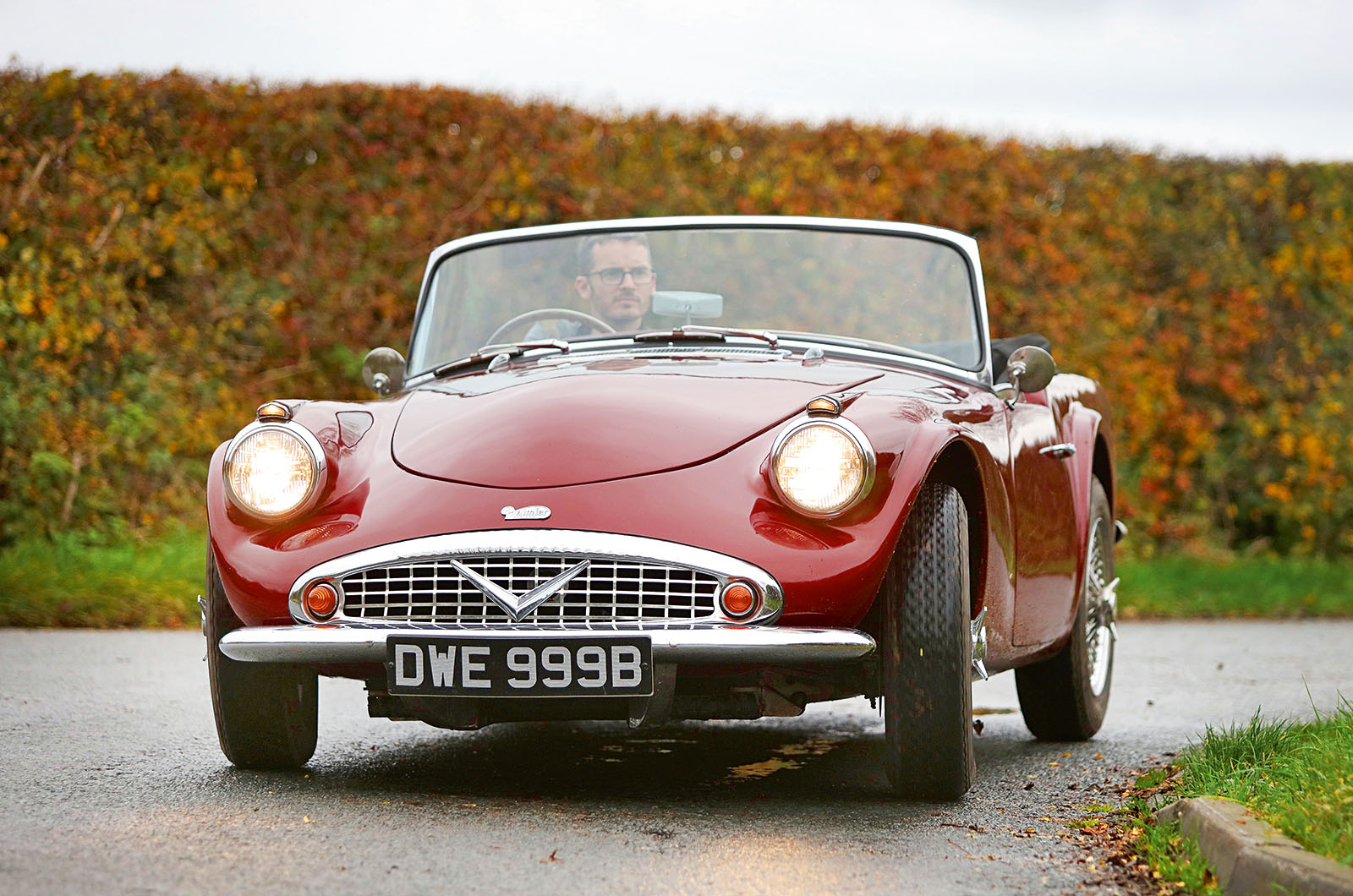
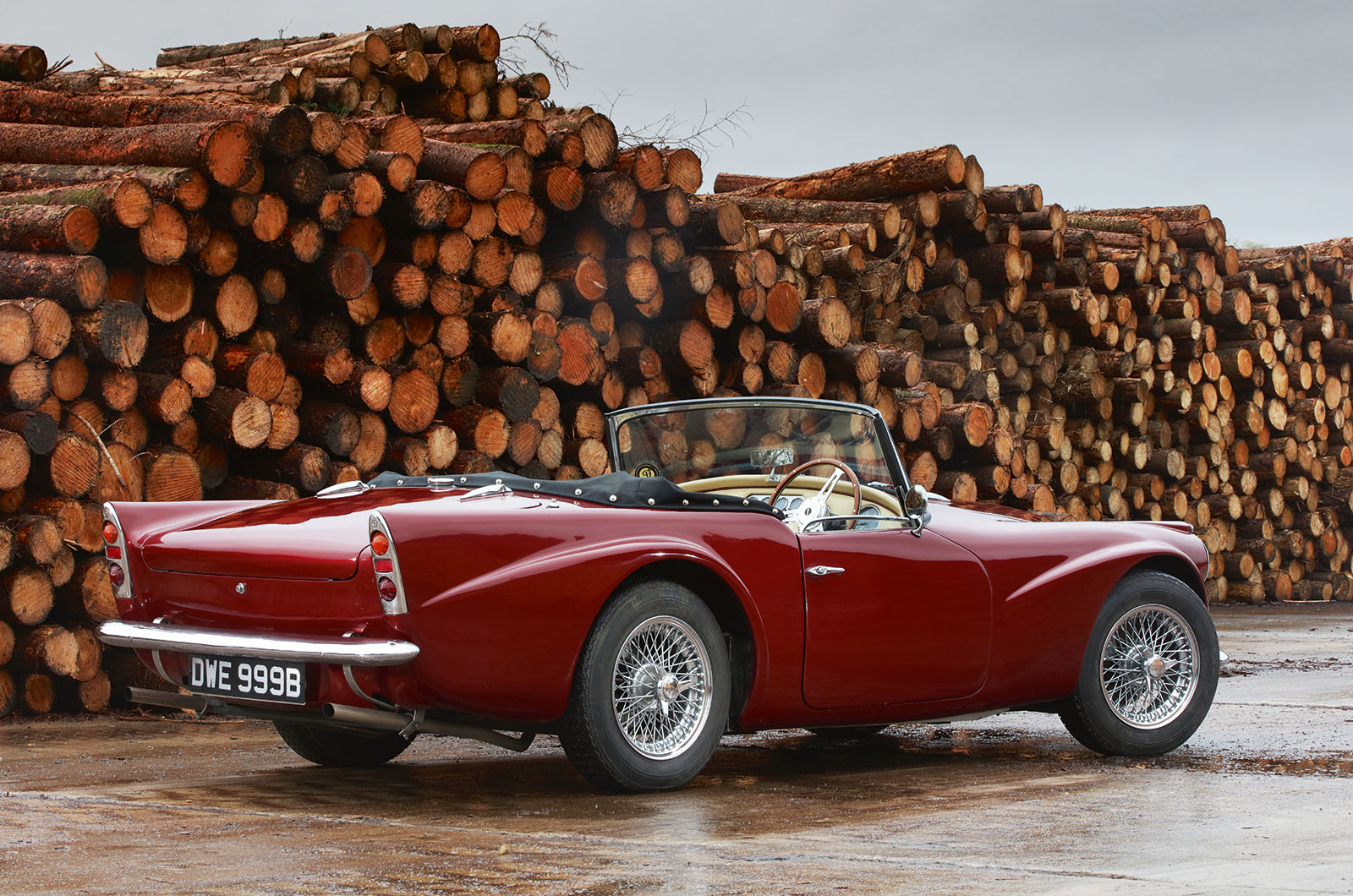
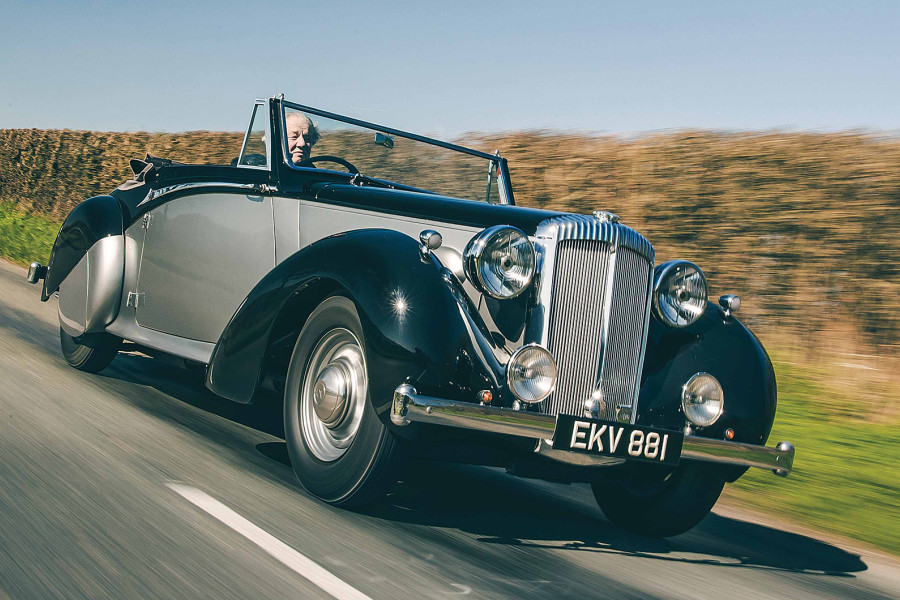
Whether it’s housed in the brilliant SP250 or the V8-250 saloon, his automotive powerplant can stand proudly alongside anything he produced for Ariel or Triumph.
Images: James Mann
Thanks to: Jonathan Wills and Dave Bowden at Cotswold Classic Car Restorations
This was first in our January 2016 magazine; all information was correct at the date of original publication
Jaguar and Daimler: badge engineering
The fluted grille became a Daimler giveaway © John Bradshaw
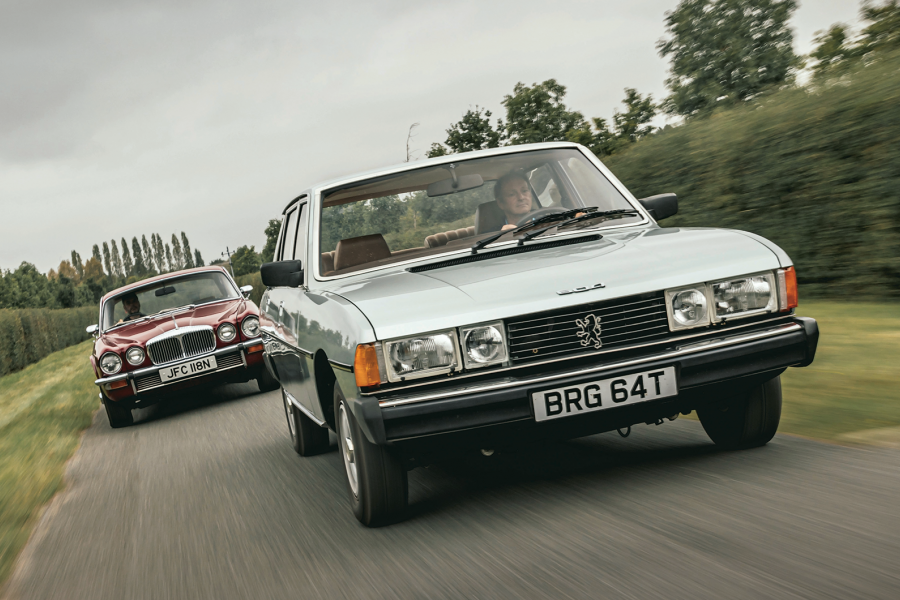
Once Jaguar bought Daimler, the SP250 was on rocky ground, but Turner’s engine found a new home in the V8-250 saloon.
Not that it just dropped into the Jaguar Mk2 bodyshell.
The water pump needed to be moved and adapted, for a start, but the engine and gearbox together weighed 64kg less than the Jaguar’s 2.4-litre ‘six’ and ’box, so the suspension was modified to suit via the use of softer springs.
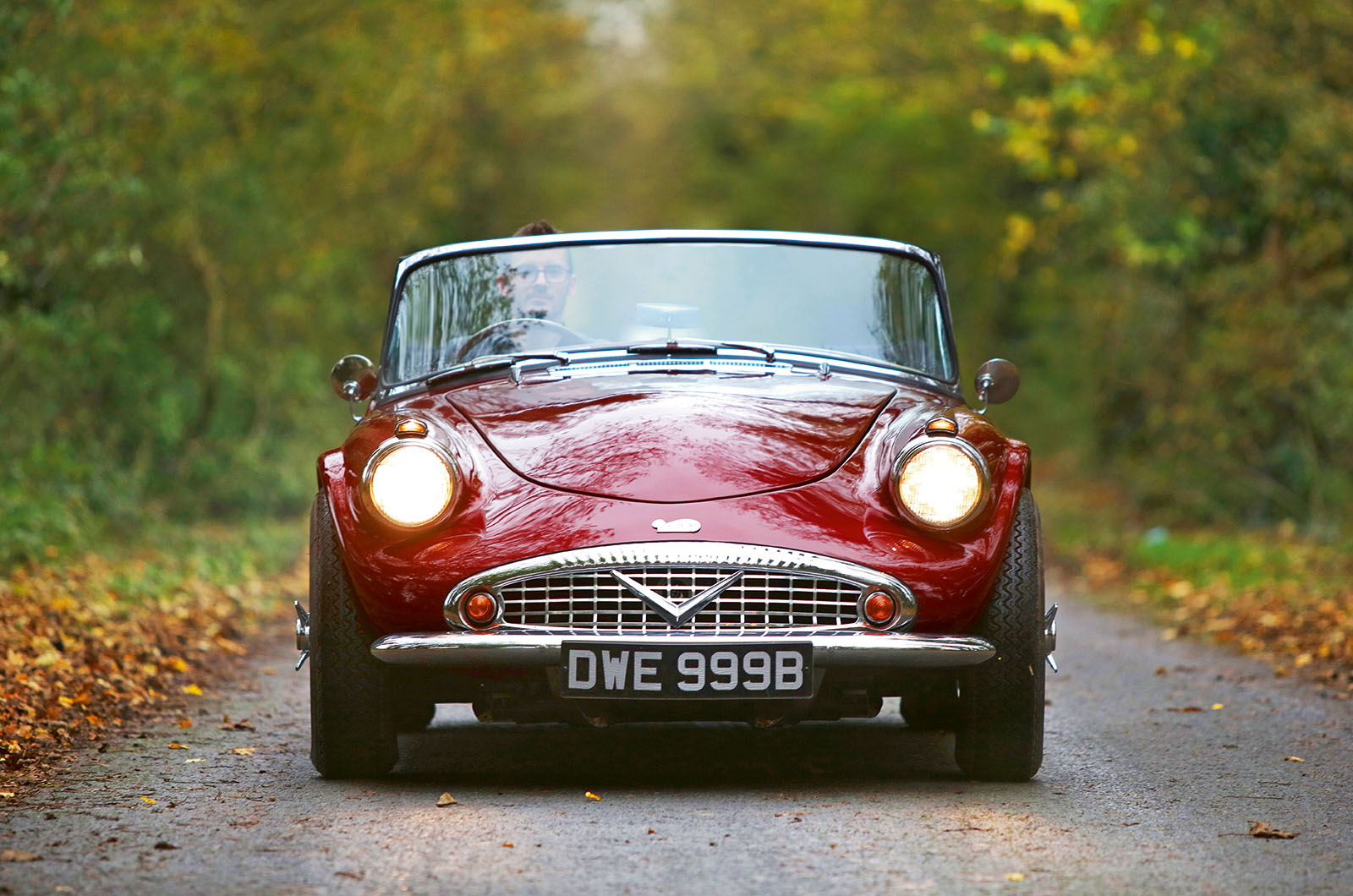
The Daimler V8-250 was launched in October 1962, with the most distinctive external change over the Mk2 being the adoption of Daimler’s traditional ‘crinkle’ grille.
There were other detail differences, and the interior used a new type of bench seat, while the adoption of a Borg-Warner automatic gearbox made it more of a ‘mature’ motor car when compared to the raffish Mk2.
A manual version was offered from 1967, but didn’t find many buyers.
The Daimler’s short gearing made for reasonable acceleration on early cars, with 0-60mph taking 13 secs, but it came at the expense of fuel consumption and ran counter to the more relaxed image of a Daimler.
In 1964, therefore, Jaguar changed the final-drive ratio from 4.55:1 to 4.27:1, which also had the effect of raising the top speed to 114mph.
In September 1967, the V8-250 received the same visual updates as the Jaguar 240 and 340, which most obviously included slimline bumpers.
The model stayed in production until August 1969, and was clearly seen as a very British car – none were officially exported to the USA, for example.
Factfile
Daimler SP250 ‘Dart’
- Sold/number built 1959-’64/2645
- Construction steel ladder chassis with glassfibre body
- Engine iron-block, alloy-head, ohv 2548cc V8, twin SU carburettors
- Max power 140bhp @ 5800rpm
- Max torque 155lb ft @ 3600rpm
- Transmission four-speed manual, RWD
- Suspension: front independent, by wishbones, coil springs, telescopic dampers rear live axle, semi-elliptic leaf springs, lever-arm dampers
- Steering cam and peg
- Brakes discs
- Length 14ft ¾in (4286mm)
- Width 5ft ½in (1536mm)
- Height 4ft 2¼in (1276mm)
- Wheelbase 7ft 8in (2336mm)
- Weight 2240lb (1018kg)
- Mpg 24
- 0-60mph 9.6 secs
- Top speed 120mph
- Price new £1489
Enjoy more of the world’s best classic car content every month when you subscribe to C&SC – get our latest deals here
READ MORE
22 cars powered by British V8 engines
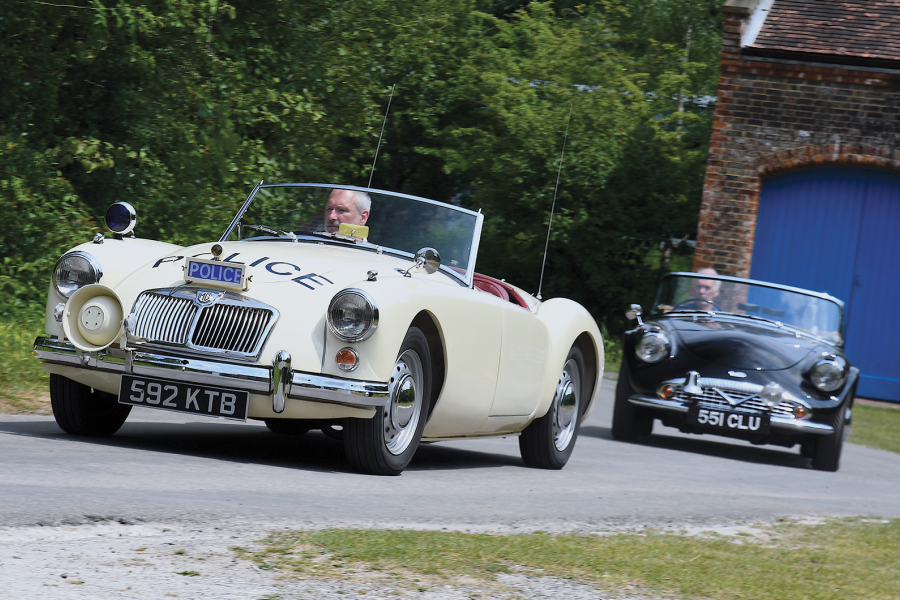
MGA and Daimler SP250: high-speed policing
Aston Martin vs Jaguar vs Triumph vs AC vs Austin-Healey vs Bristol: Britain’s best straight-sixes
James Page
James Page is a regular contributor to – and former Editor of – Classic & Sports Car