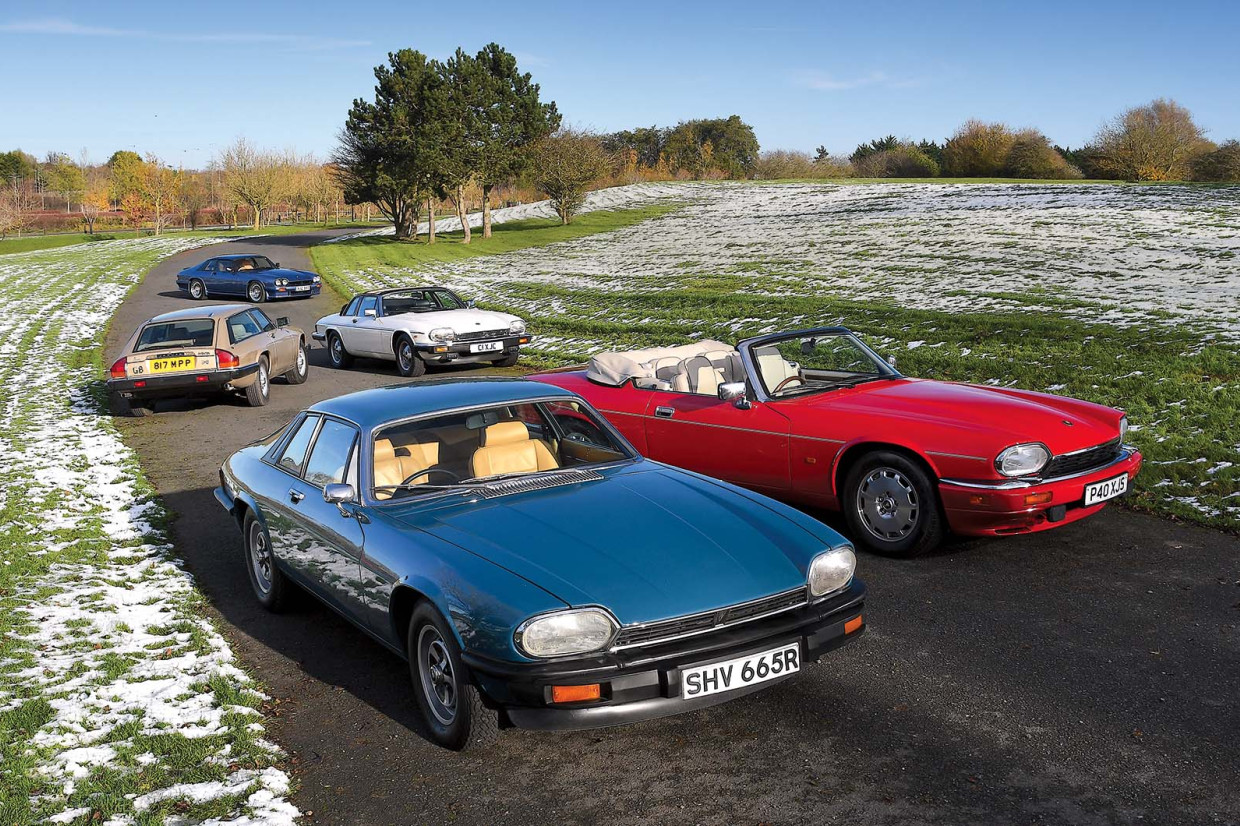
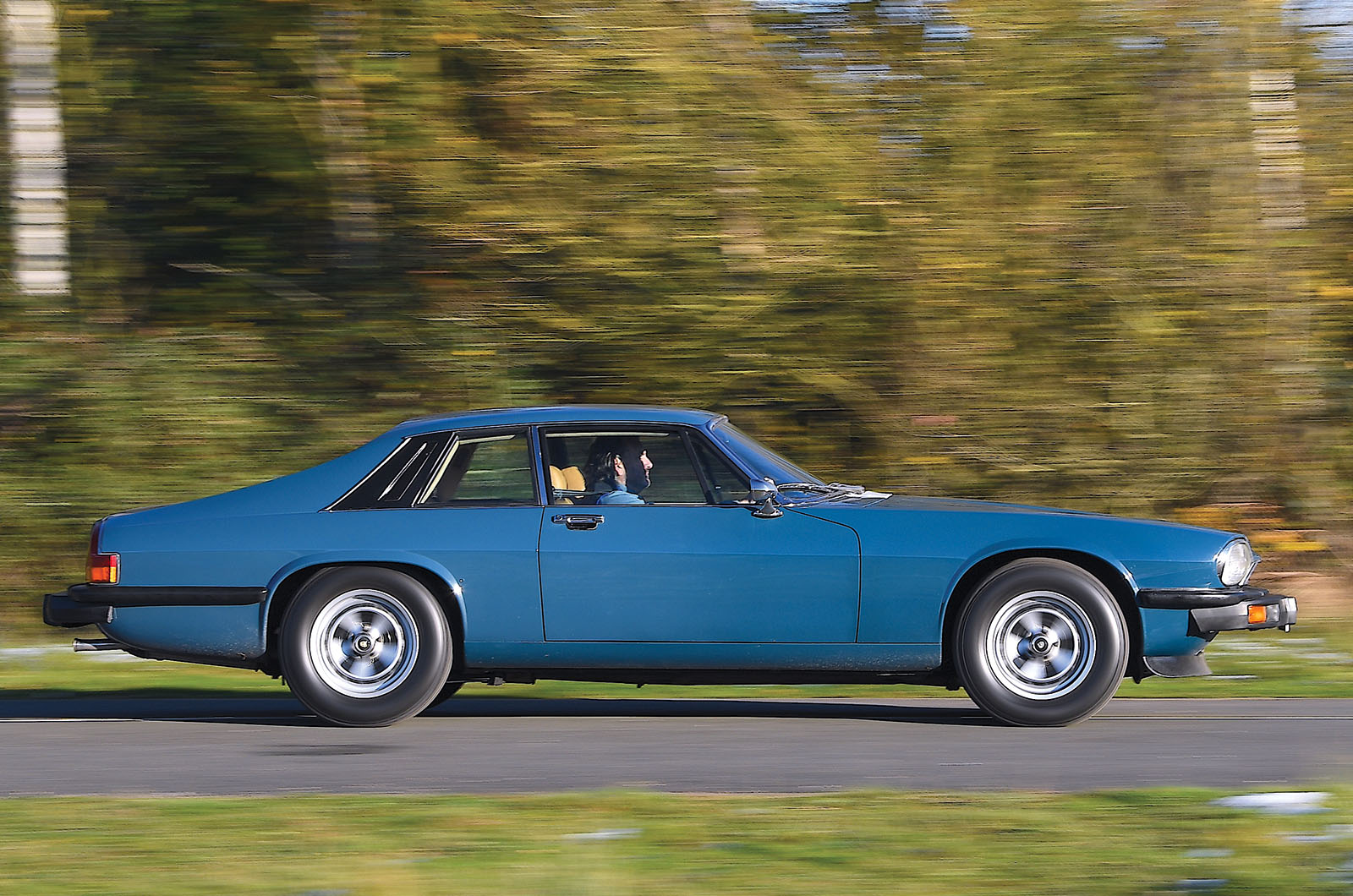
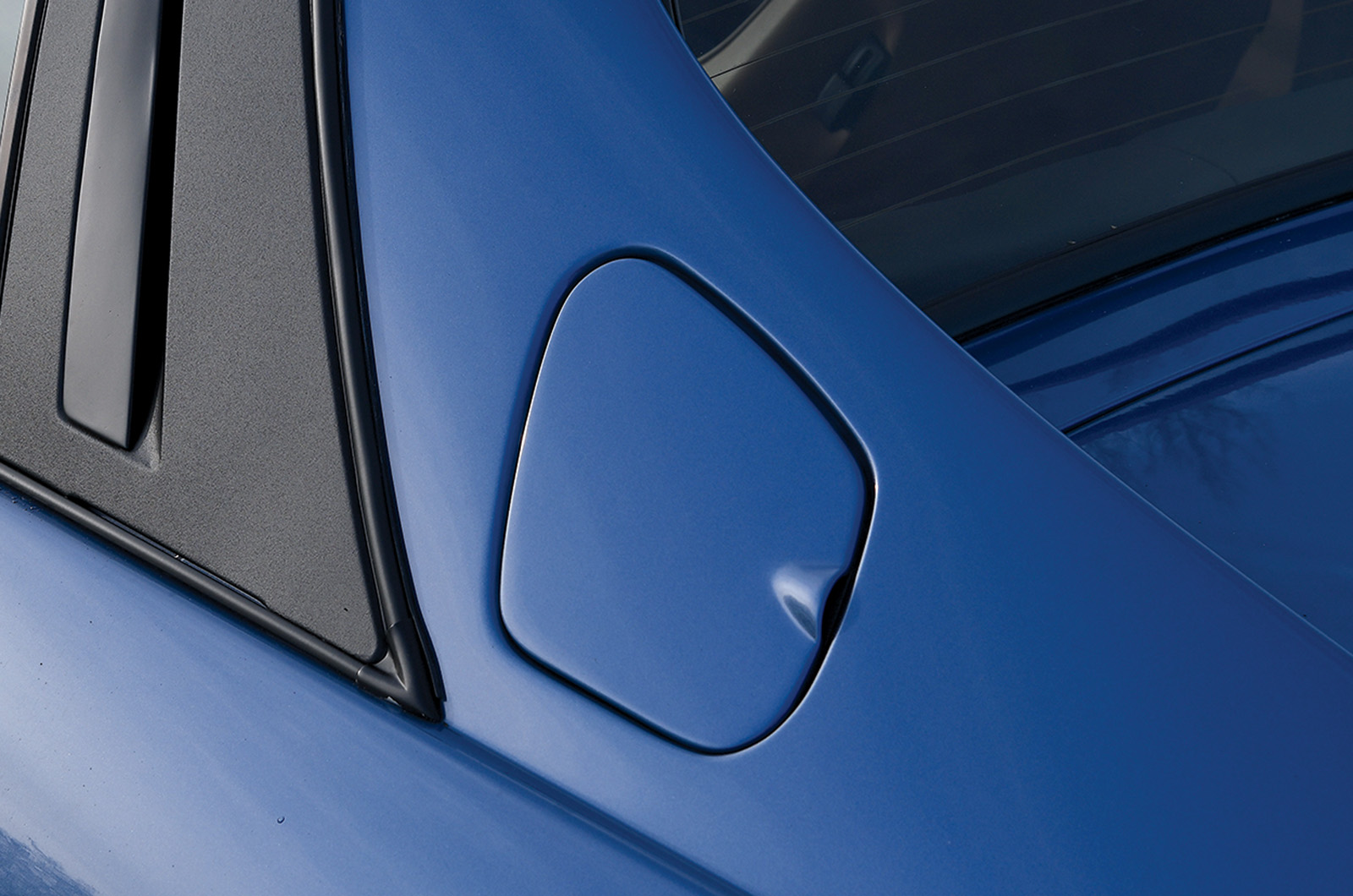
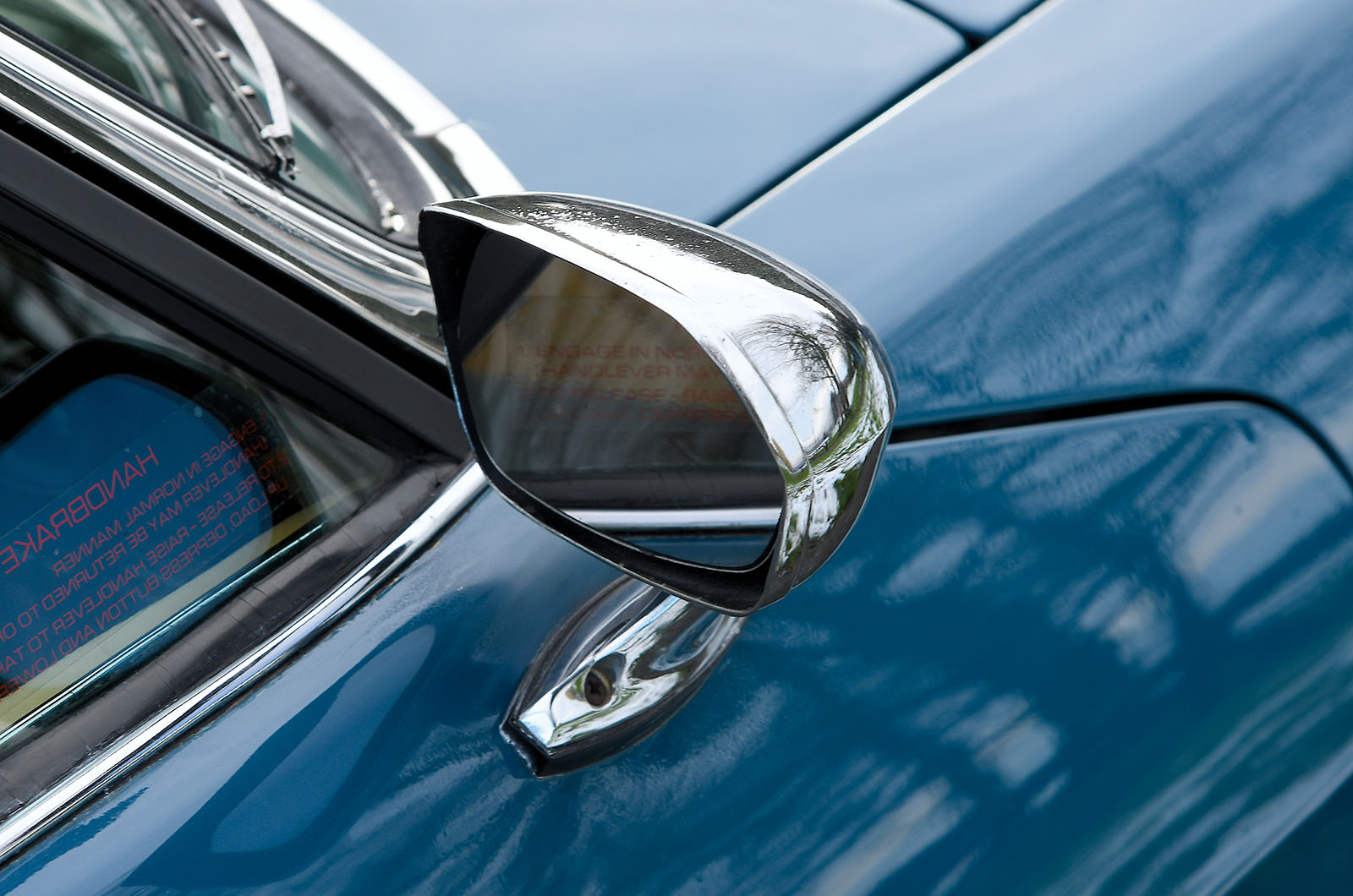
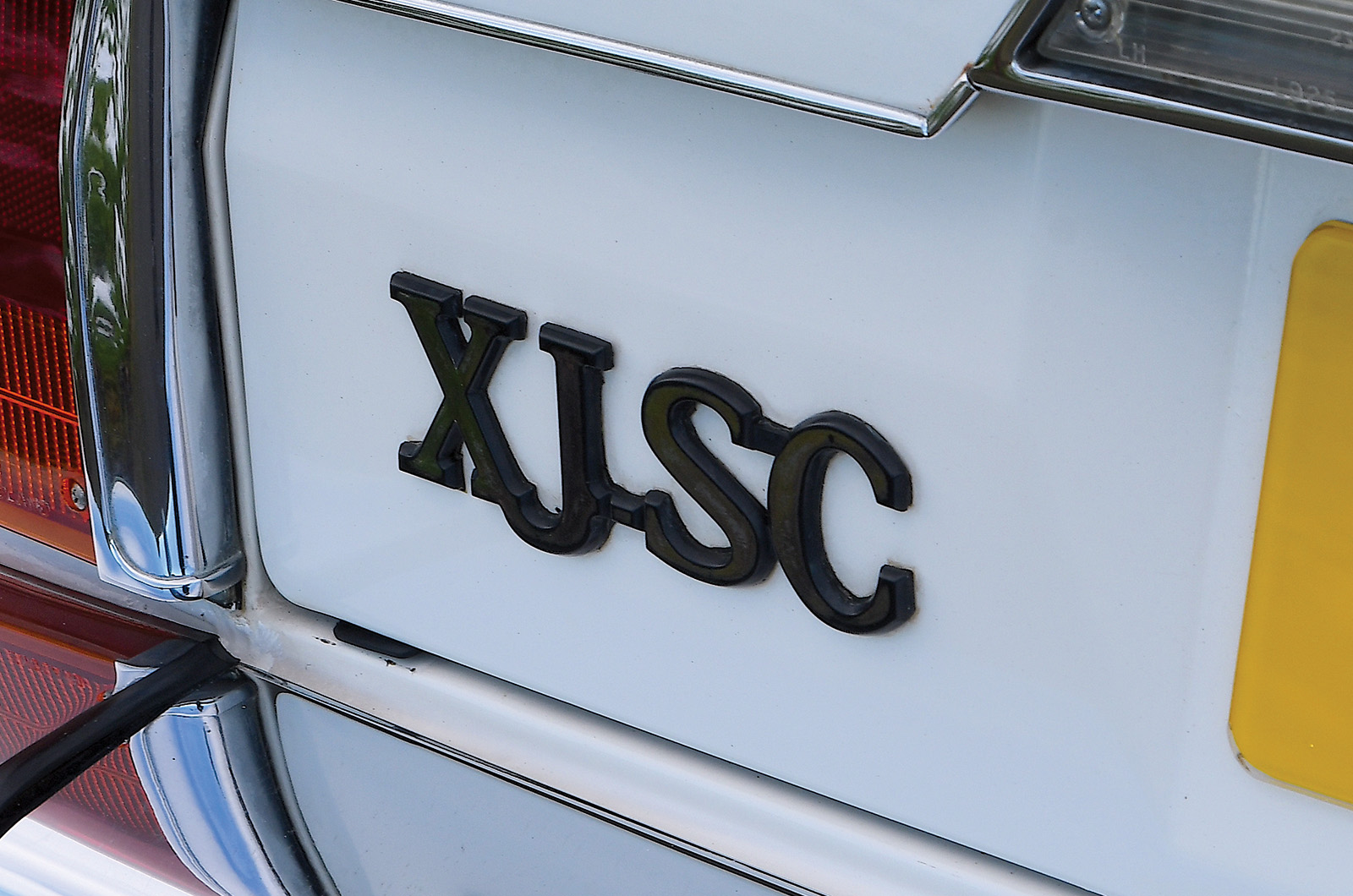
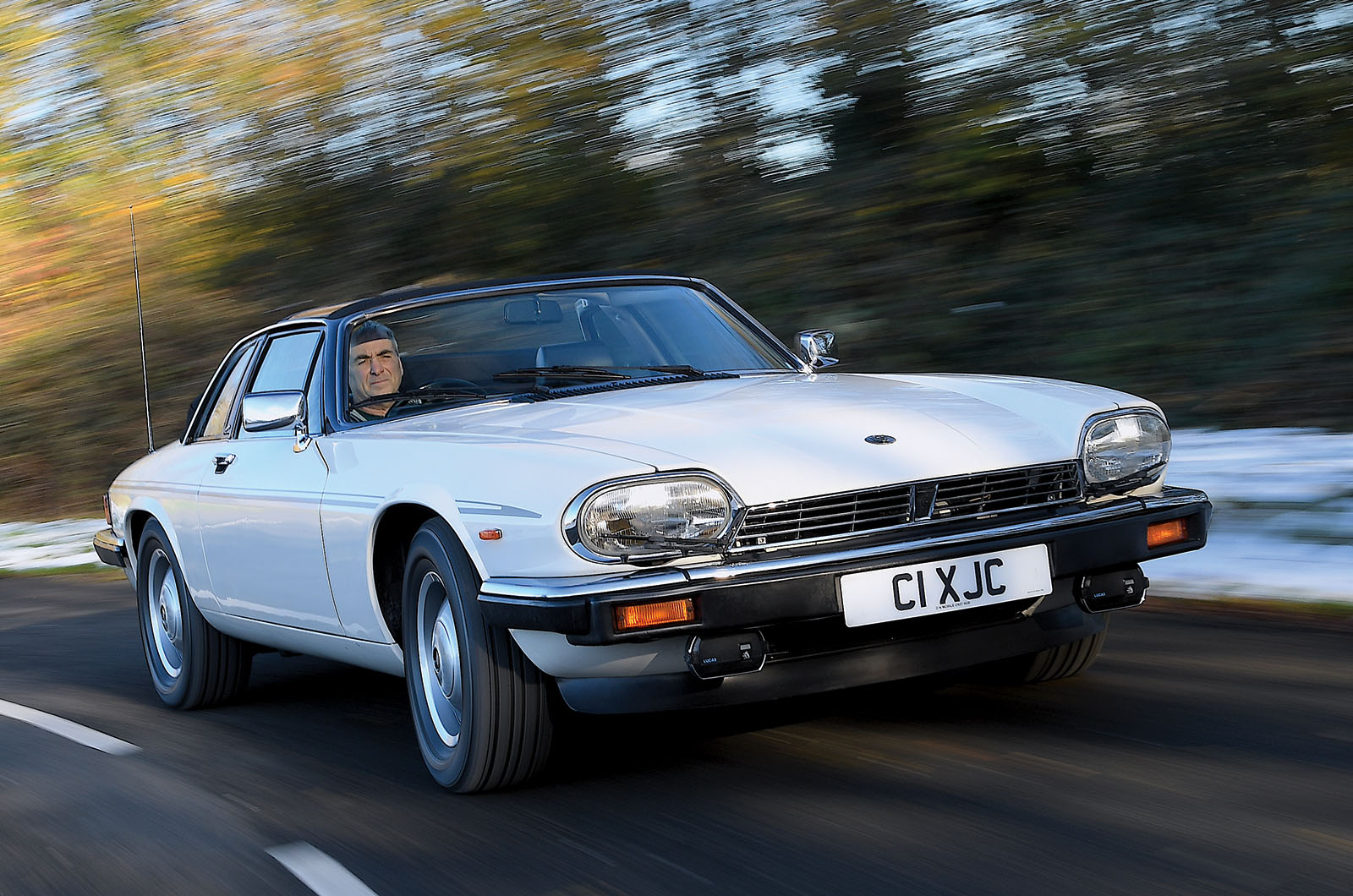
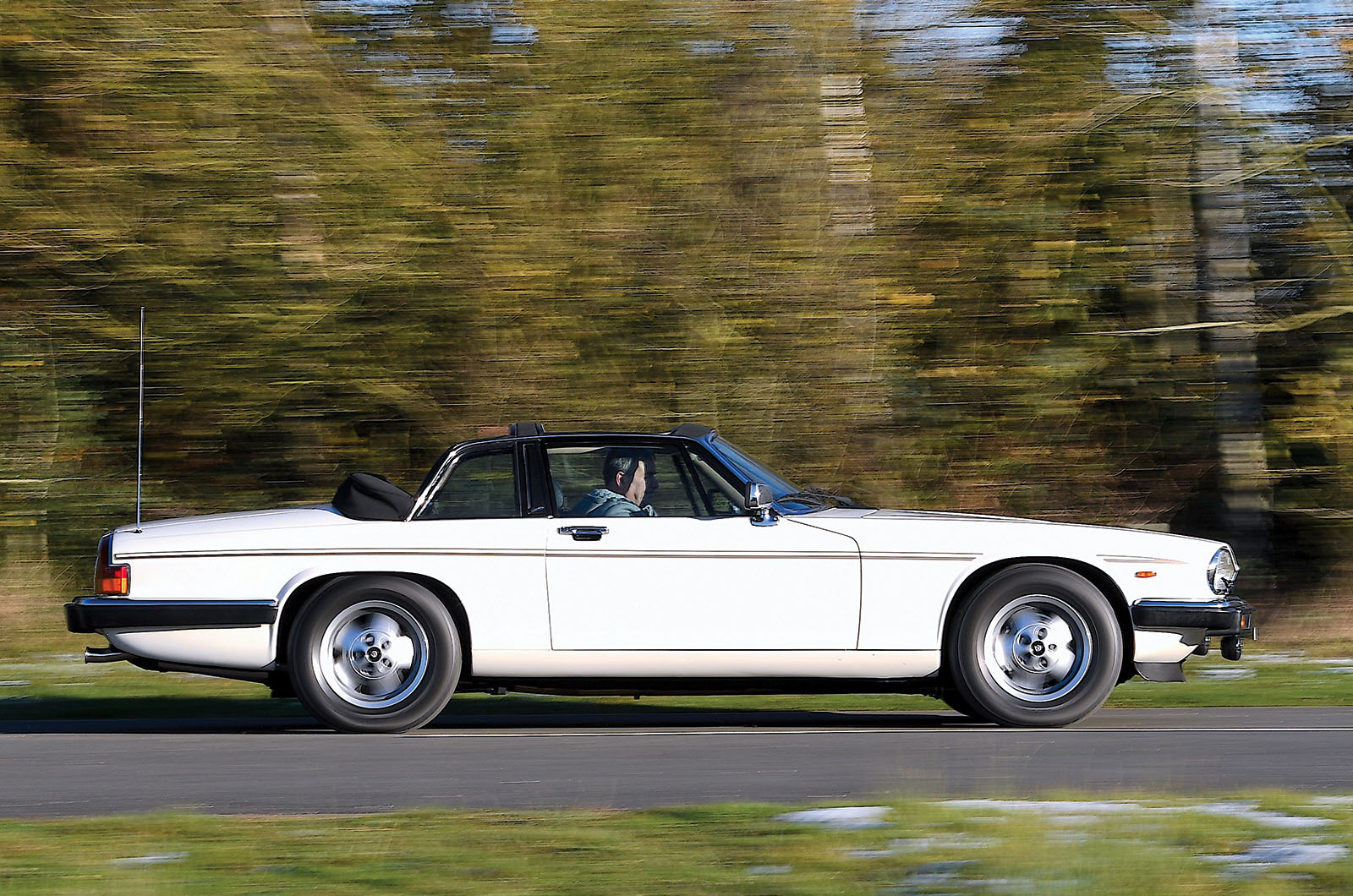
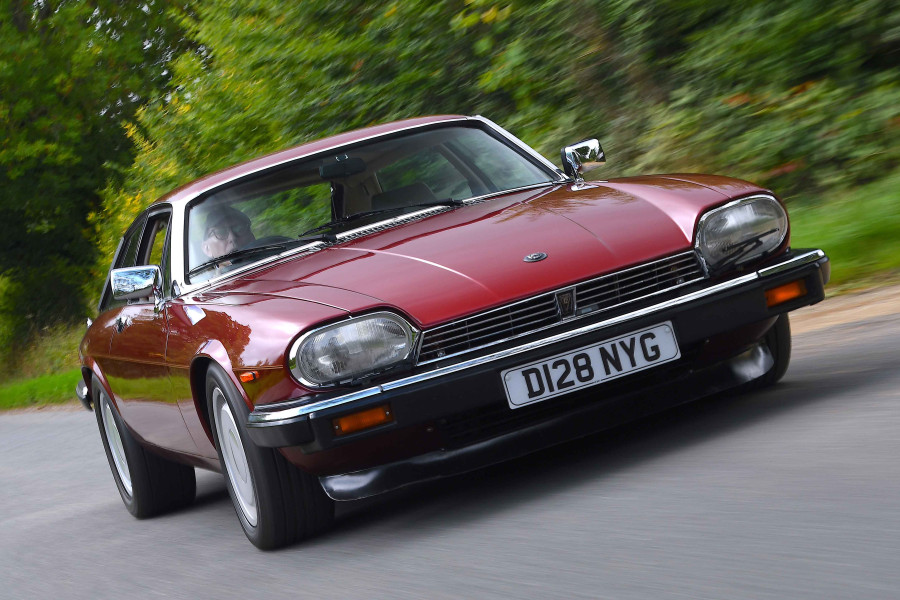
The SC was in effect a factory conversion: it retained the coupé’s profile, with fixed cant rails and rear quarter-windows, but removed the buttresses and +2 rear seats to liberate space for a fabric roof to fold down from behind a central T-top.
The drop-top model replaced the Jaguar XJ-S coupé’s buttresses with a fabric hood
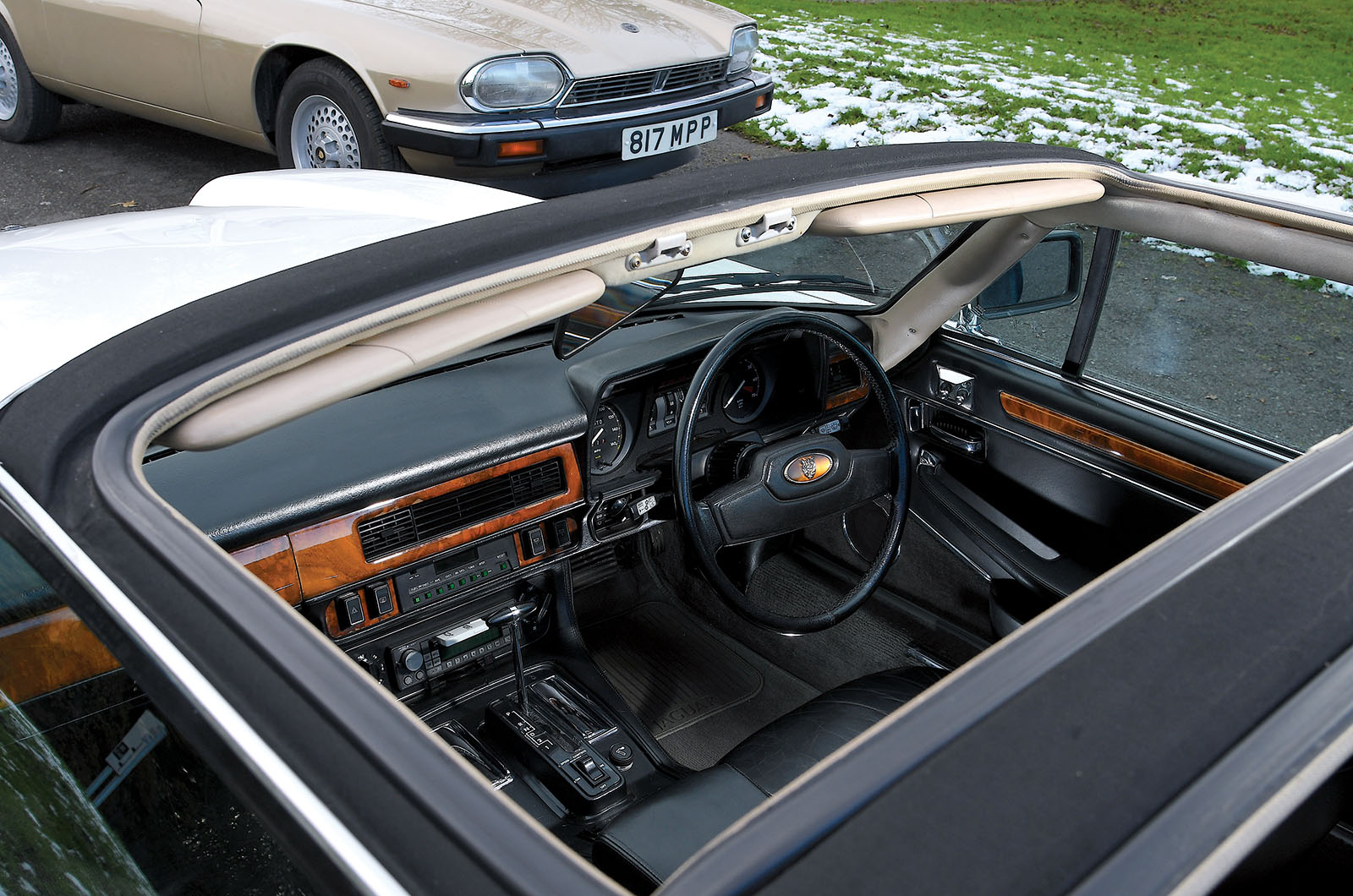
Two removable roof panels above the front seats could be stored in the boot to create a near-open cabin.
Dave Norris has owned his highly original, 74,000-mile example for 10 years and believes it’s one of 2200 XJ-SCs that survive worldwide from a total six-year production of around 5000 cars.
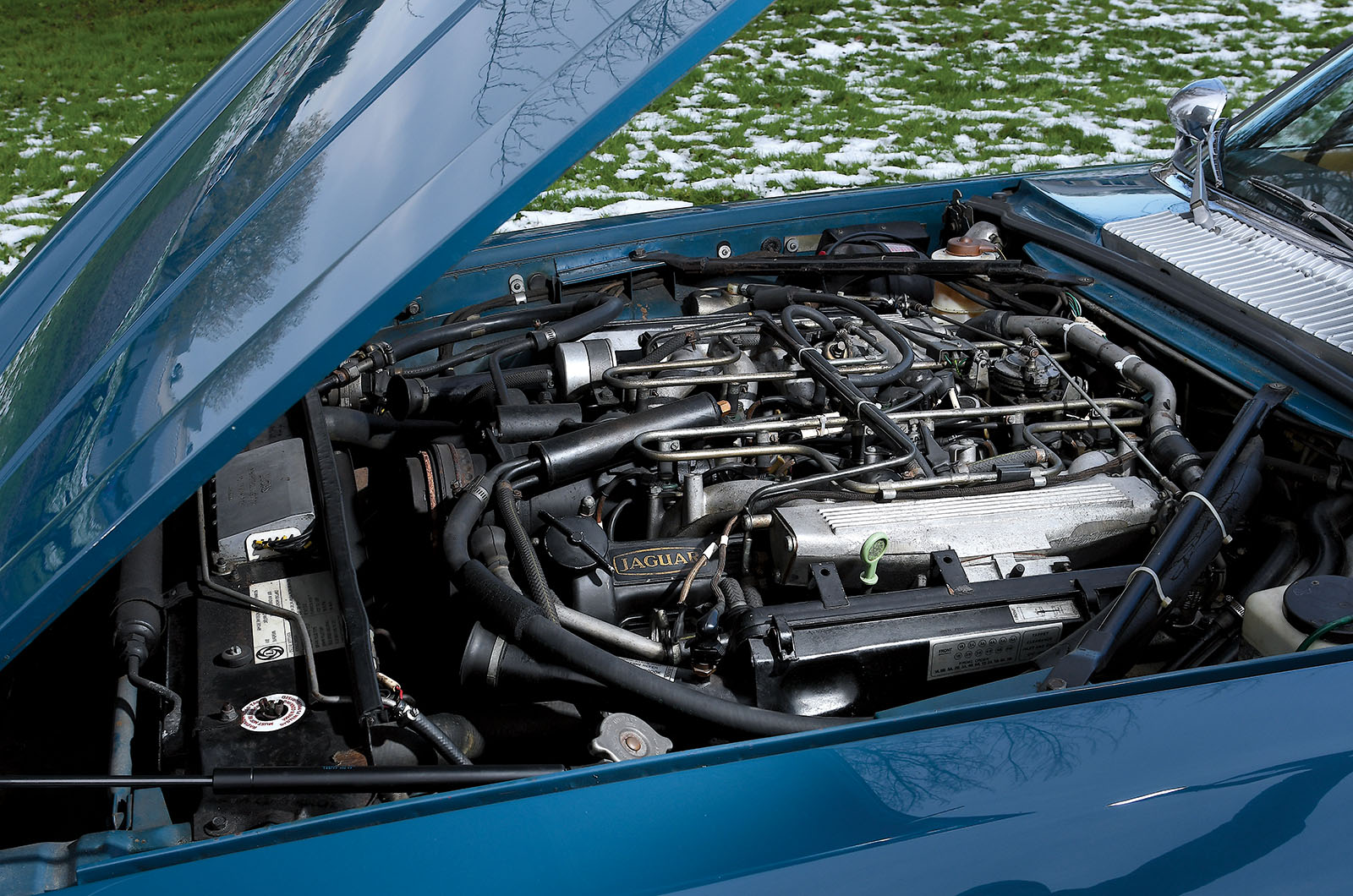
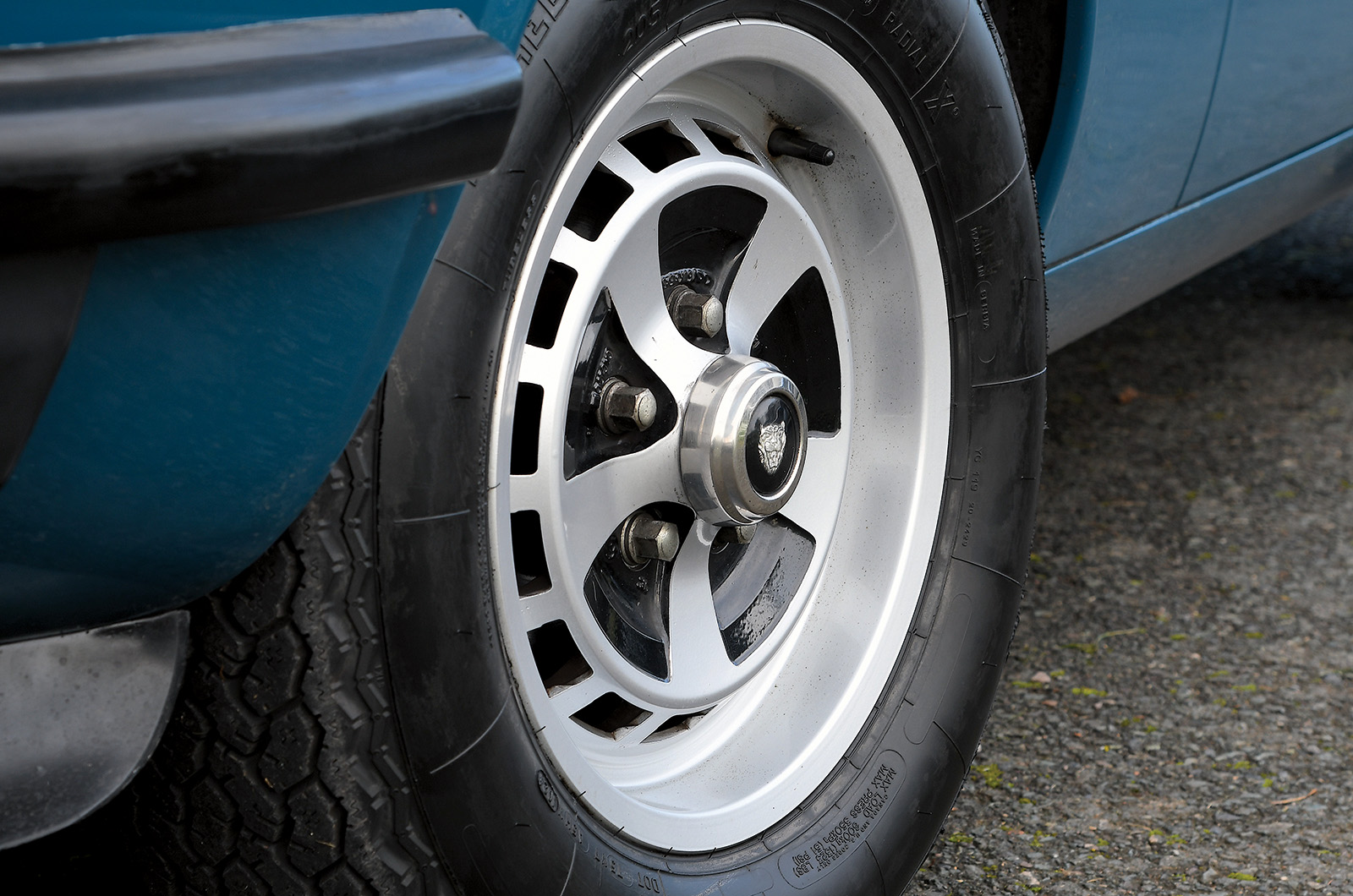
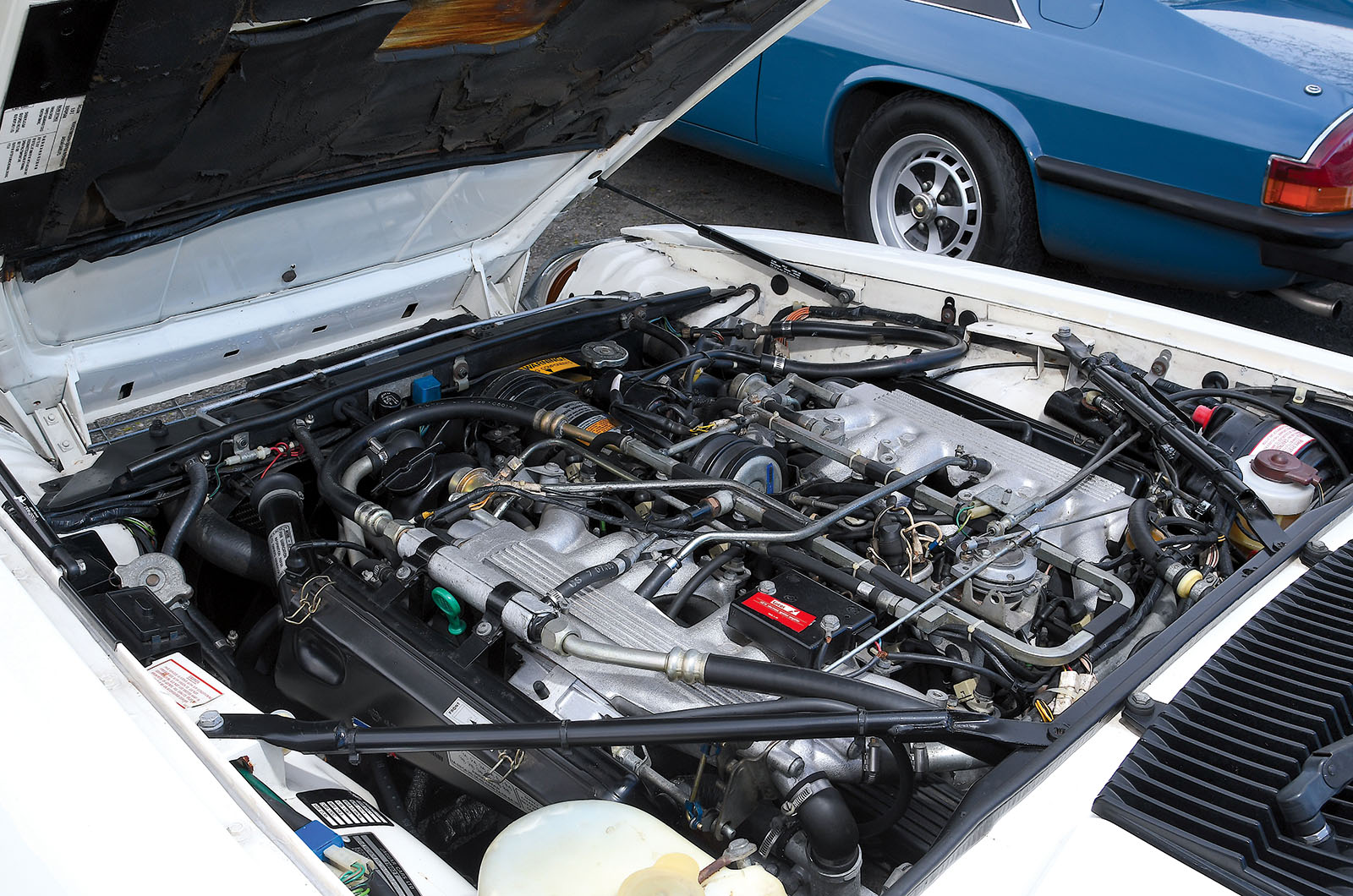
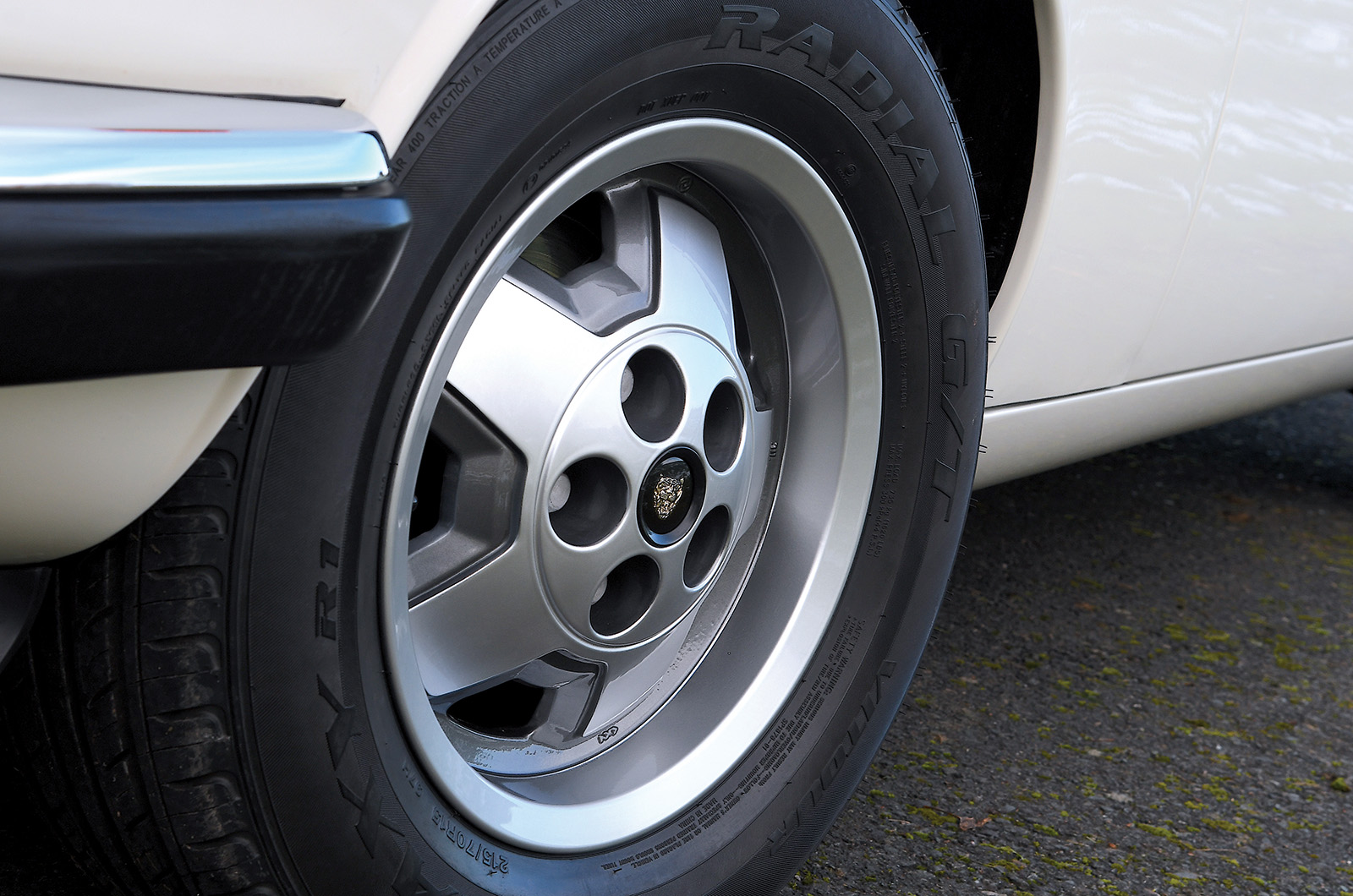
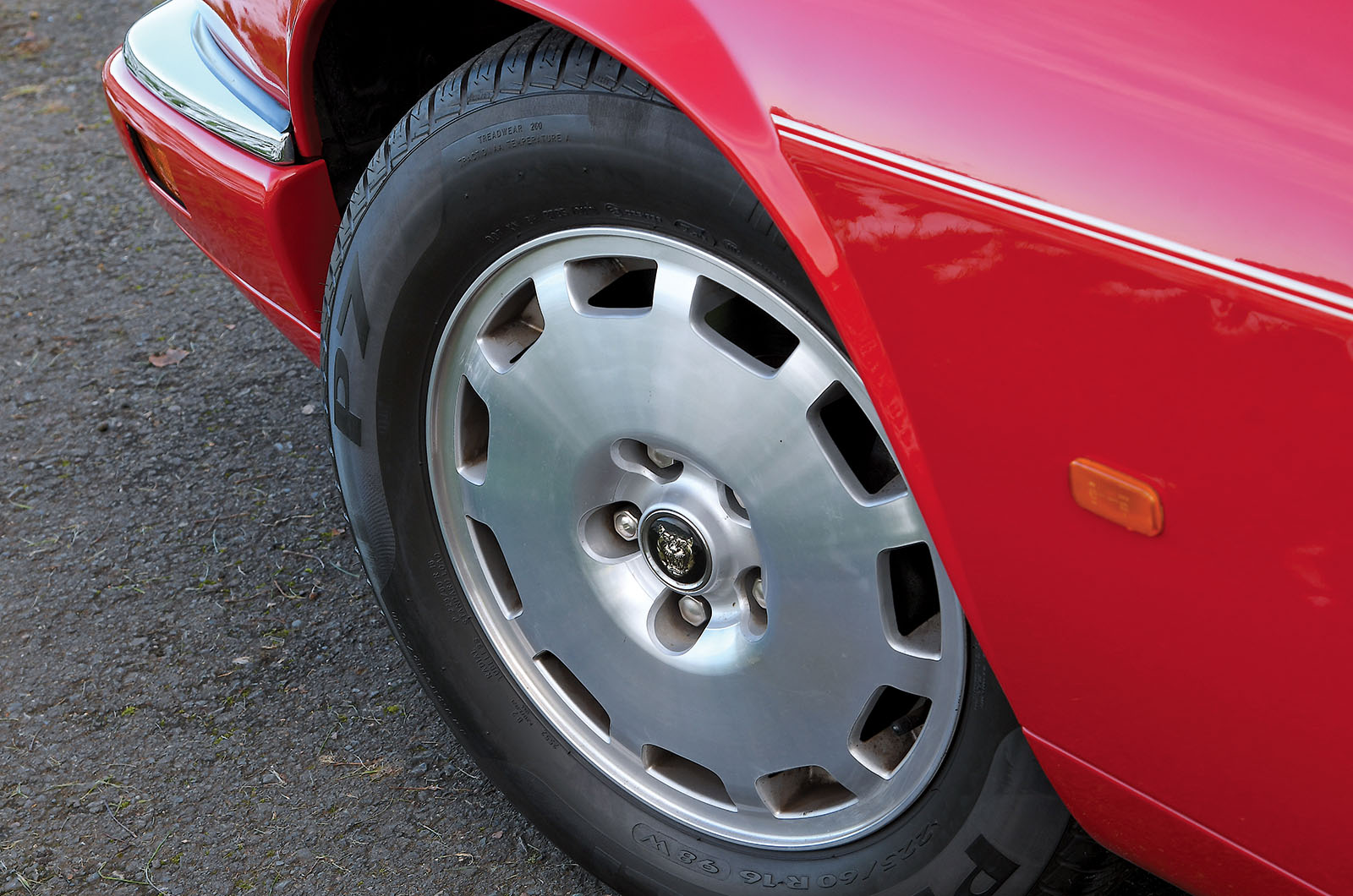
As the sole V12 HE representative here, it’s instantly identifiable (apart from the obvious upper-body changes) by its wider ‘Starfish’ alloy wheels with 215-section rubber.
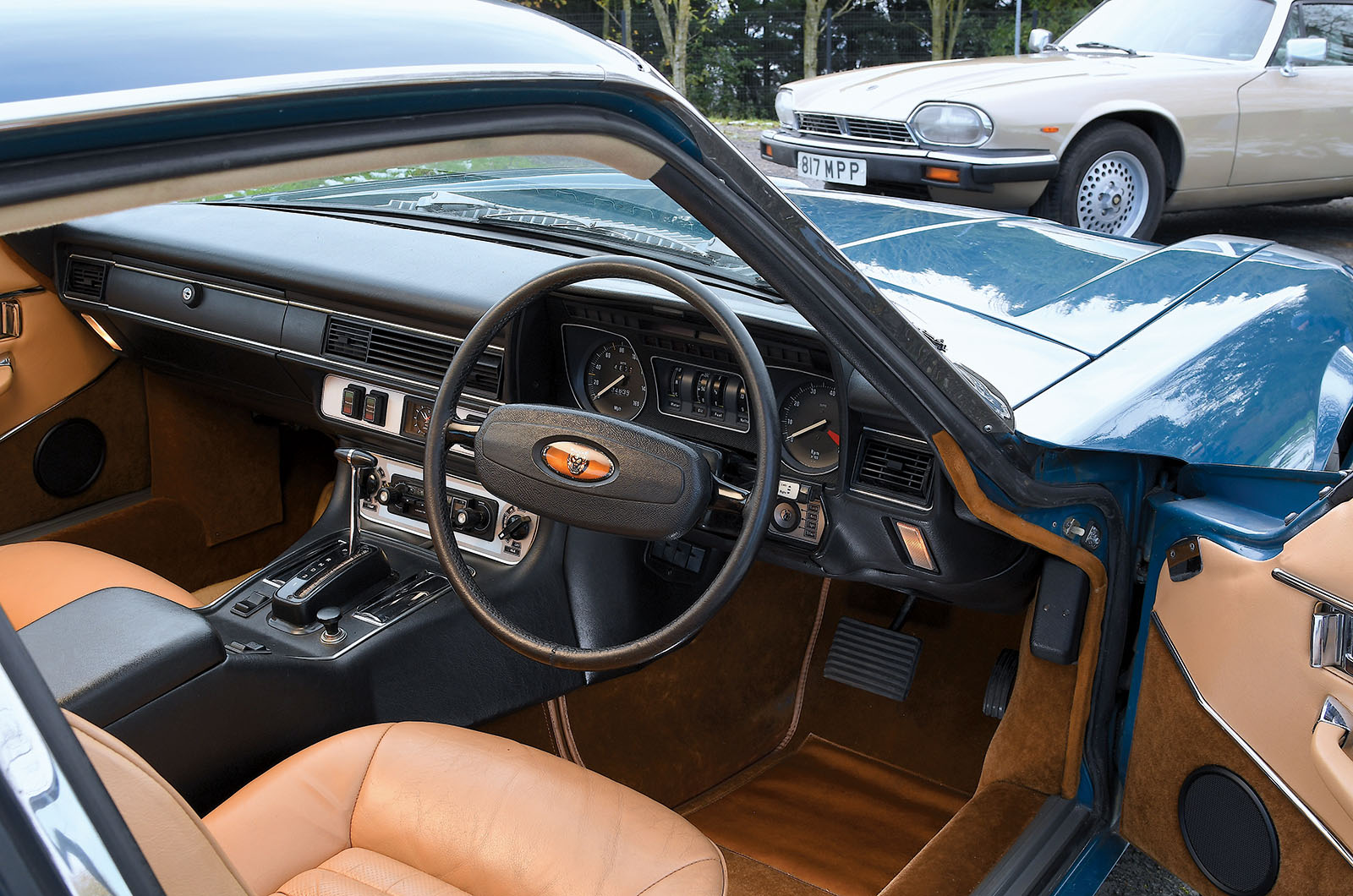
Inside, while the basic cabin architecture is unchanged, save tweaks to instrument fonts and a cleaner (though no less uninspiring) steering-wheel design, it’s altogether more luxurious, with swathes of leather and wood lifting the tone.
The HE (for High Efficiency) Jaguar XJ-S was fitted with wider alloy wheels
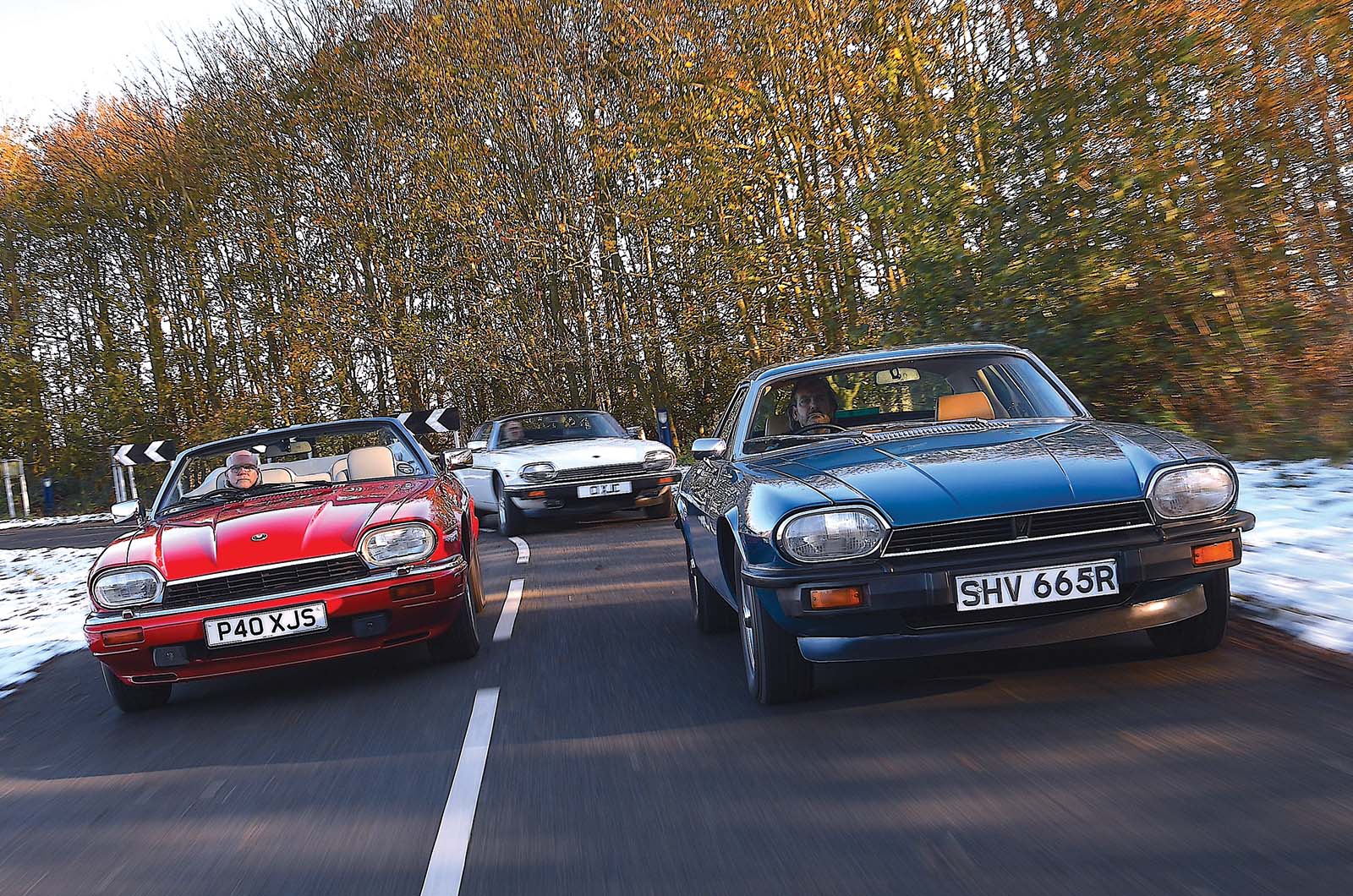
To drive, the Jaguar XJ-S Cabriolet loses some of the coupé’s ride suppleness, perhaps due to toughened suspension to compensate for its 200lb-plus of extra weight.
But otherwise it’s notable for the HE engine’s improved mid-range urge and a feeling of effortlessness – although when extended, the coupé still feels like the quicker car.
The XJ-SC’s arrival actually prompted the conception of our next derivative, the Lynx Eventer.
Hastings-based Lynx had already been converting XJ-S coupés into 2+2 convertibles, but when Jaguar added the Cabriolet to its range the company was forced to develop an alternative conversion.
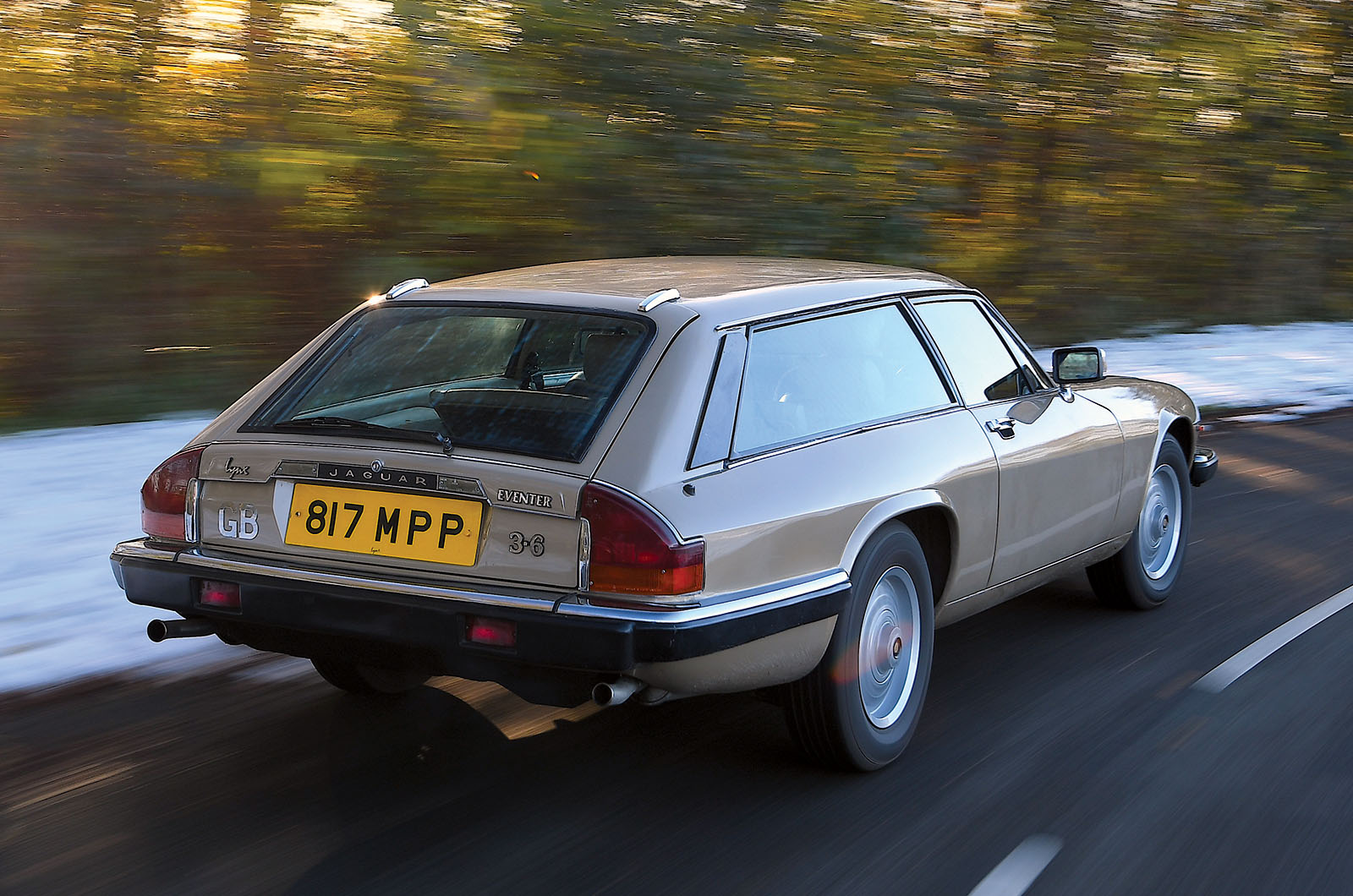
Lynx built 67 examples of the Jaguar XJ-S-based Eventer estate
Michael Byng has owned his 1985 Opalescent Gold model for the past nine years, during which time it has been fully restored.
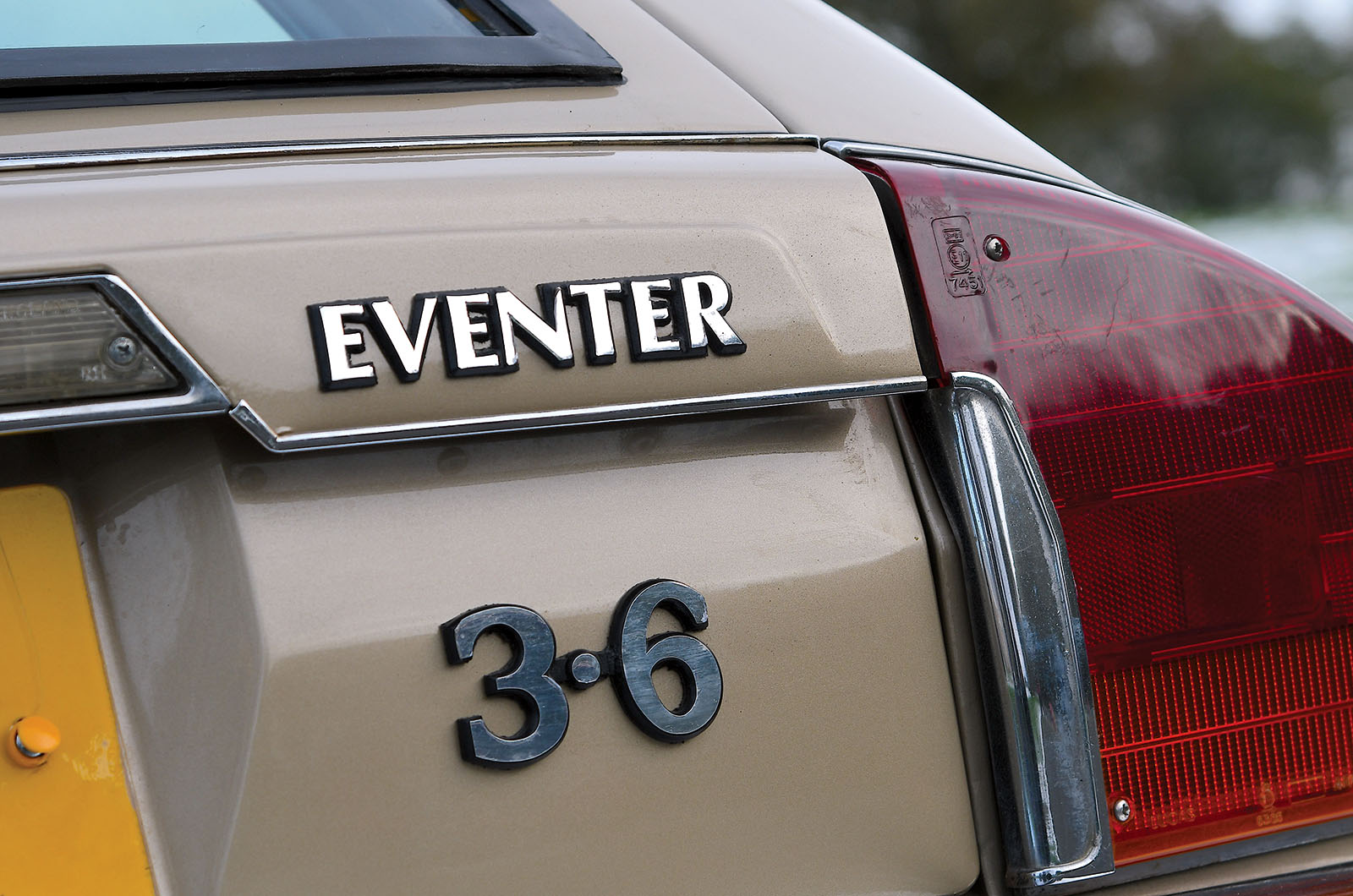
It’s a rare car for being one of only two out of a total 67 Eventers that Lynx produced with a 3.6-litre manual-overdrive powertrain (through its 16-year production life, the Eventer was also available with the 4-litre straight-six as well as 5.3- and 6-litre V12s).
Make your own decision about the Eventer’s styling, but to my eyes it’s incredibly elegant and not at all “an upmarket Reliant Scimitar”, to which John Egan likened it.
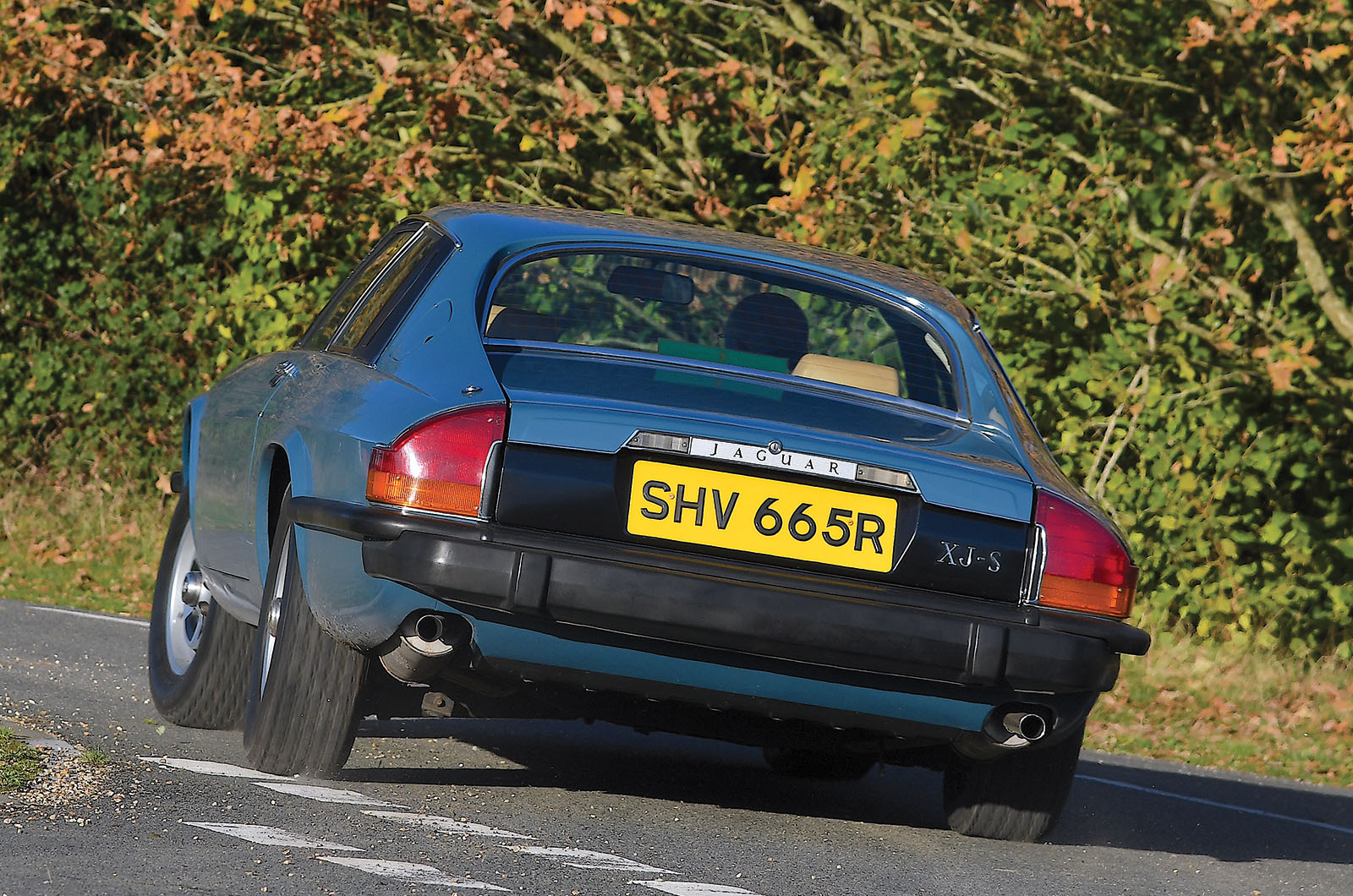
The six-cylinder Lynx Eventer estate feels more agile than the V12-engined Jaguars
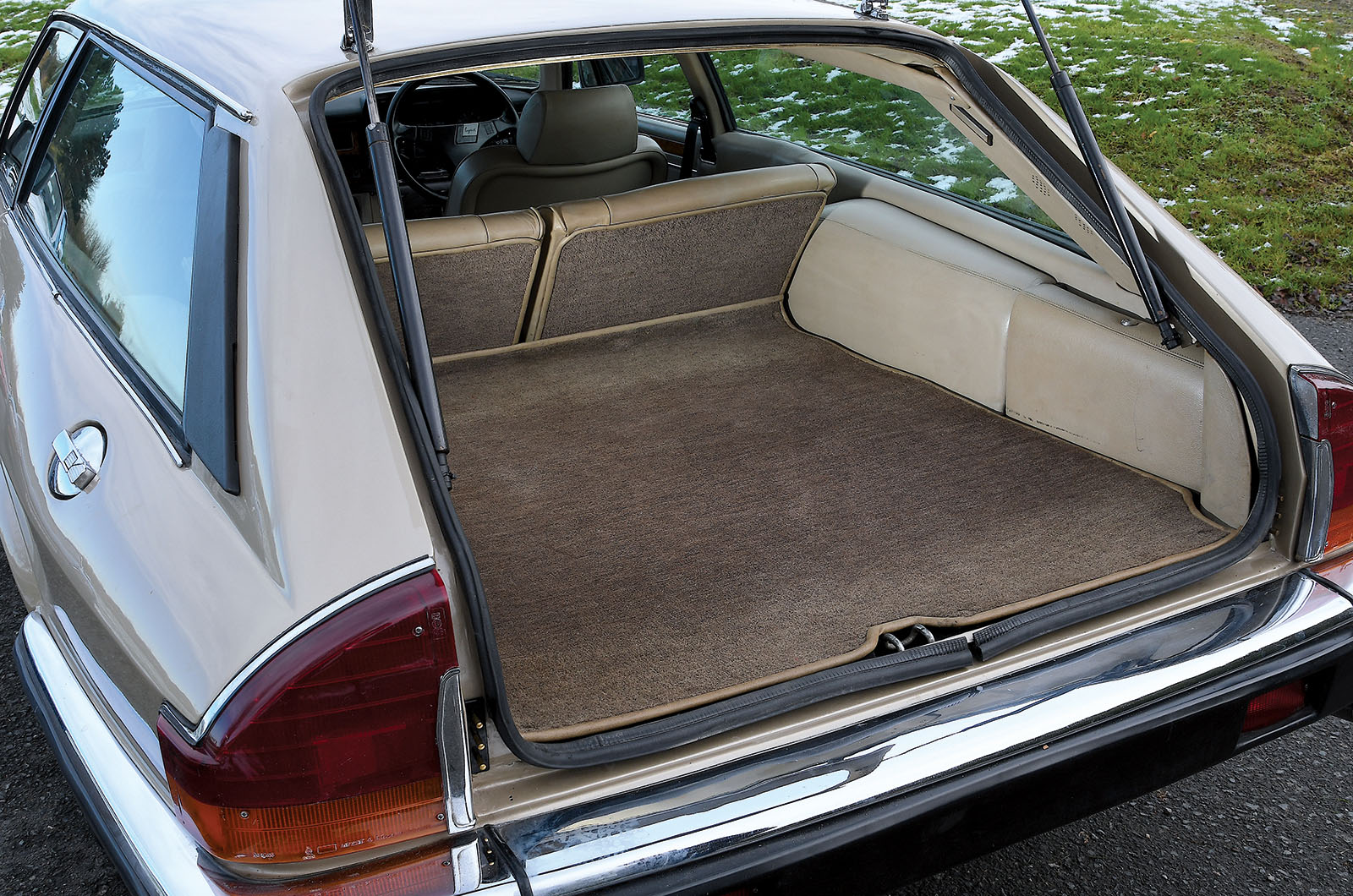
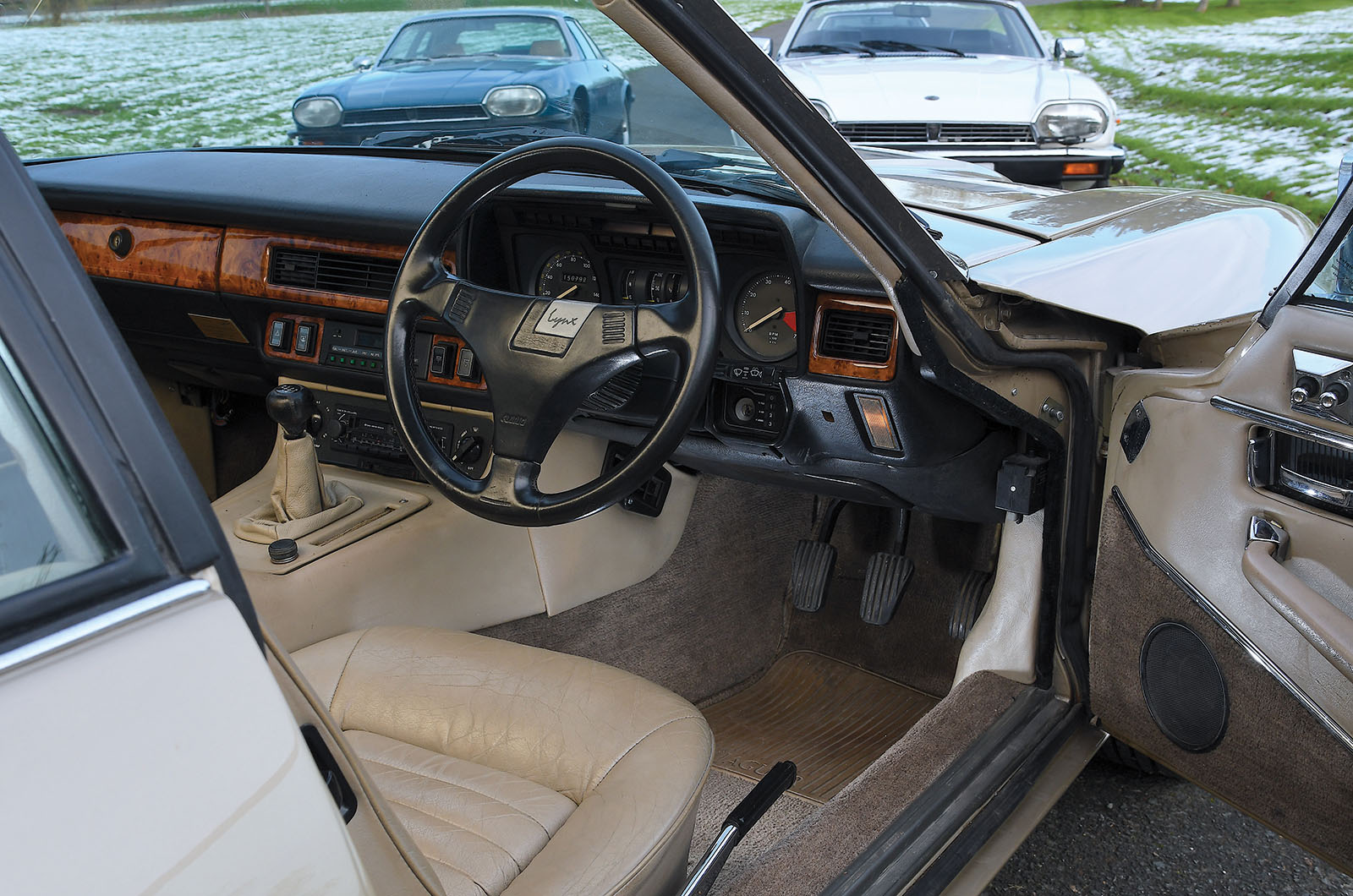
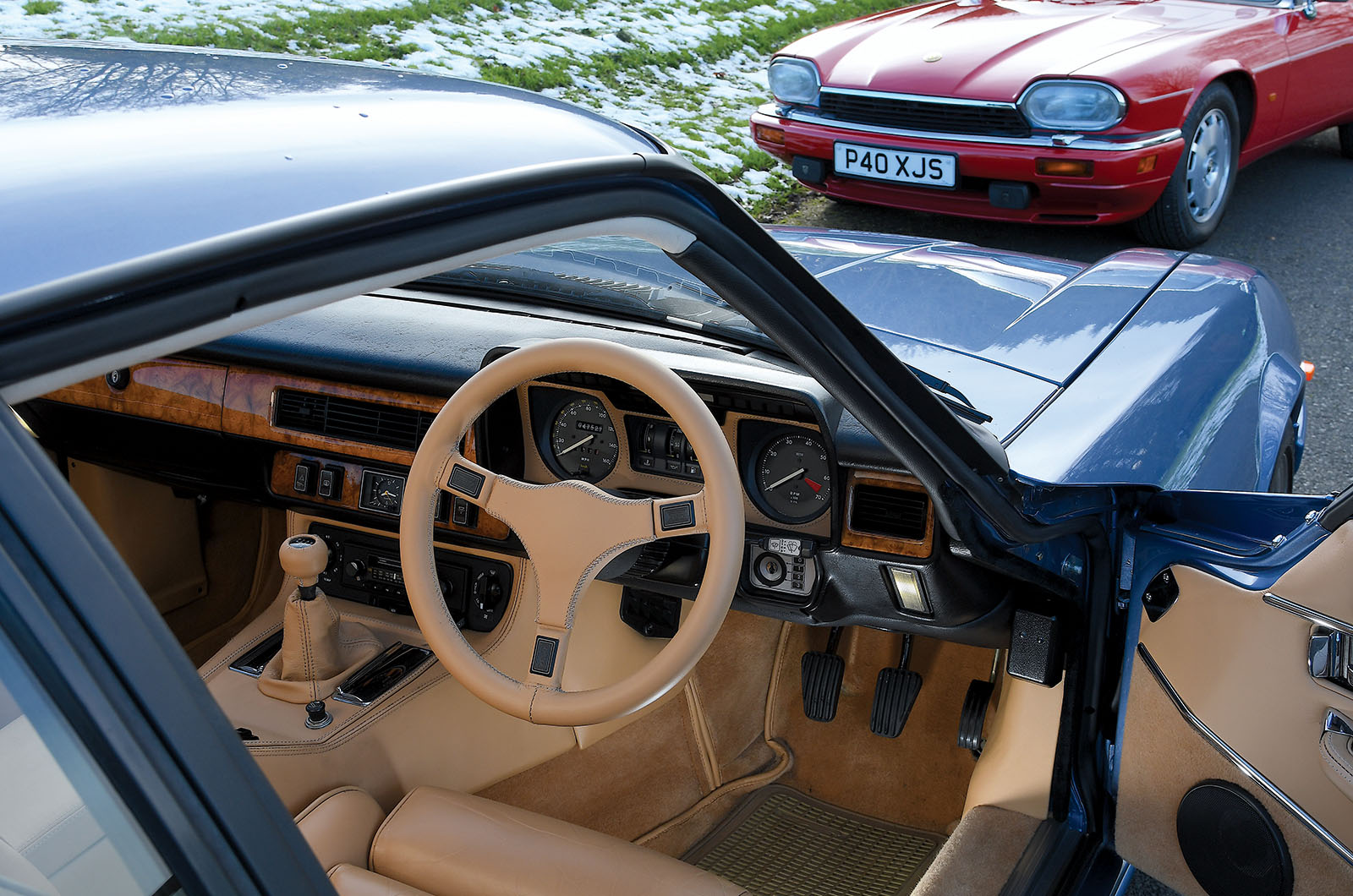
Inside, there’s more legroom for adult rear passengers, but apart from the Lynx’s rather incongruous three-spoke steering wheel, the front cabin is par for the XJ-S course.
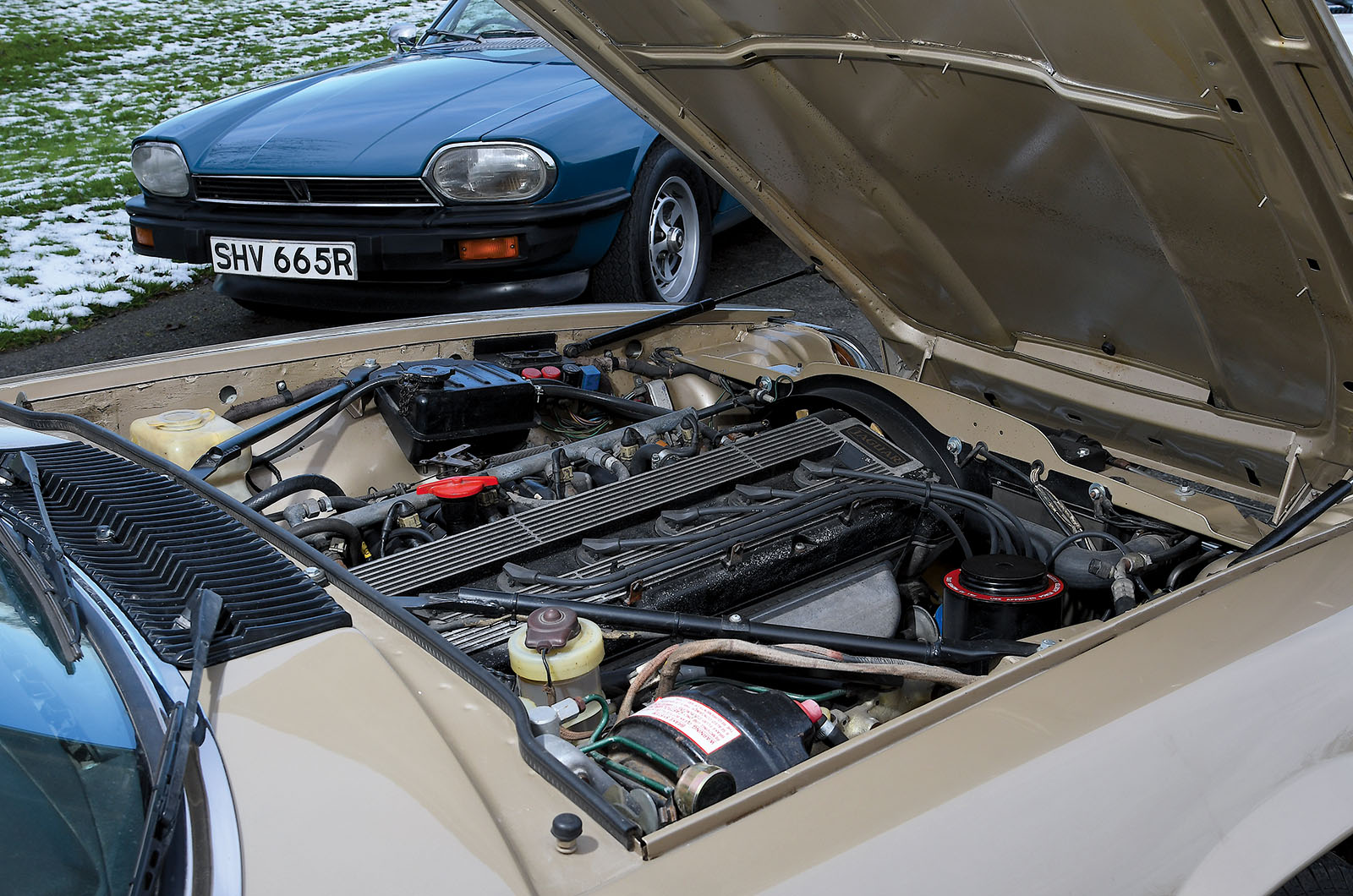
The AJ6 engine – an all-new, all-alloy straight-six for the Jaguar XJ-S range in 1983 – sounds slightly blue-collar at start-up, but becomes sweeter and more sonorous as the revs rise.
The default five-speed manual Getrag ’box is relatively slick and quick to shift through its ratios, and while it obviously lacks the outright guts of the V12, this Eventer only feels as if it’s trading 15-20% in performance terms.
However, it is certainly the most agile car here, being keener to turn in and feeling lighter on its feet than the V12s.
Clockwise from top: this Lynx Eventer was fitted with a 3.6-litre ‘six’, but V12 options were offered; the Jaguar cabin was unchanged bar the three-spoke steering wheel; useful boot space
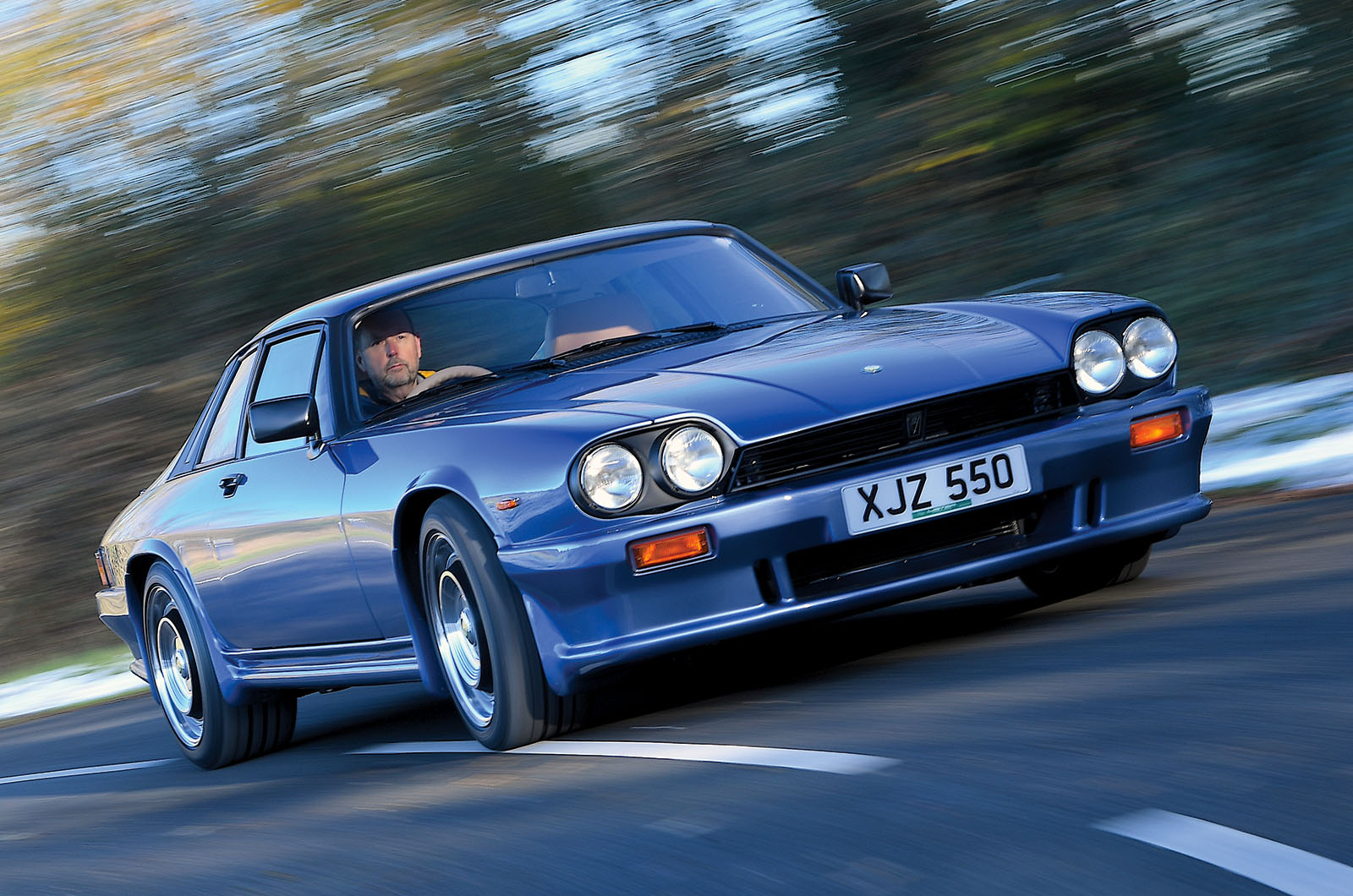
Contrasts don’t come any greater after the Lynx Eventer than Simon Spurrell’s Mineral Blue 6-litre Lister MkIII, fresh from a 4000-hour, nut-and-bolt restoration.
The original concept of a quasi-racer XJ-S came out of a discussion between Classic & Sports Car’s own Simon Taylor and ’50s sports-racing legend Brian Lister.
Frustrated with the performance of his new XJ-S, Simon asked: “Why don’t you turn it into the car it should be and call it a Lister-Jaguar?”
Enthused by the idea, Lister started to look for a partner to bring the idea to fruition.
The Lister-Jaguar XJ-S 6.0 MkIII keeps its mass in check
Initially BLE Automotive was commissioned to perform the conversion work, but in the longer term well-known Jaguar racer Warren Pearce’s WP Automotive was contracted, with the project managed by Pearce’s son, Laurence.
For around £15,000, Lister Cars took the standard 5.3-litre engine and increased its stroke from 70mm to 78mm for a displacement of 5955cc.
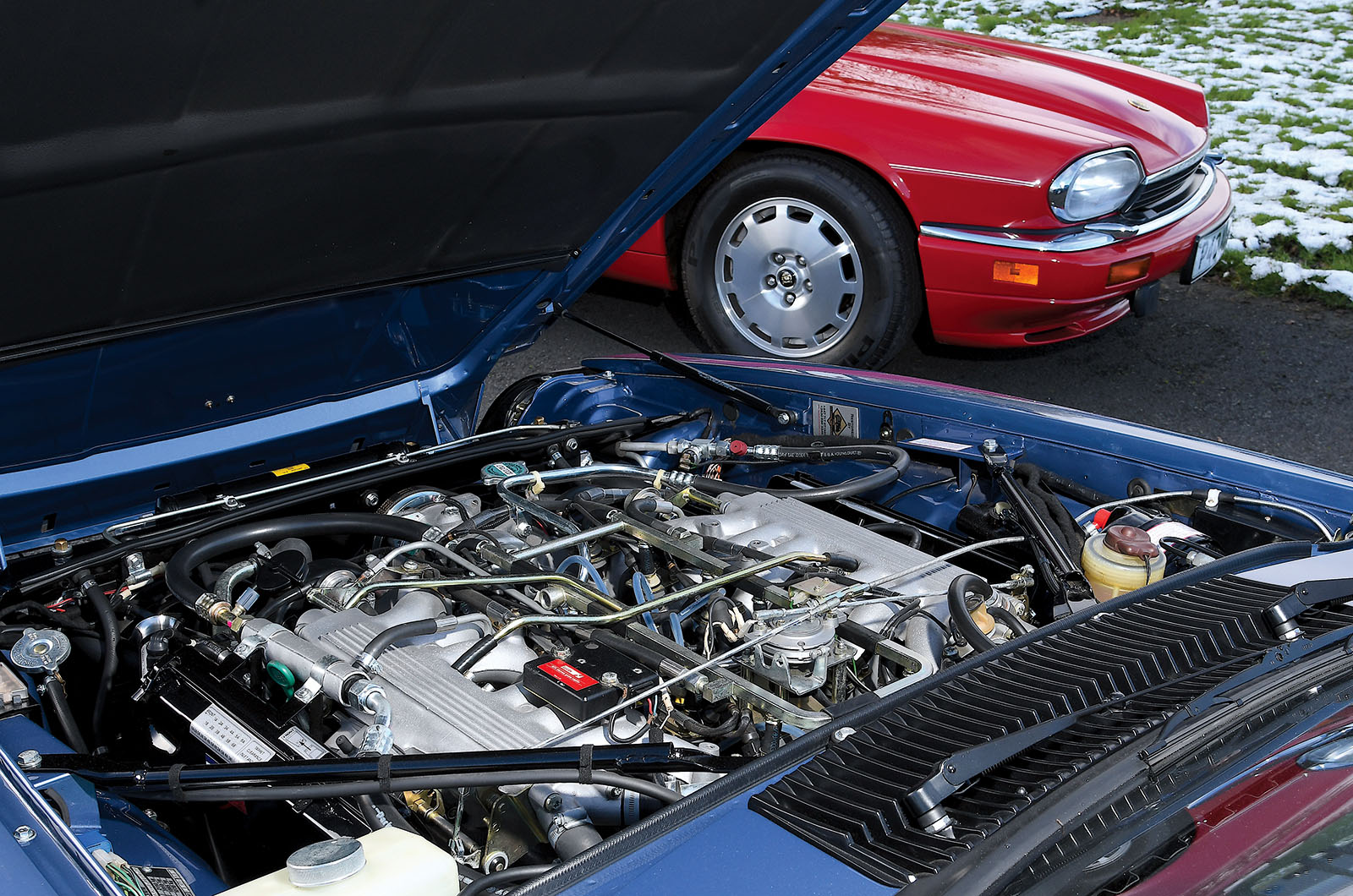
The crankshaft was nitrided and rebalanced, and forged Cosworth pistons were fitted, while the cylinder head received different valves and steel followers, among a raft of other detail upgrades.
A modified injection system, revised inlet manifolds and wider throttle bodies were also employed, contributing to an overall output of some 482bhp.
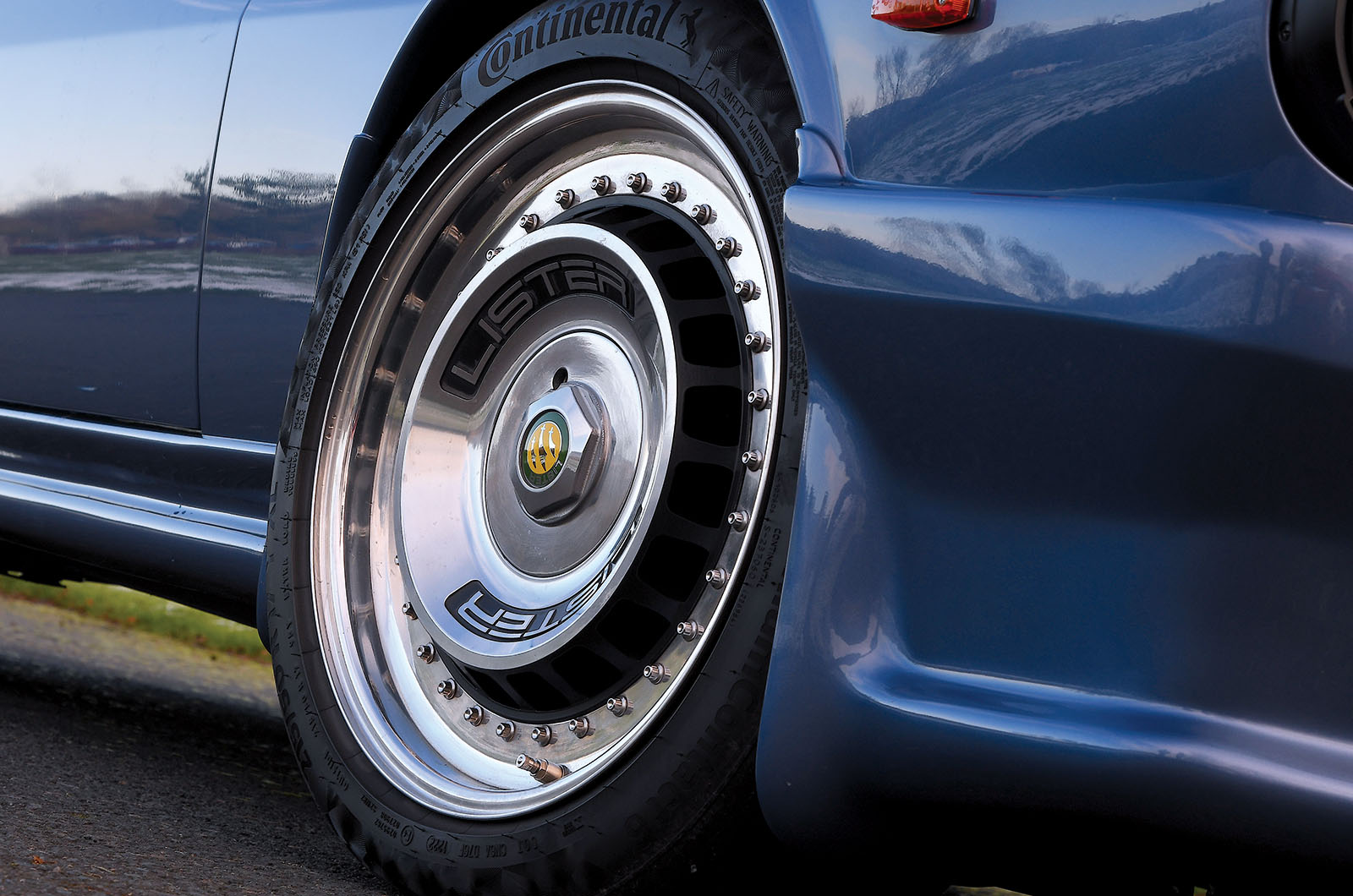
The Lister-Jaguar XJ-S 6.0 MkIII’s 17in split-rims (left); the cabin feels upmarket
More extreme variants followed, including a twin-supercharged 7-litre, but ‘our’ Lister received 17in split-rim alloy wheels, bumper and sill extensions, twin headlights, and de-chromed window and front-grille surrounds.
The suspension was lowered and stiffened all round, while the cabin gained a complete, Lister-branded retrim.
We hear the MkIII long before we see it: the TT exhaust – an AJ6 Engineering replica of Lister’s original – emits a blood-curdling yowl as it approaches.
The Lister body addenda is very much of its time, but the fit and finish are impeccable; inside, Lister’s makeover gives the cabin a satisfyingly expensive ambience.
The Lister-Jaguar XJ-S 6.0 MkIII’s modified V12 makes 482bhp
On the road the Lister feels grown up and quite refined when you’re not at full chat.
The Getrag five-speed manual shift is a little notchy and rubbery, but the ratios are well chosen and the clutch is not too heavy.
You can lean on the car through bends, too: the Lister belies its mass and handles with alacrity.
The pumped-up V12’s soundtrack is infectious, although the car tends to sound faster than it is: Autocar set 0-60mph in 5.6 secs with a 5.3-litre Lister in 1986 and, despite this car’s larger capacity, its acceleration feels no more brisk than that.
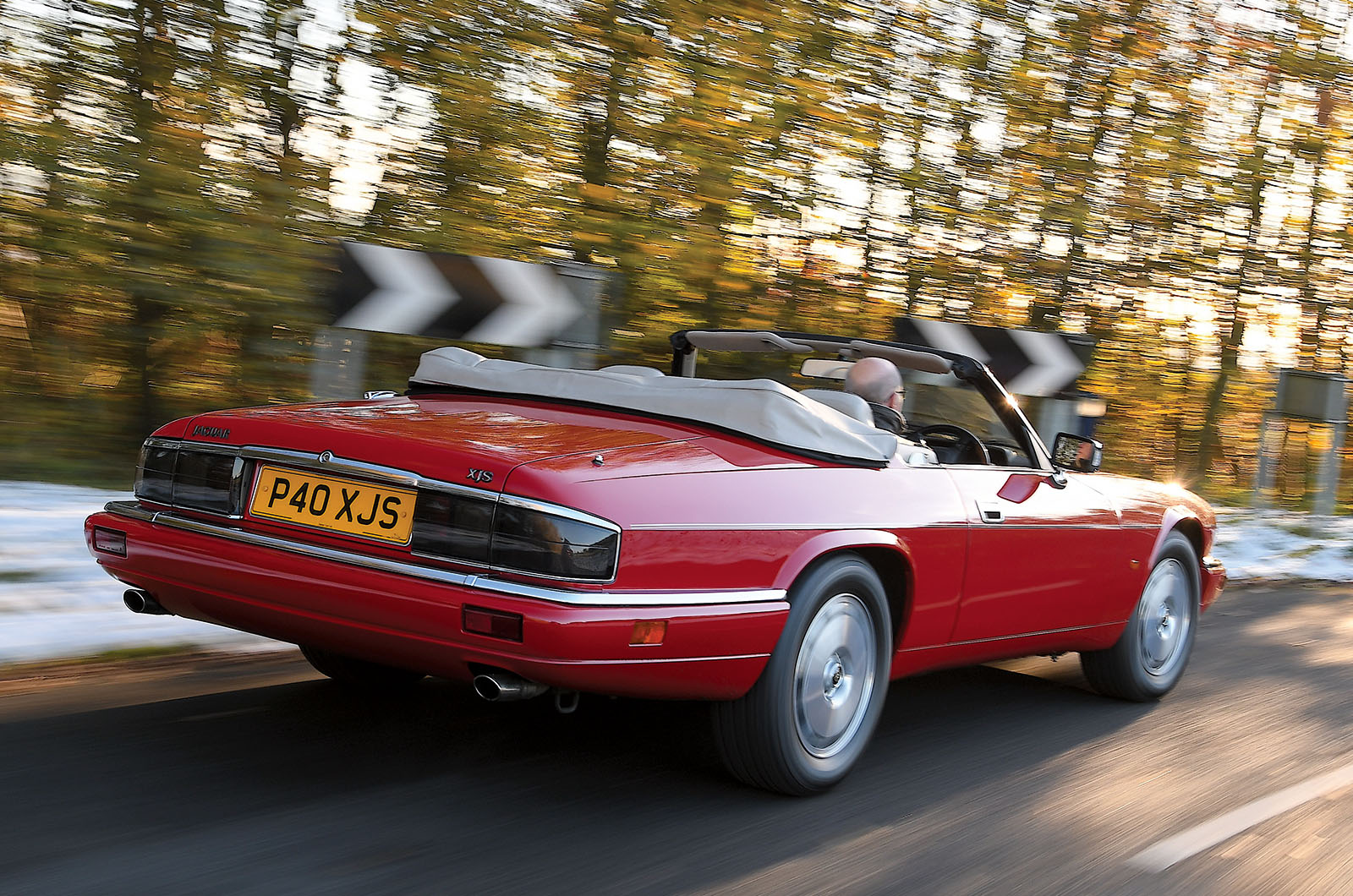
The Jaguar XJS 4.0 Convertible is very refined
All of which brings us to our final variant, the Convertible.
Launched in 1988 to replace the SC, the new model had a fully folding electric roof and retained vestigial rear seats.
But after just three years, as part of a substantial investment in the range by new owner Ford, the Convertible and coupé received a major overhaul (and lost the hyphen in their names), to make them match-fit for their final stint in the market.
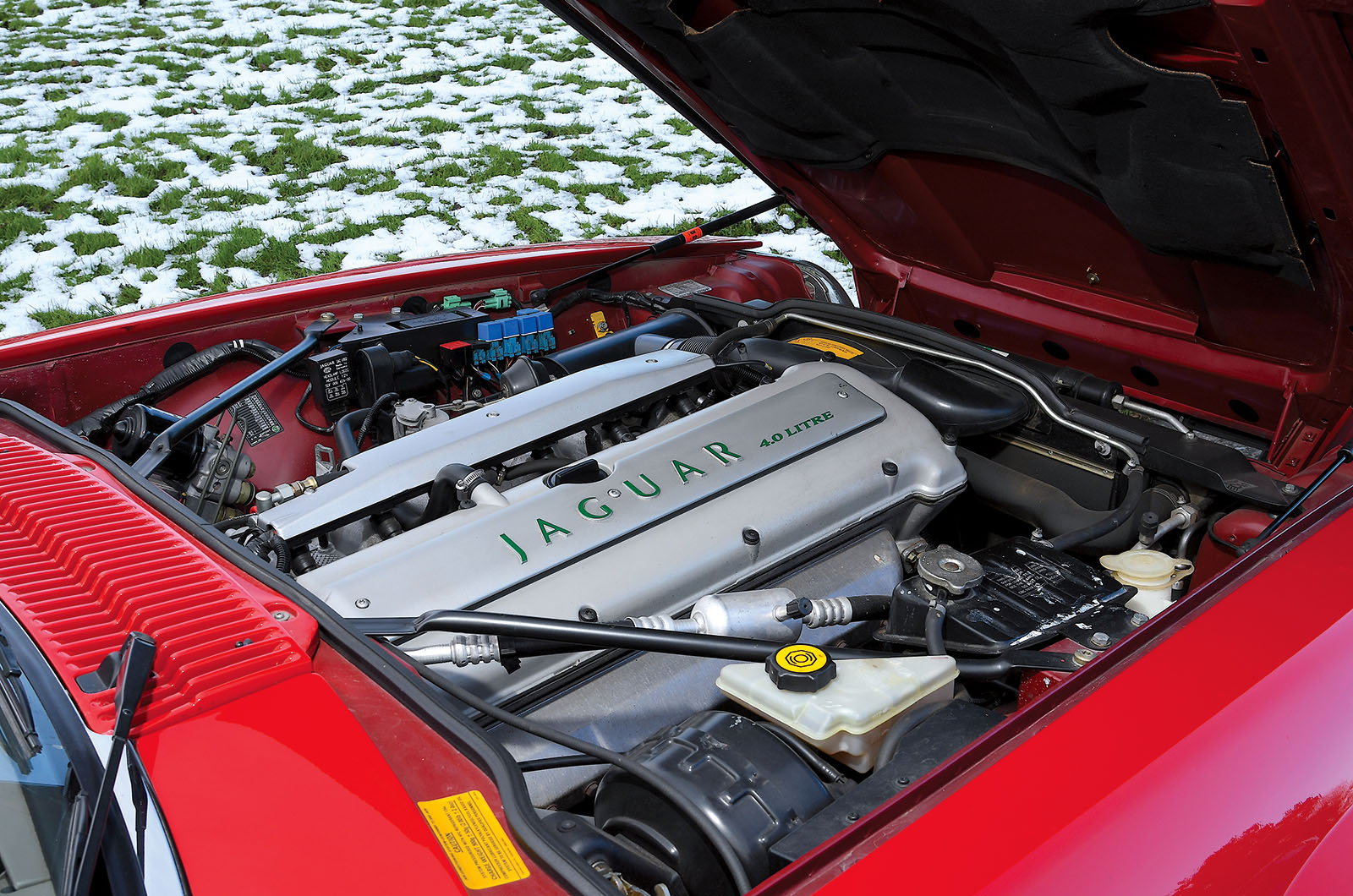
The V12’s capacity was increased to 6 litres, while a new AJ16 4-litre straight-six replaced the 3.6-litre AJ6.
Just as significant was a masterful redesign by the late Geoff Lawson: some of the original car’s rougher edges were smoothed over (buttresses and bumpers, most noticeably) to yield a pleasingly fresh take on Sayer’s original design.
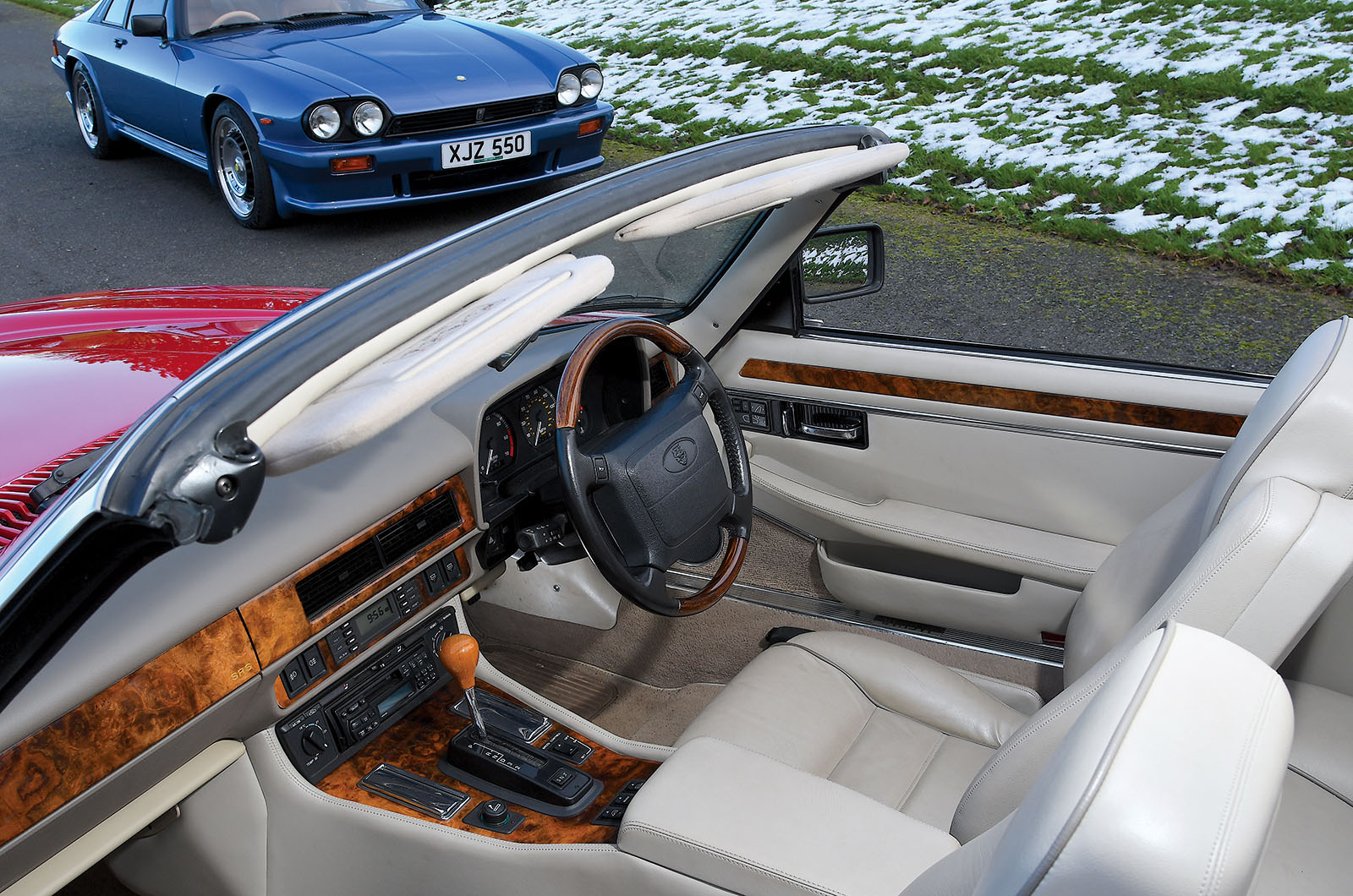
Clockwise from top: the 1992-on Jaguar XJS Convertible and coupé’s interior quality was a big step up; the XJS 4.0 Convertible’s Aerosport alloy wheels; from 1994, the Jaguar ‘six’ featured coil-on-plug ignition
The Jaguar Daimler Heritage Trust’s 1996 4-litre Celebration Convertible is the very last such model to be built and, with just 6700 miles under its belt, it still feels box-fresh.
There’s a sea-change in cabin quality and a real uptick in ergonomic efficiency; quite simply, it’s more user-friendly.
You would never call the 4-litre Convertible quick, but it’s a super-refined and stable delight to drive, and tactile enough at the helm to reward even press-on motorists.
There is no doubt that the XJ-S had already come of age by the mid-’80s, but it was also good to know that, after 21 years in the market, the XJS into which it morphed was still capable of fulfilling the fantasy lifestyle portrayed in those original sales brochures.
Images: John Bradshaw
Thanks to: XJS Club; Jaguar Daimler Heritage Trust; British Motor Museum
Factfiles
Jaguar XJ-S V12
- Sold/number built 1975-’81/61,209 (all V12s)
- Construction steel monocoque
- Engine all-alloy, sohc-per-bank 5343cc 60° V12, Lucas-Bosch fuel injection
- Max power 285bhp @ 5800rpm
- Max torque 294lb ft @ 3500rpm
- Transmission Borg-Warner three-speed auto or Jaguar four-speed manual, RWD via Salisbury Powr-Lok limited-slip differential
- Suspension independent, at front by semi-trailing wishbones, coil springs, telescopic dampers, anti-roll bar rear lower wishbones, driveshafts as upper links, radius arms, twin coil-over dampers
- Steering power-assisted rack and pinion
- Brakes vented discs, rears inboard, with servo
- Length 15ft 2¾in (4870mm)
- Width 5ft 10½in (1790mm)
- Height 4ft 1in (1260mm)
- Wheelbase 8ft 6in (2591mm)
- Weight 3718lb (1686kg)
- Mpg 11-14
- 0-60mph 6.7 secs (auto 7.5 secs)
- Top speed 153mph (auto 145mph)
- Price new £8900
- Price now £10-25,000*
Jaguar XJ-SC HE
(where different from XJ-S)
- Sold/number built 1983-‘88/5014
- Max power 296bhp @ 5500rpm
- Max torque 318lb ft @ 3250rpm
- Transmission GM Turbo-Hydramatic 400
- Height 4ft 2in (1270mm)
- Weight 3933lb (1784kg)
- Mpg 16
- 0-60mph 7.7 secs
- Top speed 140mph
- Price new £27,215 (1985)
- Price now £10-24,000*
Lynx Eventer 3.6
(where different from XJ-S)
- Sold/number built 1983-2002/67
- Engine all-alloy, dohc, 24v 3590cc straight-six, Lucas-Bosch digital fuel injection
- Max power 225bhp @ 5300rpm
- Max torque 240lb ft @ 4000rpm
- Transmission Getrag five-speed manual
- Weight 3549lb (1610kg, XJ-S 3.6)
- Mpg 17.6 (XJ-S 3.6)
- 0-60mph 7.4 secs (XJ-S 3.6)
- Top speed 141mph (XJ-S 3.6)
- Price new £6950 (conversion only, 1983)
- Price now £100,000*
Lister-Jaguar XJ-S 6.0 MkIII
(where different from XJ-S)
- Sold/number built 1986-‘94/c49
- Engine all-alloy, sohc-per-bank 5955cc 60° V12, Lucas-Bosch fuel injection
- Max power 482bhp @ 6250rpm (est)
- Max torque 410lb ft @ 4000rpm (est)
- Transmission Getrag five-speed manual
- Suspension: rear twin Koni coil-over dampers
- Steering re-valved power-assisted rack and pinion
- Brakes vented discs, with six-piston front, four-piston rear AP Racing calipers
- Weight 3747lb (1700kg, est)
- 0-60mph 5.6 secs (est)
- Top speed 170mph (est)
- Price new c£15,000 (conversion only, ’86)
- Price now £40-70,000*
Jaguar XJS 4.0 Convertible
(where different from XJ-S)
- Sold/number built 1992-’96/n/a
- Engine all-alloy, dohc, 24v 3980cc straight-six, Lucas electronic fuel injection
- Max power 223bhp @ 4750rpm
- Max torque 278lb ft @ 3650rpm
- Transmission ZF four-speed automatic
- Brakes vented discs, rears outboard, with servo and ABS
- Length 15ft 7in (4764mm)
- Width 6ft 3in (1883mm)
- Height 4ft 1in (1254mm)
- Wheelbase 8ft 6in (2591mm)
- Weight 3947lb (1790kg)
- Mpg 25 (est)
- 0-60mph 8.6 secs
- Top speed 138mph
- Price new £41,270
- Price now £25-50,000*
*Prices correct at date of original publication
Enjoy more of the world’s best classic car content every month when you subscribe to C&SC – get our latest deals here
READ MORE
Aston Martin vs Jaguar vs Triumph vs AC vs Austin-Healey vs Bristol: Britain’s best straight-sixes
Jaguar XJ-S vs Lotus Elite: new order grand tourers
Driving the cars of The Saint: Volvo P1800, Jaguar XJ-S, Jensen Interceptor and Volvo C70
Simon Hucknall
Simon Hucknall is a senior contributor to Classic & Sports Car