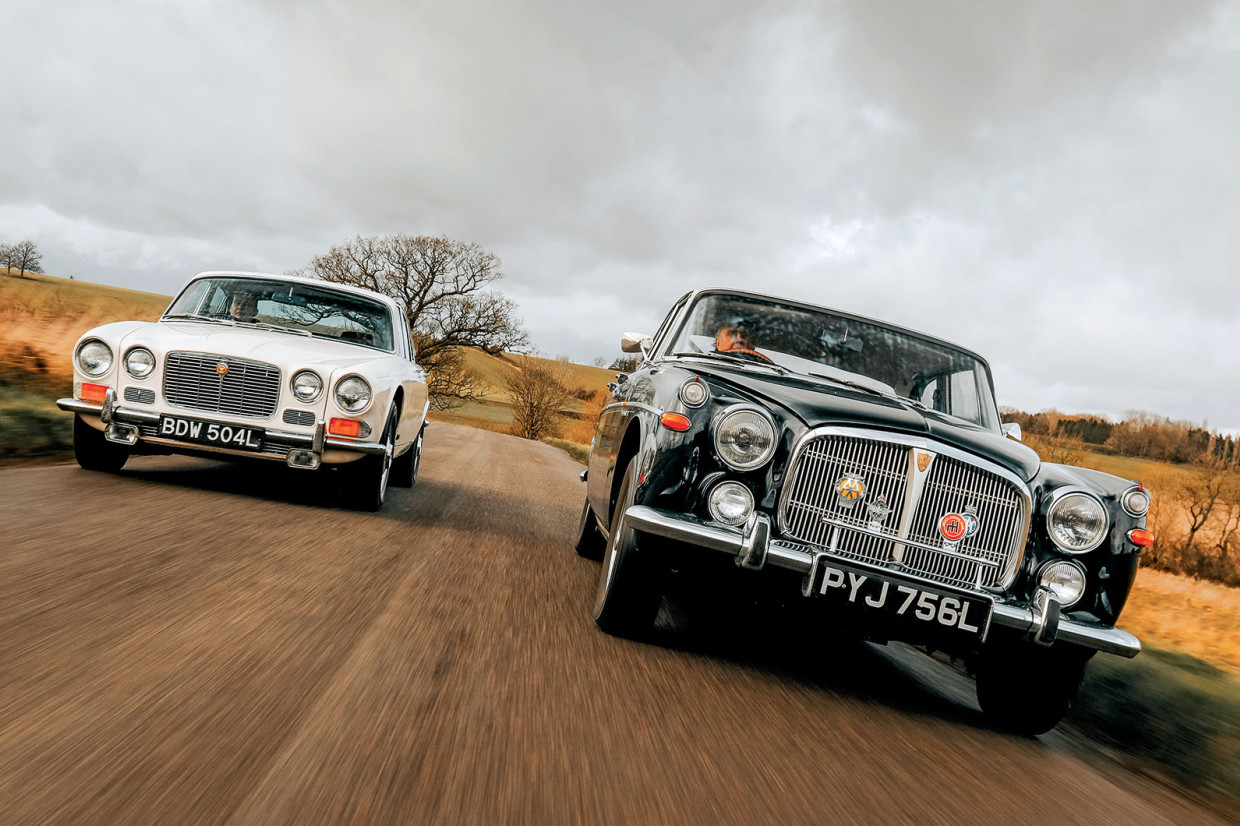
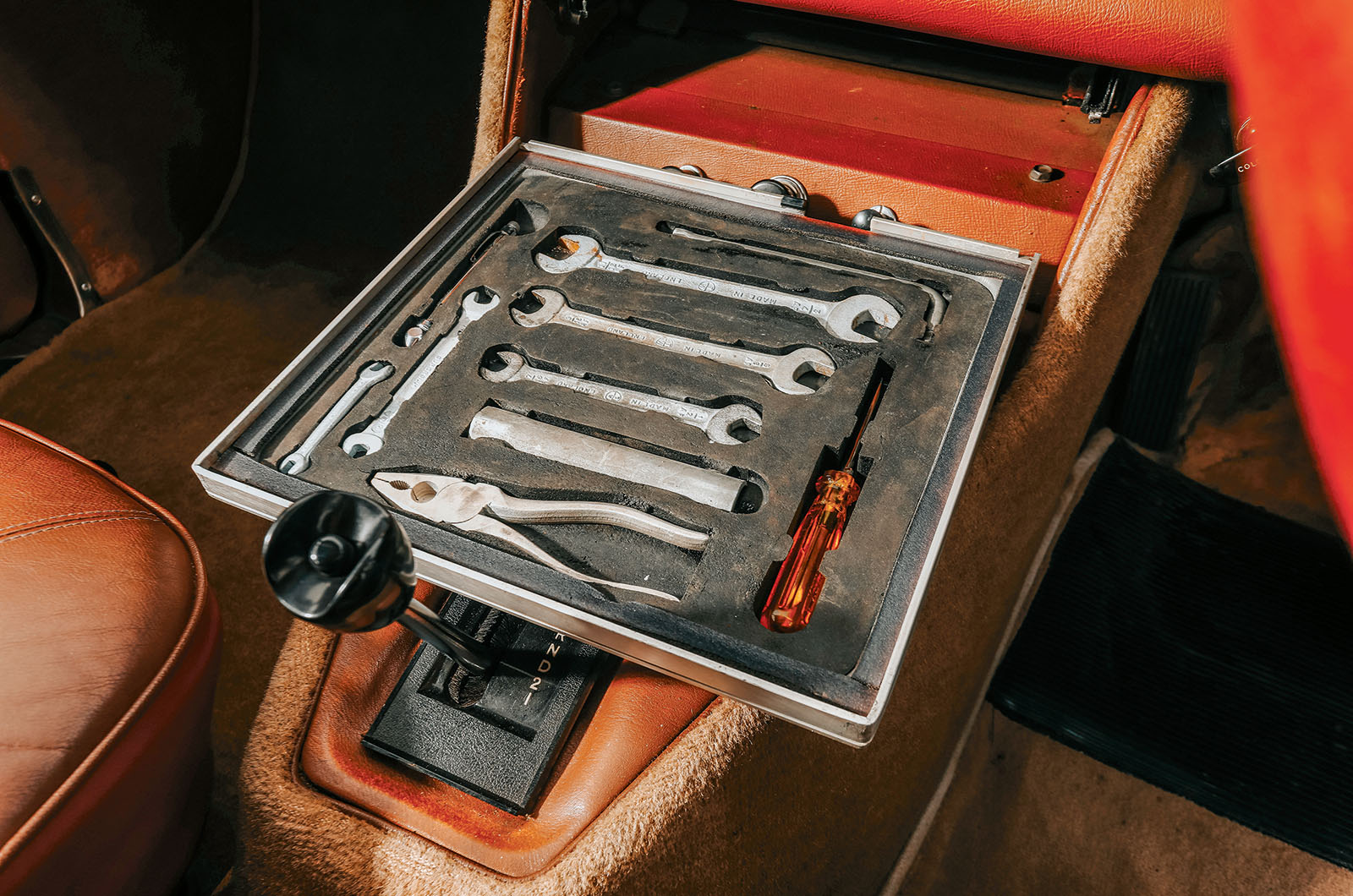
Throttle response is good, and the Borg-Warner ’box slurs away imperceptibly, but you need a positive action to engage kickdown.
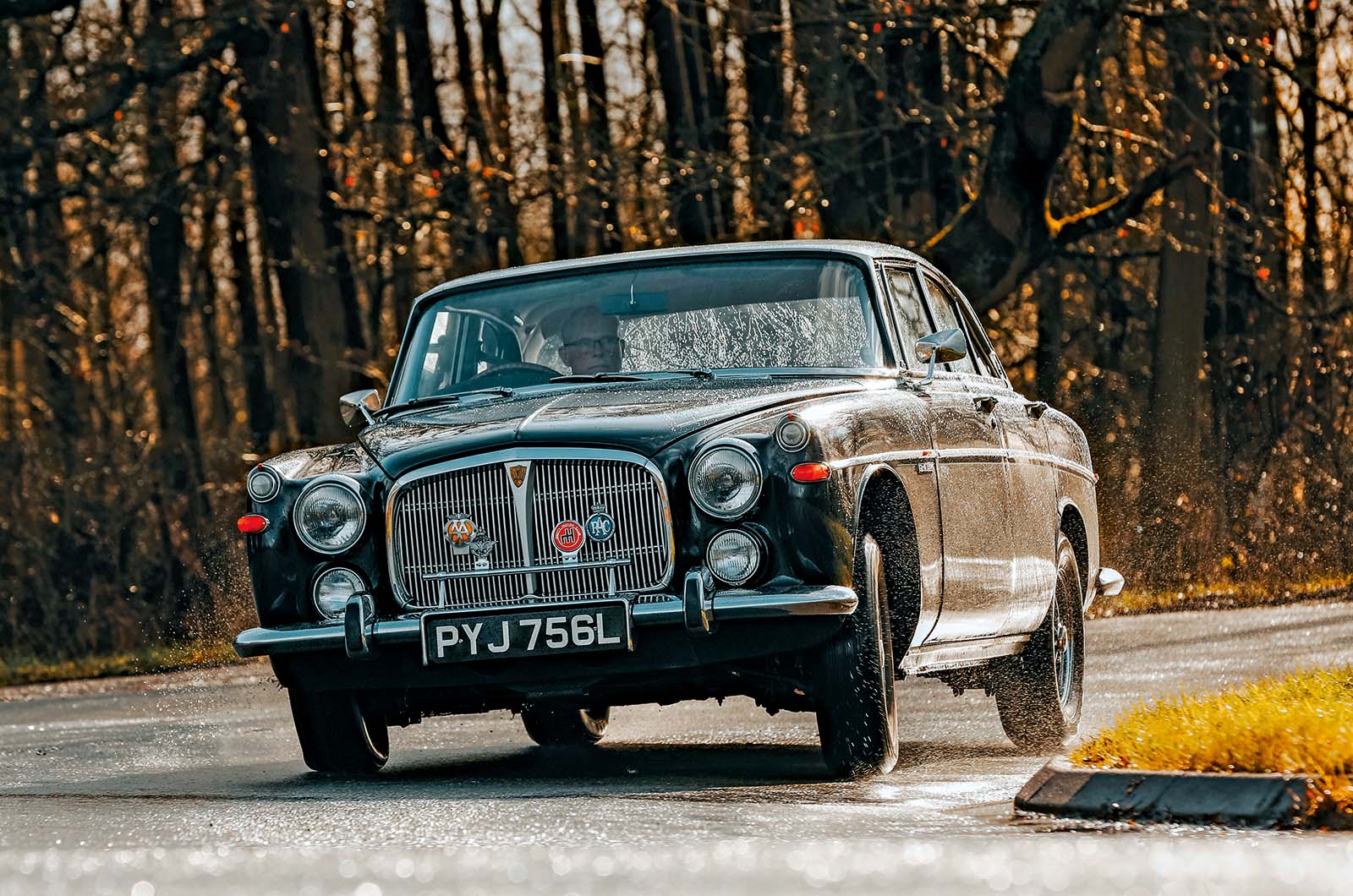
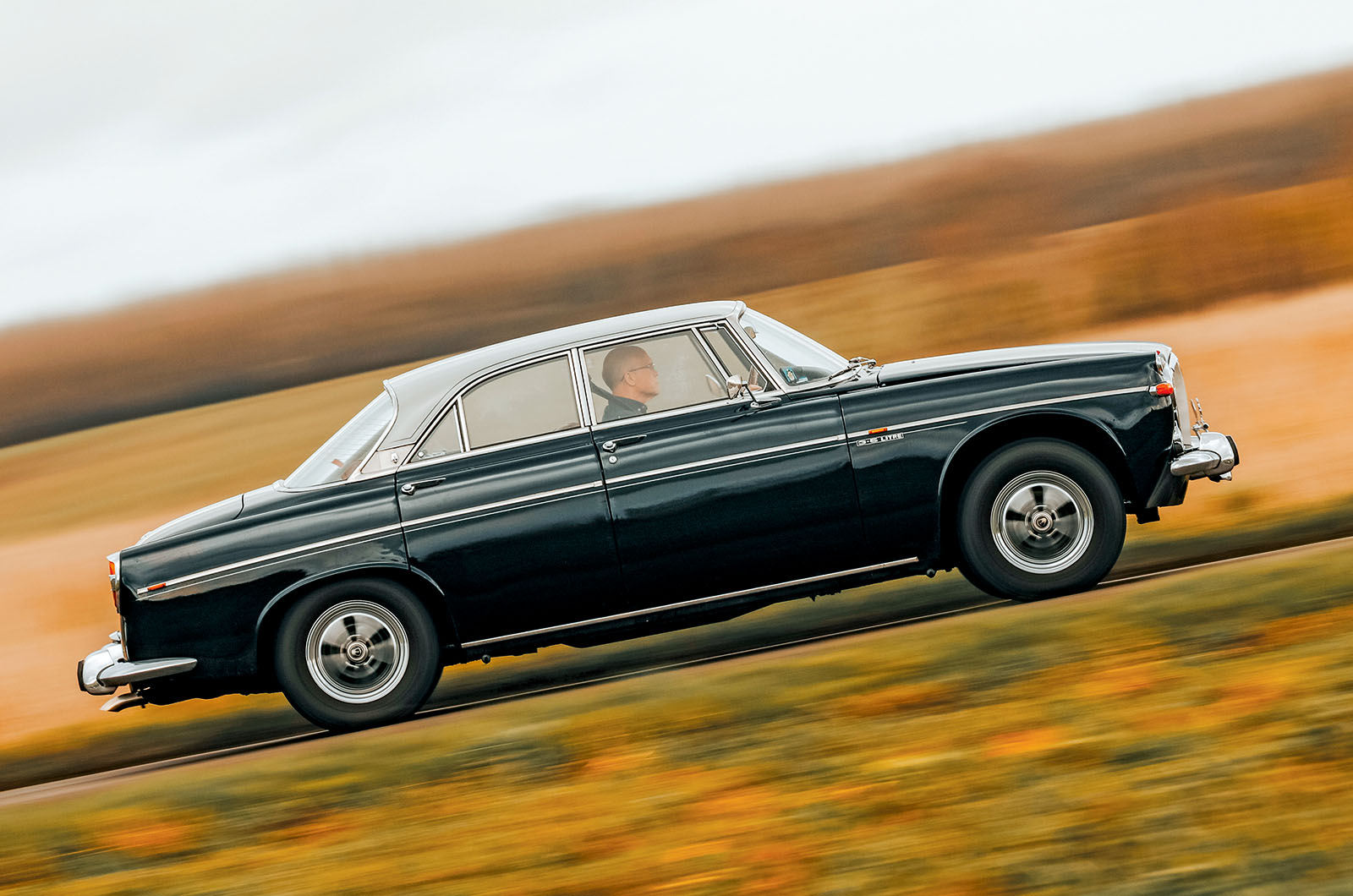
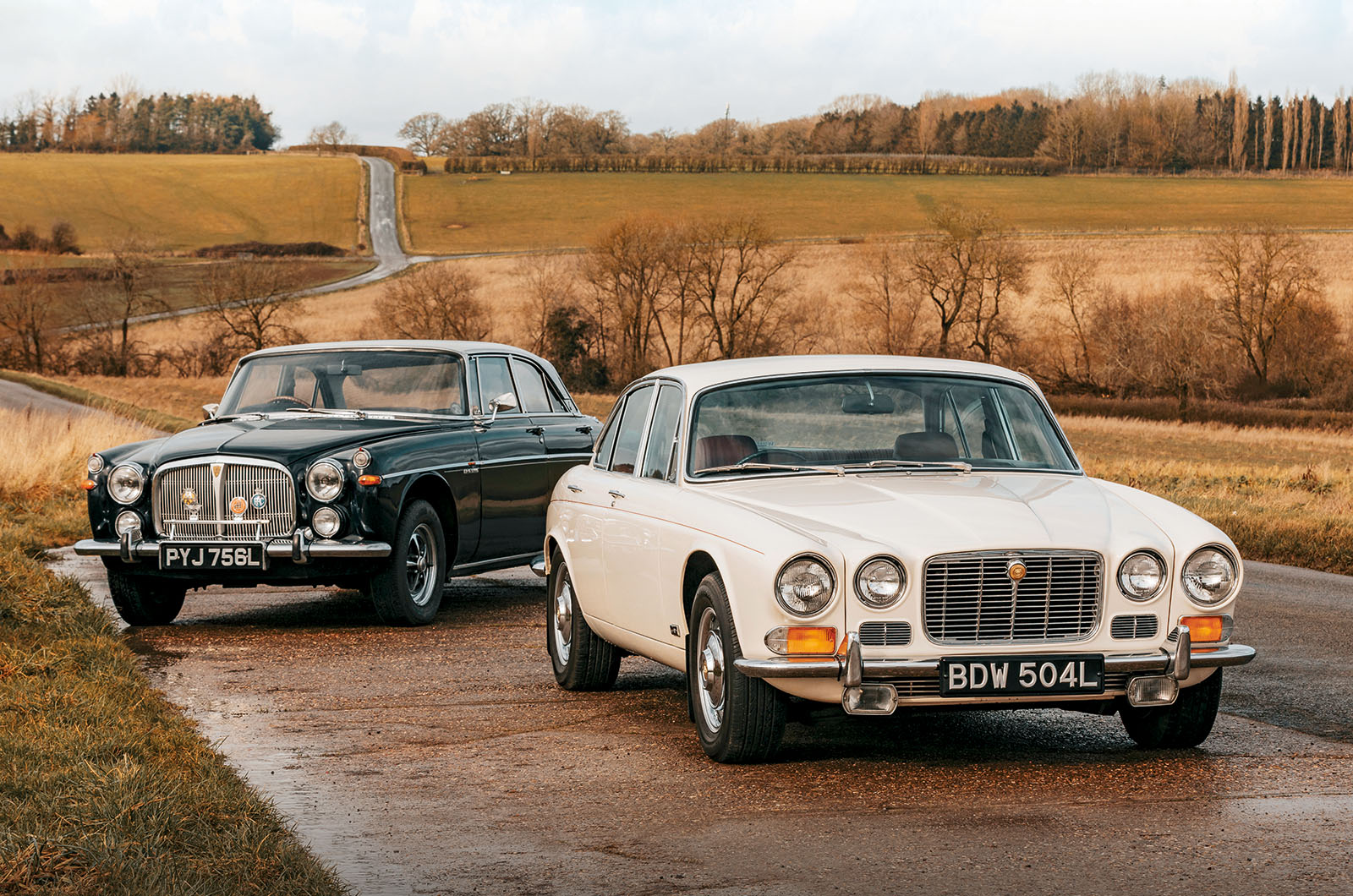
For a near-60-year-old motor, the Rover P5B feels indecently quick across our rural test route.
It’s planted and stable, although uneven surfaces give its rear suspension the quivers and the ride quality feels quite nuggety for a luxobarge.
The steering is resolutely devoid of feedback and has some play just off the straight-ahead, but it has more substance during cornering than the Jaguar XJ6, which actually gives you the confidence to lean hard into bends, prompting mild understeer.
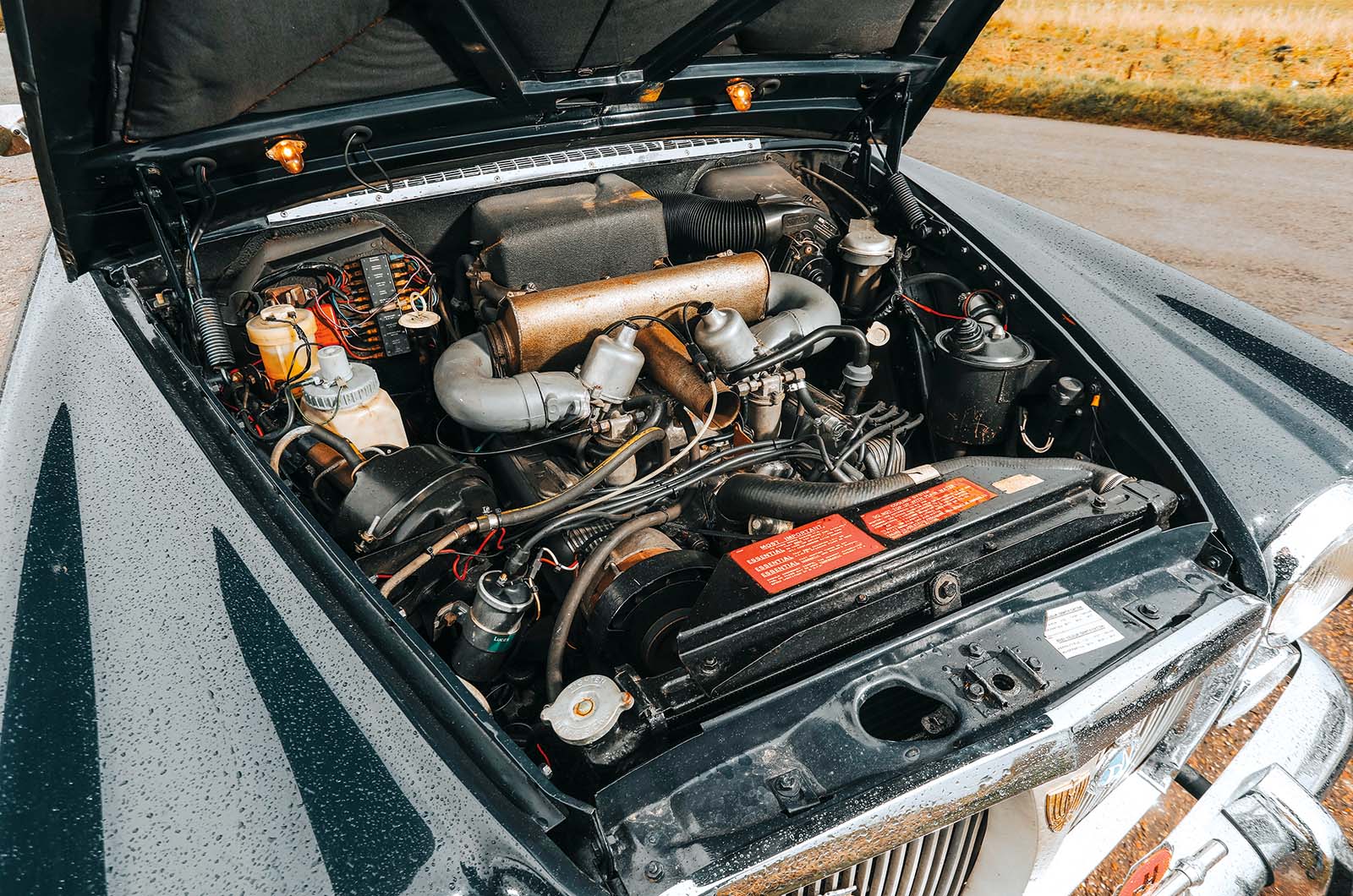
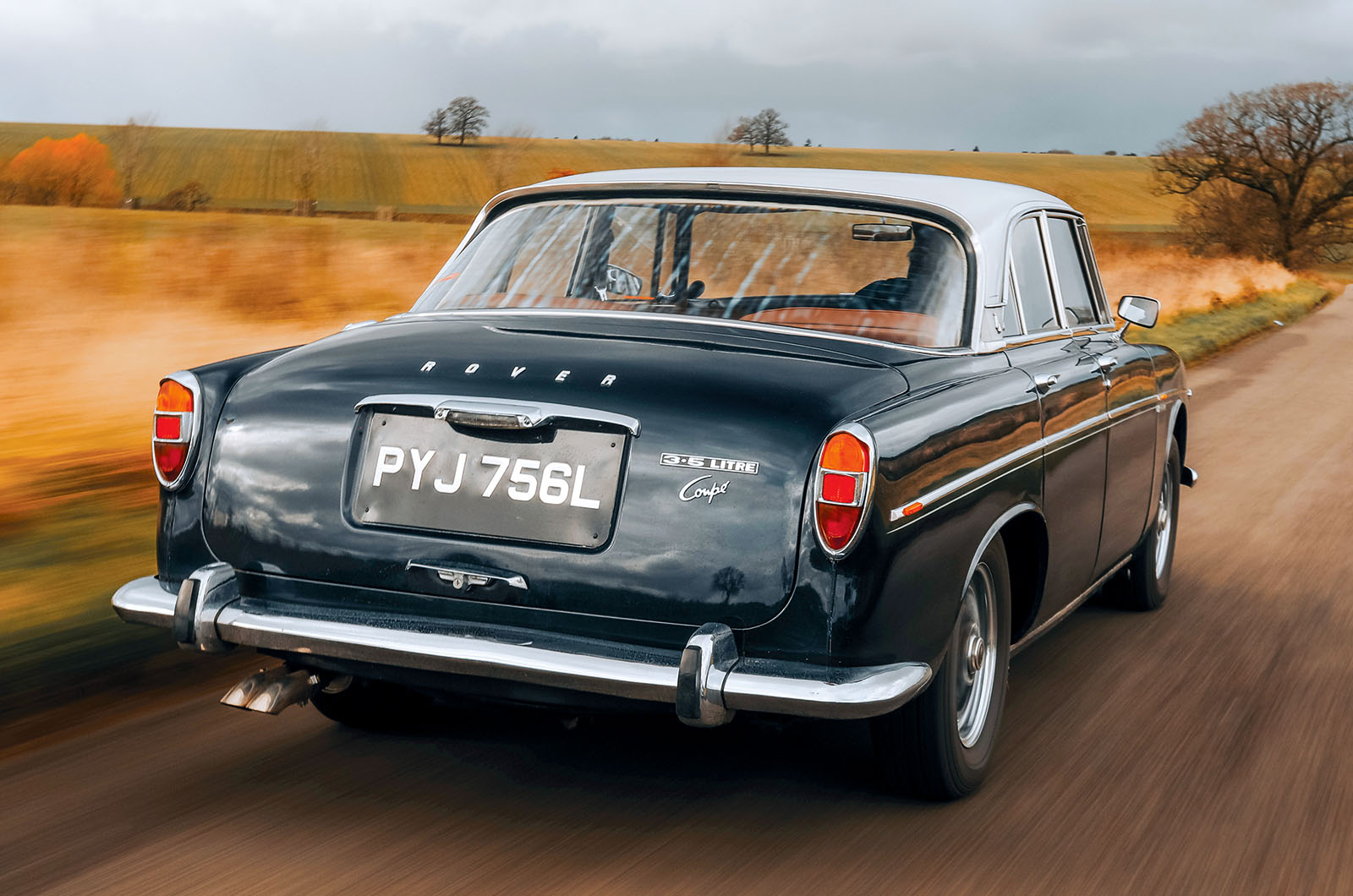
The Rover P5B’s V8 burble adds more than a little character
You would never accuse the Rover of being sporty, but its muted V8 soundtrack adds more than a touch of olde-worlde hot rod to its make-up.
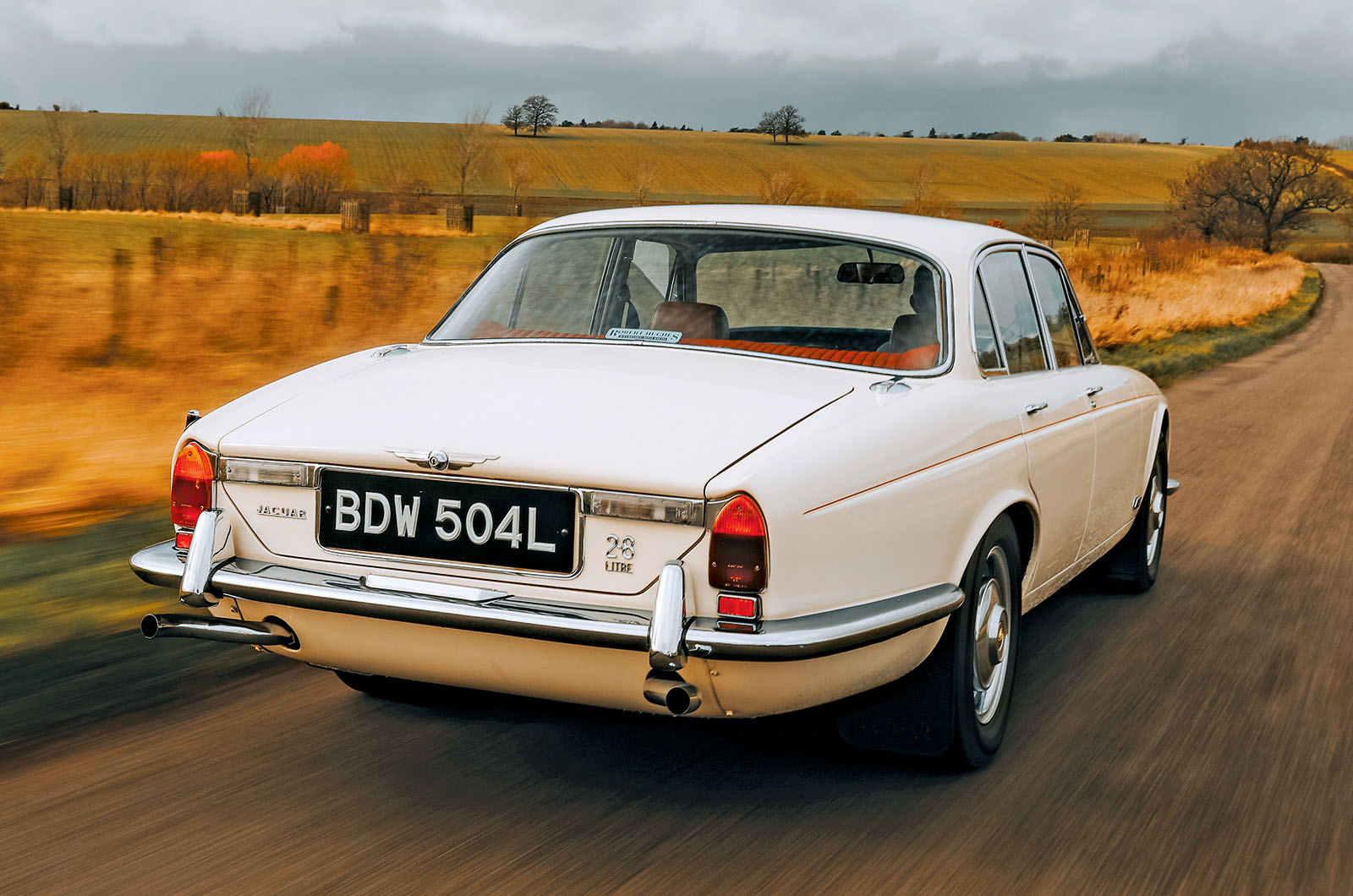
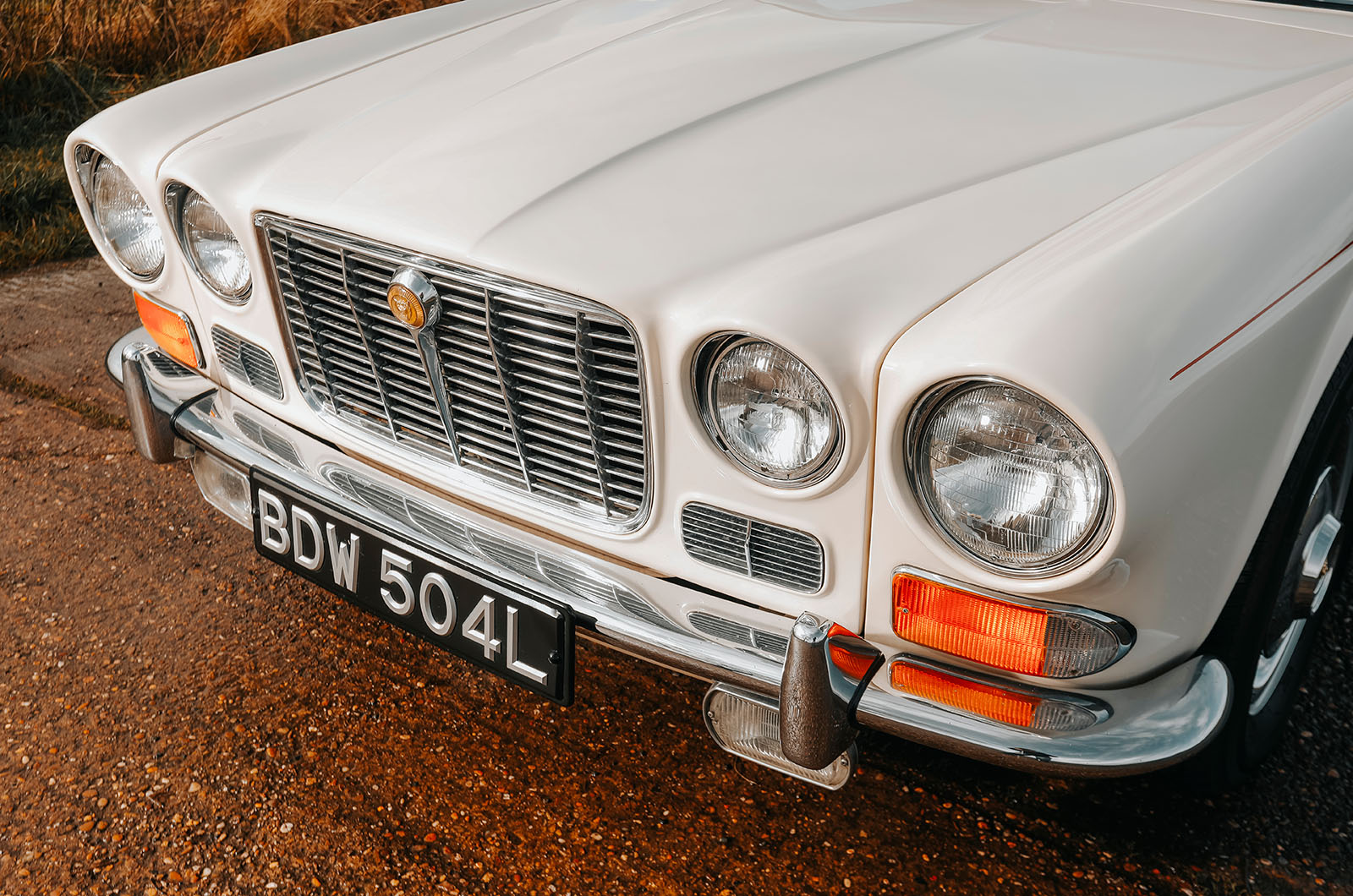
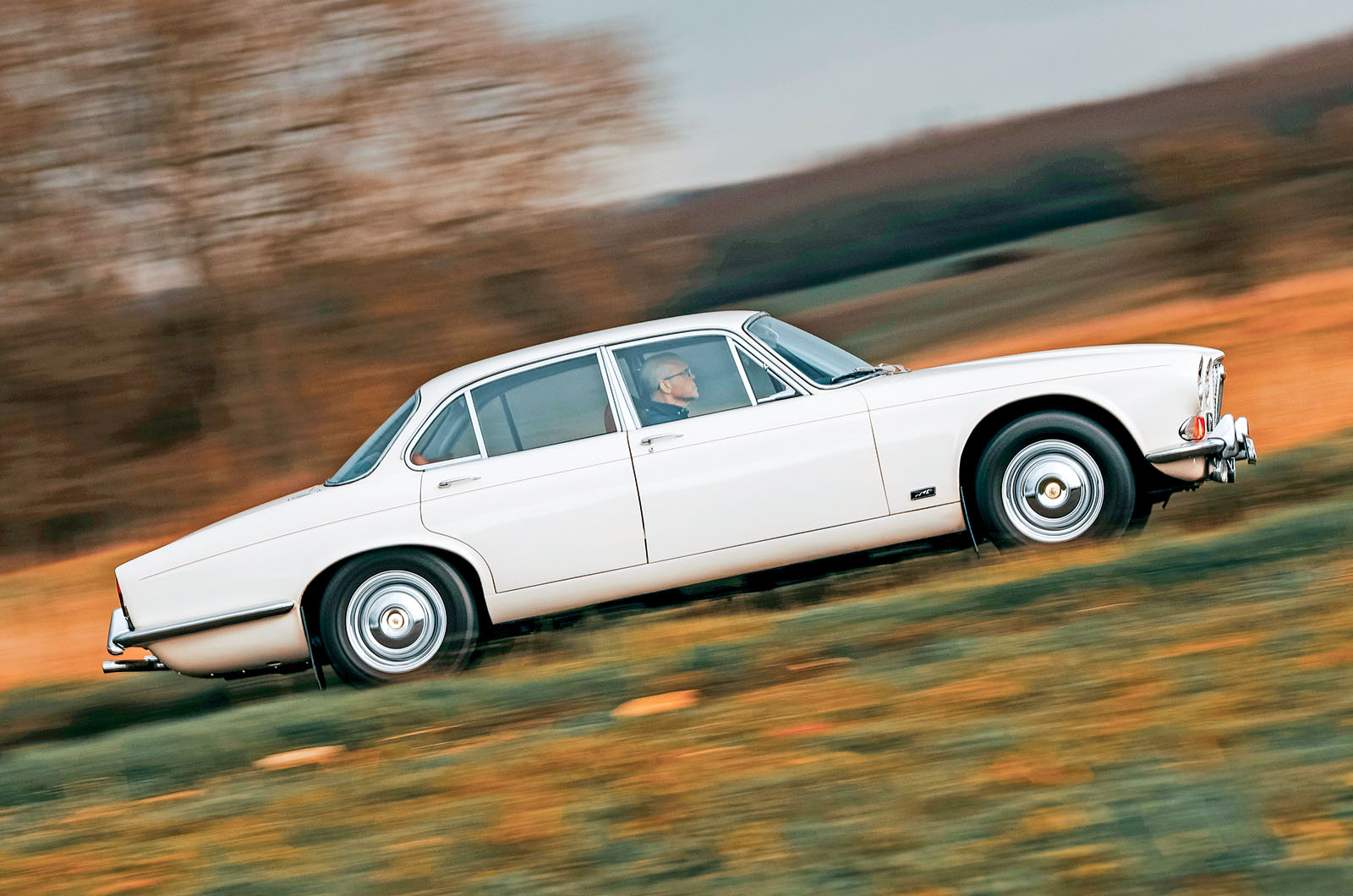
The XJ6 is nothing of the sort. Lower, wider and cleaner of line, it is quite telling that Sir William Lyons’ vision of a sporting luxury saloon not only evolved through three series of the XJ6, but also extended well into this century, only finishing with the X350 of 2002.
A Series I XJ such as this, though, remains the purest exponent of that vision.
Neil Murray has only owned this manual overdrive 2.8 since last year and is clearly not afraid to use it, having covered 400 miles in the 24 hours leading up to our shoot.
More advanced suspension gives the Jaguar XJ6 2.8 the upper hand dynamically
Even so, the car still shows just 16,500 miles, with a good chunk of that accrued by this magazine nearly 30 years ago when senior contributor Mark Hughes drove it to Biarritz for a story in the June 1997 issue.
Like the Rover, this Jaguar XJ6 is very original, having had a repaint in its factory colour some years ago, and its minimal use can be seen and felt as you hunker down in its low-set driver’s seat.
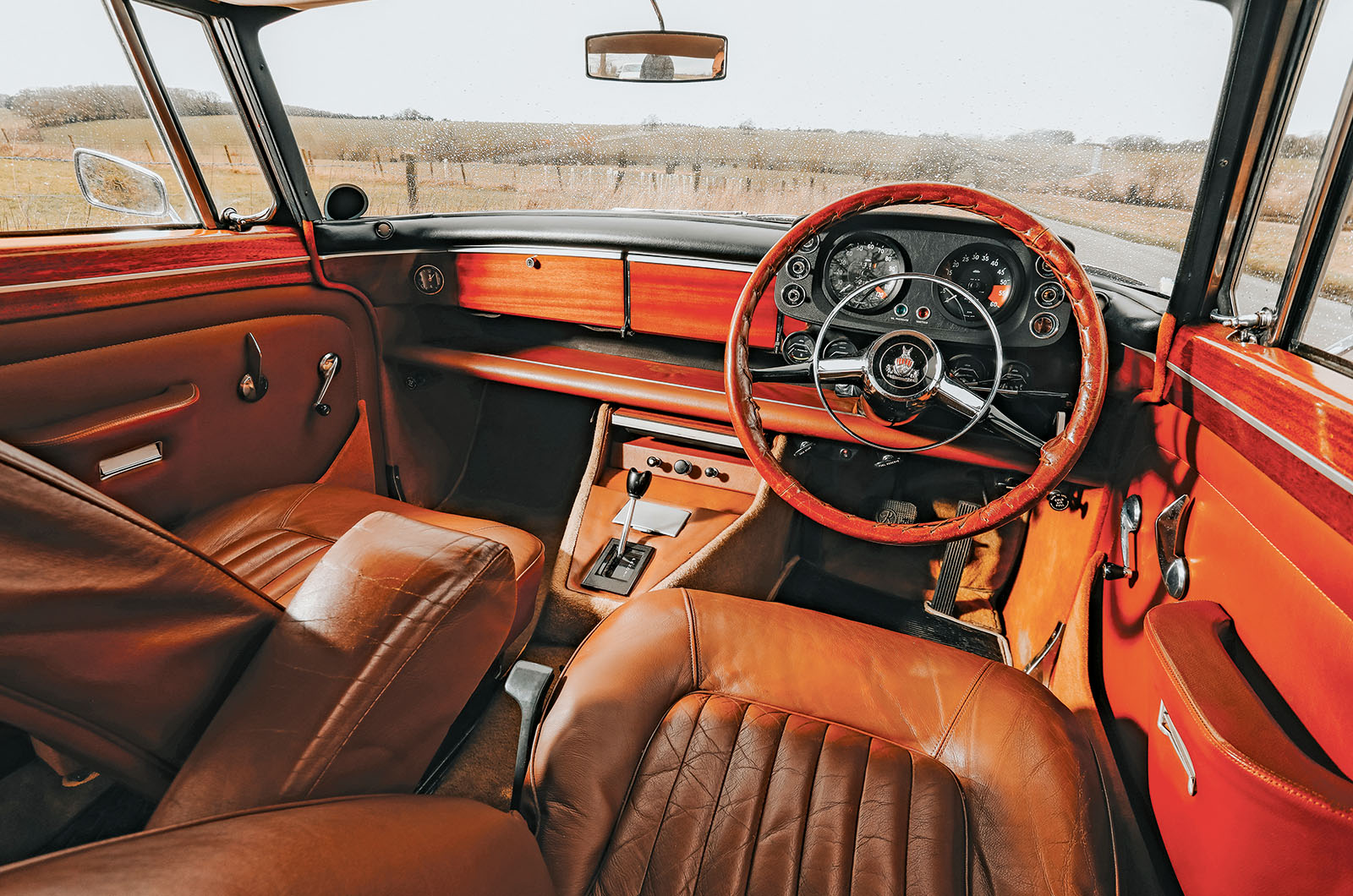
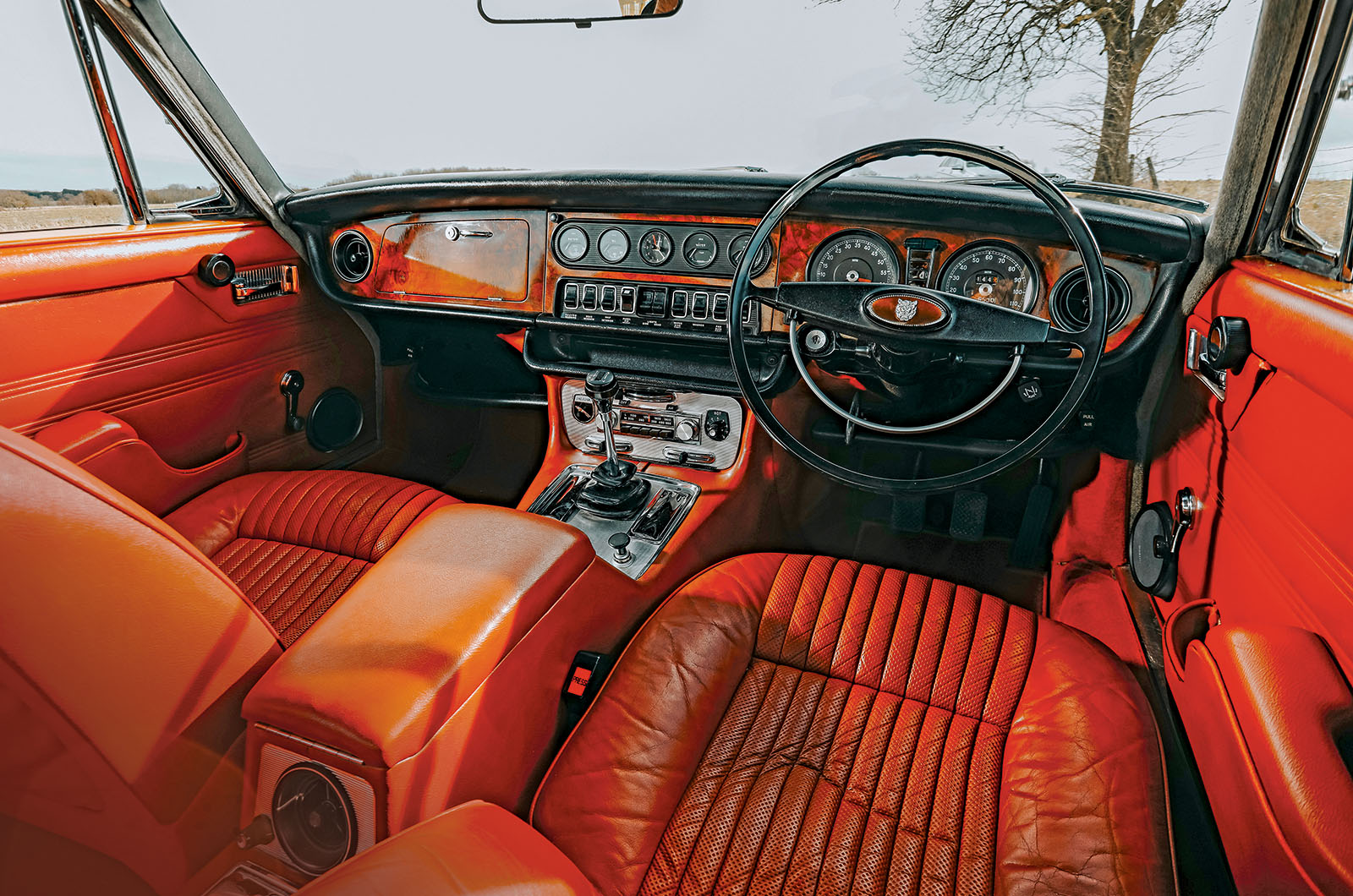
Facing you is a well-ordered dash, with large dials for speed and revs, and a bank of five secondary clocks across the centre, with no fewer than 10 rocker switches below them.
Backlit at night, the fascia looks magnificent.
The Jaguar XJ6’s busy but orderly dashboard packs in the dials
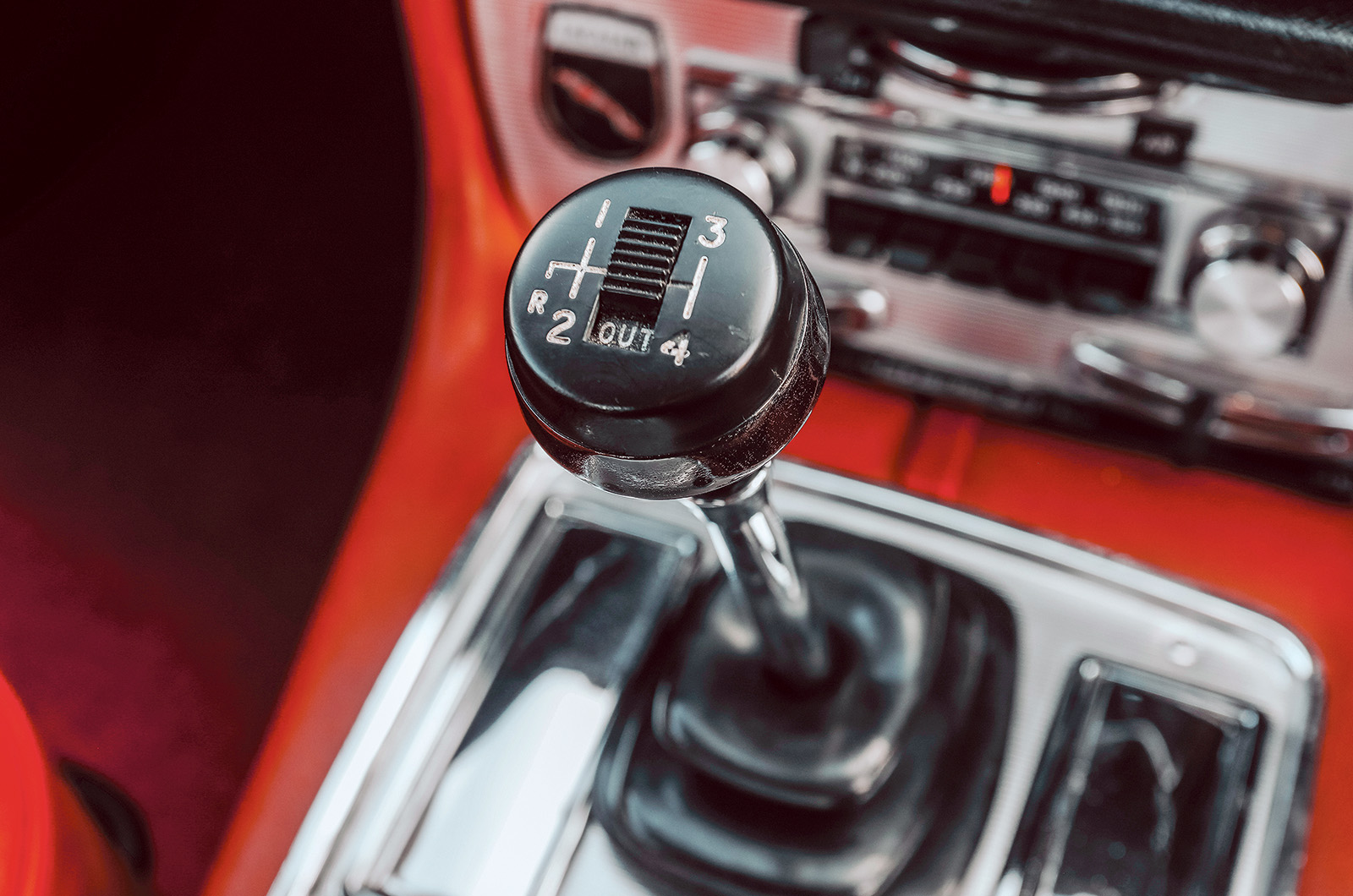
It’s strange to see a manual shifter sprouting from the central tunnel of an XJ, but its chromed lever and chunky gaiter add to the car’s sporting vibe.
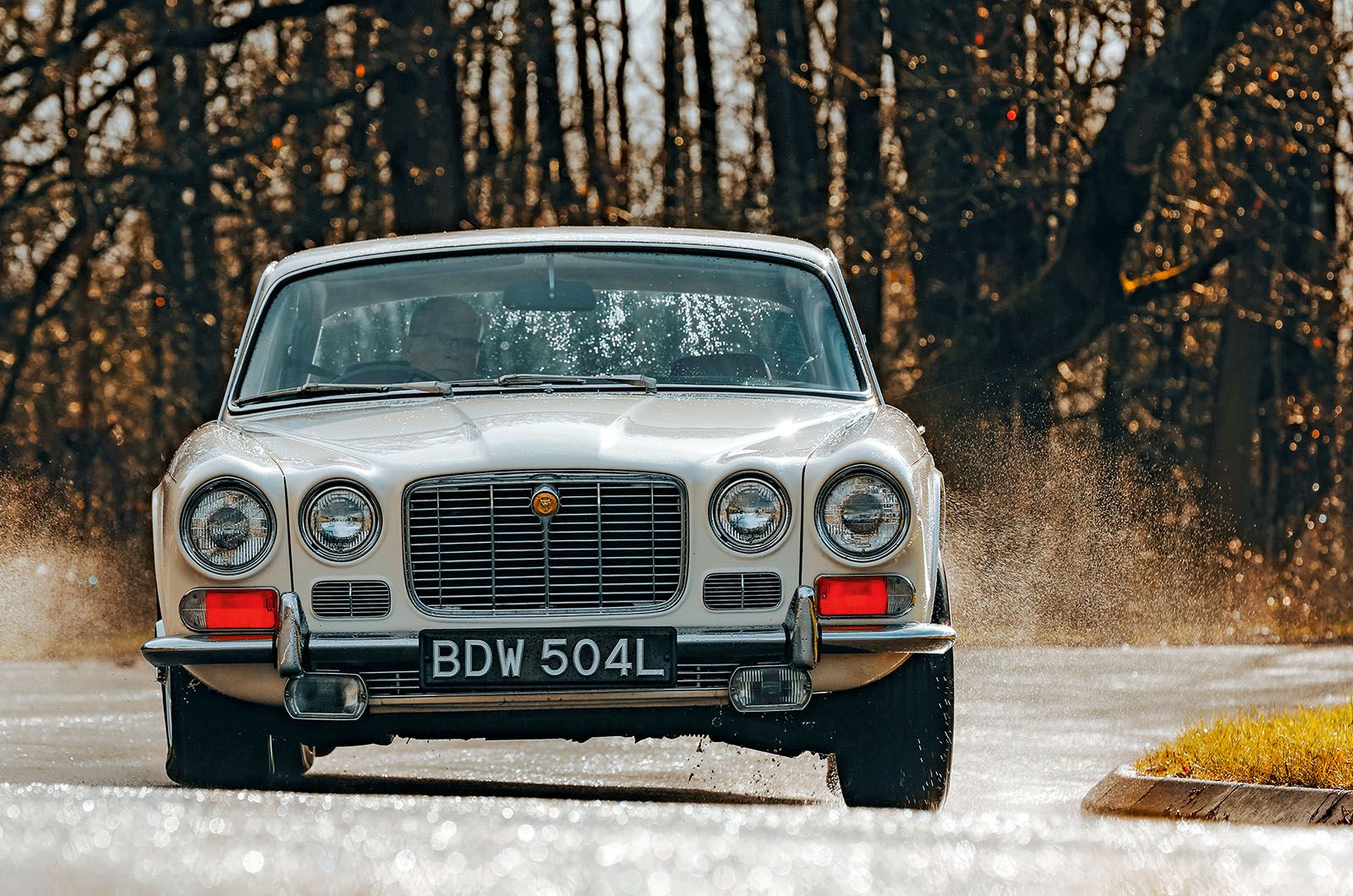
You only have to travel half a mile in the Jaguar to realise how revelatory it must have been in its day.
Objectively, it has the Rover licked in almost every way – steering aside.
The rack is even lighter than the P5’s when parking, but while it gains heft with speed, and is faster-geared and keener to turn in, its featherlight nature means you can’t engage with the car quite as you’d like.
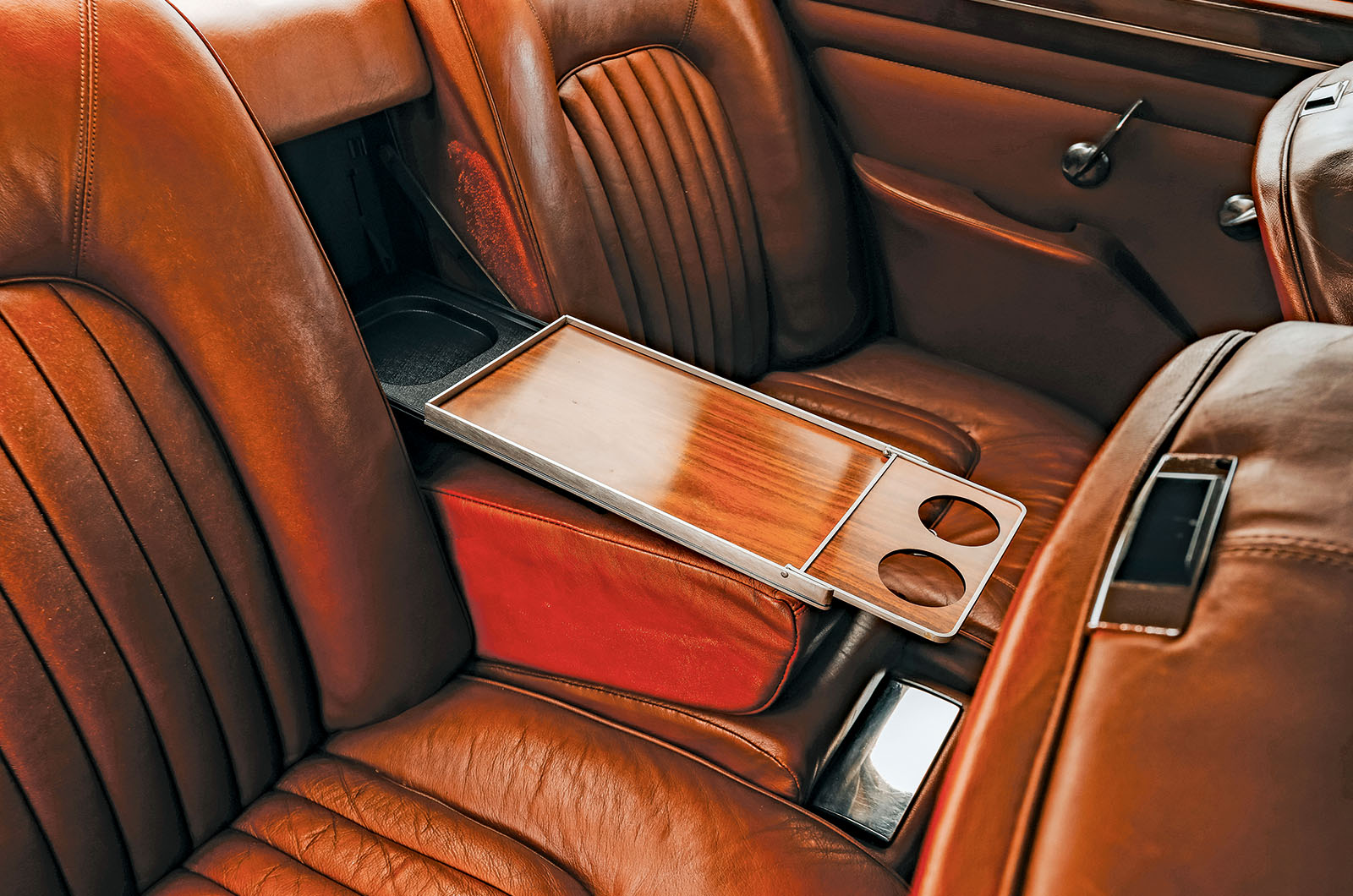
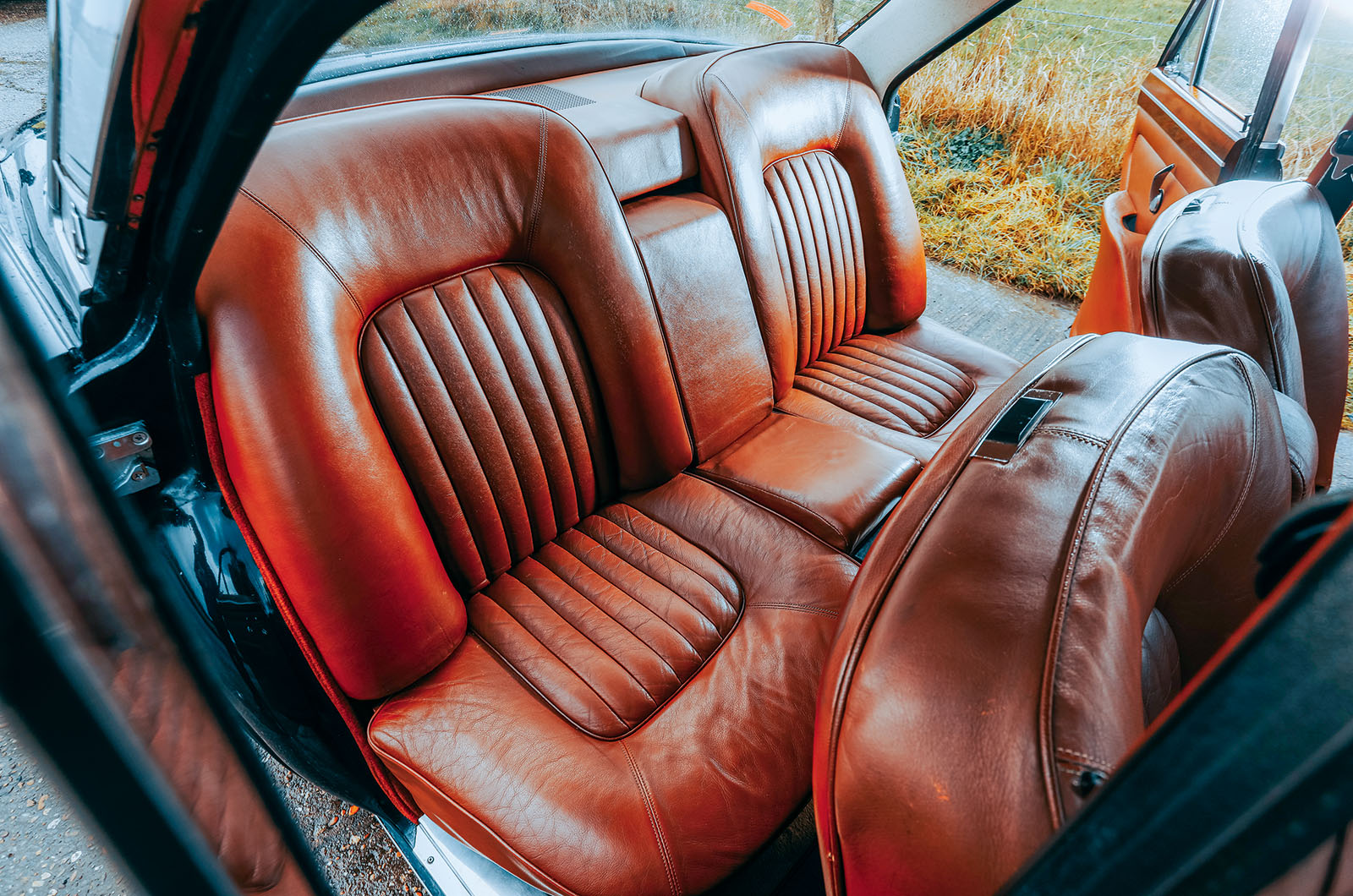
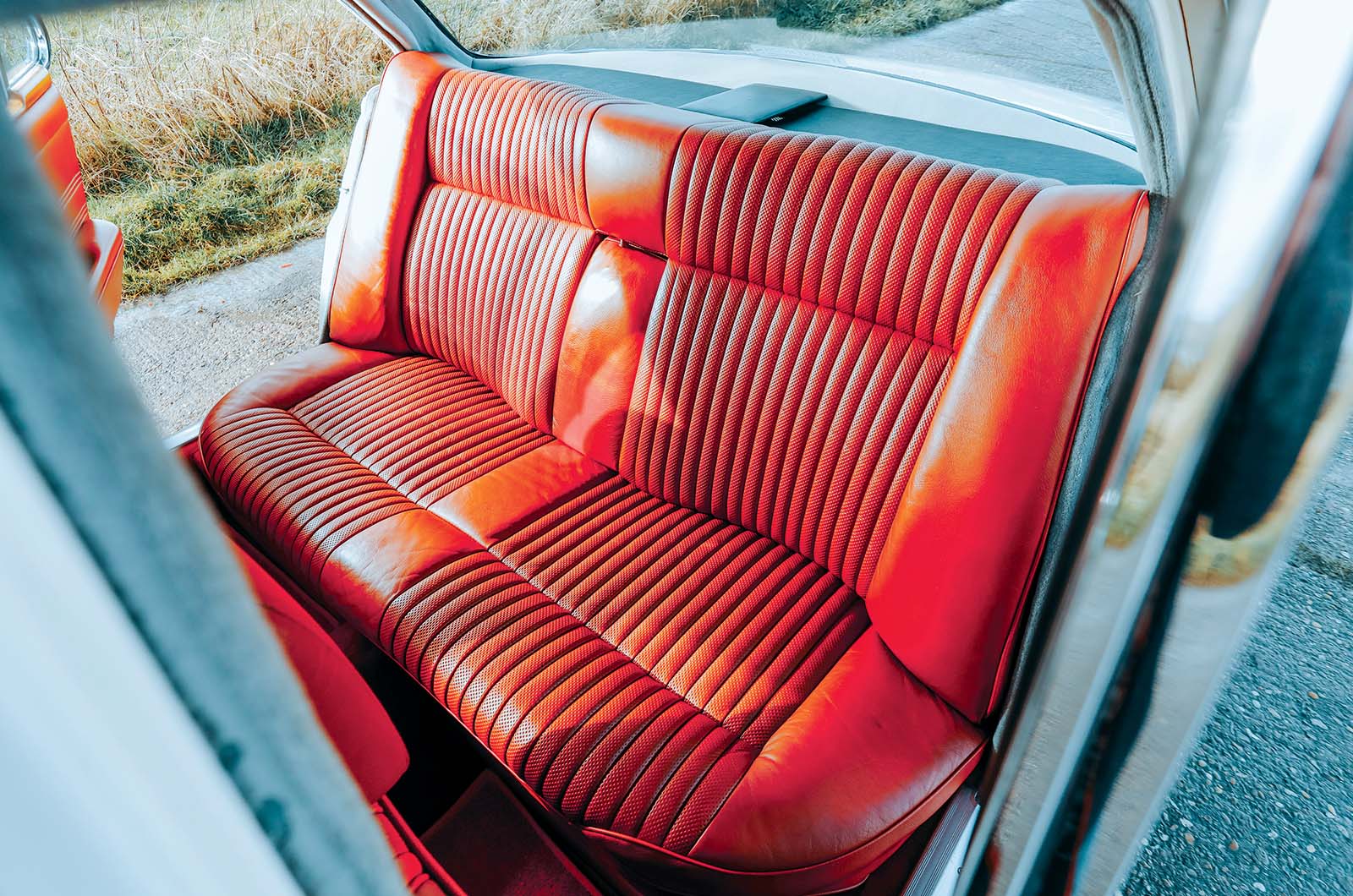
The Jaguar XJ6 2.8 has a sculpted bench in the back
That’s a shame, because the Jag’s dynamic repertoire is immense: it rides superbly, soaking up imperfections with ease and filtering out much of the suspension noise.
It feels stiffer than the Rover, and general levels of wind and road noise are lower.
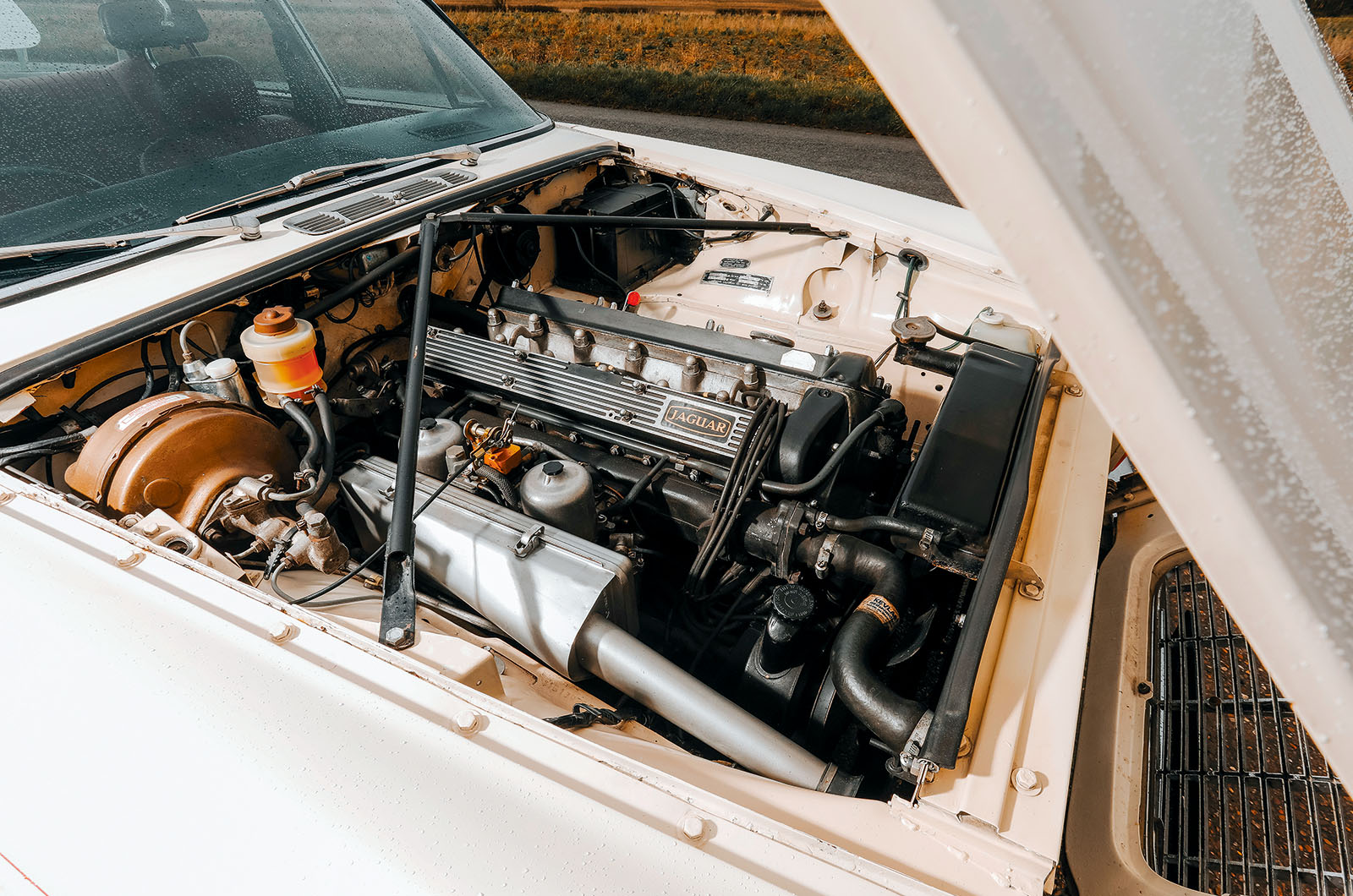
The 2.8-litre ‘six’ is also smoother, if not as characterful as the P5B’s V8 when extended.
The four-speed manual is a delight: quite slow, but positive and well-oiled. There’s some gear whine in the intermediate ratios, but overall it’s a happy union between engine and ’box.
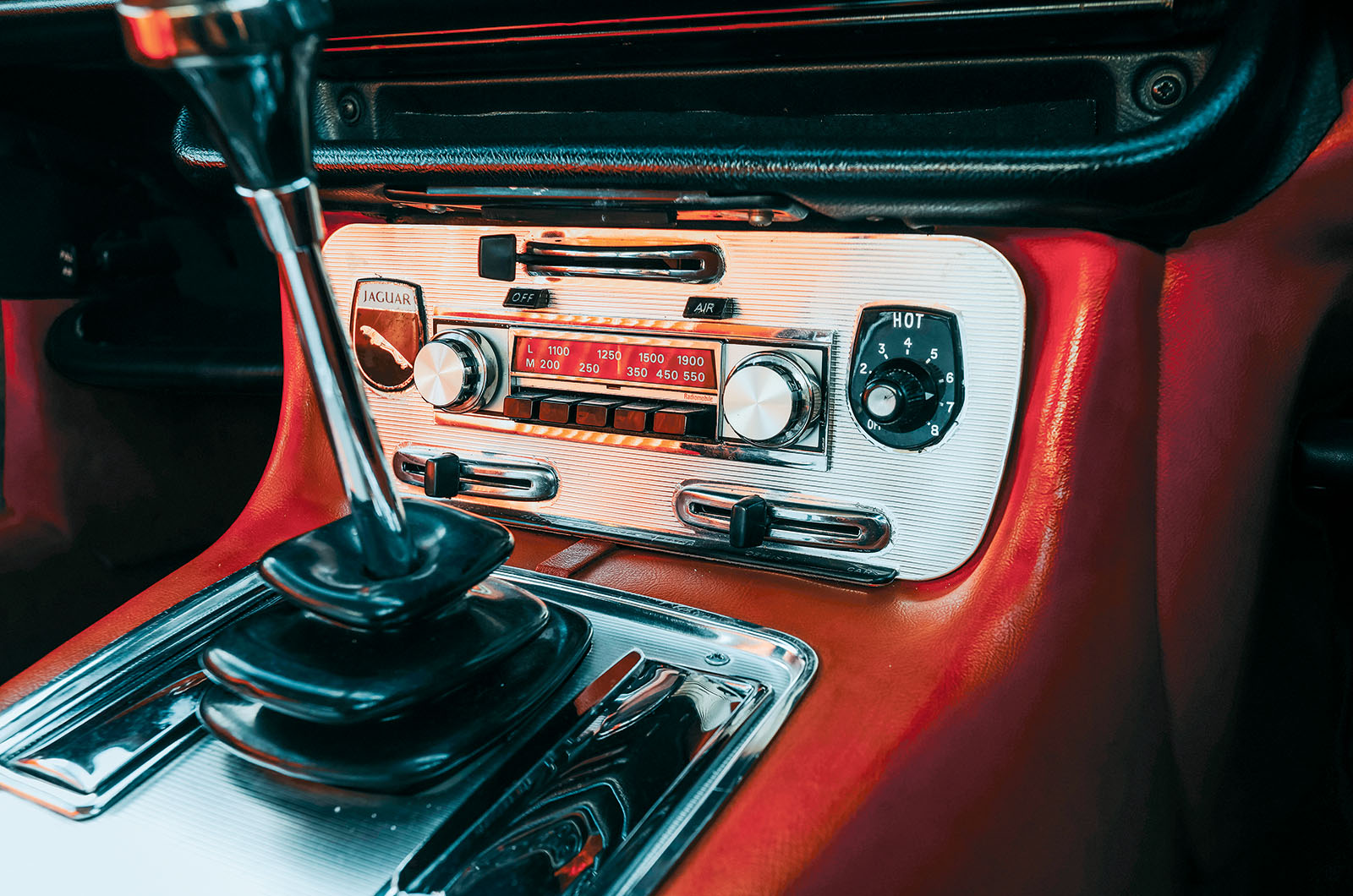
The Jaguar XJ6’s period radio
Accelerate briskly and the Jaguar XJ6 feels as quick as the Rover P5B to 60mph, but this is due to short gearing, not excess torque, which is perhaps this drivetrain’s greatest bugbear: in top it barely manages 17mph per 1000rpm.
Even with the overdrive engaged, the engine will be spinning at 3700rpm at 60mph.
None of this spoils the experience on a fast, twisty road, though: it feels biddable and composed, with hardly a trace of understeer.
I’d wager that many a contemporary sports car would have struggled to keep up with a well-driven XJ back in the day.
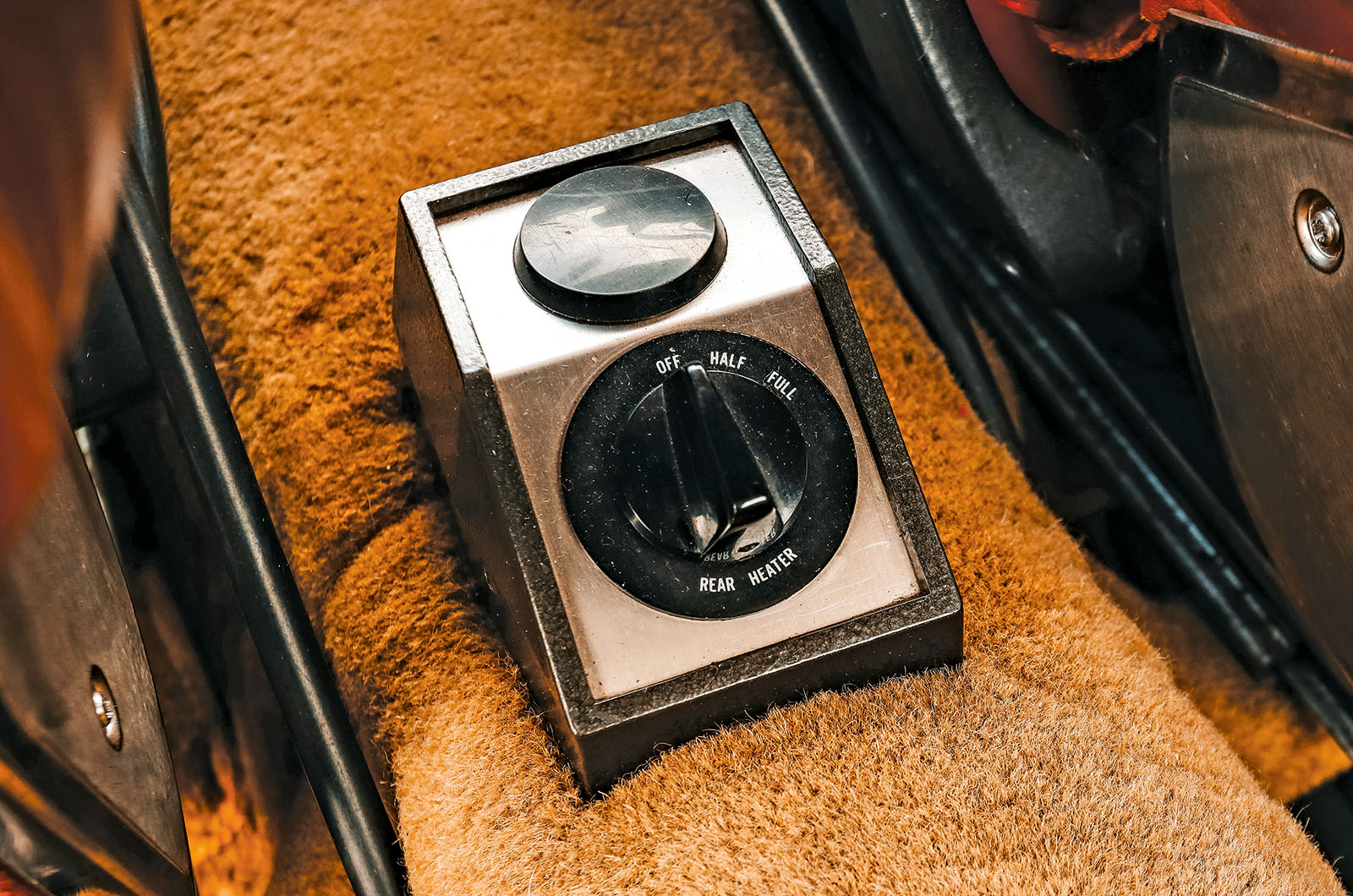
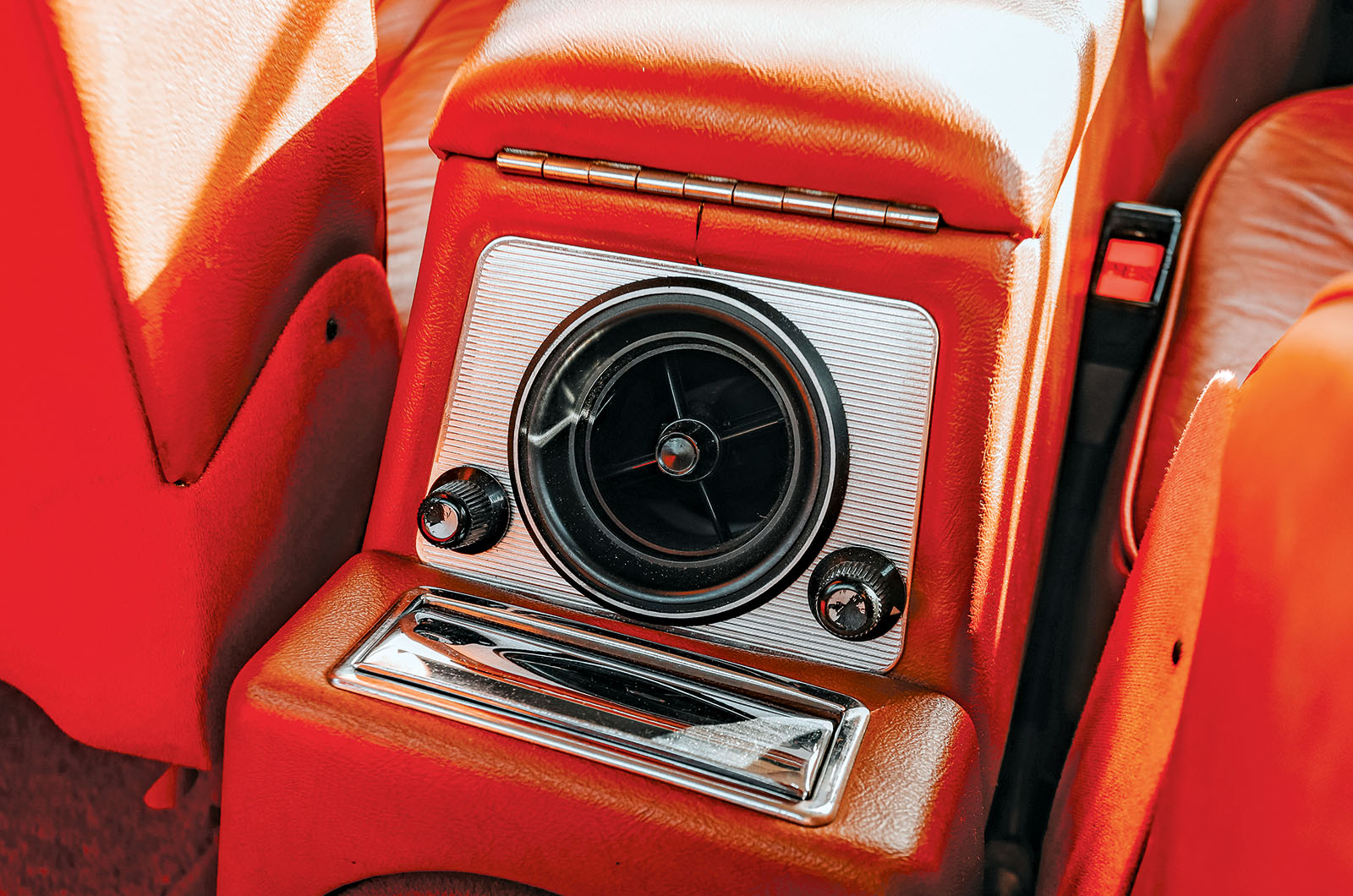
The Jaguar XJ6’s simple rear ventilation controls
Many years ago I owned both of these cars at the same time, although my Series I XJ was a 12, not a 6, and my 3.5 Litre Coupé was more Isopon P38 than Rover P5.
But what drew me to them as a 20-year-old still holds true.
The Jaguar XJ, regardless of engine size, was one of the best-resolved driver’s saloons of its day and remained so for many years after.
The Jaguar XJ6 2.8 has a manual shifter with an overdrive switch
I wouldn’t argue with anyone who felt that its design – aesthetically and functionally – was superior in every way to the P5B’s.
But just occasionally you’re entitled to make irrational choices.
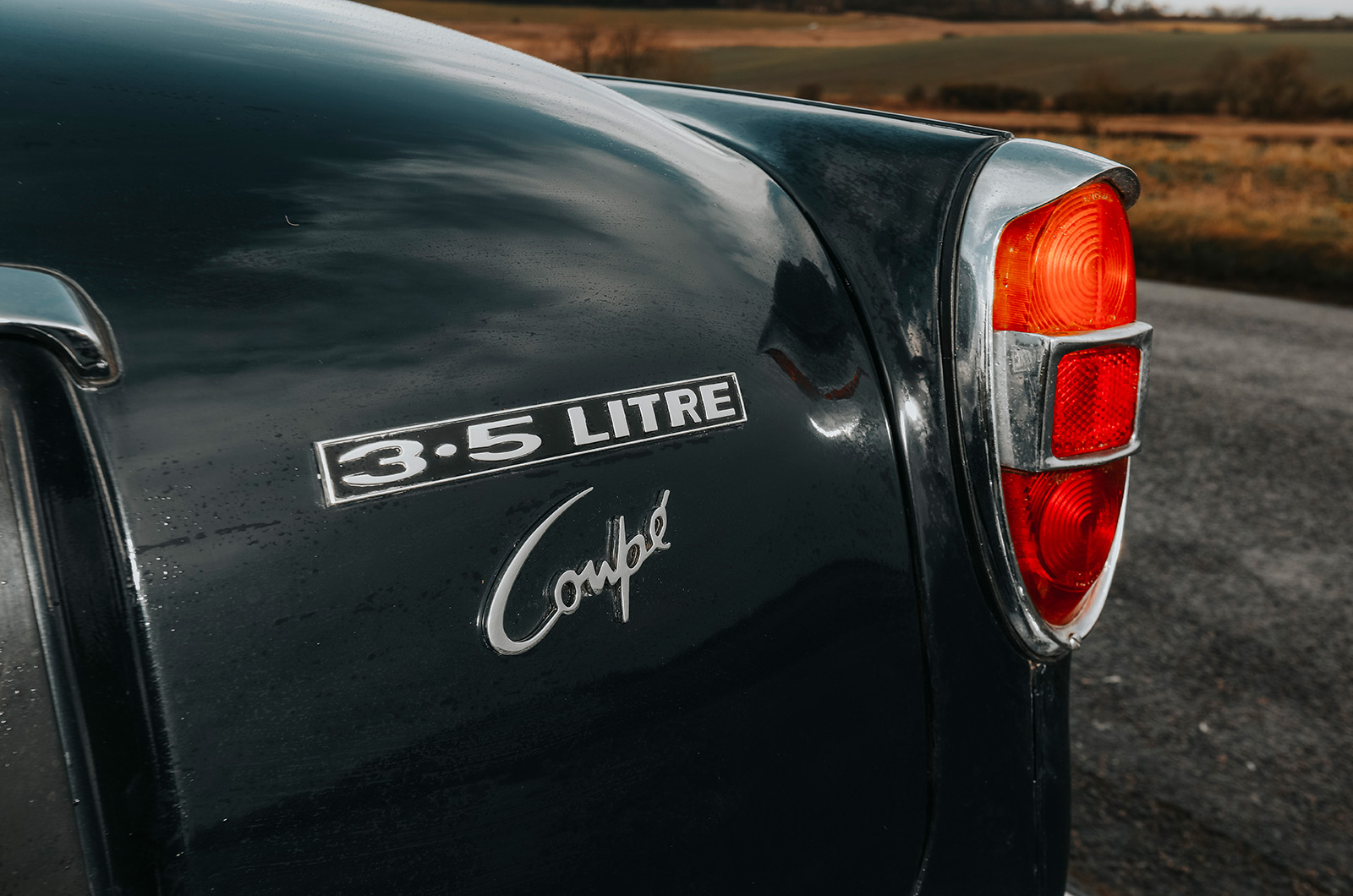
That I am still as entranced by the Rover 3.5 Litre Coupé’s shape, its punchy V8 and the majestic way it drives down the road all these years later means it has been added to my bucket list of classics to buy sooner rather than later.
Images: Tony Baker
Thanks to: Robert Hughes; British Motor Museum
Factfiles
Rover 3.5 Litre Coupé
- Sold/number built 1967-’73/9099
- Construction steel monocoque
- Engine all-alloy, ohv 3528cc 90° V8, twin SU carburettors
- Max power 151bhp @ 5200rpm
- Max torque 201lb ft @ 2750rpm
- Transmission three-speed Borg-Warner Type 35 automatic, RWD
- Suspension: front independent, by wishbones, torsion bars, anti-roll bar rear live axle, progressive-rate semi-elliptic leaf springs; telescopic dampers f/r
- Steering power-assisted recirculating ball
- Brakes discs front, drums rear, with servo
- Length 15ft 7in (4750mm)
- Width 5ft 10in (1791mm)
- Height 4ft 10in (1473mm)
- Wheelbase 9ft 2in (2807mm)
- Weight 3500lb (1587kg)
- 0-60mph 10.7 secs
- Top speed 112mph
- Mpg 17
- Price new £2853
- Price now £15-40,000*
Jaguar XJ6 2.8
- Sold/number built 1968-’73/98,527 (all SIs)
- Construction steel monocoque
- Engine iron-block, alloy-head, dohc 2792cc straight-six, twin SU carburettors
- Max power 180bhp @ 5150rpm
- Max torque 150lb ft @ 4250rpm
- Transmission four-speed manual, optional overdrive, or three-speed automatic, RWD
- Suspension independent, at front by wishbones, coil springs, telescopic dampers, anti-roll bar rear rubber-mounted subframe, lower wishbones, radius arms, twin coil spring/damper units
- Steering power-assisted rack and pinion
- Brakes discs, with servo
- Length 15ft 9½in (4813mm)
- Width 5ft 9¾in (1770mm)
- Height 4ft 6in (1371mm)
- Wheelbase 9ft 4¾in (2865mm)
- Weight 3389lb (1537kg)
- 0-60mph 11 secs
- Top speed 120mph
- Mpg 15-18 (est)
- Price new £2832 (1972, manual o/d)
- Price now £8-20,000*
*Prices correct at date of original publication
Enjoy more of the world’s best classic car content every month when you subscribe to C&SC – get our latest deals here
READ MORE
Buyer’s guide: Jaguar XJ6/XJ12
Rover P5B: yes, Prime Minister
Jaguar Mk2 2.4 vs BMW 1800 vs Alfa Romeo 1300 TI: Continental challenge
Simon Hucknall
Simon Hucknall is a senior contributor to Classic & Sports Car