Sławomir Poros is a young Polish blogger with a taste for old cars, particularly pre-war machinery. That makes him a rare bird among his compatriots.
Even in a country of petrolheads, with proud motoring and engineering traditions, there appears to be comparatively little public awareness of – or appreciation for – Poland’s automotive achievements in the pre-Communist era.
“People love the cars from the Soviet period,” he says, “but I’m more on the pre-war side, whereas my colleagues are more post-war.”
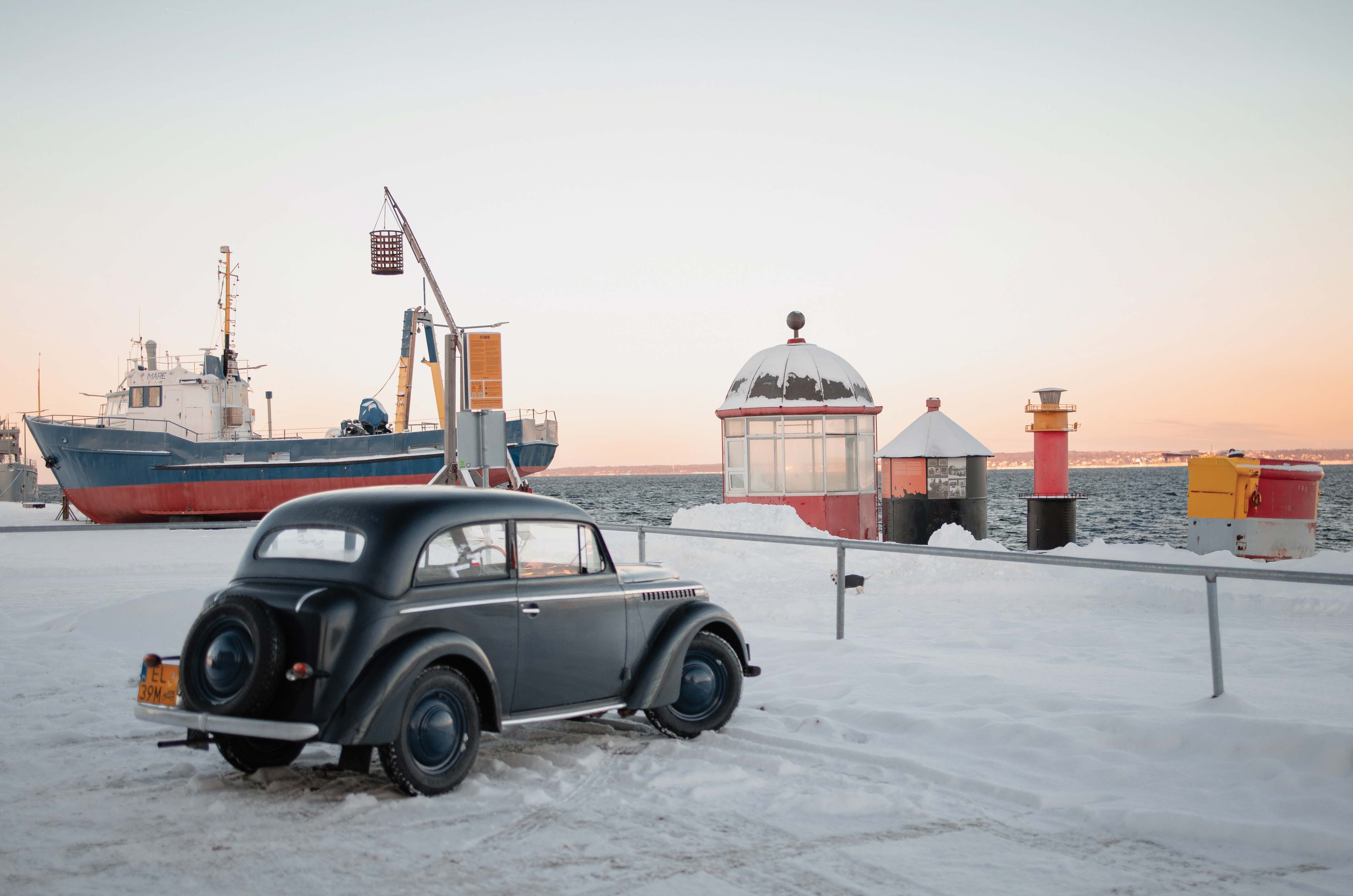
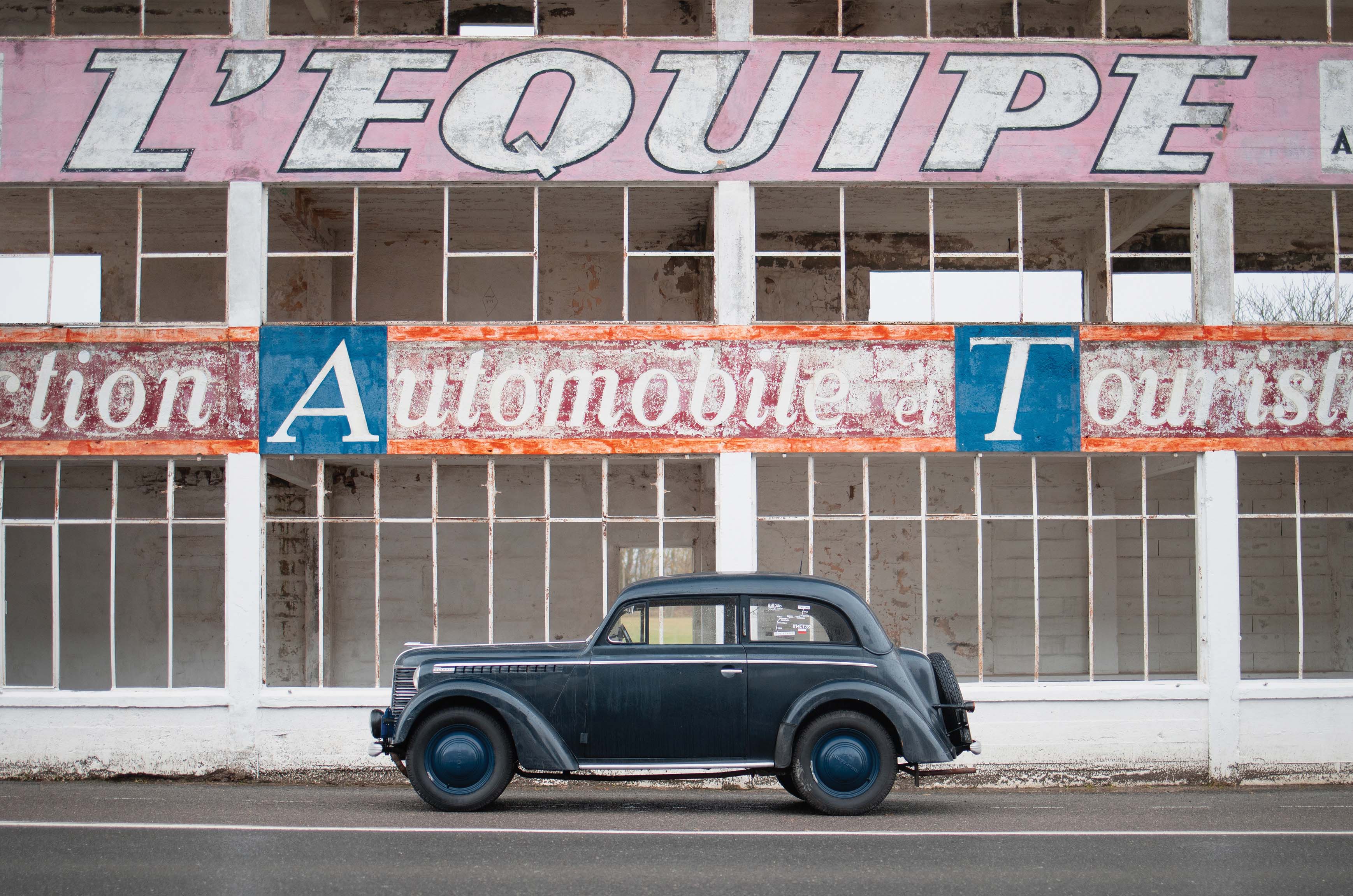
The Opel Olympia at the port of Tallinn, Estonia, the day before departure
Sławomir has been working as hard as anyone to change perceptions of cars from the 1930s and before in Poland.
Since 2017, his automotive website, Tejsted.pl, has been not only spreading the word about pre-’39 vehicles, but also promoting the stories and characters that inevitably go along with them.
As one of the organisers of the Śniadanie & Gablota breakfast meetings, held in the eight largest Polish cities (with an additional event in Berlin), Sławomir and his friends are raising awareness of Polish motoring history.
But the lack of interest in the pre-war era among local enthusiasts remains a frustration.
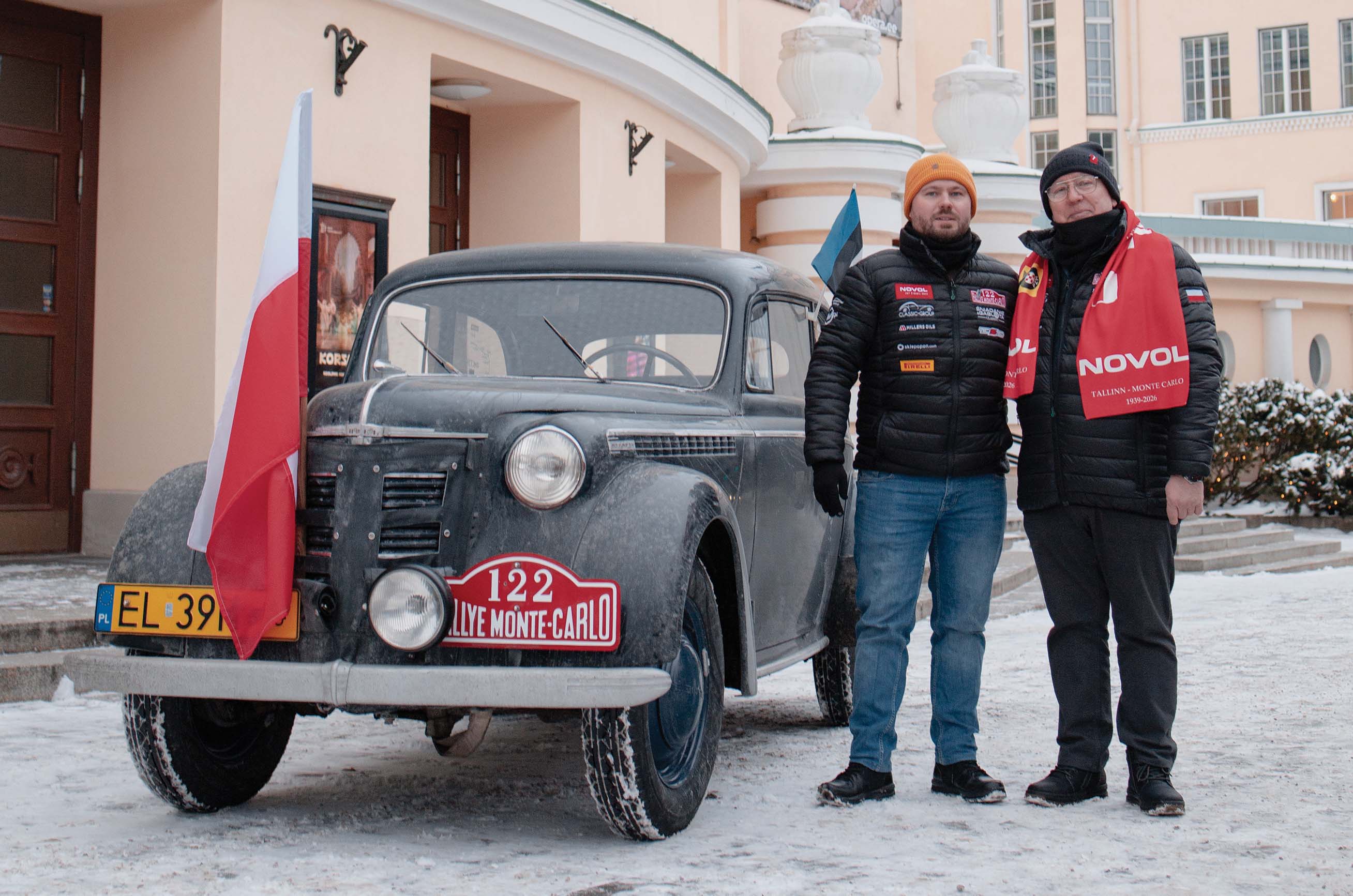
The Opel Olympia, Sławomir Poros (left) and Poros Snr (right) at the start of the 3800km adventure, outside Estonia’s National Opera in Tallinn
“I love that, in Britain, a lot of young people are passionate about this period,” he says.
“So when you talk about ‘classic cars’ it doesn’t just mean Porsche 911s, but also Austin Sevens.
“I’d like people in Poland to start doing the same thing, to get them more interested in really historic cars and show them that we had some great drivers as well.
“There are lots of pre-war cars here, but people don’t talk about them much.”
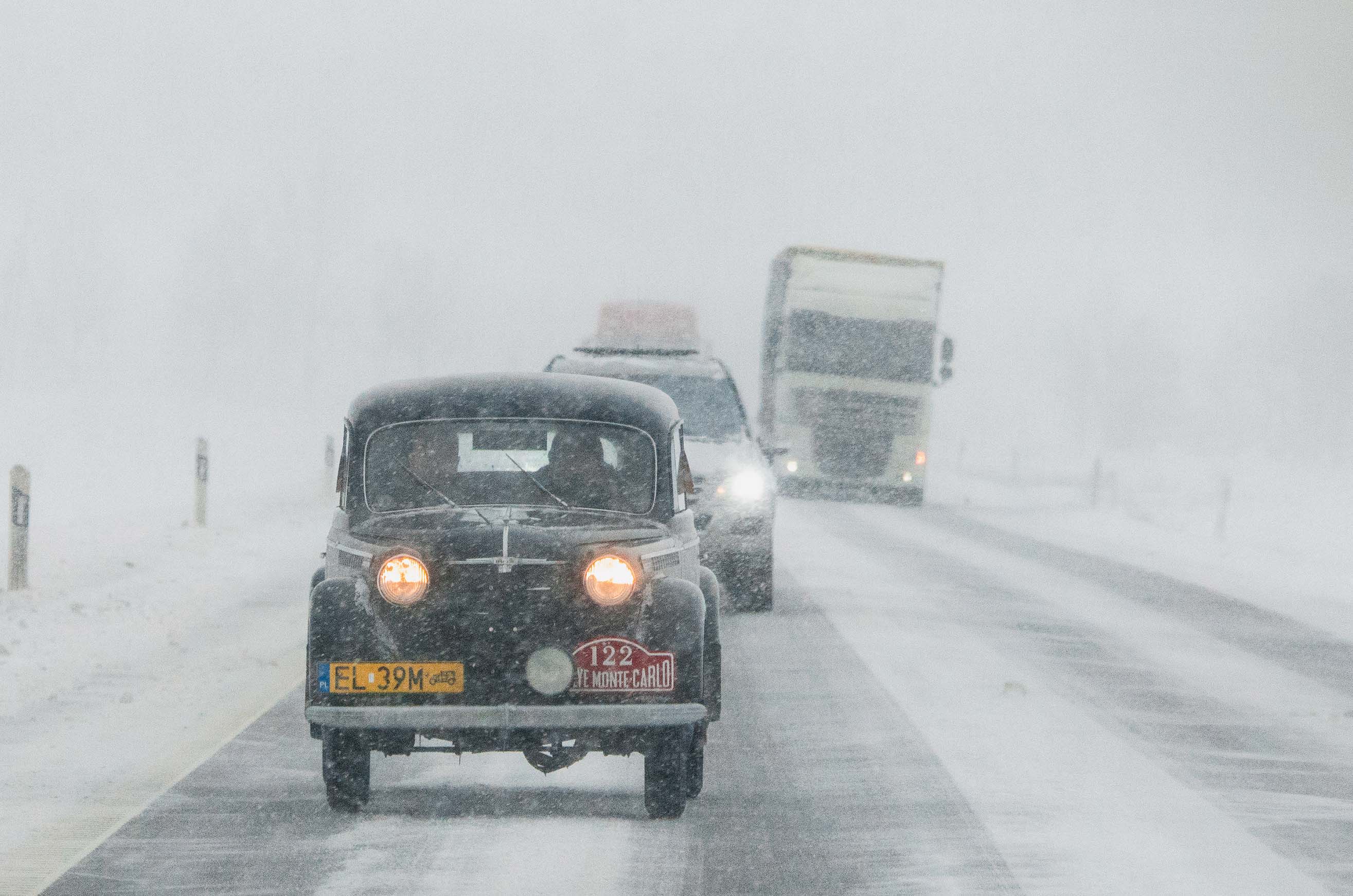
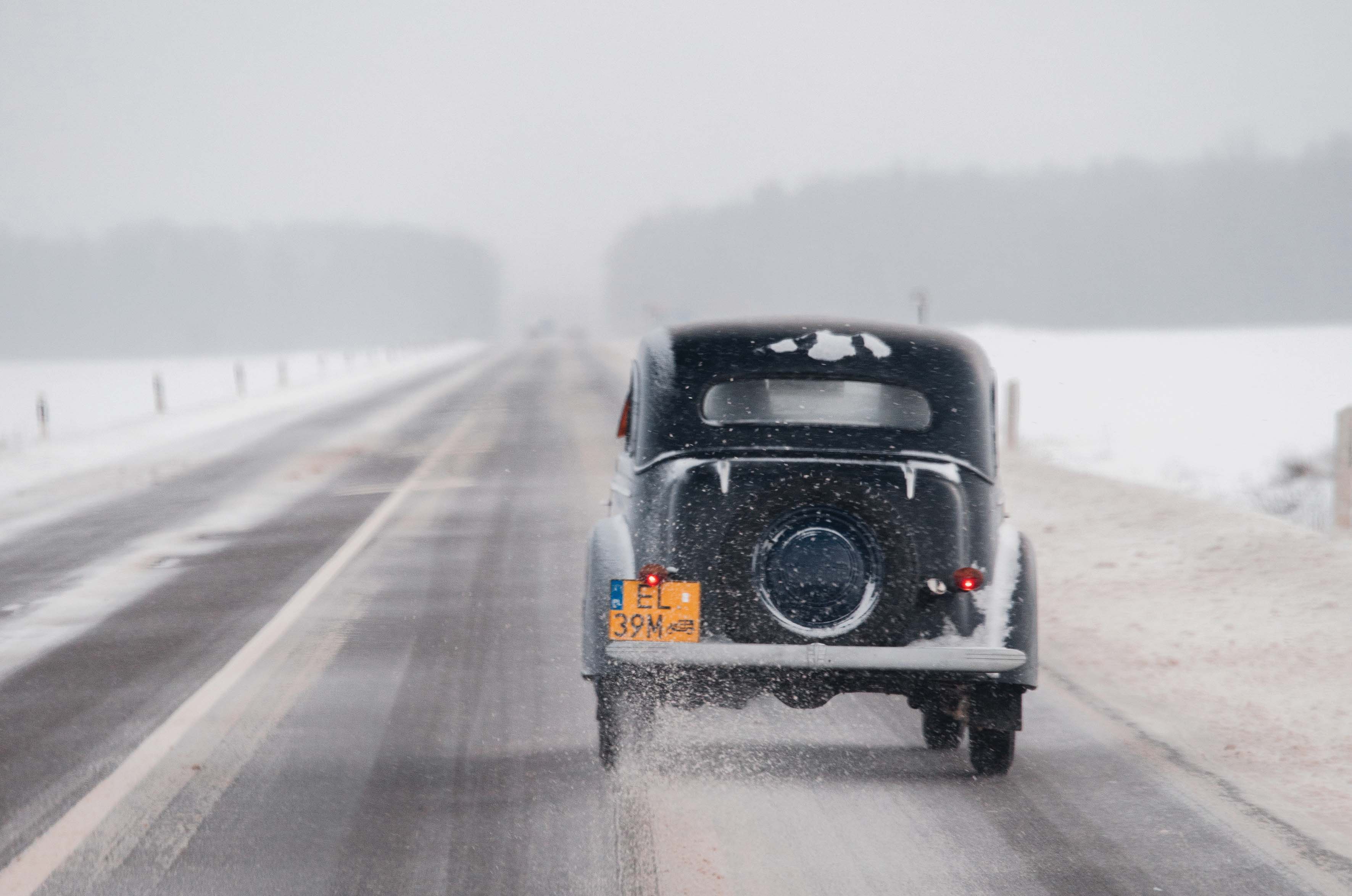
The Opel Olympia tackling the treacherous conditions on the roads of Estonia, Latvia and Lithuania
Two years ago, Sławomir came across an advert in a 1939 newspaper featuring Tadek Marek, the brilliant Polish engineer who later became famous for designing engines for Aston Martin.
Competing in that year’s Rallye Automobile Monte-Carlo in an Opel Olympia, this intuitive designer came 32nd overall and fifth in class with co-driver Witold Pajewski.
Sławomir immediately saw an opportunity.
Retracing Marek’s snowy wheeltracks during the 28th Rallye Monte-Carlo Historique, from 29 January to 7 February 2026, would give him a chance to tell an important story about the pre-war period and bring it to life with the tale of a local hero.
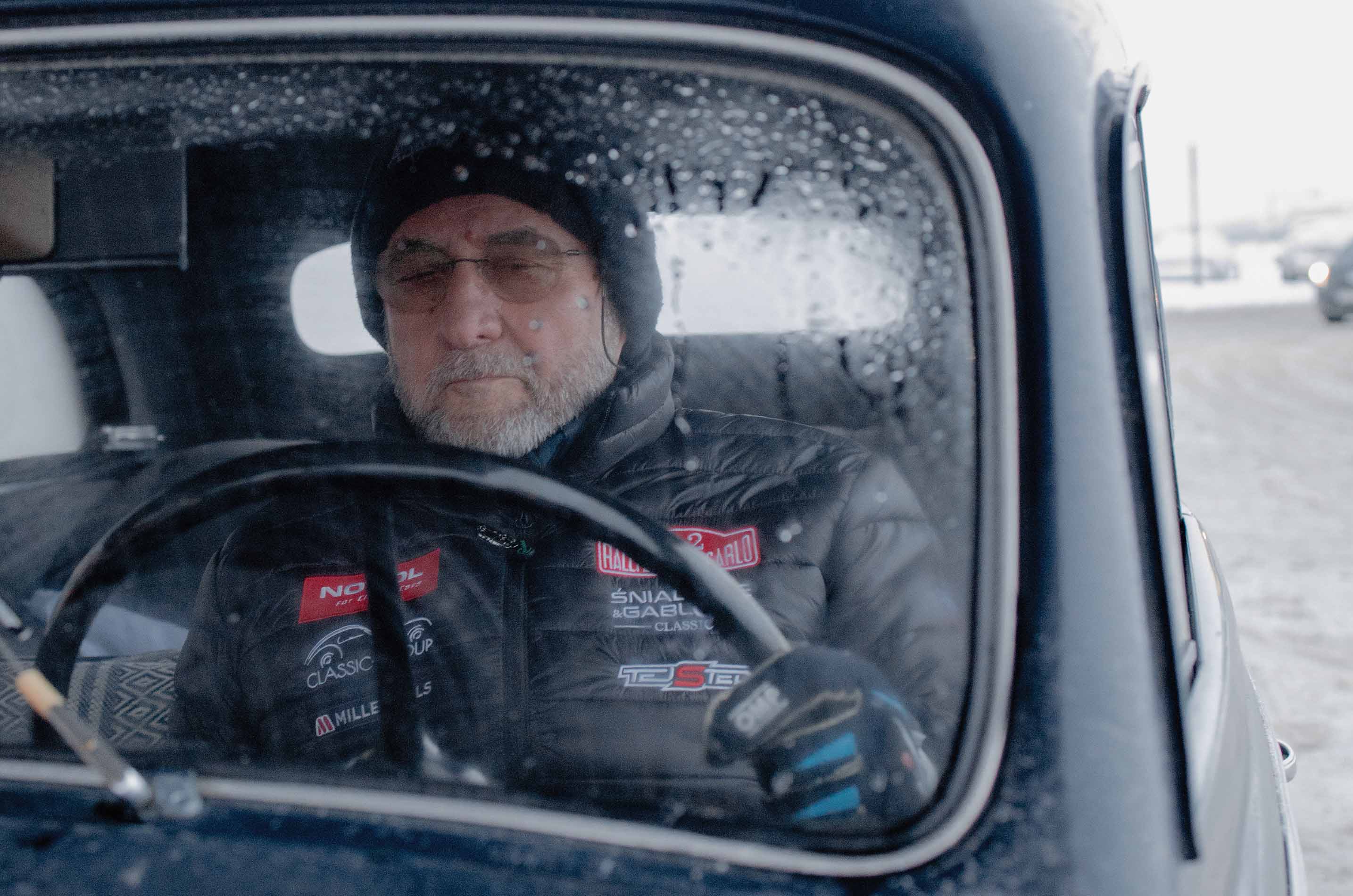
Historic racing driver Marian Stoch at the wheel of the Opel Olympia
“Tadek Marek is not so well known in Poland,” explains Sławomir, “and people here don’t really connect him with Aston Martin.
“They don’t know that a Polish guy designed the engine for the James Bond car. It seemed like a terrific way to build a bridge between the British story and the Polish story.”
Sławomir, who already owns a pre-war Opel Kadett, pitched to his friends the whole notion as both a promotional tool for the Śniadanie & Gablota Classic and an adventure for all concerned.
Once they were on board, the next job was to find an Opel Olympia, working on the assumption that Marek’s original Monte Carlo car was long gone.
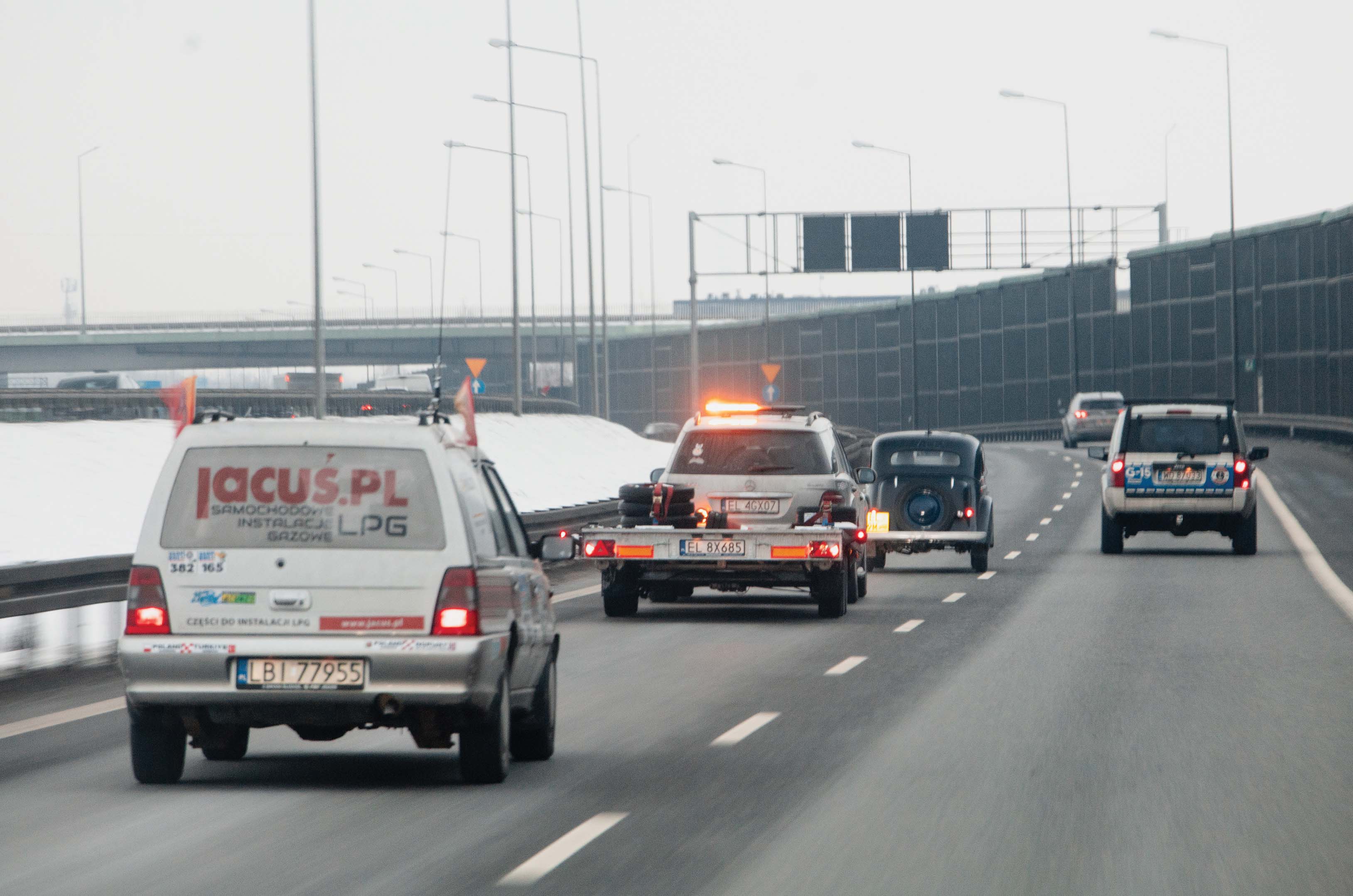
The Opel Olympia’s support crew followed closely
In truth, finding any pre-war Olympia was easier said than done, but then the team got lucky.
“We started out looking for the ‘perfect car’ and found it in Linköping, Sweden,” he says.
“It’s an amazing find because an Opel Olympia was just a regular car for regular people, which means that a lot of them were fixed with non-Opel parts or were bodged.
“To me it appears that special cars are easier to find in good condition, whereas it’s hard to find very popular, ordinary cars in good condition because they were used every day: to go to church, the shops, the countryside.”
The Opel Olympia’s frozen windows were a problem
“Also, our Olympia is unusual because it is a 90% original, matching-numbers survivor,” Sławomir continues.
“We know its whole story from build in January 1939: it was sold new in Visby in May, and two former owners are still living.
“The first keeper died in 1963, but his grandson, now aged 83, is still living in the city where his grandfather used the Opel as a new car.”
The grandson remembers the Olympia very fondly, says Sławomir: “His grandfather gave it to him when he was 23, and he learned to drive in it. He recalls everything, including the smell inside.
“Hans, the third owner, came over from Sweden to Tallinn for the start of the rally. He was very emotionally connected to the car.”
The Opel Olympia was handled with care on the ice
With a solid Olympia captured, it was still important to go through the 87-year-old car from end to end in anticipation of the 2400-mile journey it would be undertaking, starting in the depths of an Eastern European winter.
“It was in fully working condition,” explains Sławomir, “and running quite well. But there is a big difference between ‘working condition’ and being able to tackle a trip like this.
“So we checked everything: the engine, suspension, brakes, windscreen wipers.
“We improved things where necessary, but tried to keep the car as it was in 1939, with no major restoration. Luckily, my dad is a great mechanic: we did everything together in his garage at home.”
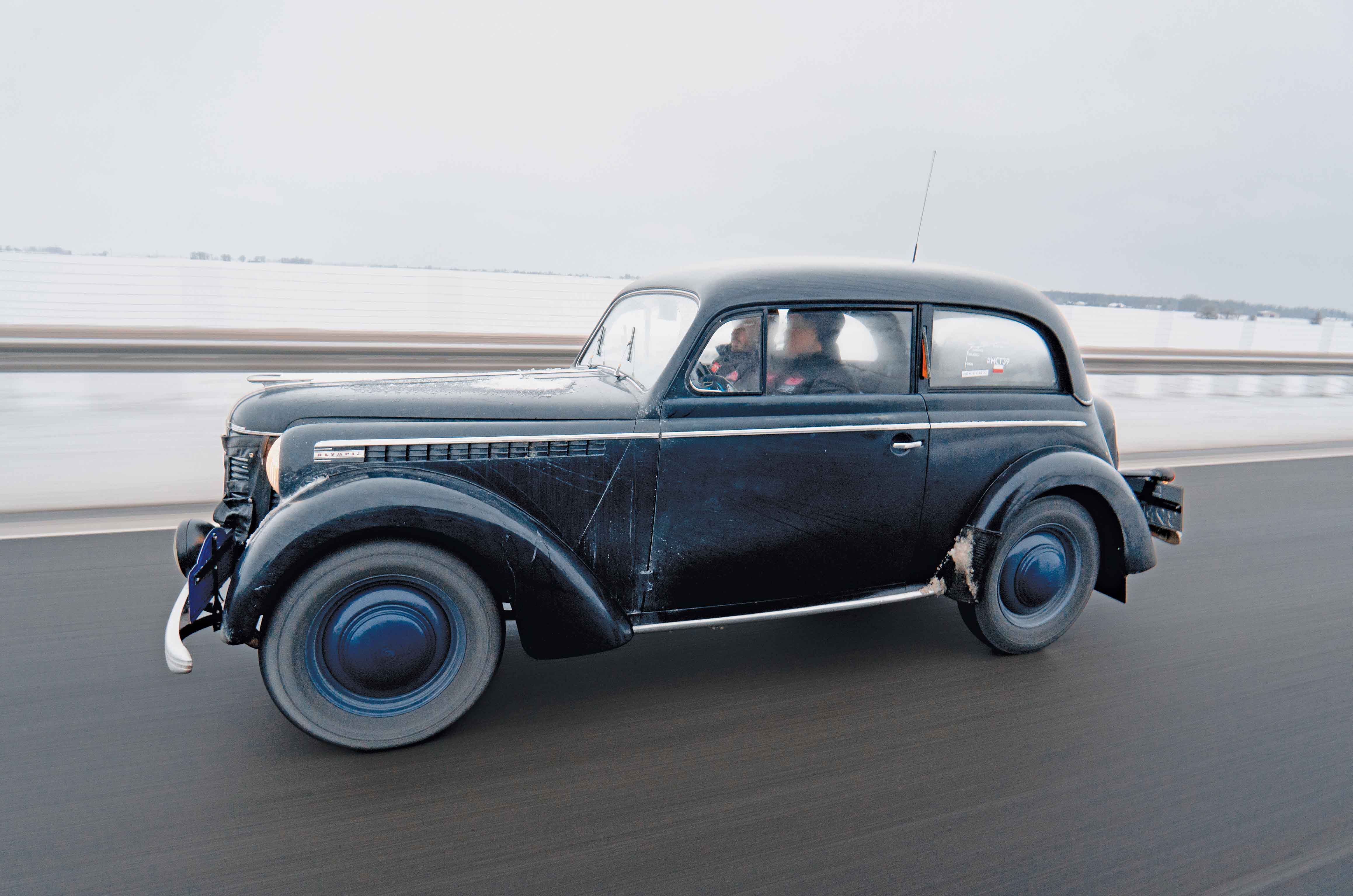
Making use of the Opel Olympia’s 37bhp to overtake local traffic
Sławomir Snr was a pivotal figure in this endeavour, being steeped in pre-war car restoration (although it’s not his daily job) and also a skilled rallyist.
He shared the driving duties in the Opel with his son, who drove or co-piloted the entire distance, and Marian Stoch, a fellow enthusiast who has campaigned pre-war Astons in events such as the Goodwood Members’ Meeting and 1000 Miglia – a subtle nod to Tadek Marek’s legacy.
The back-up crew comprised Rafał Pilch, Maciej Jasinski, Szymon Wolny, Pawel Szymula and Damian Górniak.
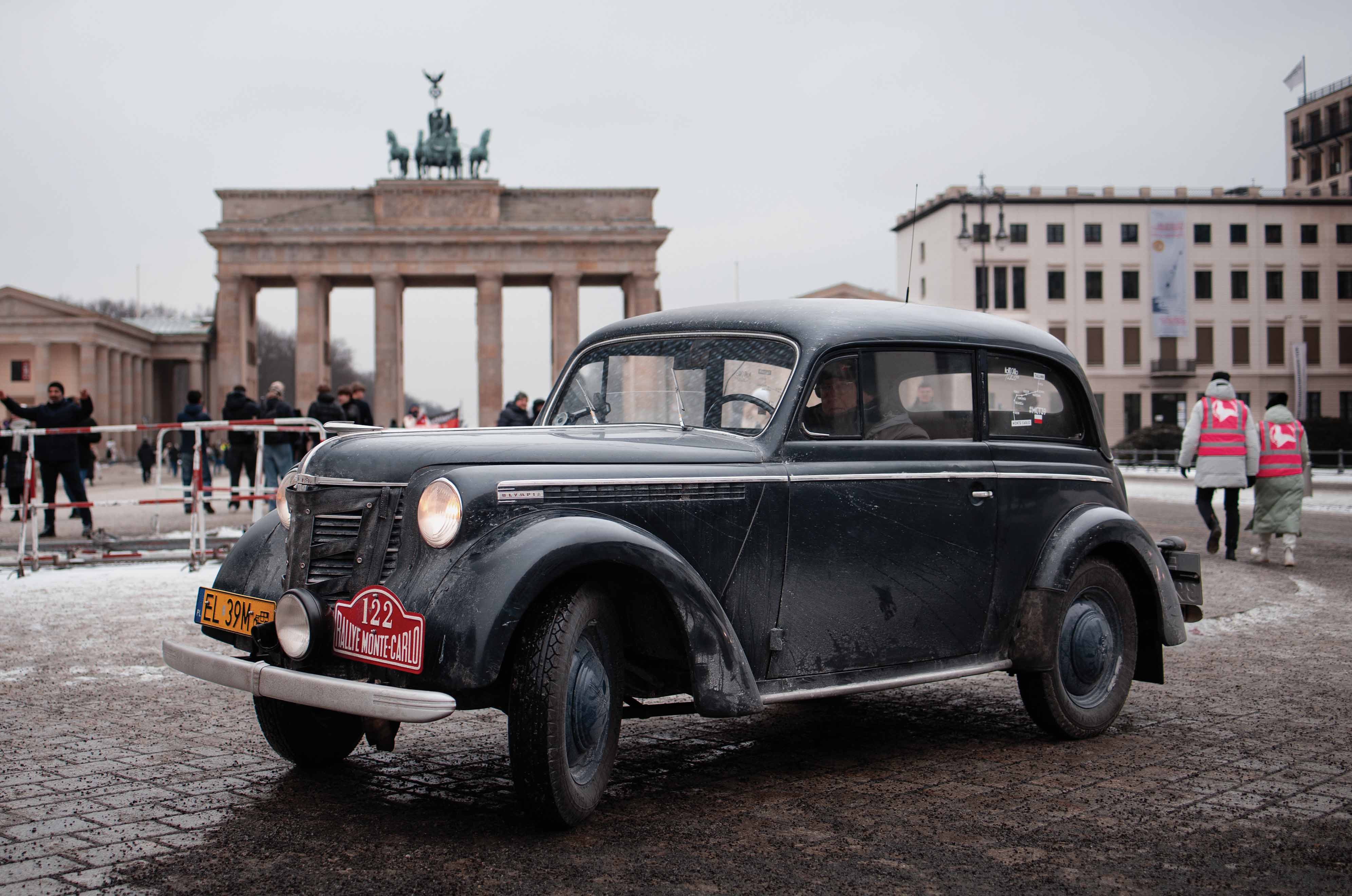
The Opel Olympia next to the Brandenburg Gate in Berlin, Germany
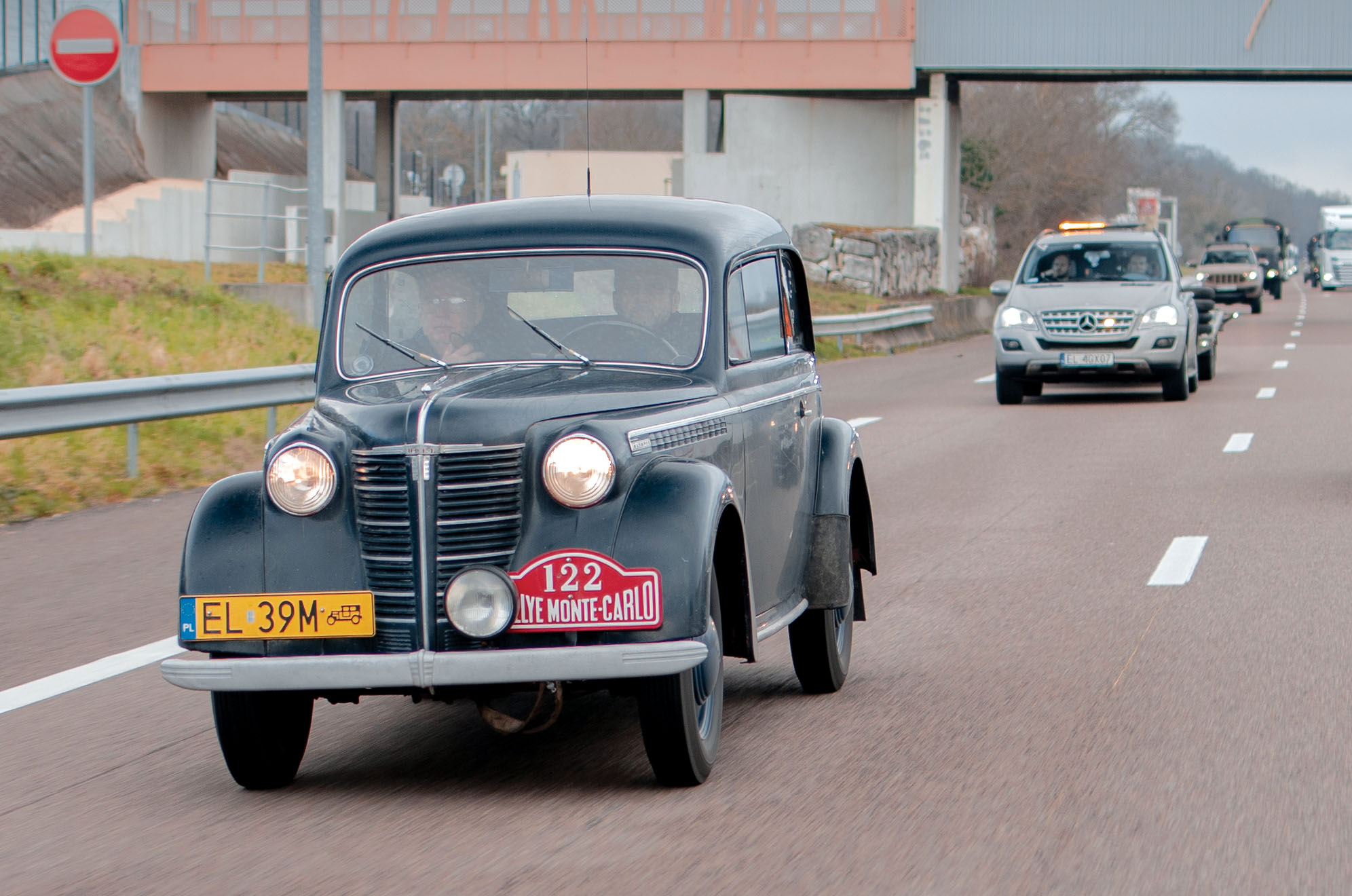
“They drove a service van and a Mercedes-Benz ML that tailed us, with its hazard lights flashing,” explains Sławomir.
“This was a safety measure, because the Opel has tiny rear lights and indicators that other drivers tend to ignore.
“People in modern cars either didn’t see or acknowledge them, or they pulled up alongside and start taking photographs of us.”
With or without the challenge of 21st-century rubberneckers, nearly 2500 miles in 10 days aboard a 37bhp car was always going to be tiring.
But for Sławomir, it was also fascinating. “Every day we started fairly early, ate breakfast and went straight to the car,” he enthuses.
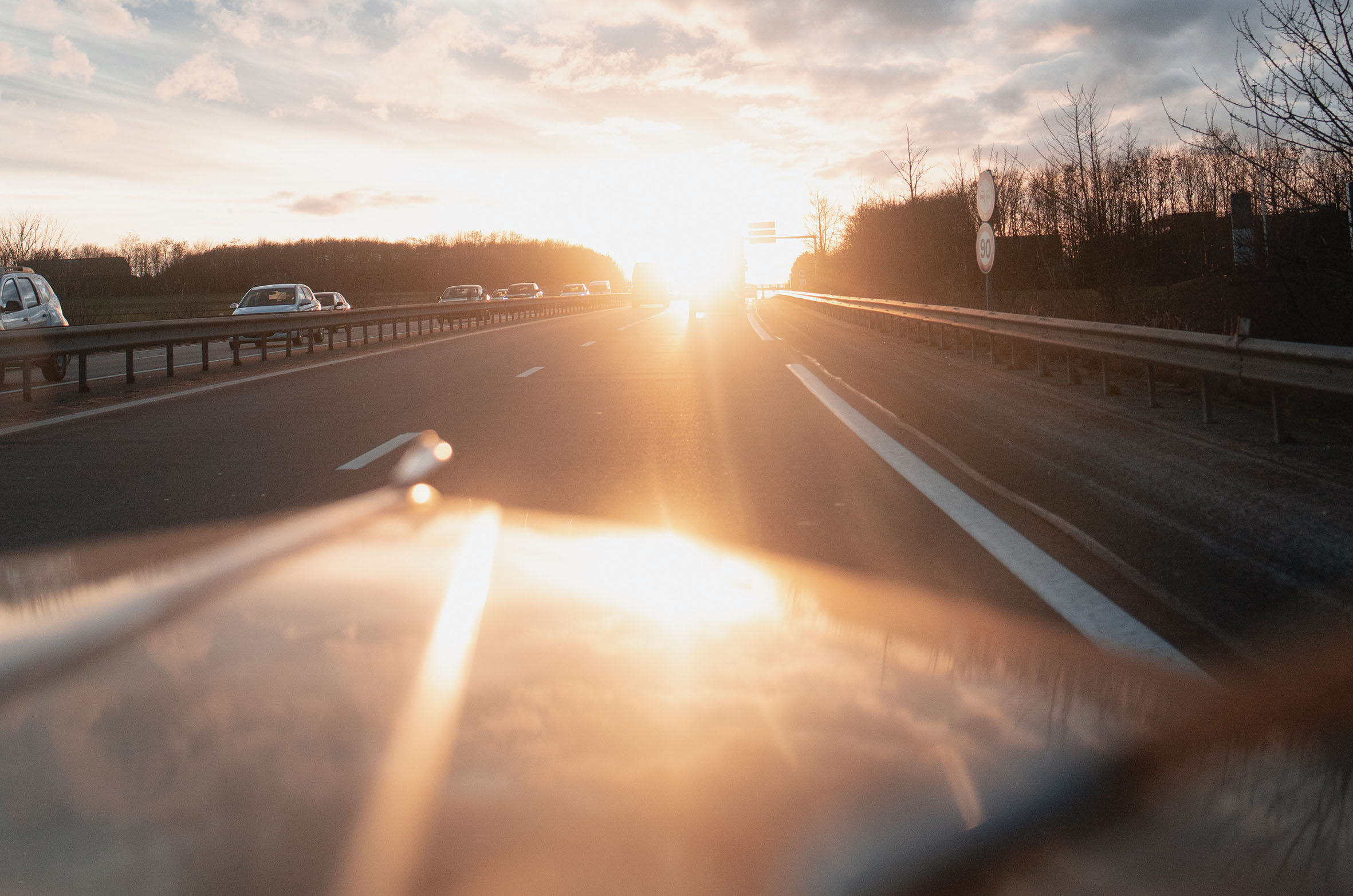
The Opel Olympia drives towards sunrise in The Netherlands, where conditions became far less arduous
“We began driving at 9am and usually ended the day at 8 or 9pm,” he adds. “We never did more than about 80kph [50mph], with two people in the car.”
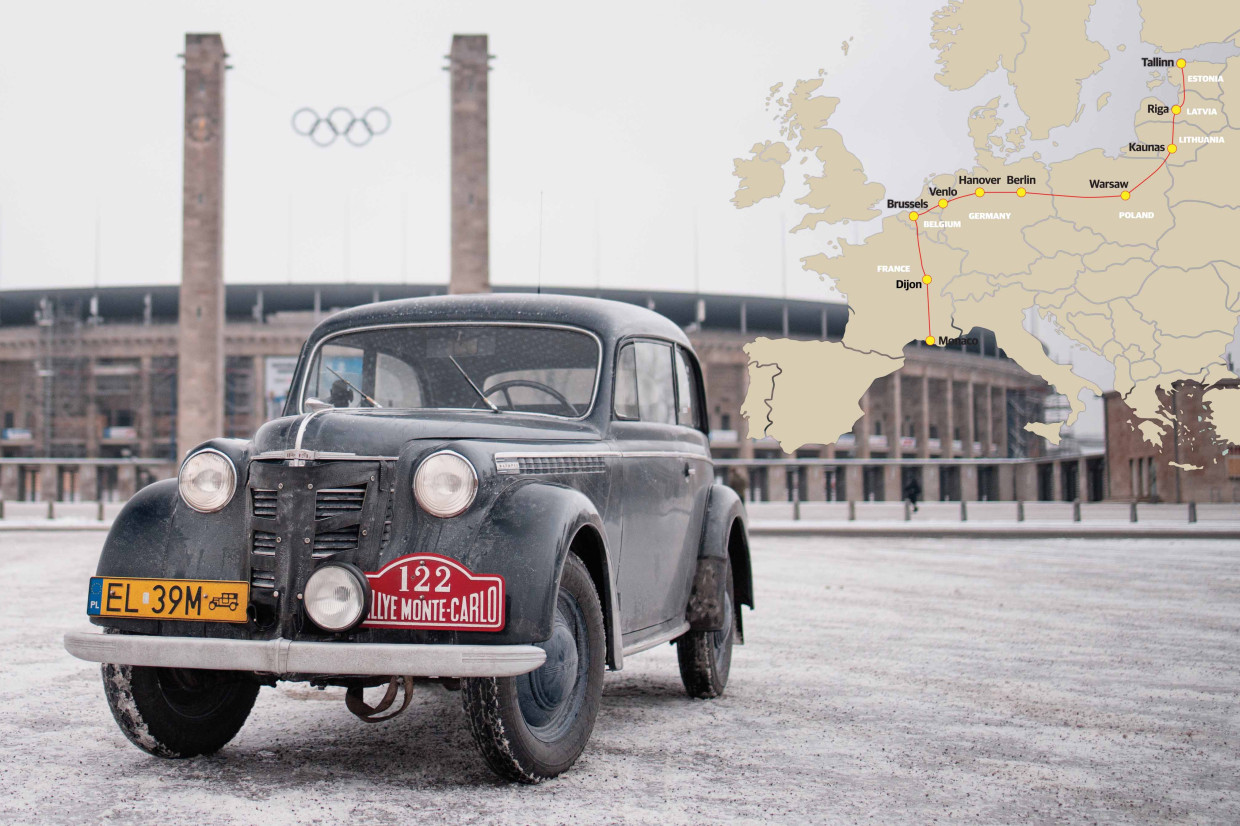
Following Marek’s route, they started in the Estonian capital, Tallinn.
“In the early stages it was very hard,” Sławomir recalls. “It was the heaviest winter for six years. The lorry drivers were surprised we were driving such a small, old car in these conditions.”
The Opel Olympia stopped outside the old Reims-Gueux circuit in France
Sławomir Snr, a former Polish jetski champion, was the ‘ice king’ in the baby Opel. “My dad is a great driver of pre-war machines,” says his proud son, “and on the ice, for almost 400km [c250 miles], I had to let him drive.
“He was the only one of us who wanted to. To be honest, we couldn’t have done it without Dad.”
It was, in almost all respects, the classic Rallye Monte-Carlo winter experience.
“There were snowstorms, the windows were freezing up on the inside, and it was dropping to -20°C,” says Sławomir.
“Truly heavy conditions, but quite similar to how it was 1939 – although the modern roads are in better condition.”
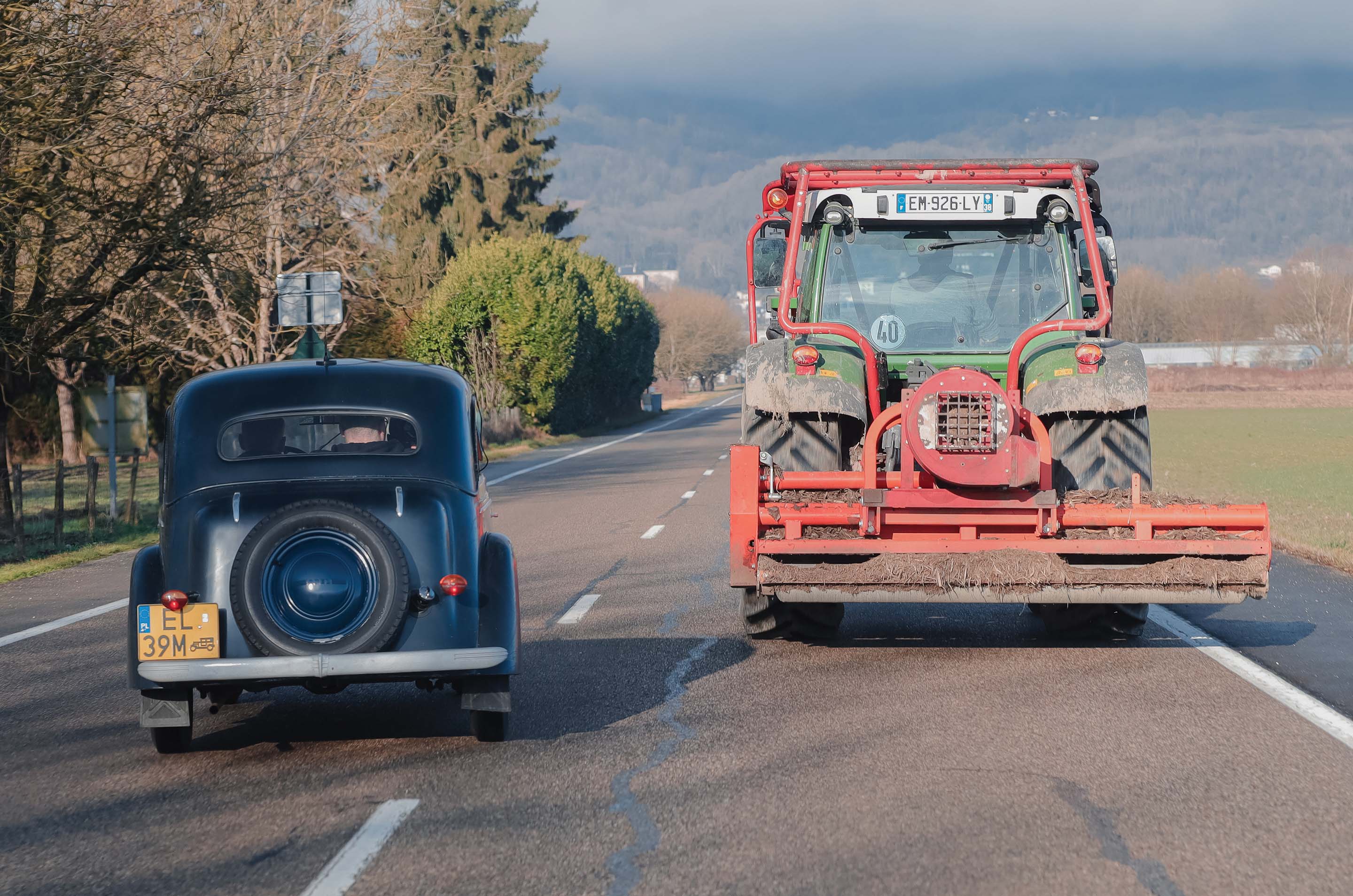
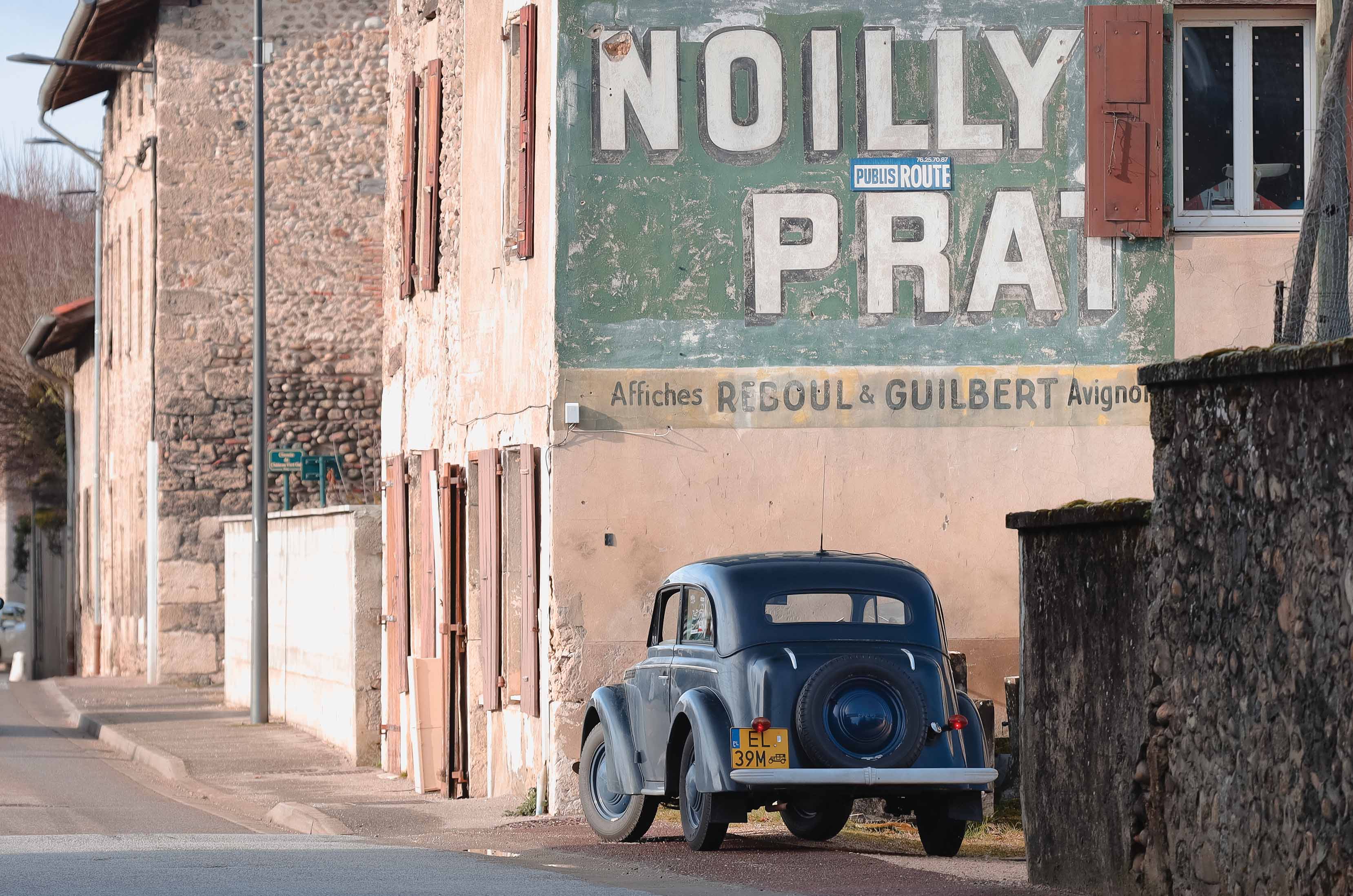
The Opel Olympia blends in well in rural France around Grenoble, where it was a joy to drive in the early spring weather
The Opel, though, ate it up – pretty much.
“The Olympia is a great car,” says Sławomir, fondly, “and a pleasure to drive for such an old vehicle with such a small engine.”
Remarkably, there were only two breakdowns – the same number as the Mercedes chase car! Sławomir says: “Soon after the start, we just stopped. It was -18°C, and, as usual, everybody looked at my dad as if to say, ‘What’s wrong?’
“It seemed as if everything was sitting on his shoulders at times. Luckily it was only a minor carburettor problem, which we fixed very quickly.”
Then, in Lithuania, there was an ignition issue. “That was also easily sorted,” Sławomir says, “and apart from that there were no problems.”
“We improved things where necessary, but tried to keep the Opel just as it was in 1939, with no major restoration”
The Olympia has a crash gearbox and is technically similar to a Vauxhall 10 – it was General Motors’ Continental sibling under the skin.
And, being a Scandinavian-delivered car, it even has a heater, although Sławomir points out: “It’s a very small heater, and it was still cold inside.
“That wasn’t as much of a problem as the ice on the windows, which was a real hazard.
“Nothing worked: I can understand why Marek had an aircraft windscreen heater on his car.”
For 2026, the team fitted Pirelli Stella Bianca tyres: “We didn’t use chains, and passed lots of trucks parked due to the snow.”
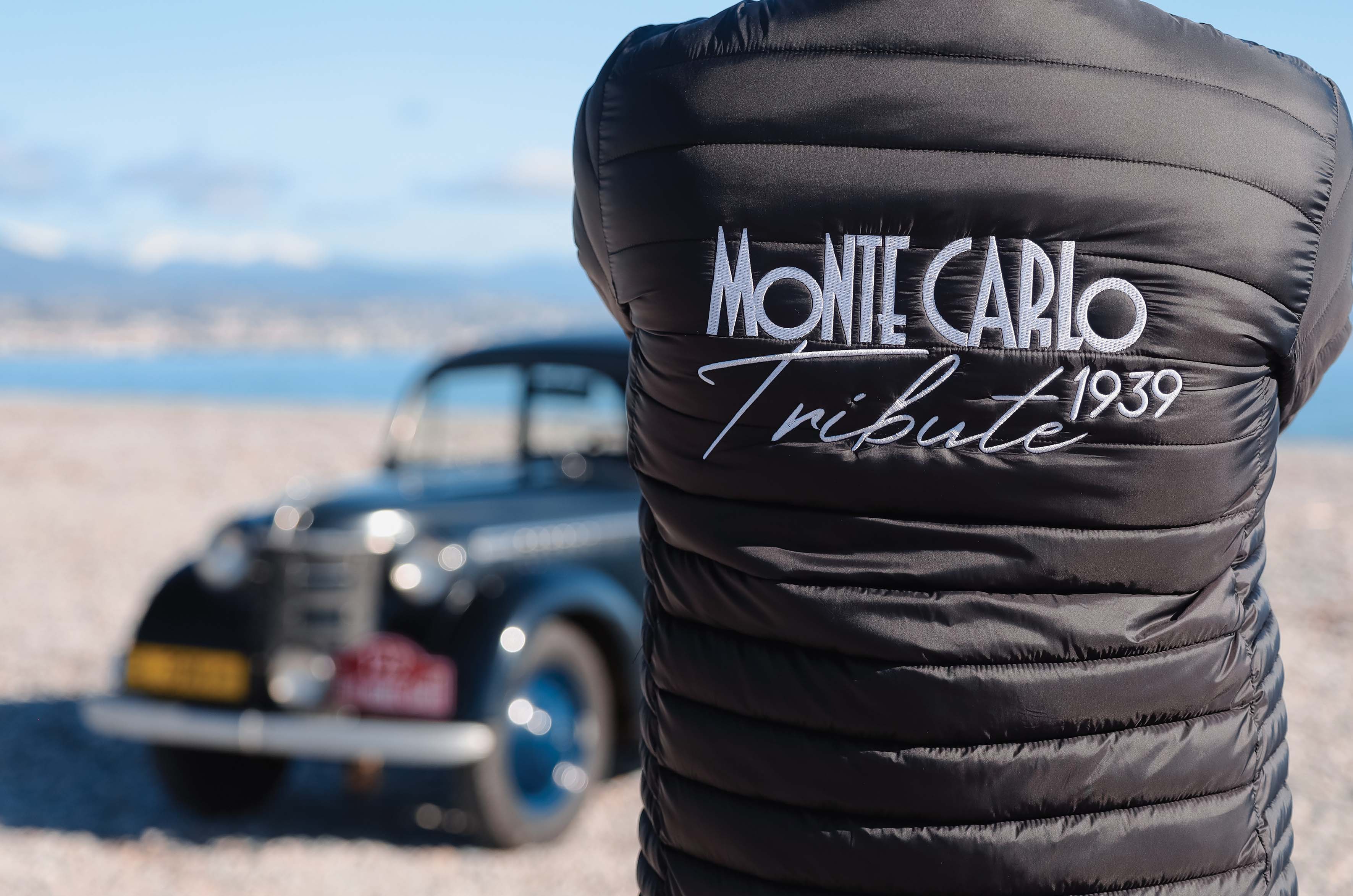
Stylish team kit for the Opel Olympia crew
At a coffee stop, they got some advice from a Polish truck driver: “He said, ‘Don’t go to Bauska, it’s impossible in this snow.’ And we replied, ‘We’ve just come from Bauska!’ He was suitably impressed.”
Undoubtedly, the three stages from the Baltic countries were the hardest, Sławomir says: “By the time we got to Poland we were exhausted by the conditions.
“But on the other side of the country things got better: in The Netherlands it was spring, and driving was a pleasure.”
It took three days to drive through France to Monte Carlo. “In Grenoble we met some Polish guys who live there and run a classic car event and their own classic rally,” says Sławomir.
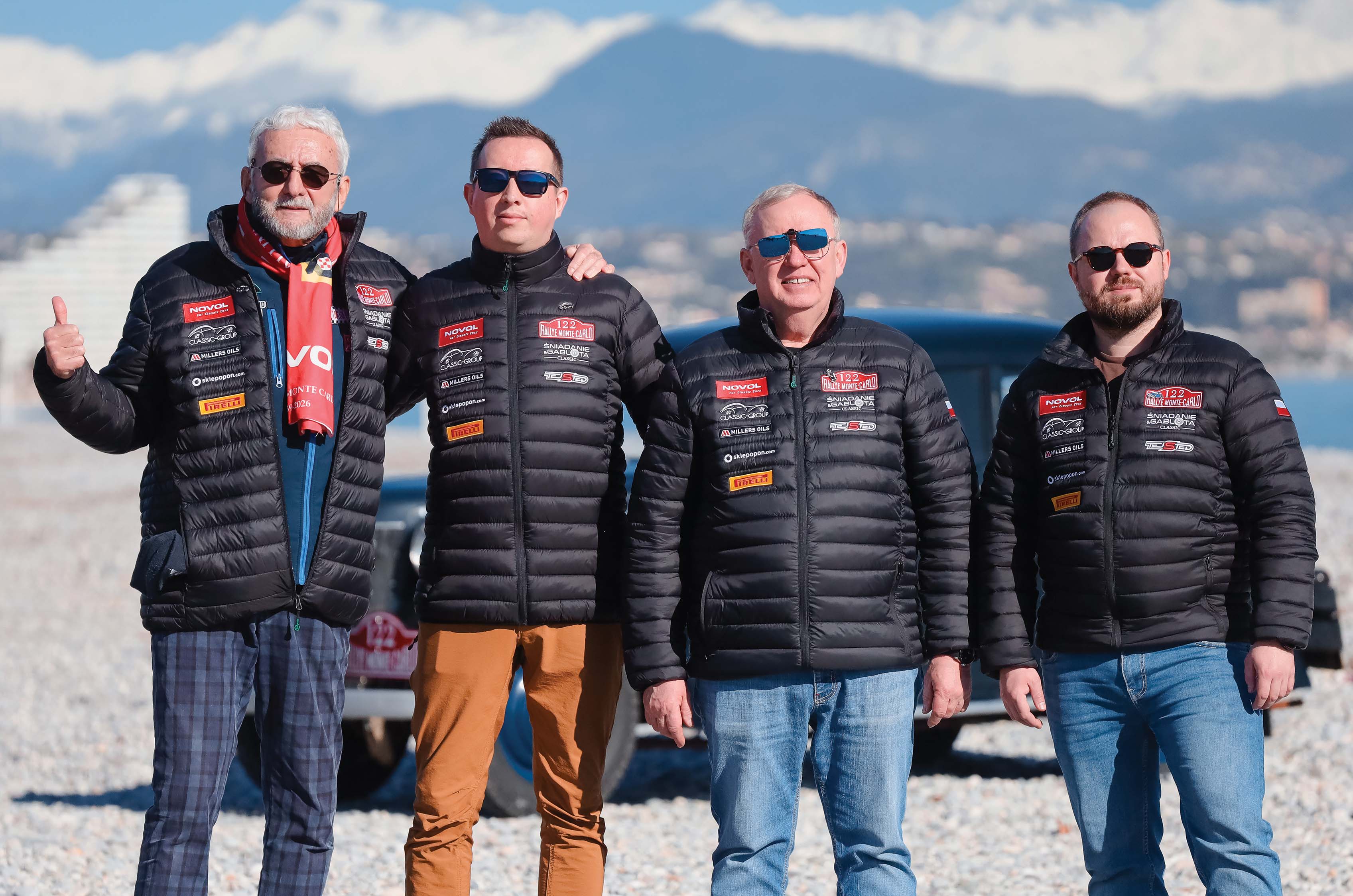
The Opel Olympia with (left to right) Marian Stoch, Szymon Wolny, Poros Snr and Poros Jnr
The final stage took them from Nice to Monte Carlo: “In the Alps it was like summer, but near Nice we got very heavy rain. I discovered that if you do 80kph, you don’t need the wipers!”
The Polish Opel team was not officially part of the Rallye Monte-Carlo Historique, but they did follow the historic route and made all the checkpoints in the cities en route to meet, greet and spread the word.
Sławomir says: “It was great because we didn’t just go over the ramp at the end.
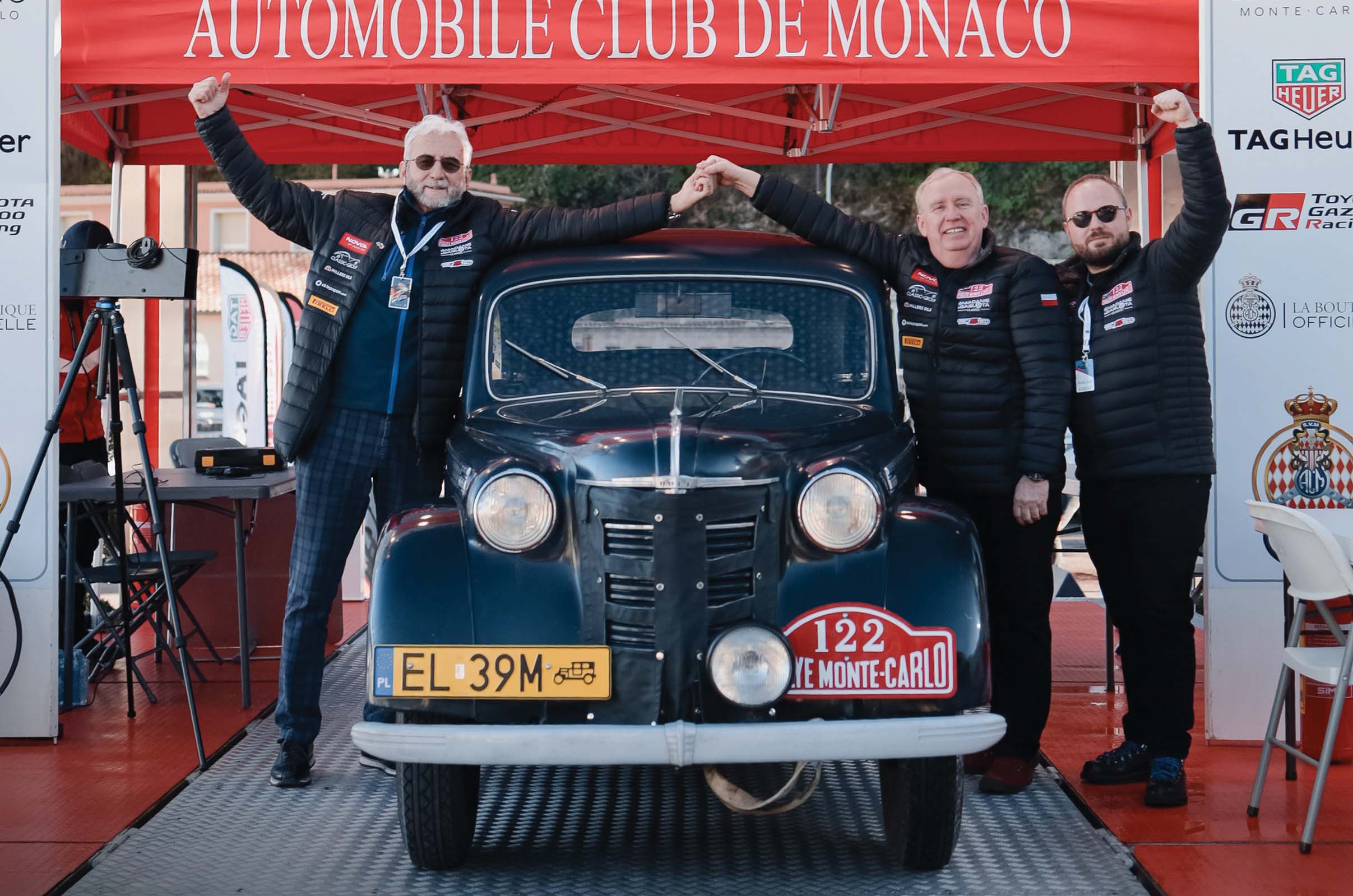
“The organisers were really helpful and even built a TV studio around our car to do all the interviews. They made us really welcome and really appreciated our efforts.”
Marian (left) and the two Sławomirs at the finish in Monte Carlo, where the organisers welcomed the team with open arms
Polish teams do compete in events such as this, but Sławomir feels that they don’t promote the idea enough: “When we posted that we were doing this event, a lot of people from the classic community told us it was impossible.”
Having proved the naysayers wrong – and hopefully educated a few people about the contributions of Opel, Marek and Poland to pre-war motorsport – Sławomir now has even more ambitious plans for the Olympia, his dad and the rest of the Monte-Carlo team.
The engine is already being rebuilt in preparation. “I don’t want to reveal too much yet, but it will involve Africa,” hints Sławomir.
“We want to join the long-distance club.”
Images: Śniadanie & Gablota Classic
Follow @tejsted.pl on Instagram to keep up to date with Sławomir’s adventures
The Opel Olympia’s ascendance
The Opel Olympia was named after the 1936 Summer Olympics, held in Berlin
With GM ownership dating back to 1928, Opel engineering and styling at Rüsselsheim evolved along American lines during the ’30s, adapted to German tastes.
The cars were built, like their Detroit cousins, with value for money and ease of ownership in mind (adverts boasted the rounded styling was ‘easy to keep clean’).
Solid and sensibly engineered, Opels did more to put ordinary Germans on the road than the first Volkswagens ever did.
Opel used modern overhead-valve engines, hydraulic brakes, independent front suspension (marketed as ‘Syncron’) and ‘easy-change’ gears.
The range stretched from the baby Kadett (later built in Russia as the first Moskvitch) to the Super Six and Admiral.
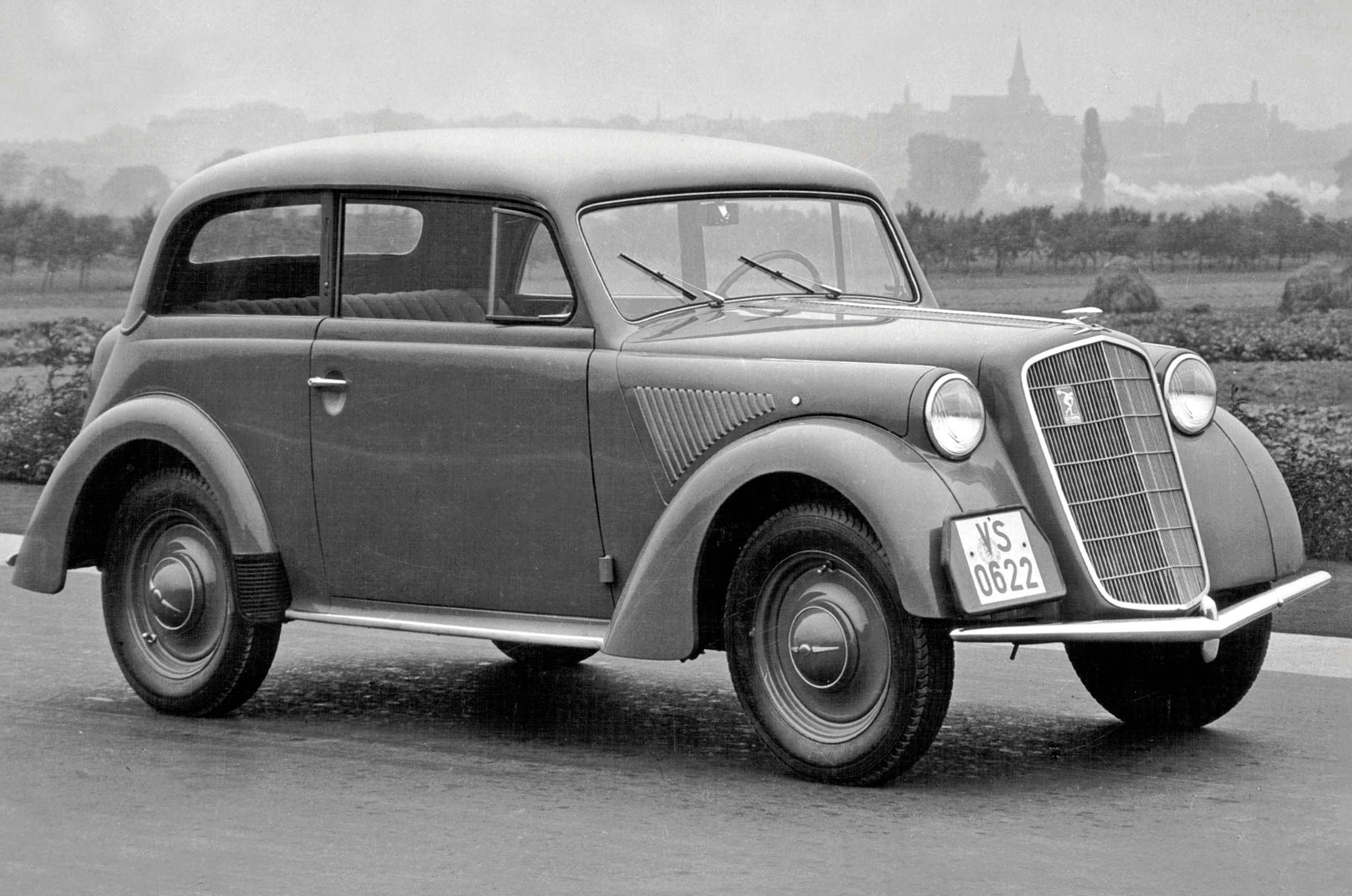
The Opel Olympia was a pioneering car in pre-war Germany
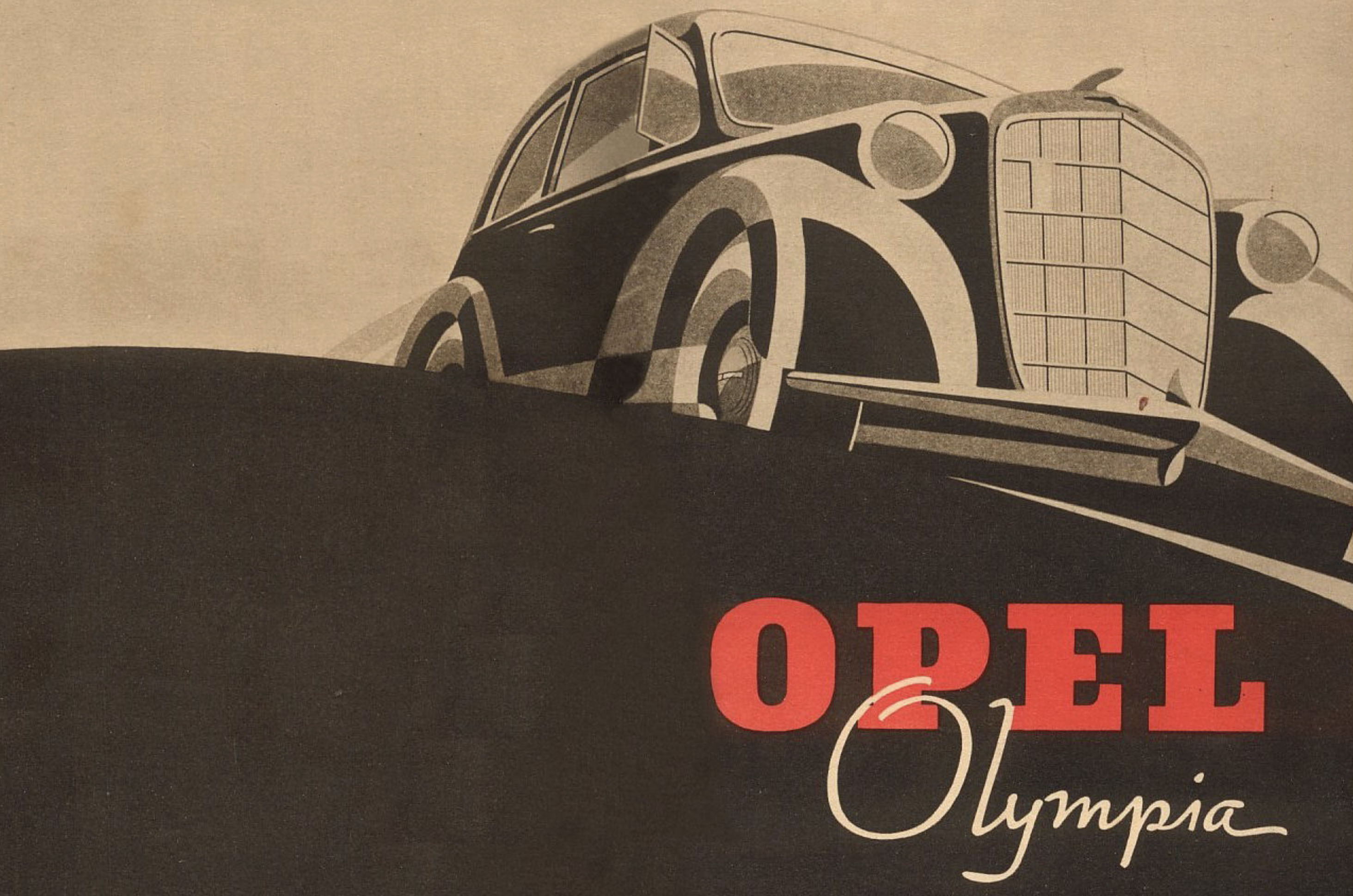
The Olympia, launched in 1935 (above) and named for the forthcoming Berlin Olympic Games, was the mid-sized offering.
It was Germany’s first unibody car, and the first unitary saloon of its size and price anywhere.
Weighing 400lb less than the Mk1, the Mk2 OL38 of 1937-’40 got an American-style facelift and 50% more power from its 1.5-litre engine, hitting 70mph on 37bhp.
Buyers could choose two- or four-door, four- or six-light saloons, or a two-door cabriolet with a roll-back roof.
These Olympias were built by GM in Poland and sold across Europe, including Britain, where London dealer Pride & Clarke asked £159 for them – a price likely subsidised by the Third Reich.
The model reappeared post-war, but Britain didn’t get it (or any other Opels), although it sold strongly in Germany.
Tadek Marek’s Monte-Carlo roots
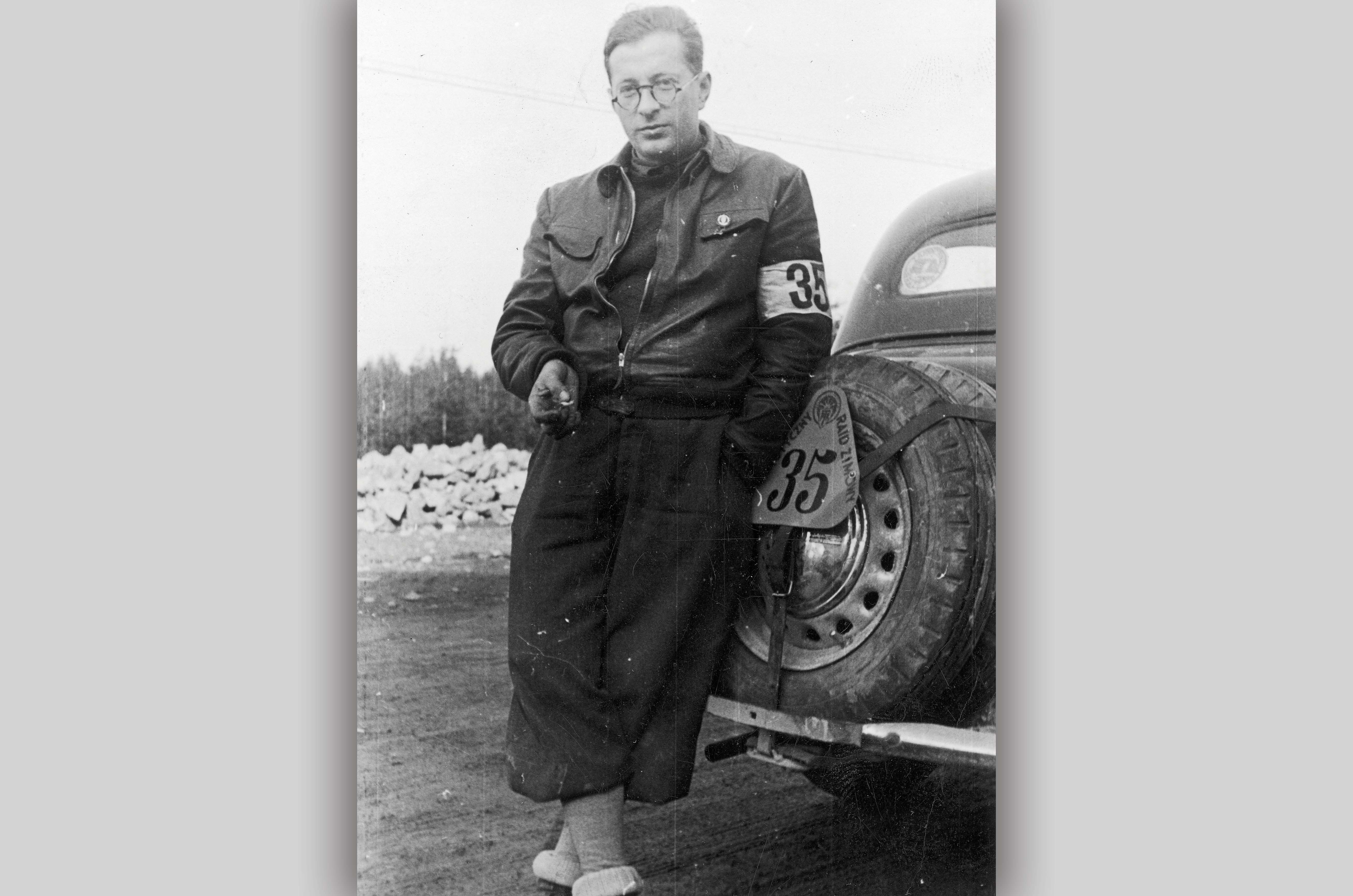
Tadek Marek with his Opel Olympia rally car © Polish National Digital Archives
The Kraków-born Tadeusz Marek was almost as good a racing driver as he was an engineer.
He rebuilt an ex-army Model T Ford when he was 14, and motorcycles were an early obsession – he even designed some rugged ones for the Polish army and raced various makes until a huge accident – and eight months in hospital – made racing cars look like the healthier option.
During the 1930s he competed in every Polish race, rally and speed trial possible, acquiring an impressive array of awards.
Marek won the 1937 Polish GP and 1939 Polish Rally, and entered the Monte three times.
In 1937, starting from Palermo in a Polish Fiat 508, he drove without brakes for 180 miles but was scuppered by snow in the Dolomites.
In ’36 he started from Athens in a Lancia Aprilia: its suspension failed, but the resourceful Pole effected a temporary repair and reached the finish.
After gaining his diploma in engineering from the Charlottenburg technical institute in Berlin, Marek worked for General Motors’ Polish outpost.
He also trained at Fiat’s local HQ and later worked for the firm in Turin. However, by ’39 he was at GM’s Polish plant, which explains the choice of the Olympia for rallying (above).
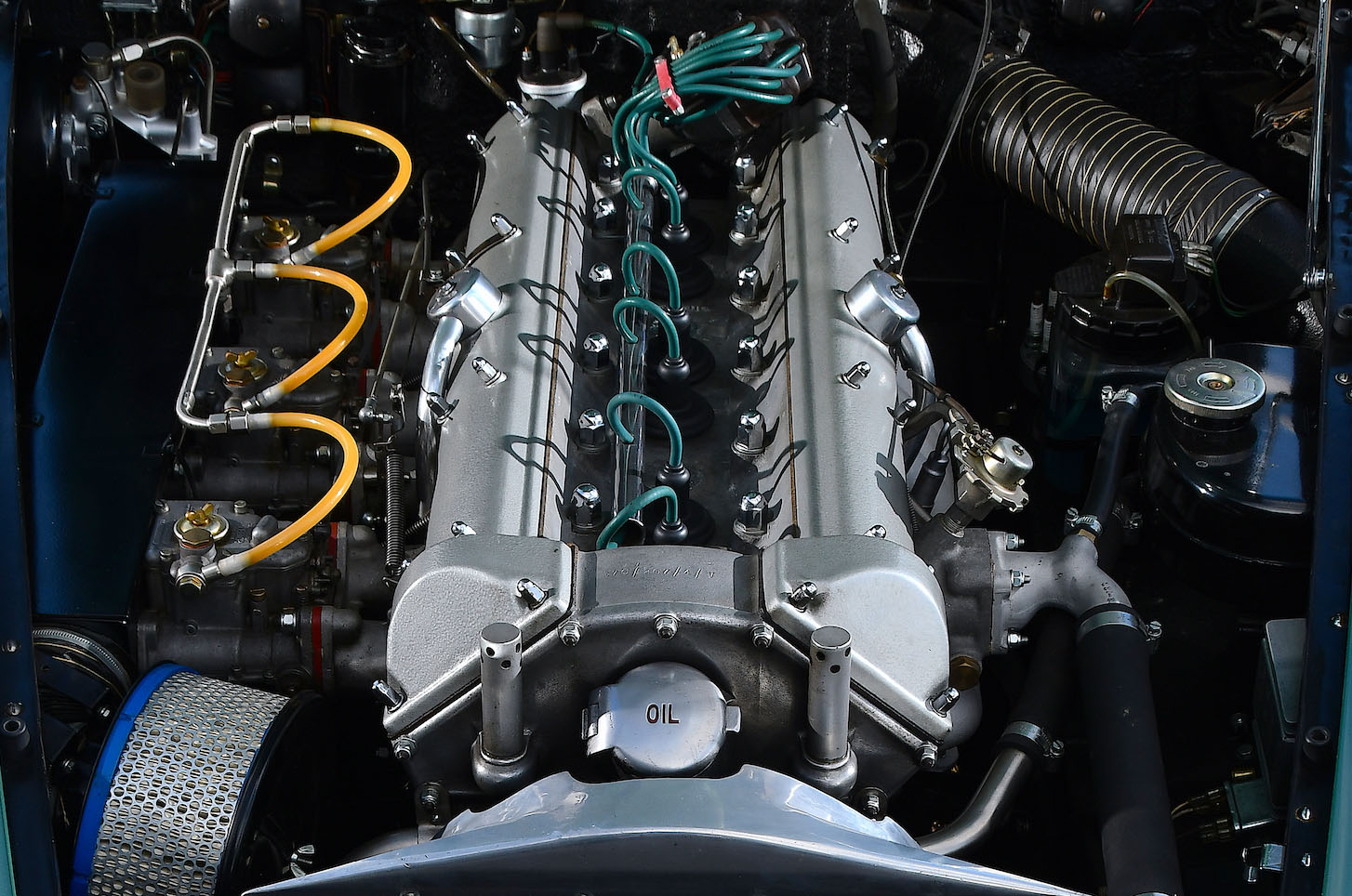
The Tadek Marek-designed straight-six in the Aston Martin DB4
Fog around Warsaw could have ended his rally in the Opel, but familiarity with local roads saved the day and he finished fifth in class with no penalties.
He competed in a Chevrolet Master Sedan as well, another locally assembled GM product.
Wartime adventures included internment by the Germans and a daring escape via Casablanca to Britain, arriving in 1941 as part of the Allied forces.
He settled in Finchley (and met a local girl, Peggy, whom he married) and helped to create an amphibious version of the Centurion tank.
In ’49 he took a post with Austin at Longbridge, where he designed the 2.6-litre C-series and a cancelled V8 based around a pair of A40 engines.
He moved to Aston Martin in ’53 when it was still at Feltham and worked on the 3-litre DB MkIII/Lagonda unit, and created the 3.7-litre DB4 ‘six’ and its derivatives, as well as the V8, before retiring to Italy in 1968.
Enjoy more of the world’s best classic car content every month when you subscribe to C&SC – get our latest deals here
READ MORE
Driving Tadek Marek’s unique Aston Martin DB4
Aston Martin vs Jaguar vs Triumph vs AC vs Austin-Healey vs Bristol: Britain’s best straight-sixes