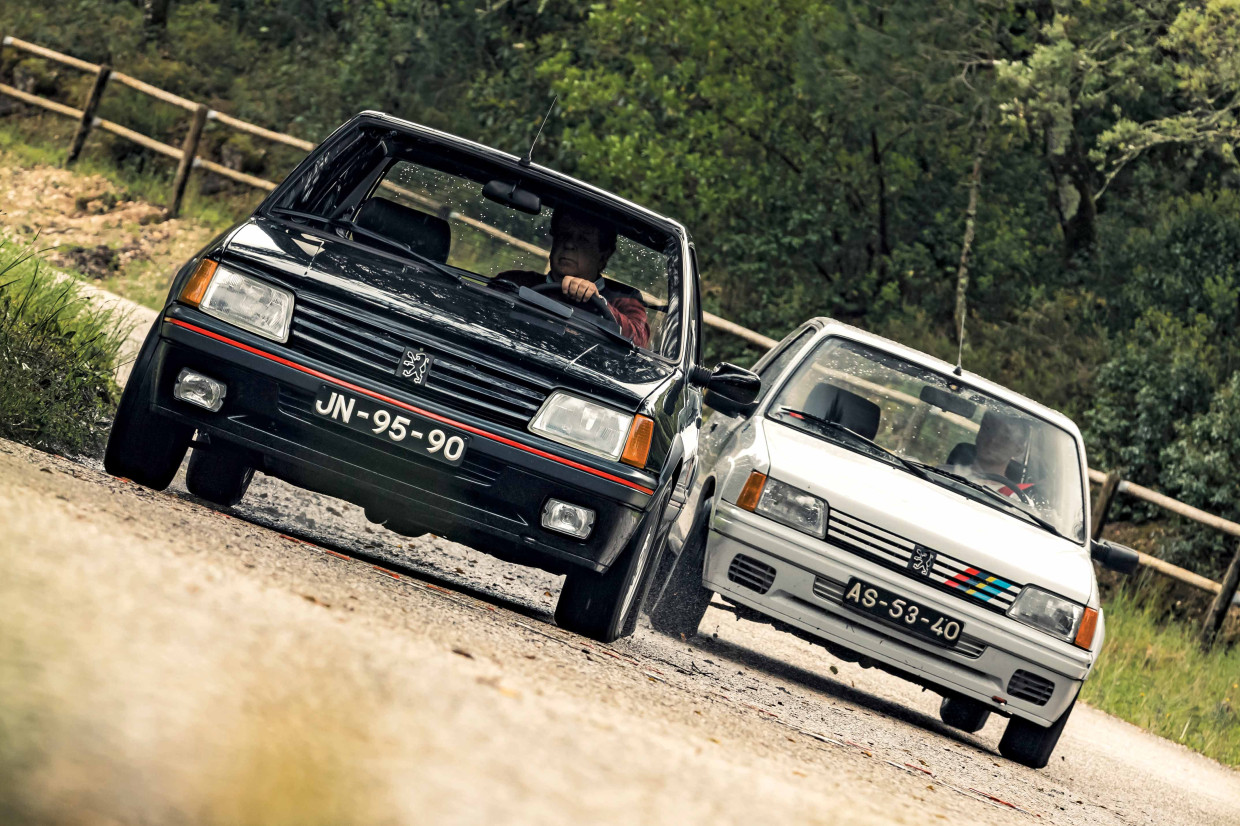
These two Peugeots, a launch-specification 205 GTI and a bona-fide, European-spec Rallye, are separated by just four years and three brake horsepower.
They each feature different four-cylinder engines and five-speed ’boxes, while, counter-intuitively, the newer one runs on carburettors rather than the older car’s electronic fuel injection.
Both are answers to the question, ‘What is the best hot hatchback ever made?’ – and naming either will draw knowing nods and thoughtful murmurs from fellow car enthusiasts.
But separating these outwardly near-identical cars and deciding which is the true holder of the crown? Civil wars have been settled by shorter negotiations.
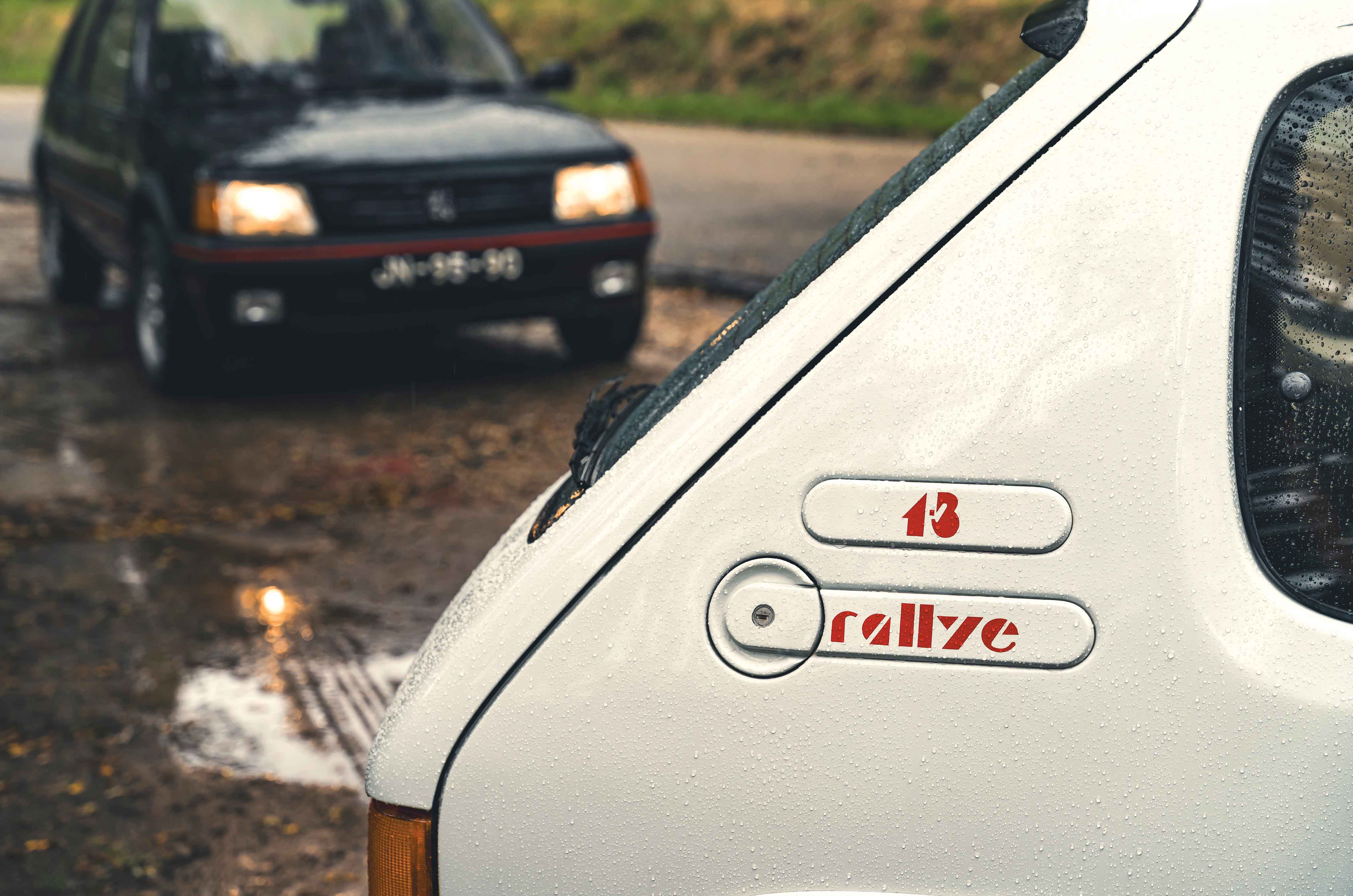
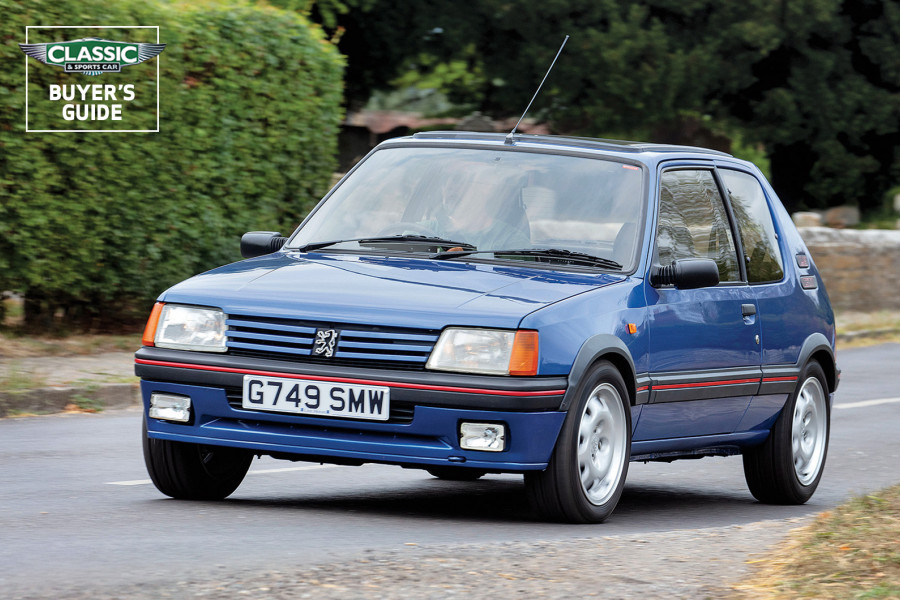
Peugeot built arguably the best hot hatch of all time in the 1980s, but both the 205 Rallye (closest) and 205 GTI lay claim to the title
Despite the GTI’s image as a boy-racer’s favourite and the Rallye’s reputation as a white-knuckle homologation special, both owe their existence to rallying.
Before a Jean Todt-led Peugeot Talbot Sport created the lairy, mid-engined T16 to compete in the loosely regulated Group B, Peugeot had not built a three-door 205.
Unusually for an early ’80s supermini, the 205 was launched as a five-door, and the sportiest offering was the 79bhp GT.
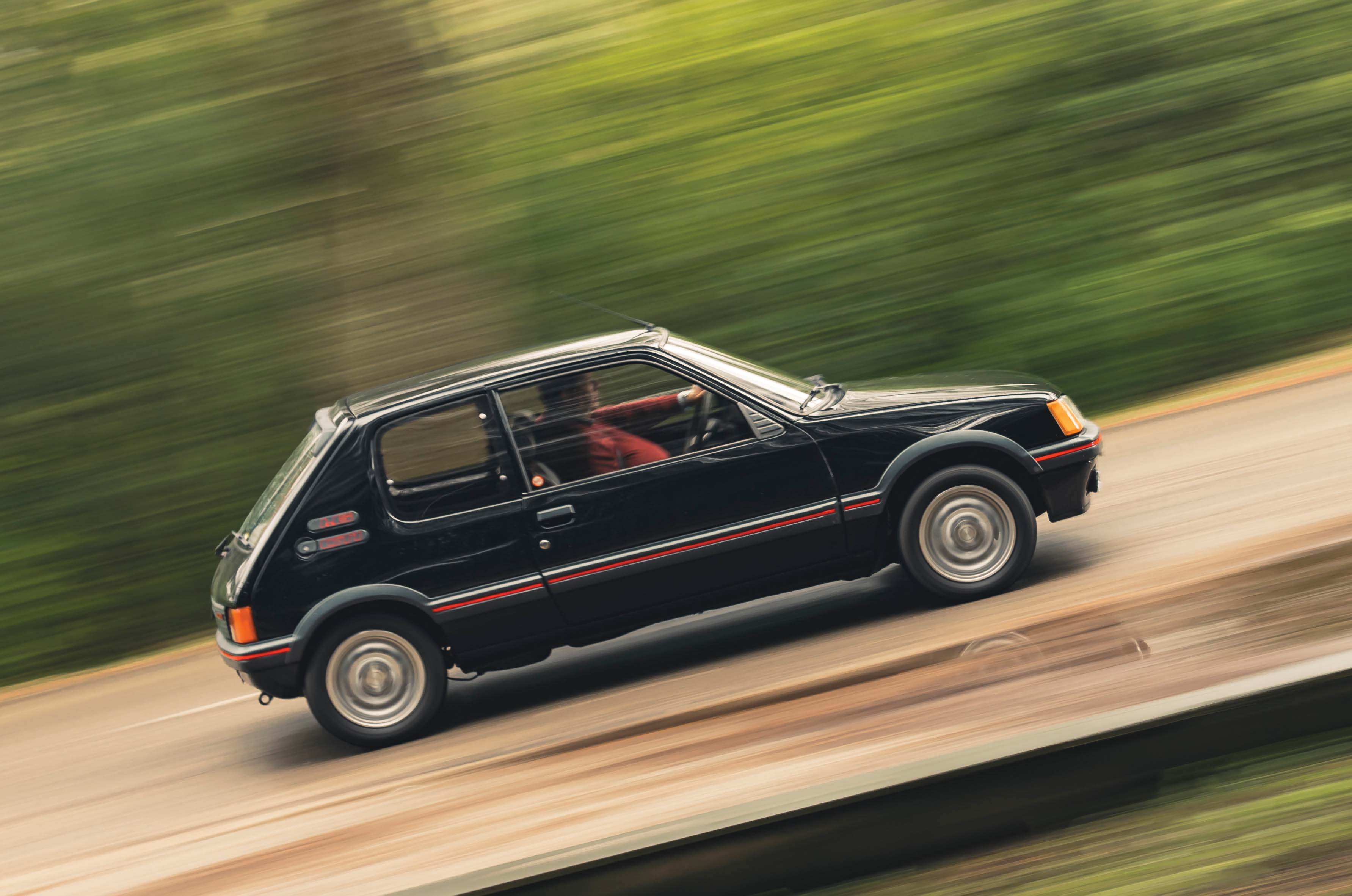
The Peugeot 205 GTI delivers instant, accessible performance
The mid-engined T16 shared little more with the 205 you could buy from the showroom than its front profile.
But maximising the publicity value of the rally car’s antics prompted Peugeot to introduce the GTI, and it would adopt as many of the T16’s styling cues as it could.
Those included a similarly shaped front bumper and pepperpot alloy wheels, while extra cladding provided hints of the T16’s wider body without any actual changes in the sheet metal.
Other visual improvements were what the car’s great inspiration, the MkI Volkswagen Golf GTI, had already set out as the blueprint for the 1980s hot hatchback: red striping on the bodywork, red carpets inside, and leather for the steering wheel and gearstick gaiter.
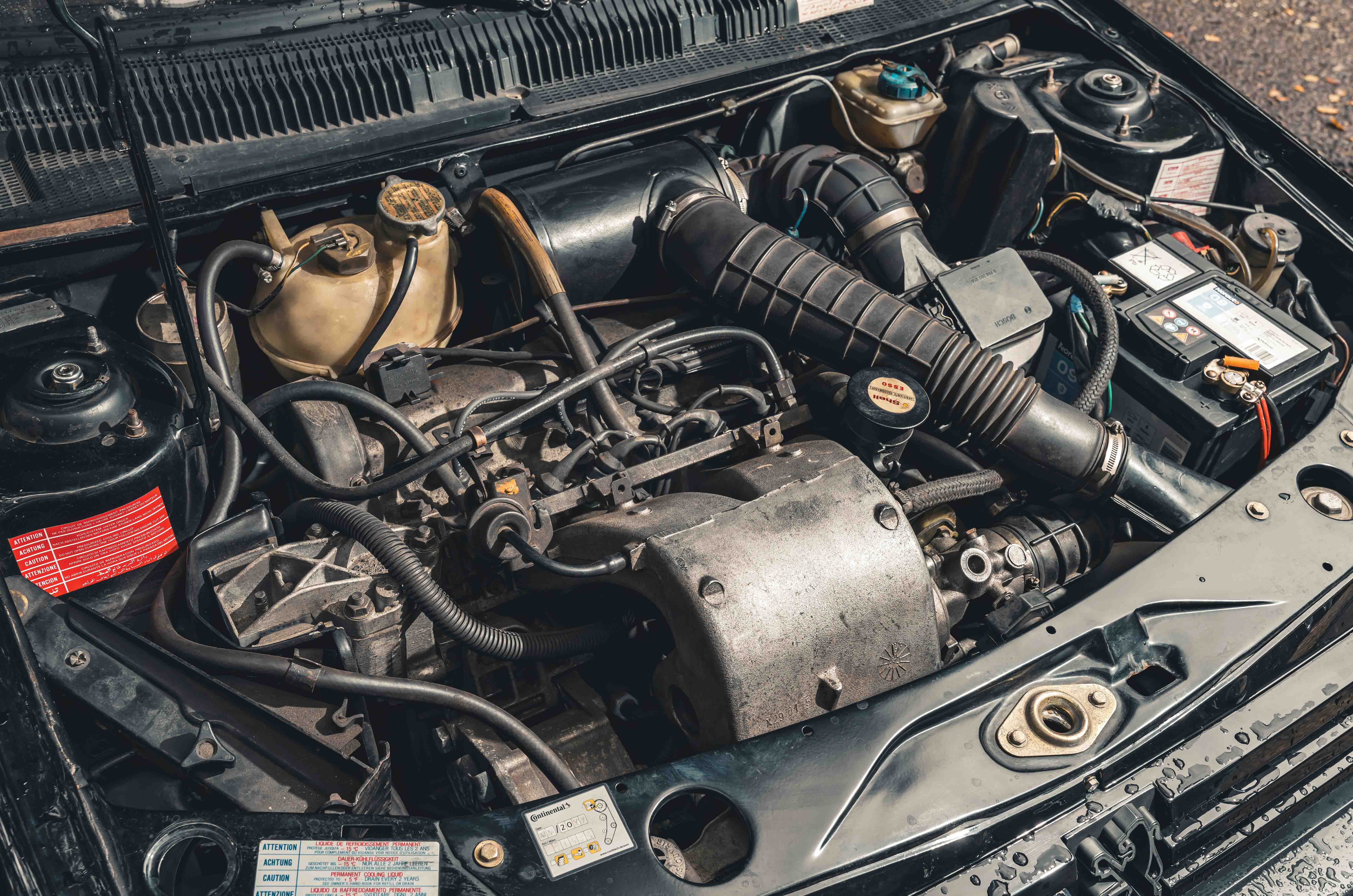
Peugeot’s product plan left room for a 105bhp, 1.6-litre, injected ‘four’ in the 205 GTI
Beyond the de rigueur trim changes, Peugeot further cribbed VW’s notes with a fuel-injected, 1.6-litre engine stuffed under the bonnet.
Thankfully, Peugeot’s desire to also endow the 205 with the large XUD diesel motor meant that the related petrol version, the XU5, would fit into the car without issue, despite all other petrol-powered 205s using a much smaller series of engines.
Ventilated discs replaced solid ones at the front of the GTI, while the suspension was duly stiffened and lowered.
Peugeot even redesigned the front subframe for the sporting variant, with discreet lower control arms triangulating the front wheels where cooking models used their anti-roll bars to provide a bottom link.
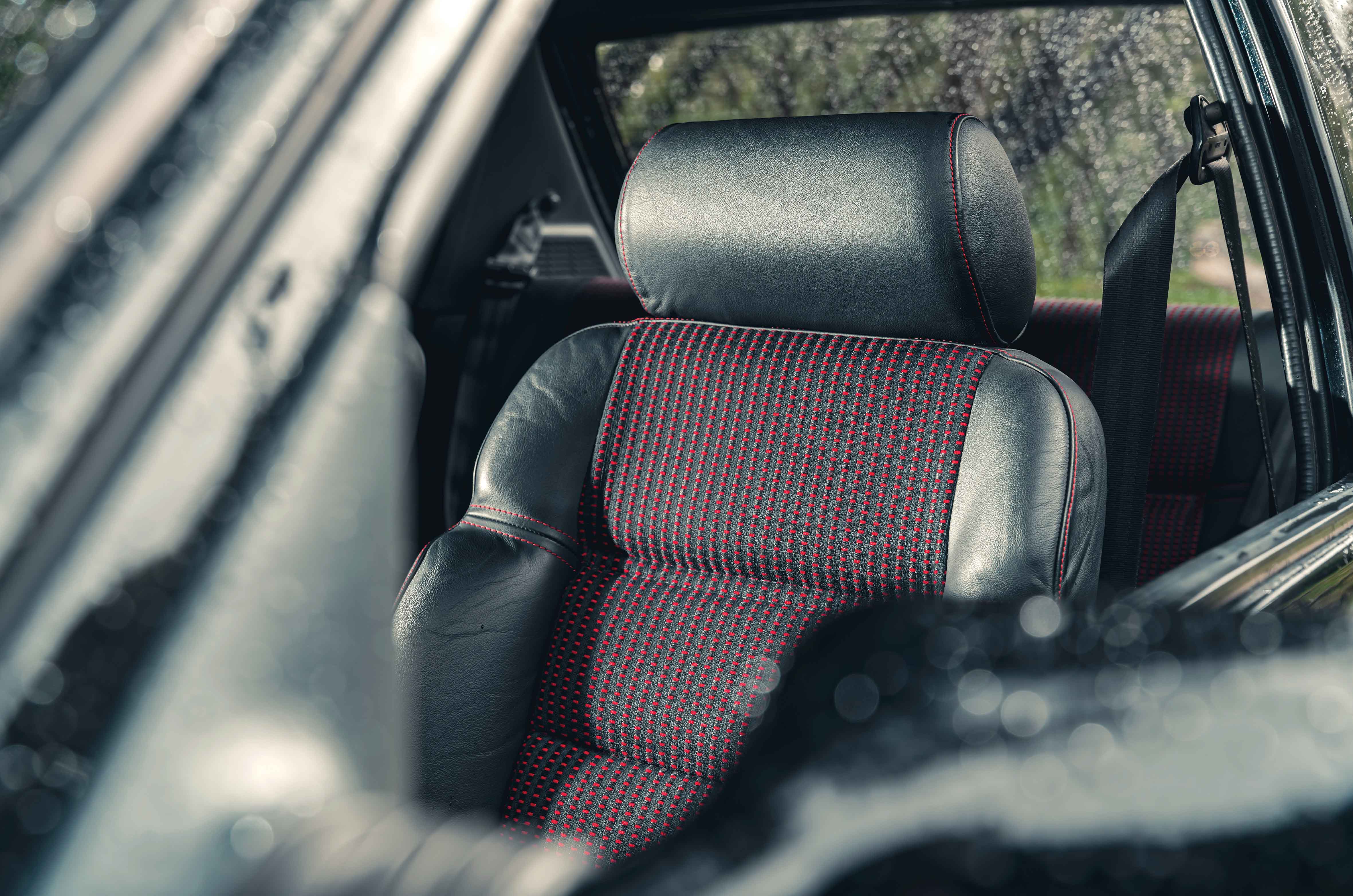
The Peugeot 205 GTI’s soft seats are high-set
For the layman driver, the difference was steering that felt more secure at high speeds, while cheaper models were prone to a slight wandering.
To fit the chronology, I’m starting in the GTI, opening a door made of sheet steel that, if any thinner, could be classed as foil.
The seating position is a bit high, inheriting the standard 205’s set-up that prioritises vision, with a feeling of being over the steering wheel rather than behind it.
A key, with a head made of plastic so soft that where there was once a lion rampant there is now a barely recognisable blob, starts the engine, which wakens in a quiet orchestra of rattles and vibrations at idle.
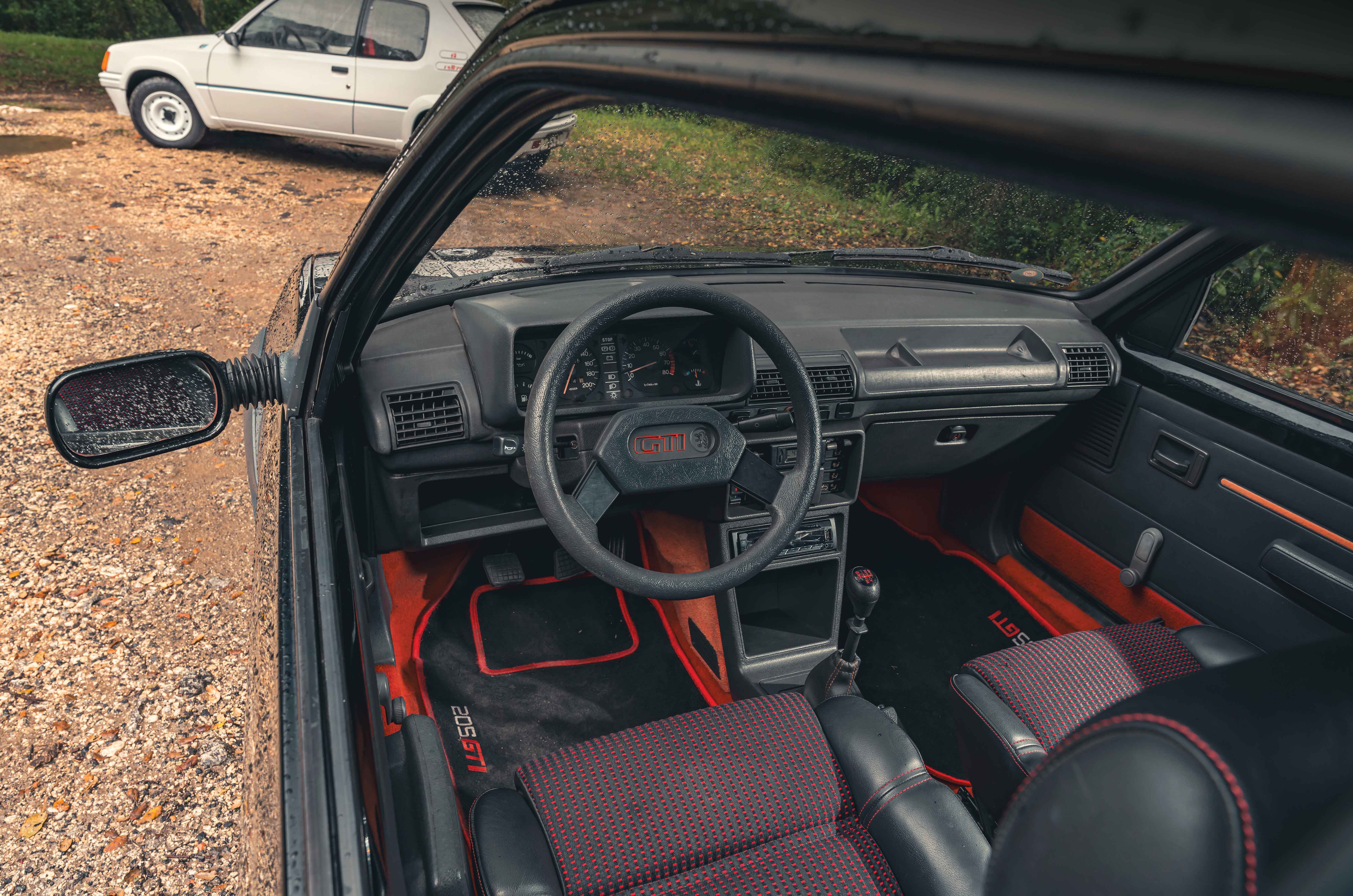
The Peugeot 205 GTI’s cabin epitomises 1980s sportiness
It is not exactly an auspicious start, then, but such frugality brings rewards.
A light, cable-operated clutch (significantly lighter than in a right-hand-drive car) allows you to select a gear with the easy – if loose and long – gearshift, and as soon as you push the throttle, the GTI announces itself as something special.
The response from the oversquare engine is electric, rivalling the finest, fuel-guzzling, triple-Weber-equipped Italian twin-cams for zinginess.
So immediate is the response that it’s easy to accidentally kangaroo the car back and forth if you try to set off gingerly – Peugeot later softened the GTI’s pick-up at low revs to improve drivability.
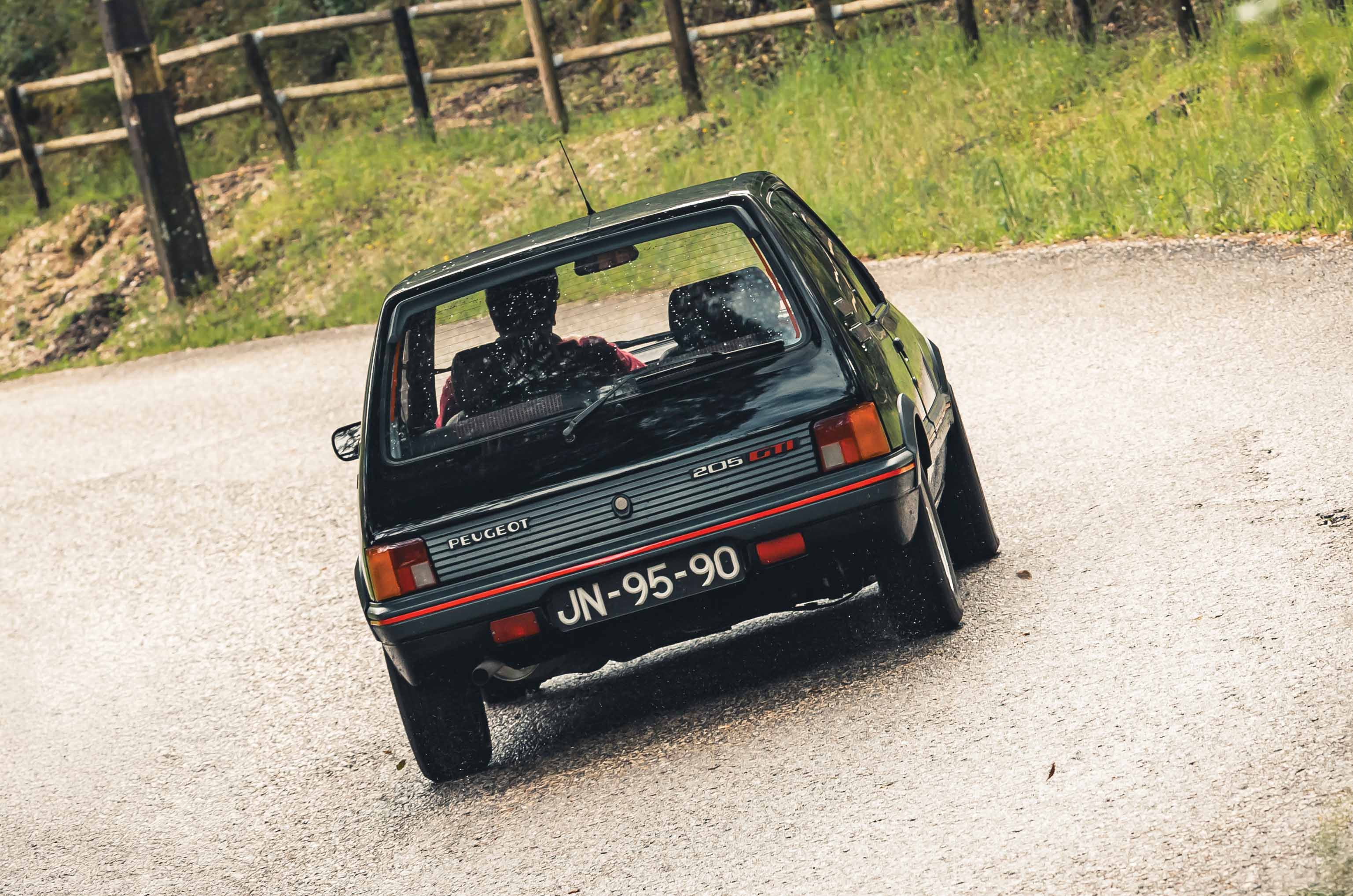
The Peugeot 205 GTI pivots around its front end
Immediacy is the name of the game: the 205’s steering instantly reacting to inputs, despite the ratio of the unassisted rack not being all that quick, at 3.9 turns lock to lock.
There’s no slack in the set-up, while a slight toe-out on the front wheels makes the car eager to change direction.
Threading through city traffic on the way to more open roads, the GTI is already a joy, with quick lane changes giving the driver the sensation of being in their own urban car chase, the Peugeot leaning slightly with each rapid change of direction.
It’s a nose-heavy driving experience, with the car pivoting on its front axle when driven with verve and its rear end happy to be thrown around in a manner that makes you wonder if there’d be much difference were the back wheels replaced by sofa castors, so eager do they seem to do so little and lift off the Tarmac.
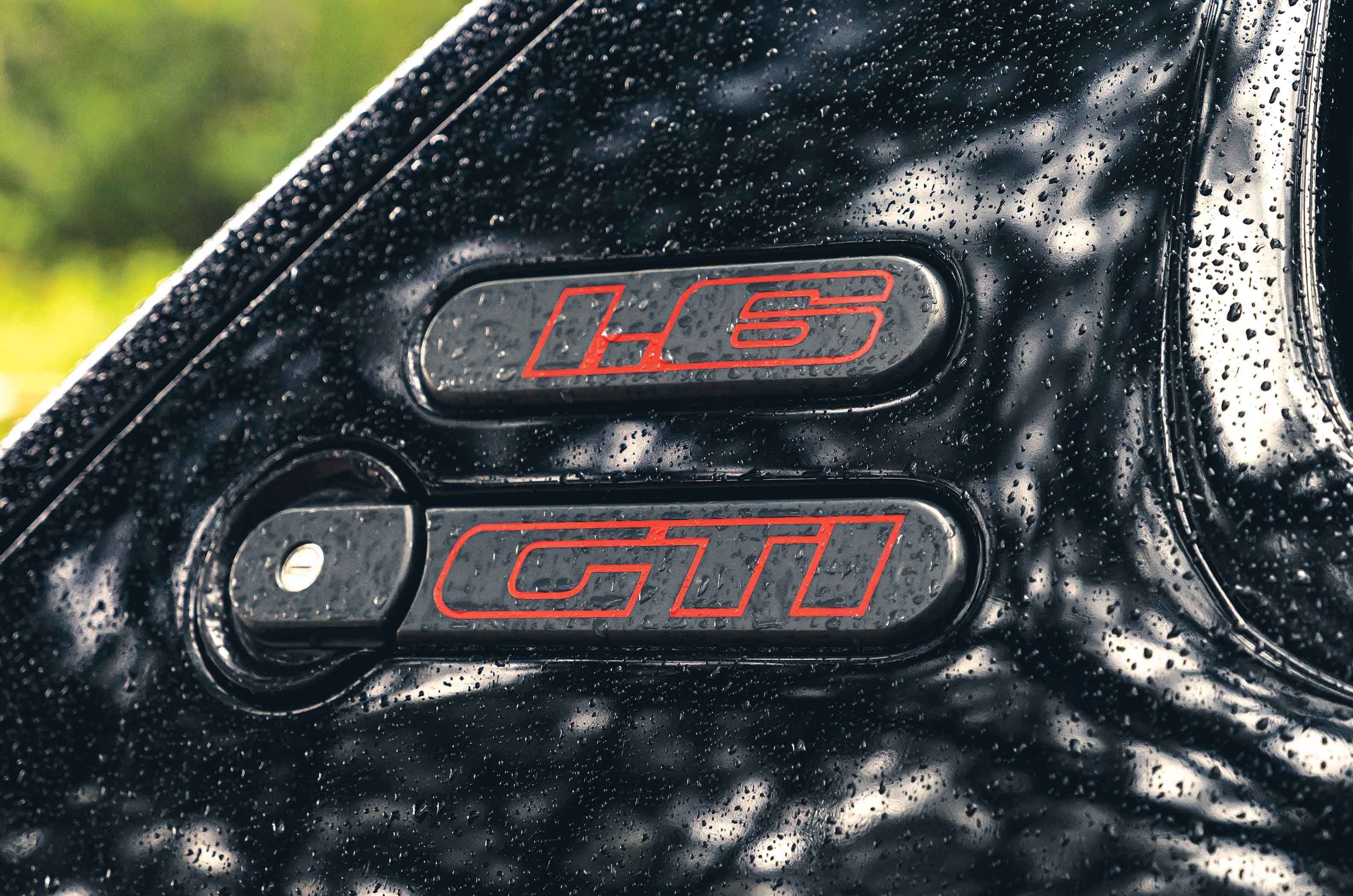
The Peugeot 205 GTI’s red trim and decals ensure it’s not mistaken for a cooking model
Get used to it, though, and it encourages aggressive, grin-inducing driving.
A hard stab of the strong brakes helps the front of the car grip the apex of a tight corner, before you wring every last bit of power from the engine on the way out via satisfying gearchanges, stirring the long wand of a lever as quickly as you can.
Revving is frantic, and the engine offers a reasonably linear stream of power up to its 6500rpm redline – although the last 1000 are a touch harsh.
There is a degree of refinement here, though: the ride is good for a car so small and light, while the seats, which offer squishy cushioning of the sort that quickly went out of fashion by the mid-1990s, provide a bit of insulation from the road surface, too.
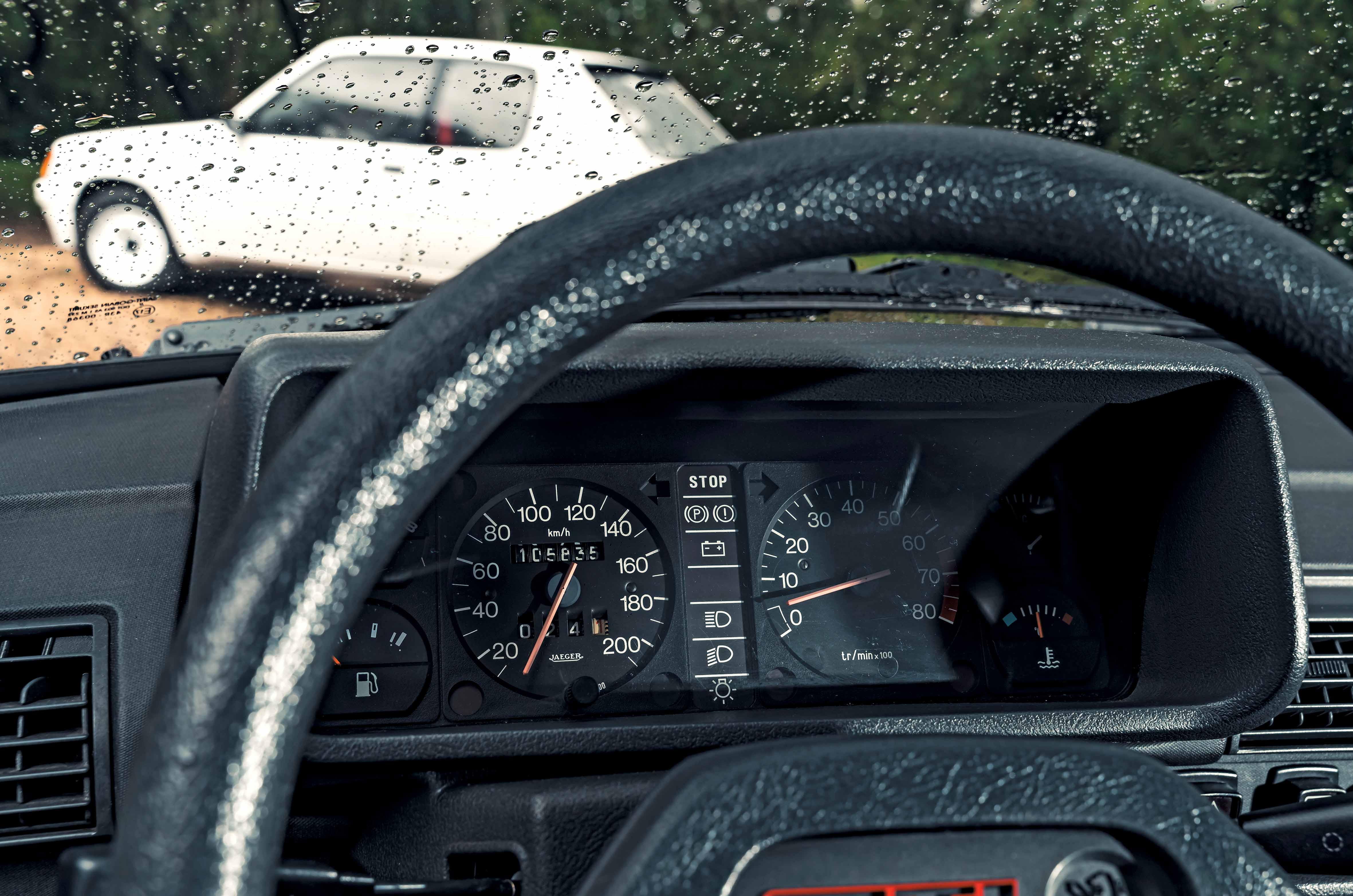
This left-hand-drive Peugeot 205 GTI’s speedometer shows kph
Ably promoted by a 205 T16 that won the constructors’ championship in 1985 and ’86, along with a drivers’ title for Juha Kankkunen in ’85, the GTI proved to be an instant best-seller.
In France, 11% of 205s sold were GTIs, while the figure was even higher in the UK, at 20%.
When the FIA pulled the plug on Group B at the end of 1986, however, Peugeot was in a bind.
No one had been more successful in this wild era of rallying, and a T16 ‘Evo 3’ had been in the works to try and retake the drivers’ championship from Lancia in 1987.
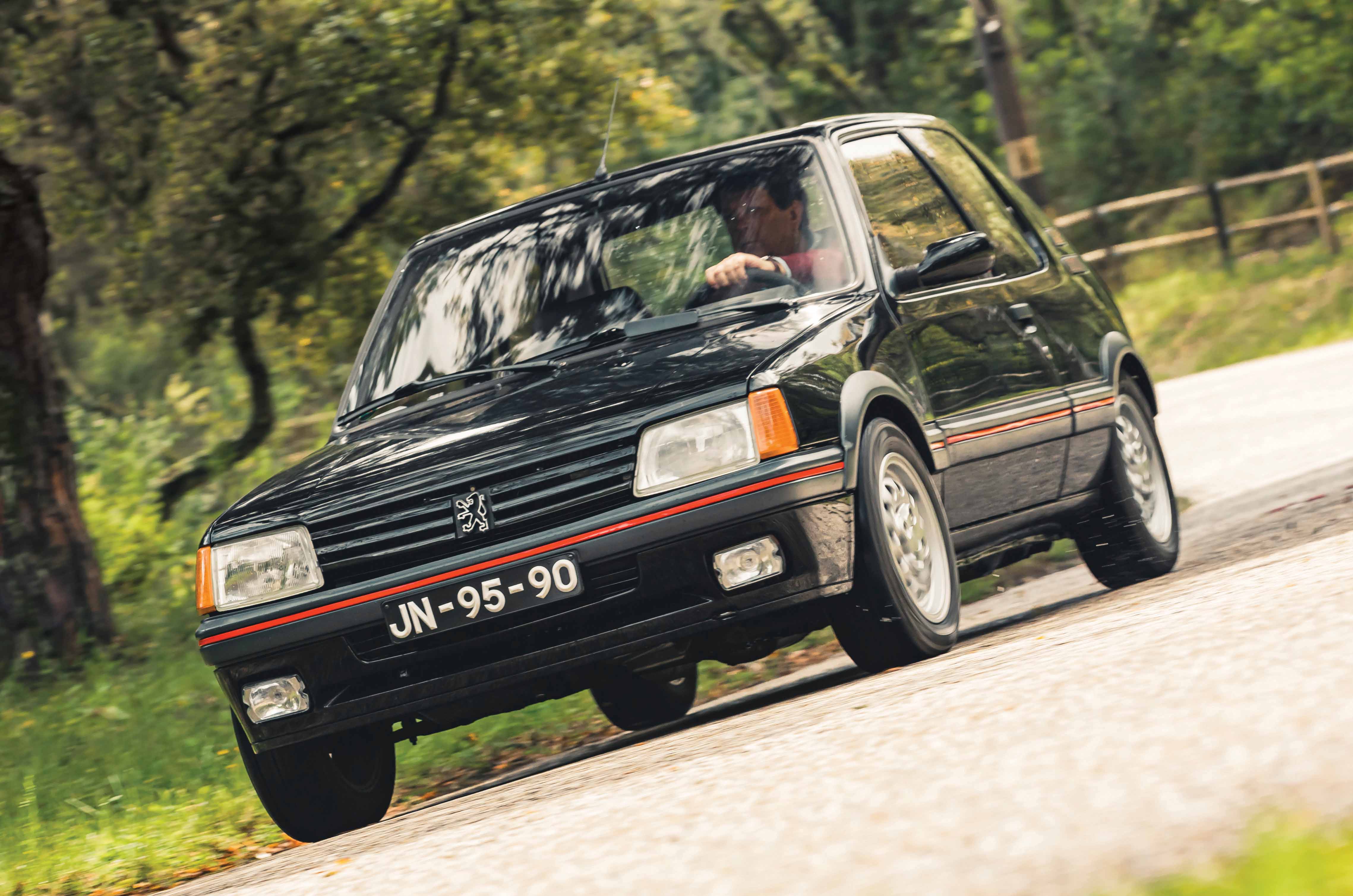
The Peugeot 205 GTI’s playful chassis rewards aggressive driving
In protest at the lost investment from what Peugeot regarded as a unilateral, knee-jerk reaction from the FIA, the marque would not return to compete in the championship until 1999, but it did decide to enter the under-1300cc Group A category – for which it needed to homologate a new car.
This couldn’t be the GTI, its 1.6-litre engine being as small a capacity as the XU engine family could drop to; also, to the benefit of enthusiasts, the required number of homologated units to qualify for Group A was 5000 cars, rather than Group B’s measly 200.
Enter 1988’s 205 Rallye.
With so many examples to sell, the Rallye had to be a profitable product – the company couldn’t take a large loss on the cars in the manner most manufacturers did with their Group B homologation products.
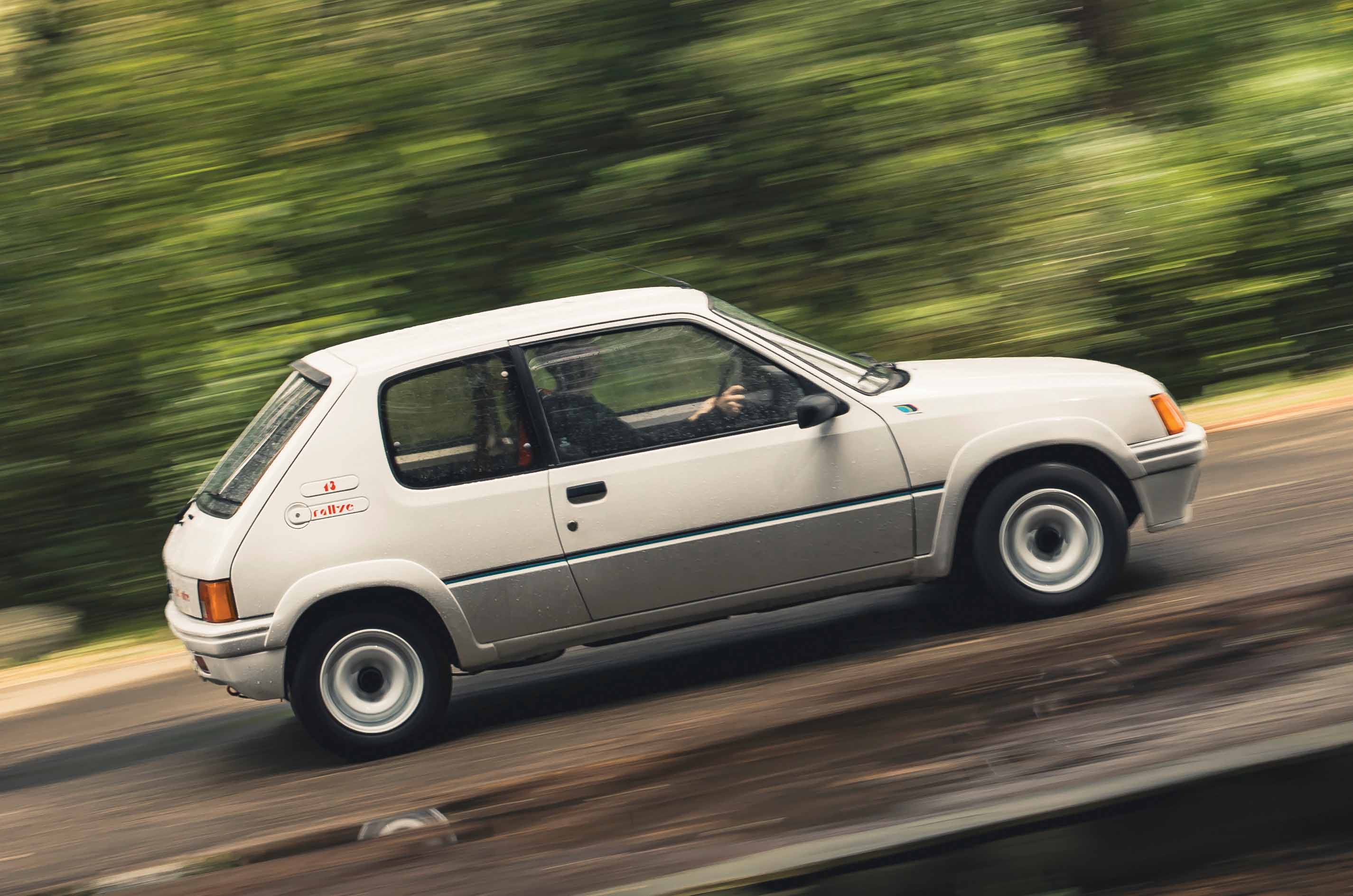
Driving the Peugeot 205 Rallye is a raw and raucous experience
The Rallye, then, would offer the components needed for the rally car – and little else.
In between the release of the GTI and the Rallye, all 205s gained an updated dashboard in 1988, and this hides some of the Rallye’s cost-cutting when comparing these two examples.
Peugeot aficionados will notice the expanse of carpet over the transmission tunnel in front of the gearstick, where all but base-spec 205s have a storage bin, while the lockable glovebox has been deleted in favour of an under-dash shelf.
Outside, alloy wheels are replaced by steels, while the front bumper has lost its foglights.
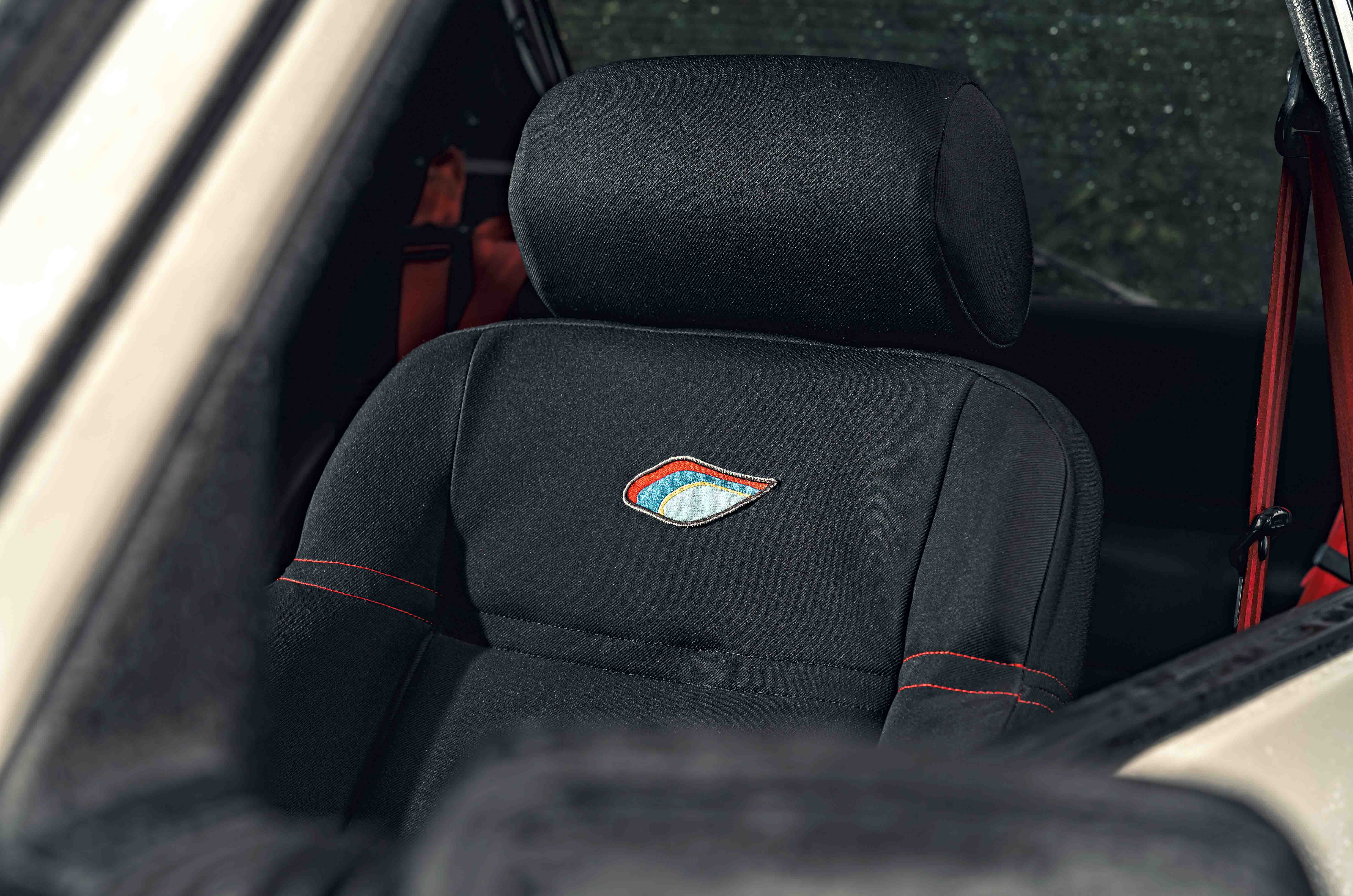
The Peugeot Talbot Sport logo is embroidered into the 205 Rallye’s front seats
What decoration there is, such as the body cladding, is purely functional, extending the wheelarches to cover the 5½in-wide wheels.
What you were paying for, when choosing a Rallye over a base-spec 205, was the engine.
From PSA’s smaller, economy-minded series of TU petrol motors, the single-cam, eight-valve unit features an alloy block – to save weight over shopping-trolley variants – and is bored to a quite specific 1294cc to maximise capacity within its sporting class.
Lift the bonnet and the engine itself looks like any other TU, even down to its uninspiring cam cover – but taking up at least as much of the visible area of the engine bay is a pair of sidedraught, twin-choke Webers.
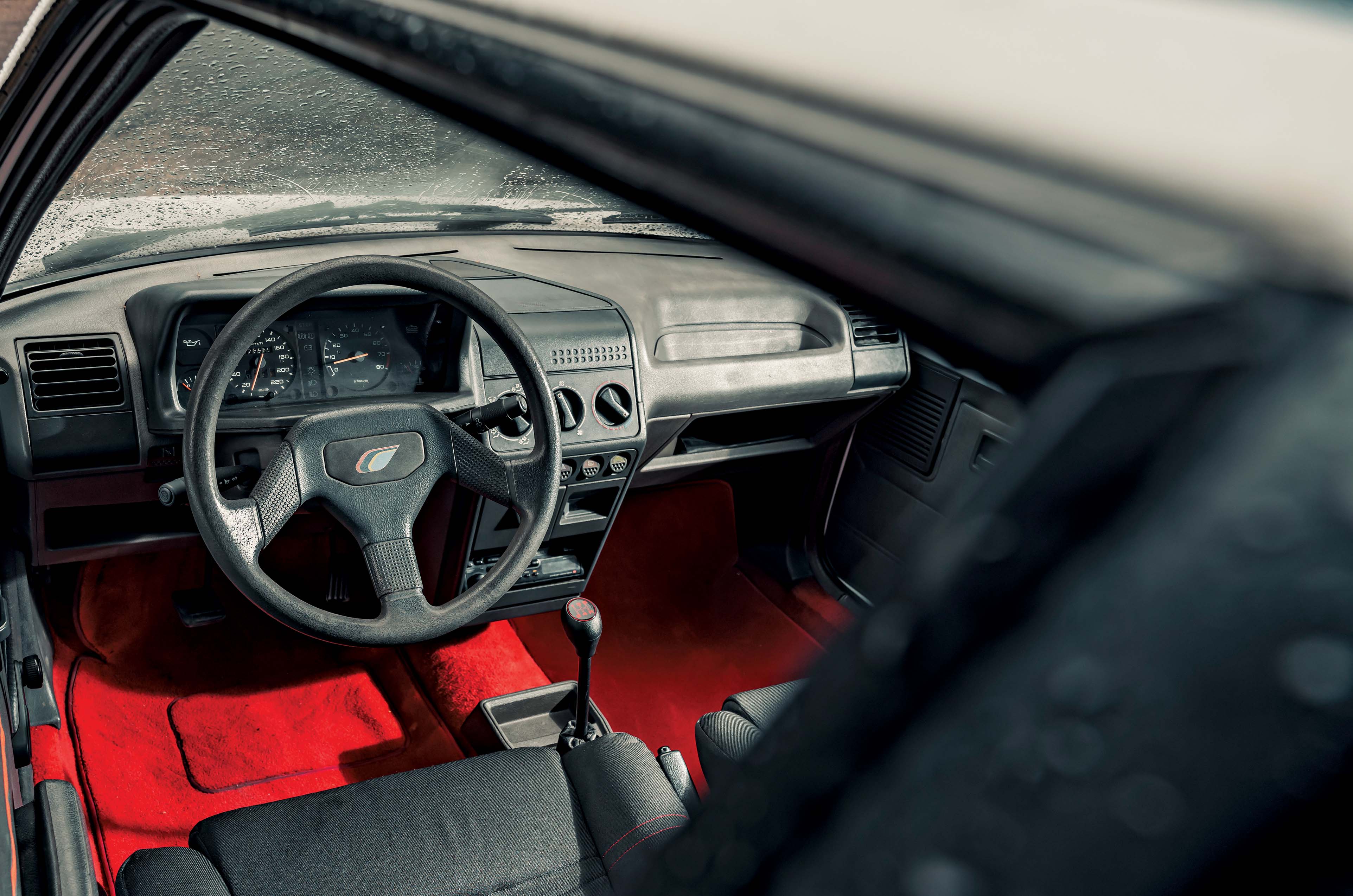
The Peugeot 205 Rallye does without a central storage bin or glovebox
Starting the Rallye requires a longer crank than the GTI, including fiddling with a manual choke.
Just a blip of the throttle makes obvious the difference: where the GTI sounded a bit fruity, this car has a delicious induction roar.
Peugeot skimped on soundproofing, too, so it’s noisier in the cabin, both in terms of engine sound as well as various squeaks and rattles.
It coughs and splutters at first, and while there’s a palpable sense of those long intake tracts clearing their throats, there’s a low-rev flat-spot that never quite goes away.
It’s best to make use of the Rallye’s gearing, which is even shorter than that of the GTI: in fifth, 70mph comes up at more than 4000rpm.
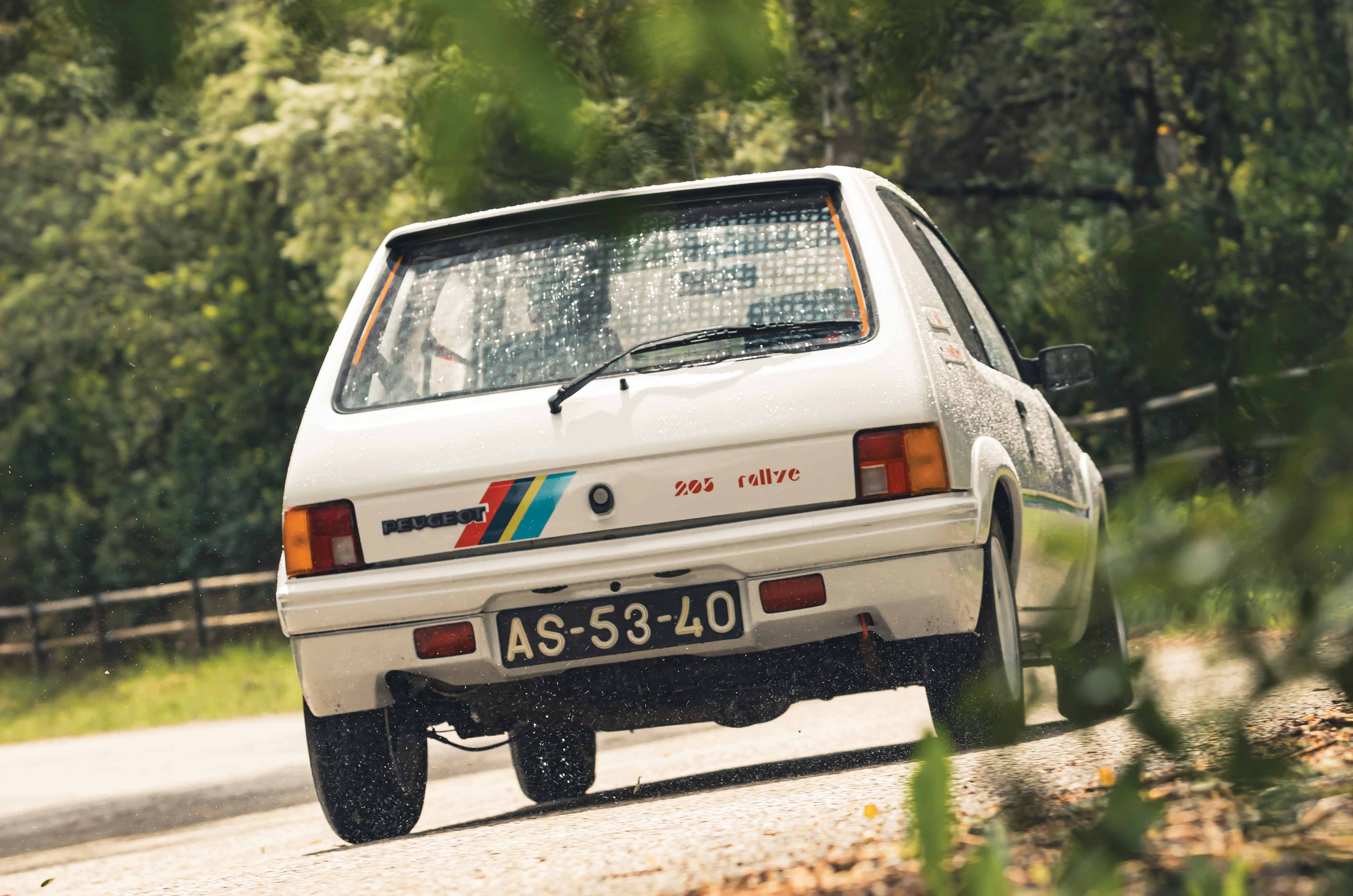
The Peugeot 205 Rallye is more balanced than the 205 GTI, thanks to improved weight distribution
It’s a better gearshift than the GTI’s – still long in the throw, but the ratios slot into place with improved feedback.
The gearbox of the Rallye, like the engine, is of a completely different design, being PSA’s smaller, lighter MA unit that was usually reserved for economy models, such is its aversion to torque.
Anyone who campaigns a 205 Rallye, a 106 or a Citroën Saxo will tell you it’s these gearboxes that are the bottleneck in the tuning potential of the cars.
Buzzing away frantically, the Rallye makes up for the torque it gives away to the GTI with shorter gearing and less weight, and it is every bit as fast – as long as it is kept above 3500rpm, where the hot cam finds most of its power.
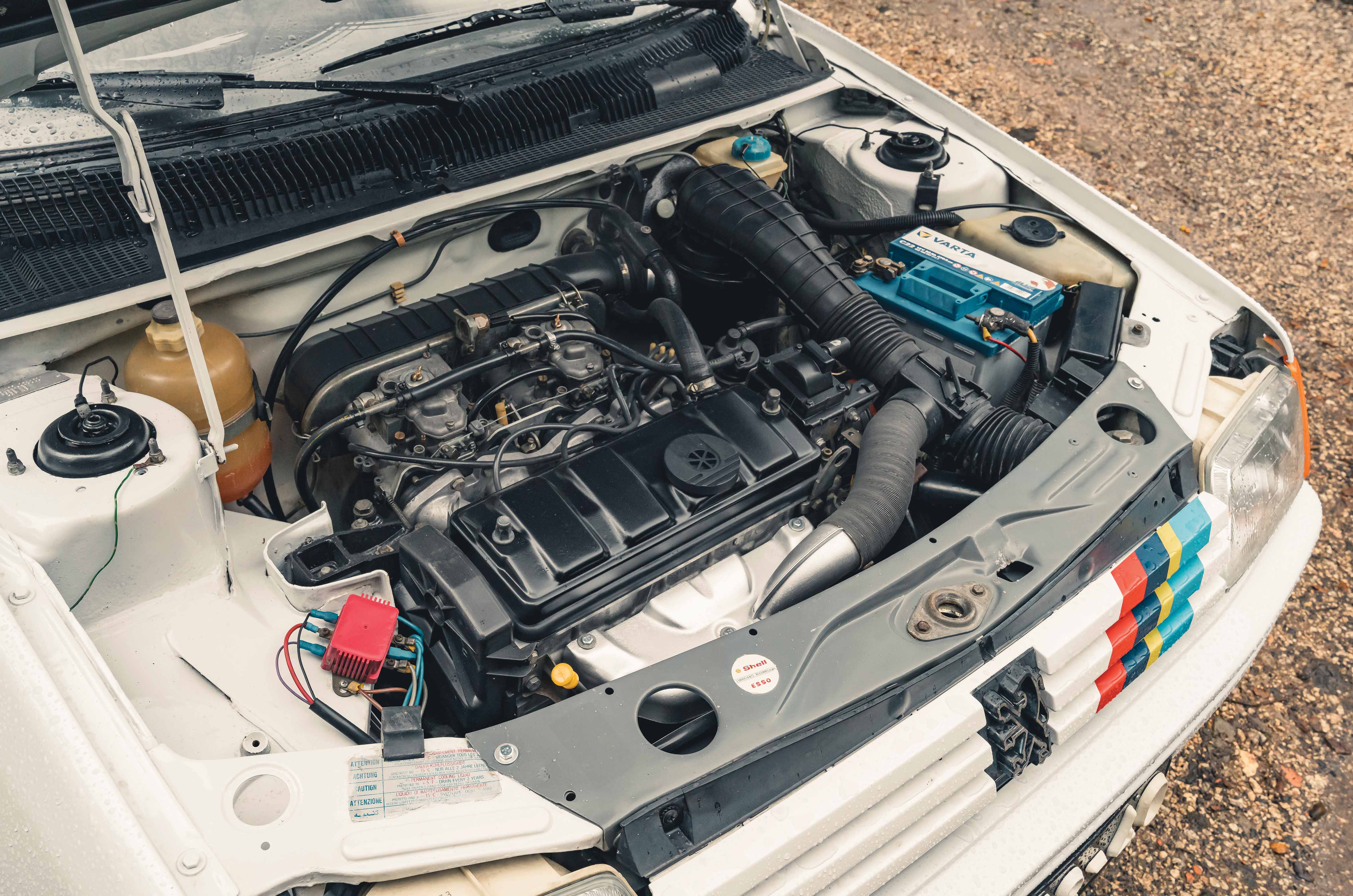
Twin Webers almost dwarf the Peugeot 205 Rallye’s 1294cc ‘four’
Its redline is higher, at 7000rpm, but it’s between 4000 and 6000rpm where the Rallye is at its best.
Lowered and stiffened like the GTI, and borrowing its improved front subframe, the car handles similarly, albeit with a more balanced character thanks in part to its weight bias being slightly further back.
It’ll still pitch its rear around a corner, but it’s more controllable and less of a pendulum-like sensation.
As soon as there is a ripple or rut in the surface, though, the Rallye descends into a cacophony of rattles that overcomes even the engine noise as the shocks shake through the shell.
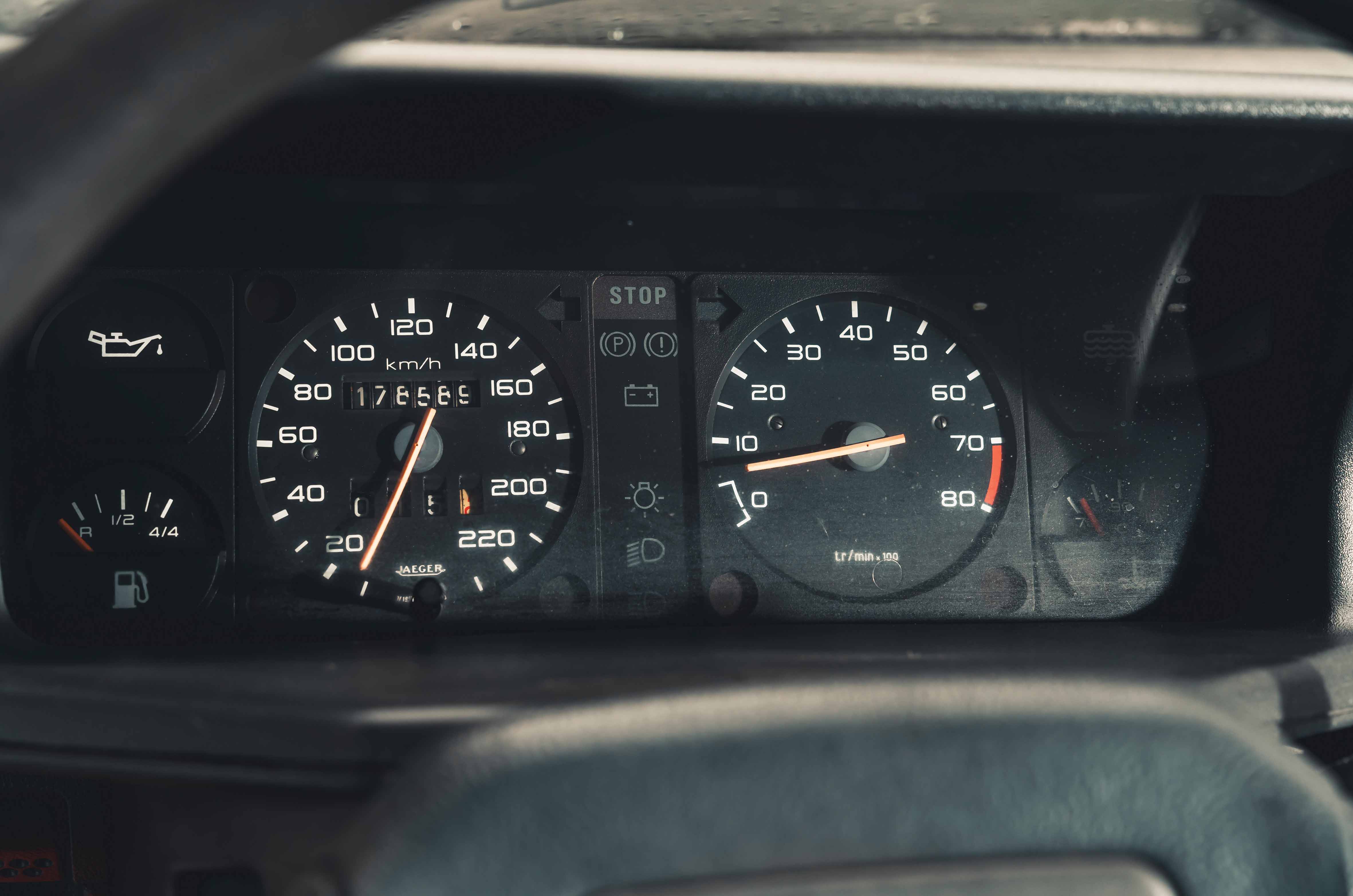
The Peugeot 205 Rallye’s simple dials
Later I notice that even the trim panels on the walls of the boot have been deleted, turning the cabin into a metal-walled resonance chamber.
Driving at speed is intense to every sense, the steering wheel vibrating in my hands, ears ringing and scenery dashing past the window, while hot oil and exhaust fumes are just about detectable by nose and tongue.
Both of these Peugeots are antidotes to the overpowered, overweight and over-insulated cars of the modern era.
Feedback, response and agility are their watchwords – but there is no doubt that the Rallye takes this further.
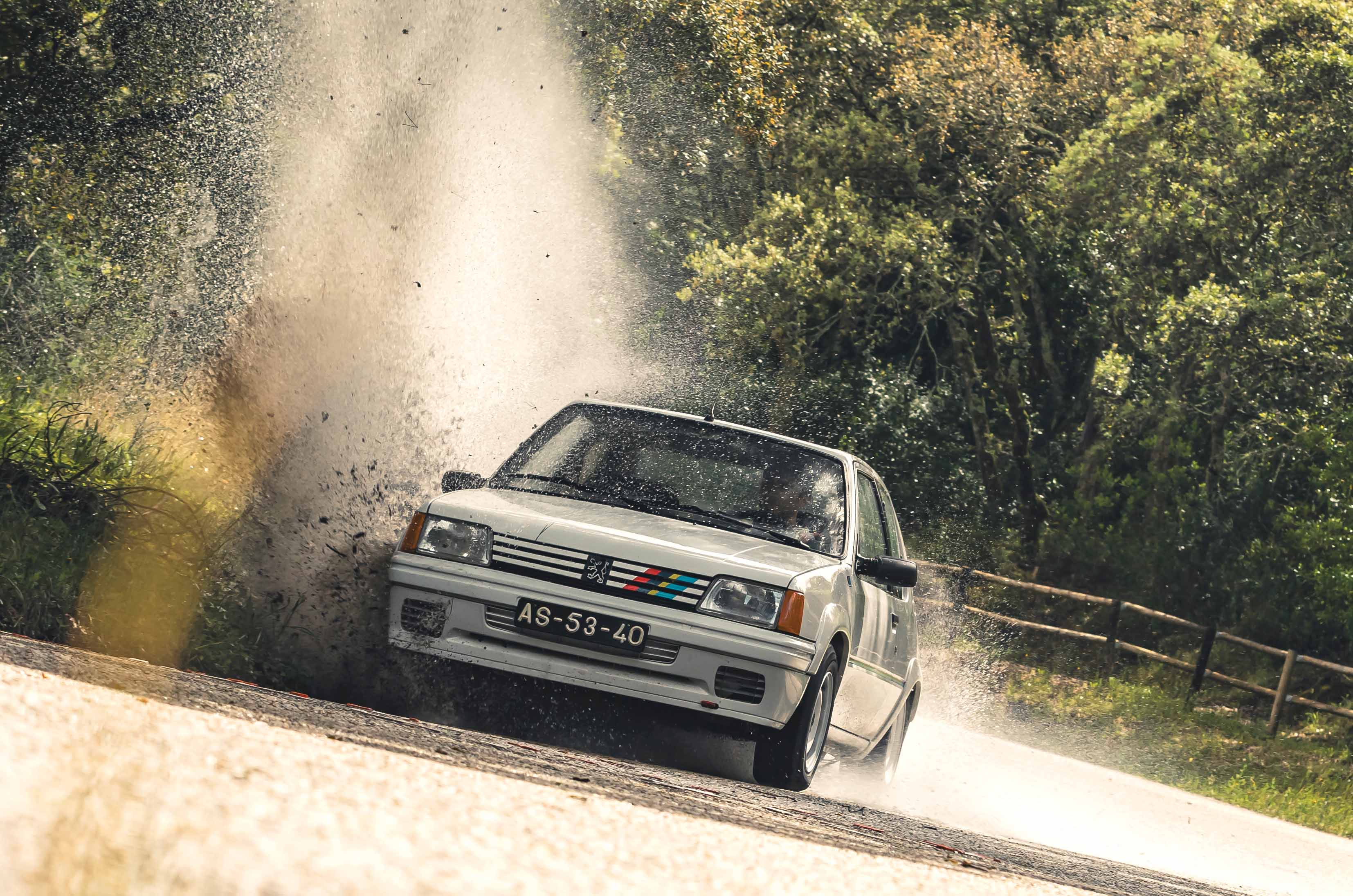
Refinement isn’t on the Peugeot 205 Rallye’s agenda – everything that happens outside is felt and heard on the inside
Sadly, the full-fat version never came to the UK, the right-hand-drive Rallye being little more than a sticker-clad special, while Germany and Switzerland also missed out due to emissions laws.
Nonetheless, Peugeot found such a ready market for the stripped-out model that it built more than six times the amount required for homologation, starting a tradition of Rallye editions that stretched into the 1990s.
If I were to pick a set of keys for 20 minutes on a twisty road, I’d take the raucous Rallye – but only if I had a collection of other classics that meant this was all I ever used it for.
But for those of us without a 10-car garage, the GTI’s small sacrifices make it the more complete car.
Road trip, B-road blast, even daily duties, this 205 is a true do-everything classic.
For me, that breadth is part of the essence of hot hatch versus sports car, so make mine a GTI.
Images: Max Edleston
Thanks to: Lisbon Classics
Factfiles
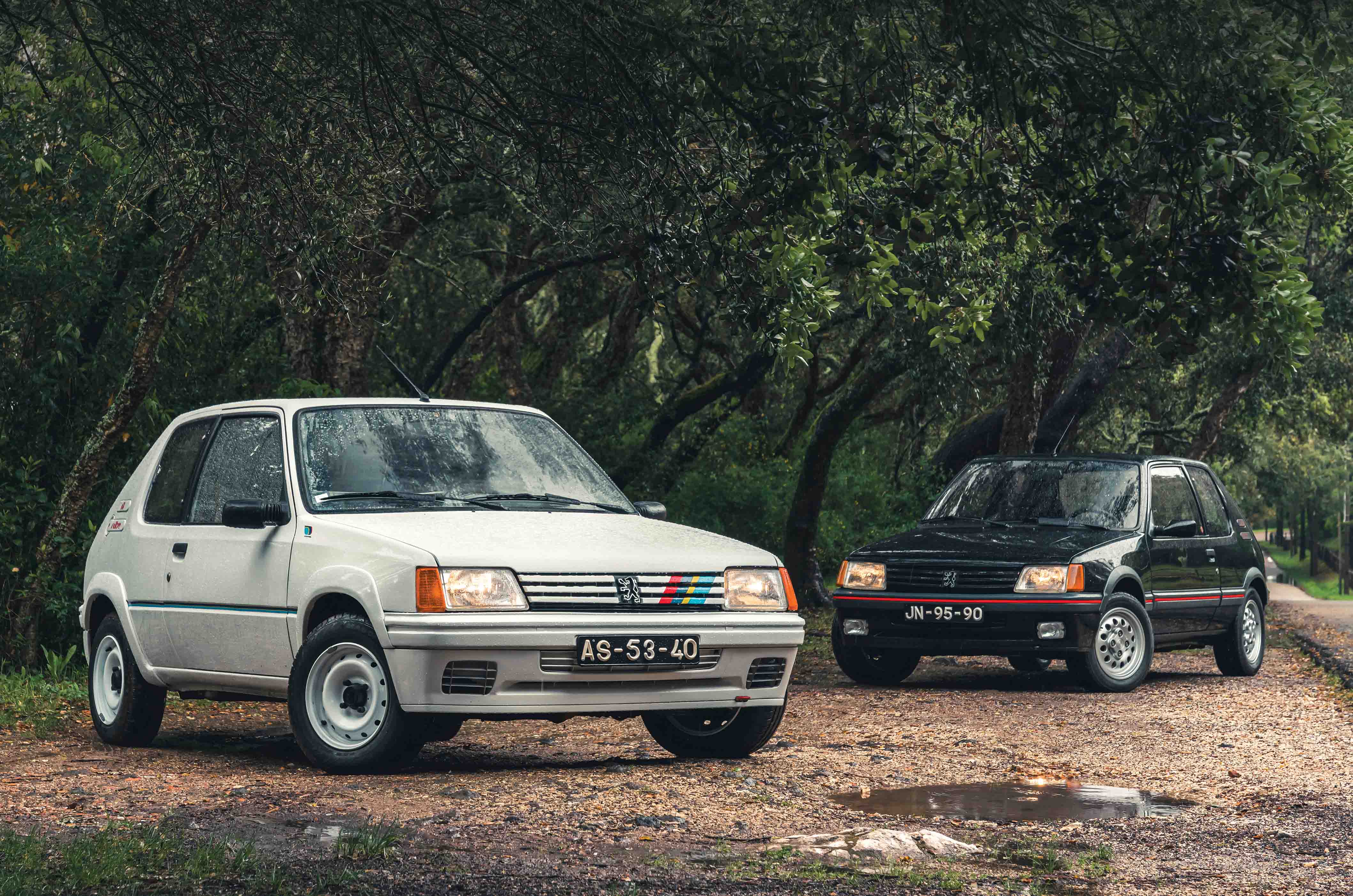
Peugeot 205 GTI 1.6
- Sold/number built 1984-’94/332,924 (1.6 & 1.9)
- Construction steel monocoque
- Engine all-alloy, sohc, 8v 1580cc ‘four’, Bosch LE2-Jetronic fuel injection
- Max power 105bhp @ 6250rpm
- Max torque 98lb ft @ 4000rpm
- Transmission five-speed manual, FWD
- Suspension independent, at front by MacPherson struts rear trailing arms, torsion bars, telescopic dampers; anti-roll bar f/r
- Steering rack and pinion
- Brakes vented discs front, drums rear, with servo
- Length 12ft 1⅞in (3705mm)
- Width 5ft 1⅞in (1572mm)
- Height 4ft 5½in (1360mm)
- Wheelbase 7ft 11¼in (2420mm)
- Weight 1874lb (850kg)
- 0-60mph 9.5 secs
- Top speed 118mph
- Mpg 35
- Price new £7145 (1985)
- Price now £8-30,000*
Peugeot 205 Rallye
(Where different from GTI)
- Sold/number built 1988-’92/30,111
- Engine 1294cc, two twin-choke Weber carburettors
- Max power 102bhp @ 6800rpm
- Max torque 89lb ft @ 5000rpm
- Weight 1742lb (790kg)
- 0-60mph 9.6 secs
- Top speed 118mph
- Price new Ffr69,800 (1988)
- Price now £10-25,000*
*Prices correct at date of original publication
Enjoy more of the world’s best classic car content every month when you subscribe to C&SC – get our latest deals here
READ MORE
Peugeot 205, 106 and 306 Rallyes: the perfect formula
Feisty four-pots: Peugeot 306 Rallye vs Honda Integra Type R vs Ford Racing Puma