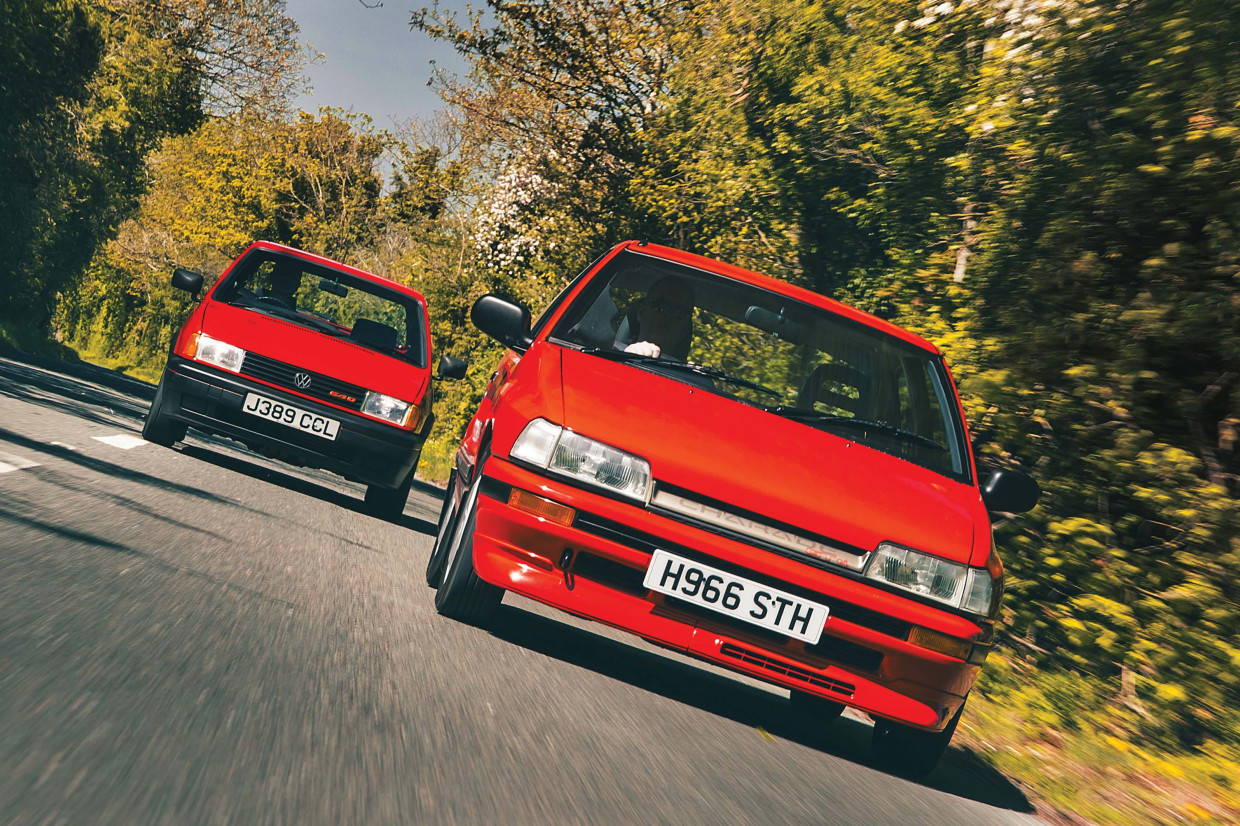
Not only did almost every manufacturer join the hot-hatch party in the early 1990s, but many also produced a lively variant of every different-sized model across their ranges.
While most were figuring out how to package saloon-car powertrains under small bonnets, a few eccentric engineers at Daihatsu and Volkswagen were sitting in the corner, playing with high-pressure plumbing and small-capacity, three-cylinder madness.
Daihatsu was first out the blocks in 1987 with the Charade GTti, but the marque already had form in the field, having offered a mildly sporty Turbo model of the preceding incarnation of Charade.
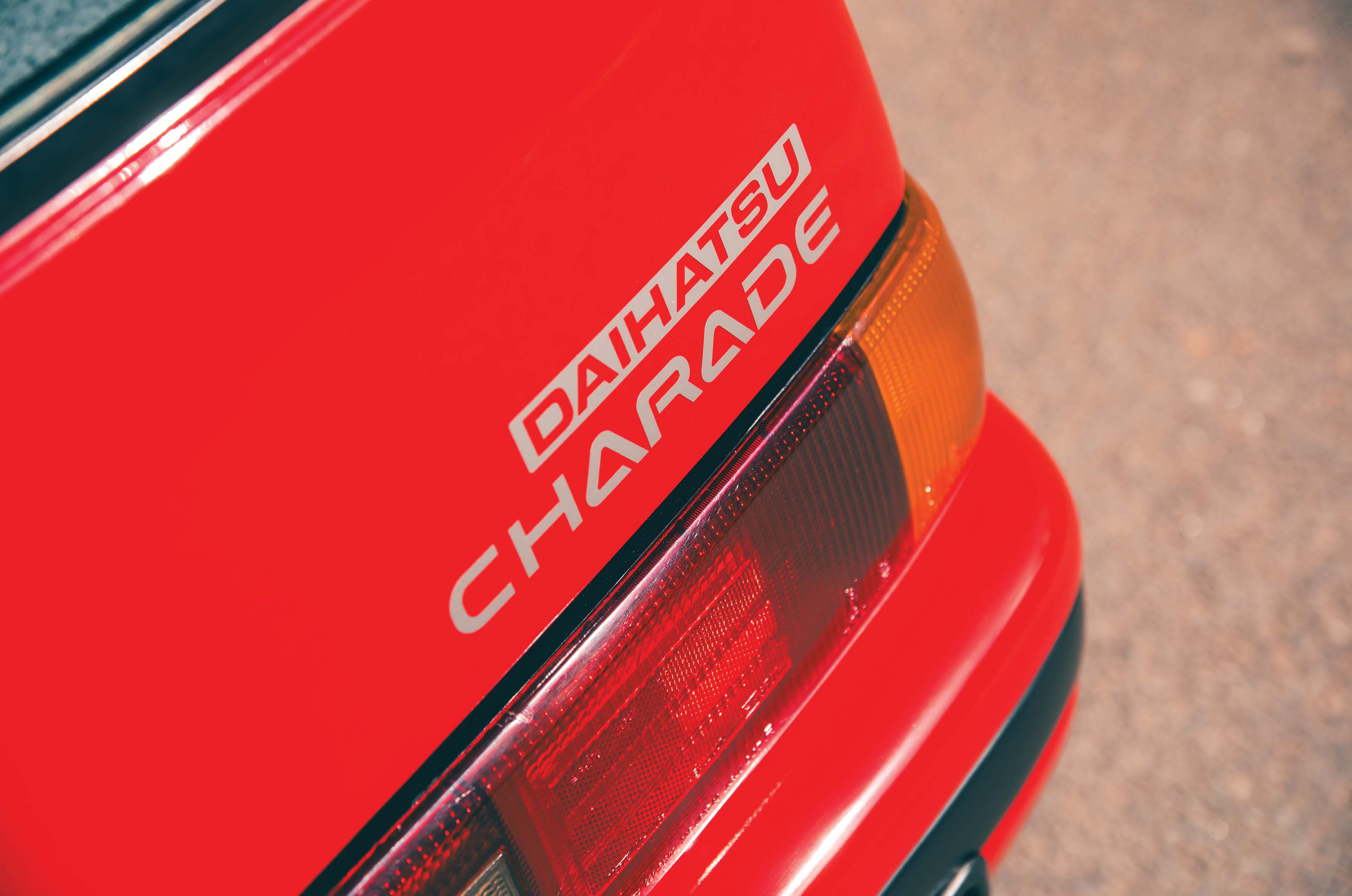
Daihatsu’s standard Charade provided a good base for the GTti
Despite a muscular, boxy bodykit and fitting red stripes (and even a De Tomaso variant with Campagnolo alloys), that car offered just 67bhp in European trim – barely enough to qualify for the ‘warm hatch’ field.
The marque had some notable competition success with that first-generation Charade Turbo nonetheless, including class wins on multiple editions of the Safari Rally.
But it really raised eyebrows among more storied names when it unveiled the Charade 926R at the 1985 Tokyo motor show.
Here was a mid-engined, rear-wheel-drive prototype – in effect a Japanese Renault 5 Turbo, featuring the first iteration of the CB70 twin-cam, 12-valve head.
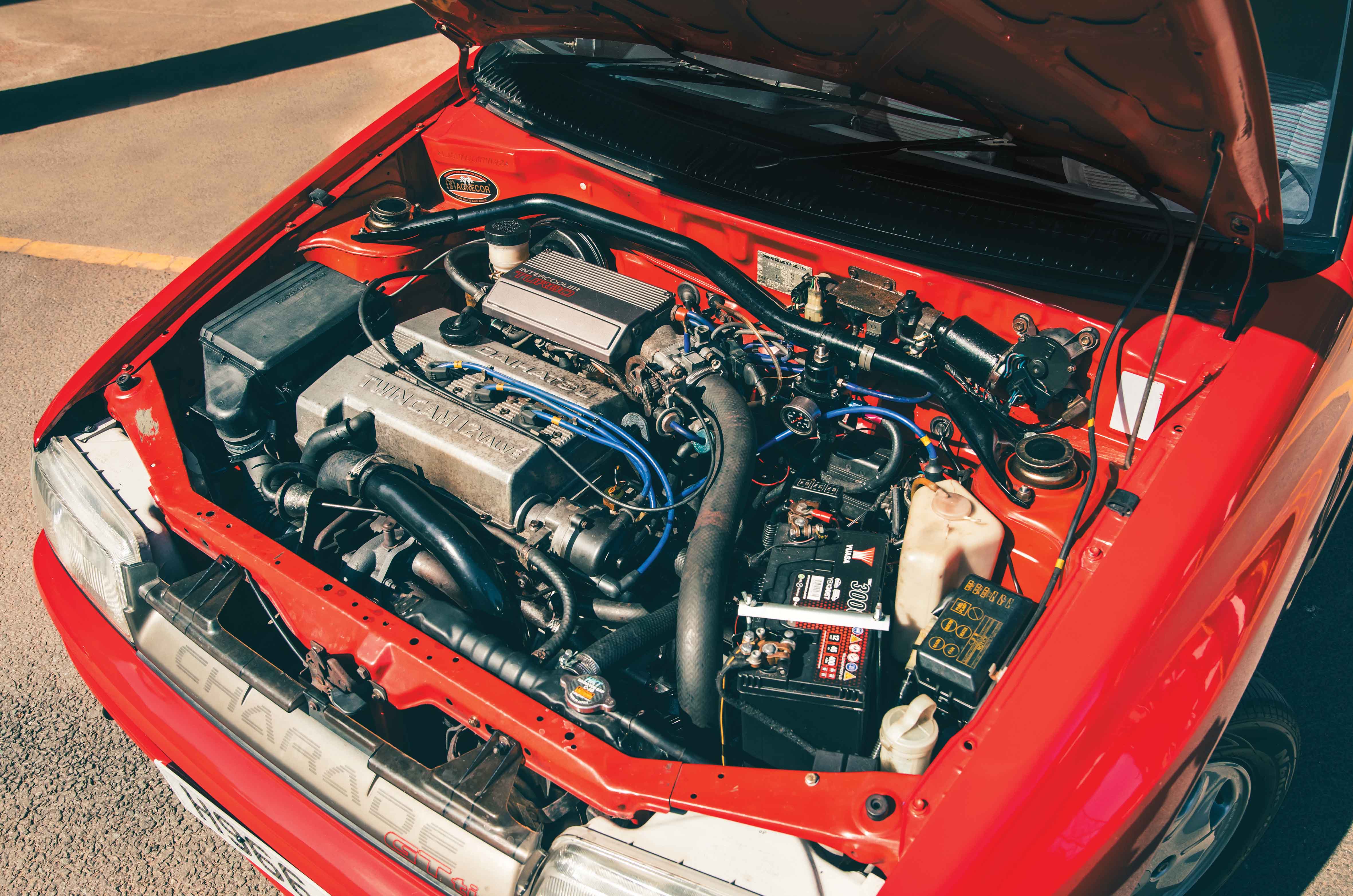
The Daihatsu Charade GTti’s small, three-cylinder unit packs plenty of punch
When Group B was banned in 1986, the 926R died, but its high-tech cylinder head survived to become the heart of the incoming road car.
Fitted with more valves, more camshafts and an intercooler, the GTti provided 101bhp from just three cylinders.
Totalling 993cc in capacity, it was the first mass-produced 1-litre car engine to generate more than 100bhp.
That extra power and a dry kerbweight of just 810kg gave the Charade GTti a 0-60mph time of 8.2 secs – faster than a 1.6-litre Peugeot 205 GTI – and Daihatsu its first real hot hatch.
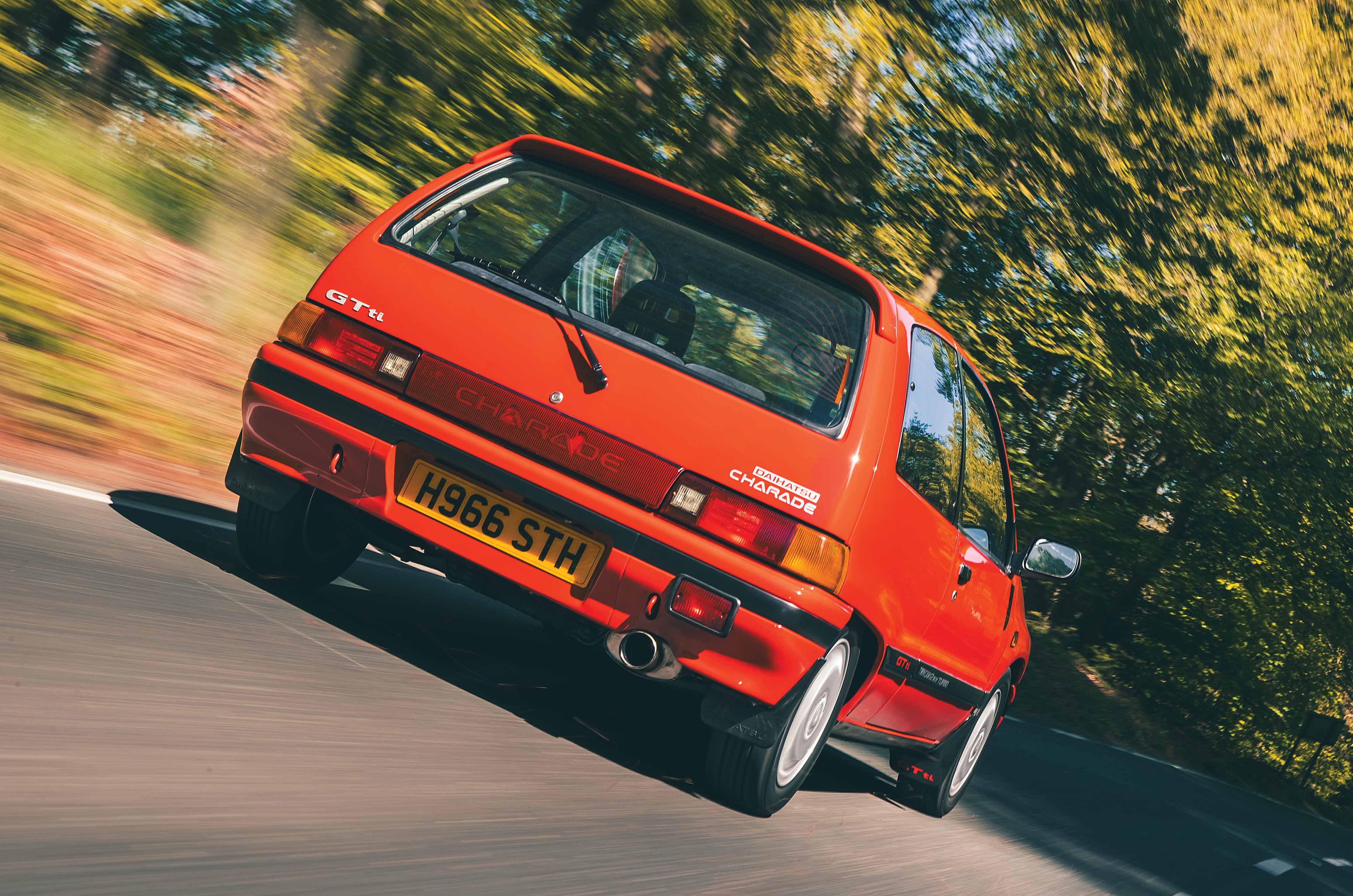
The Daihatsu Charade GTti’s reflective rear panel was of the moment
The Japanese manufacturer returned to rallying with the new GTti, too, performing well on the Safari from 1989-’93, including a fifth place overall.
Inheriting the standard Charade’s fully independent suspension gave the GTti an excellent base on which to start, and from there Daihatsu’s engineers, still largely separate from Toyota at this point, added stiffer suspension, 14in alloy wheels, rear disc brakes and typically sporting visual addenda for the period.
This included that most late-’80s/early-’90s styling element: a tail-light heckblende.
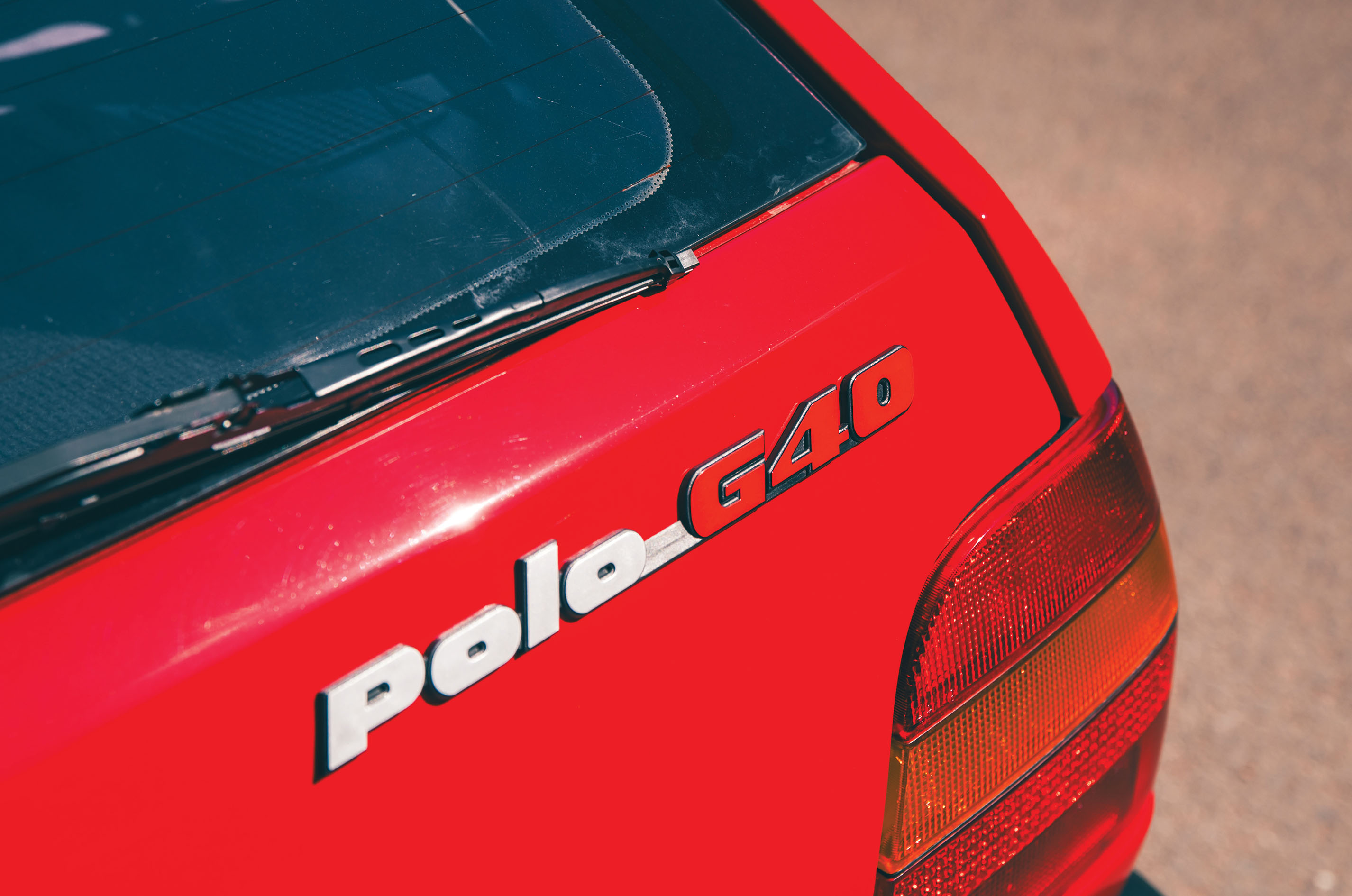
Volkswagen’s well-proven supermini had mainstream appeal, even in supercharged G40 guise
Compared to what Daihatsu’s engineers were cooking up in Osaka, Volkswagen’s method to cram more power into a small hatchback that couldn’t accommodate a larger engine – the Polo – might appear a bit old fashioned on the surface.
With the exception of American drag racers and the odd exotic performance car, superchargers were falling out of fashion in the face of turbocharging.
VW believed the temperatures in the Polo’s tiny engine bay would be too great with a turbo, however, so it decided to resurrect a technology that was previously largely untested in mass-produced automobiles: the scroll-type supercharger.
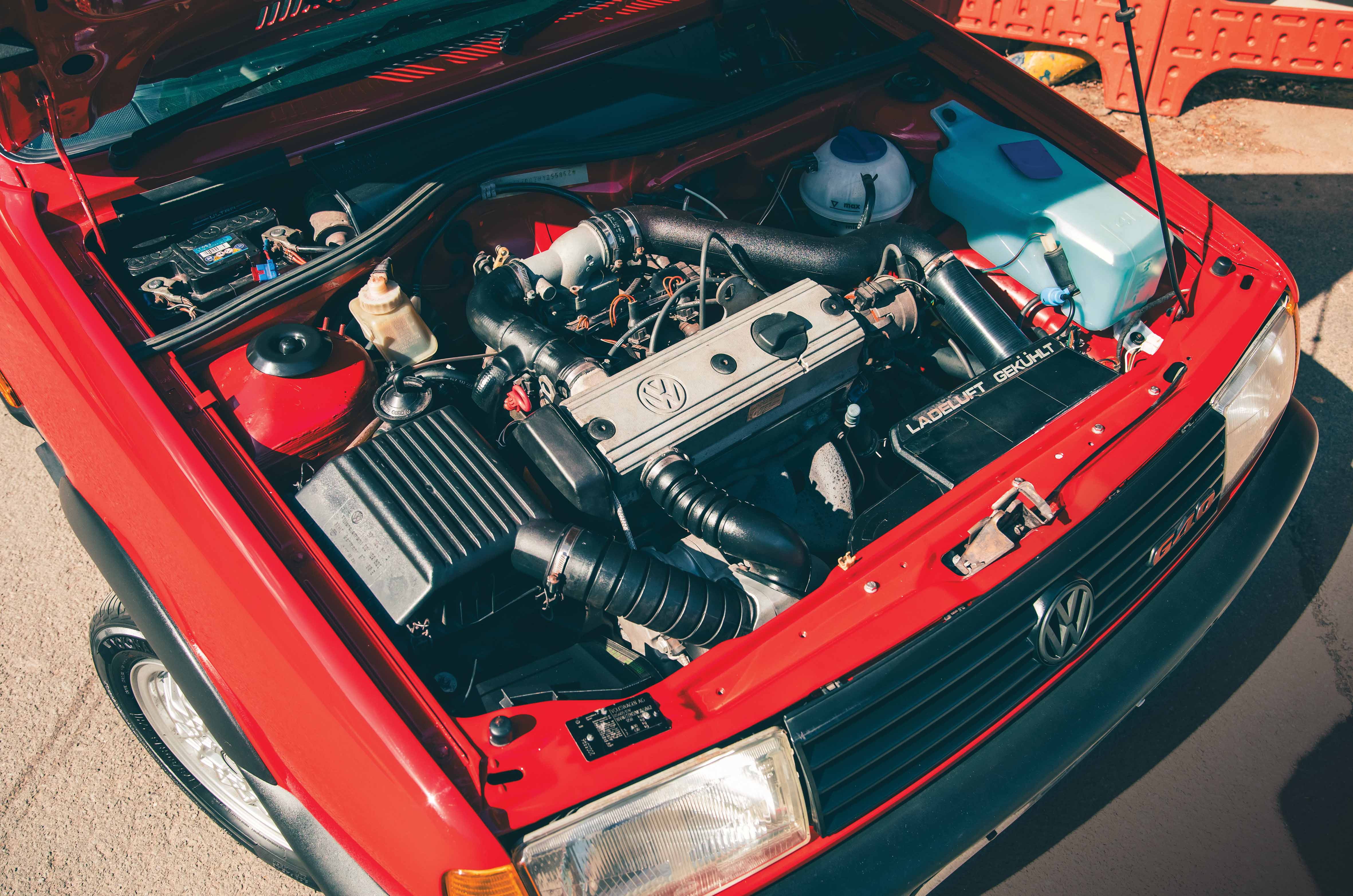
VW proved its ‘G-Lader’ concept on the Polo’s 1.3-litre, four-cylinder engine
An idea almost as old as the car, and initially intended for aviation use, scroll superchargers are, in theory, the most efficient in terms of both power and packaging – but making them work reliably has proven difficult.
Yet VW achieved just that, pouring its development muscle behind the idea it labelled ‘G-Lader’ (G for the shape of the spiral scroll, lader being German for charger).
It made its debut in the limited-run (of 500) Polo GT G40, for European left-hand-drive markets only, in 1987; once no serious flaws became apparent, it was launched as a regular model in 1990.
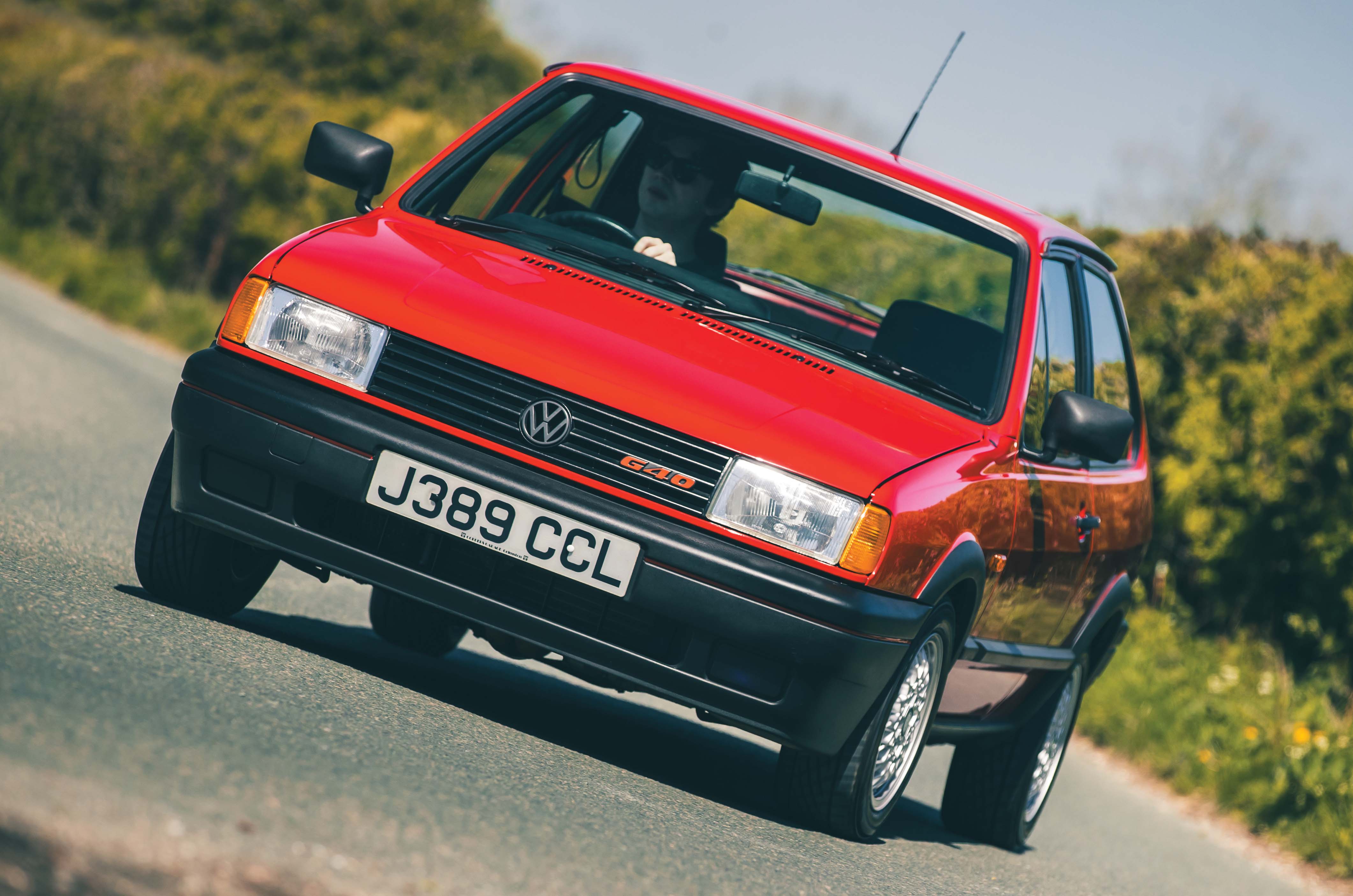
The nose-heavy VW Polo G40 tends towards understeer
The cars from the initial run are clearly distinguishable from later G40s as the only pre-facelift models, with their characteristic quad round headlights.
The ‘40’ referred to the 40mm width of the supercharger’s scroll, and when a larger unit was fitted to the 1.8-litre engine of the Corrado, Passat and Golf, it was fittingly labelled G60.
Stepping into the Charade is to find a perfect manifestation of Daihatsu’s particular talent for building tiny cars. It is made of steel as thin as paper, but the bodywork is a mastery of origami.
Panel gaps are perfect, nothing requires a slam and there’s less rattling than you would expect once going down the road.
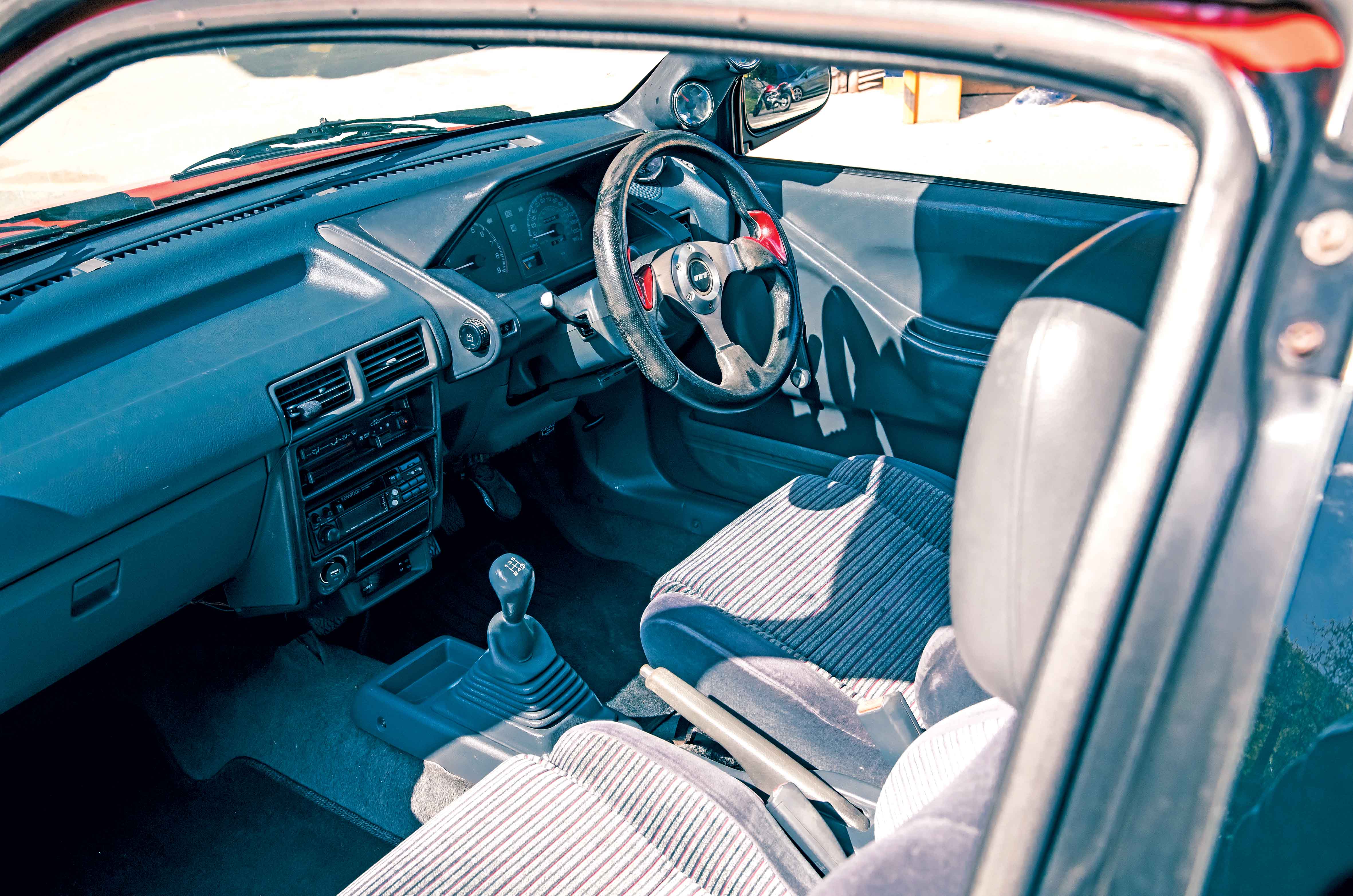
This Daihatsu Charade GTti has an aftermarket steering wheel
Virtually nothing inside is given over to luxury: the plastic trim is hard and barely ornamented; the door cards make no attempt at style, just one single sheet of plastic with a moulded armrest, no cloth inserts and not even any texturing; and the accordion-like, rubberised gearshift gaiter looks straight out of a base model – even Volkswagen of the 1980s, then an outright miser when it came to the specification of its vehicles, stretched to a leather gaiter for its top-spec Polo.
But not Daihatsu.
And yet this car has none of the flimsiness of a contemporary Peugeot or Ford; the plastics are not brittle for all their hardness, while items such as the indicator stalks are well honed in operation.
The Daihatsu Charade GTti’s understated interior trim
The Charade is not without compromise, however.
Wheelarch intrusion is inevitable in such a short-wheelbase four-seater, and it pushes the pedals towards the centre of the car.
It’s easy to accidentally push the throttle instead of the brake at first, and a wide pair of shoes can have you wedged behind the accelerator when releasing the brake.
That’s the only ergonomic quirk, though; the Charade otherwise has light, feelsome steering and a deeply satisfying gearshift.
It’s a little long in the throw but completely intuitive to move around quickly, and its gate is delightfully tight.
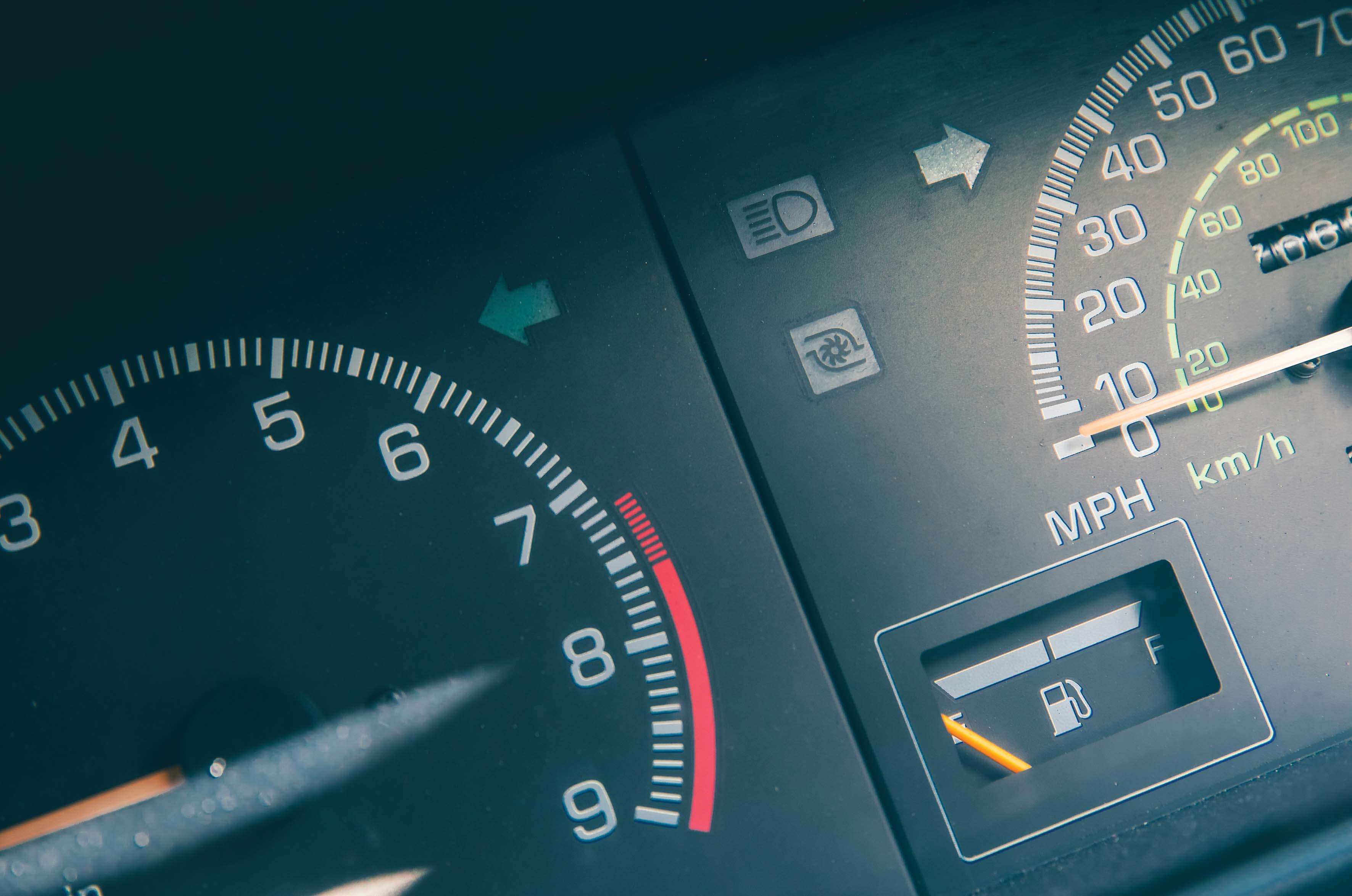
The zingy Daihatsu Charade GTti’s redline
You get a lot of practice with that change, too, because while the little three-pot can rev happily to just over 7000rpm, this is a short-geared car that races round its tacho, especially on boost.
The engine is fitted with one of the smallest turbos you’ll see, and it is a remarkably lag-free experience.
Boost is spread broadly across the revs, but reaches a crescendo north of 4500rpm, at which point it surges before you’re forced into an upshift accompanied by a delightful, high-pitched turbo flutter.
It’s not a linear delivery, but it doesn’t feel dead at low revs in the manner of so many ’80s turbos.
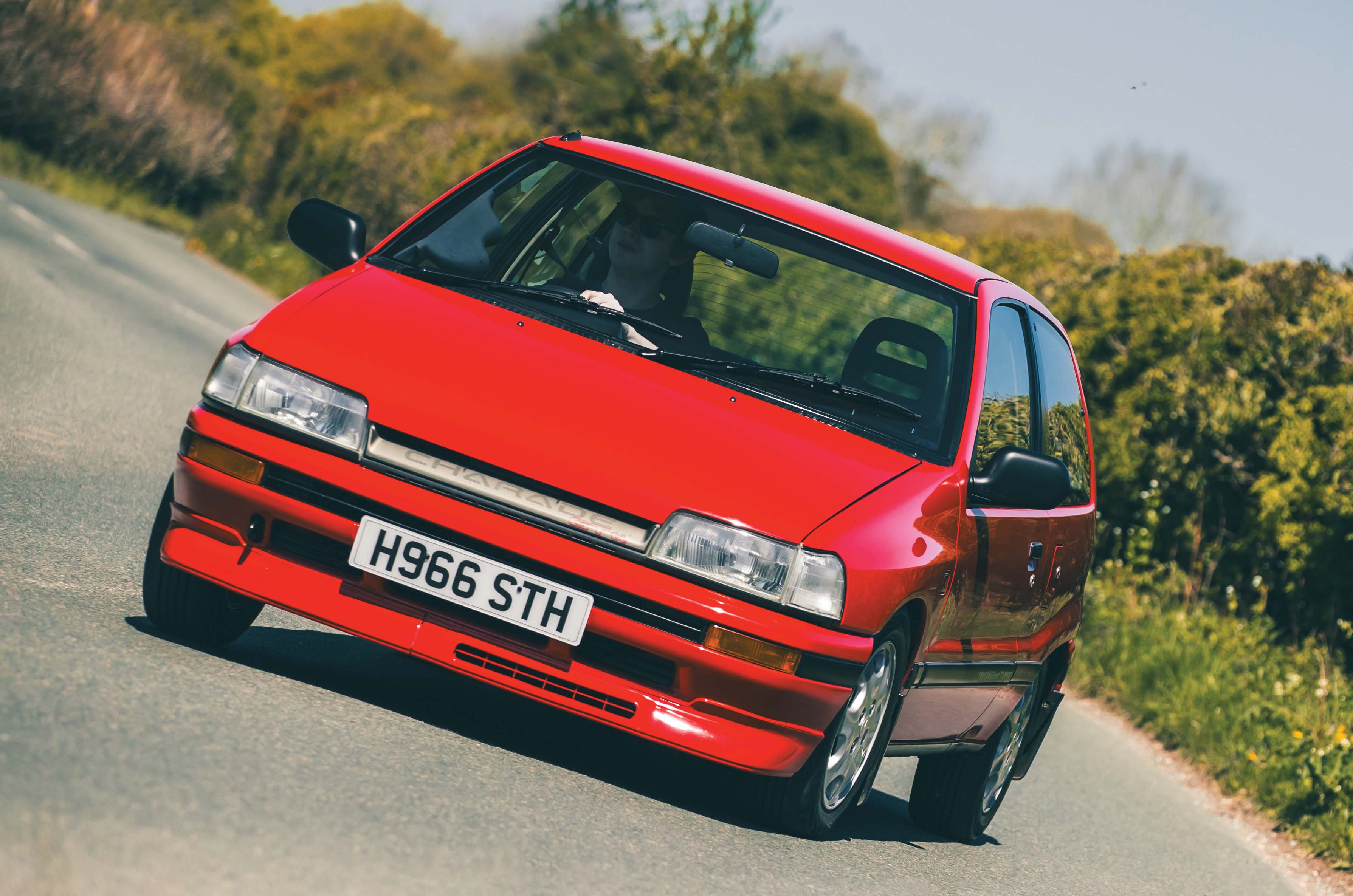
The agile Daihatsu Charade GTti flirts with unpredictability at times
Attempt a corner with verve and the Charade is somewhat nose-heavy, but the rear axle doesn’t bounce around like that of many contemporary hot hatches, and overall it feels settled.
This car is the more balanced of the pair, less prone to understeer, with unassisted steering transmitting a feeling of the front tyres pulling the car through bends.
Squarer than the Polo, it feels more eager to turn in – although, like the similarly ‘wheel at each corner’ Mini, it also feels the more likely to swap ends.
Agile and immensely chuckable, it only falls short of contemporary greats such as the Peugeot 205 GTI by way of steering that is a bit light at speed.
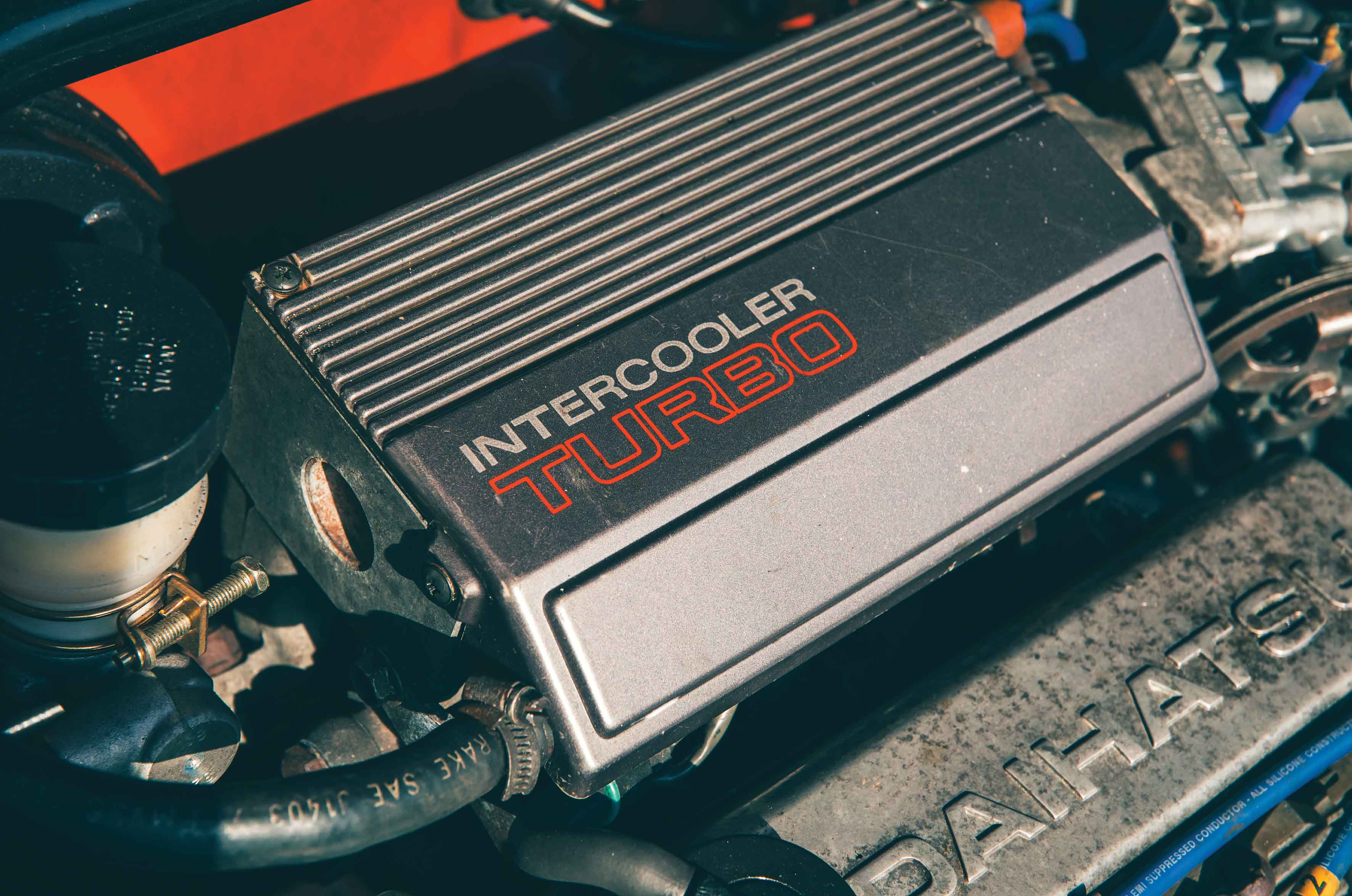
The Daihatsu Charade GTti’s small IHI turbocharger minimises lag
The VW does, predictably, give a feeling of solidity compared with the Daihatsu. As well-built as the Japanese car is, the Polo is simply made of thicker stuff.
It has a narrow cabin, though, even more so than the Daihatsu’s, while the in-your-face dash betrays just how old the Polo was by this 1991 G40.
The Mk2 had first appeared in 1981, and its 1990 update was just a heavy facelift that couldn’t change the hard points.
The pedals are slightly offset again, but not as tight as the Charade’s, and the Polo feels more modern in terms of its insulation: this is a much quieter car in which to go about your regular business, more so than even a Fiesta of the time, never mind the Charade.
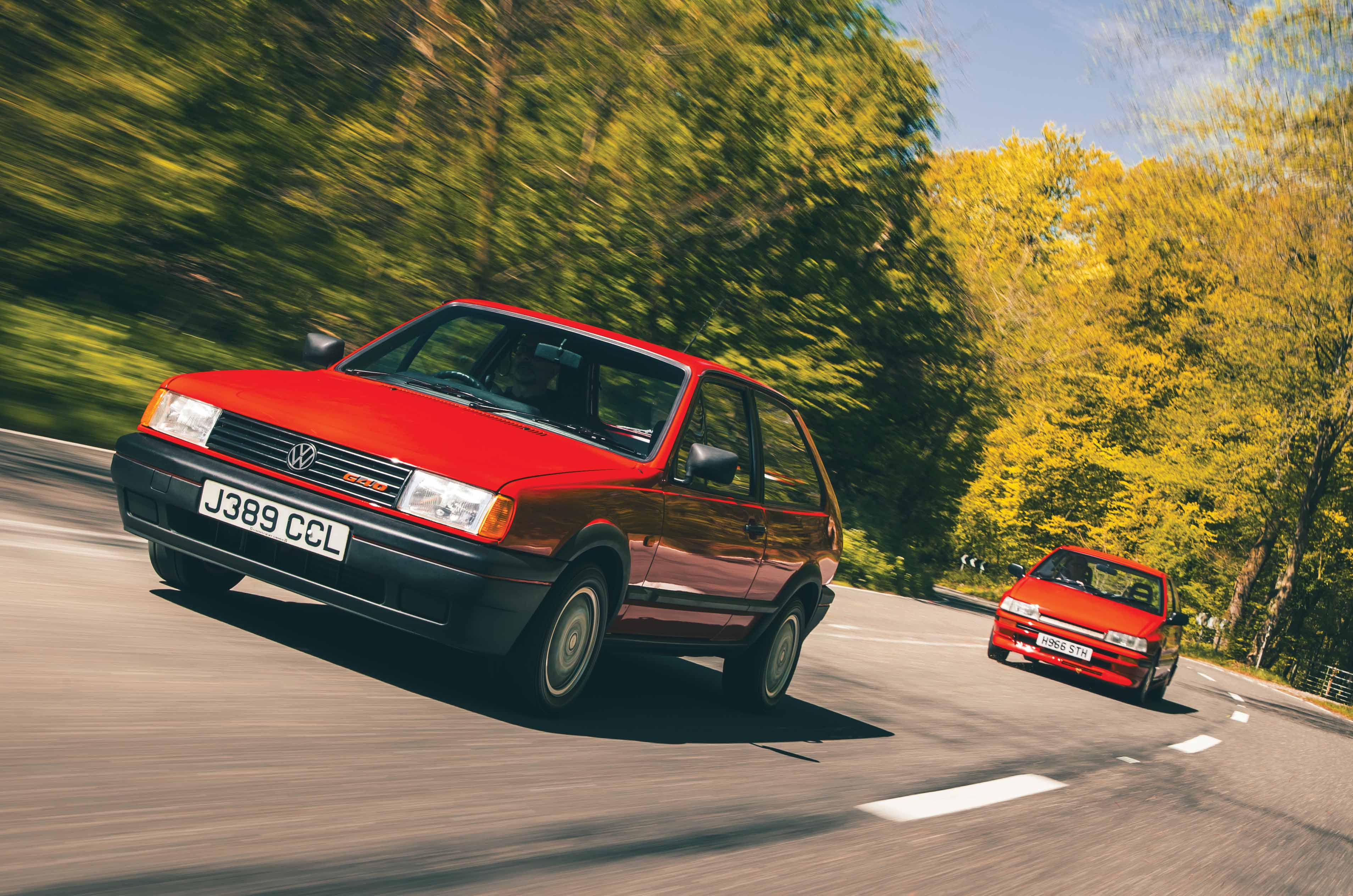
Both the Volkswagen Polo G40 (closest) and Daihatsu Charade GTti were pioneers, but which has the most driver appeal today?
The VW Polo has a two-stage throttle and at first doesn’t feel all that peppy for its 113bhp, but a more deliberate push of the accelerator pedal unlocks a roar from the engine and a linear stream of torque.
It’s a frantic sensation at odds with the Volkswagen’s sober interior: engine noise fills the cabin and the wheels perceptibly scrabble at the Tarmac.
Stamp on the throttle from rest, or with a bit of steering lock applied, and the Polo will torquesteer.
While the Daihatsu feels as if it has a boosted engine, albeit a very responsive one, the G40 pulls off the trick of behaving as if it’s powered by a much larger-capacity motor.
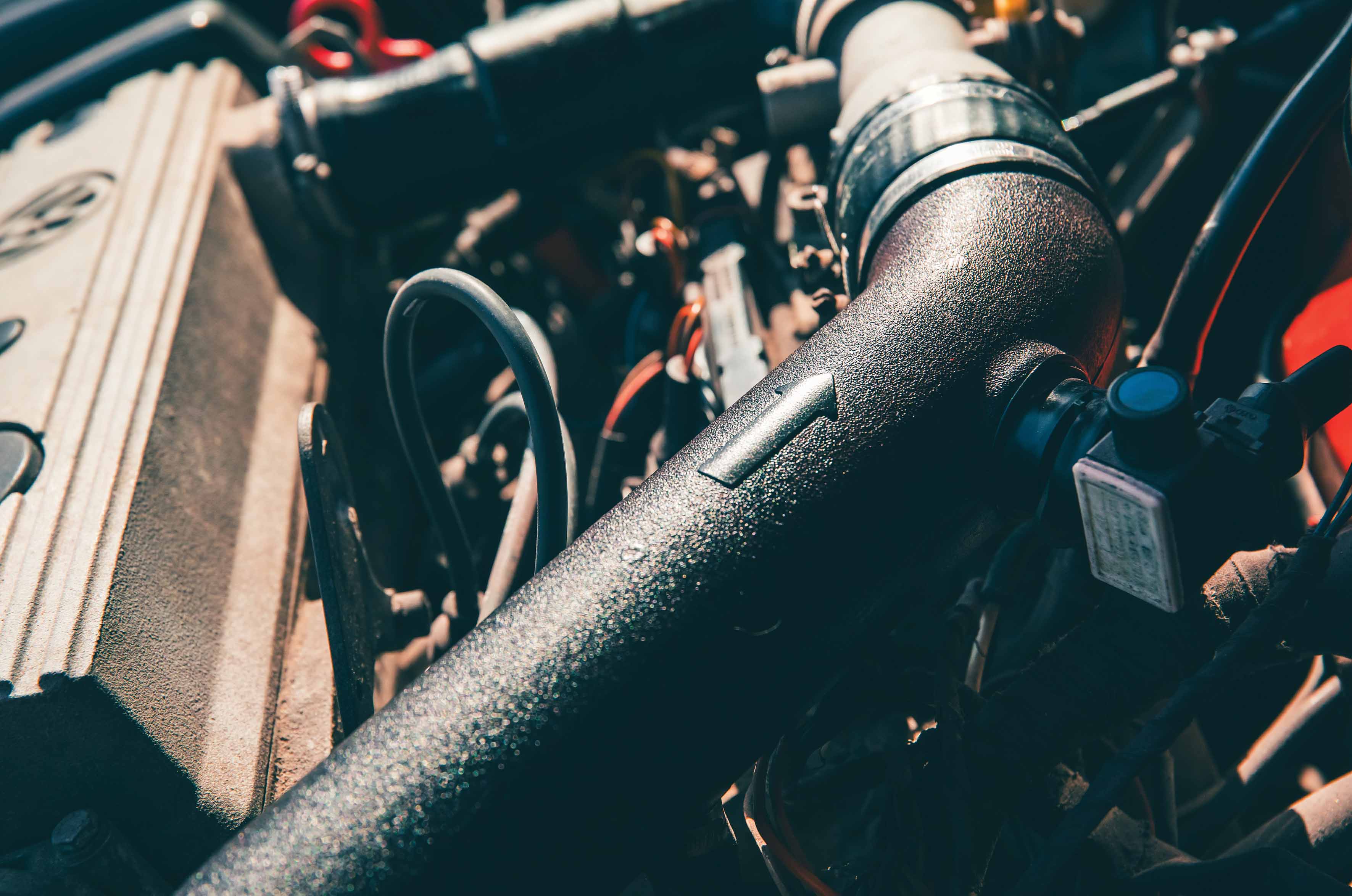
The Volkswagen’s G-Lader pipework dominates the Polo’s engine bay
Delayed throttle negotiated, the VW Polo is a quick and flexible car.
Volkswagen’s engineers appear to have taken the brief of creating the ‘big engine in a small car’ feeling a bit too literally, however, because the Polo understeers like something with a large weight hanging off its front bumper.
Nearly all hot hatches are front-biased, but the G40’s small, 13in wheels feel overwhelmed as it ploughs straight ahead in tighter bends.
Add steering that is heavy and lacking in feel compared with the Charade, and VW’s Polo proves to be more of a point-and-shoot weapon than a true back-road blaster.
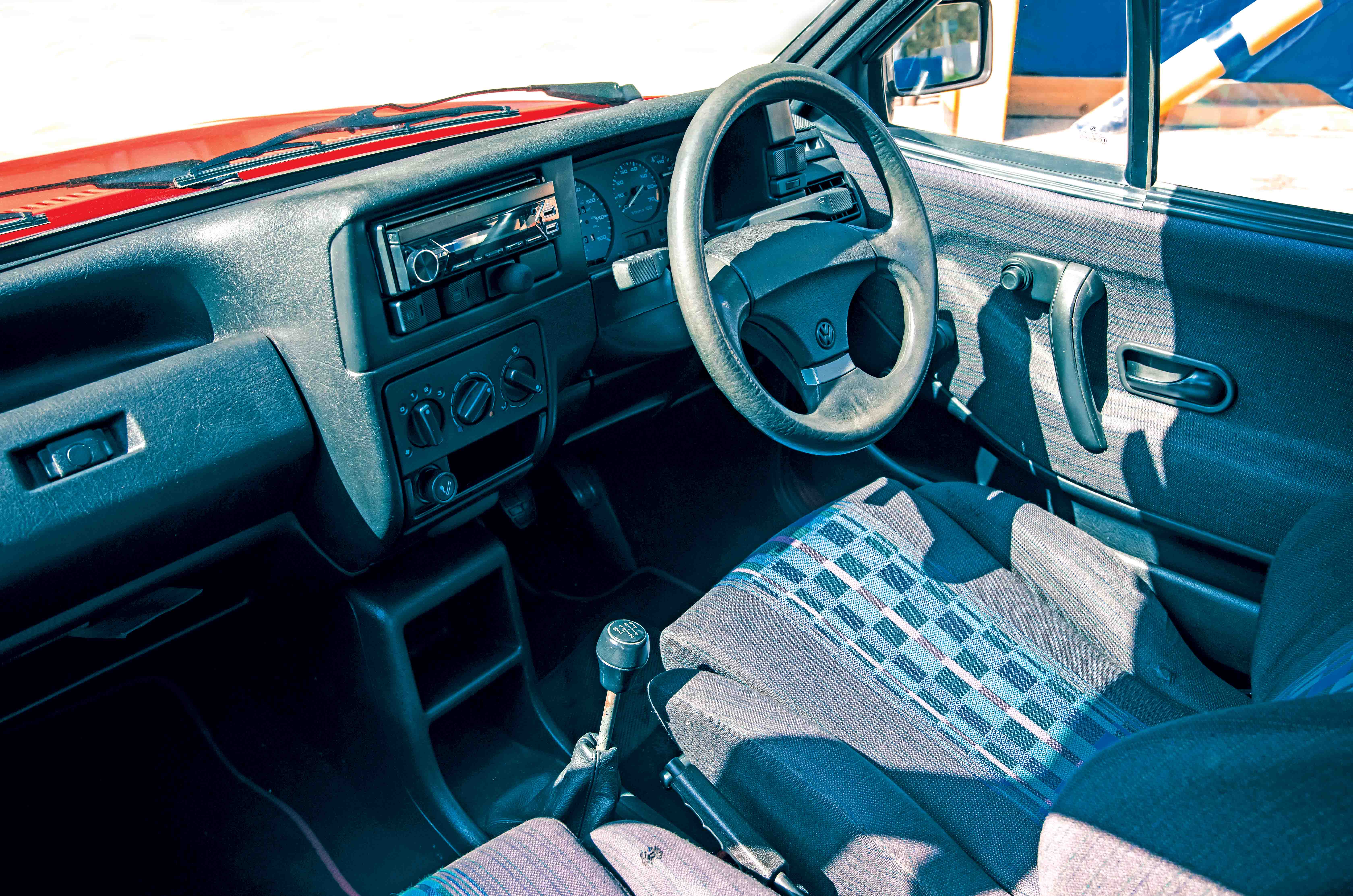
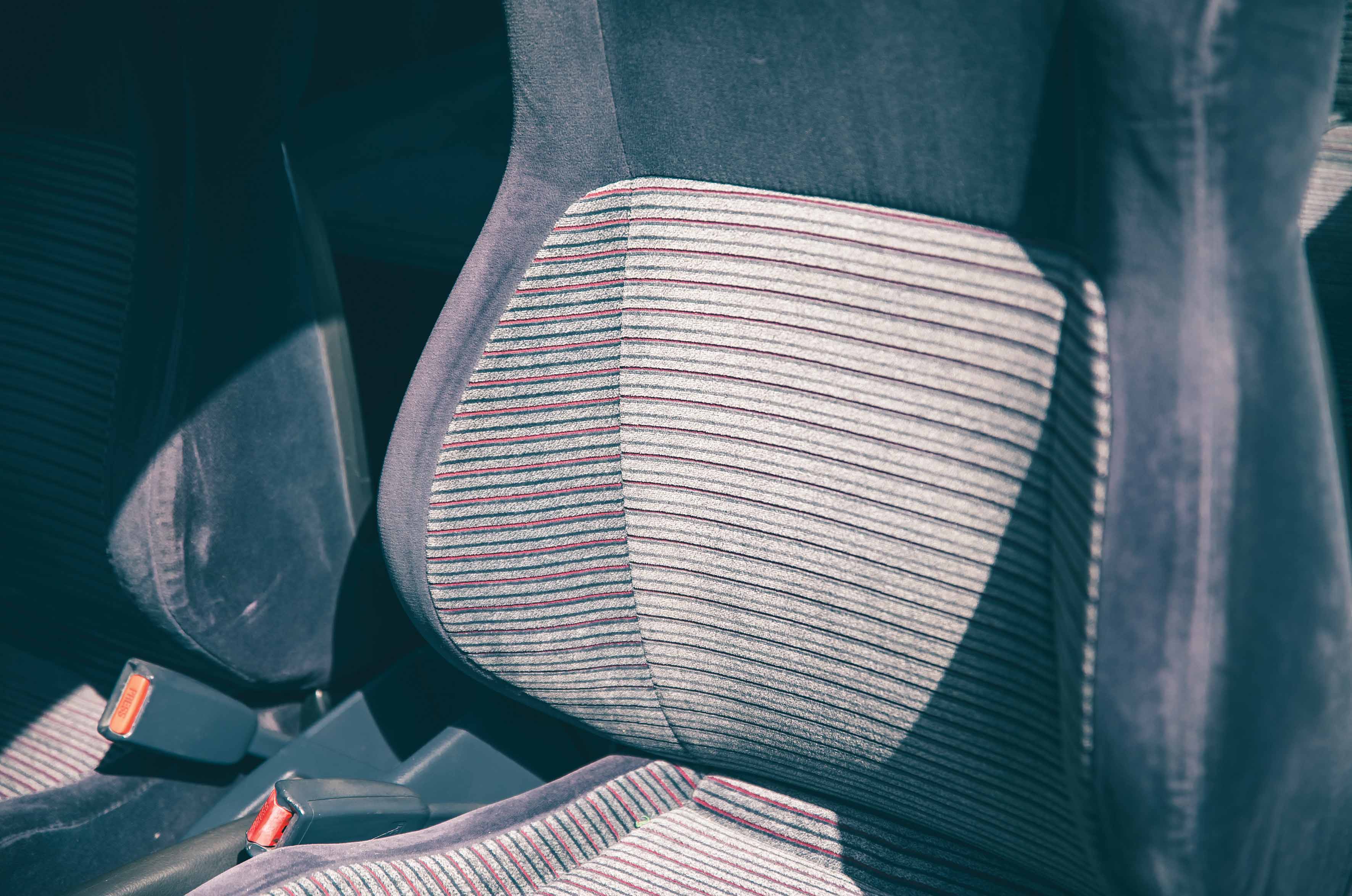
This VW Polo G40 has ‘Le Mans’ cloth trim
Both of these cars were well judged for their respective customer bases, however, even in their methods of forced induction.
Those coming to Volkswagen for a small hot hatch in 1990 were mainstream motorists who wanted not only speed, but also build quality and refinement – qualities that the many French, Italian, Japanese or British options lacked.
The G40 engine’s ability to behave just as if it were 500cc or so larger was perfect.
That same customer group was likely more concerned with straight-line performance than cornering G-forces and exit speeds.
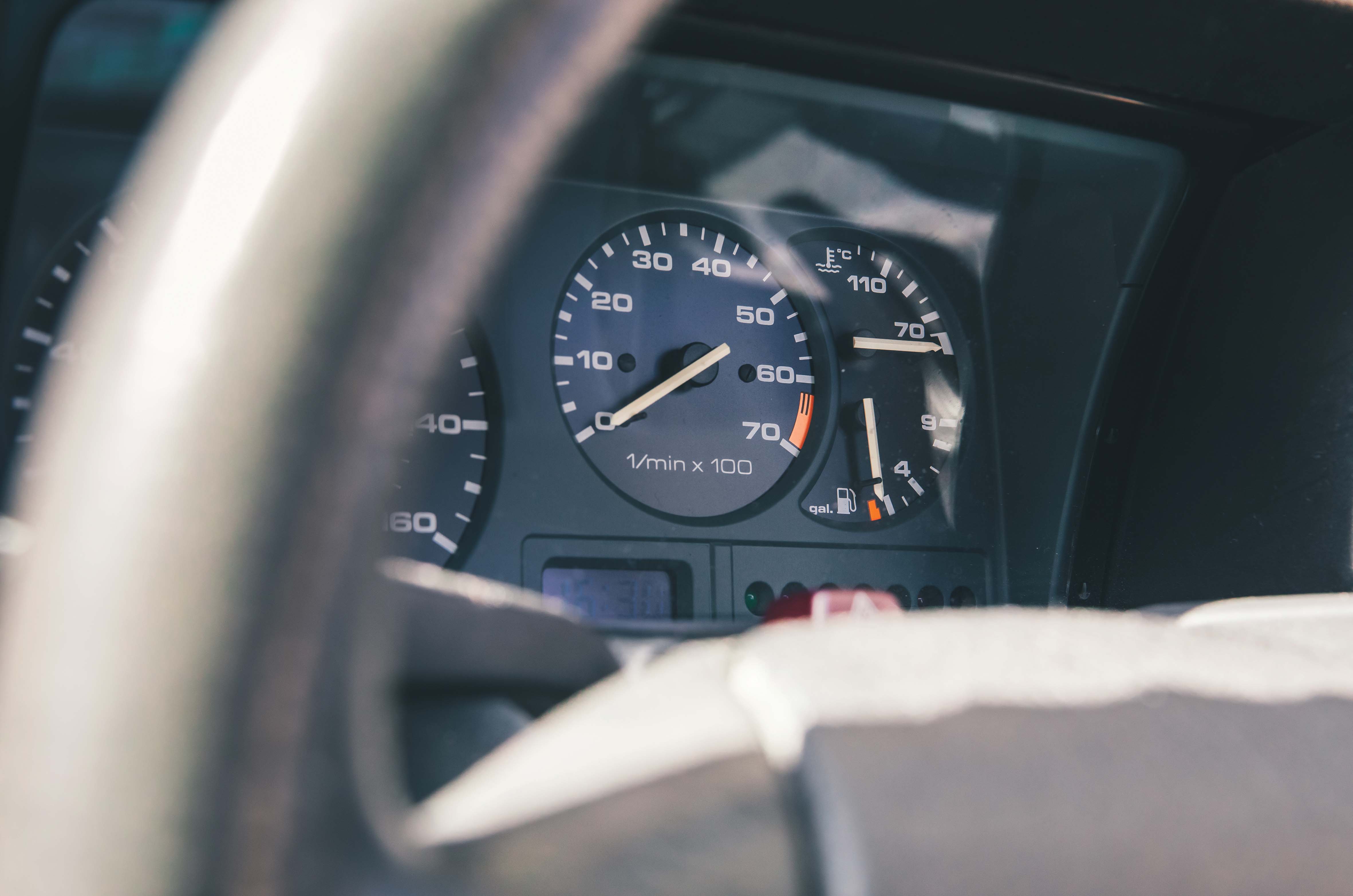
The Volkswagen Polo G40’s plain dials
Daihatsu being such a niche brand – in virtually every market, not just the UK – meant the Charade GTti was always going to have a distinct and equally niche appeal; simply knowing what one was marked you out as an enthusiast, as it does today.
In everyday use the Daihatsu asks for compromises that the Volkswagen does not, whether because of its austere interior or its less relaxed cruising ability, but it is the more rewarding car for an involved driver on a twisty road.
Turbocharging was just part of a recipe that maximised bangs for the buck in the lightweight Charade.
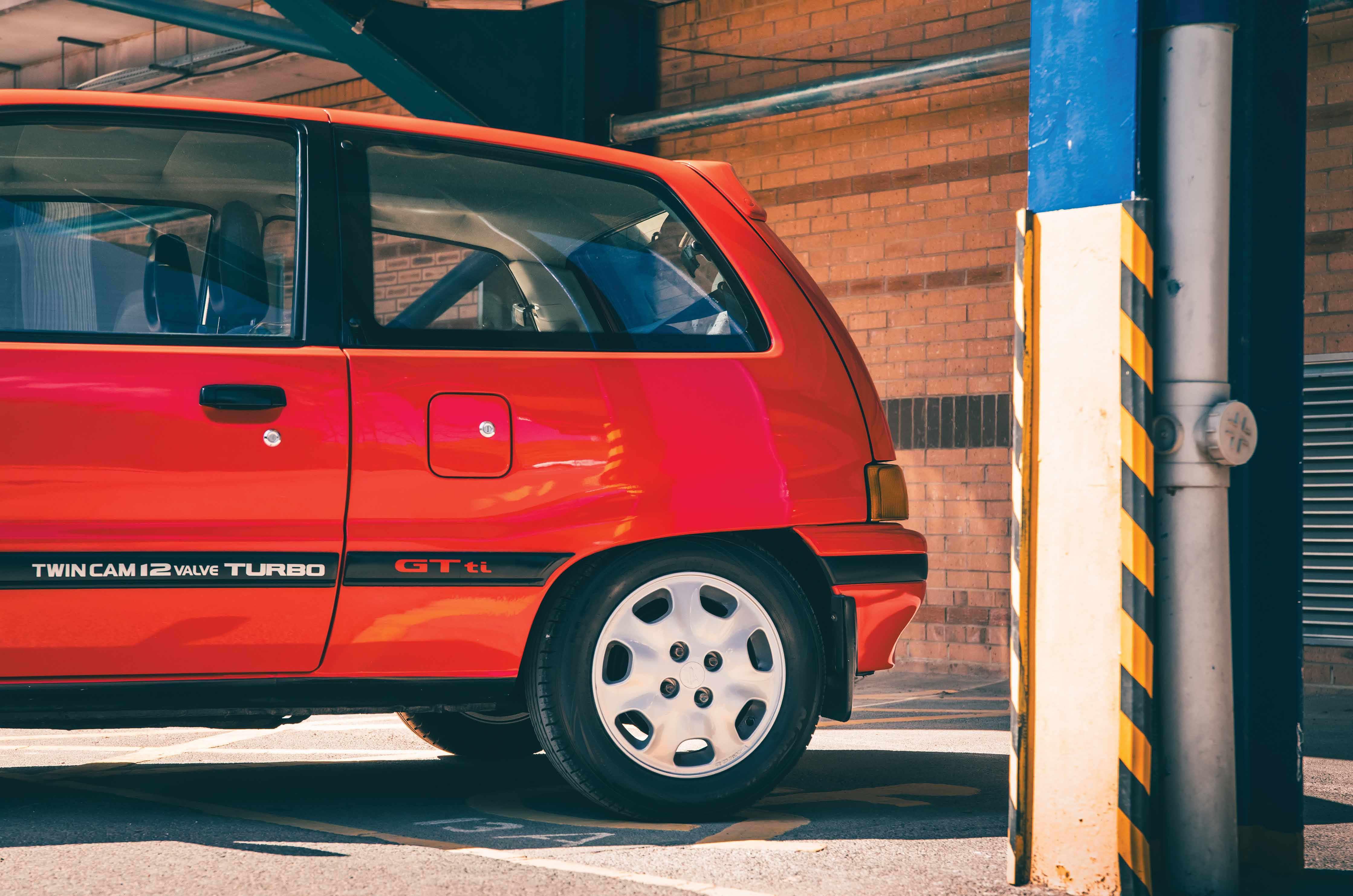
The Daihatsu Charade GTti’s tight shutlines
Daihatsu was on the right track historically: small turbo motors became the engines of choice for hot hatches, while the sub-1-litre turbo ‘triple’ has been the supermini default for the past decade, including the VW Polo.
Not that it helped Daihatsu stay relevant in the European market.
The G-Lader approach ultimately proved less durable and less efficient than turbocharging, and VW moved to turbos in 1994.
It wasn’t a complete blind alley, though: Wolfsburg returned to superchargers for the excellent twin-charged 1.4 TSI in the Mk5 Polo GTI, but this would use a more traditional, Roots-type Eaton supercharger.
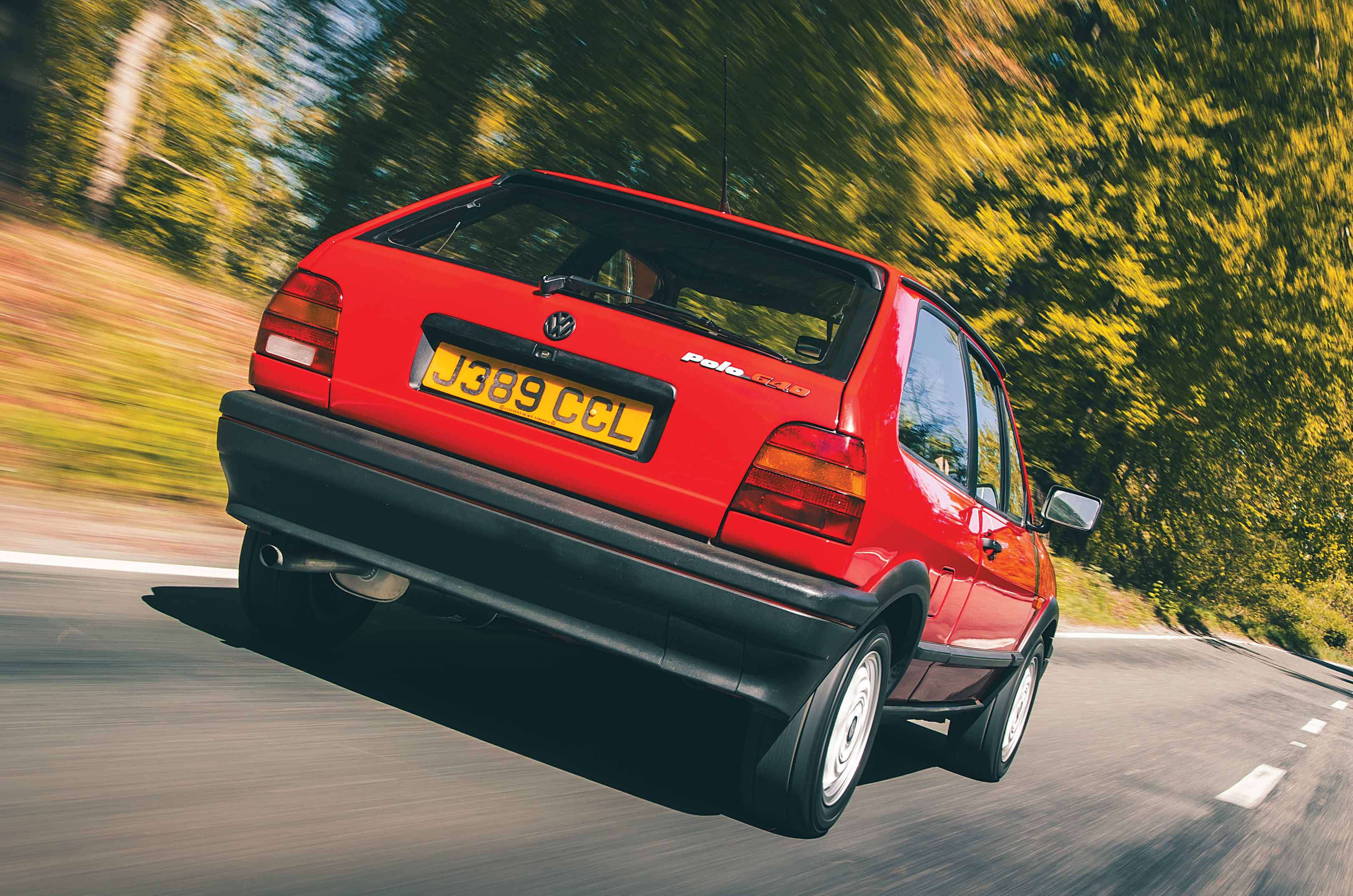
The VW Polo G40’s supercharged engine gives strong, big-car power delivery
Today, it is very difficult to pick between them.
The Volkswagen is definitely the collector’s choice, with its iconic styling and a stronger reputation.
It’s a more nostalgic drive for most, and more pleasant thanks to its relative comfort – plus, unlike some cars you’d buy for nostalgia, it has the performance to get out of its own way and have fun with.
But the Daihatsu feels like unearthing a hidden gem: it’s a cult classic.
The early-’90s era was the last hurrah of cars built this light; never again would we get such modern, powerful and compact powertrains stuffed into something so featherweight.
It’s a tin can strapped to a rocket, and it’s all the better for it.
Images: Jack Harrison
Factfiles
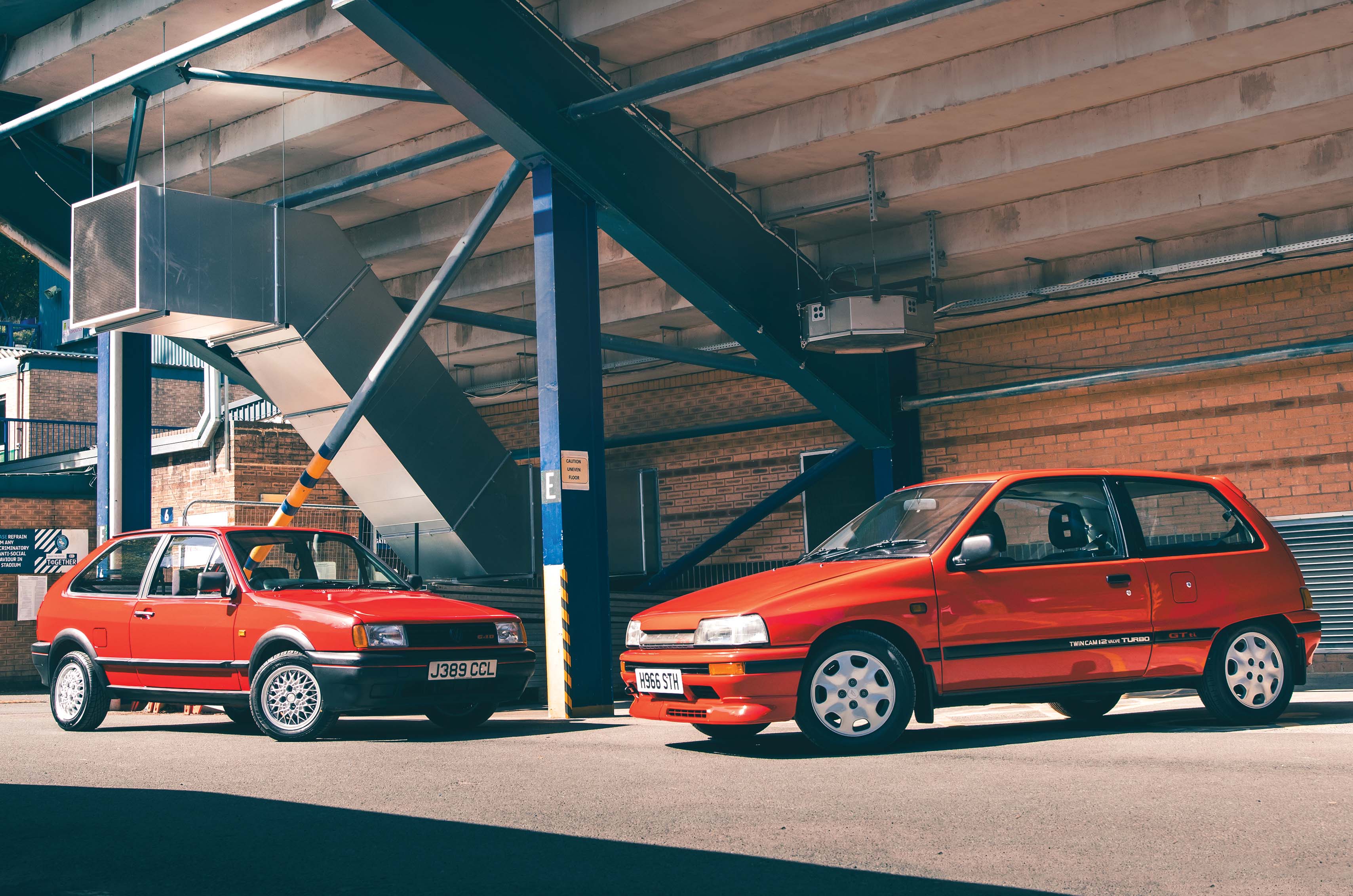
Volkswagen Polo G40
- Sold/number built 1989-’94/c5000
- Construction steel monocoque
- Engine iron-block, alloy-head, sohc 1272cc ‘four’, scroll-type supercharger, multi-point fuel injection
- Max power 113bhp @ 6000rpm
- Max torque 110lb ft @ 3600rpm
- Transmission five-speed manual, FWD
- Suspension: front independent, by MacPherson struts rear torsion beam, telescopic dampers; anti-roll bar f/r
- Steering rack and pinion
- Brakes discs front, drums rear, with servo
- Length 12ft 4in (3765mm)
- Width 5ft 3in (1590mm)
- Height 4ft 4in (1325mm)
- Wheelbase 7ft 8in (2335mm)
- Weight 1785lb (830kg)
- 0-60mph 8.6 secs
- Top speed 122mph
- Mpg 36
- Price new £11,568 (1991)
- Price now £6-20,000*
Daihatsu Charade GTti
- Sold/number built 1987-’93/227,000
- Construction steel monocoque
- Engine iron-block, alloy-head, dohc 993cc triple, IHI turbocharger, electronic fuel injection
- Max power 101bhp @ 6500rpm
- Max torque 96lb ft @ 3500rpm
- Transmission five-speed manual, FWD
- Suspension independent, by MacPherson struts, telescopic dampers, anti-roll bar f/r
- Steering rack and pinion
- Brakes discs, with servo
- Length 11ft 10in (3610mm)
- Width 5ft 4in (1615mm)
- Height 4ft 7in (1397mm)
- Wheelbase 7ft 8in (2340mm)
- Weight 1785lb (810kg)
- 0-60mph 8.2 secs
- Top speed 114mph
- Mpg 38
- Price new £9340 (1991)
- Price now £6-15,000*
*Prices correct at date of original publication
Enjoy more of the world’s best classic car content every month when you subscribe to C&SC – get our latest deals here
READ MORE
Volkswagen Golf at 50: Wolfsburg’s best vs rivals