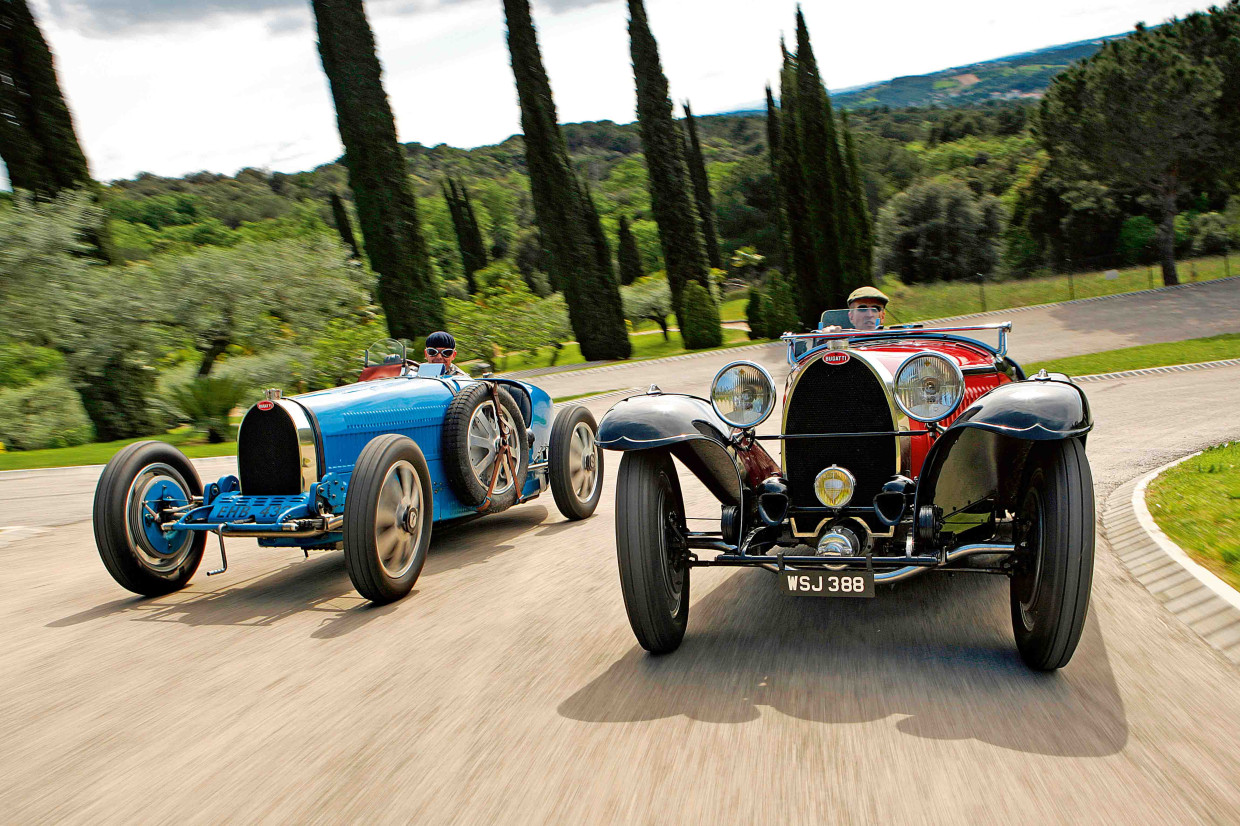
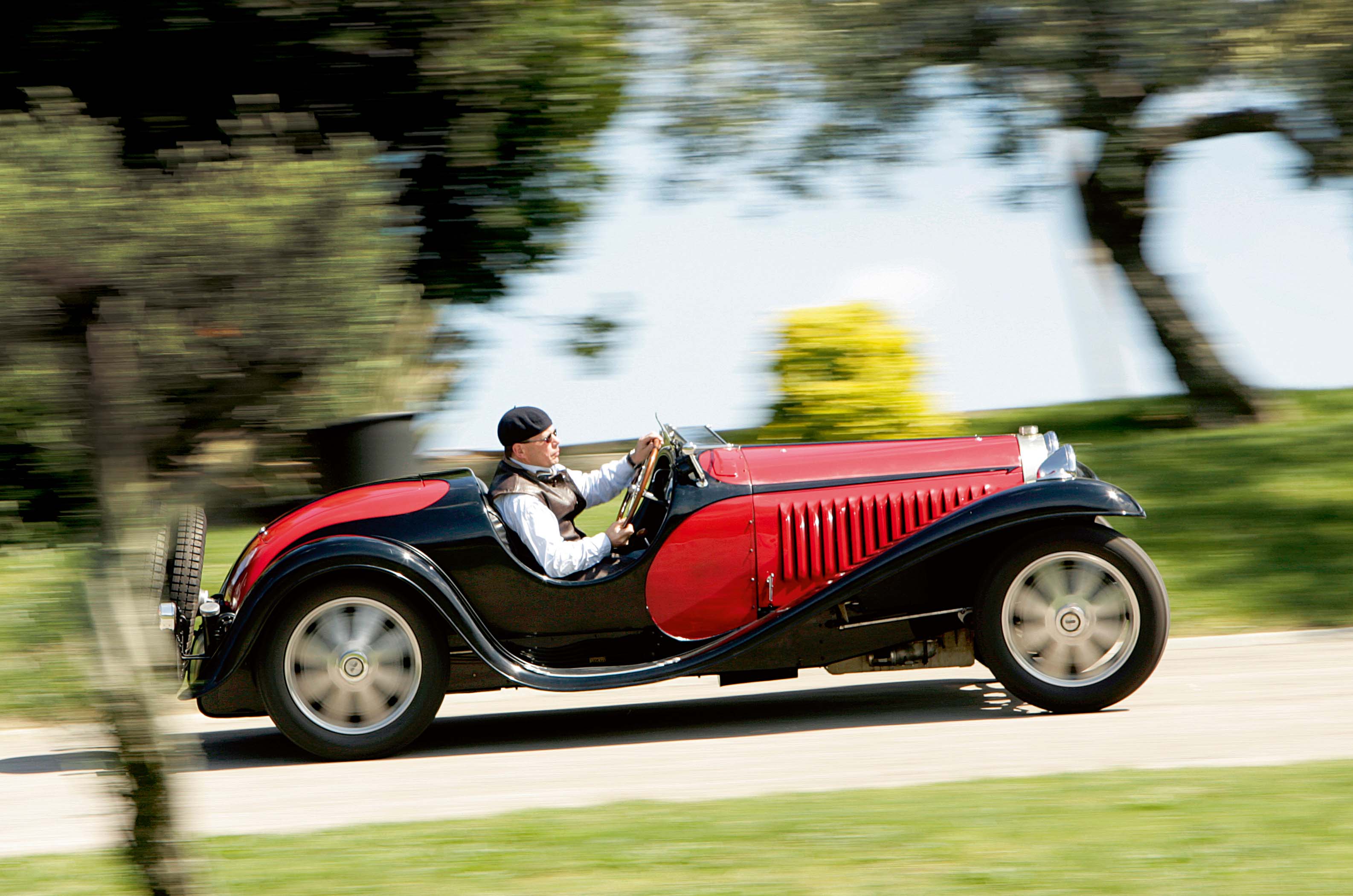
On the twisty section of this narrow track, the rapid outside change perfectly exploits the engine’s sharp, urgent response and the car’s excellent traction.
The smooth surface also suits the impressive brakes, a firm pedal pressure inspiring deeper entries into the hairpins.
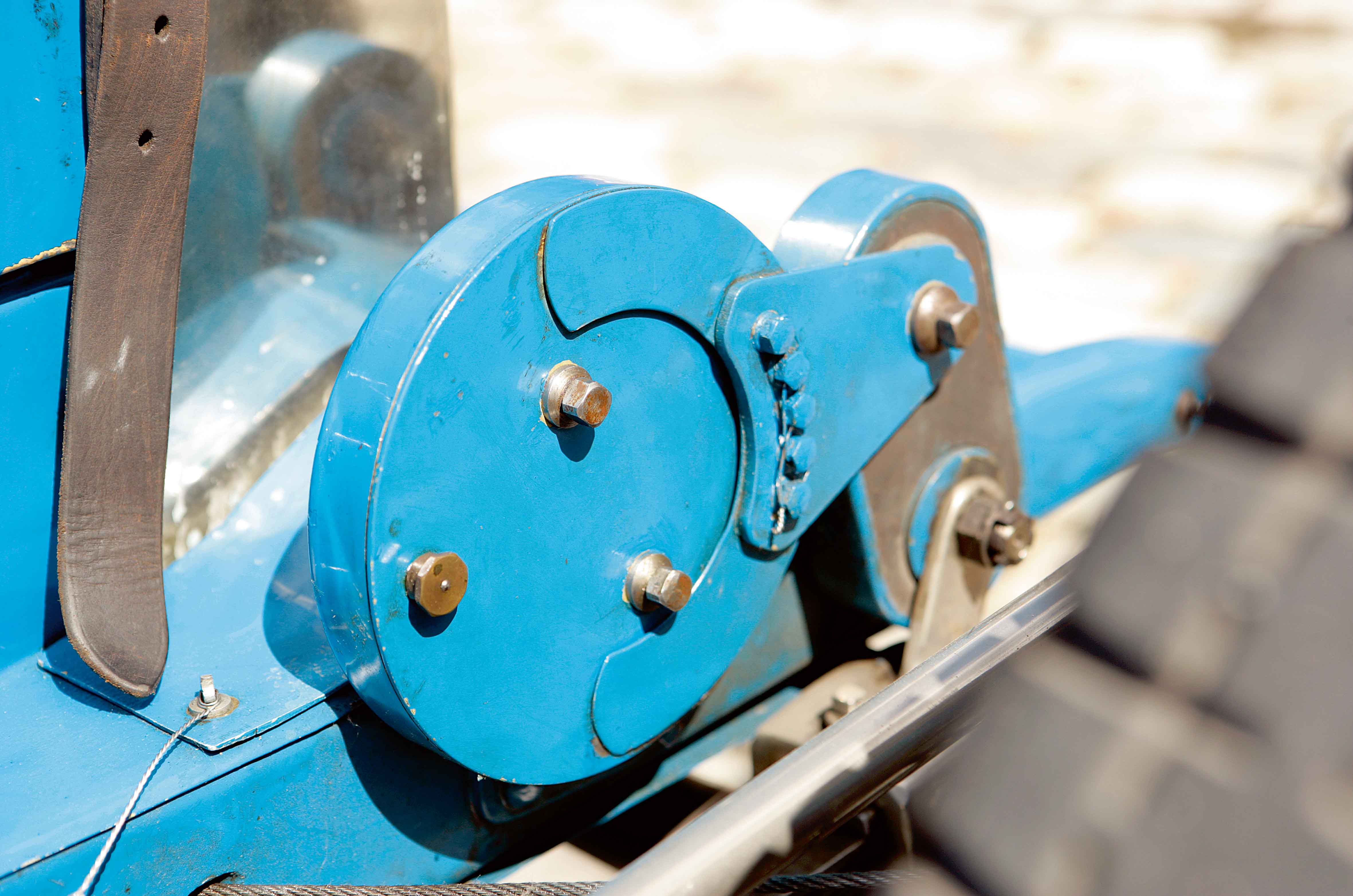
It pulls up straight and strong every time, but you have to watch out for bumps: a jarred, locked brake drum could easily twist the front axle.
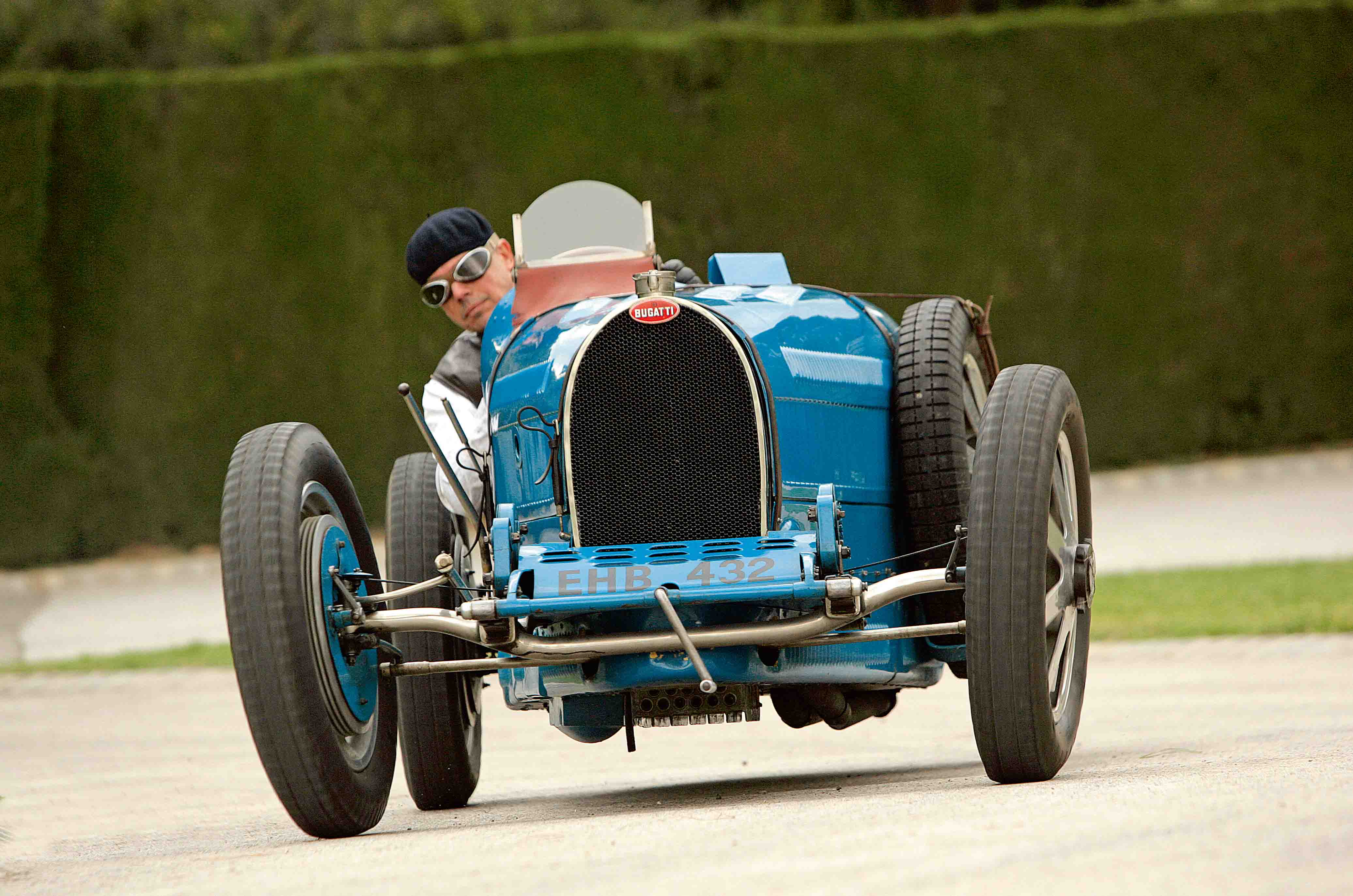
The steering is the Type 51’s most physical aspect. There’s little self-centring, so you have to wind it straight with a deliberate action as you exit tight bends.
It’s heavy at low speeds, too, and almost four hours around Monaco – nine on the Targa Florio! – must have taken great upper-body strength and stamina.
You sit close to the steering wheel and your shoulders are forced into play when you start to hustle through the bends. That doesn’t take long.
The chassis is taut and predictable, its snappy turn-in encouraging you to go ever quicker.
Superb balance builds confidence and you are soon powersliding out of tighter corners, the limited-slip differential ensuring that there are no smoking tyres as you gun away from apex after apex.
It’s a winning feeling that gathers momentum with every action and at every turn.
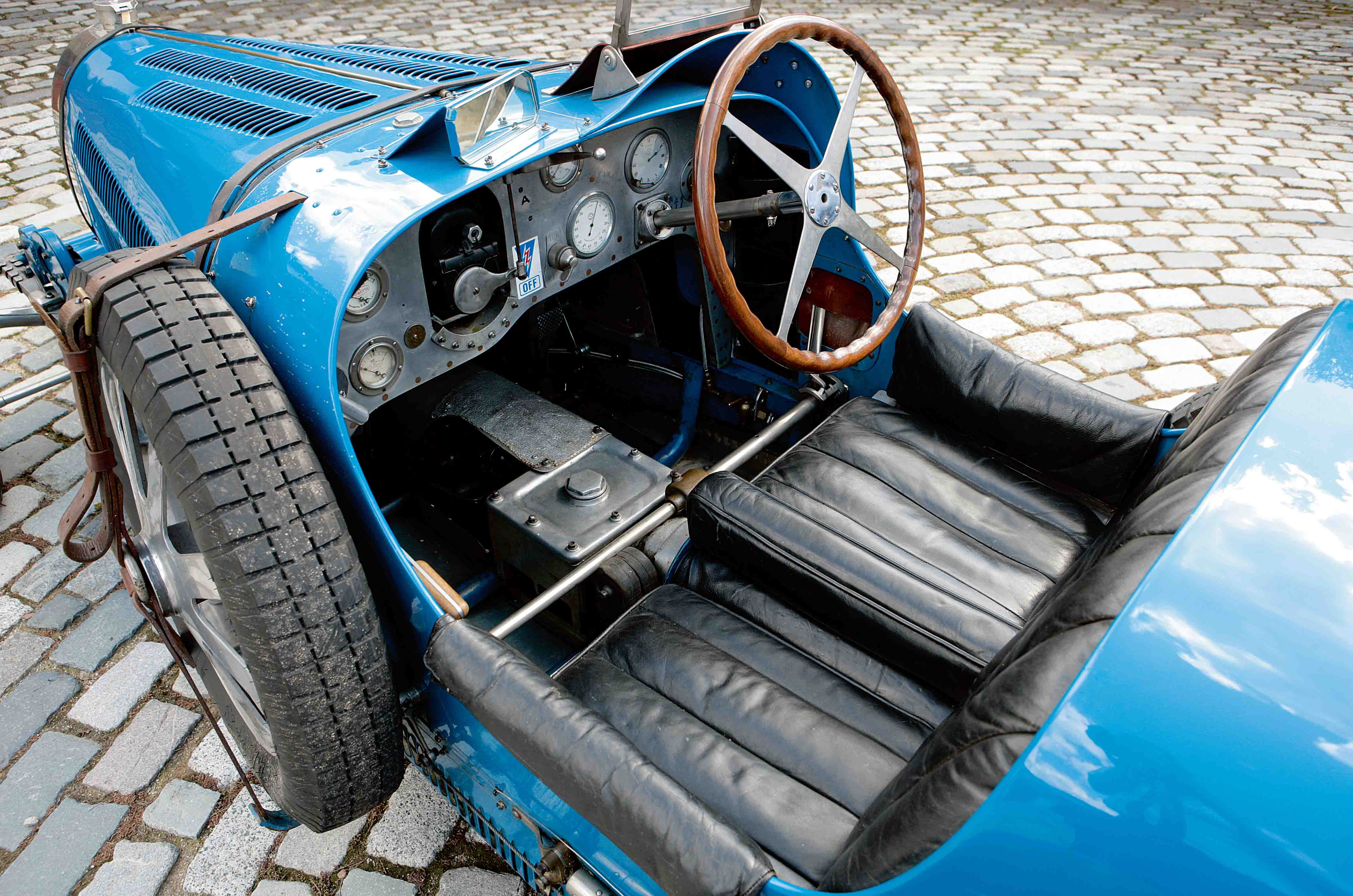
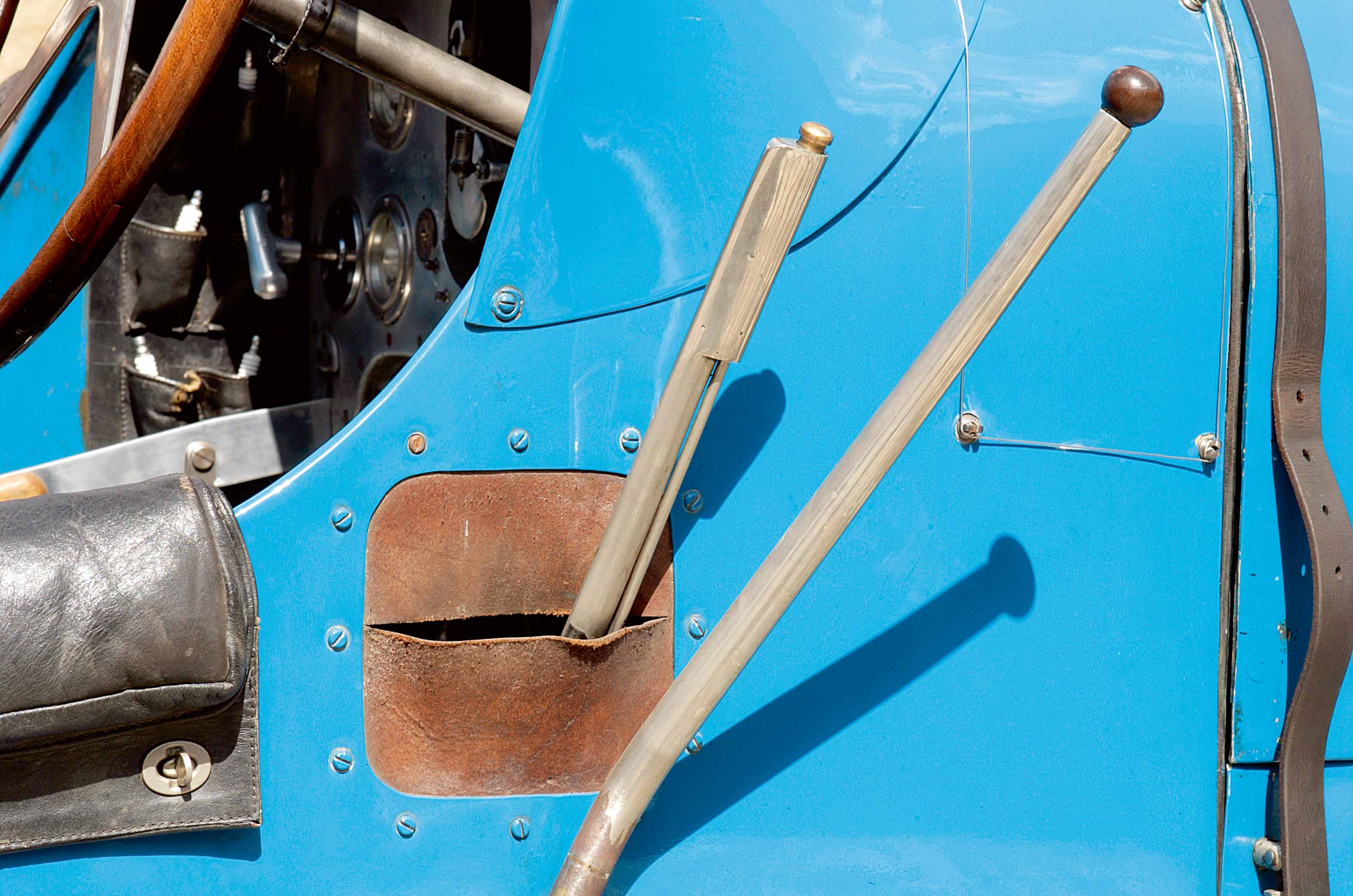
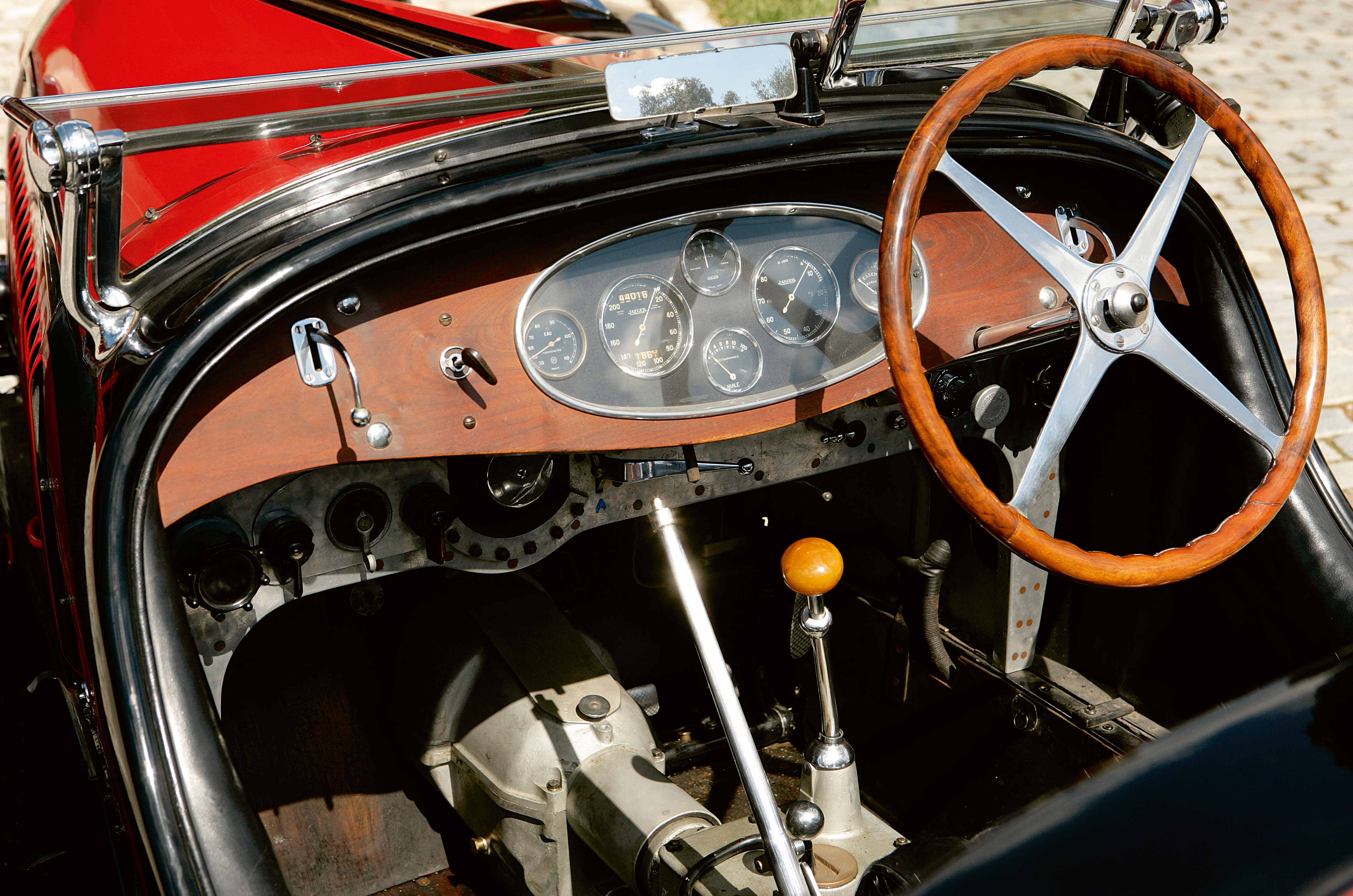
There’s plenty to look at (and do) in the Bugatti Type 55’s busy cockpit
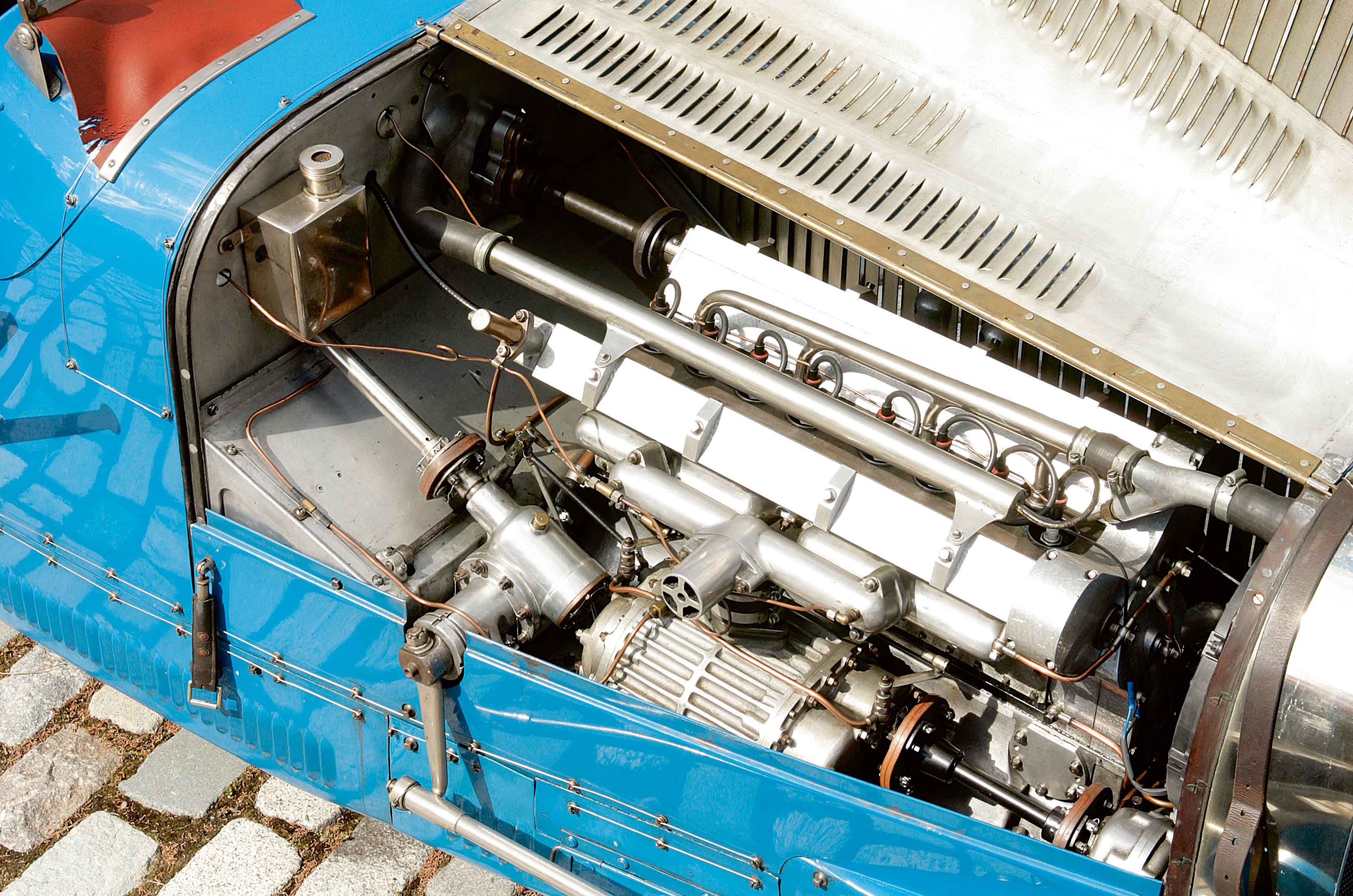
It would be difficult to tell the difference between a Type 35B and Type 51 on the slower sections of the track, but, even running on pump petrol, the extra grunt of the twin-cam engine comes into play on the longer straights.
It starts to sing once spinning above 4000rpm, and you can really feel the increased urge at the top end as you power up inclines.
A Type 51 will rev to 7000rpm in the heat of battle, as demonstrated by Geoffrey St John when he chased Neil Corner’s Type 59 in the all-Bugatti race at Silverstone in 1986.
Only the superior handing of the later, lower, longer and wider Type 59 gave it the edge.
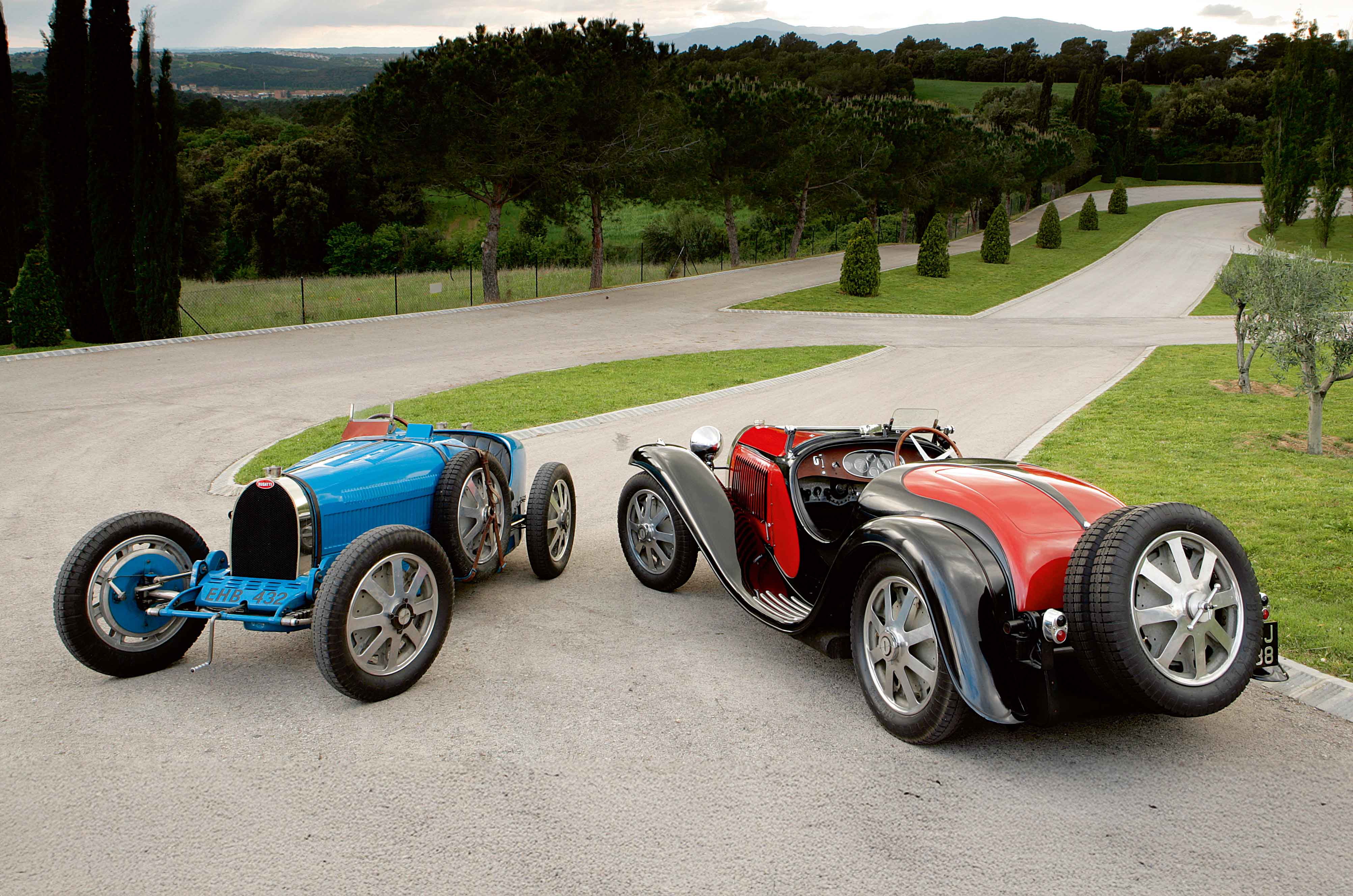
The roadster’s competition pedigree is clear the moment you climb aboard, its handsome wooden steering wheel jutting from an engine-turned scuttle.
The Type 55’s driving position is still upright, with feet deep down inside the chassis, and, following the racing car’s layout, the throttle is in a central position.
Its oval cluster of Jaeger dials contrasts with the Grand Prix machine’s busy layout and exposed magneto cut-out, but don’t let that glamorous style seduce you: the driver still has plenty of distractions.
There are knobs for damper adjustment, an advance/retard lever above the passenger’s knee, and an oil tap for the blower that has to be turned every 30 miles.
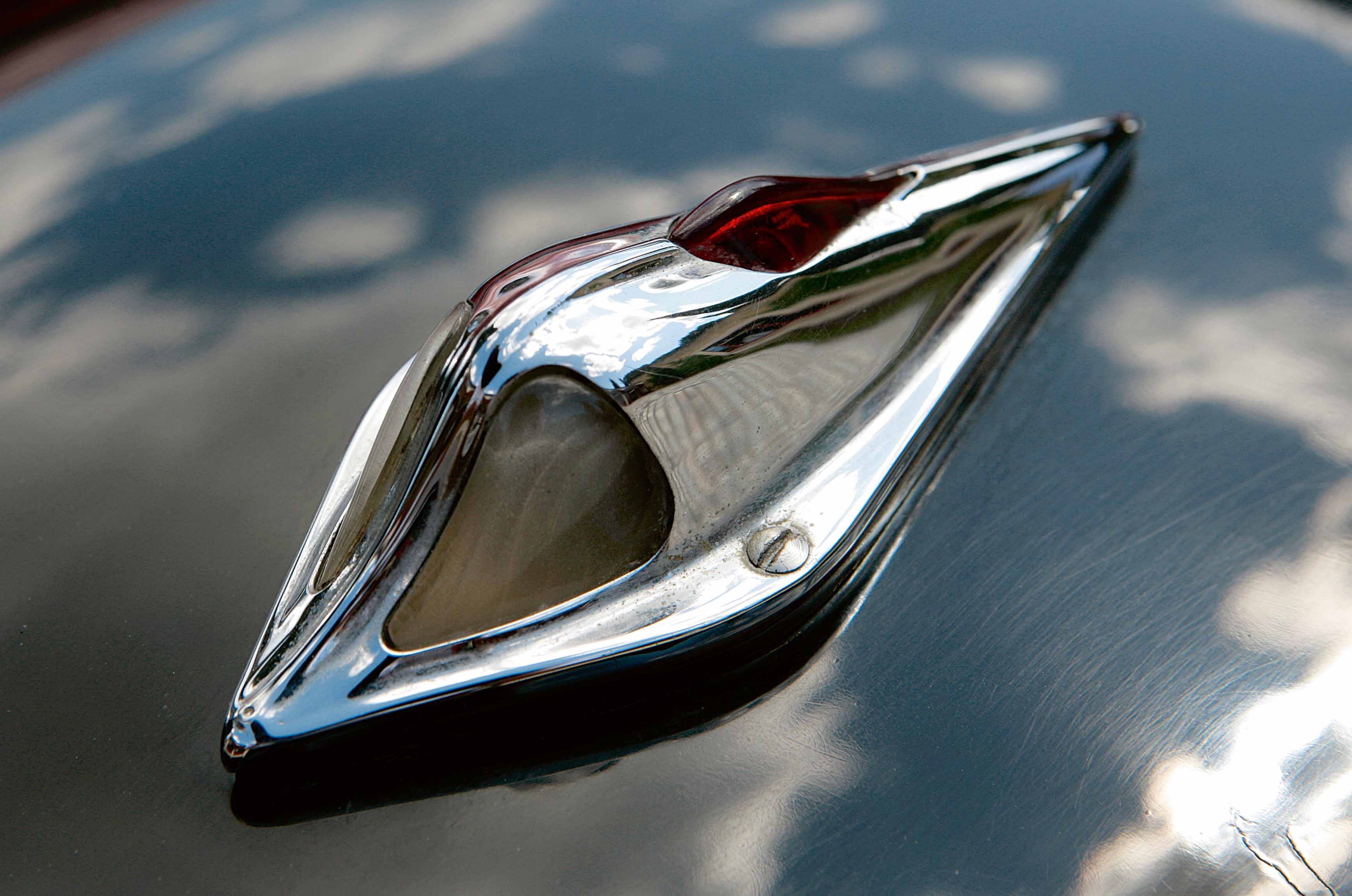
The Bugatti Type 55 has stylish, Art Deco-influenced chrome trim
Formerly owned for more than 50 years by marque connoisseur Miles Coverdale in America, this superbly original Type 55, chassis 234, was discovered in Paris in 1954 and is absolutely one of the world’s best.
Its engine is already warm, so there are no pre-ignition duties required to build up oil pressure or prime the fuel system.
Simply push the clockwork-type key and the twin-cam fires abruptly with a crisp, hard-edged exhaust bark underscored by a whoop from the blower and a mechanical thrash.
After the racing thoroughbred, the first impression is the Type 55’s far smoother ride.
It copes with the bumps well, even over some cobbles. It feels more sophisticated than its Alfa Romeo rival, too.
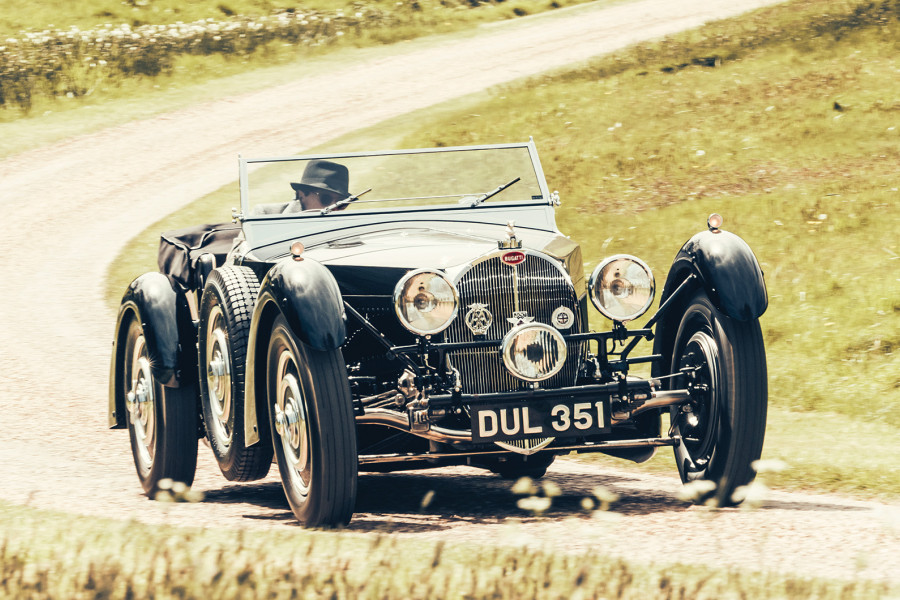
That low, fold-down windscreen, however, although it enhances the lines, offers little protection at speed. Even with my short build, there’s no chance of keeping that trilby on.
The cutaway body sides – there are no doors – also look great but expose your trunk to cold draughts.
Little wonder that coachbuilders such as Figoni went for the less glamorous but more practical straight-sided, rear-hinged door style.
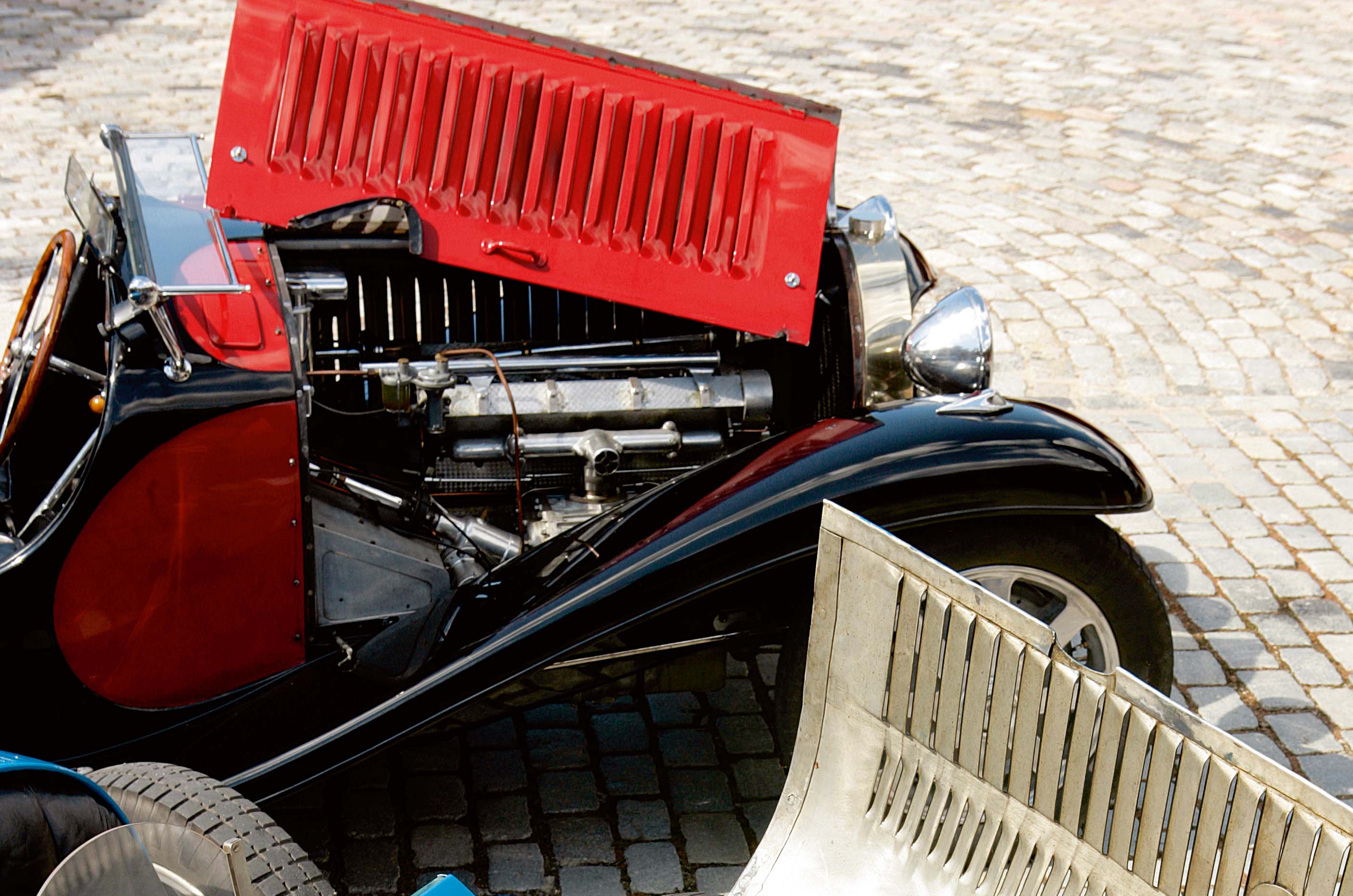
The spare and functional Bugatti Type 51 Grand Prix (left), and the flowing and adorned Type 55
The steering is beautifully direct, like the racer’s, its well-weighted, sharp action getting even better as the speed increases.
Matched with its balanced handling, the Type 55 continually inspires.
Only its gearbox, in comparison with the Type 51’s, disappoints.
The laboured change, with its tricky timing across the gate and heavy clutch, seems at odds with the sportiness of the rest of the car.
The engine’s performance, although it feels less responsive up to 4000rpm as if suffering from the added weight, unfolds as the revs climb.
After driving the Type 51, its roadgoing cousin was always going to be an anticlimax, yet away from the track and with a warm destination ahead, the Type 55 comes into its own.
Both machines are ultra-desirable, but, if I were only allowed one, it would have to be the T51.
Its gearchange, grunt and raw character epitomise the ultimate Bugatti experience.
As beautiful as the Type 55 is, I’d dread seeing an Alfa 8C blasting up into my mirrors.
Images: Tony Baker
This was first in our March 2011 magazine; all information was correct at the date of original publication
The Millers that inspired Bugatti’s twin-cam
The front-wheel-drive Millers eventually copied by Bugatti were ordered by Leon Duray in 1926.
In 1929, with backing from Packard Electric, Duray planned a European trip with three Millers, two front-drives and one rear-drive.
A Cord L-29 demonstrator completed this stylish equipe.
After a diversion to the famed Land Speed Record road at Arpajon, the four arrived at the banked circuit at Montlhéry, near Paris, where lead-foot Duray raised the 10-mile World Record to 135.33mph and set a five-mile record at 139.22mph.
No European 1500 could match these speeds.
After their evaluation at Molsheim, the Millers were left abandoned in storage until their rediscovery in 1953, covered in piles of rubbish and dirt.
Historian Griff Borgeson returned them to California at the end of that decade.
Enjoy more of the world’s best classic car content every month when you subscribe to C&SC – get our latest deals here
READ MORE
Hudson ‘Bestium’ special: Domingo Bucci’s hometown hero
Alfa Romeo 8C-2300: the story of the ‘Wrigley Special’
Bugatti Type 55: a Bug’s life
Mick Walsh
Mick Walsh is Classic & Sports Car’s International Editor