Incorporating Austin Maxi gear clusters in a Lotus casing, the gearbox had a higher top gear (it dropped revs by 1400rpm at maximum speed) and a lower first.
The ‘130’ nomenclature alluded to a rounding up of the advertised 126bhp at 6500rpm, achieved by way of 1.6in inlet and 1.32in exhaust valves, high-lift ‘D’ camshafts and a 10.3:1 compression ratio.
Tony Rudd’s attentions extracted 81bhp per litre and came with a beefed-up drivetrain featuring stronger driveshafts with Rotoflex couplings and a reinforced final-drive casing.
Collectively, these models would account for another 3000 or so sales through to the end of 1974; whichever way you slice it, the Lotus Elan is a much rarer car than the 2+2 Jaguar E-type.
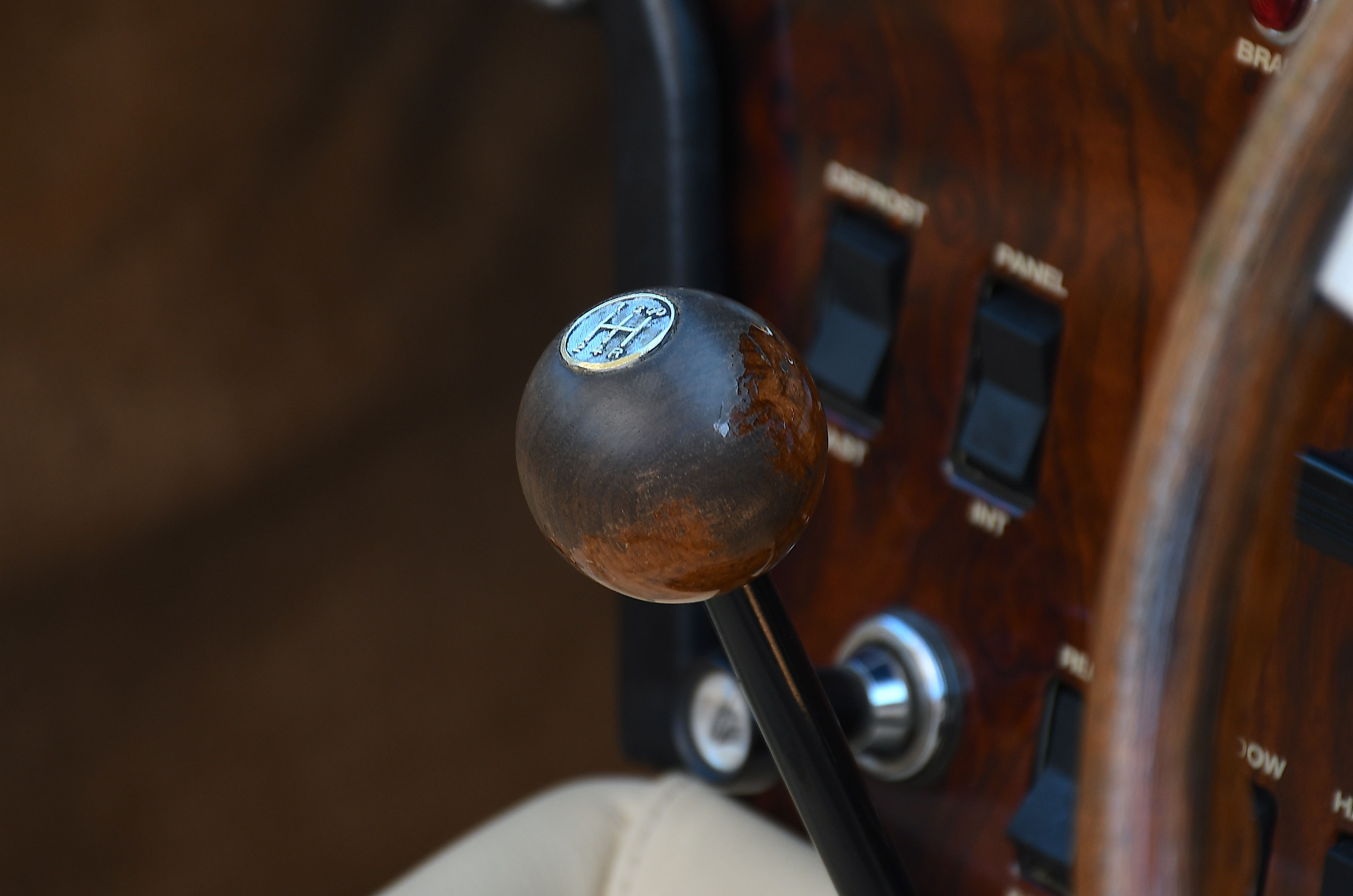
The Lotus Elan +2S has a sweet gearshift
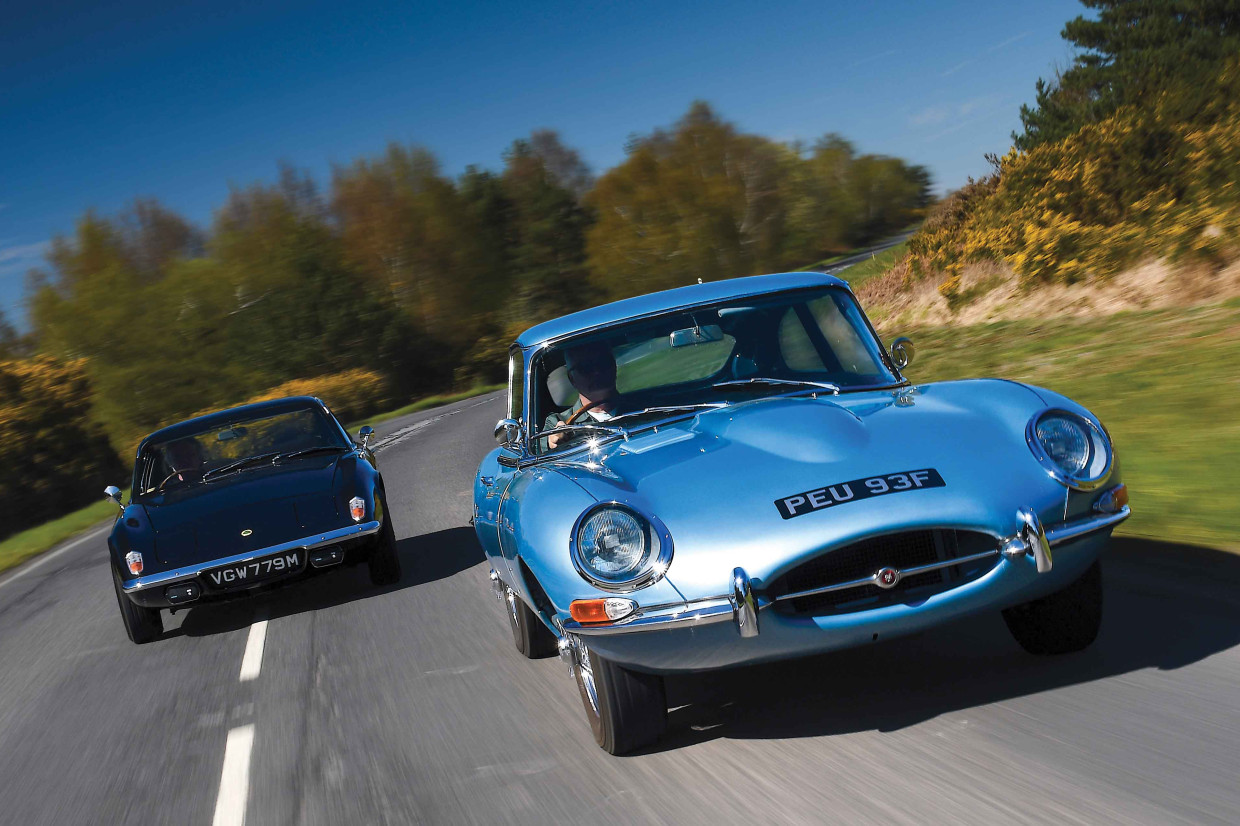
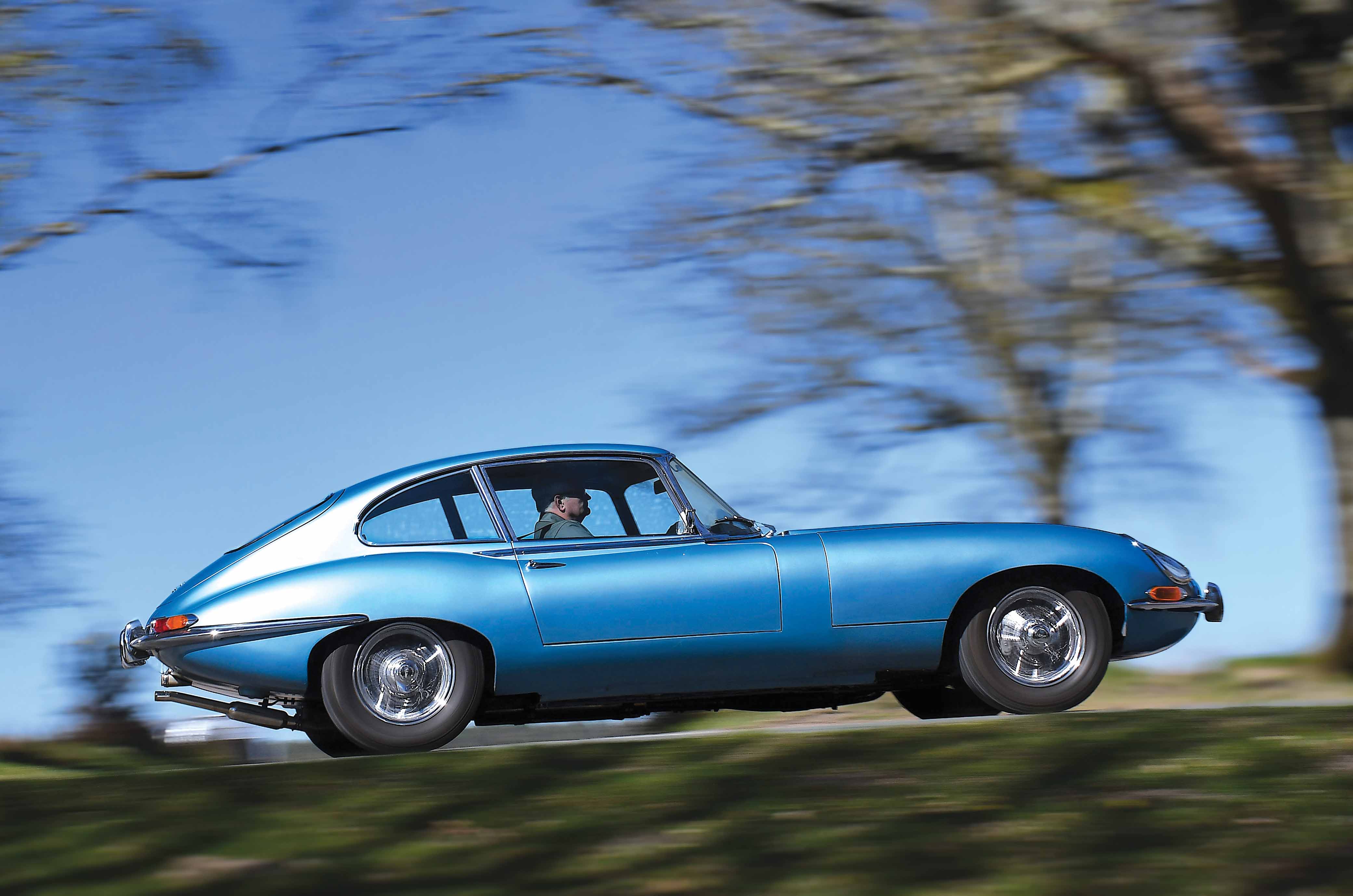
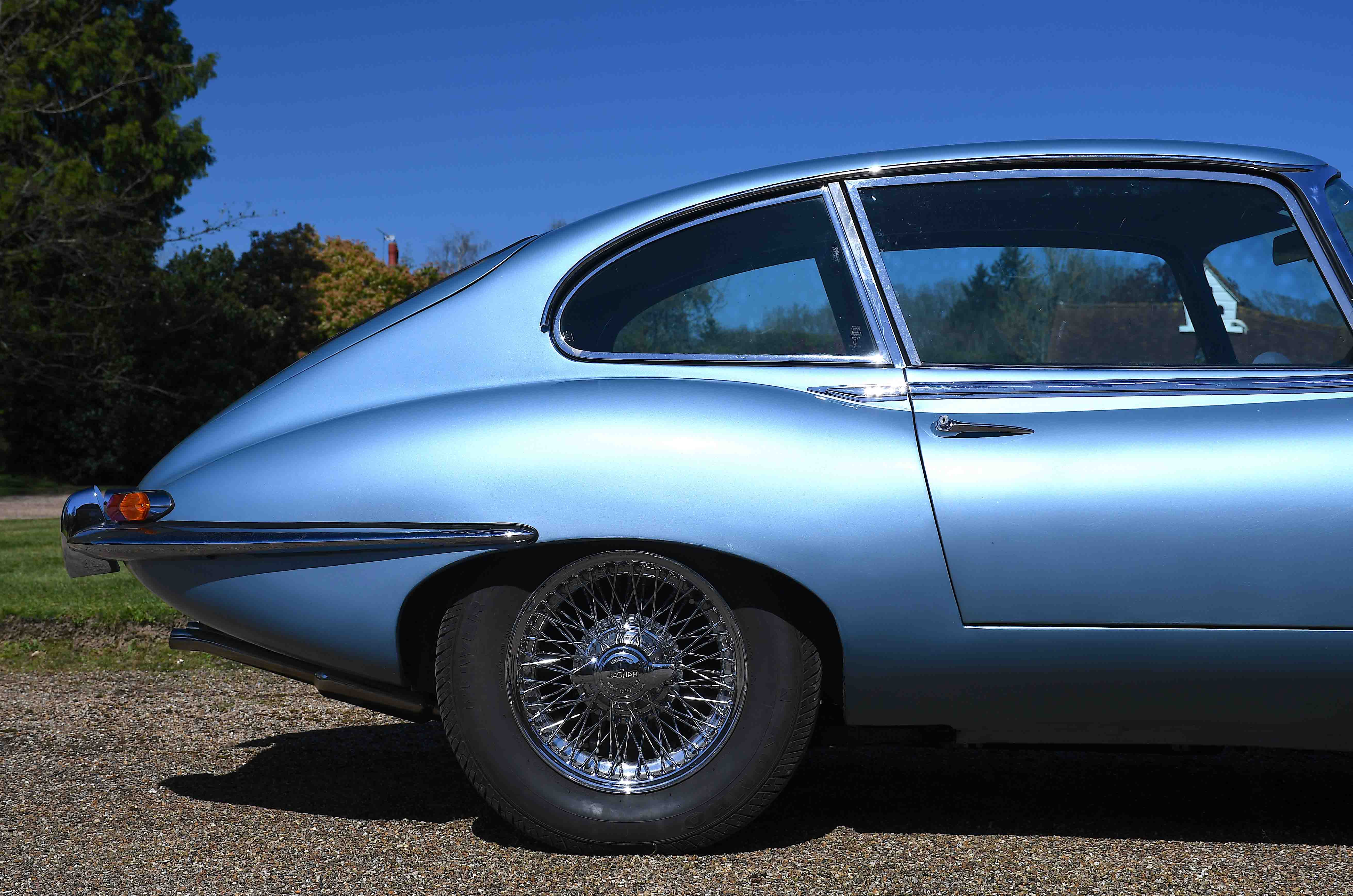
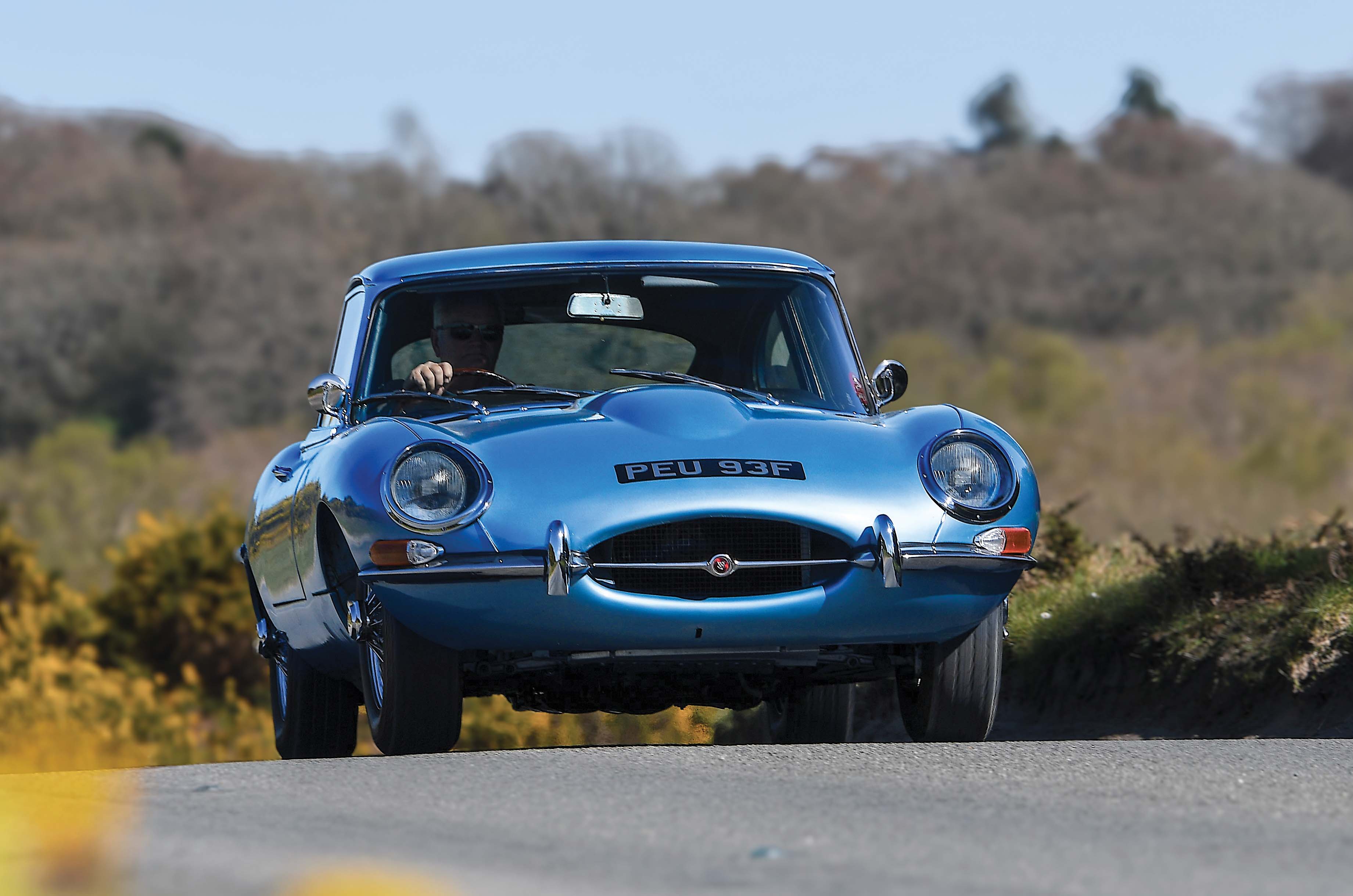
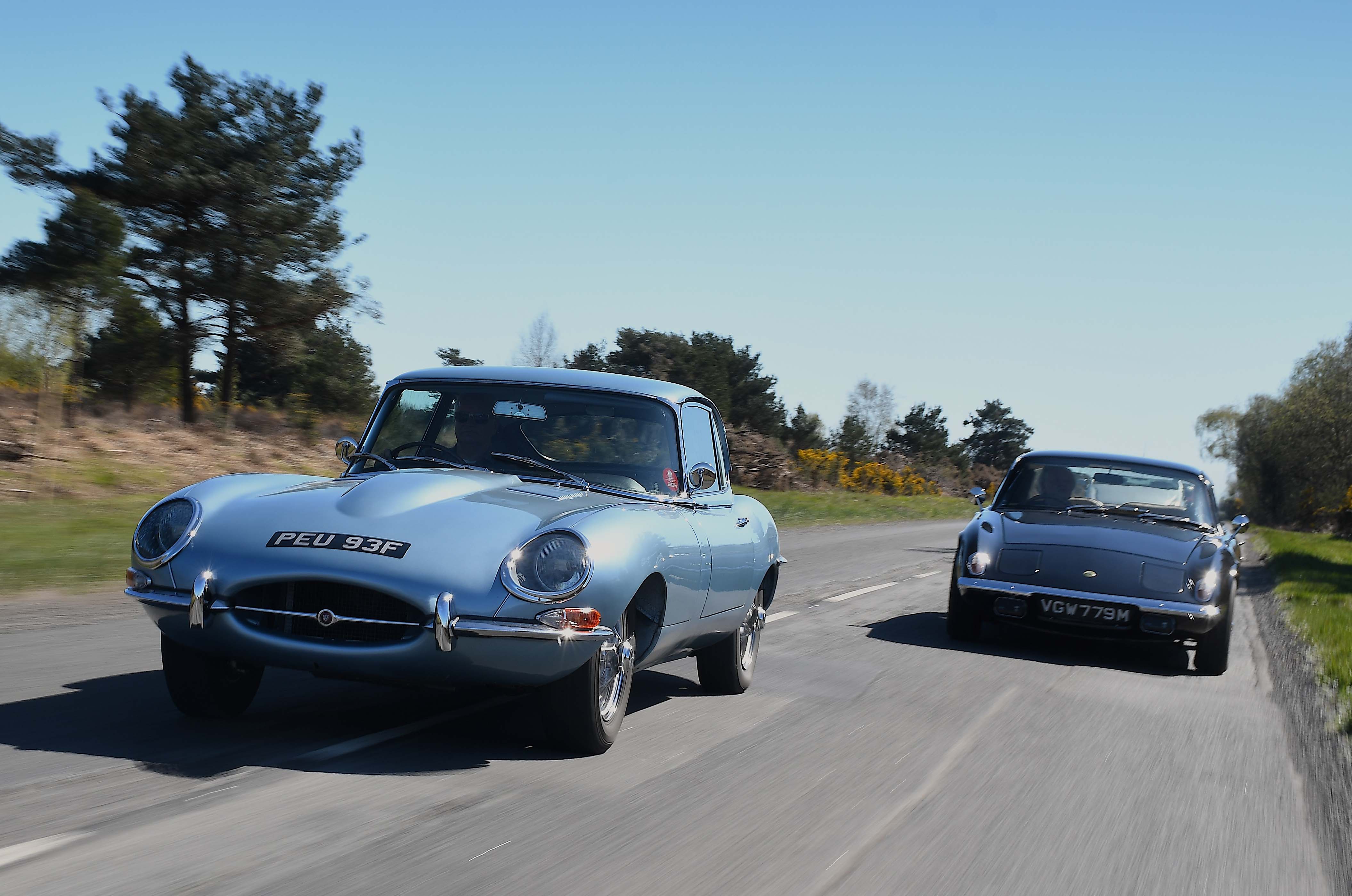
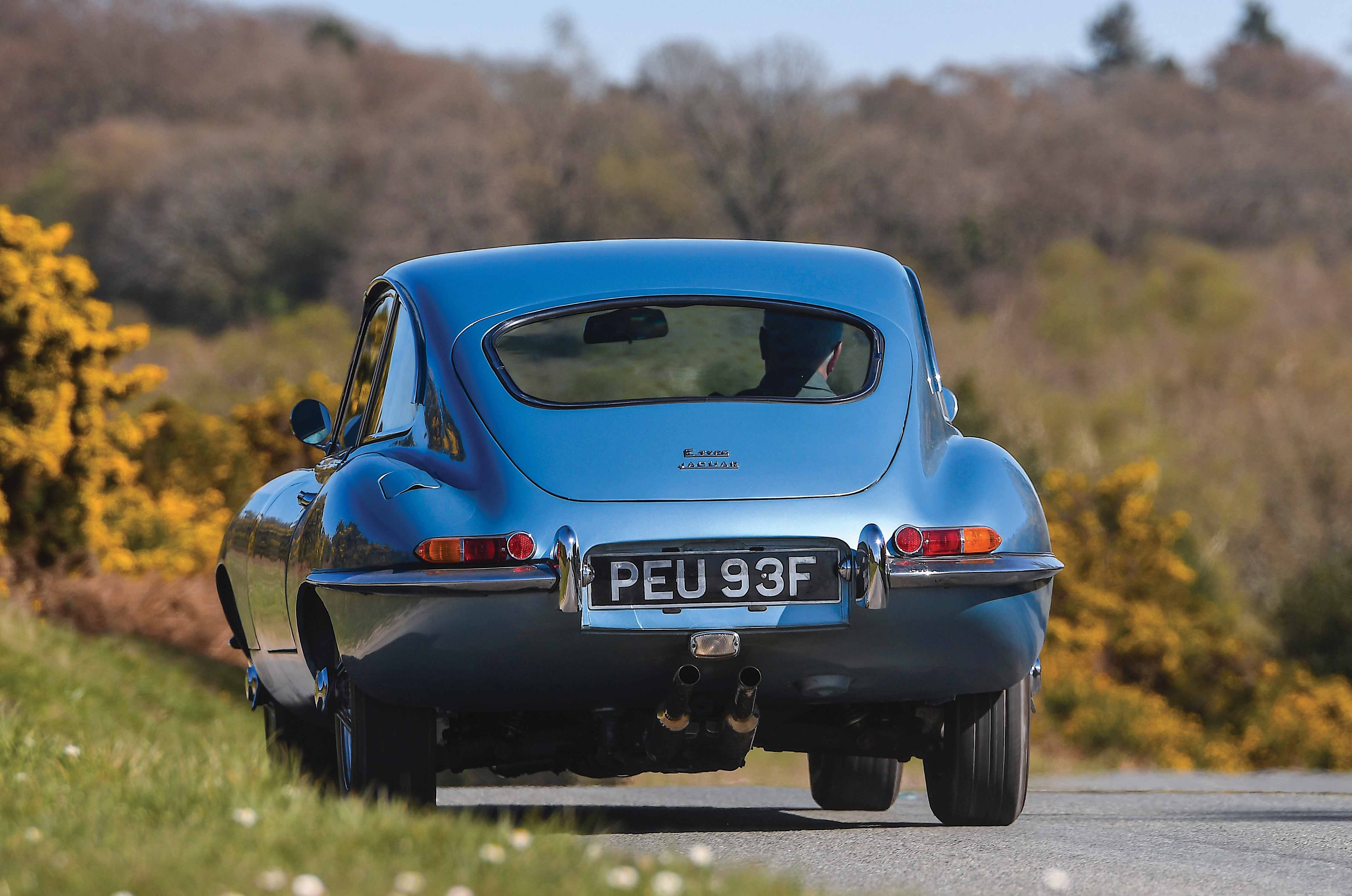
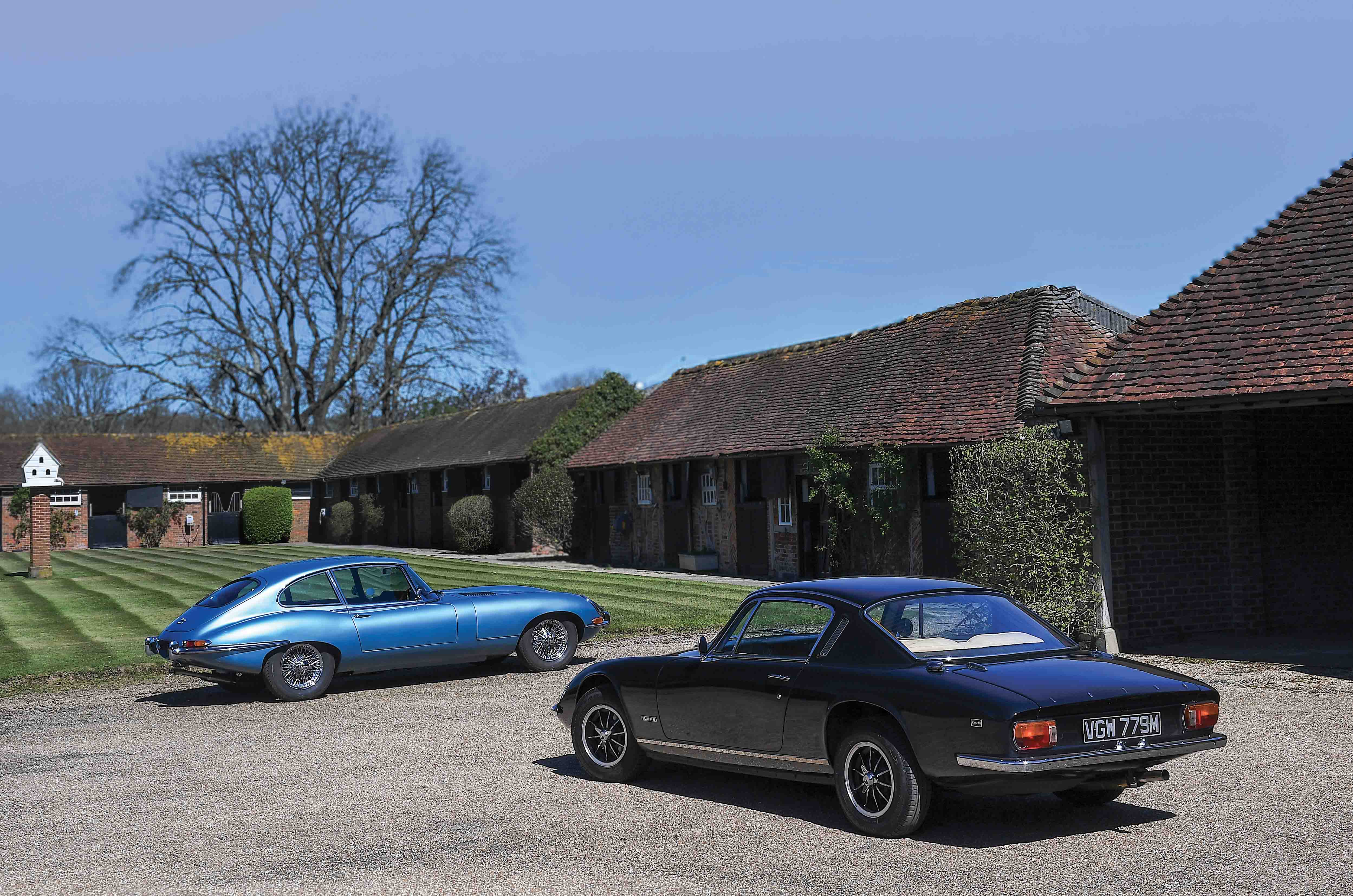
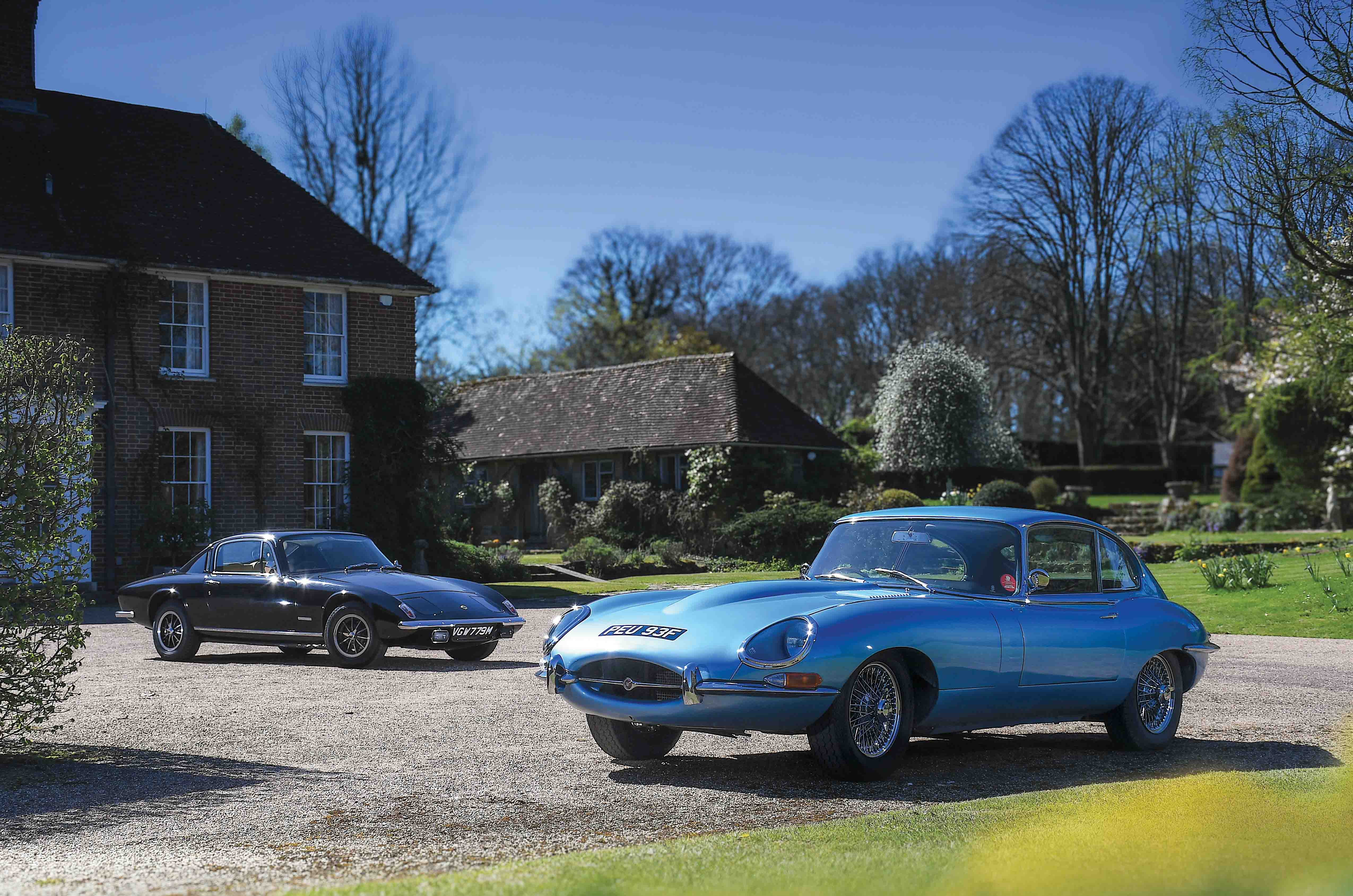
The 2+2 may be the poor relation of the E-type family, but it is still very much one of the clan and a beautiful car by any normal measure.
That is particularly the case in light metallic blue, as here, this example bought as an unfinished project from a deceased estate five years ago by current keeper John Love.
John had specifically wanted a 2+2 to accommodate his 6ft 2in-tall wife – “I’m the short one in our family!” – and a large dog.
The latter has never been anywhere near the car to date, although his kids, and the occasional pal, have braved the rear bench for short outings.
The Jaguar E-type 2+2’s ride is controlled but well cushioned on broken roads
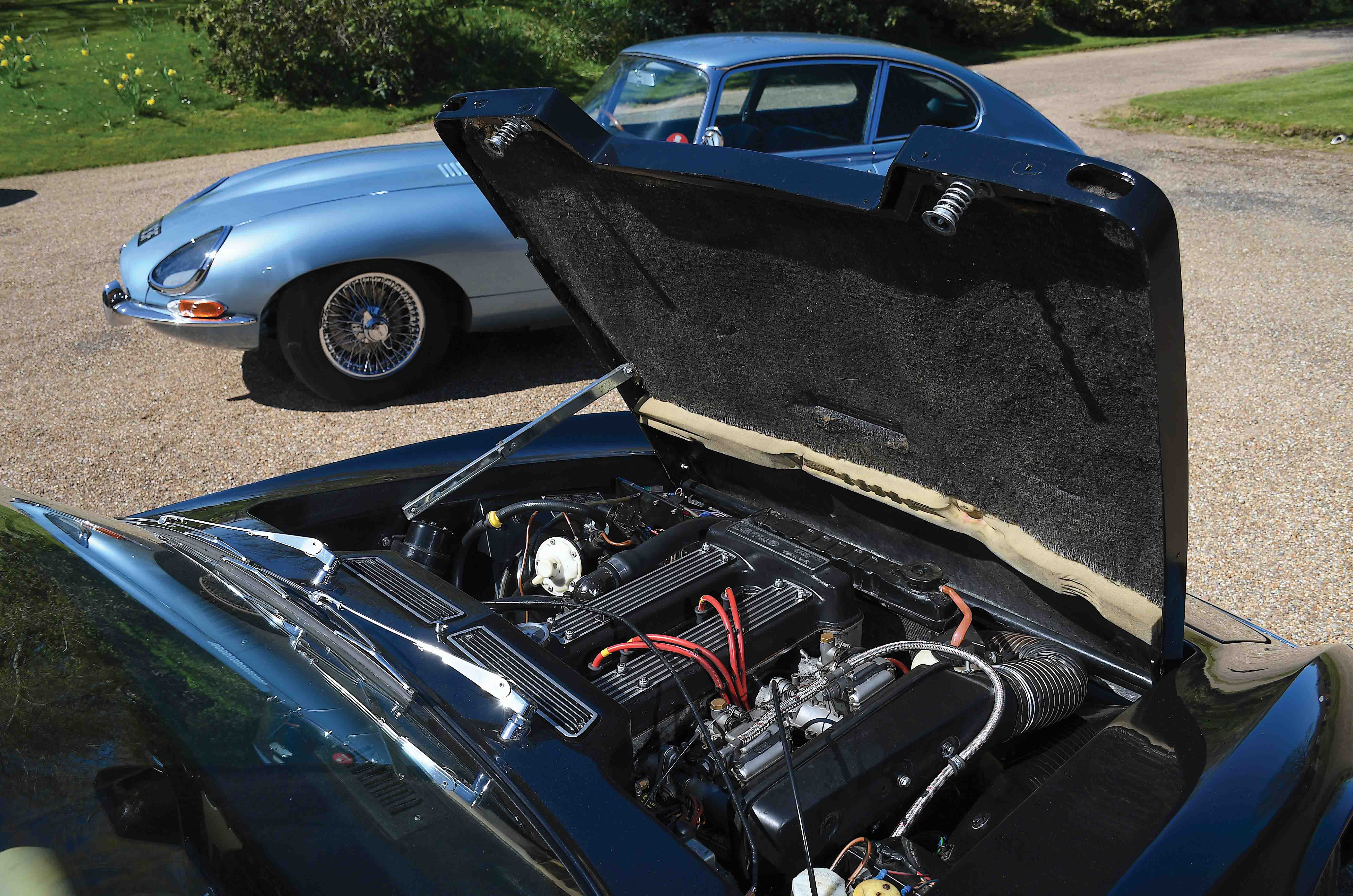
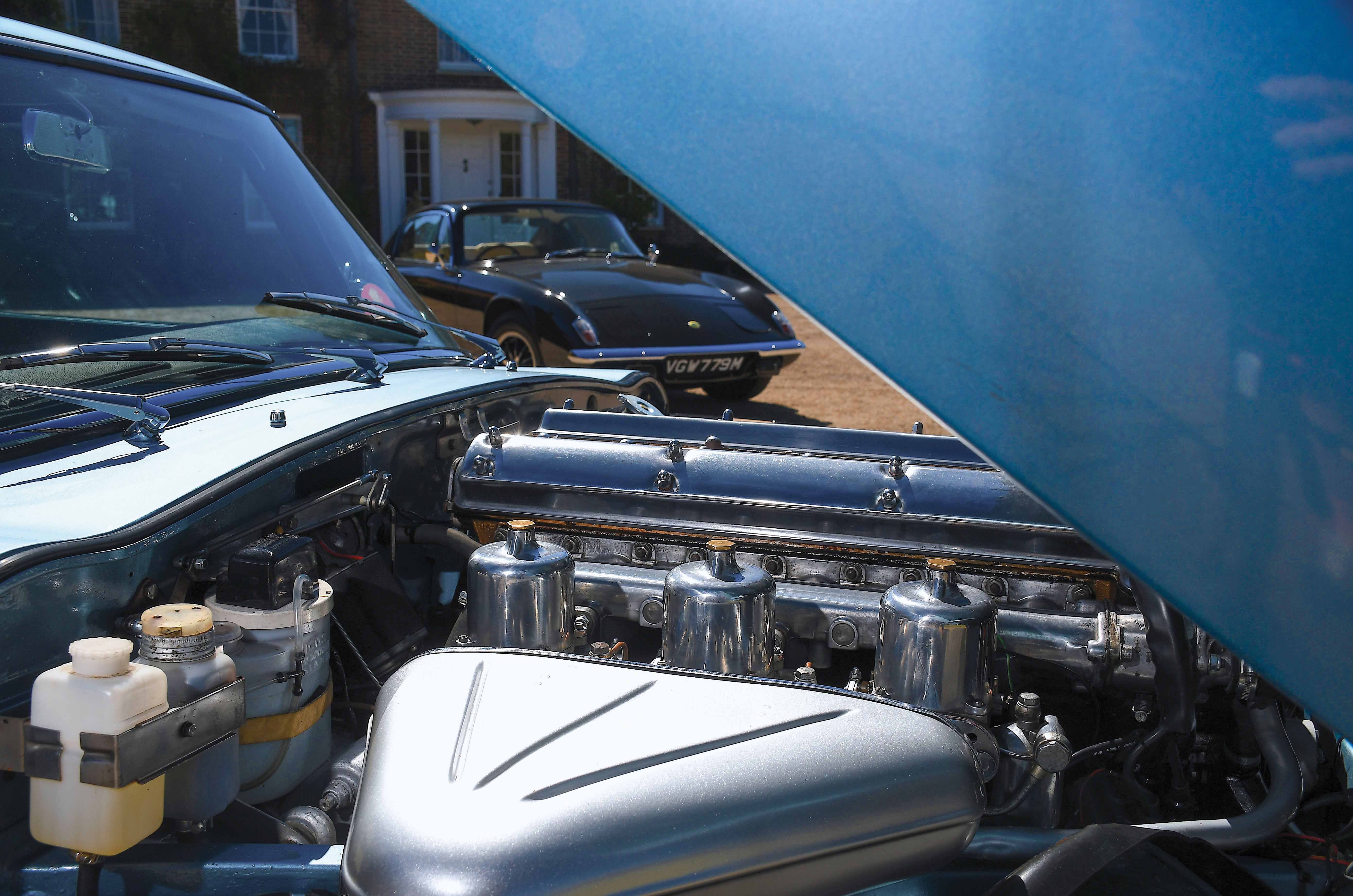
Half of the Jaguar E-type appears to be bonnet, which tips forward to view the magnificent XK engine, a handsome old friend.
It comes to life on command with a familiarly silky rumble, all polished cam boxes, enamelled exhaust headers and sucking triple SU HD8s, sitting in its nest of square-section subframe tubing.
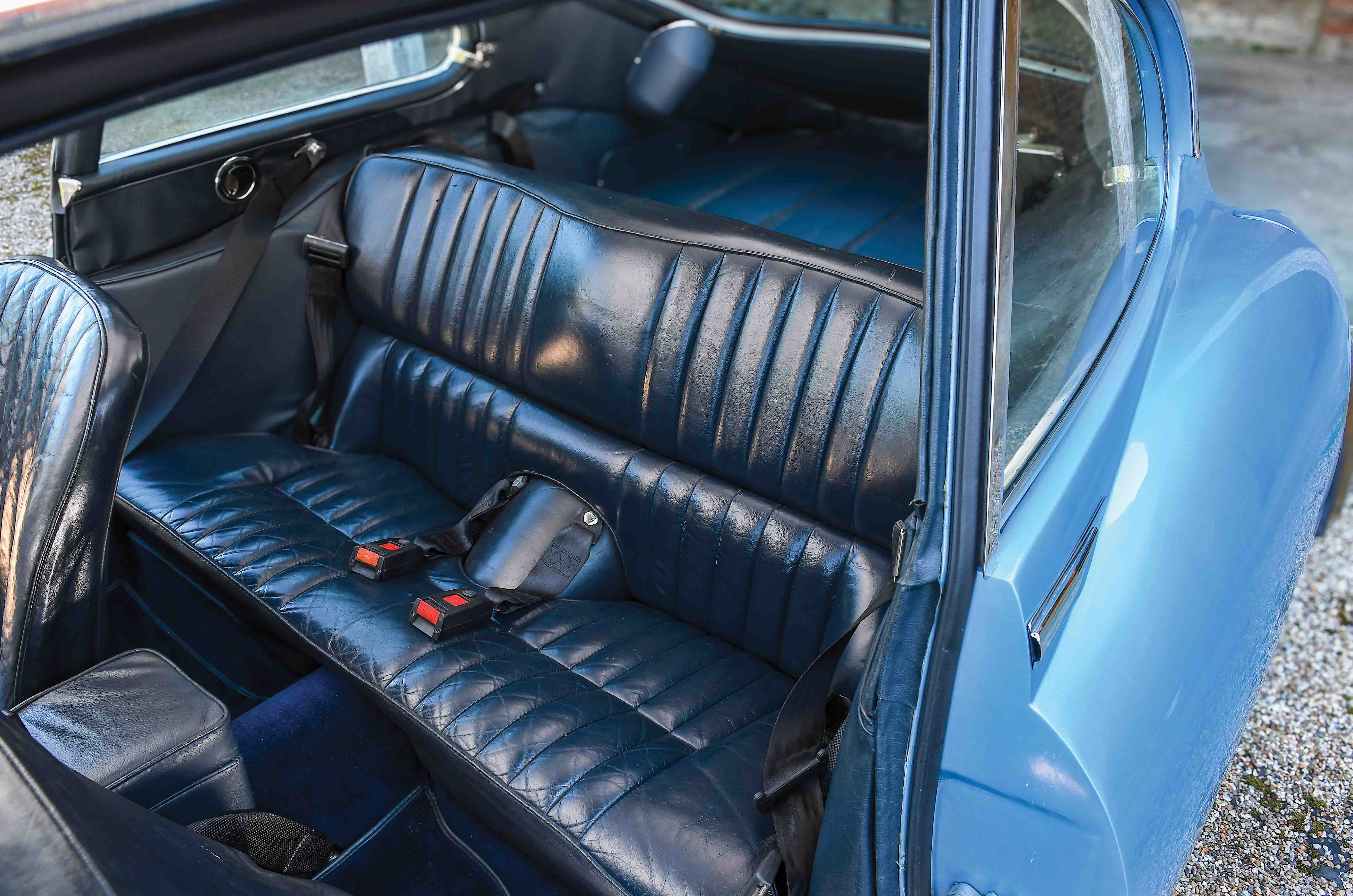
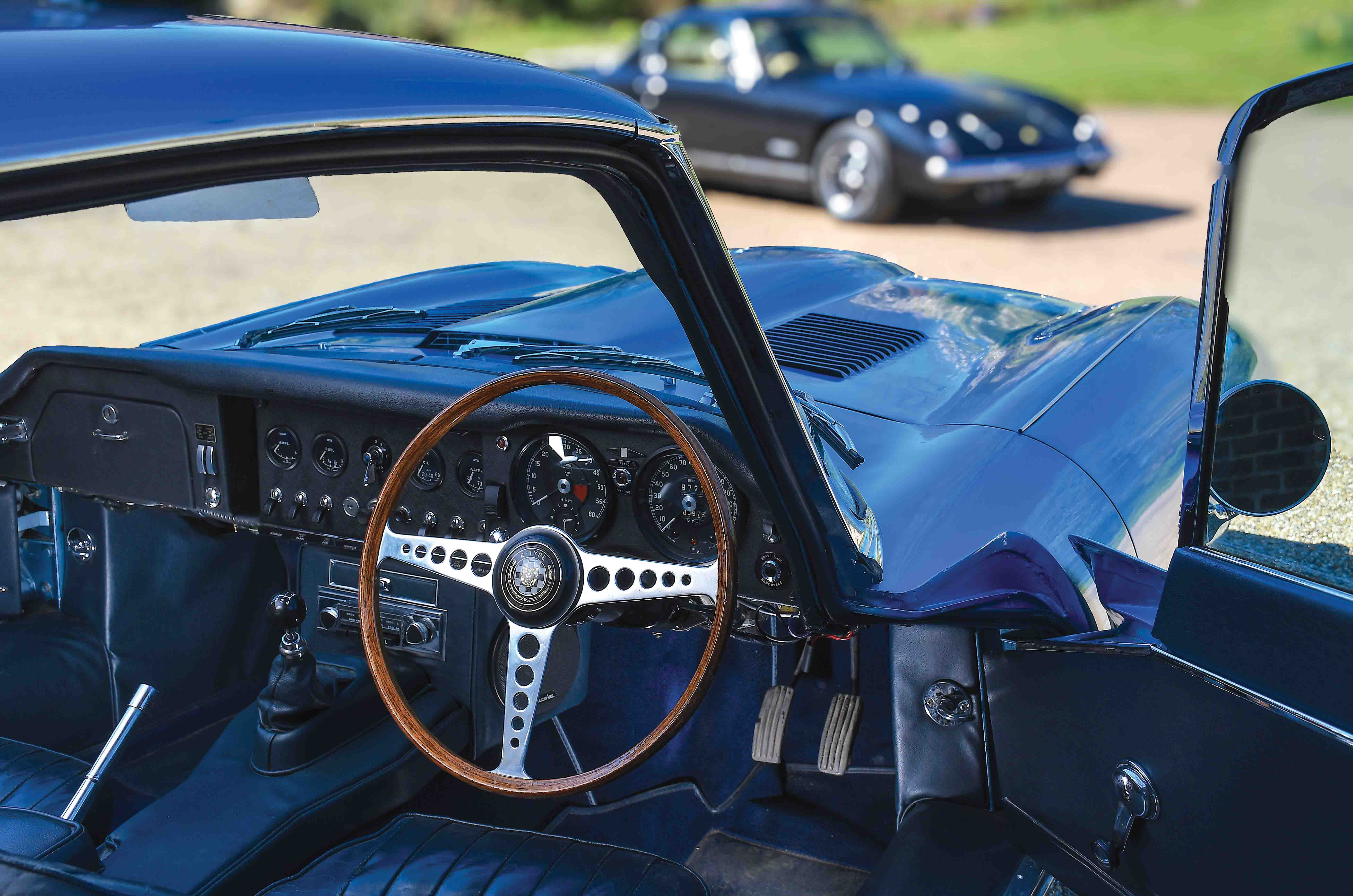
Once over the broad sill, folding yourself in half, you realise that the point about the 2+2 was not so much the rear seats, but releasing head and elbow space for those in the front, where there is legroom to burn and saloon-car-type leather chairs for full-sized adults.
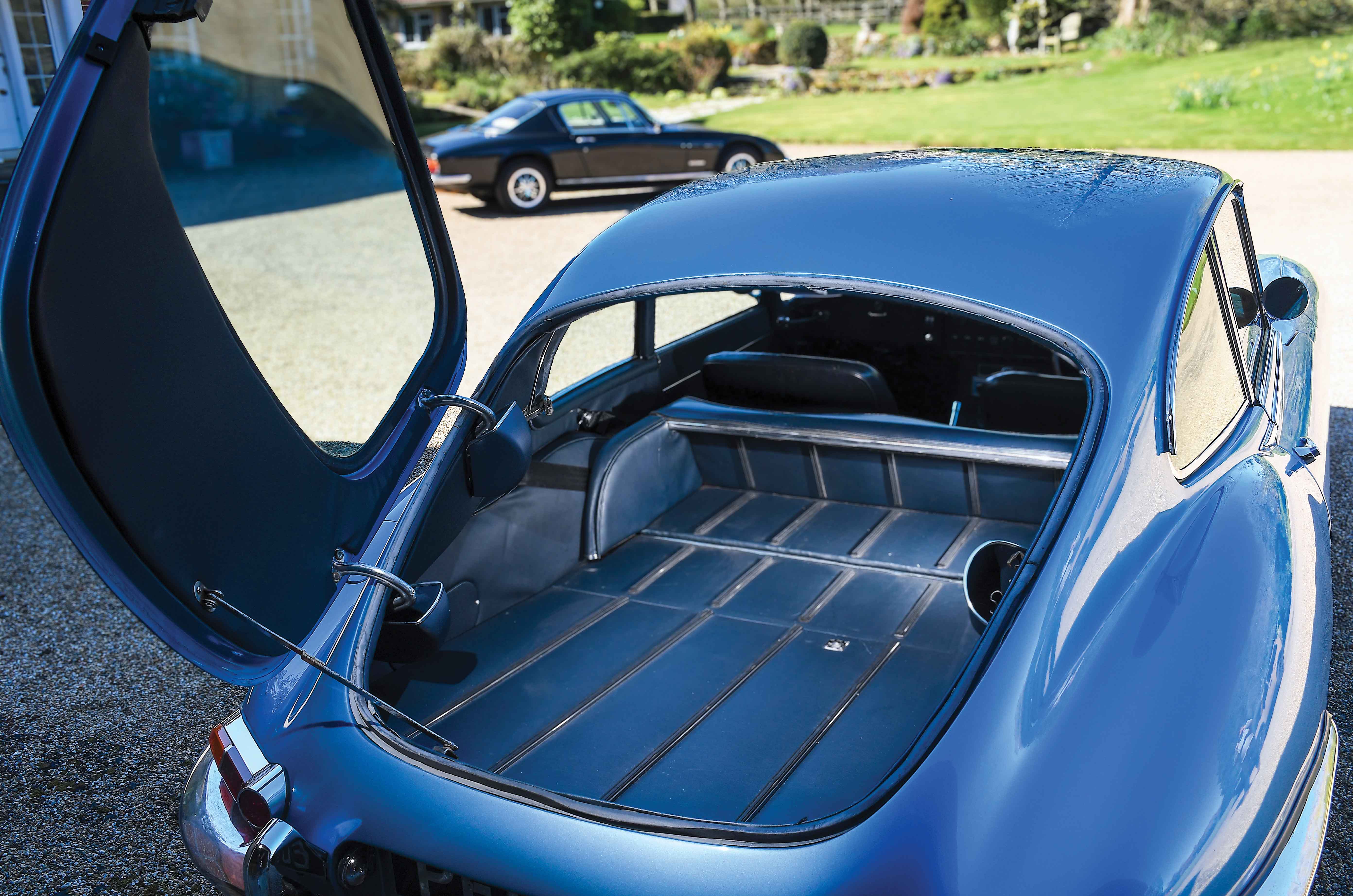
With the back seats folded, there really is a lot of space for luggage – or indeed a dog.
This Jaguar E-type 2+2’s sonorous XK ‘six’ breathes through hotter camshafts and bigger valves
The driving position is good, if a little upright, and the wood-rimmed steering wheel larger than it needs to be, given how light and sensitive is the control.
The Jaguar E-type is very stable in a straight line and very responsive on lock, with a touch of understeer that is easily cancelled out with throttle.
You learn to caress it lightly in the hands and enjoy the feel and feedback rather than fight it.
The gears and clutch need a bit more effort, but slick changes mean full use of the clutch travel, whereas the brakes only need to be massaged.
The Jaguar E-type 2+2’s back bench folds to make a decent load space
And then there is the ride. With its deep-sidewalled tyres and ample, well-controlled suspension travel (double wishbones up front, four coils at the back), modern potholes hold no fears for the E-type: it has decent ground clearance and doesn’t bounce or jolt its occupants, but feels solid and of a piece at all times.
Rough ground is traversed serenely, with merely a remote patter of the tyres and some slight reaction from the steering wheel.
With hotter cams and bigger valves, this E-type 2+2 goes well, storming through the gears in a rousing crescendo of power yet without any loss of torque or low-speed drivability.
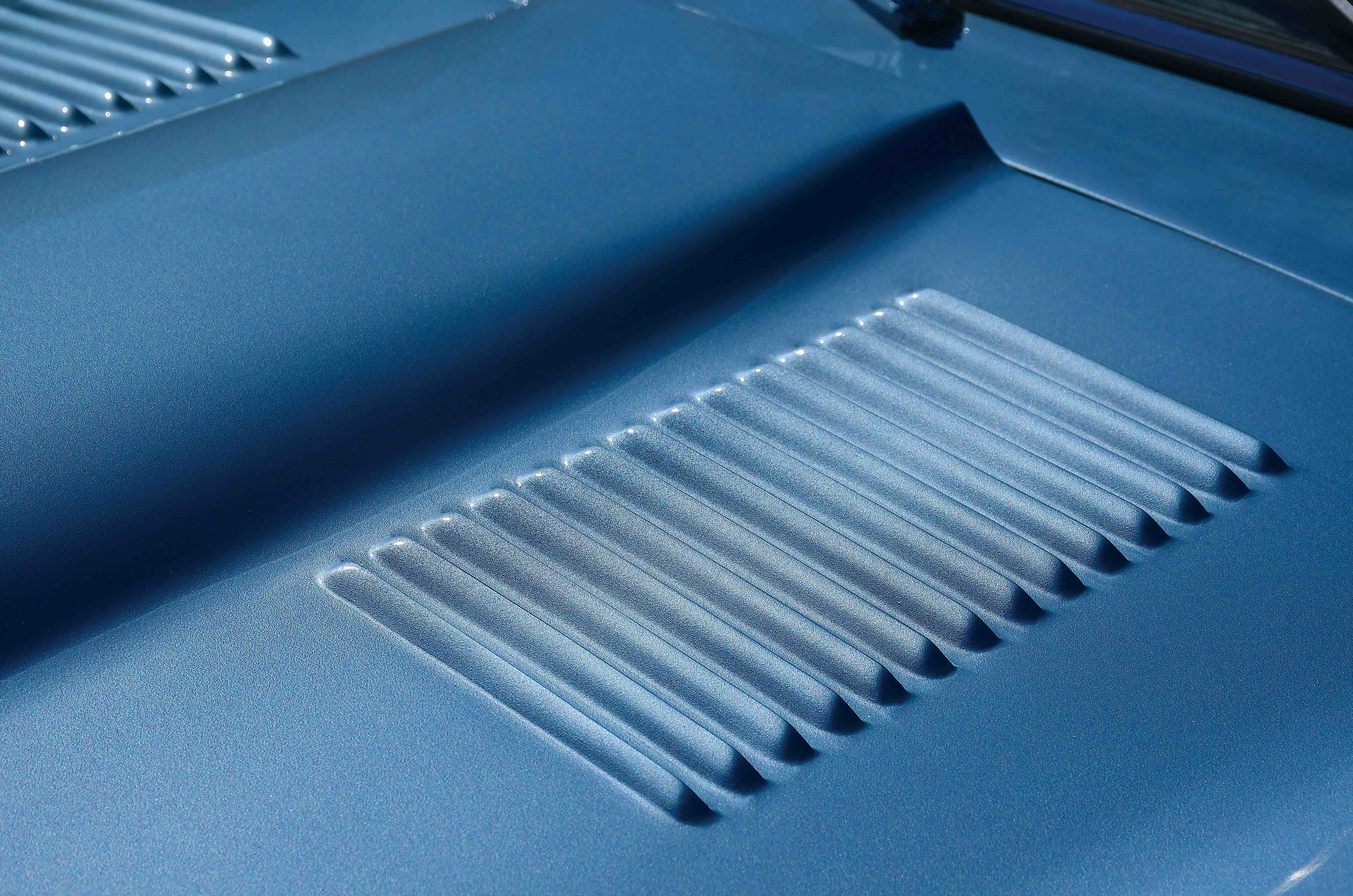
The E-type 2+2’s distinctive bonnet louvres
It feels as if it would happily pull a couple more gears beyond fourth, a ratio in which it will throttle down to a jogging pace and then pull seamlessly away.
But at 4000rpm in the intermediates it still delivers a thrilling degree of raw thrust: the tail squats, the bulging nose lifts and the road is yours.
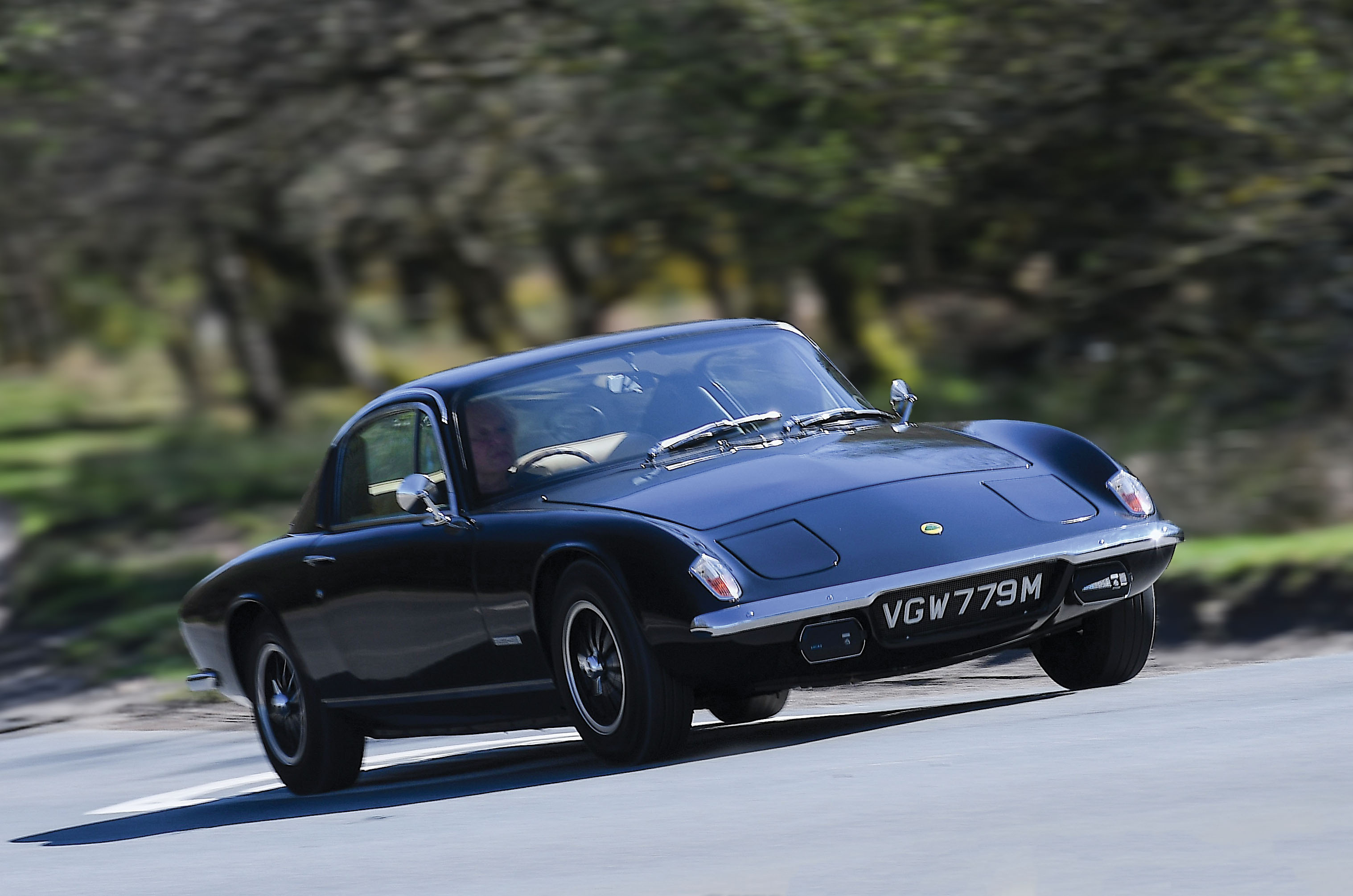
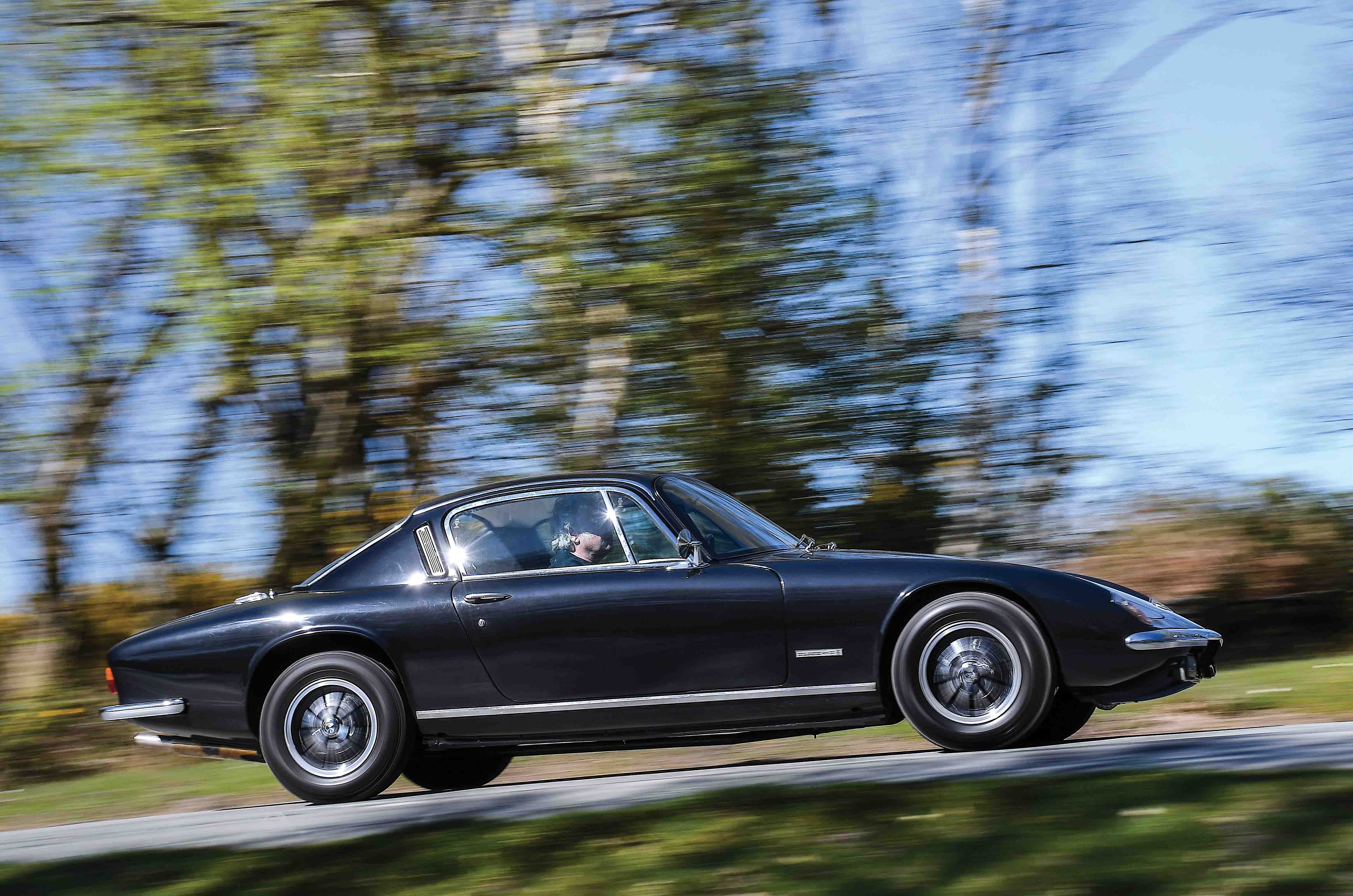
Then again, a well-driven Lotus Elan +2 owes no piece of road to almost any car: many considered Hethel’s bigger Elan handled even more sweetly than the baby one.
I consider it a prettier car, for sure, in many ways one of the most beautiful British coupés of the 1960s.
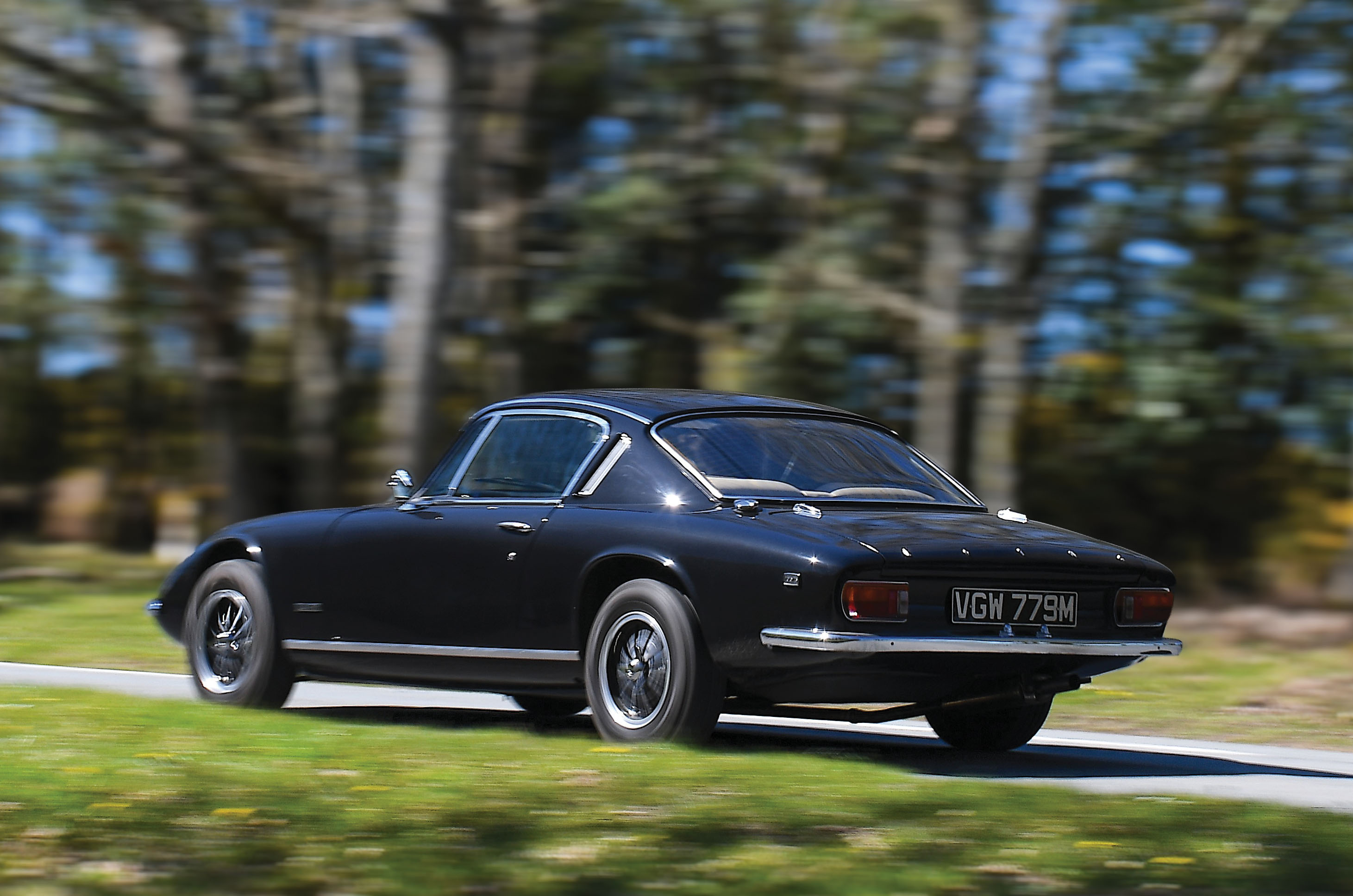
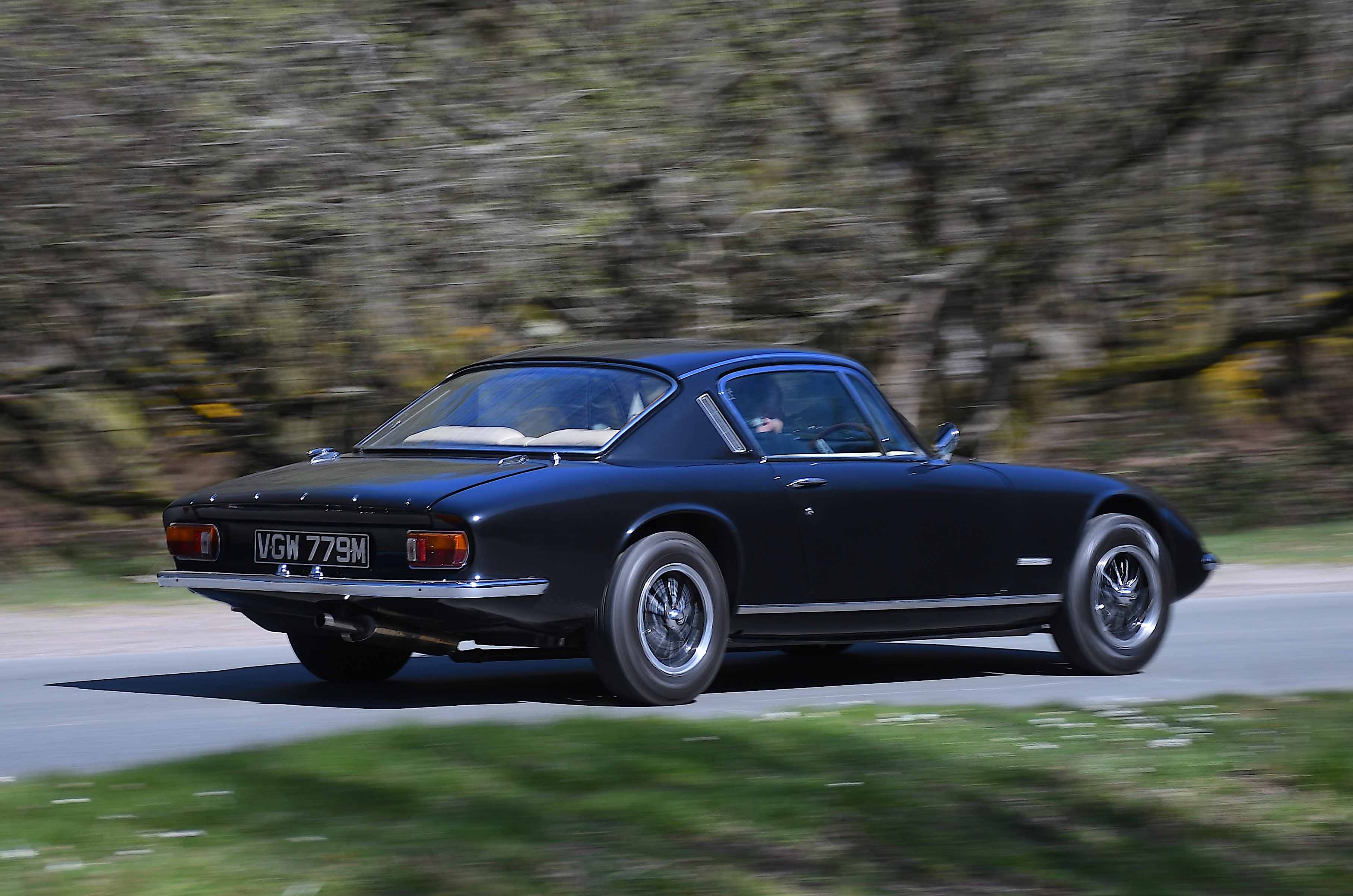
The Lotus Elan +2S (right) retains a more compact profile than the Jaguar E-type 2+2, and it’s only 1in taller than its two-seater sibling
Oli Heath’s five-speed Lotus Elan +2S 130/5 was brought along by his father, Peter.
Inside, you are lower-slung, almost skimming the ground, wearing the car rather than merely sitting in it.
Like the Jaguar, the last couple of feet of nose disappear and the window sills feel high, with poor three-quarter vision due to the chunky roof pillars.
On the plus side, the turning circle is tight, reverse is easily found and the clutch is light – civilising factors all in a sports car.
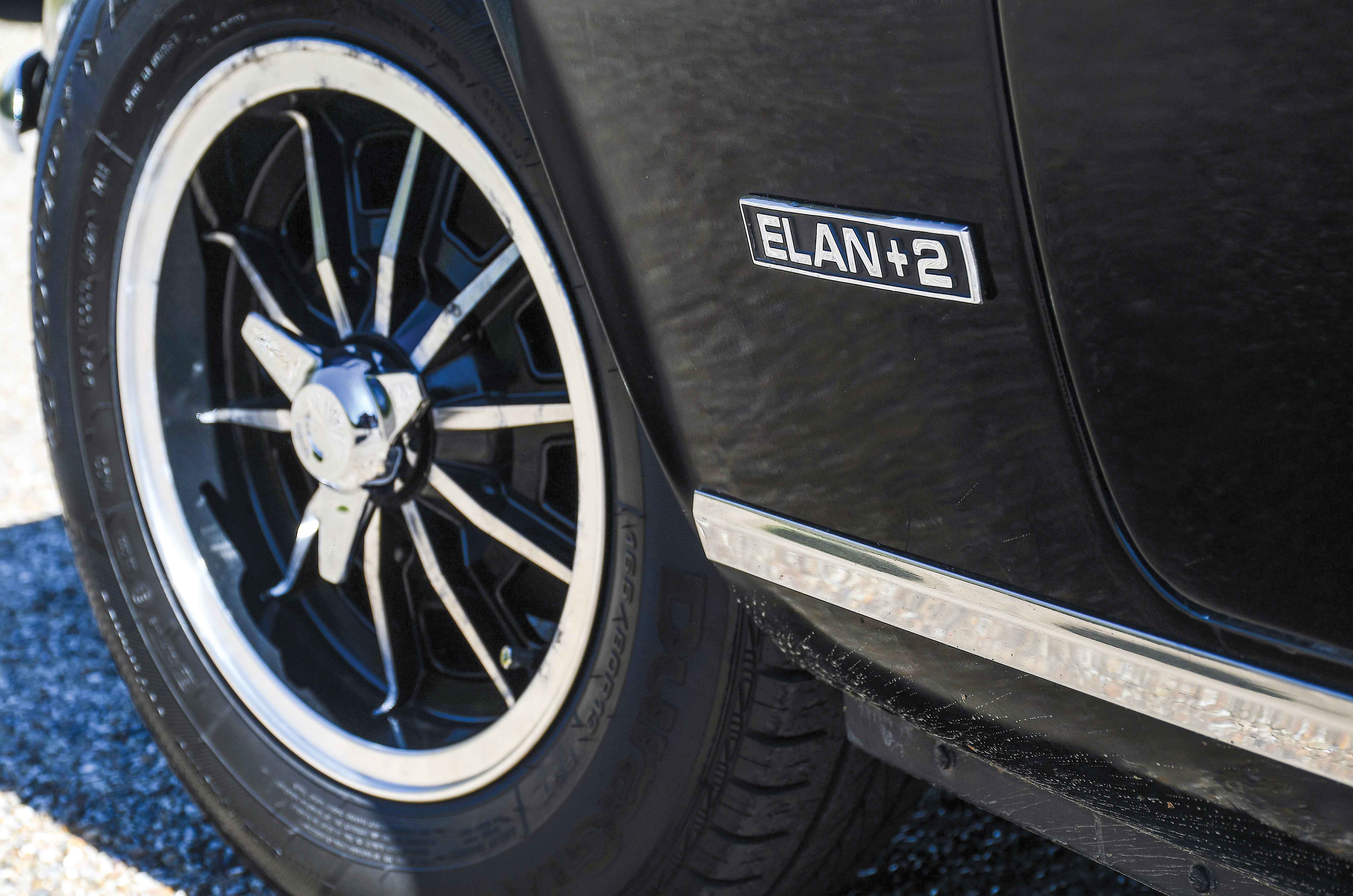
The Lotus Elan +2S has a wheelbase that is a full 12in longer than the two-seater’s
Driveshaft surge remains, but you learn to work around it.
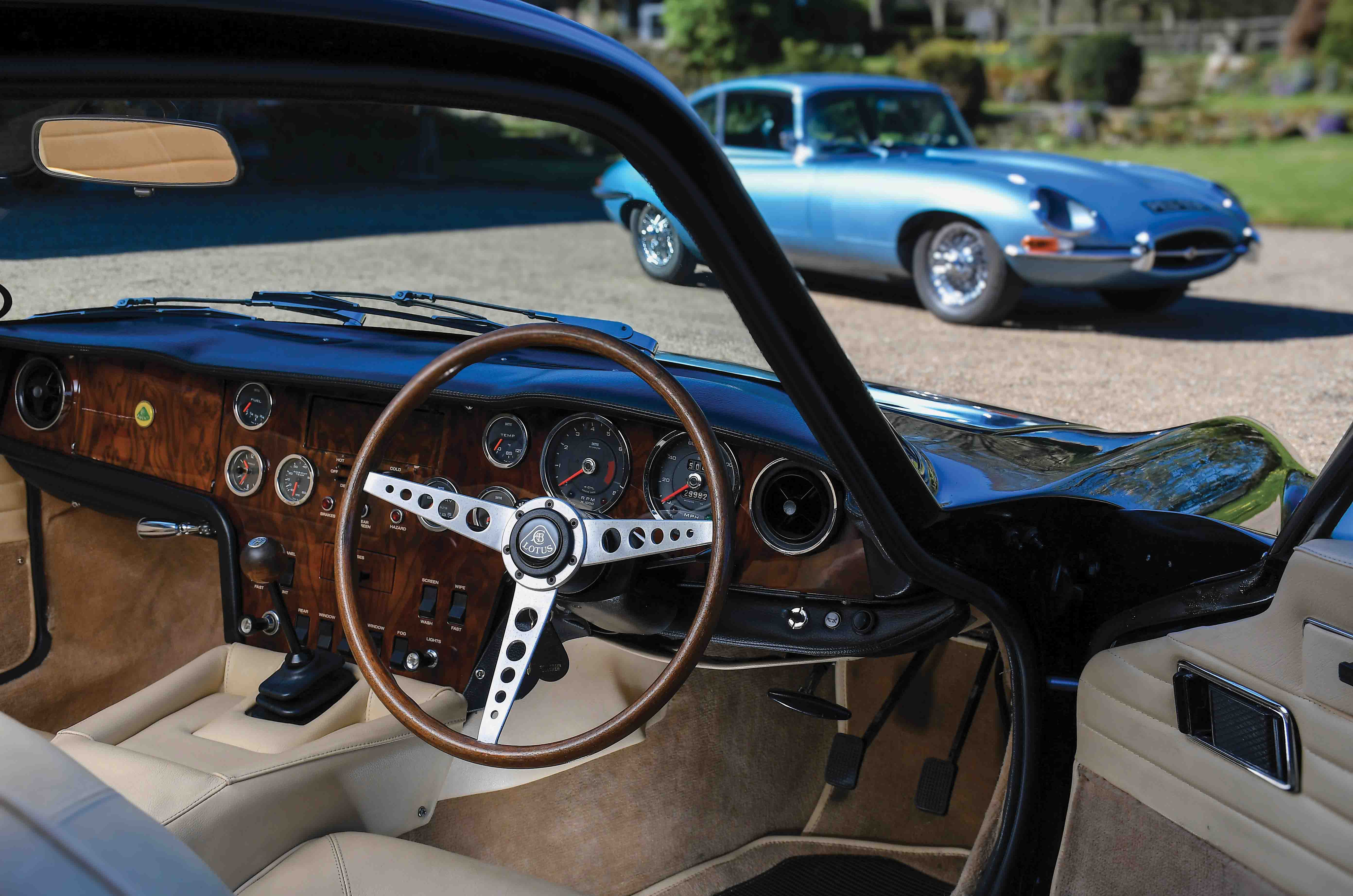
With seven instruments and upwards of 15 switches, the walnut dashboard of the Lotus Elan appears contrived to impress Jaguar owners.
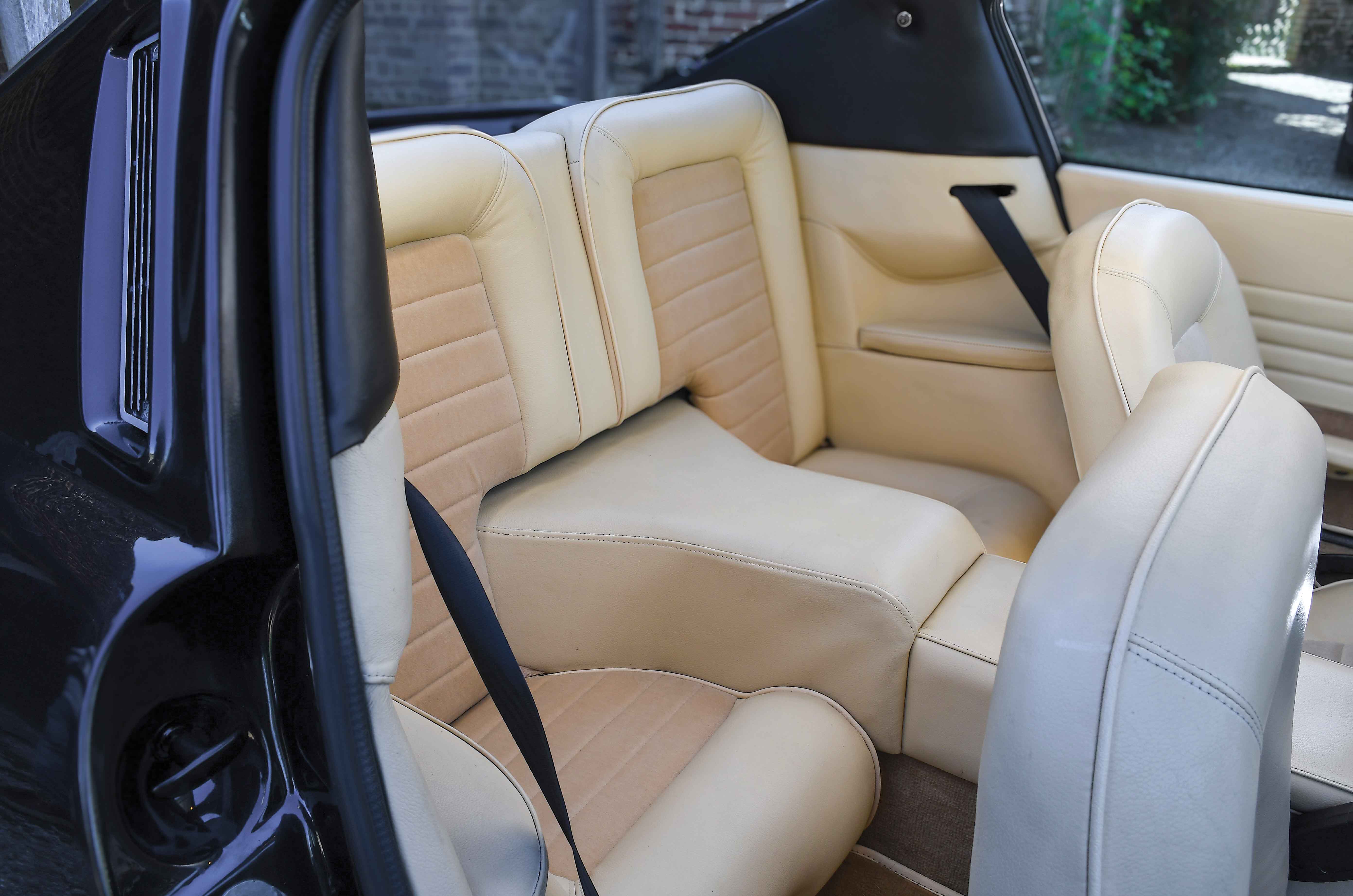
Other than the fascia, the cabin materials are entirely synthetic, but the rear seats look marginally more inviting than the Jaguar’s and, compared with the E-type’s oversized foot pedals, the Elan’s are dainty postage stamps.
Out on the road, steering the Elan – if you will permit me the cliché – really does seem to be more of a thought process than a physical action.
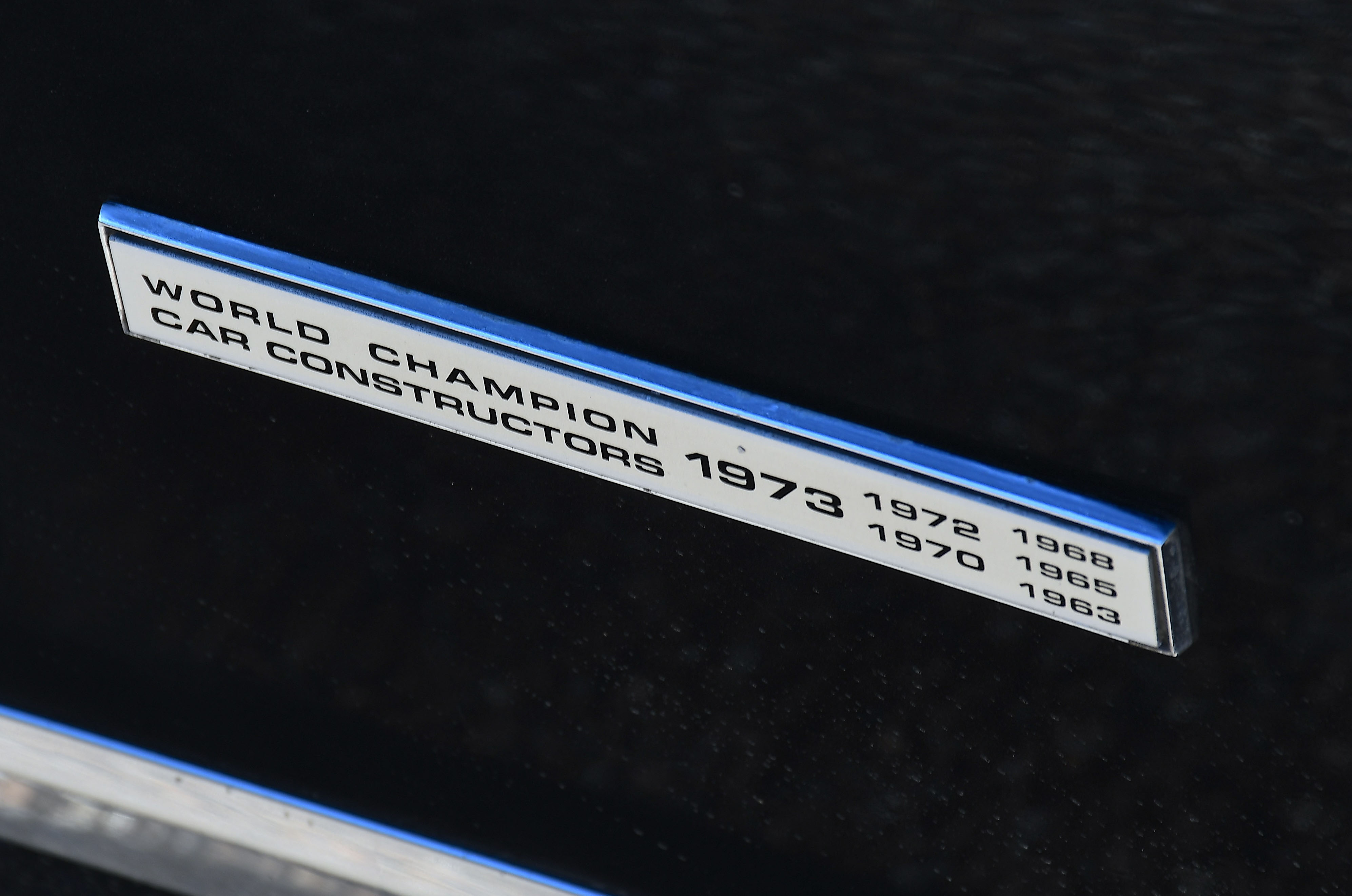
The Lotus Elan +2S has a plaque to celebrate the marque’s Formula One triumphs
The sense of cornering forces building is not relatable to body roll, protesting tyres or loading of the steering, simply because these characteristics are not present – or at least delayed to a degree you would never discover on the road.
The progressive, well-balanced, four-wheel disc brakes achieve the same standard, while the light footprint of the Elan’s supple ride, on those skinny tyres, is almost up there with the Jaguar in the comfort stakes.
In pure figures the Lotus Elan is not too far behind the Jaguar in a straight line, only trailing significantly beyond about 100mph.
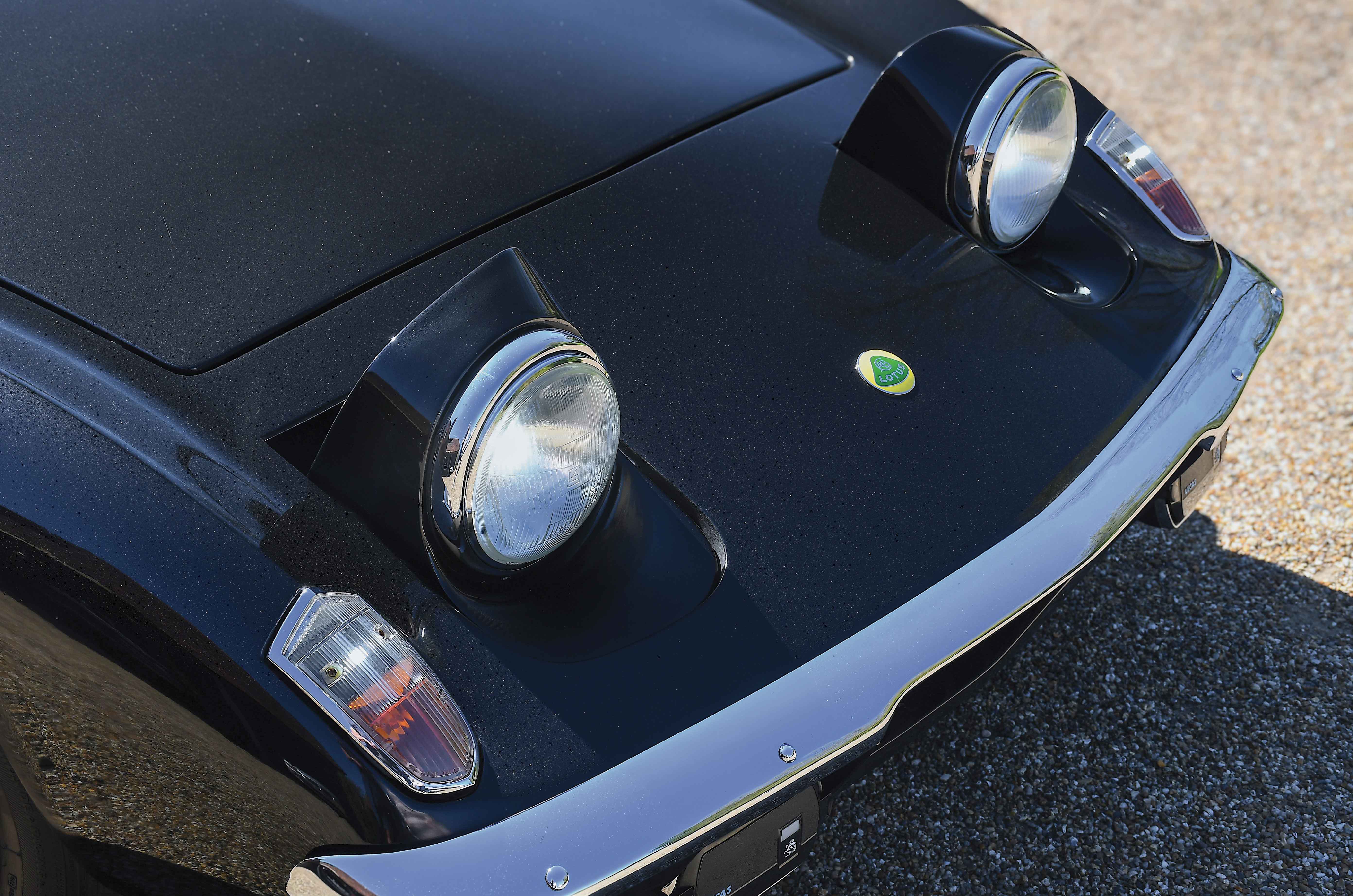
The Lotus Elan +2S has pop-up headlights and a Ford Anglia front bumper
But you have, naturally, to be much freer in your exploitation of revs and use of the gears.
The Twin Cam, sluicing cheerfully through its big-throated Webers, is tunefully aggressive in the way it pulls and revs out, but it is also surprisingly tractable.
The slightly notchy change has a narrow gate, but with familiarity is precise and light, with ratios well placed to extract the best from an engine that will spin freely, smoothly and noisily to 7000rpm.
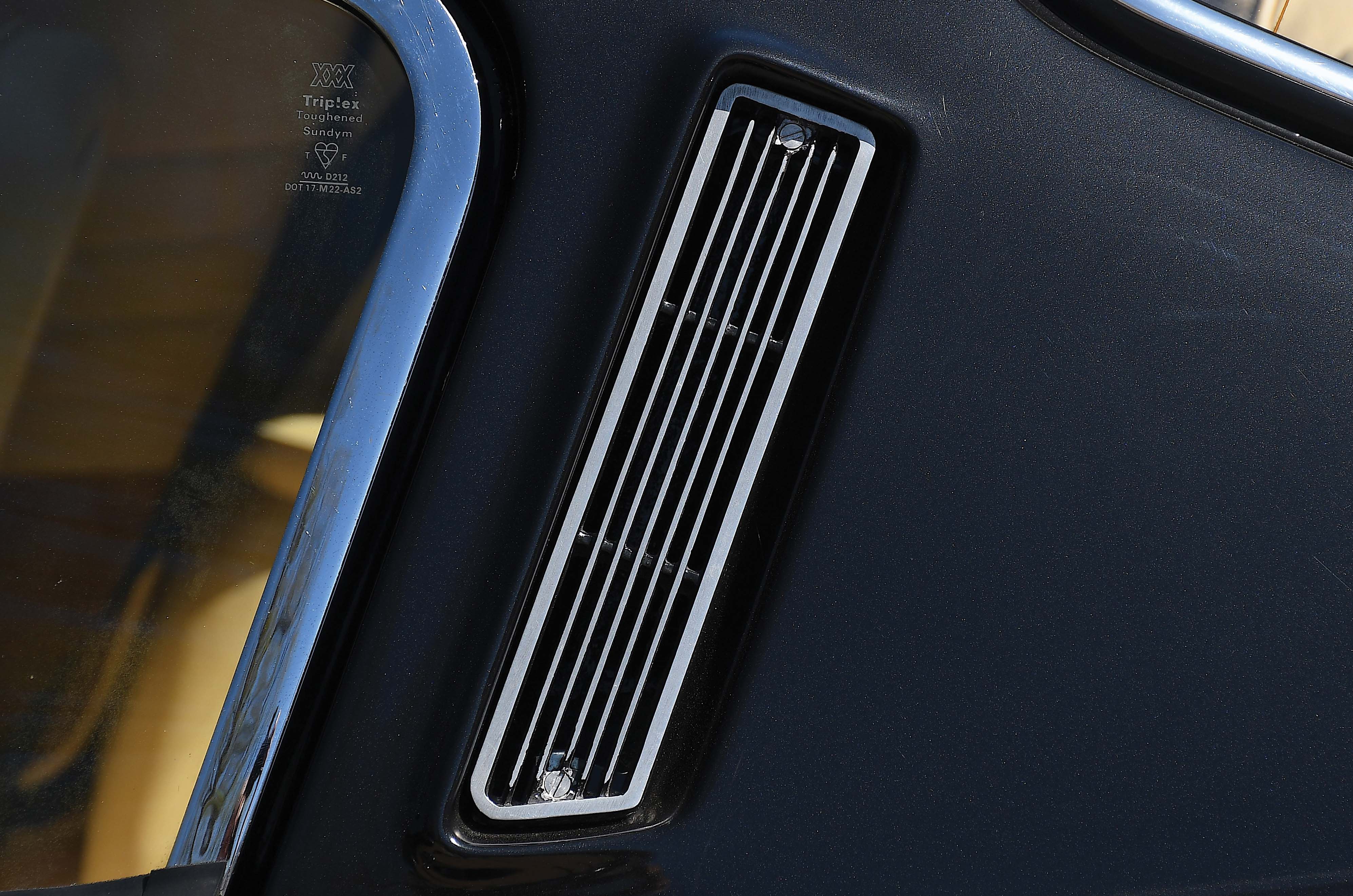
The Lotus Elan +2S 130/5’s stylish cabin vent
The fact that these two coupés are nominal 2+2s is incidental to the conclusion of this story.
My feeling is that anyone who could afford either car 60 years ago had the wherewithal to buy a full four-seater as back-up, even if it was a secondhand Morris Minor.
Today, the two appear on the enthusiast’s radar as inexpensive entry points to the world of Lotus Elans and Jaguar E-types, although the wind is taken out of the sails of that argument when values of the more desirable two-seater versions begin to falter: the ‘bargains’, sadly, have the same expensive tastes in specialists’ chargeable hours and parts.
‘A well-driven +2 owes no piece of road to almost any car: many considered it handled more sweetly than the baby Elan’
But, on balance and with many caveats – including acknowledging the fact I probably don’t have the patience to own almost any sort of Lotus – I’d probably choose the Elan.
There is much to admire about this far from unloved but moderately sidelined model.
I like the shape, the uncompromising driver appeal, the fact that it achieves so much with so little – and the sheer ingenuity behind it that was uniquely Lotus, perhaps uniquely English.
Images: John Bradshaw
Thanks to: Simon Crockford of Stradale Icons for finding both cars and supplying the location
Factfiles
Jaguar E-type S1 4.2 2+2
- Sold/number built 1966-’71/10,924
- Construction steel monocoque with tubular front subframe
- Engine iron-block, alloy-head, dohc 4235cc ‘six’, triple SU carburettors
- Max power 265bhp @ 5400rpm
- Max torque 283lb ft @ 4000rpm
- Transmission four-speed manual, RWD
- Suspension independent, at front by wishbones, torsion bars, telescopic dampers rear twin coil-overs, lower wishbones, radius arms; anti-roll bar f/r
- Steering rack and pinion
- Brakes discs
- Length 15ft 4½in (4684mm)
- Width 5ft 5¼in (1656mm)
- Height 4ft 2in (1270mm)
- Wheelbase 8ft 9in (2670mm)
- Weight 2744lb (1245kg)
- 0-60mph 7.4 secs
- Top speed 139mph
- Mpg 18-22
- Price new £2245
- Price now £50,000 *
Lotus Elan +2S 130/5
- Sold/number built 1967-’74/5244 (all)
- Construction steel backbone chassis, glassfibre body
- Engine iron-block, alloy-head, dohc 1558cc ‘four’, twin Dell’Orto carburettors
- Max power 126bhp @ 6500rpm
- Max torque 113lb ft @ 5500rpm
- Transmission five-speed manual, RWD
- Suspension independent, at front by wishbones, anti-roll bar rear struts, lower wishbones; coil springs, telescopic dampers f/r
- Steering rack and pinion
- Brakes discs
- Length 14ft (4267mm)
- Width 5ft 3in (1600mm)
- Height 3ft 11in (1164mm)
- Wheelbase 8ft (2438mm)
- Weight 2086lb (946kg)
- 0-60mph 7.7 secs
- Top speed 121mph
- Mpg 21-26
- Price new £2626
- Price now £25,000*
*Prices correct at date of original publication
Enjoy more of the world’s best classic car content every month when you subscribe to C&SC – get our latest deals here
READ MORE
Triumph Spitfire vs MGB vs Lotus Elan: a new dawn
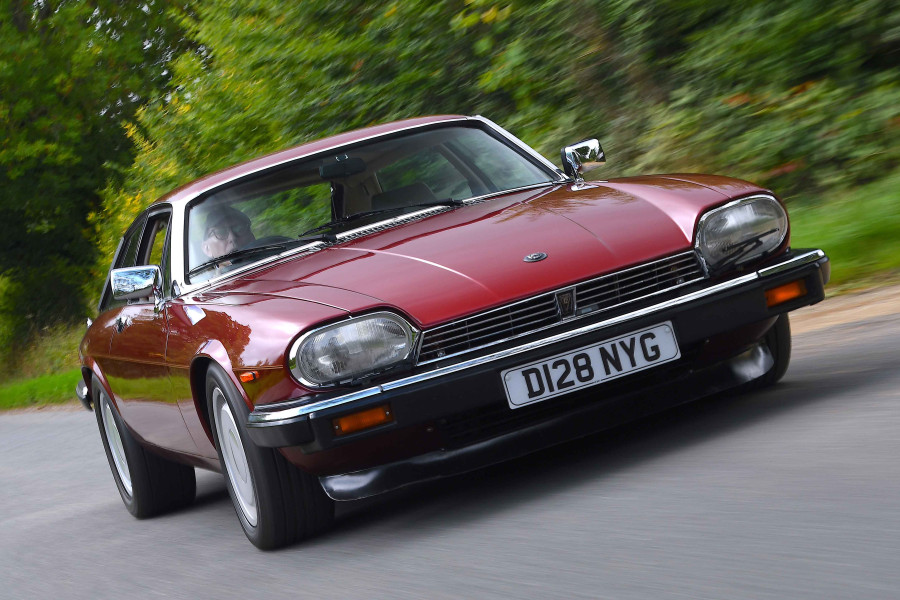
Jaguar E-type V12: return of the silent sports car
Ferrari Mondial vs Porsche 911 vs Alpine GTA vs Lotus Excel: 2+2 equals phwoar
Martin Buckley
Senior Contributor, Classic & Sports Car