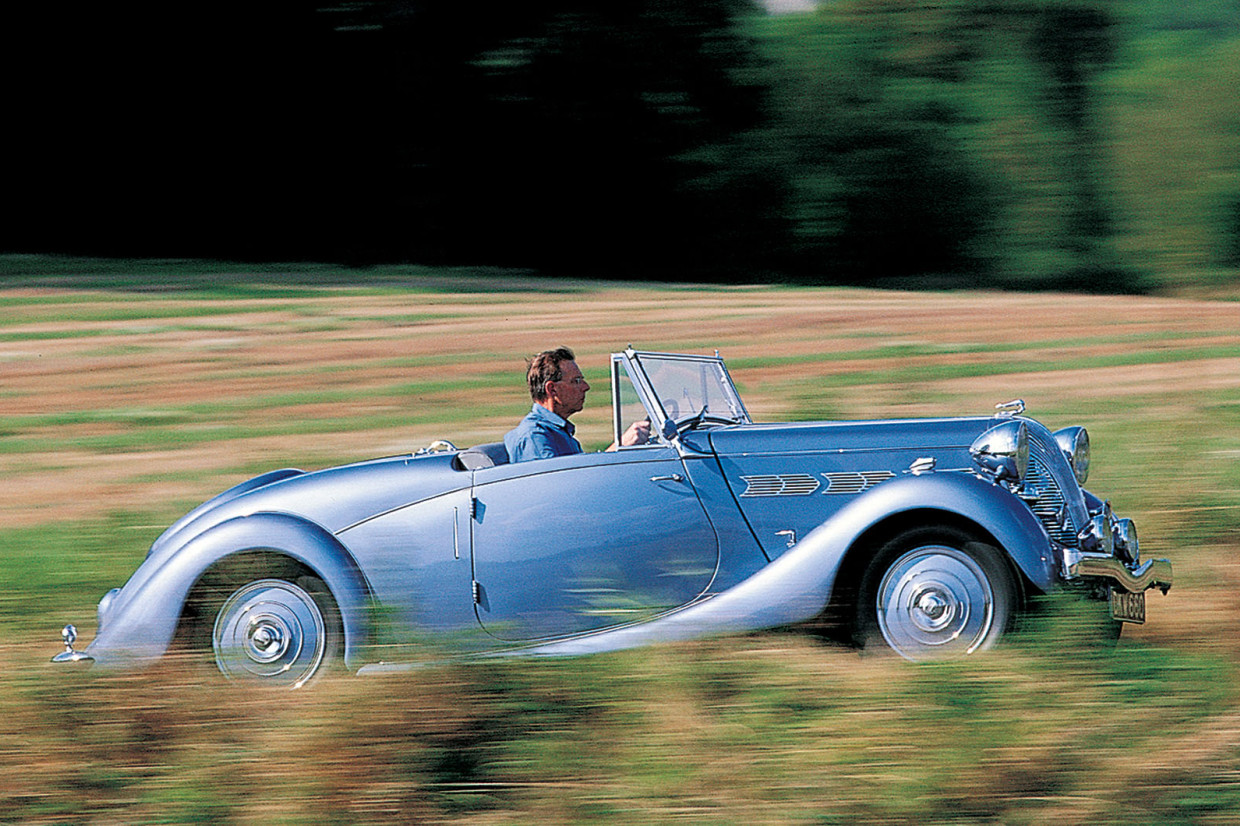
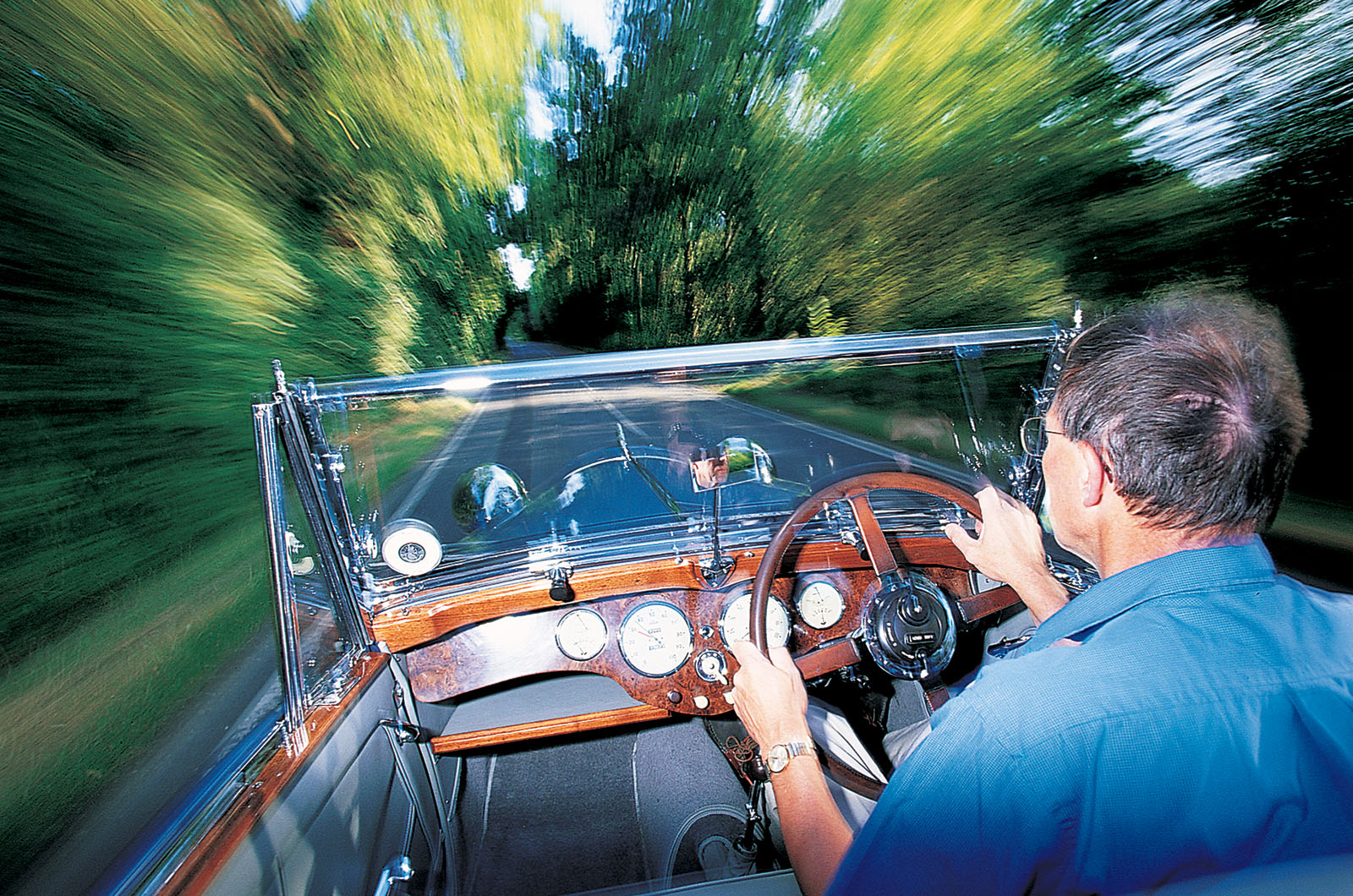
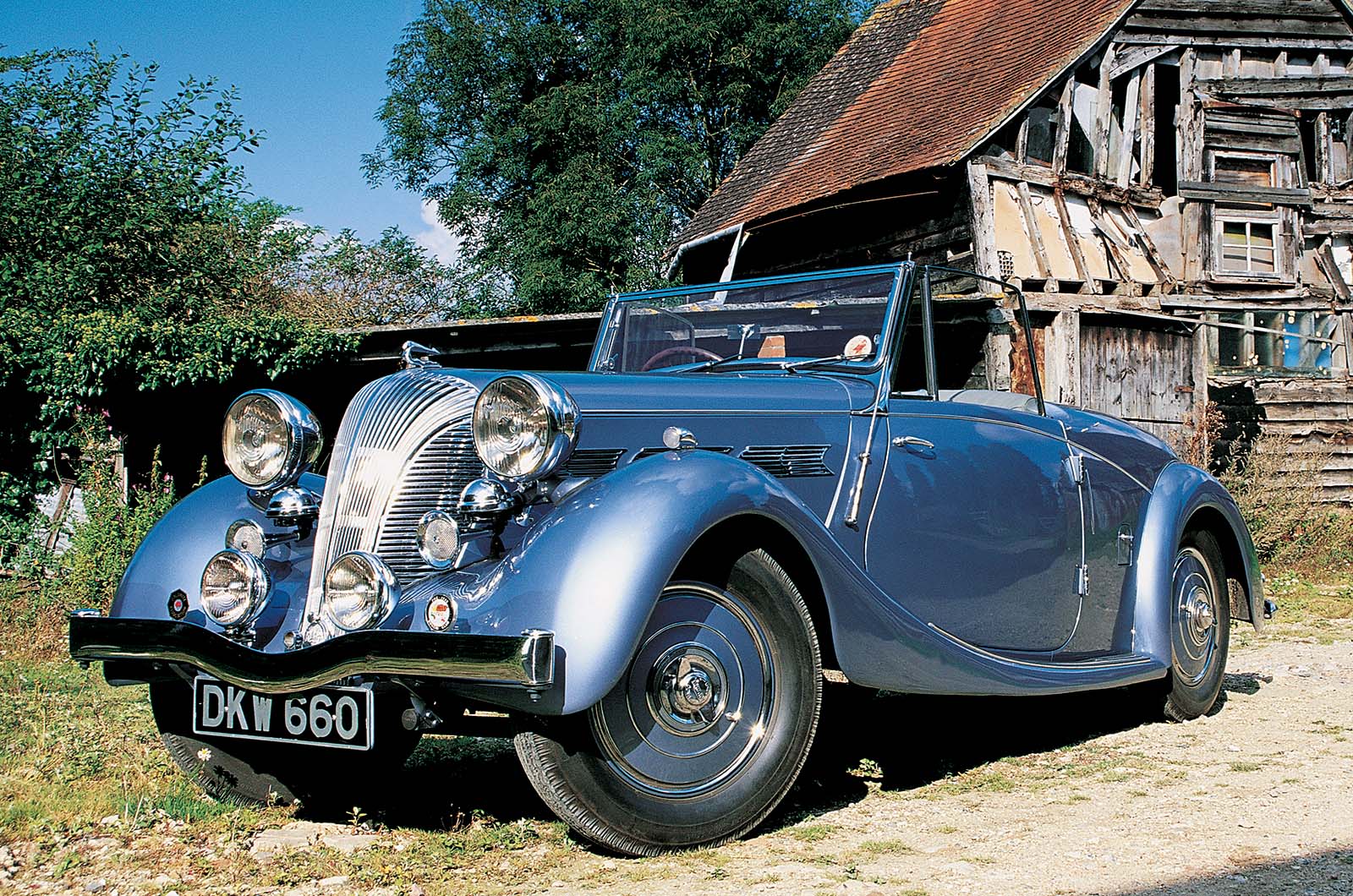
Sitting high and quite upright, looking down the bonnet to those lovely large, chromed headlamps, you’re immediately comfortable in the Triumph’s cockpit.
The detailing, as you’d expect, is excellent, and includes quick-action window winders, sprung flap-pockets in the smartly trimmed doors, and a chromed bar linking the windscreen wipers.
In the veneered dashboard – which should be leather-covered on a 1939/1940 Roadster Coupé – is a set of dignified, black-on-white British Jaeger dials and a stylish clock with Roman numerals, while the steering wheel is leather-wrapped.
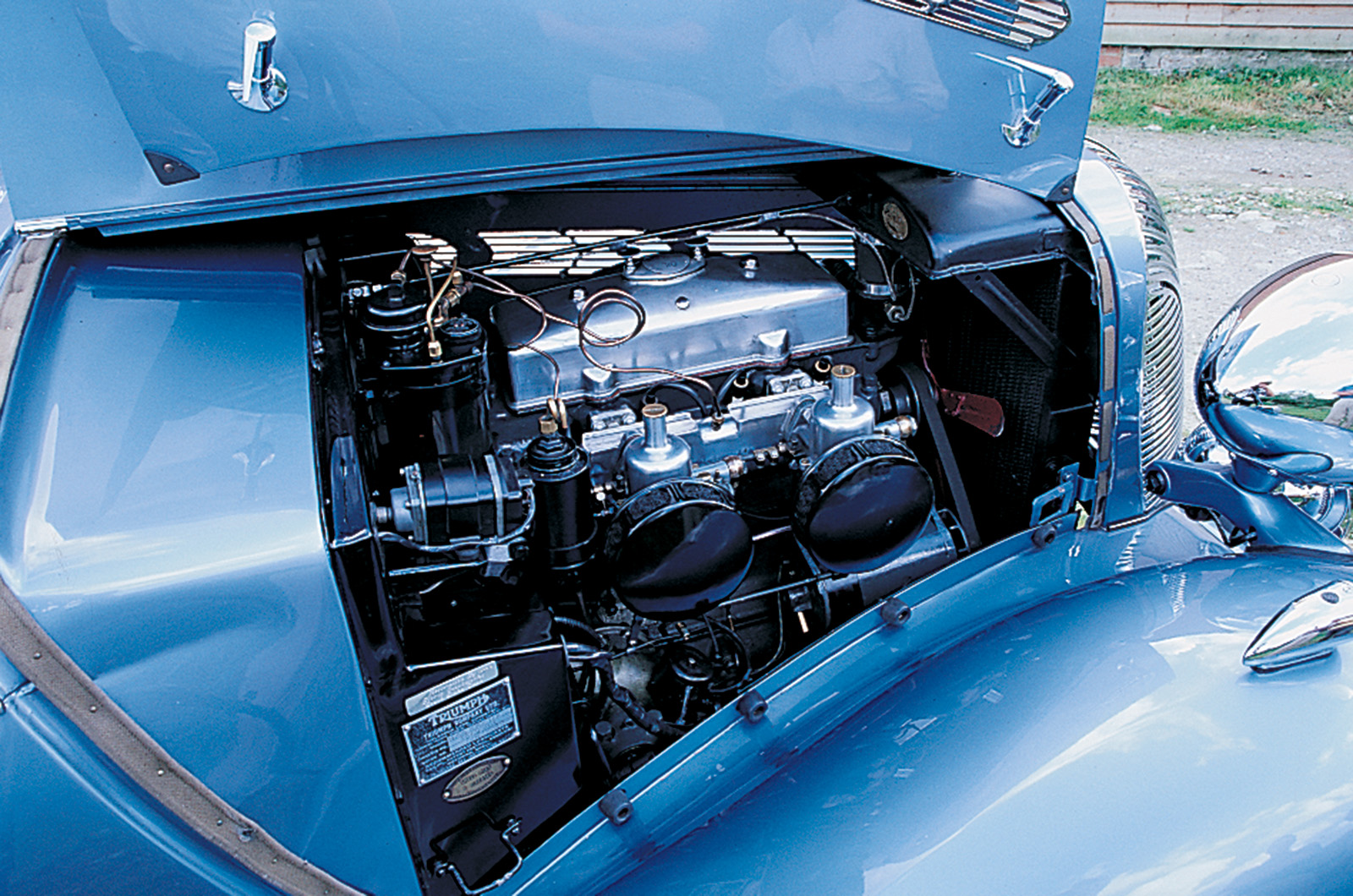
That 1767cc ‘four’ might lack the 75bhp offered by the triple-carbed 2-litre Triumph Dolomite Roadster Coupé, but it sounds robustly sporting – possibly helped by the TR2 air cleaners the engine currently wears.
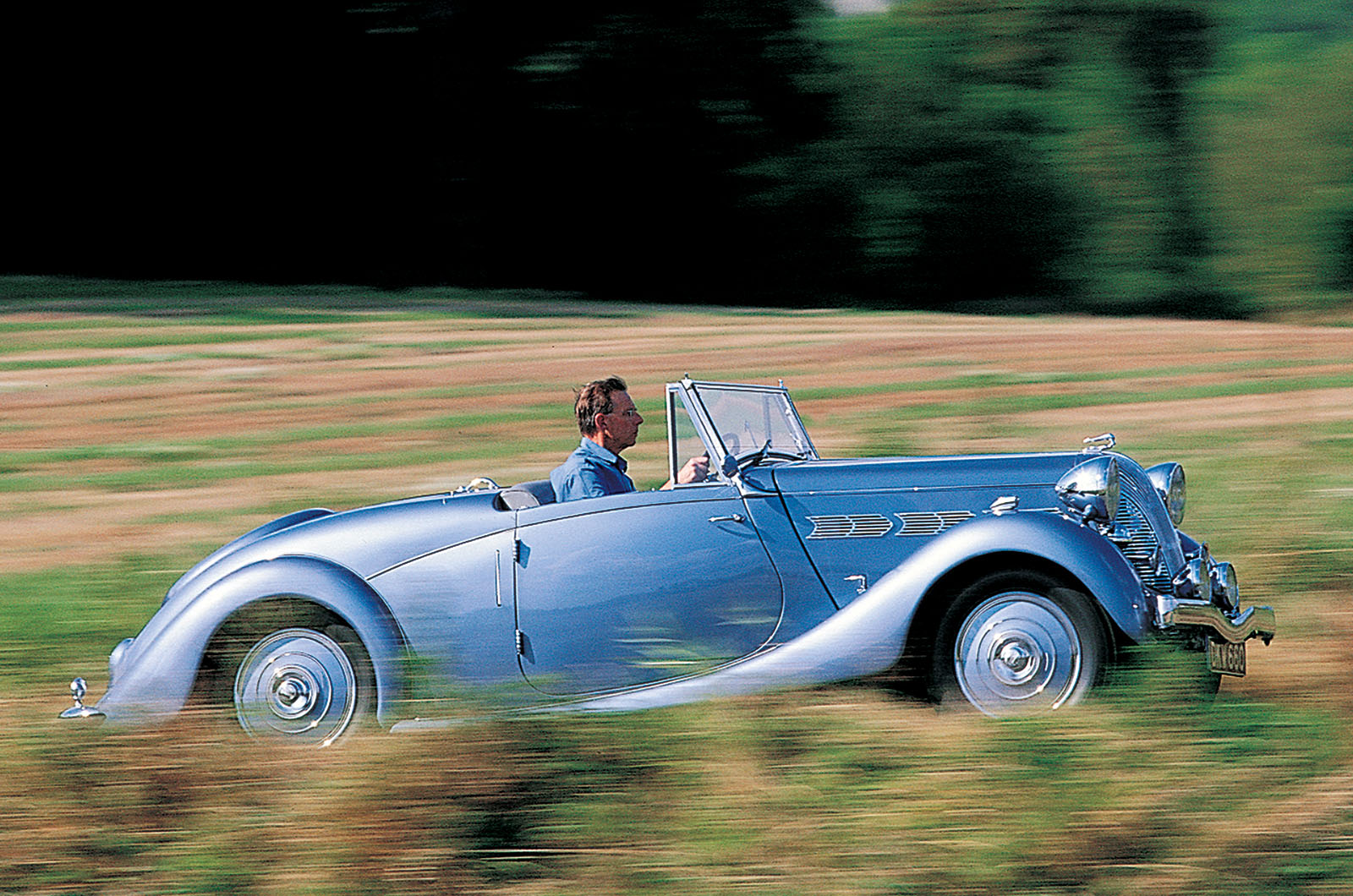
It’s surprisingly responsive, pushing the Triumph – which is no featherweight – up to 45-50mph without effort.
That’s a happy speed on unchallenging terrain, but switch to A-roads and you struggle to hit 60mph, especially if there’s a gradient against you, let alone get within sniffing distance of the car’s supposed 70-75mph maximum; a comfortable cruising gait is more like 50-55mph.
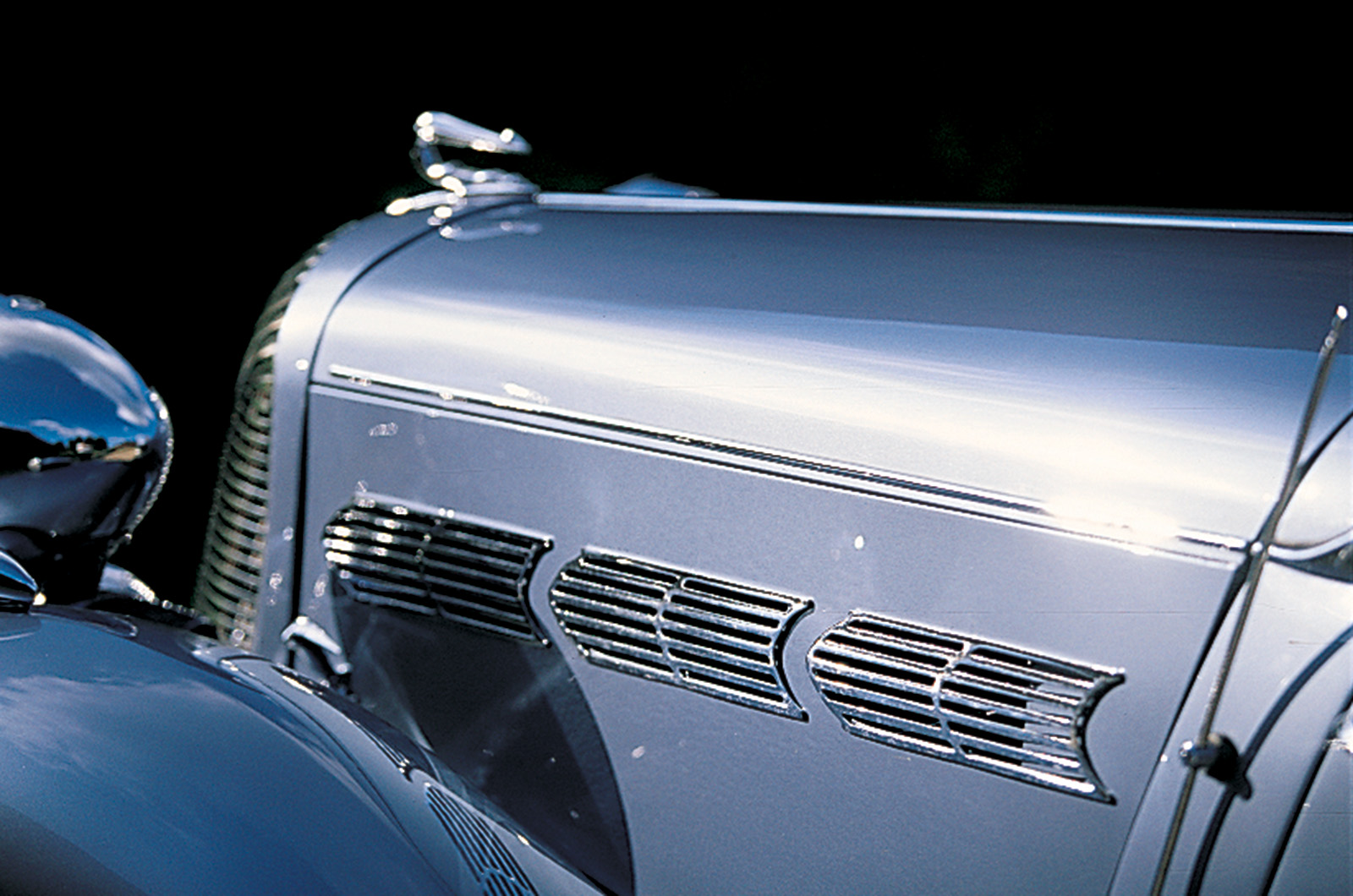
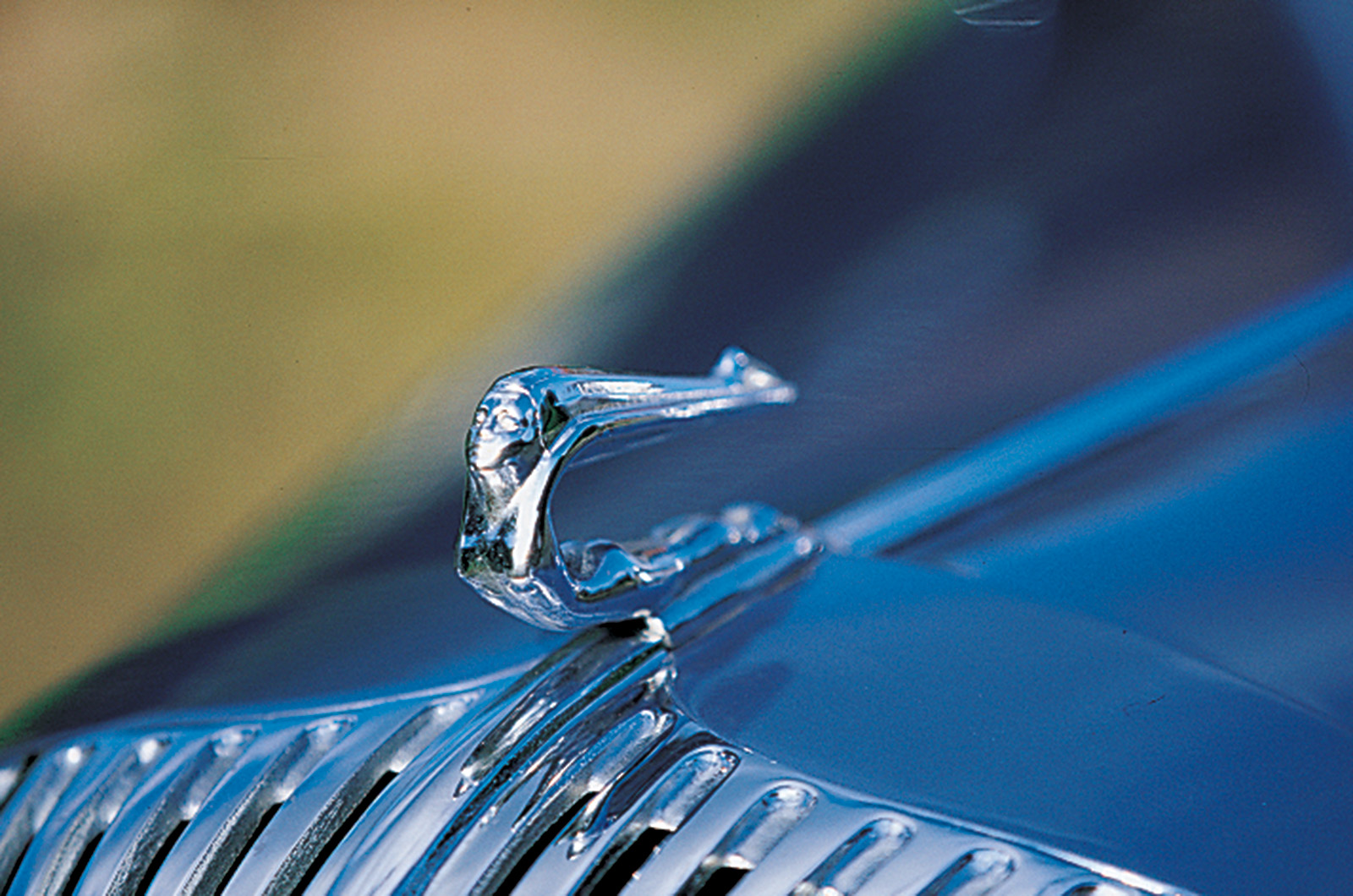
The Triumph’s Gloria mascot was styled by designer Walter Belgrove
Low gearing would appear to be at least partly the reason. You can pull away in second, third is distinctly low, and once in top you can pretty much keep it there.
As you often do – caught out by a surprisingly unfriendly gearchange.
A firm hand takes the stubby remote cleanly into first and second, but finding third – as Jon himself confesses – really is something of an art.
With a decisive action, pushing the lever quite a way across the gate, you can usually locate it on an upchange, but downchanges invariably defeated me – a shame, because the synchromesh is more than reasonable.
Doubtless there’s something not quite right down below, but if you fluff third you can get away with slotting back into top and letting the car haul itself back – hurrah for good old, torque-rich 1930s drivability.
In any case, this is not a vehicle you want to hustle. The steering is not a model of precision, and has that inevitable slight vagueness at the straight-ahead.
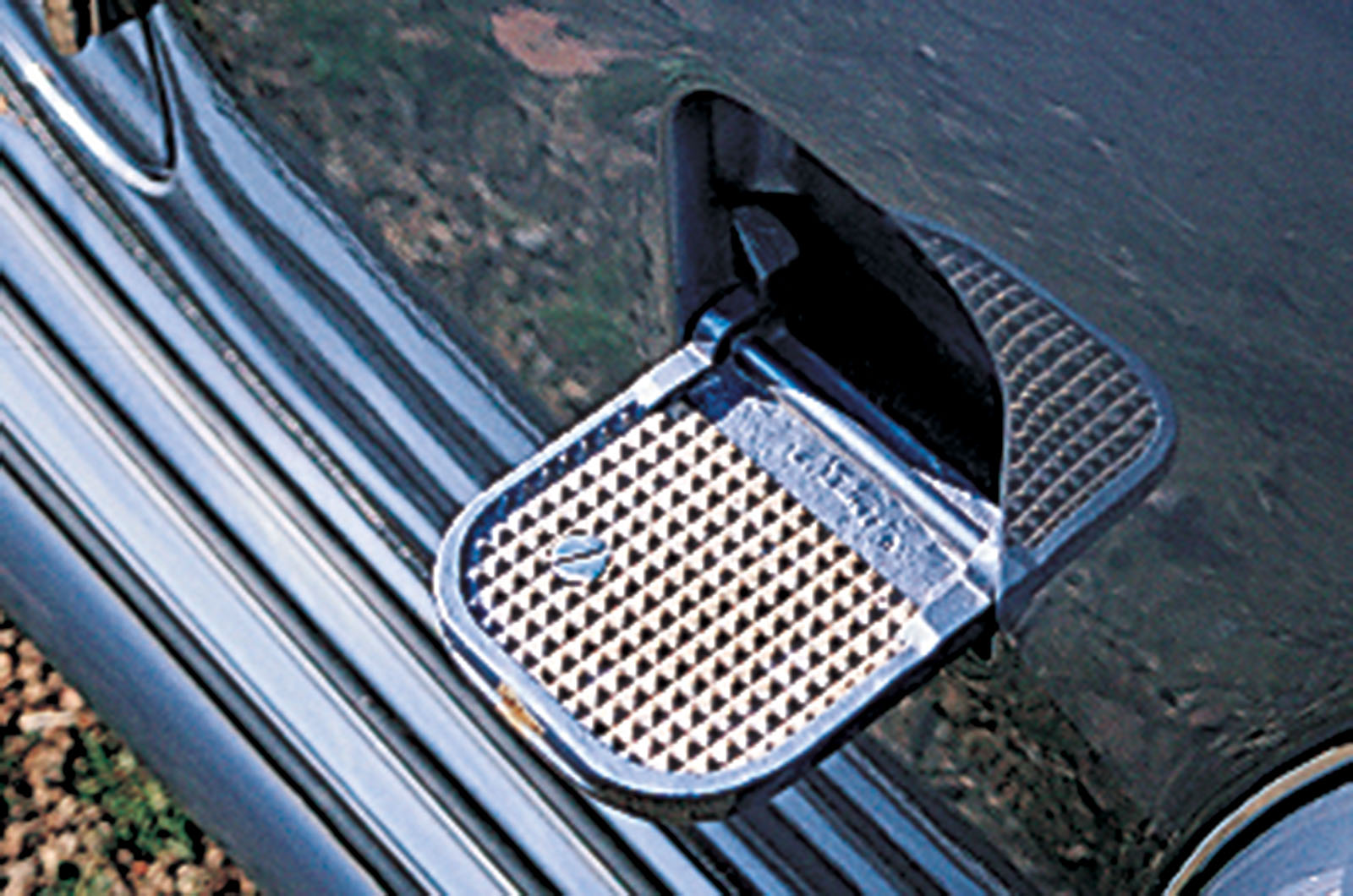
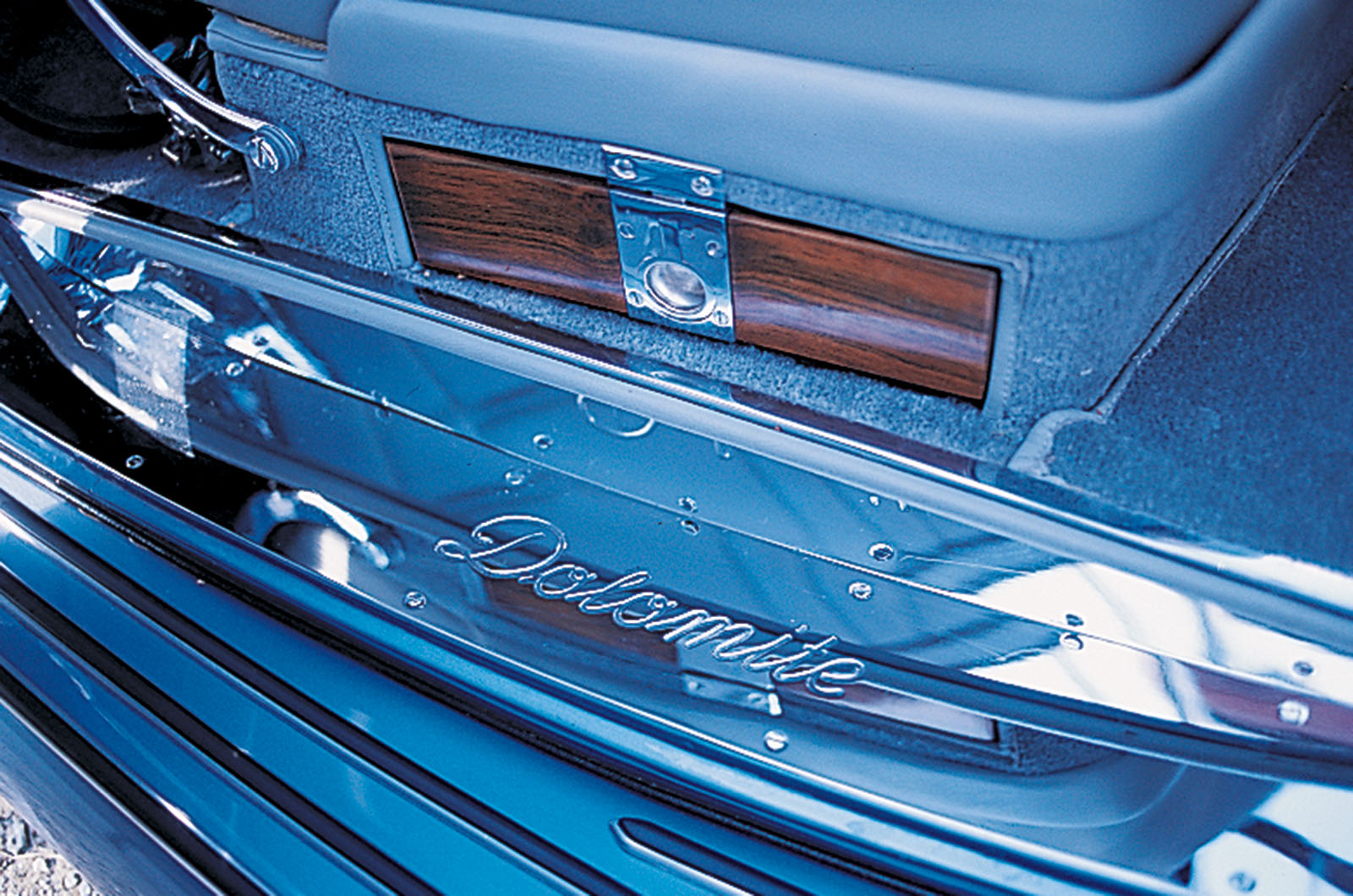
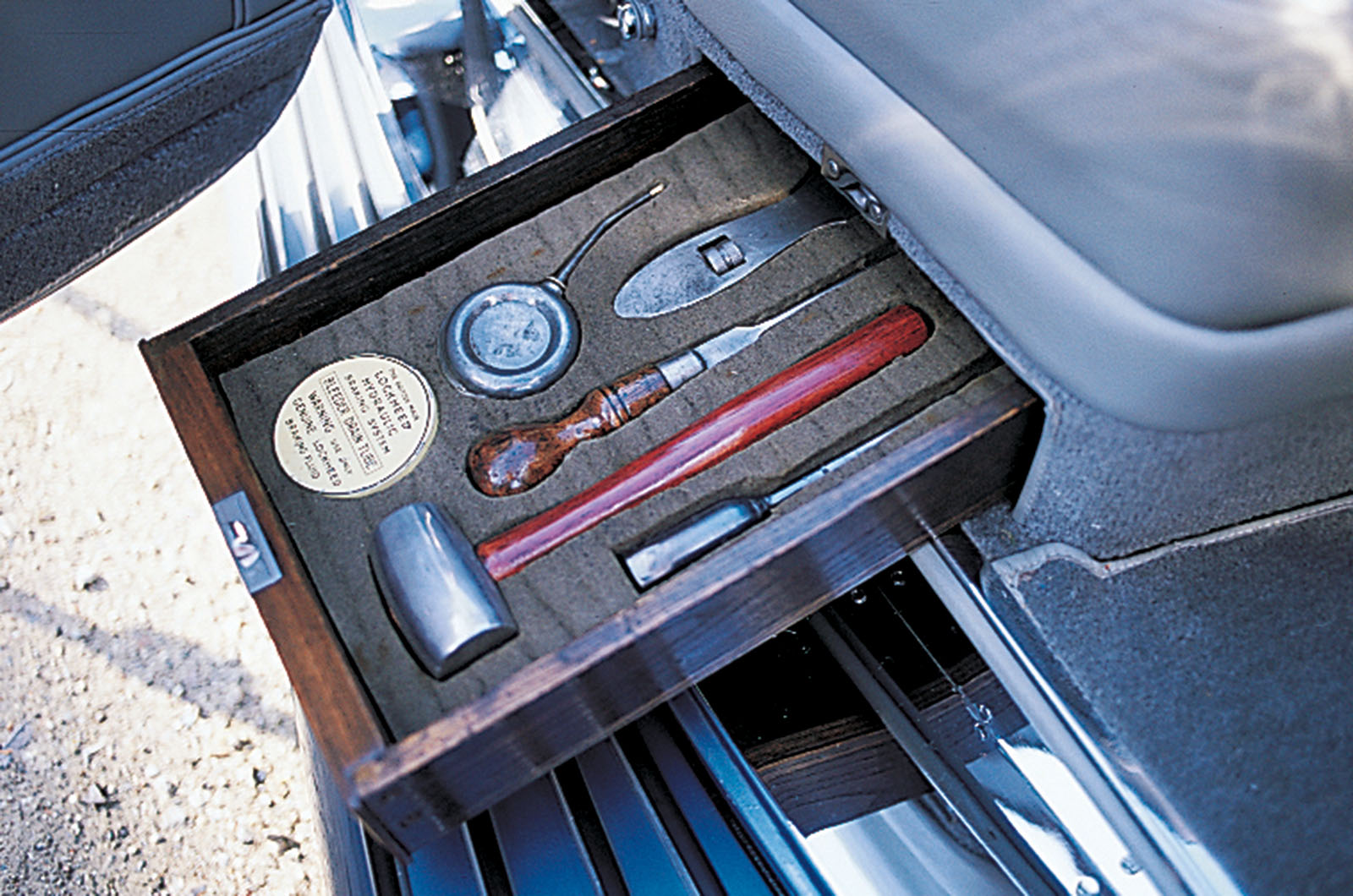
The Triumph Dolomite Roadster Coupé’s toolkit was a challenge to source, and the lead hammer head had to be re-cast
So you take a gentle grip on the wheel, and just let it shimmy a bit through your hands.
Put on some lock, and – predictably – the steering stiffens.
With its semi-elliptic springs and rigid axles front and rear, the suspension is identikit British pre-WW2 conservative.
The front is a touch lively over bumps – tired dampers, maybe? – but otherwise there is a certain abruptness: undulating surfaces do throw the Triumph about a bit.
There’s a rhythm to be found, then, with this smaller-engined Triumph Dolomite Roadster Coupé.
Take it easy, throttle back to 40-45mph, reassure yourself that those all-hydraulic brakes really are very good, and then play it lazy: keep the car in top as much as you can, caress it round bends, and avoid any unnecessary attempts at locating third gear.
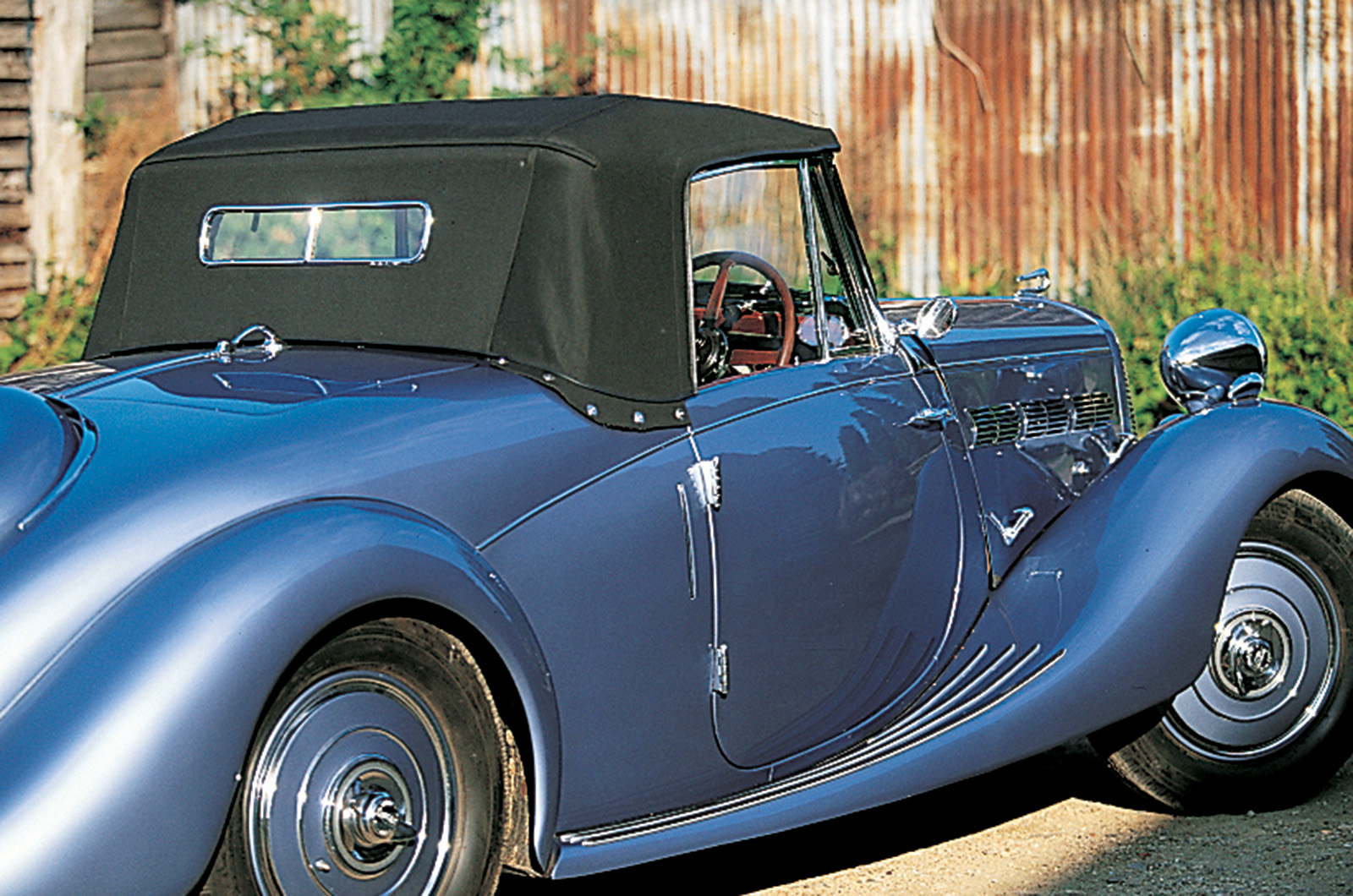
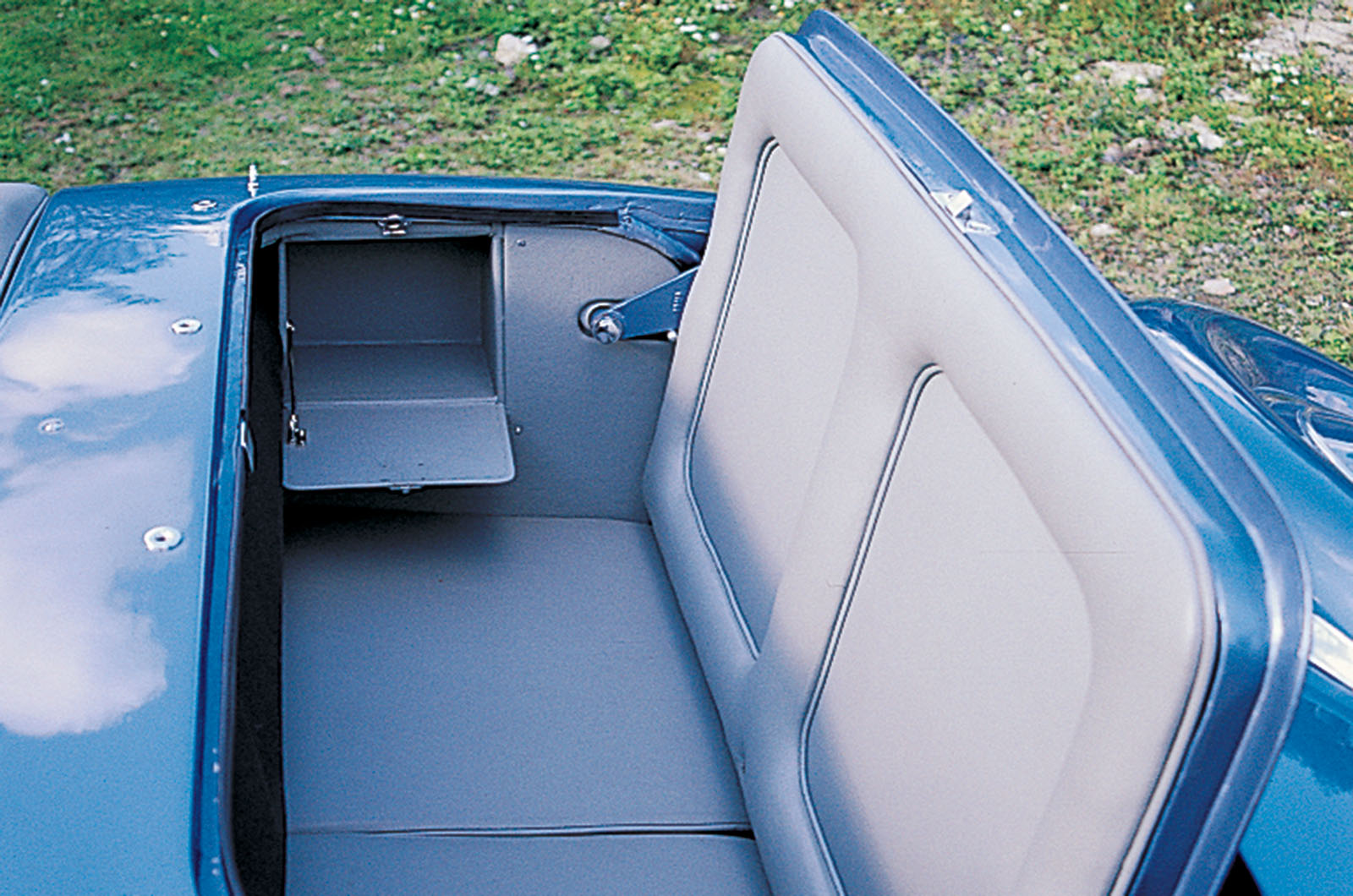
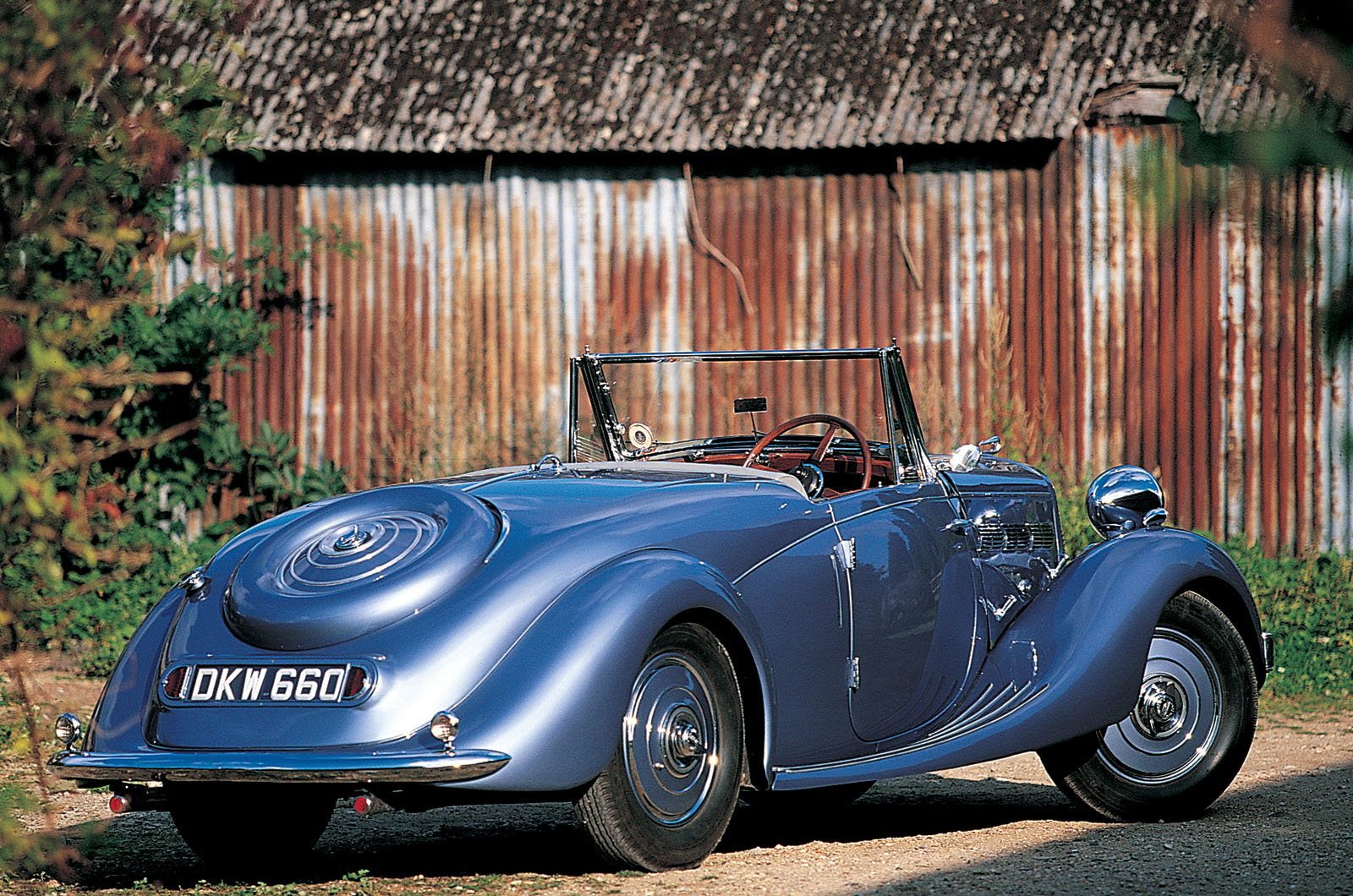
The Triumph Dolomite Roadster Coupé’s clever hood folds away to give a smooth rear deck, also housing the covered spare wheel
“It’s not a sports car by any means – it’s much more a gentle open tourer,” confirms Jon. That’s absolutely fine by me.
The Dolomite is undemanding, friendly and really quite endearing, so manifestly a British quality car of the immediate pre-war period.
In road behaviour a Citroën Traction Avant would eat it for breakfast and come back for another croissant.
Yet in terms of style or presentation it apologises to nobody.
In the insular and possibly over-self-satisfied Britain of Baldwin and Chamberlain, it deserved to have done better than to drive its maker into the hands of the official receiver.
Images: Tony Baker
Thanks to: the Pre-1940 Triumph Motor Club
This was first in our March 2003 magazine; all information was correct at the date of original publication
Enjoy more of the world’s best classic car content every month when you subscribe to C&SC – get our latest deals here
READ MORE
Budget sporting saloons: Triumph Vitesse vs Vauxhall Viva GT
Triumph Stag saloon and estate: missed opportunities?
Your classic: Triumph Renown
Jon Pressnell
Jon Pressnell is a contributor to Classic & Sports Car