There is something rather special about driving a car built in the 1800s.
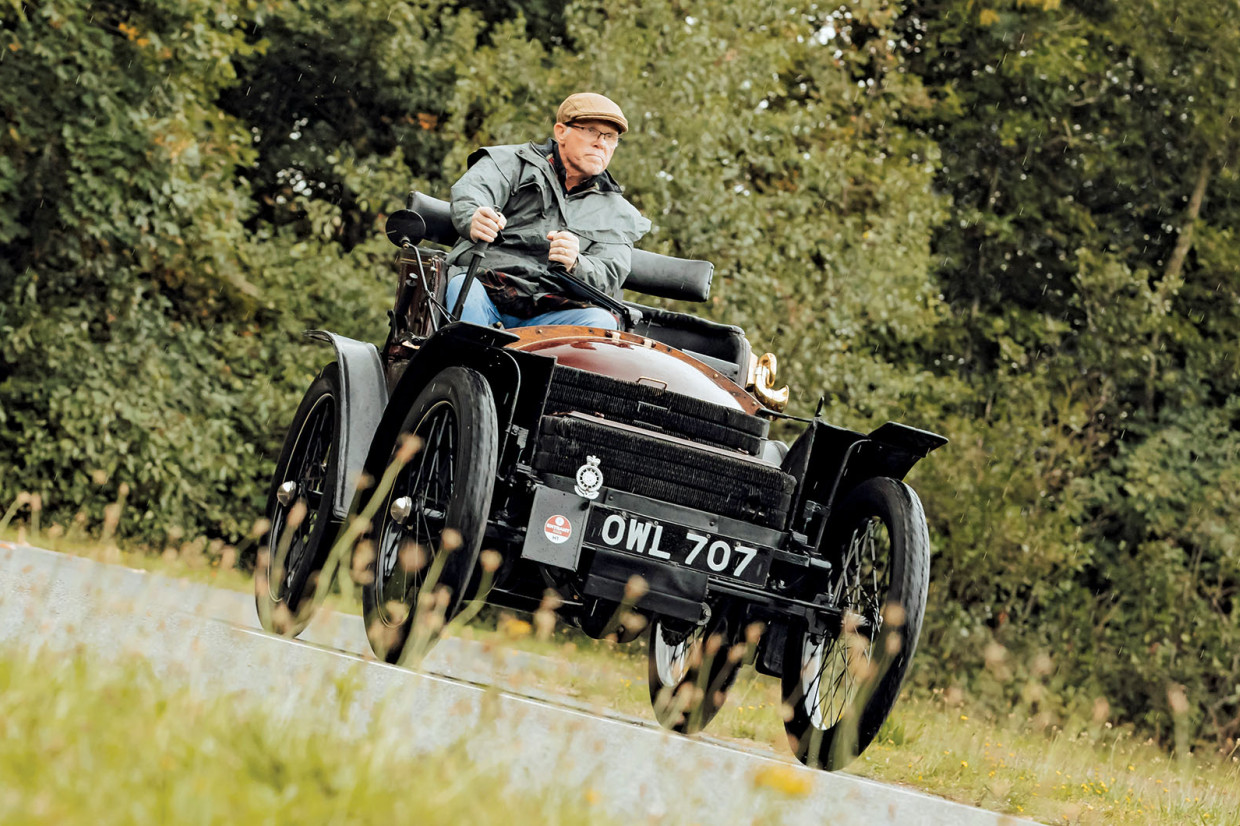
This 1899 Wolseley 3.5hp Voiturette’s single-cylinder motor first burst into life when Queen Victoria was on the throne and preparations were being made for the Boer War.
Those historical facts seem somehow incompatible with the motor car.
And yet here we are, in a modest horseless carriage, puttering along a main road at around 25mph (on a slight downward gradient, admittedly), with more speed in reserve if we were of a mind.
This Wolseley is one of two survivors from the 1000 Miles Trial of 1900
The thought that this little car was driven in, and completed, a 1000-mile competitive event on largely unpaved roads only a year after it was manufactured adds to not only its lustre, but also your appreciation of what was being achieved in our fledgling car industry – at a quite astonishing pace, too.
‘OWL’, as this Wolseley is better known thanks to its registration mark, is one of two surviving entrants from the 1000 Miles Trial that first took place in 1900.
It marked the run’s 125th anniversary by being the first automobile to leave Hyde Park at the start of the 2025 London to Brighton Veteran Car Run, the 40th time OWL completed the historic trip to the coast.
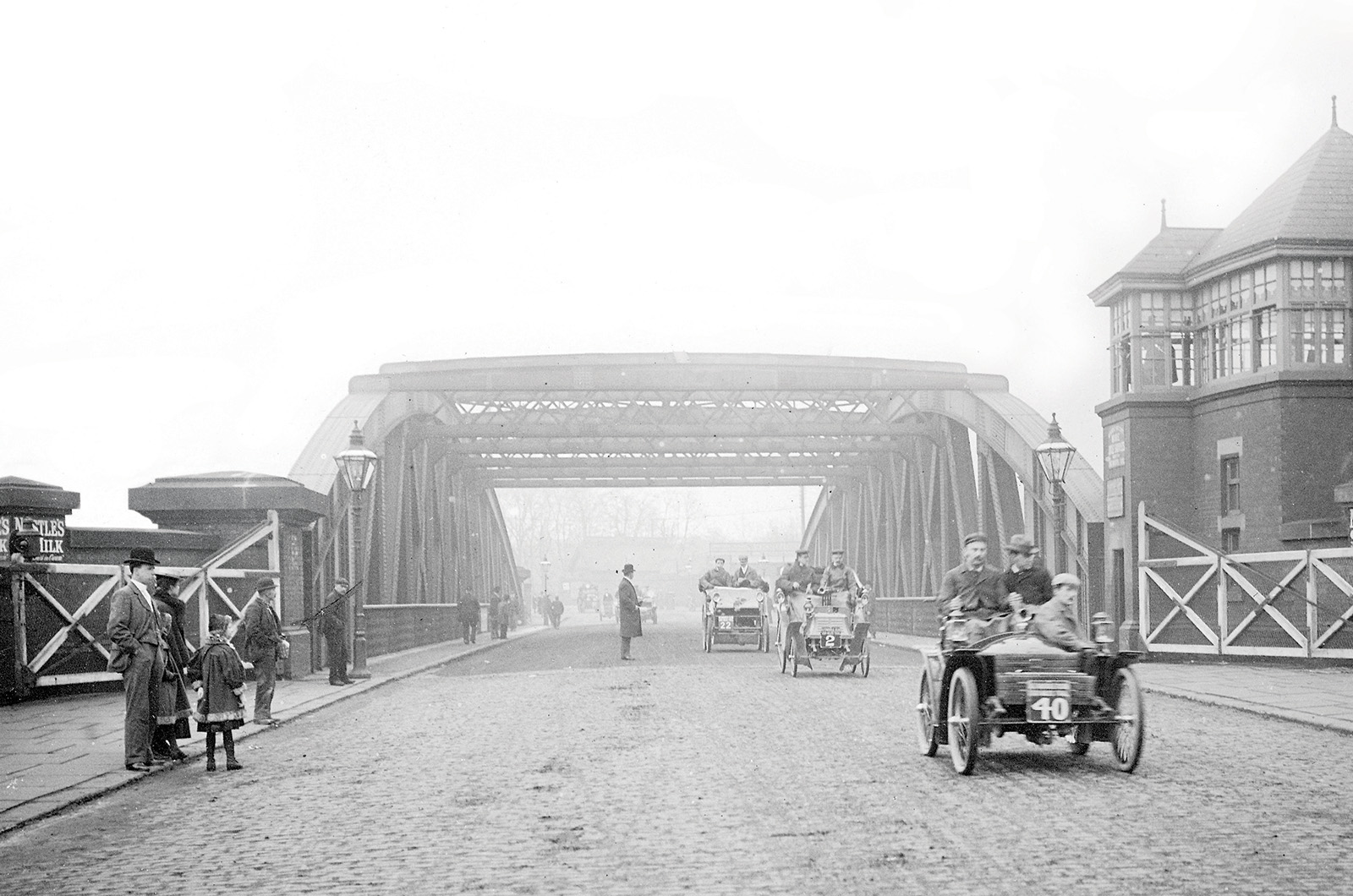
‘OWL’ crosses Trafford Road Swing Bridge over Manchester Ship Canal, during the 1000 Miles Trial in 1900 © Royal Automobile Club
This Wolseley, then, is an immensely important player in Britain’s automotive history, not least because it was among a select group of vehicles that first brought motoring to the masses.
As Duncan Wiltshire, the Royal Automobile Club’s chairman, said recently: “It’s hard to overstate the significance of the 1000 Miles Trial – it really put the joys and practicalities of motoring on the map.”
Given the seismic change wrought by motorised transport to Western civilisation, it’s alarming to think the widespread cynicism that existed towards the motor car in the late 19th century could have put paid to its early evolution – or, at least, delayed it.
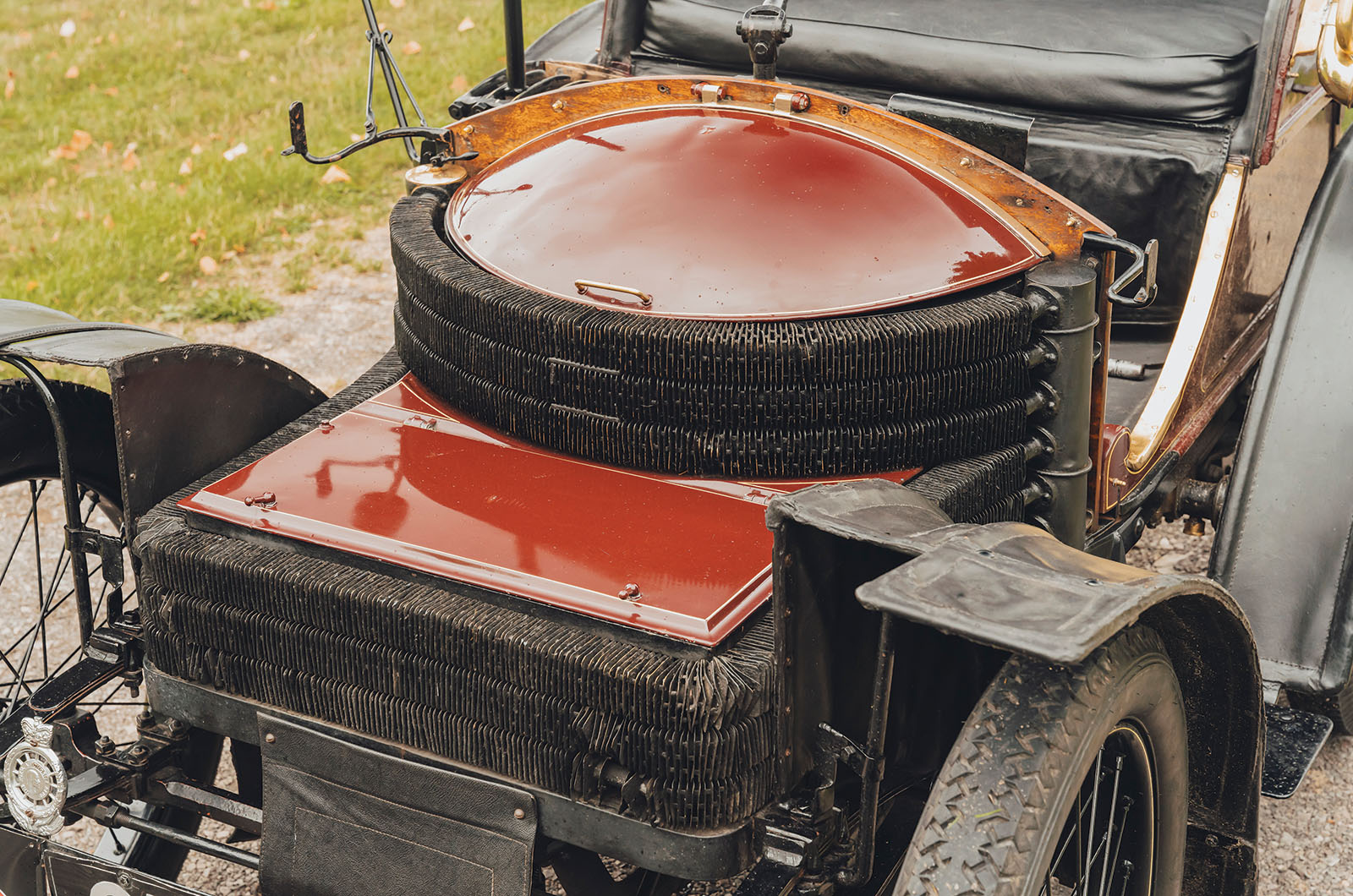
The Wolseley 3.5hp Voiturette’s exposed radiator is highly efficient
This was not merely a transition from one form of propulsion to another, such as today’s graded introduction of electrification; rather, it was the advent of mass mobility, with all the societal benefits bestowed by moving from horse power to horsepower.
But heralding the motor car’s arrival required a bold strategy.
The Automobile Club of Great Britain and Ireland (later to become the Royal Automobile Club) recognised that a majority of people – especially those in the Midlands and the north – had never even set eyes on a motor car.
The number of ‘horseless carriages’ in Britain had risen from around 30 in 1895 to between 700 and 800 by 1900, but they were still a rarity.
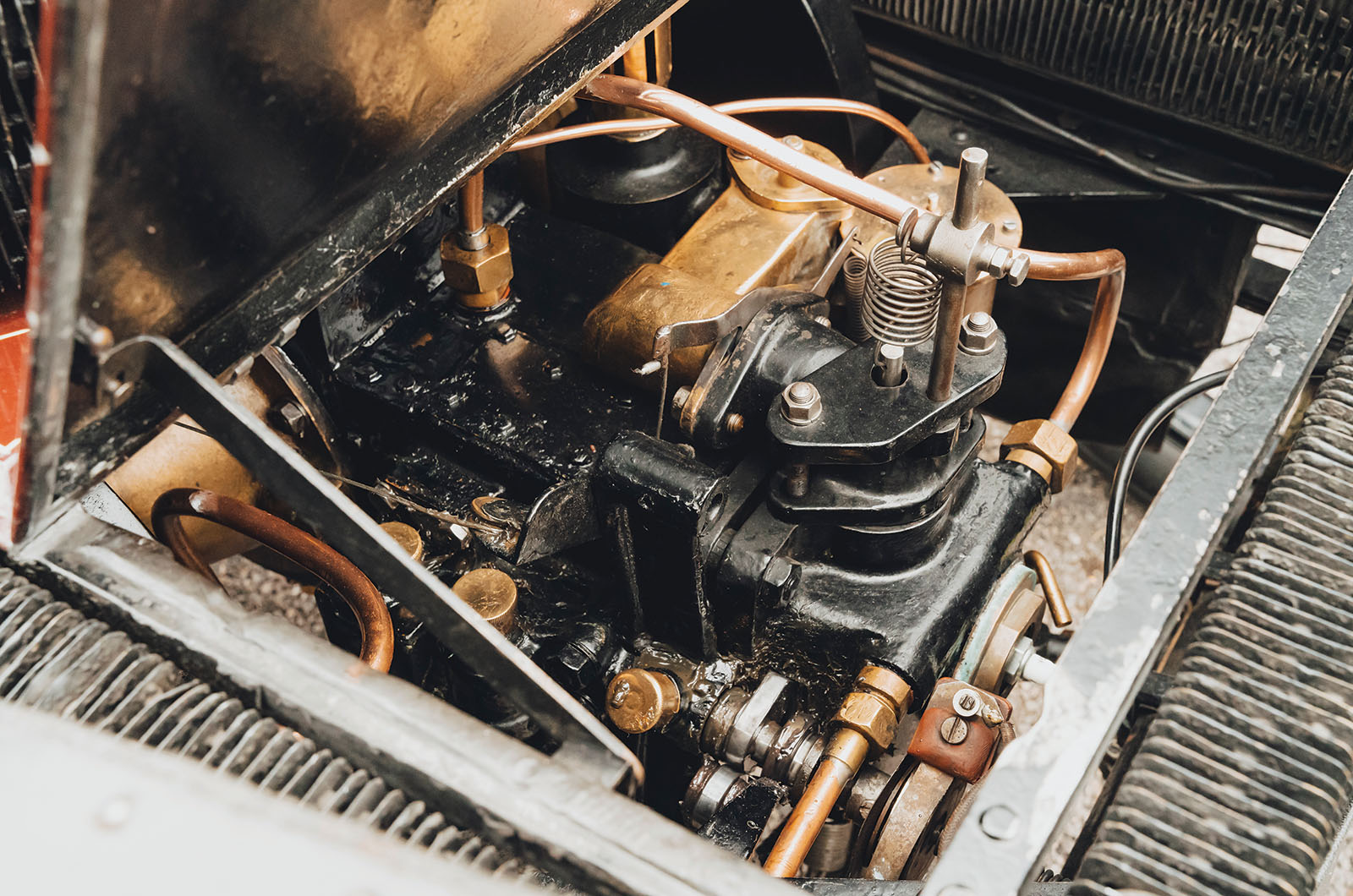
The 1899 Wolseley’s 1300cc single-cylinder engine
An event was proposed that would bring together a group of the country’s leading motorists and their machines, and task them with covering just under 1000 miles through a broad cross-section of the British mainland.
There would be strict time deadlines over 11 days, as well as the completion of four hillclimbs and various time trials along the way.
The route was to start from London and take in Bath, Bristol, Birmingham, Derby, Manchester, Kendal, Carlisle and Edinburgh, then visit Newcastle upon Tyne, York, Leeds, Sheffield, Lincoln, Nottingham, Leicester and Northampton on the return leg.
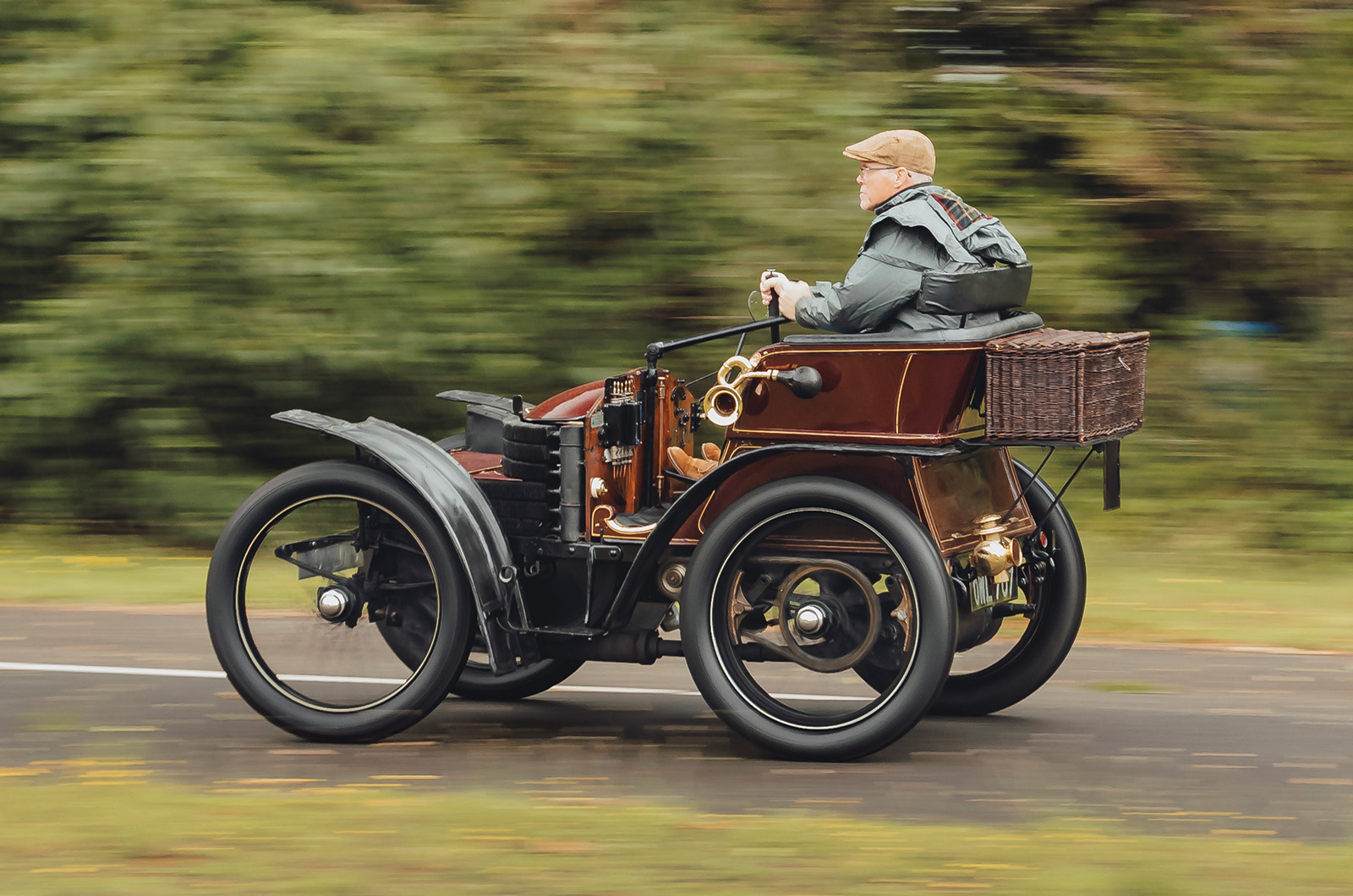
Driving the Wolseley 3.5hp Voiturette is both satisfying and engaging
A motoring event of such magnitude had never been contemplated before – it had only been four years since the hated 4mph (2mph in towns) speed limit for motor vehicles had been lifted.
But even in that short time the durability and driveability of cars had improved sufficiently to make travelling 100 miles in a day – typically three times that of a horse and carriage – a reality.
More to the point, Britons would be turning out in their thousands to witness these motoring pioneers and their combustion-engined steeds: it had all the makings of a momentous PR coup for the automotive lobbyists.
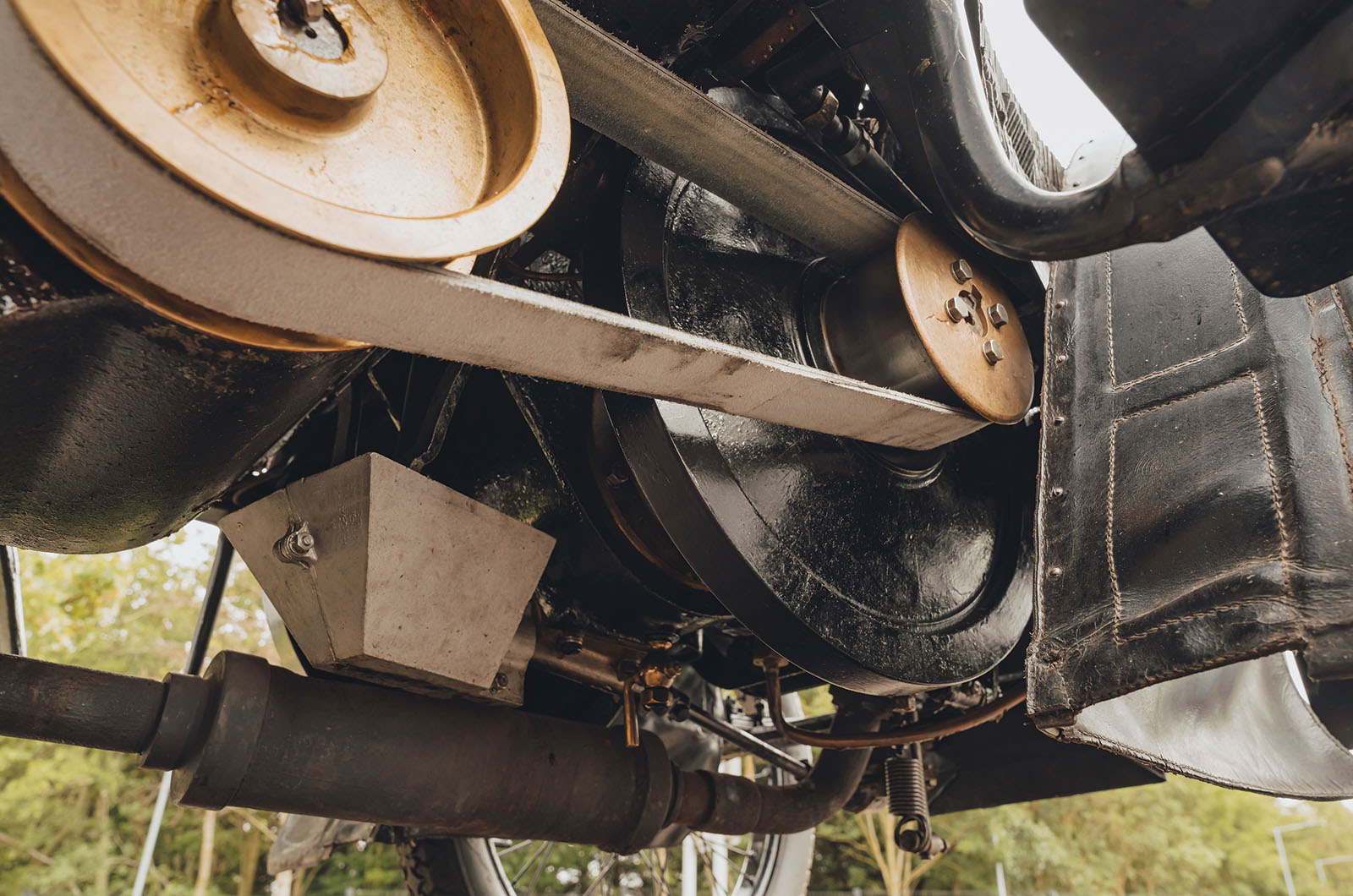
‘It’s a highly physical experience. You’re forcing the weight of the Wolseley’s gearbox against the drive belt [pictured] to attain more speed’
On 23 April 1900, 83 motor vehicles – around a 10th of Britain’s car population – gathered for the start of the 1000 Miles Trial at Grosvenor Place, near London’s Hyde Park.
Two categories – for car manufacturers and for privateers – were each split into sub-classes according to the cost of the cars entered.
The field comprised 31 different marques, many of which would not see out the first decade of the new century.
But plenty would: Benz, Ariel, Napier, Peugeot, Triumph, Daimler, Panhard and Wolseley were largely in experimental mode as car manufacturers, but doubtless buoyed by the opportunity to prove their vehicles’ mettle on a vast national stage.
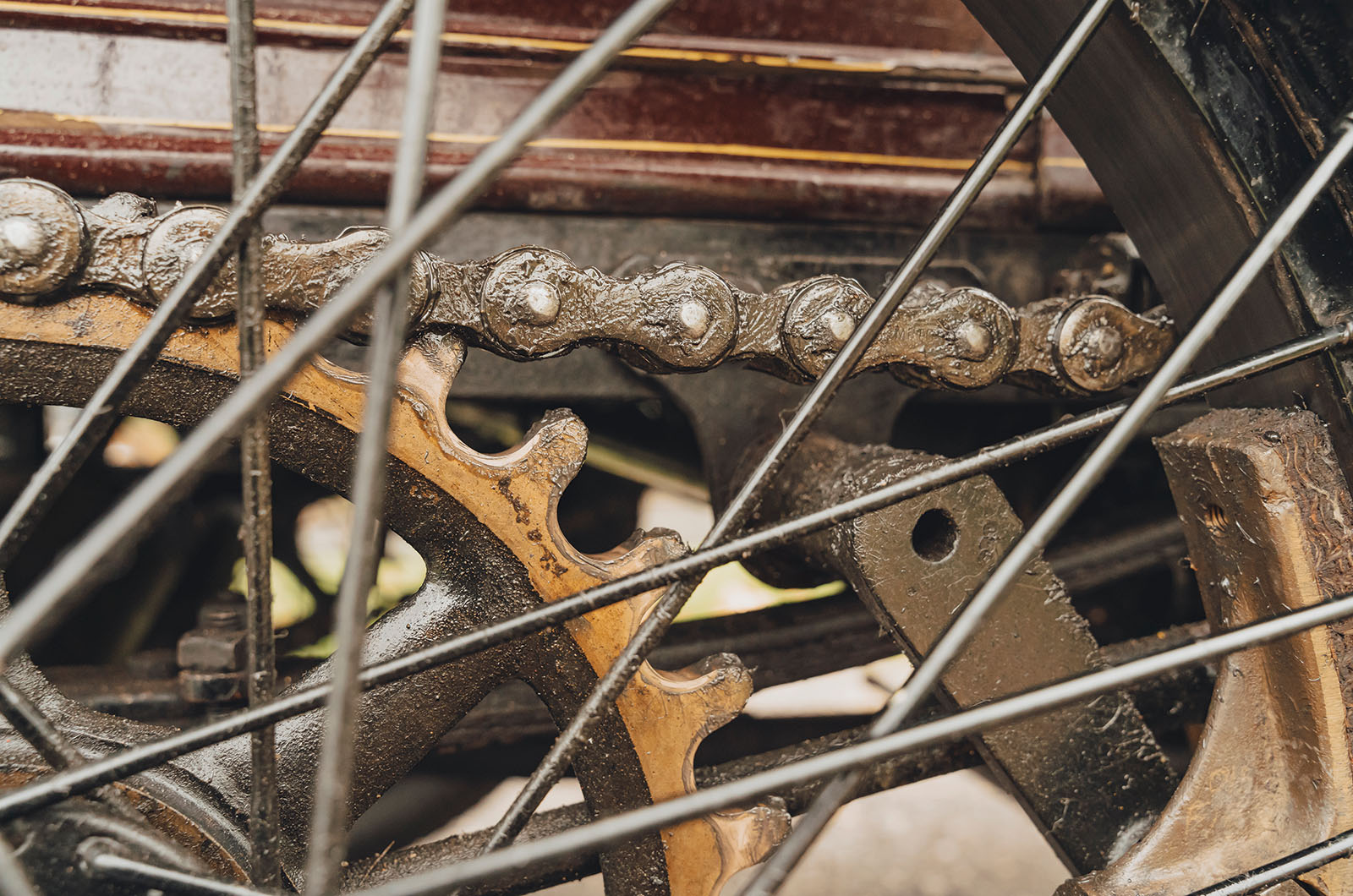
The Wolseley’s final-drive sprocket
Like many of the other nascent motor-car makers, Wolseley was already an established manufacturer, in this case as the Wolseley Sheep Shearing Machine Co of Alma Street, Birmingham.
The company was founded in Australia by Frederick Wolseley, who employed one Herbert Austin as his works manager.
The business relocated to Britain in 1889, but the perennial challenge remained the seasonal nature of the sheep-shearing trade, leaving spare capacity in the so-called ‘Sydney Works’ each year.
Austin, enthused by the potential of the new automobile, started to develop his own machines.
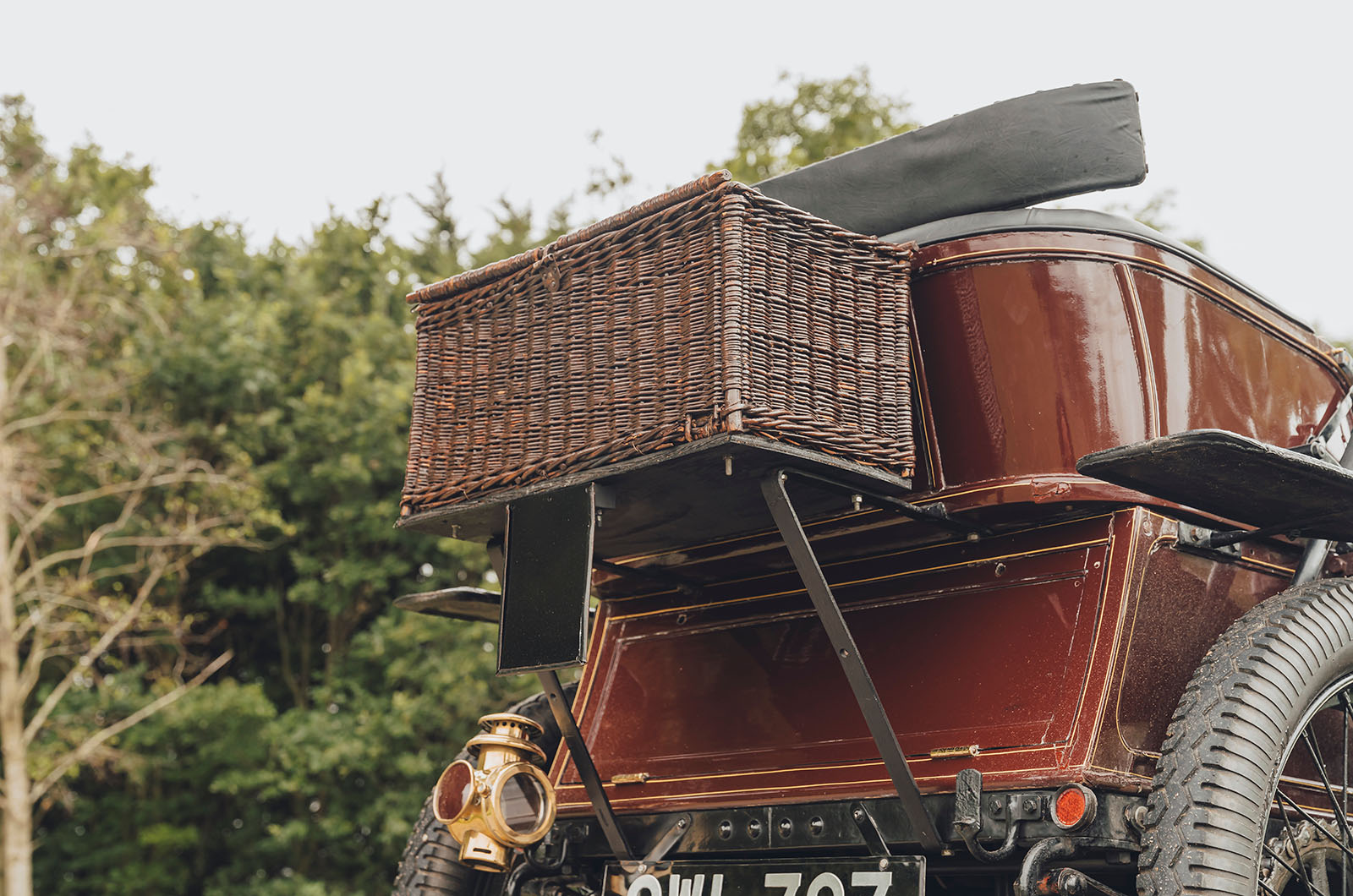
The Wolseley 3.5hp Voiturette’s wicker basket – don’t forget to pack a picnic
By 1899 he had built two three-wheeled Wolseley models, with ‘our’ 3.5hp experimental vehicle his first, surprisingly advanced four-wheeler.
It appears that – initially, at least – Austin had full support from the company, as evidenced by The Autocar reporting in its 6 January 1900 issue: ‘For over three years the Wolseley Sheep Shearing Machine Co… have been carefully experimenting with autocars, and their works manager, Mr H Austin, has devoted a very great deal of attention to the subject.
‘The experimental stage has now been passed, and the firm is preparing to put its cars on the market.’
The article describes the two-seater car as having three gears, which could be ‘varied by changing the sprockets’, and a ‘fixed petrol tank [holding] three and a half gallons, sufficient for one hundred miles’.
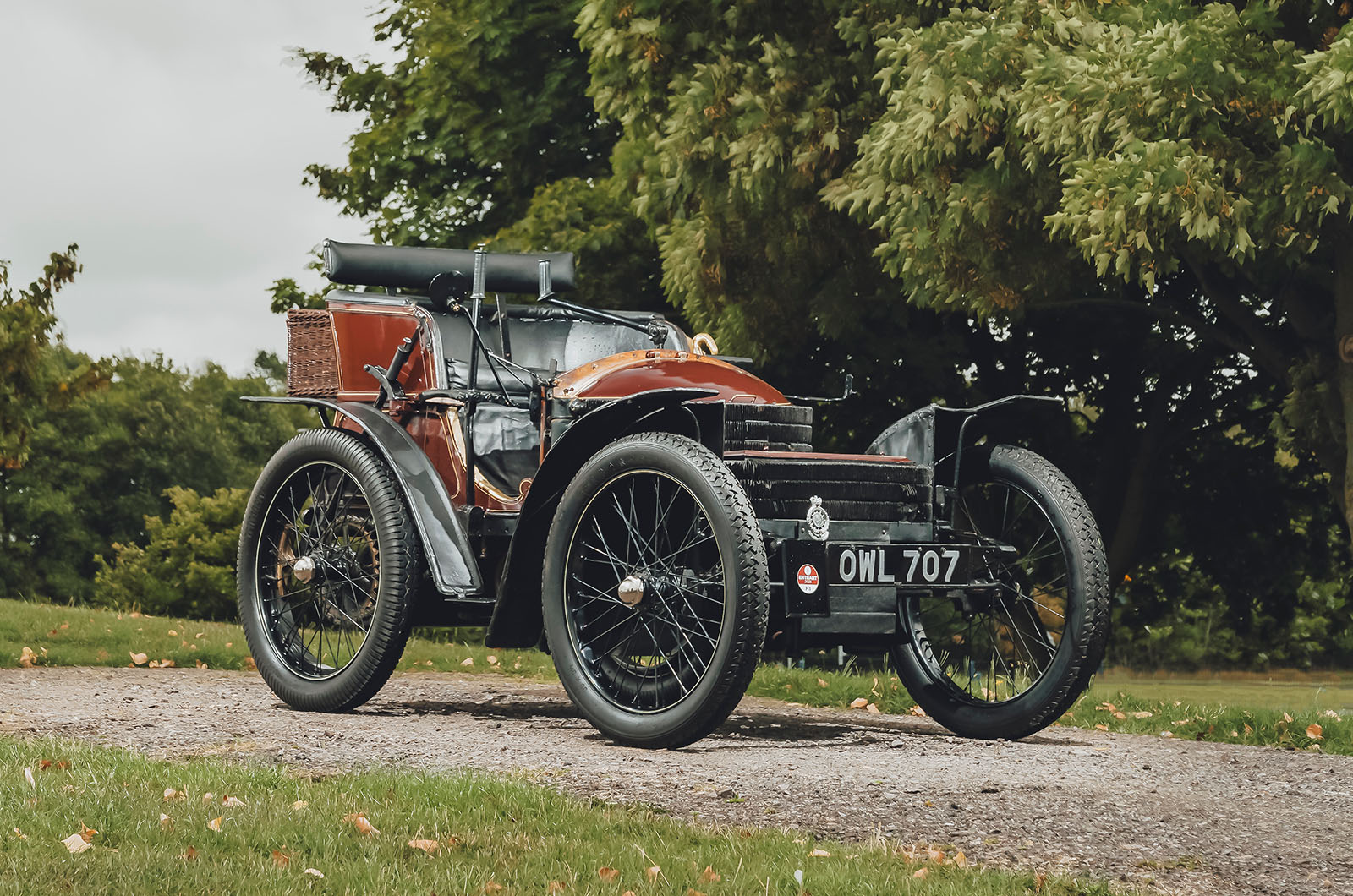
‘OWL is a remarkably proficient and capable motor car, powered by a 1.3-litre engine of Wolseley’s own design’
Given the Trial’s typical daily mileage, that range was an advantage for the Wolseley.
Predictably, Austin drove OWL himself – and he was in good company, with many early automotive luminaries taking part: Charles Rolls in a 12hp Panhard; John D Siddeley (later of Armstrong Siddeley) driving a 6hp Daimler; JWE Douglas-Scott-Montagu (son of Lord Montagu of Beaulieu) in a 12hp Daimler; and George H Lanchester aboard one of his own creations.
At 118 miles, the first day’s leg from London to Bristol was one of the longest, but according to a contemporary report by Frank H Butler, himself an entrant in a 6hp Panhard: ‘In the towns people turned out in thousands to see the cars pass, and the police had to keep the streets clear for our passage.’
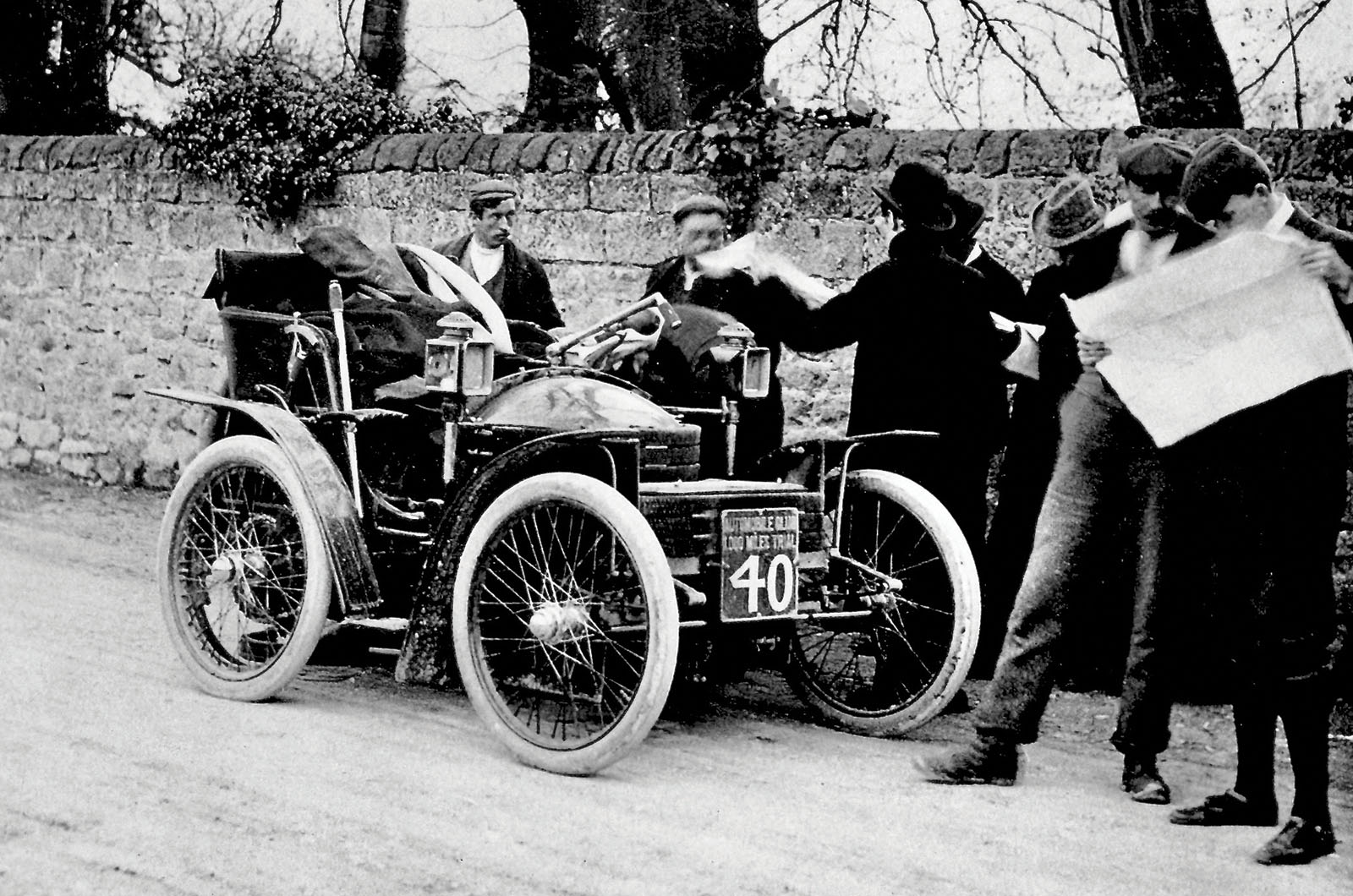
A pause on the 1000 Miles Trial in St Albans, north of London, to examine the route © BMIHT/British Motor Museum
Local dignitaries were also keen to curry favour with the new automobilists.
‘At Reading,’ wrote Butler, ‘Mr Alfred Harmsworth gave a magnificent champagne reception… At Birmingham, Mr Alfred Bird MP gave a dinner at the Conservative Club, and Mr Henry Edmunds entertained us at Manchester and Lord Kingsburgh in Edinburgh.’
But, as Butler admitted, it had been far from plain sailing: ‘We had several punctures; piston rings working round lost a good deal of compression; a lift pin of the valves put one cylinder out of action part of the time.’
By the time the Trial had reached the Scottish capital, 83 starters had been reduced to 51 – still quite impressive, given the largely unproven engineering of most of the cars and the mainly unpaved route they had followed.
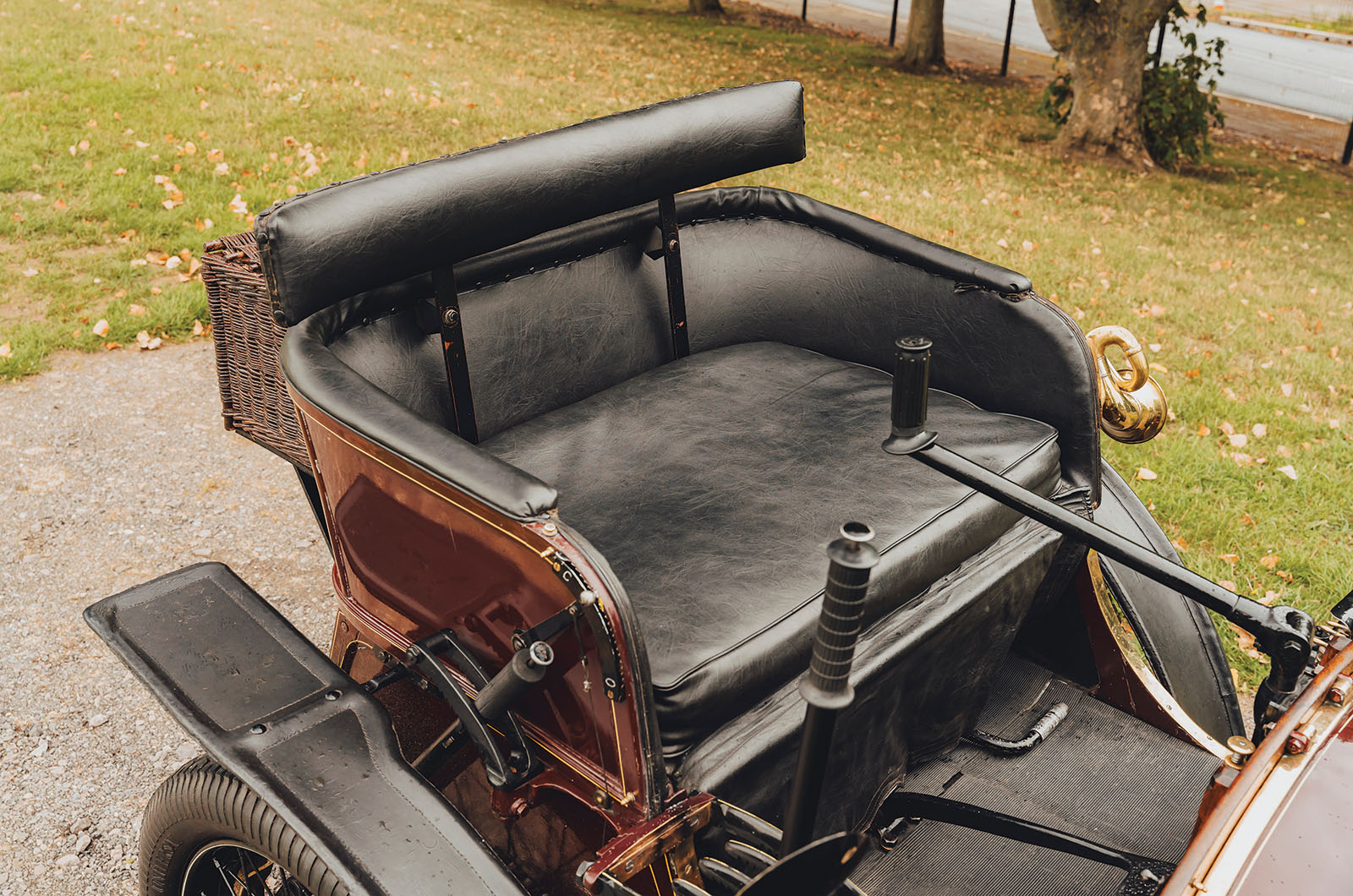
The Wolseley 3.5hp Voiturette has exposed seating for two
The equally long southbound journey to London took a further 16 cars out of the running, so by the time the Trial returned to Hyde Park on 12 May, 35 cars were flagged over the finish line, each receiving a £10 reward from the Daily Mail.
Among the 11 Daimlers that took class wins, as well as multiple Panhards, a Peugeot and a Benz, ‘our’ Wolseley won Class B in the Trade category for £2-300 cars, beating a Triumph and a De Dion.
There was no doubt the Trial had been a PR success, catapulting public awareness of the motor car and laying important foundations for its continued evolution and manufacture.
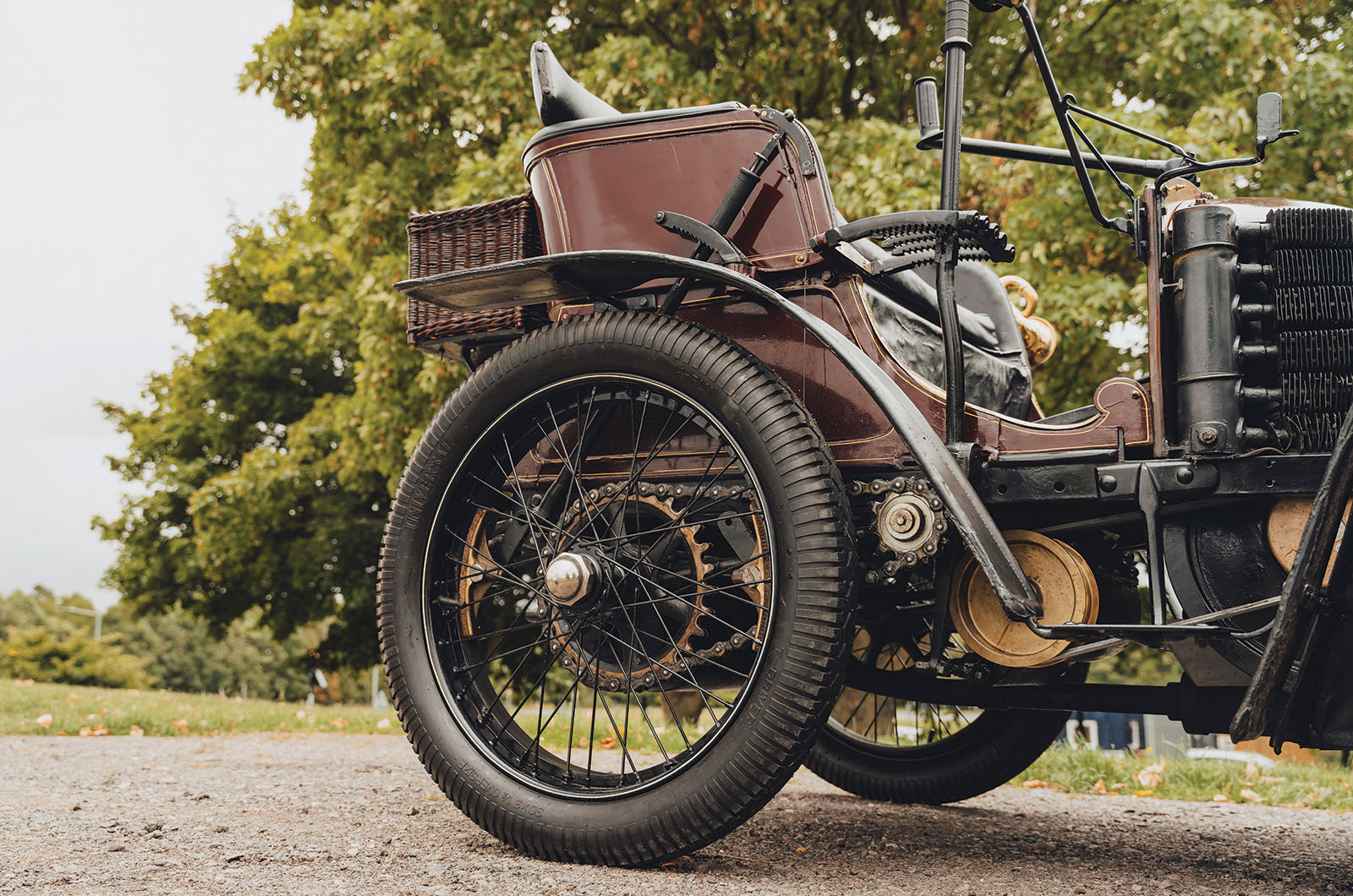
The 1899 Wolseley’s 30in-diameter spoked wheels
There were still some sensitivities, though, which The Autocar addressed in an editorial before the Trial had drawn to a close: ‘There is one thing we regret… and that is the impression which has been left in the public mind as to the dirtiness of the automobile pastime.’
(Justified, to an extent, since open cars moving in close proximity on cart tracks would have covered their charges in dust and dirt.)
The author went on to suggest that, if another Trial were held: ‘Explanatory handbills should be distributed from the cars as they pass through towns headed, “Why we are so dirty.” They would remove a great deal of misapprehension.’
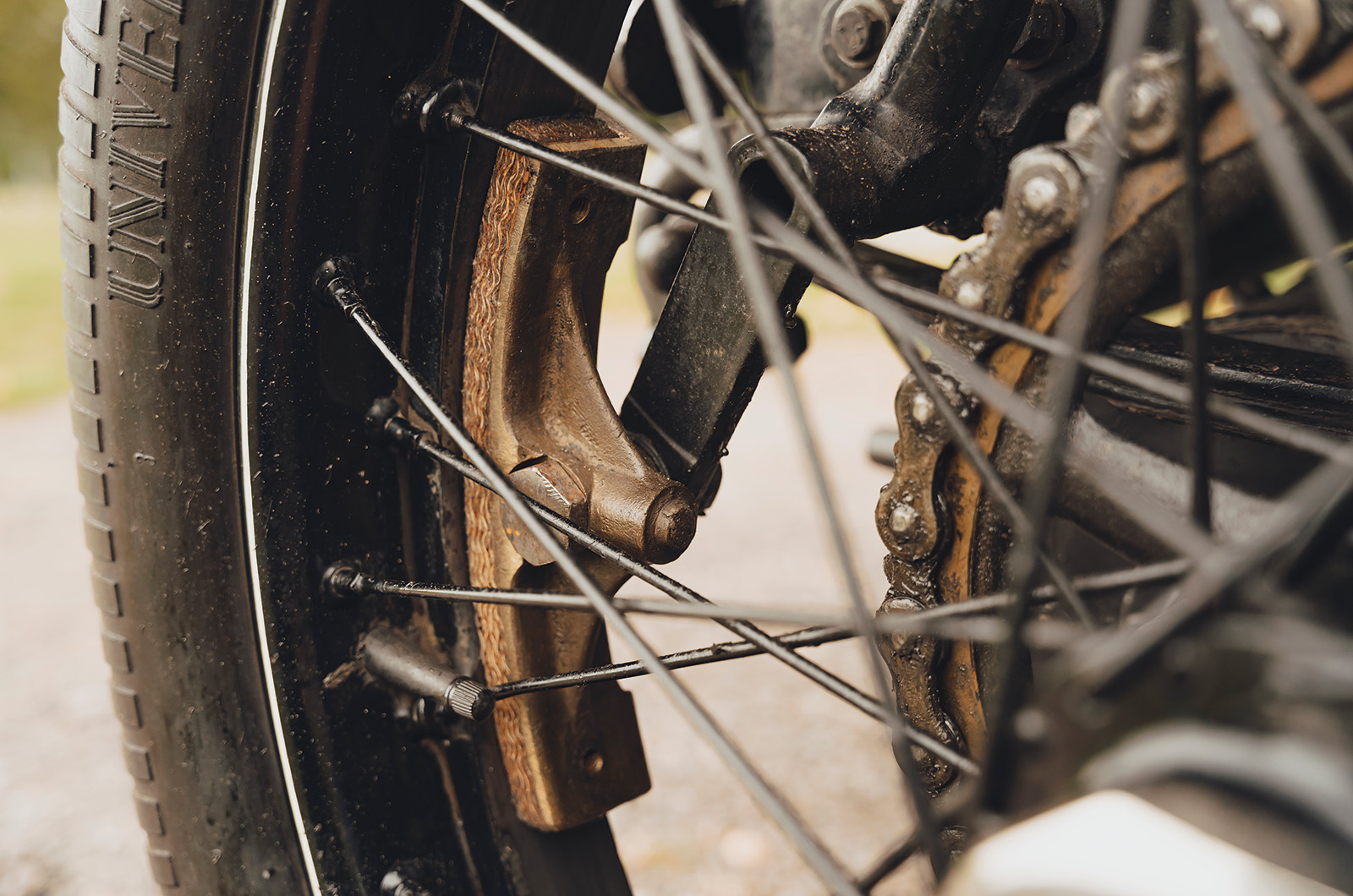
The 1899 Wolseley’s brake shoes – two on each rear wheel – engage against the inside of the rim
The Autocar needn’t have worried: by coincidence or otherwise, the 1900 1000 Miles Trial preceded a decade of furious innovation.
Curiously, Wolseley’s management was not convinced by Austin’s efforts to diversify into vehicle manufacture, selling that part of its business to Vickers Sons & Maxim Ltd in 1901 (losing Austin to the newly founded Wolseley Motors Ltd in the process).
The rest is history, as they say, and Wolseley went on to become a dominant force in motoring’s Edwardian era.
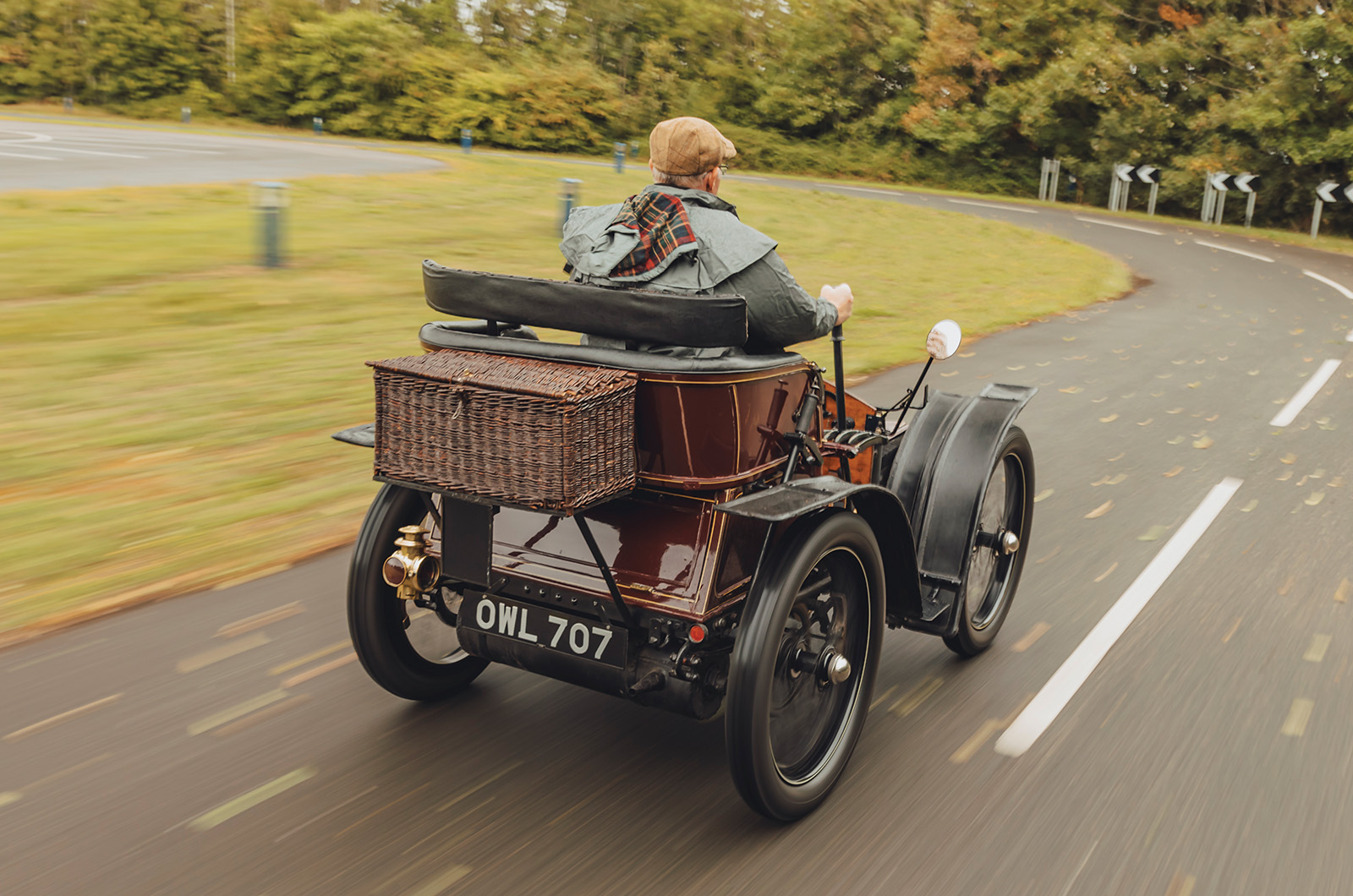
Smooth surfaces today, but the 3.5bhp Wolseley endured 1000 miles of mostly unpaved roads on its inaugural event, more than 125 years ago
OWL is perhaps not hugely representative of the larger, more prestigious machinery that Wolseley went on to produce in the period leading up to the Great War.
But viewed entirely objectively, it is a remarkably proficient and capable motor car.
Powered by a 1.3-litre engine of Wolseley’s own design, its single cylinder has a 4½in bore and a 5in stroke, with its liner, piston and combustion chamber all cast from iron.
Wolseley was keen to emphasise the construction quality of the engine, with all its components ground to fit, rather than being ‘packed’ (a practice that should be ‘abolished’, it asserted).
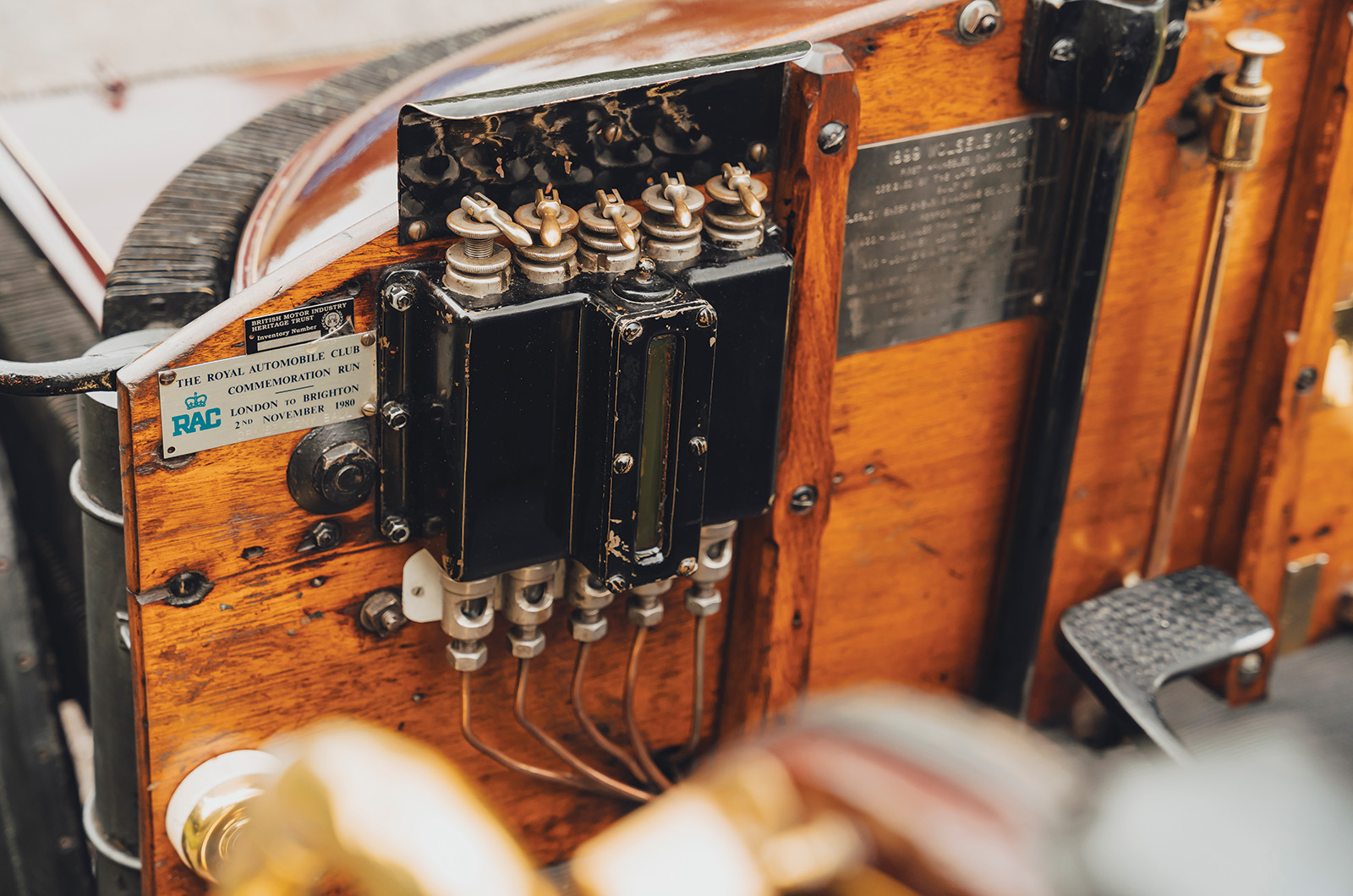
The Wolseley 3.5hp Voiturette’s sight-feed lubrication replenishes the constant-loss system
Oil is sent to the bearings through a sight-feed lubricator mounted on the dash, with capacity for, the company claimed, 150 miles of running.
The ignition uses two accumulators and a Blake trembler coil – common with many other early veterans.
The transmission, with chain final drive to the rear wheels, is quite ingenious and, as we soon find, entertaining to use.
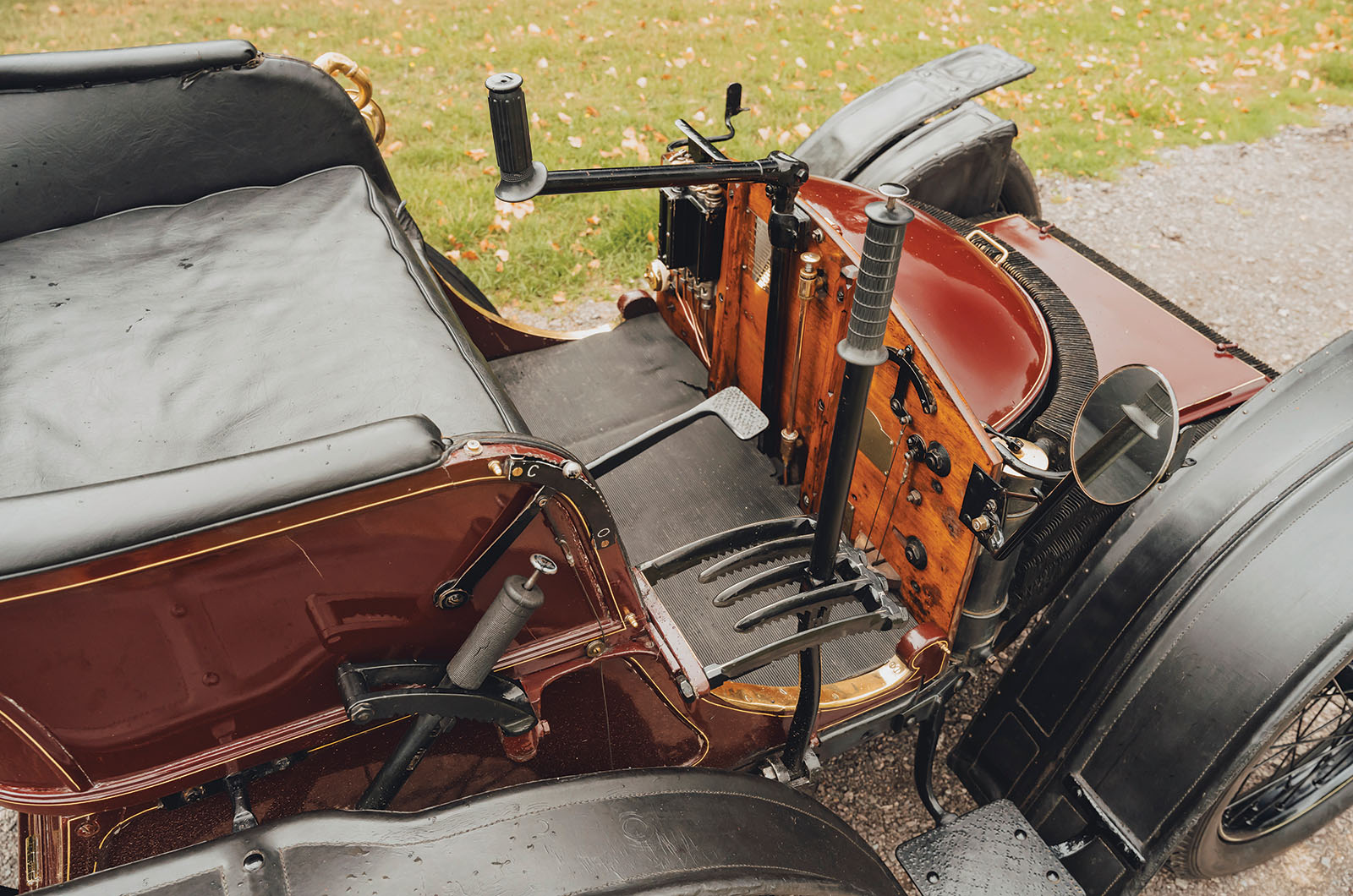
The three-speed (plus reverse) gearbox, mounted transversely beneath the bench seat, is moved back and forth as the driver selects different ratios via toothed ‘channels’ in the transmission gate.
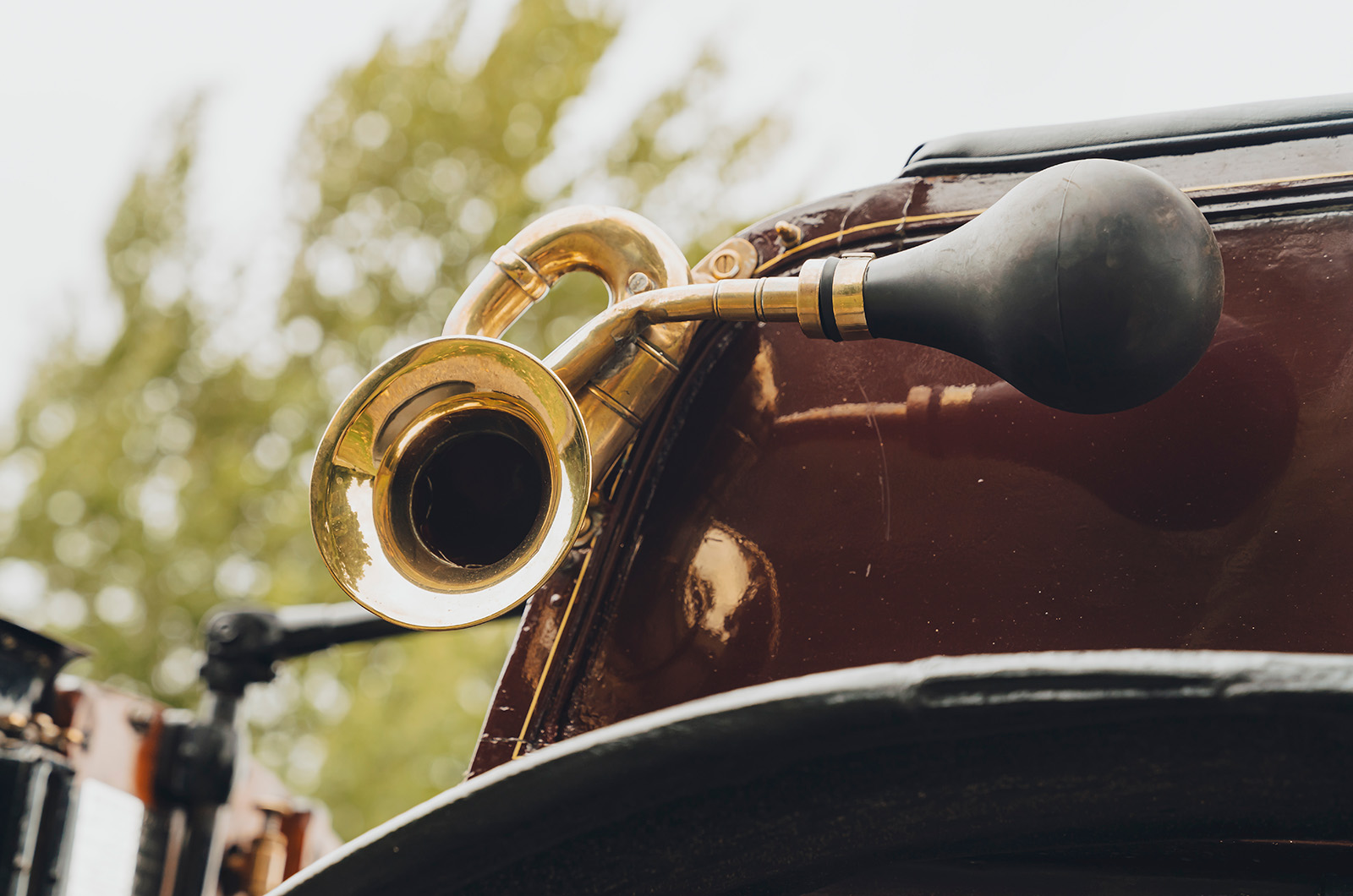
The Wolseley’s controls are complex for a veteran car newcomer, but at least the horn is straightforward
When the lever is pulled back into a neutral zone, the gearbox is pushed forward out of the confines of the fabric belt in which its drive is contained; when the lever is pushed ahead into one of the gear channels, the ’box engages progressively with the belt until it’s fully locked in.
The same lever’s lateral throw allows you to select your chosen ratio, with its lower end connected to a mechanism that moves across the ’box to engage the corresponding gear.
Apart from a hand throttle and central steering tiller, OWL’s only other main control is a footbrake operating two shoes acting directly on an additional rim fixed to the inside of each of the car’s spoked 30in rear wheels.
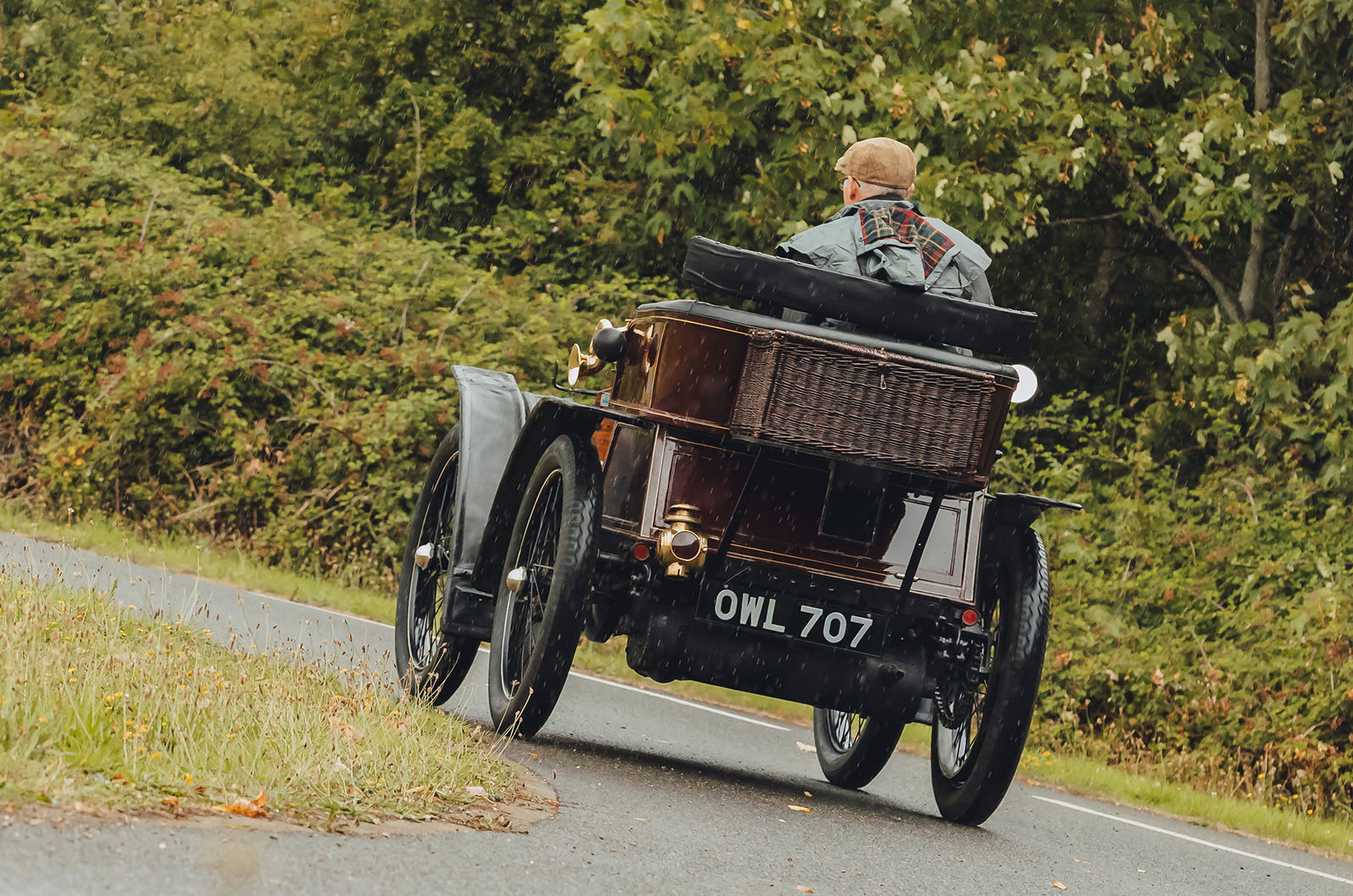
The 1899 Wolseley’s steering tiller isn’t troubled by kickback
Our drive today starts from the British Motor Museum in Gaydon, where OWL has been a resident since 1980.
(Its display history actually goes back to 1912, when it became one of the first exhibits in Britain’s first public car collection, the Motor Museum, aptly founded by the proprietor of The Motor, Edmund Dangerfield.)
OWL’s starting procedure is thus: fuel on; fully retard the ignition on the small, dash-mounted quadrant; set the hand throttle at its mid-point; then move to the nearside front of the car and start to crank – fast, and with some commitment – before switching on the ignition, after which OWL fires immediately. I’ve known worse.
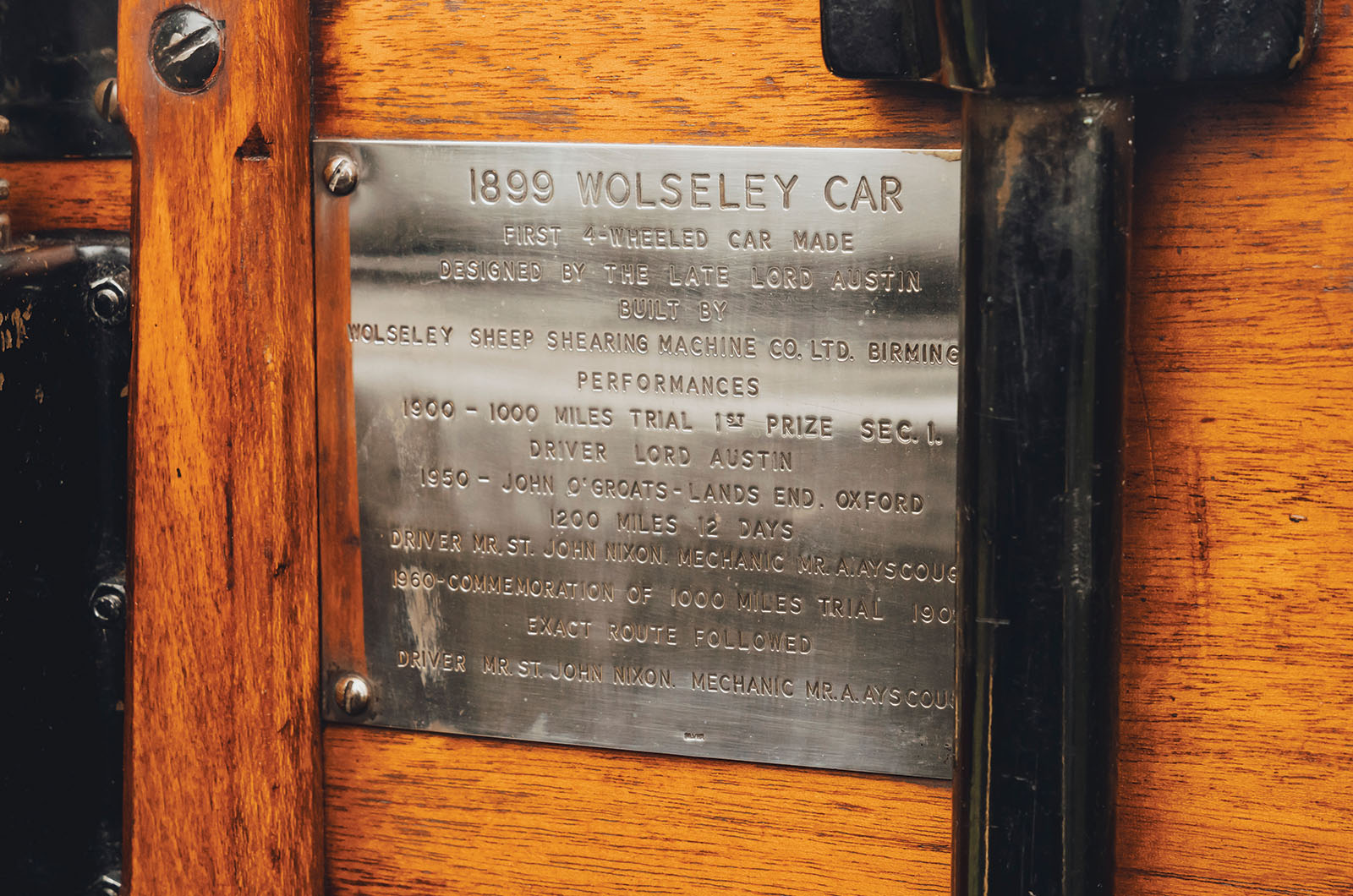
A plaque commemorates this Wolseley’s legacy
There is an art to driving any veteran, and while their control systems vary wildly, the pleasure – for me, anyway – is making steady progress without the need to overexert any componentry; I’m sure Mr Austin would have concurred.
To pull away, you add some ignition advance, leave the throttle in its midway position, release the handbrake and ease the long transmission lever forward in its first gear slot – just enough to attain jogging pace – before making a back-and-forth change into second gear.
The single cylinder’s metronomic thumping intensifies as you push the lever further in its channel.
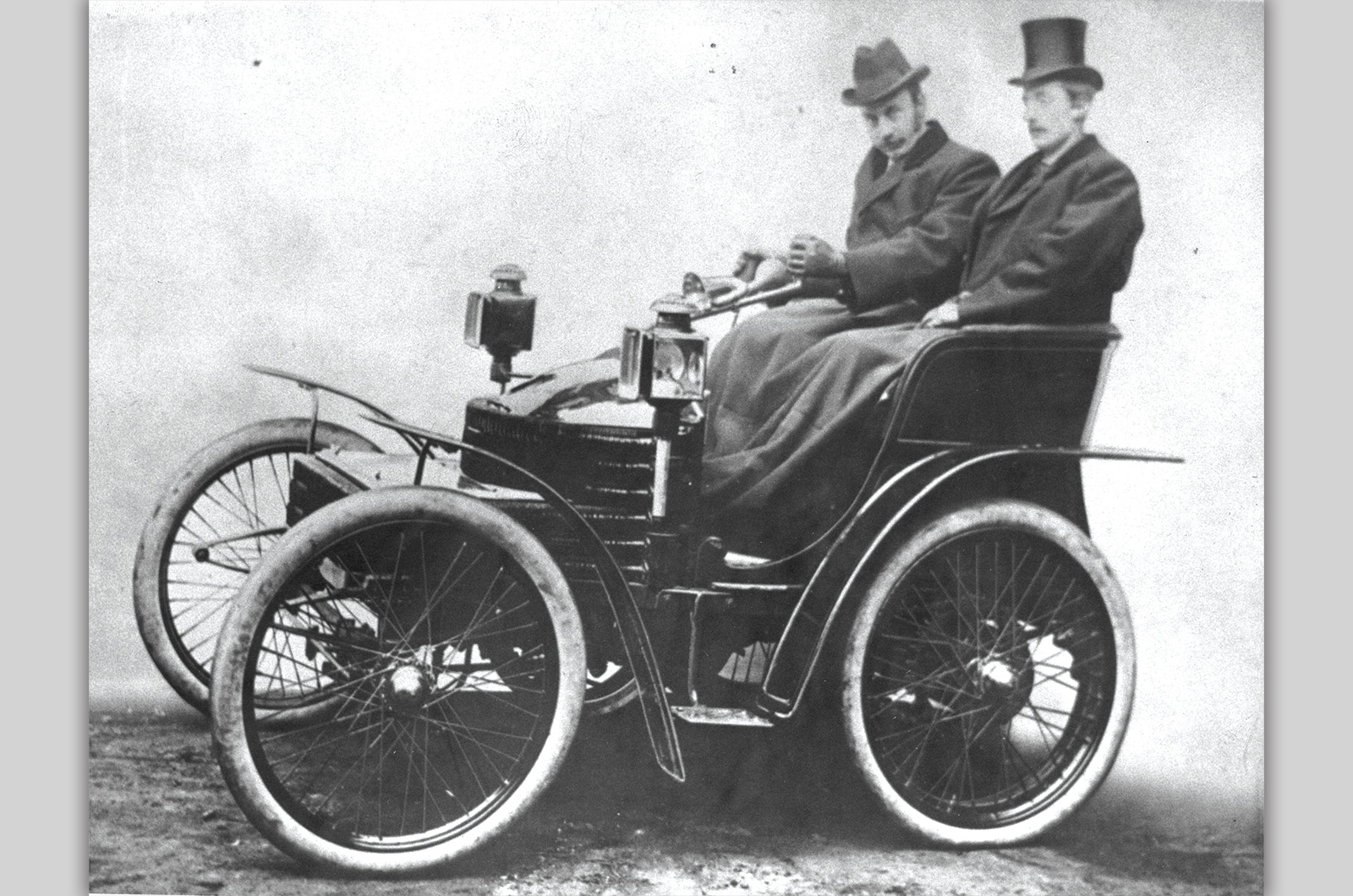
Herbert Austin at the tiller of the Wolseley 3.5hp Voiturette in 1900 © Royal Automobile Club
It’s a highly physical experience for your upper body, because you are in effect forcing the weight of the gearbox against the drive belt to attain more speed.
Once into third, with a clear road before you and the transmission locked in, OWL lopes along, its monobloc engine surely still turning at below 1000rpm.
On paper, a five-years-younger Vauxhall Light Car’s coil-sprung chassis should feel more sophisticated than the Wolseley’s cart-sprung set-up, but once you have acclimatised to OWL’s central steering tiller – benign enough to avoid kickback from potholes and drain covers – its impressive stability licks that of the later, London-built car.
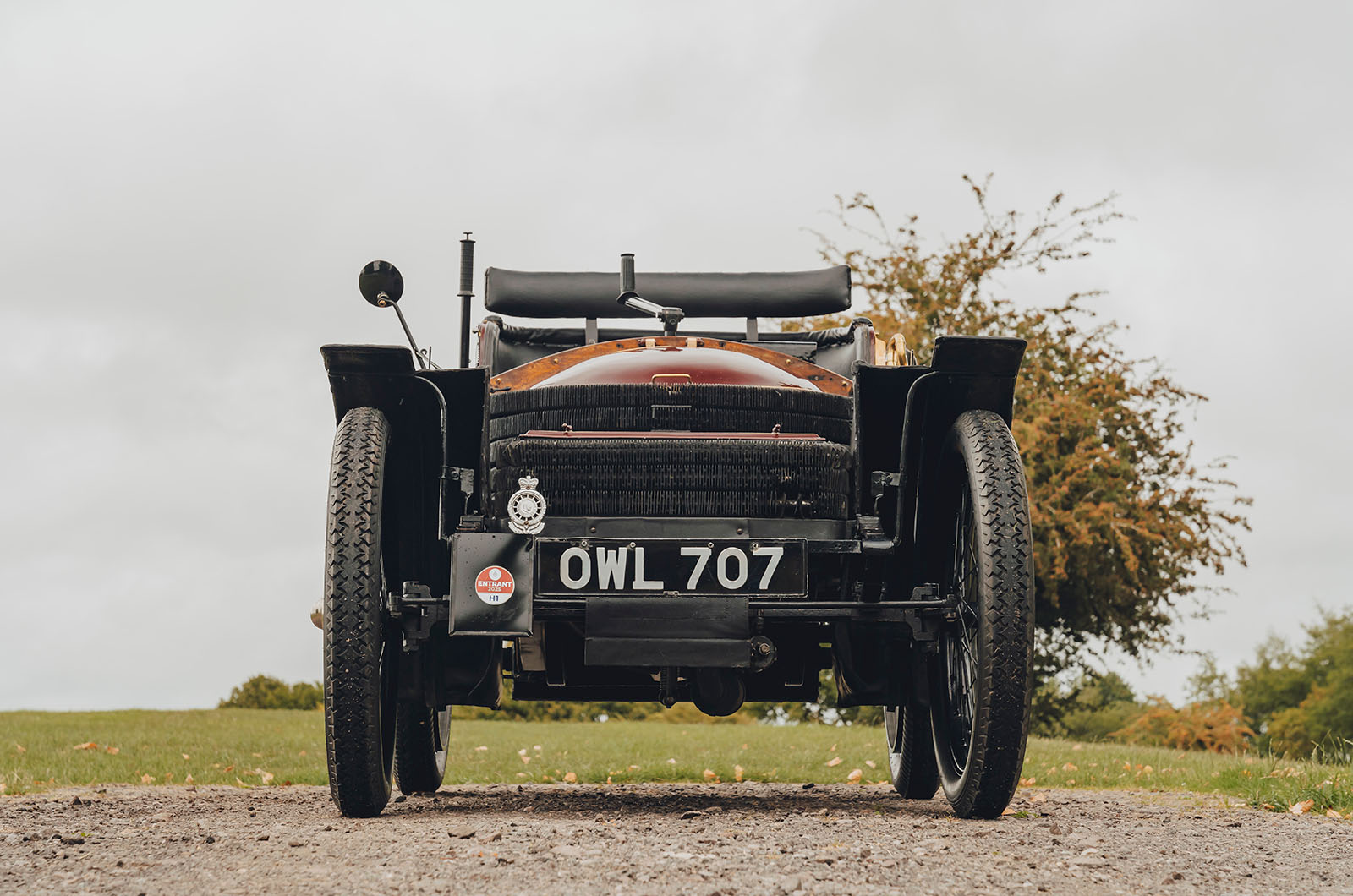
‘This important Wolseley was among a select group of pioneer vehicles that first brought motoring to the masses’
More than that, though, is the sheer thrill of piloting a genuinely driveable car from the century before last.
No motor vehicle engages you quite like an early veteran: the organic simplicity of the engineering is refreshing and, while operational solutions were still diverse, you find yourself sharing their maker’s naïve optimism that their particular way was the future.
The internal-combustion-powered motor car, whatever its form, was the future, though, and 125 years ago a nation of doubters was starting to be convinced.
Images: Max Edleston
Thanks to: Stephen Laing, British Motor Museum; Jonathan Gill, London to Brighton Veteran Car Run
Enjoy more of the world’s best classic car content every month when you subscribe to C&SC – get our latest deals here
READ MORE
Genevieve reunion: meet the Darracq and Spyker film stars