Bugatti Type 51 Grand Prix vs Type 55: twin-cam cousins

| 26 Jun 2026
Classic & Sports Car – Bugatti Type 51 Grand Prix vs Type 55: twin-cam cousins

Motoring history has few father-and-son associations as rich as that of the Bugatti dynasty.

Jean was no match for his father Ettore’s diverse design output, but he clearly garnered a natural feel for engineering and aesthetics growing up around the eponymous marque’s Molsheim workshops and design offices.

He did not benefit from a formal technical education, but, as his father’s methods became more blinkered, so young Jean continually encouraged the adoption of new ideas – even if they were other people’s.

Classic & Sports Car – Bugatti Type 51 Grand Prix vs Type 55: twin-cam cousins

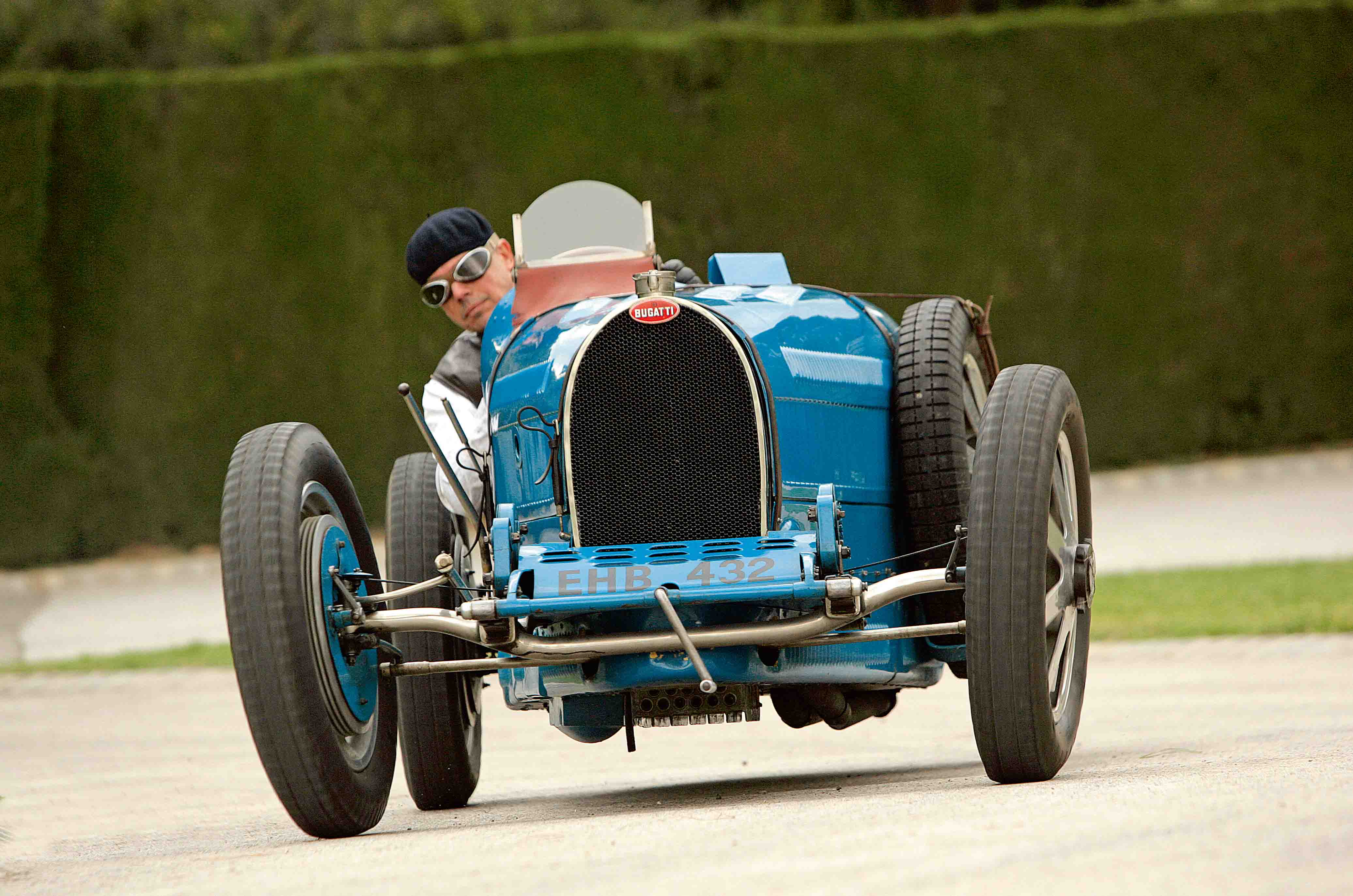
The Bugatti Type 51 Grand Prix has heavy steering, despite its positive camber

Jean’s refreshing instinct was demonstrated by his embracing of dual-camshaft technology for both Bugatti’s racing and road cars.

It is believed that he was the key influence behind the shrewd deal to acquire a pair of front-drive Miller 91 racers from Leon Duray in 1929, so the factory could access and assess these advanced, beautifully engineered twin-cams.

Story has it that Ettore resisted the idea, but the prospect of Vittorio Jano’s mighty Alfa Romeo 8C was a wake-up call for Molsheim: its Type 35B racer urgently needed more power.

Duray had contested the 1929 Monza Grand Prix, where his 1.5-litre machines – he was allowed by the organisers to race both, albeit in different heats – proved fast but unreliable: one wrecked its engine, the other broke its transmission.

Out of money and disappointed, Duray, aka ‘The Black Devil’ – his real name was George Stewart and he came from Cleveland, Ohio – was a genuine barnstorming showman with an eye for the main chance.

The deal proposed was a favourable one – Duray would return to Hollywood with three Type 43 road cars – and he happily traded his damaged racers with Bugatti.

Classic & Sports Car – Bugatti Type 51 Grand Prix vs Type 55: twin-cam cousins

The Bugatti Type 51 Grand Prix’s gearbox is housed in a square metal casing

By then the Millers were redundant formula cars, but their appeal to Jean was their jewel-like straight-eight engines and centrifugal superchargers.

This layout was the most efficiently powerful of the era, and on Molsheim’s test benches a steady 200bhp was quickly confirmed – until a blower disintegrated.

That figure was almost twice then-current Bugattis’ per-litre output.

The first Bugatti twin-cam was unveiled in 1930, not in a GP car but in the 4.9-litre Type 50.

A review of dates confirms Ettore’s reluctance to develop the Type 35B/C, his greatest design, because it was still competitive during 1930, winning major races at Monaco, Spa and Pau.

Pride, too, might well have discouraged him from arriving at tracks with a new twin-cam challenger so soon after the appearance of the Miller; the road-car specification had less obvious links.

Pride perhaps also lay at the root of his looking across the Atlantic for inspiration: the twin-cam engines of Peugeot and Ballot were too close to home.

Classic & Sports Car – Bugatti Type 51 Grand Prix vs Type 55: twin-cam cousins

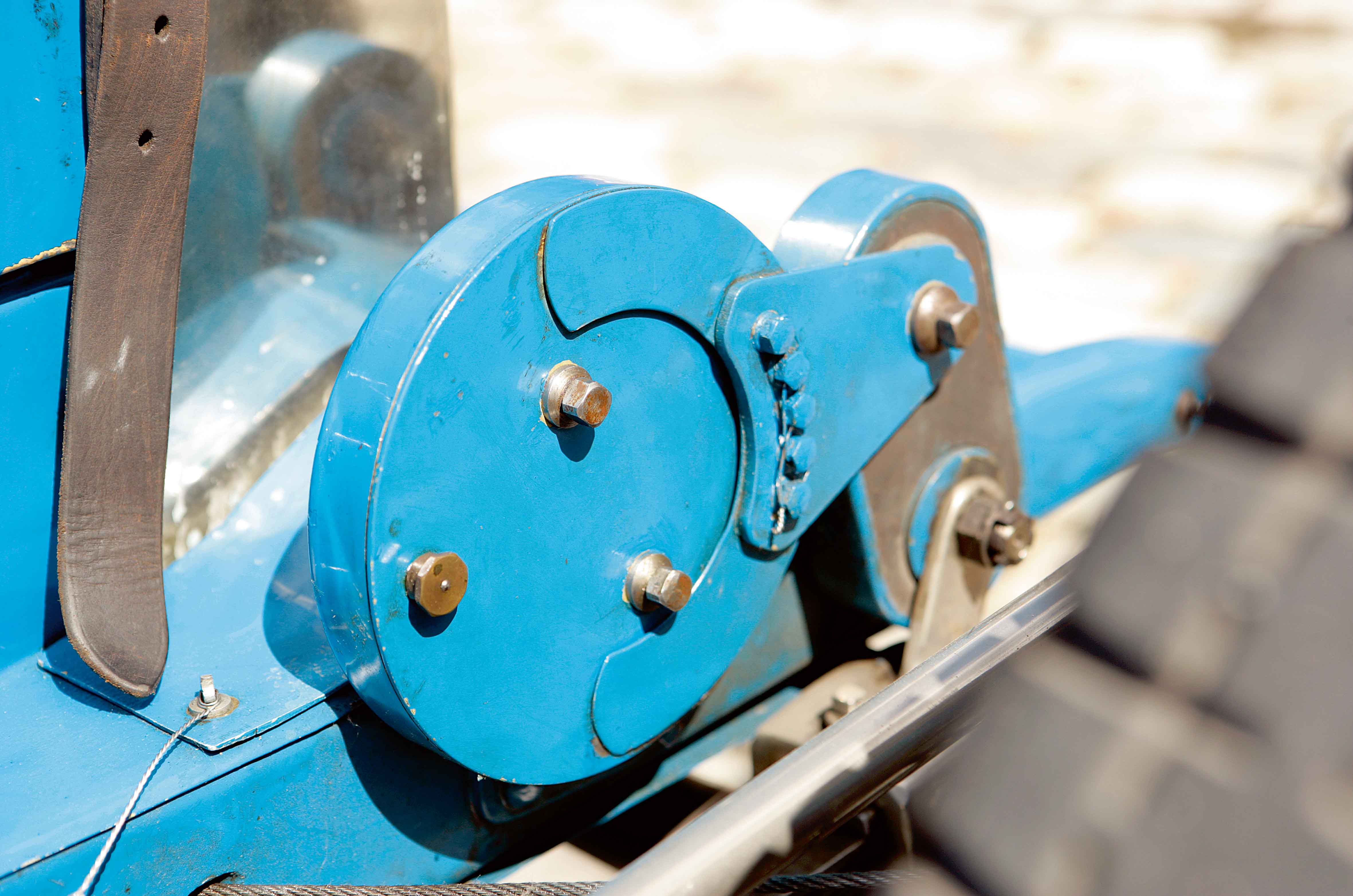
Friction dampers control the Bugatti Type 51 Grand Prix’s leaf springs

Bugatti initially followed Miller’s practice of two blocks of four cylinders, but this soon developed overheating problems. 

Marque guru Hugh Conway later claimed that Bugatti had little understanding of cylinder-head and combustion-chamber thermodynamics.

For its new Grand Prix engine, therefore, Molsheim took the option of adapting the bottom half of the Type 35B unit, with its excellent roller-bearing crank, to take a copy of the Miller’s top end.

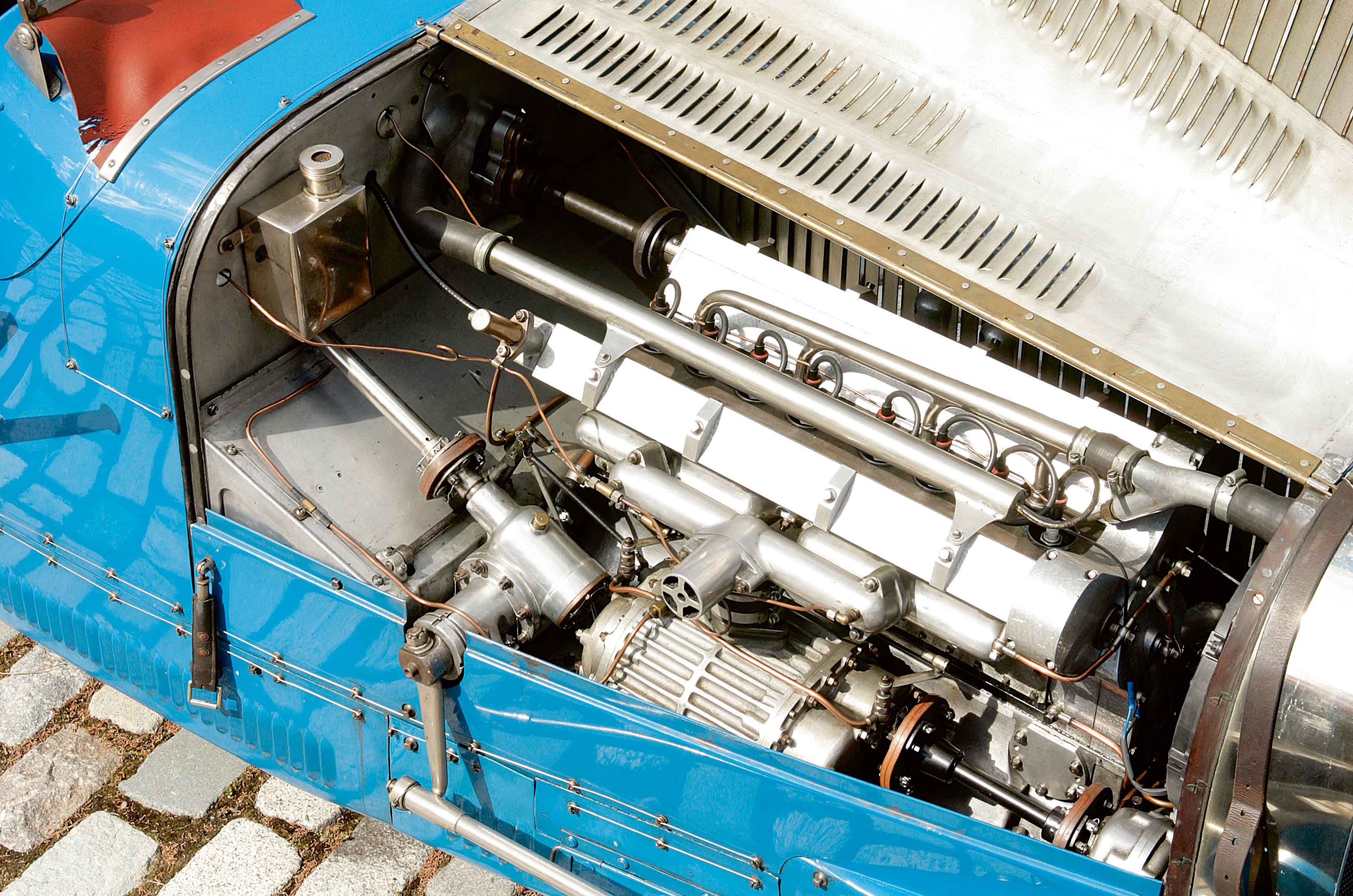
The resultant powerplant closely resembled its progenitor in many details – with cup-type cam followers and spark-plug bosses – but a single-piece block with bucket-type tappets was used, the vertical drive gearing to the cams being altered to pick up the existing bevel shaft.

Its two inclined valves gave far superior breathing to the older vertical three-valve arrangement and, fitted with a Roots-type supercharger, the 2262cc engine – the same capacity as a Type 35B – looked strong on the bench, giving 187bhp at 5200rpm, although 170bhp was the production norm.

Options included a 1493cc unit that could rev to 7500rpm because of its shorter stroke.

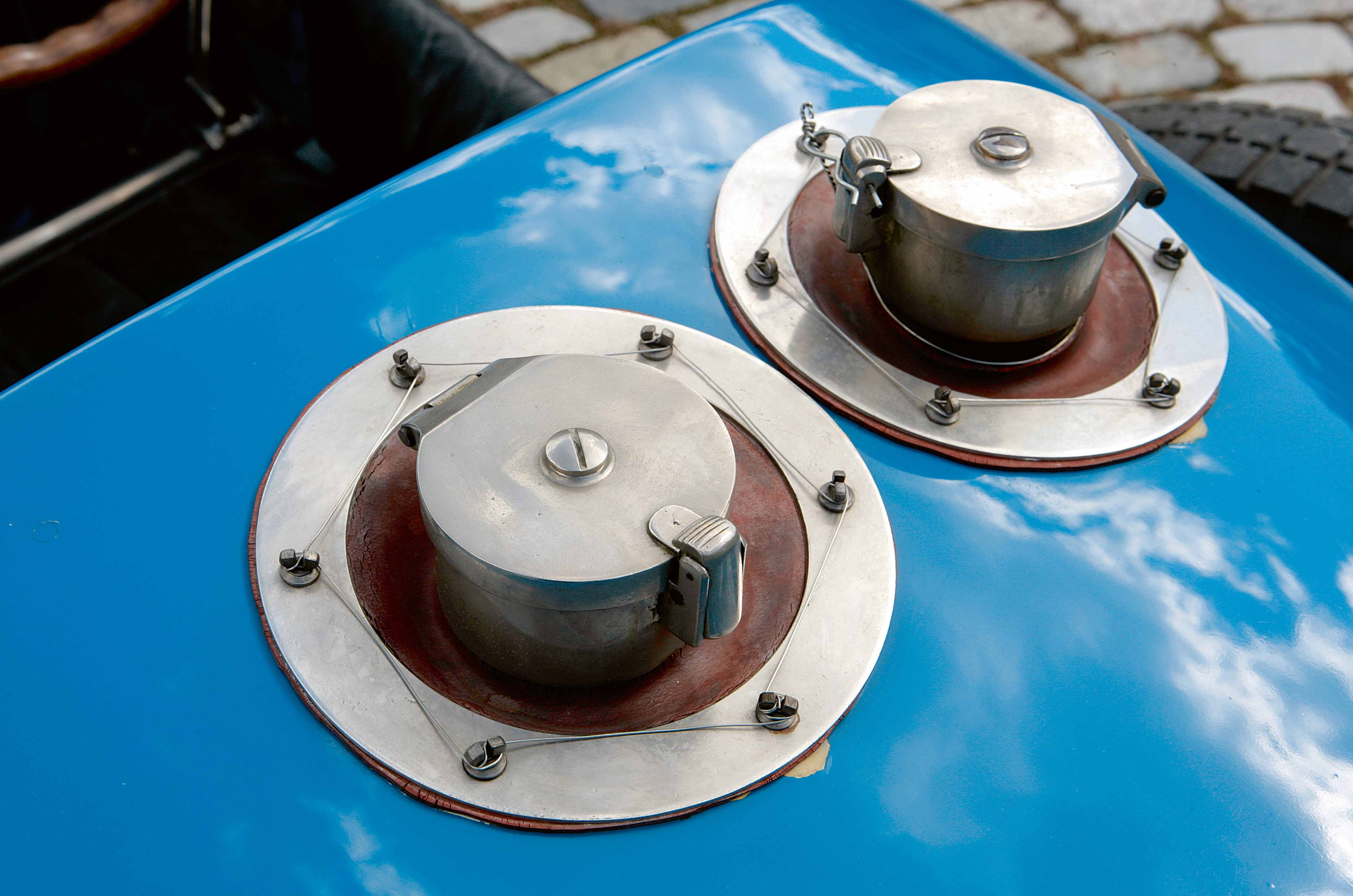
The twin-cam slotted into a Type 35 chassis with only minor modifications: twin fuel-tank fillers and an offset Scintilla magneto run from the left-hand camshaft.

Classic & Sports Car – Bugatti Type 51 Grand Prix vs Type 55: twin-cam cousins

The Bugatti Type 51 Grand Prix’s twin fuel fillers are an obvious change compared to the T35B

As with the last Type 35s, the new racer, called the Type 51, sat on the stronger, one-piece, well-base wheels that had rendered detachable rims obsolete. It also featured the slightly wider ‘Miramas’ radiator.

Officially launched at the 1930 Paris Salon, the Type 51 was being tested on roads around Molsheim by the following spring.

The first delivery went to factory-backed driver Louis Chiron; favoured British customer Lord Howe received the second car; and Italian ace Achille Varzi got the third.

Varzi was so convinced that the new French challenger was going to be quick that he had left the pace-setting Maserati team.

Other Bugatti works drivers signed up for the season included Guy Bouriat, William Grover-Williams and Albert Divo.

Varzi’s Type 51 – in fact a converted Type 35C painted red – was shipped to Carthage at the end of April for the Tunis Grand Prix, where it beat the works Maseratis by almost two minutes after 37 laps of the 7.9-mile circuit.

Following a disappointing Mille Miglia with a Type 50, Bugatti put its season back on track at the Monaco Grand Prix.

Grid slots were decided by ballot and Chiron was handed a midfield start. There was no need to panic, however: 100 laps of opportunity lay ahead.

Classic & Sports Car – Bugatti Type 51 Grand Prix vs Type 55: twin-cam cousins

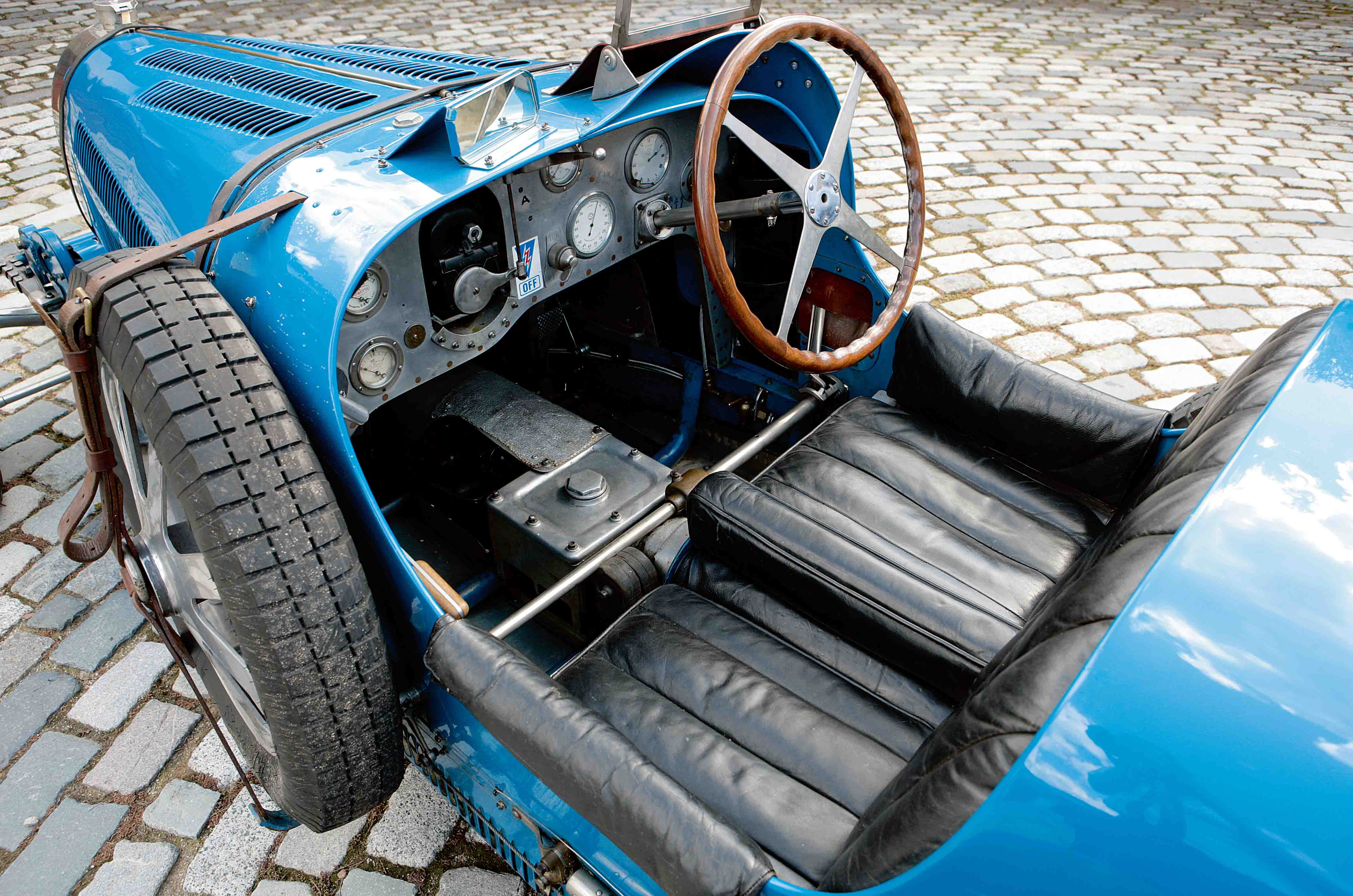
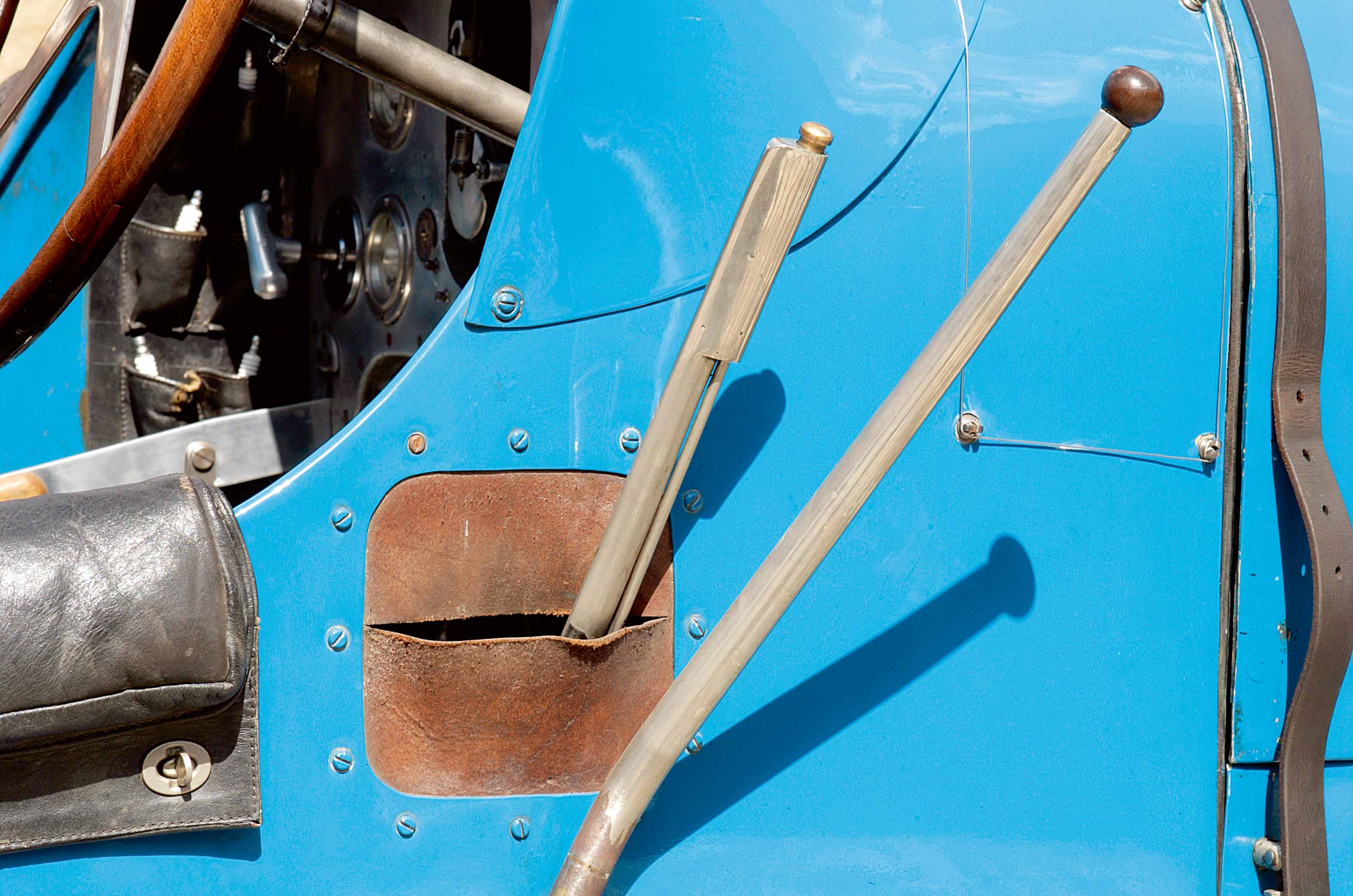
The shorter lever is the Bugatti’s gearlever – and the button on top is pressed to access reverse

René Dreyfus, the winner with Bugatti in 1930, set the early pace for the ‘Bologna Trident’, while Chiron gradually hauled in the leaders.

Varzi moved to the front and looked to have the edge, but a puncture caused him a kerb-clouting, wheel-wrecking spin in the Tunnel on lap 29. He limped to the pits and rejoined in fifth place.

The immaculate Chiron drove superbly thereafter and cruised to a four-minute win over Maserati’s Luigi Fagioli, with the charging Varzi just nine seconds behind in third.

This prestigious result for the Type 51 was underscored by Bouriat’s fourth place.

Jean Bugatti, who at just 22 had taken over the management of the works team alongside ex-racer Meo Costantini – Ettore had been injured in a road accident aboard a Royale – fell deliriously into Chiron’s arms.

Bugatti wins continued when Varzi defeated the new Alfa Romeo 8C, driven on its debut by Tazio Nuvolari, in Alessandria.

Despite being the lone works Bugatti driver entered for the gruelling Targa Florio in Sicily, Varzi was very confident.

Due to cyclonic conditions and collapsed roads, the event was switched to the Grande Madonie circuit and was held over four of its 92.5-mile laps.

Classic & Sports Car – Bugatti Type 51 Grand Prix vs Type 55: twin-cam cousins

The Bugatti Type 51 Grand Prix’s twin-cam engine has a Roots-type blower

Varzi charged into the lead, but the wise fitting of front mudguards to the Alfa Romeos paid off. Varzi, blinded by mud, had to cede to Nuvolari on the last lap and eventually dropped to third.

For its maiden European Championship, the governing AIACR had abandoned the fuel-consumption formula and replaced it with 10-hour races for two-seater cars of a 900kg minimum.

This demanded two-driver teams, and although the difference between Chiron, an urbane and debonair 31-year-old Monegasque, and the cold-steel Varzi could not have been more marked, they gelled superbly.

On a torrid June afternoon at Montlhéry, they shared a Type 51 to score Bugatti’s last French Grand Prix victory. They won by four laps.

Bugatti also prevailed in the season’s final 10-hour epic, as Williams teamed with Count Caberto Conelli to defeat the Alfa Romeos at Spa.

The Type 51 was a brilliant stopgap measure, but the state-backed Italian and German teams soon proved too powerful for the independent French outfit.

Varzi scored a thrilling victory over Nuvolari’s Alfa 8C at Monaco in 1933, and the Type 51 continued to rack up minor wins in privateer hands, but Molsheim’s priority, when industrial troubles allowed, was its development of the Type 57 road car.

Classic & Sports Car – Bugatti Type 51 Grand Prix vs Type 55: twin-cam cousins

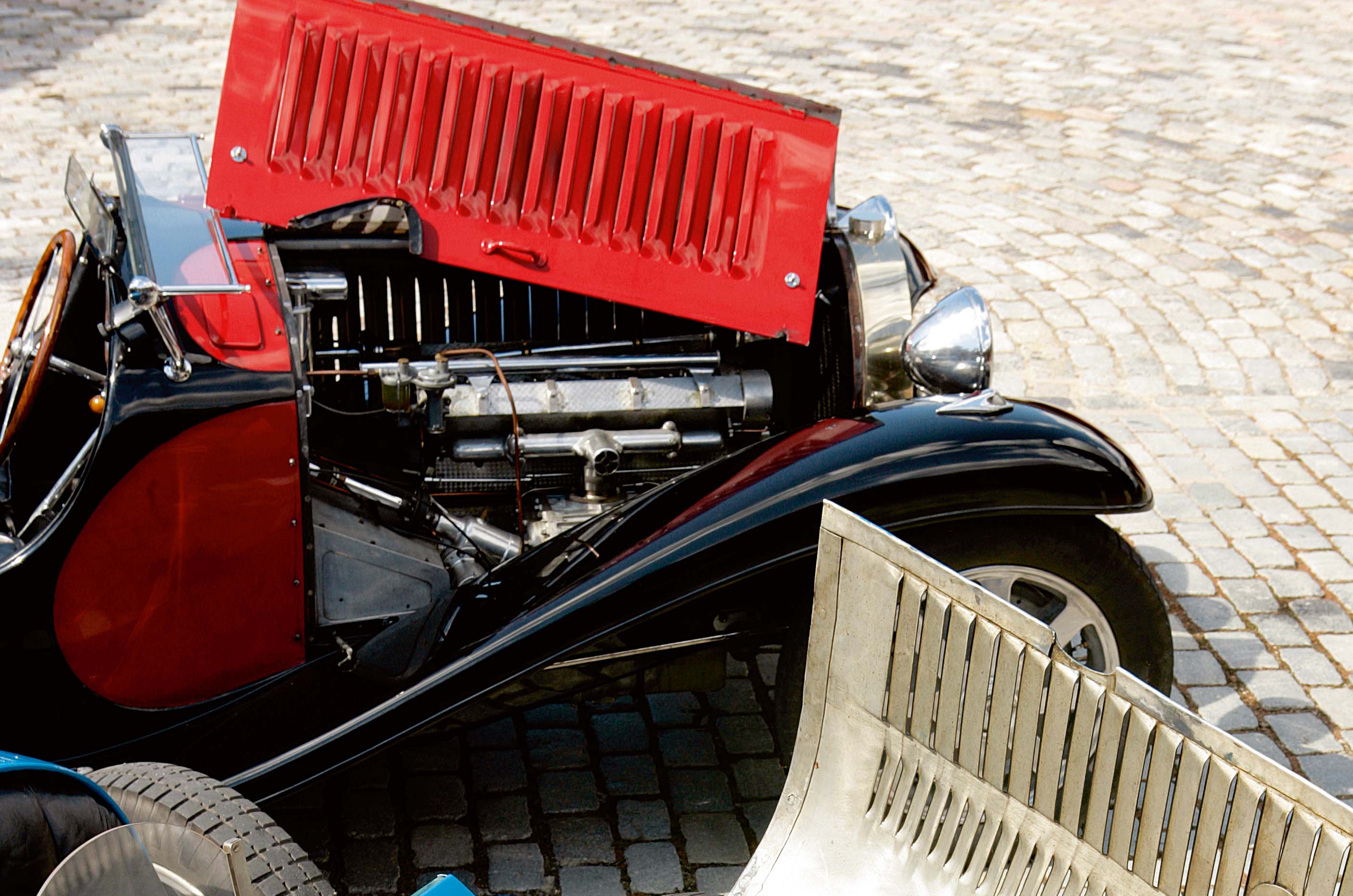
The roadgoing Bugatti Type 55 has a 130bhp version of the T51 Grand Prix’s twin-cam engine

During the 1931 season, however, Jean had instigated the development of a new sports car based around a detuned Type 51 engine.

The Type 55’s specification was laid out by redeploying a range of existing parts, including the heavier chassis from the 16-cylinder Type 47 sports-racer and the Type 49’s road-car gearbox (albeit with a special casing) with a central ball change.

Chief designer Joseph Walter was heavily involved, but it was Jean’s flowing bodywork style that really identified the new roadster.

Indented mouldings, bold two-tone paintwork and sweeping wings were all set off by eight-spoke wheels, making the Type 55 the definitive Art Deco sports car when it dazzled the world on its 1931 Paris Salon debut.

With 130bhp on tap, this 1200kg machine was capable of 112mph and 0-60mph in just 9.5 secs, yet sales were disappointing.

The Depression didn’t help, nor did the arrival of Alfa Romeo’s lighter, faster and more powerful 8C-2300.

Just 38 Type 55s were built, and 13 were Jean-style factory roadsters.

To drive either of these fabulous Bugattis would satisfy most enthusiasts; to drive both together is a dream.

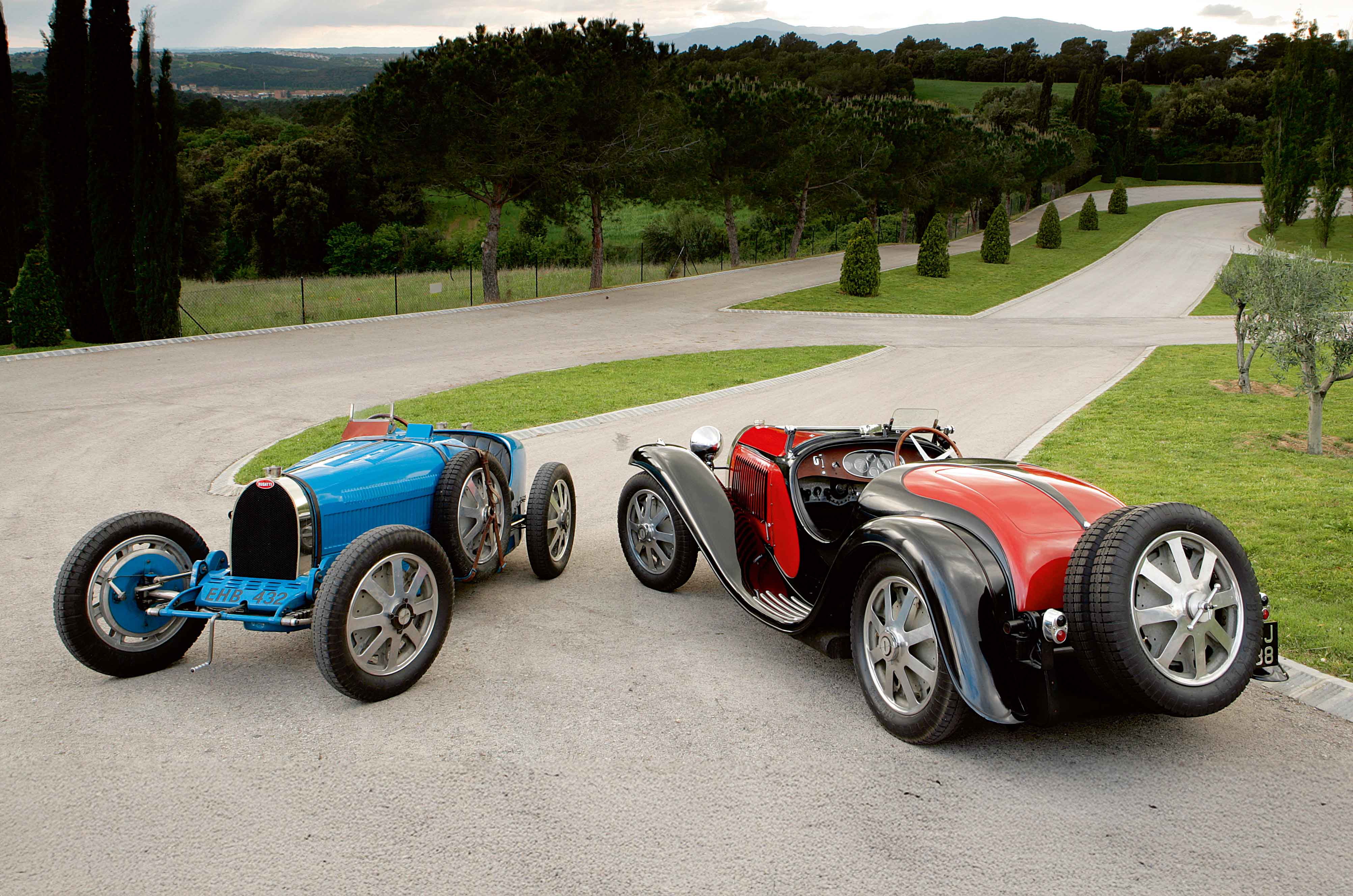
So we were extremely fortunate be able to unite two outstanding examples on a private test track in Spain.

Classic & Sports Car – Bugatti Type 51 Grand Prix vs Type 55: twin-cam cousins

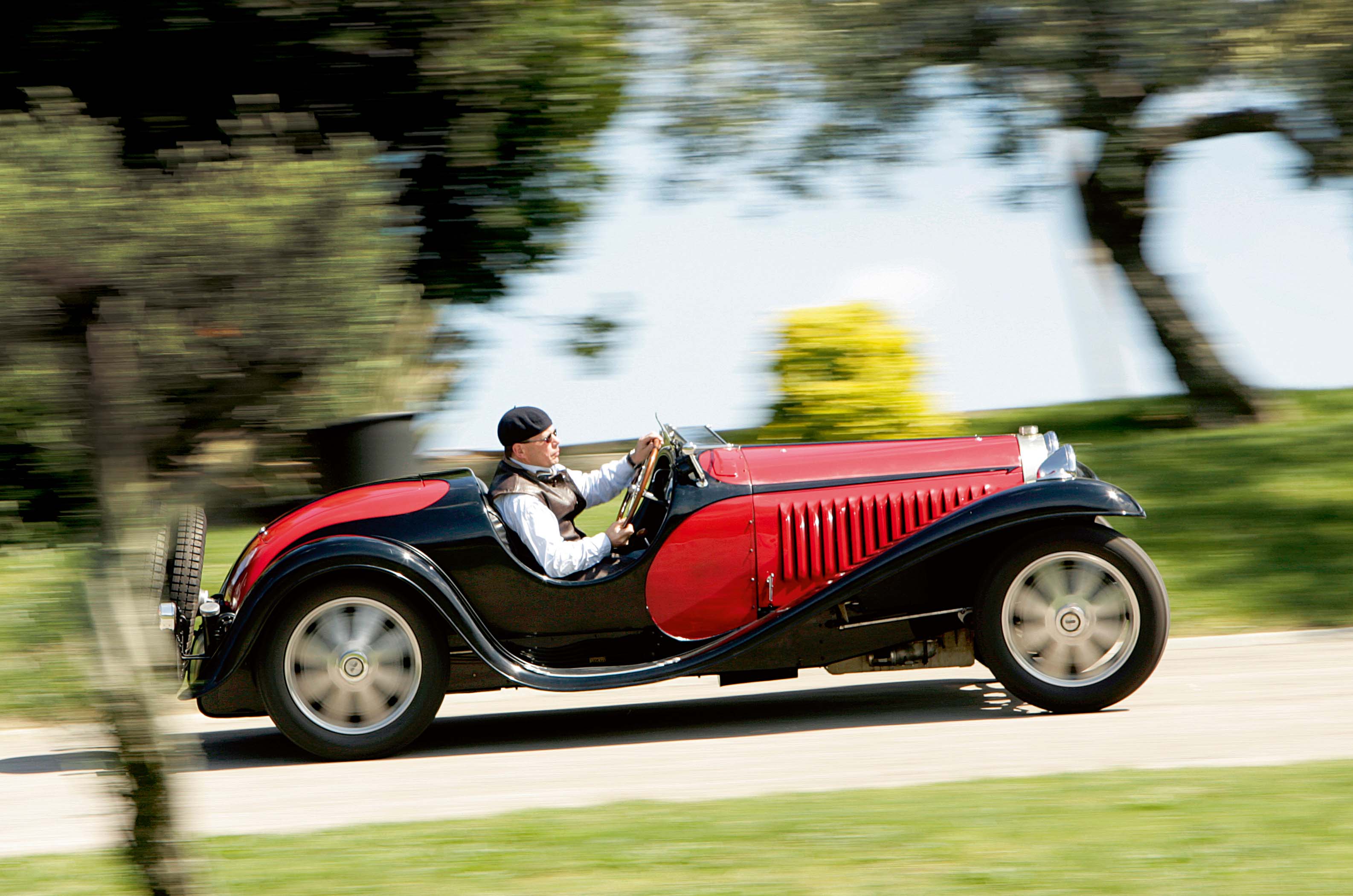
There are no doors to spoil this Bugatti Type 55’s lines

The Type 51 featured here is chassis 51127 and was ordered new by Madame Saquire of Nice; it was later joined in her garage by a T55 roadster, chassis 55231. 

Little is known about this wealthy buyer, but she must have been quite an aficionado.

How much she used the cars isn’t recorded, but I like to imagine her blasting along favourite roads on the Côte d’Azur.

Her Type 51 was sold to Italy and ended up in America after WW2. 

In the 1980s, it headed over to England, where historic racer Anthony Mayman campaigned it in earnest and enjoyed some close battles with fellow ERA driver Sir John Venables-Llewellyn in Lord Raglan’s Type 51.

Running on methanol and fitted with a limited-slip differential, the car proved very fast.

As Charles Dean’s sorted black car has confirmed recently, a Type 51 is able to upstage much younger machinery on the track.

The gearbox is superb once you’re used to its reversed-gate pattern – and the centre-throttle pedal arrangement. Although the throw is long, its action is slick.

Classic & Sports Car – Bugatti Type 51 Grand Prix vs Type 55: twin-cam cousins

This is one of 13 Jean Bugatti-designed Type 55 roadsters built

On the twisty section of this narrow track, the rapid outside change perfectly exploits the engine’s sharp, urgent response and the car’s excellent traction.

The smooth surface also suits the impressive brakes, a firm pedal pressure inspiring deeper entries into the hairpins.

It pulls up straight and strong every time, but you have to watch out for bumps: a jarred, locked brake drum could easily twist the front axle.

The steering is the Type 51’s most physical aspect. There’s little self-centring, so you have to wind it straight with a deliberate action as you exit tight bends.

It’s heavy at low speeds, too, and almost four hours around Monaco – nine on the Targa Florio! – must have taken great upper-body strength and stamina.

You sit close to the steering wheel and your shoulders are forced into play when you start to hustle through the bends. That doesn’t take long.

The chassis is taut and predictable, its snappy turn-in encouraging you to go ever quicker.

Superb balance builds confidence and you are soon powersliding out of tighter corners, the limited-slip differential ensuring that there are no smoking tyres as you gun away from apex after apex.

It’s a winning feeling that gathers momentum with every action and at every turn.

Classic & Sports Car – Bugatti Type 51 Grand Prix vs Type 55: twin-cam cousins

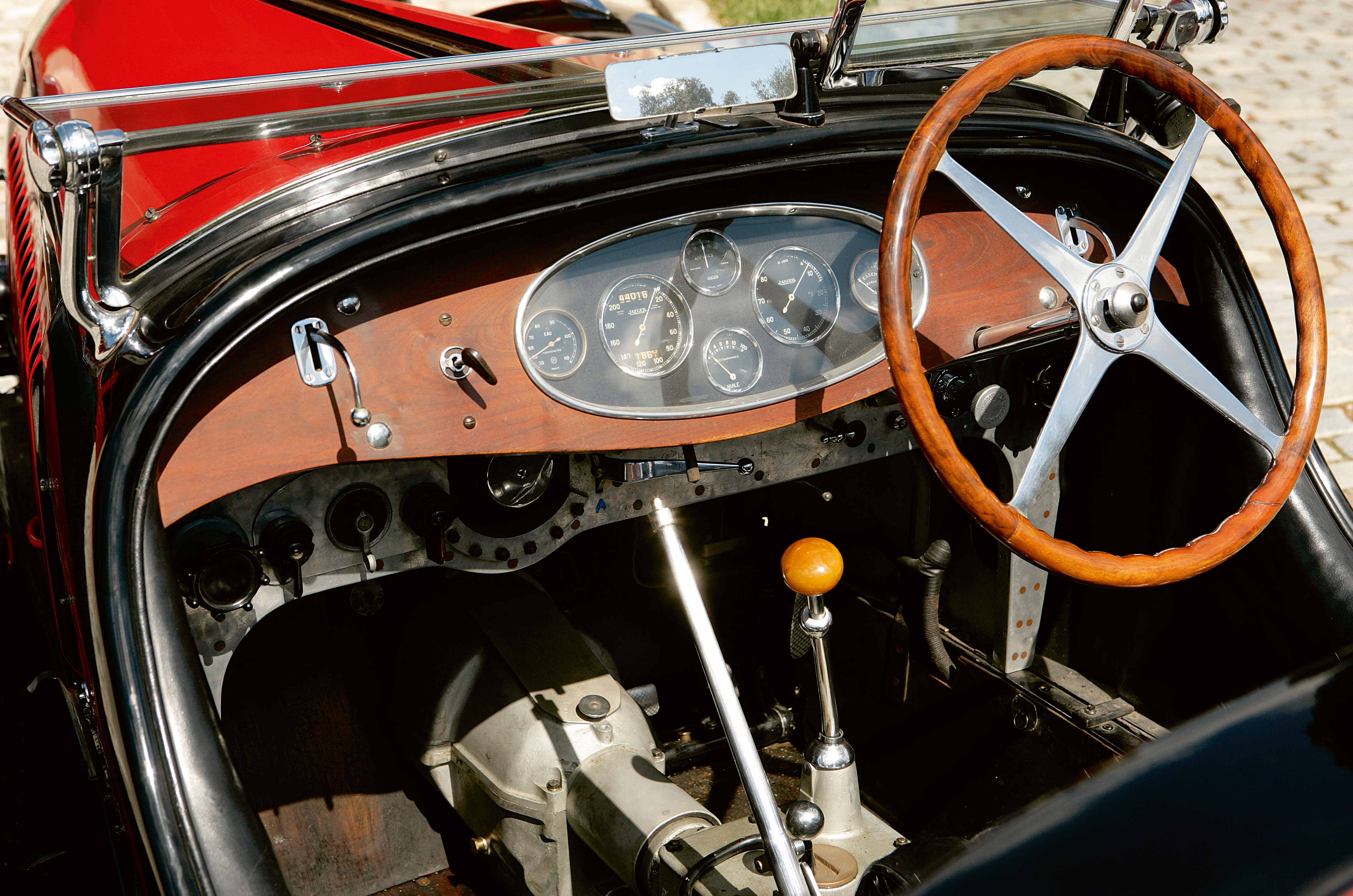
There’s plenty to look at (and do) in the Bugatti Type 55’s busy cockpit

It would be difficult to tell the difference between a Type 35B and Type 51 on the slower sections of the track, but, even running on pump petrol, the extra grunt of the twin-cam engine comes into play on the longer straights.

It starts to sing once spinning above 4000rpm, and you can really feel the increased urge at the top end as you power up inclines.

A Type 51 will rev to 7000rpm in the heat of battle, as demonstrated by Geoffrey St John when he chased Neil Corner’s Type 59 in the all-Bugatti race at Silverstone in 1986.

Only the superior handing of the later, lower, longer and wider Type 59 gave it the edge.

The roadster’s competition pedigree is clear the moment you climb aboard, its handsome wooden steering wheel jutting from an engine-turned scuttle.

The Type 55’s driving position is still upright, with feet deep down inside the chassis, and, following the racing car’s layout, the throttle is in a central position.

Its oval cluster of Jaeger dials contrasts with the Grand Prix machine’s busy layout and exposed magneto cut-out, but don’t let that glamorous style seduce you: the driver still has plenty of distractions.

There are knobs for damper adjustment, an advance/retard lever above the passenger’s knee, and an oil tap for the blower that has to be turned every 30 miles.

Classic & Sports Car – Bugatti Type 51 Grand Prix vs Type 55: twin-cam cousins

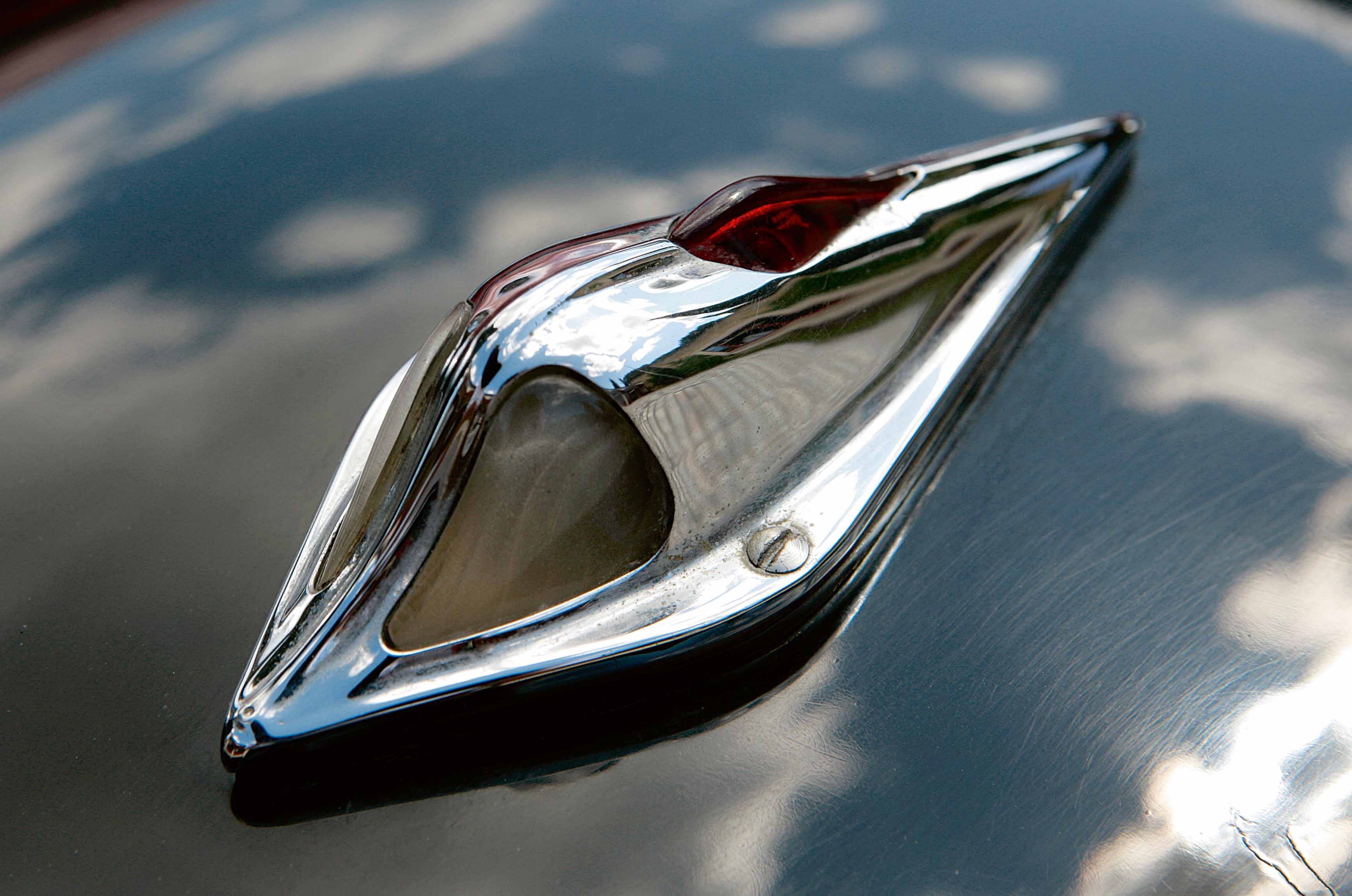
The Bugatti Type 55 has stylish, Art Deco-influenced chrome trim

Formerly owned for more than 50 years by marque connoisseur Miles Coverdale in America, this superbly original Type 55, chassis 234, was discovered in Paris in 1954 and is absolutely one of the world’s best.

Its engine is already warm, so there are no pre-ignition duties required to build up oil pressure or prime the fuel system.

Simply push the clockwork-type key and the twin-cam fires abruptly with a crisp, hard-edged exhaust bark underscored by a whoop from the blower and a mechanical thrash.

After the racing thoroughbred, the first impression is the Type 55’s far smoother ride.

It copes with the bumps well, even over some cobbles. It feels more sophisticated than its Alfa Romeo rival, too.

That low, fold-down windscreen, however, although it enhances the lines, offers little protection at speed. Even with my short build, there’s no chance of keeping that trilby on.

The cutaway body sides – there are no doors – also look great but expose your trunk to cold draughts.

Little wonder that coachbuilders such as Figoni went for the less glamorous but more practical straight-sided, rear-hinged door style.

Classic & Sports Car – Bugatti Type 51 Grand Prix vs Type 55: twin-cam cousins

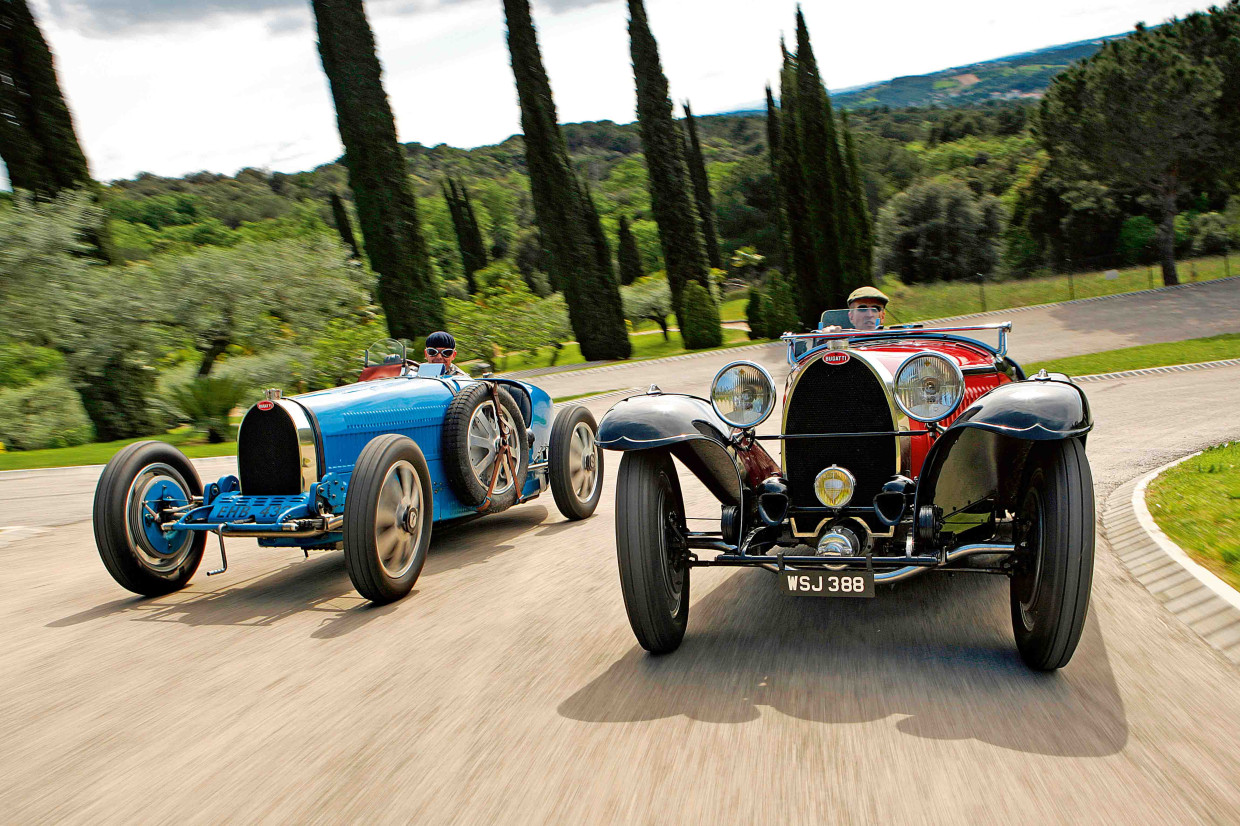
The spare and functional Bugatti Type 51 Grand Prix (left), and the flowing and adorned Type 55

The steering is beautifully direct, like the racer’s, its well-weighted, sharp action getting even better as the speed increases.

Matched with its balanced handling, the Type 55 continually inspires.

Only its gearbox, in comparison with the Type 51’s, disappoints.

The laboured change, with its tricky timing across the gate and heavy clutch, seems at odds with the sportiness of the rest of the car.

The engine’s performance, although it feels less responsive up to 4000rpm as if suffering from the added weight, unfolds as the revs climb.

After driving the Type 51, its roadgoing cousin was always going to be an anticlimax, yet away from the track and with a warm destination ahead, the Type 55 comes into its own.

Both machines are ultra-desirable, but, if I were only allowed one, it would have to be the T51.

Its gearchange, grunt and raw character epitomise the ultimate Bugatti experience.

As beautiful as the Type 55 is, I’d dread seeing an Alfa 8C blasting up into my mirrors.

Images: Tony Baker

This was first in our March 2011 magazine; all information was correct at the date of original publication


The Millers that inspired Bugatti’s twin-cam

The front-wheel-drive Millers eventually copied by Bugatti were ordered by Leon Duray in 1926.

In 1929, with backing from Packard Electric, Duray planned a European trip with three Millers, two front-drives and one rear-drive.

A Cord L-29 demonstrator completed this stylish equipe.

After a diversion to the famed Land Speed Record road at Arpajon, the four arrived at the banked circuit at Montlhéry, near Paris, where lead-foot Duray raised the 10-mile World Record to 135.33mph and set a five-mile record at 139.22mph.

No European 1500 could match these speeds.

After their evaluation at Molsheim, the Millers were left abandoned in storage until their rediscovery in 1953, covered in piles of rubbish and dirt.

Historian Griff Borgeson returned them to California at the end of that decade.


Enjoy more of the world’s best classic car content every month when you subscribe to C&SC – get our latest deals here


READ MORE

Hudson ‘Bestium’ special: Domingo Bucci’s hometown hero

Alfa Romeo 8C-2300: the story of the ‘Wrigley Special’

Bugatti Type 55: a Bug’s life