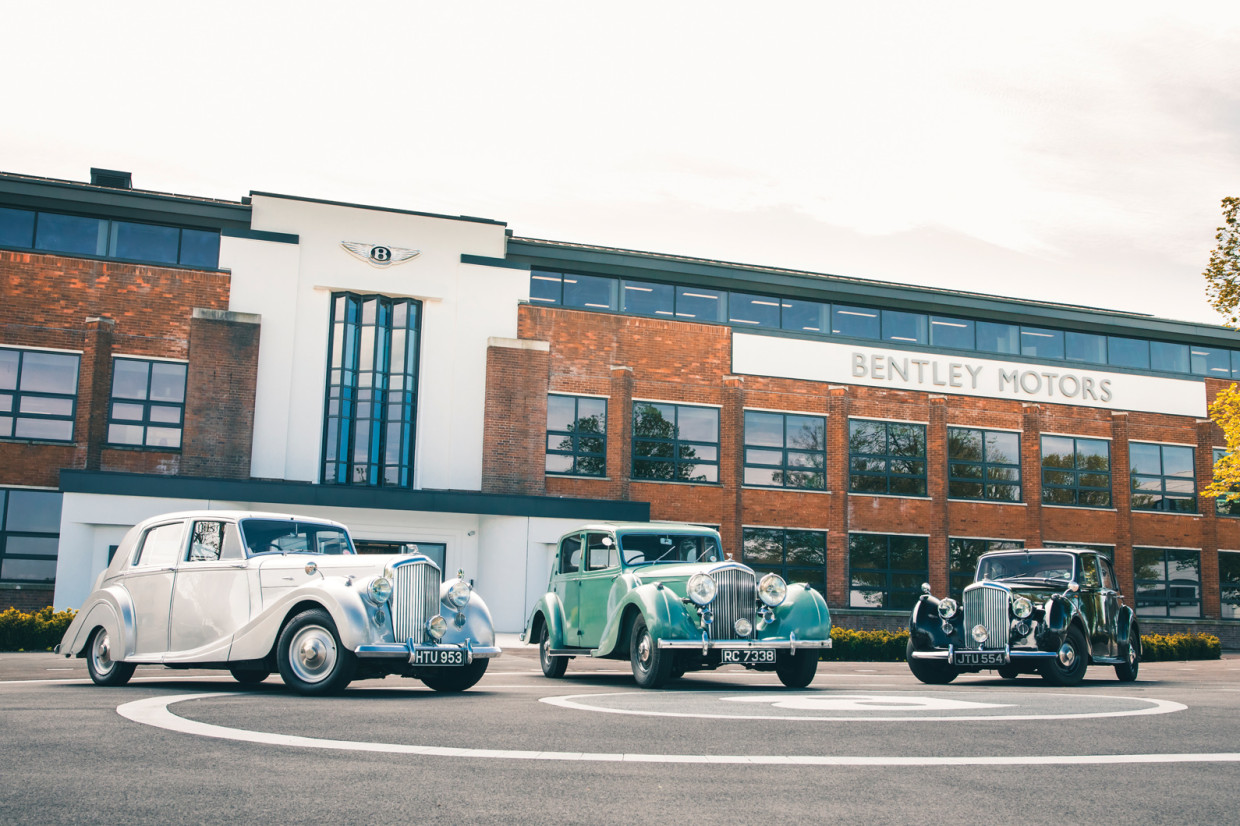
The year 2026 is an important one for Bentley.
It marks the 80th anniversary of the start of car production at Crewe and the launch of the marque’s first post-war car, the MkVI.
Its arrival in 1946 was a pivotal moment for the marque. Rolls-Royce had owned Bentley since 1931, having beaten Napier’s bid for its acquisition in the rocky aftermath of the Wall Street Crash.
The Great Depression threatened the end for the Cricklewood-based company, which was left hanging with its vast – if well regarded – 8 Litre and the underdeveloped 4 Litre.
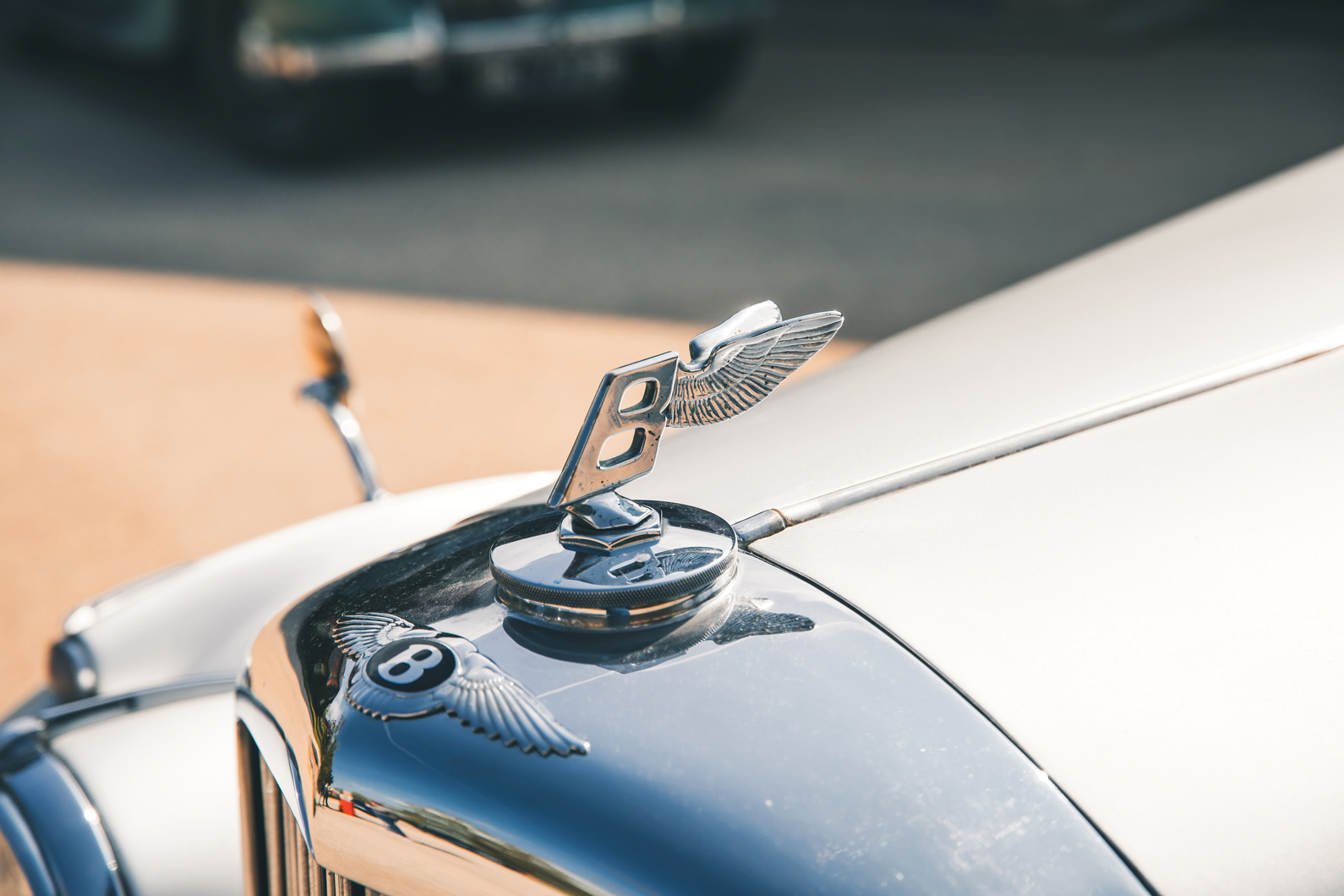
Bentley’s sloping Flying ‘B’ was fitted to early MkVIs
There was initial uncertainty at Derby about how best to use Bentley, other than removing from the market the 8 Litre that was a direct rival to Rolls-Royce’s Phantom II Continental.
The marque was eventually resurrected via the ‘Bensport’ project – the 3½-litre Derby Bentley produced from 1933 was beautifully resolved, being christened ‘The Silent Sports Car’.
It was well received and successfully developed into the 4¼-litre as a third model line, sufficiently separate from Rolls-Royce’s ‘large horsepower’ (Phantom II and Phantom III) and ‘small horsepower’ (20/25 and 25/30) ranges.
By 1937, however, the limitations of these three cars, each bearing witness to Sir Henry Royce’s very firmly held views on car design, were beginning to become apparent.
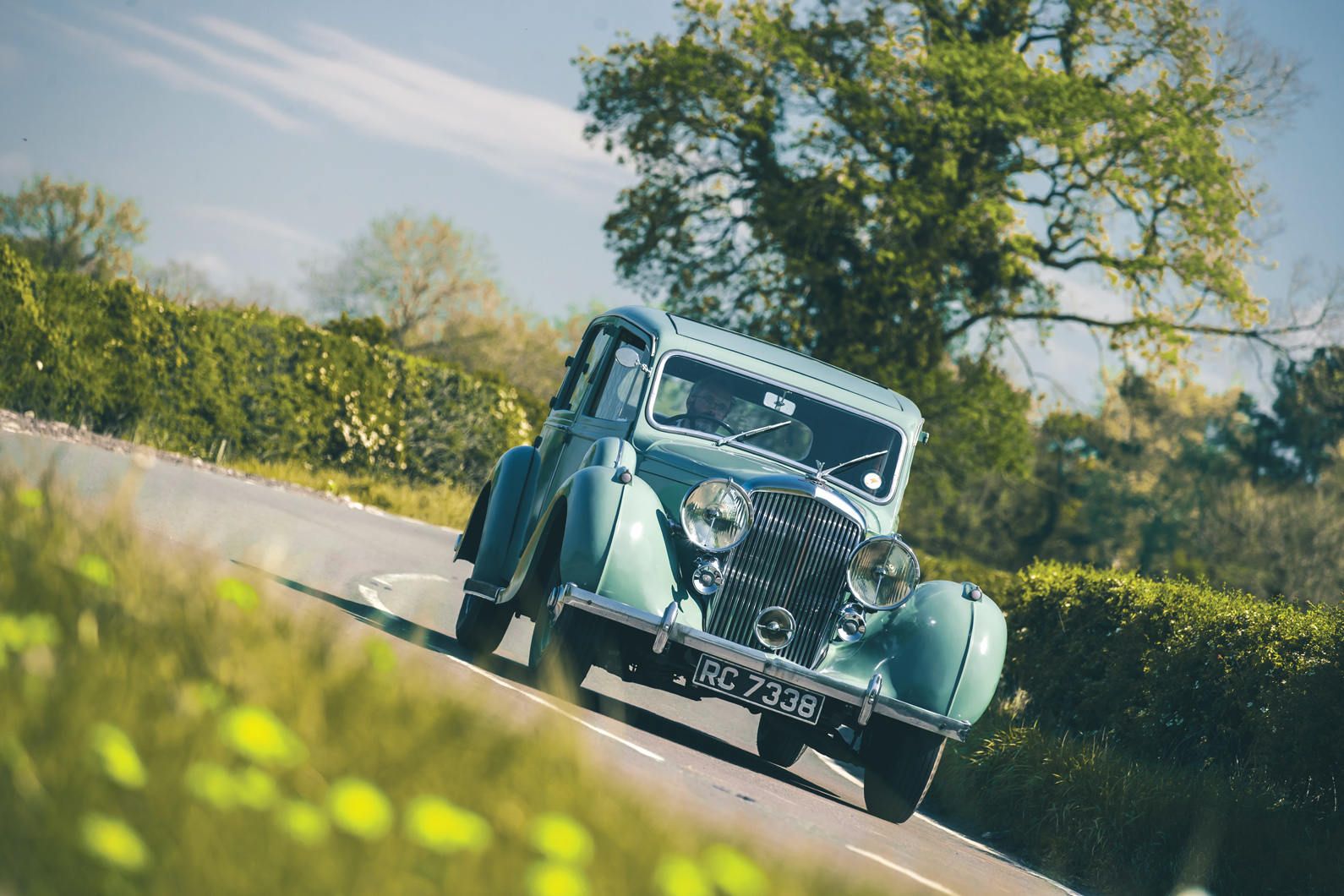
The Park Ward-bodied prototype Bentley MkVI, chassis 3-B-50, was completed in 1939, and its large, separate headlamps are of its time
Europe’s development of autobahnen, autostrade and Routes Nationale allowed for continuous high-speed touring, putting stresses on engines and tyres that were quite unknown in the UK.
New innovations appearing on much smaller but still high-quality cars, from the likes of Alvis, Lancia and BMW, were highlighting the rather traditional chassis set-ups being offered on most of the Rolls-Royce and Bentley ranges.
It was understood that a radical change was needed, and developments were initiated at the factory that year, but all work on cars stopped abruptly in 1939 as the world descended into war for the second time in a generation.
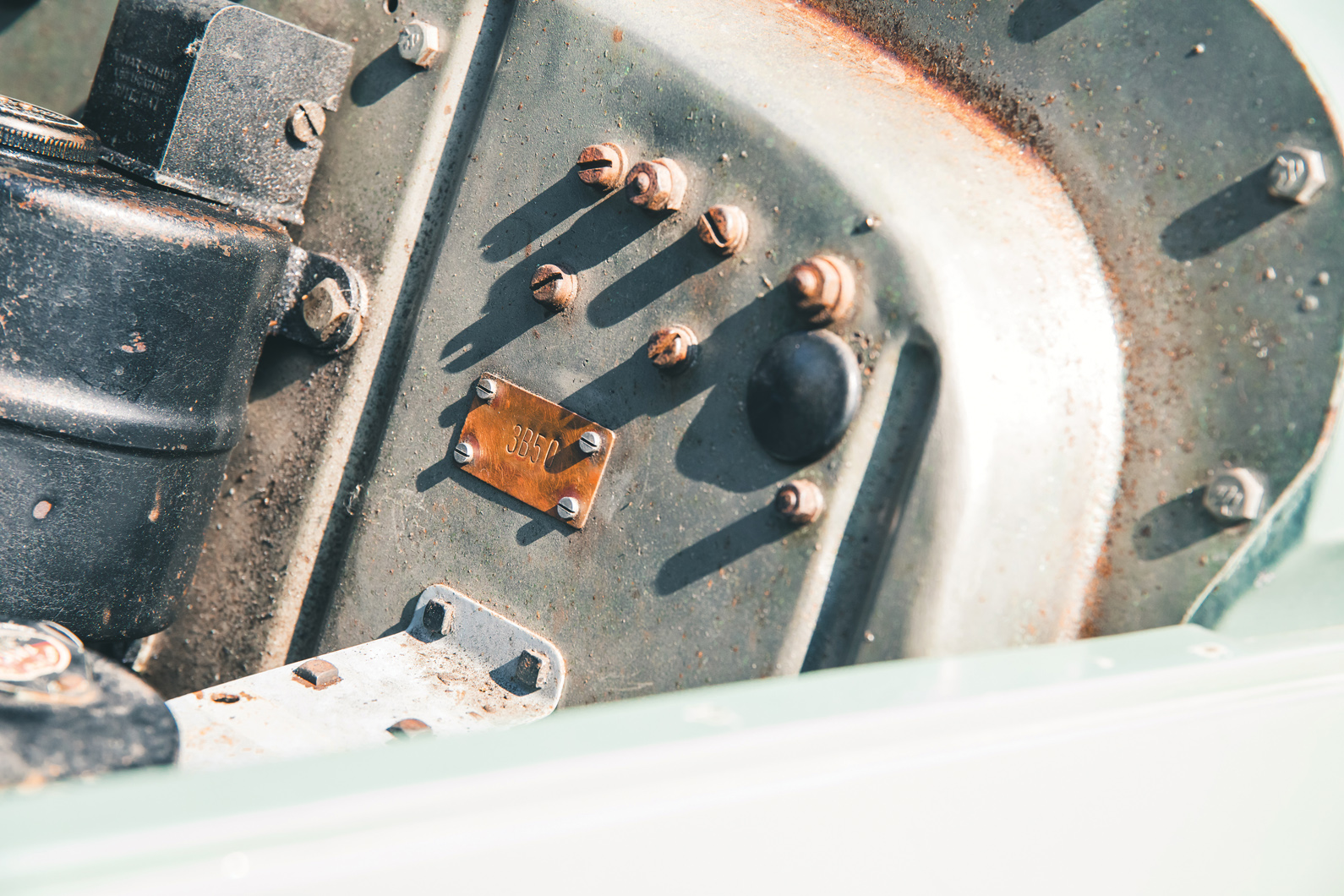
This Bentley MkVI has no chassis plate. Instead, a small brass plaque denotes its status as one of four original prototypes
Derby announced to the world the planned resumption of car production only three days after VE Day, in May 1945, and at that time there were many conflicting factors in play.
Experience following WW1 indicated that with the coming of peace there would be significant pent-up demand for luxury goods, including motor cars, and it would drive a short-term boom in sales.
Conversely, much of Europe lay shattered, fuel rationing was still in place and raw materials, such as steel and aluminium, had been consumed by the war.
There were also powerful social and political changes taking place.
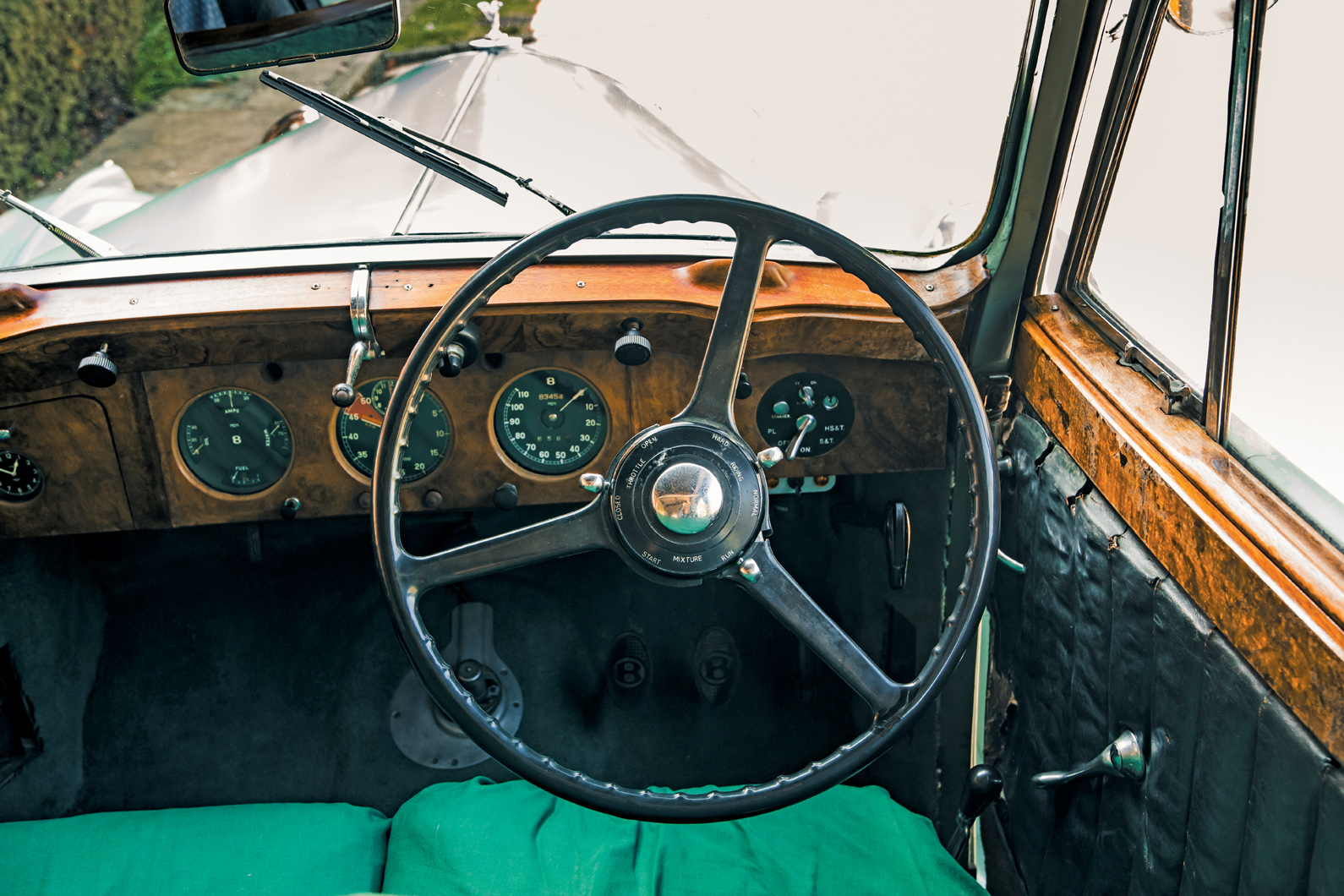
The Bentley MkVI prototype’s large steering wheel and heavily patinated leather
In the UK, Winston Churchill, the heroic wartime Prime Minister, had been swept from office by the election of Clement Attlee in a landslide victory in July 1945.
Social reform and a drive to rebuild the country were at odds with extravagant displays of wealth such as the buying of luxury cars.
Additionally, many of Bentley’s traditional coachbuilding partners, having been pressed into wartime production and shorn of much of their original skilled labour, were not in a position to build and trim bodies for new cars at anywhere near the level seen before.
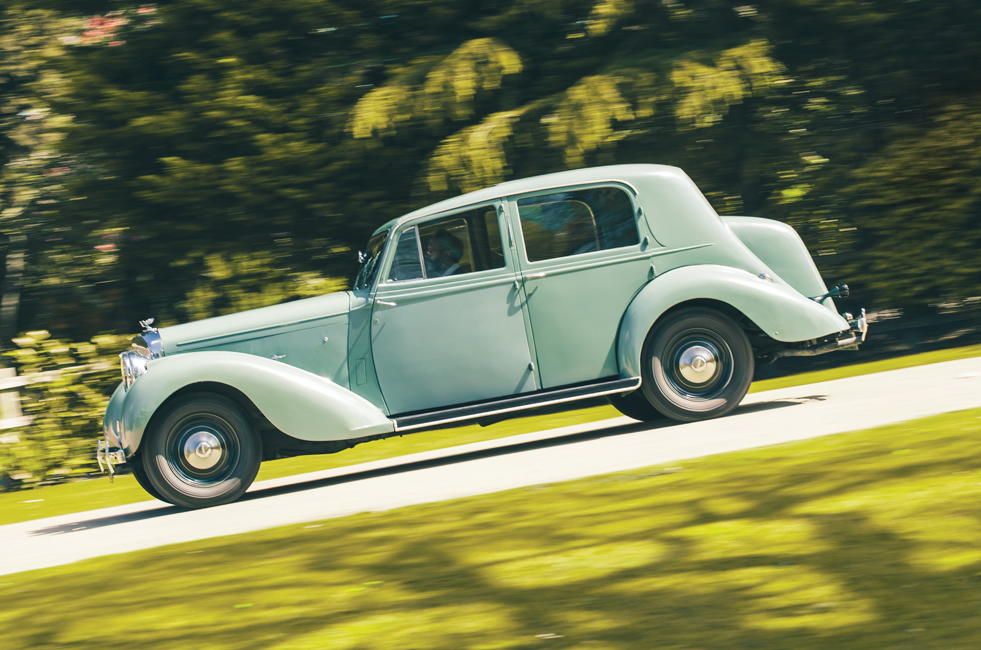
This surviving Bentley MkVI concept shows the pre-war front end married to a four-light body style that would inspire the Standard Steel saloon
To find the origins of the MkVI, we have to go back to Derby in 1937.
Ernest Hives, newly installed as the general works manager of Rolls-Royce, faced several challenges – a key one being the lack of profitability of the car division, with a sprawling range of Rolls-Royce and Bentley models in production.
From the V12-engined Phantom III – Royce’s final masterpiece, which was proving expensive to manufacture – and the small-horsepower range of the 25/30 and latterly the Wraith, to the 4¼-litre Derby Bentley, Hives had a complex model line-up that shared very few common components.
For a production volume of around 1500 cars per year, this was not sustainable.
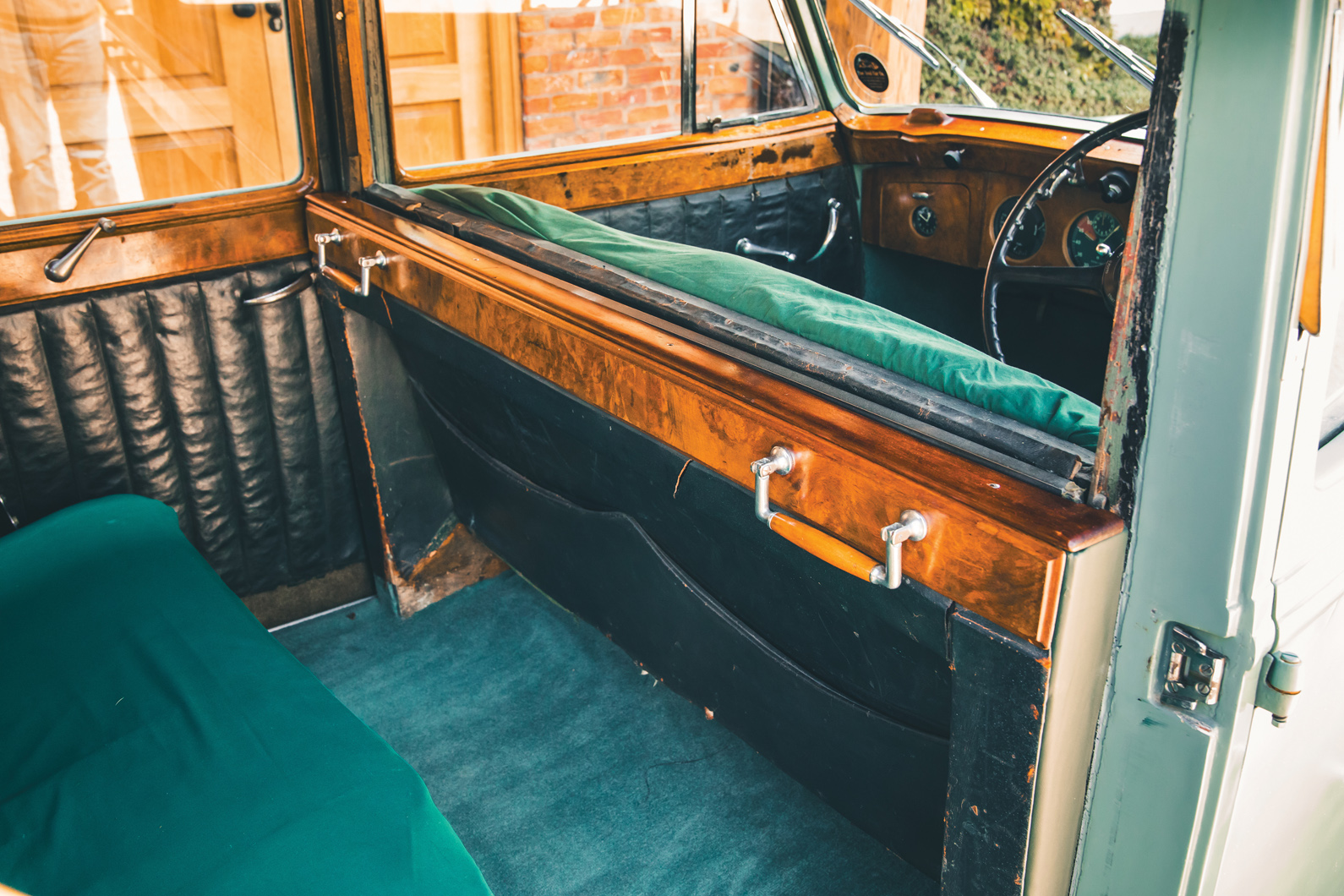
This Bentley prototype’s remarkably original interior set the template for the MkVI
Hives and his team could see that a different approach was needed.
Robert Harvey-Bailey (head of the chassis division), William Arthur Robotham (head of experimental) and Hives conceived what they called the ‘Rationalised Range’: a line of chassis scalable for different wheelbase options that featured a high commonality of parts, and which were all powered by a new range of B-series engines with four, six and eight cylinders. These cars would be developed from the outset as being configurable as either a Rolls-Royce or a Bentley, depending on the engine and chassis combination.
This was a complete reset, and it would be the first time in the company’s history that such a strategic decision had been made without input from Sir Henry Royce, who had died in 1933.
It was as momentous as the change to the single-model policy of the 40/50hp Silver Ghost in 1908.
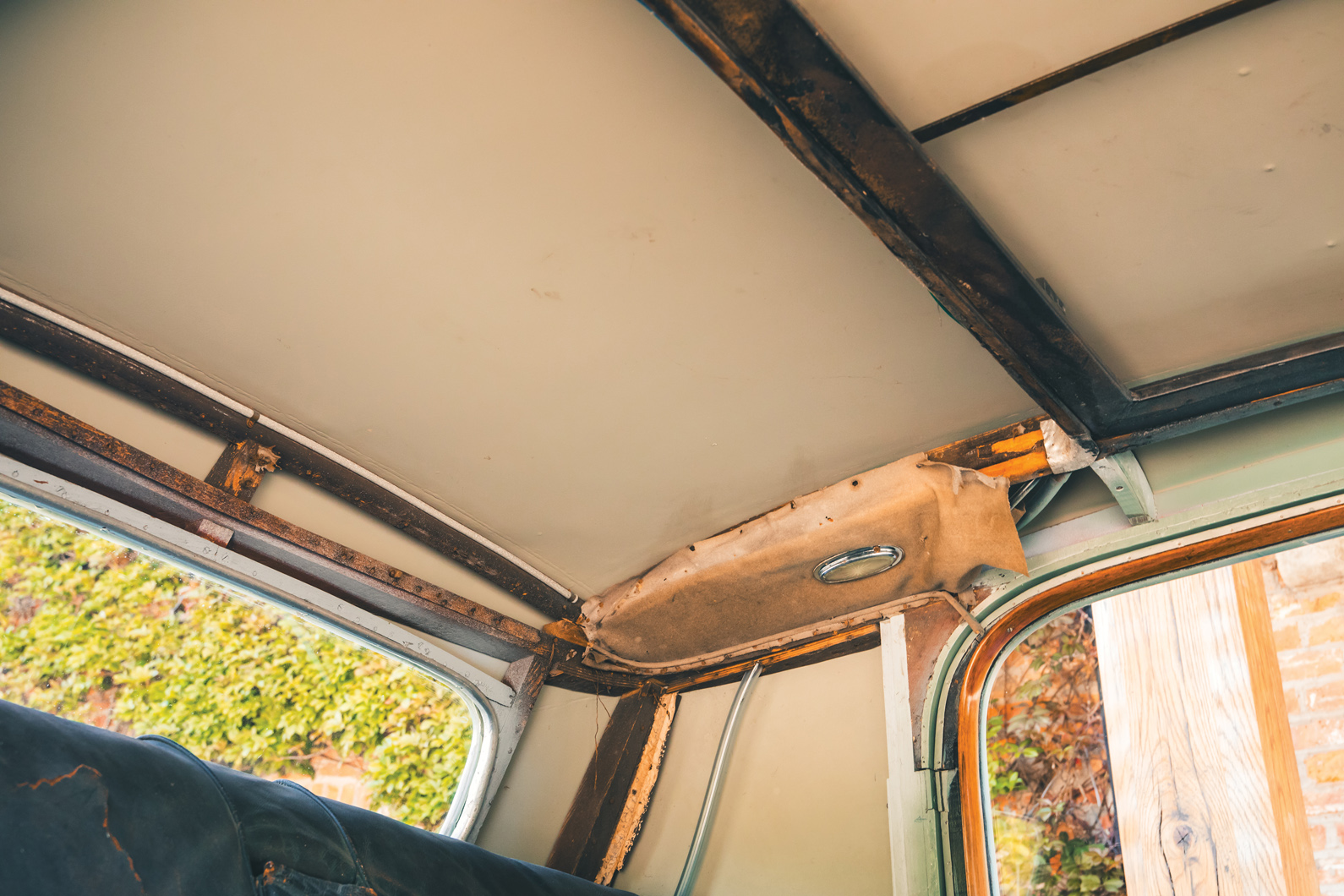
The Bentley MkVI prototype’s exposed ash frame
Giving the whole enterprise the name ‘Project Phoenix’ provides an insight into how Hives, Harvey-Bailey and Robotham viewed the magnitude of what was being proposed.
To prove the Rationalised Range concept, four prototypes were built: three six-cylinder cars and one eight-cylinder version.
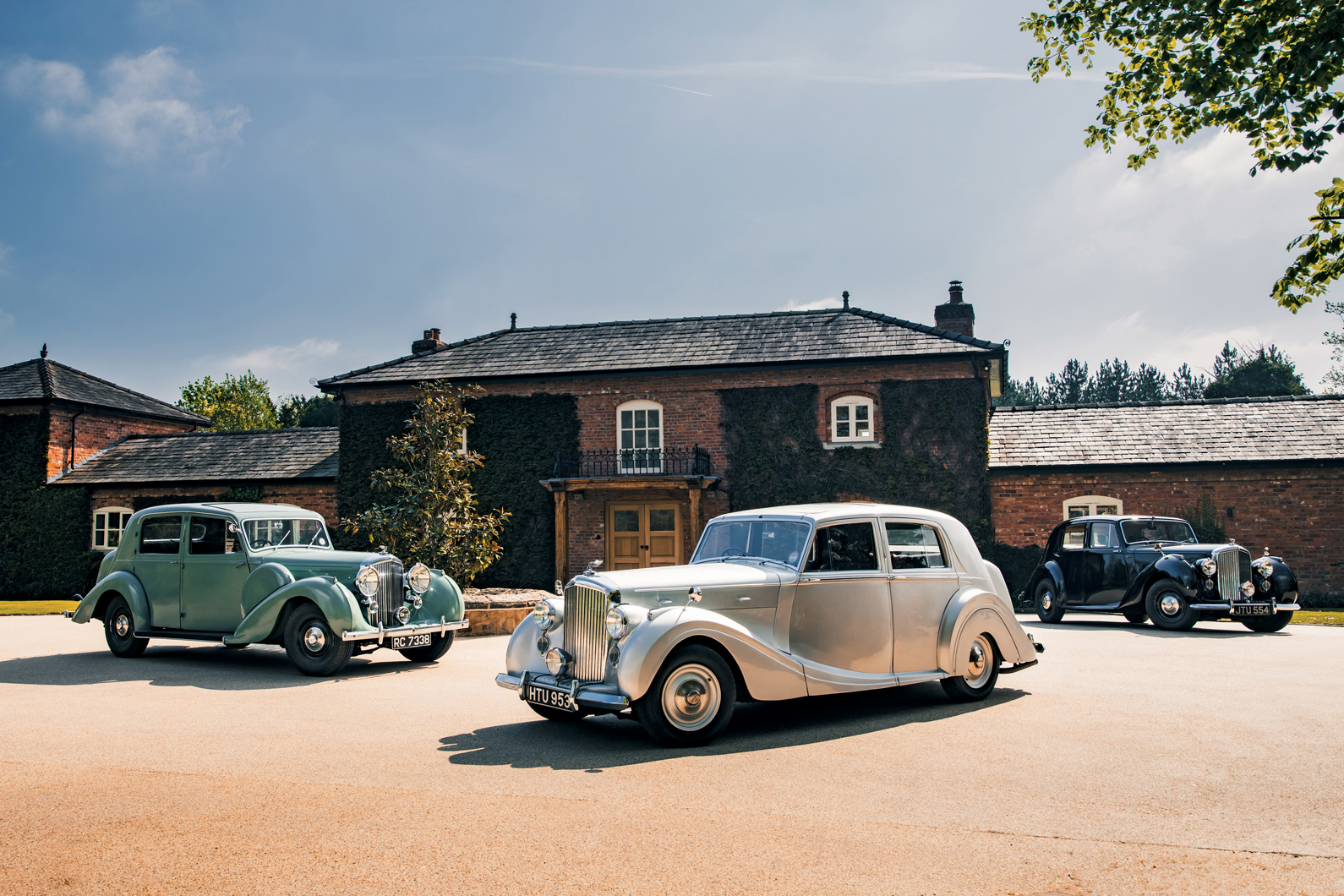
Chassis number 3-B-50, the green car featured here, is the third of the six-cylinder prototypes and the only known survivor of the original quartet.
Once the experimental chassis had been completed, it was sent to the coachbuilder Park Ward in Willesden, North London, for fitment of a four-door, four-light saloon body and was accepted for testing in May 1939.
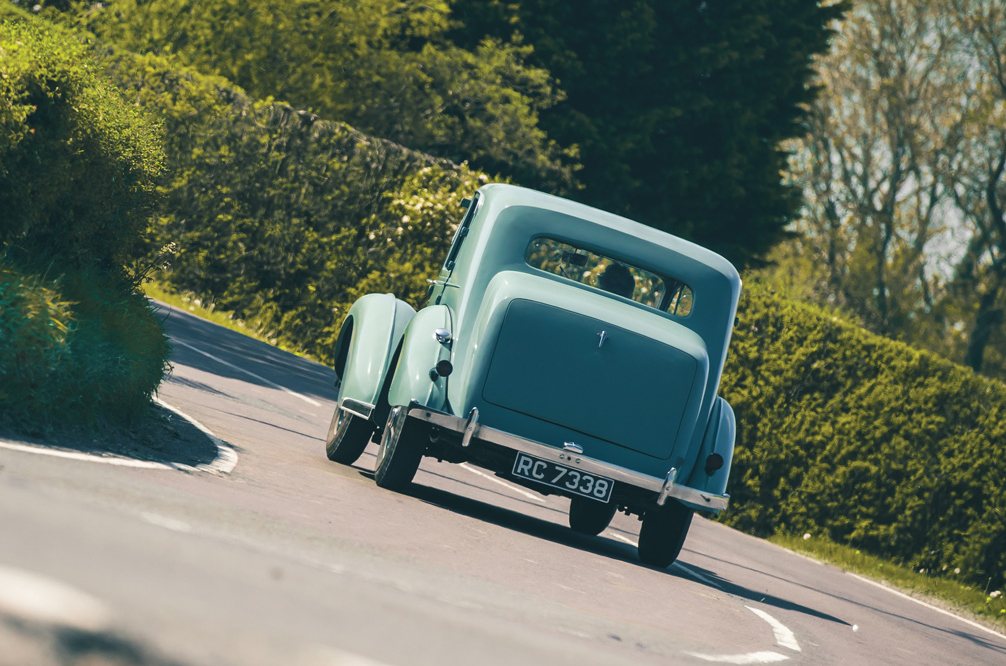
The Bentley MkVI’s 10ft 10in wheelbase provides limousine-like ride quality
It was developed as a collaboration between Rolls-Royce and Park Ward, combining the inputs of in-house designer Ivan Evernden with William Park and his coachbuilding team.
This unique survivor is in effect the concept car for what became the MkVI, and fortunately retains a prototype six-cylinder B60 engine, hydraulically actuated front brakes and a deep channel-section cruciform chassis – all of which would appear on the production car in 1946.
Like the other prototypes, it was tested extensively with alternative exhaust systems, revisions to its carburation – including an early form of automatic choke for improved cold starting – and numerous replacement engines.
The bulkhead of 3-B-50 carries the scars of this experimental work, with many blanked-off holes and redundant fittings alongside the simple brass plaque identifying the car – as a prototype, it lacks a formal chassis plate.
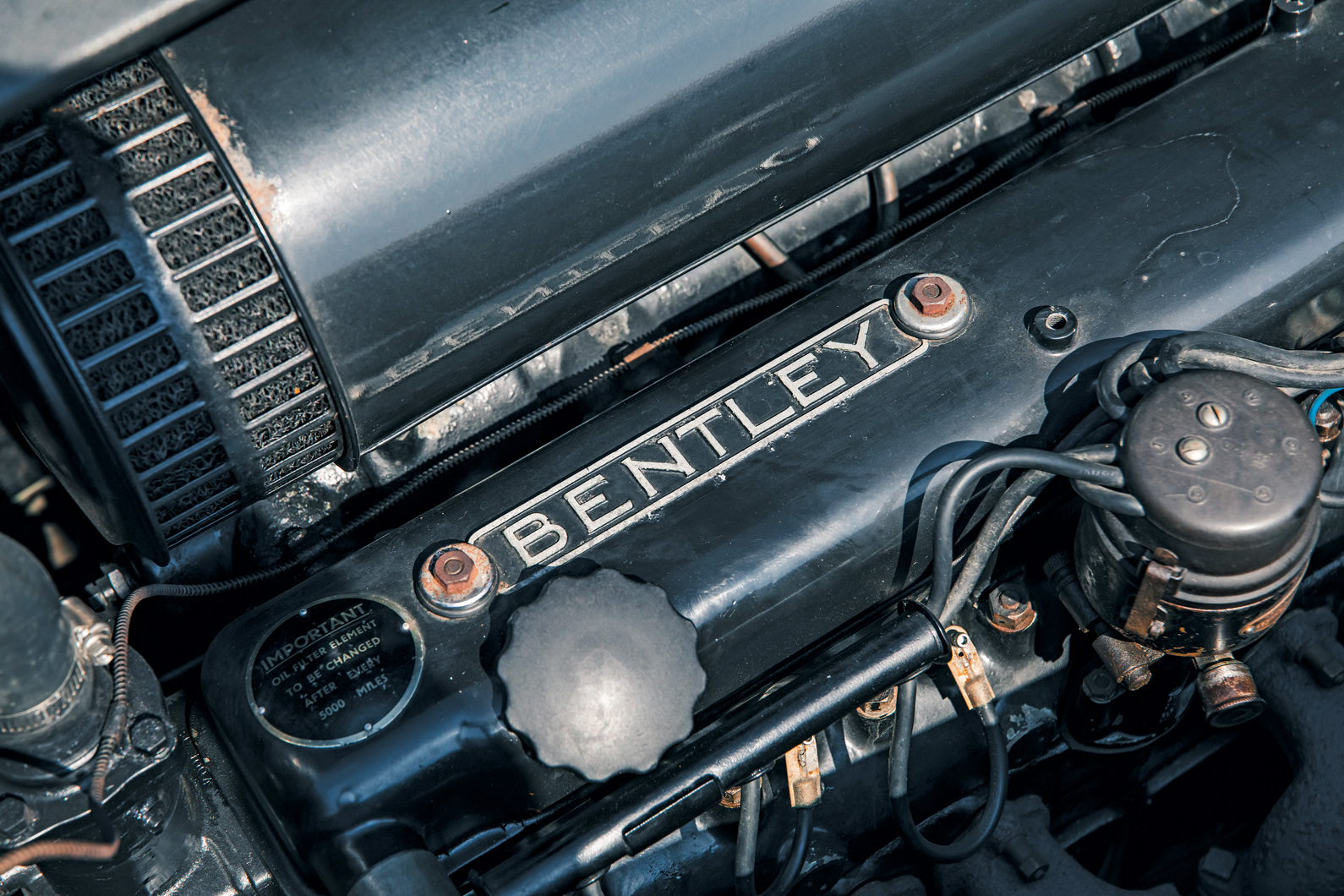
The Bentley MkVI prototype’s ‘six’ evolved into the B60
It is also the stylistic template for the Bentley MkVI Standard Steel saloon. If you view the car from the front, it appears very much of a late-1930s fashion, but from the windscreen back it is nearly identical to the MkVI.
The archives record how the drawing for 3-B-50’s body – number PD303, signed by Evernden on 8 November 1938 – became the point of visual reference for the development of the post-war cars.
Stylists Evernden and JP Blatchley would return to this particular design again and again as they worked to iterate towards a final post-war production car.
Blatchley would later claim that he did little to shape the overall appearance of the MkVI Standard Steel saloon, beyond burying the door hinges and laying out the interior, but that rather underplays the amount of important details that are evident when you place the two cars side by side.
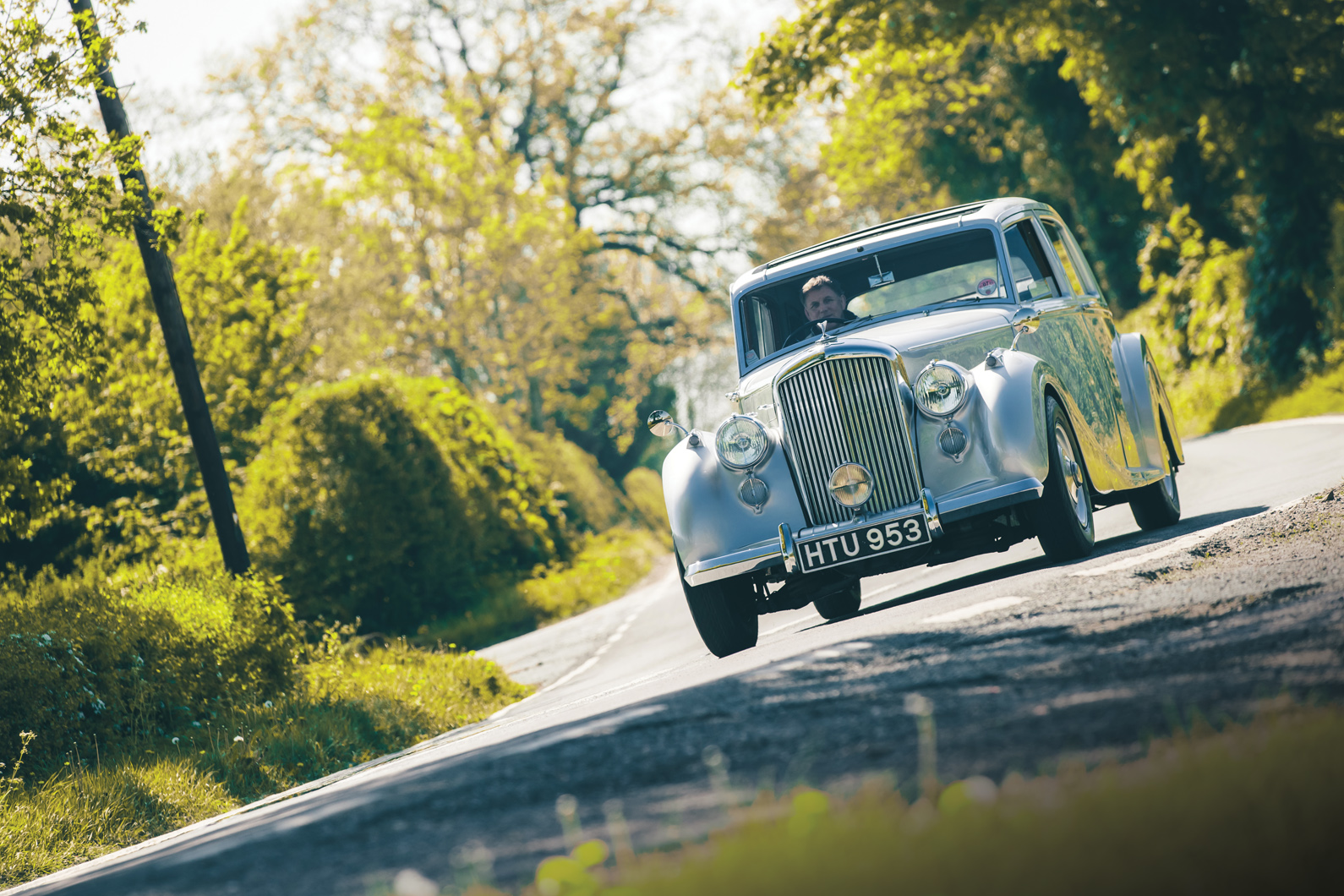
This, the first production Bentley MkVI, has refined front-end styling that’s a clear evolution from the late-1930s concept
While the MkVI is notable for being the first model from the company launched with standardised bodywork, customers were still able to purchase a rolling chassis and fit coachwork of their choice.
Indeed, such was the challenge of converting the production facilities at Crewe from aero-engine to car production, many of the earliest chassis were sent to external coachbuilders, allowing time for the in-house team to develop the new trim and electrical system, build a paintshop and bring it all together in a final assembly line.
Many of these processes were grouped in the new ‘Woodshop’ – a facility that remains in operation at Pyms Lane to this day.
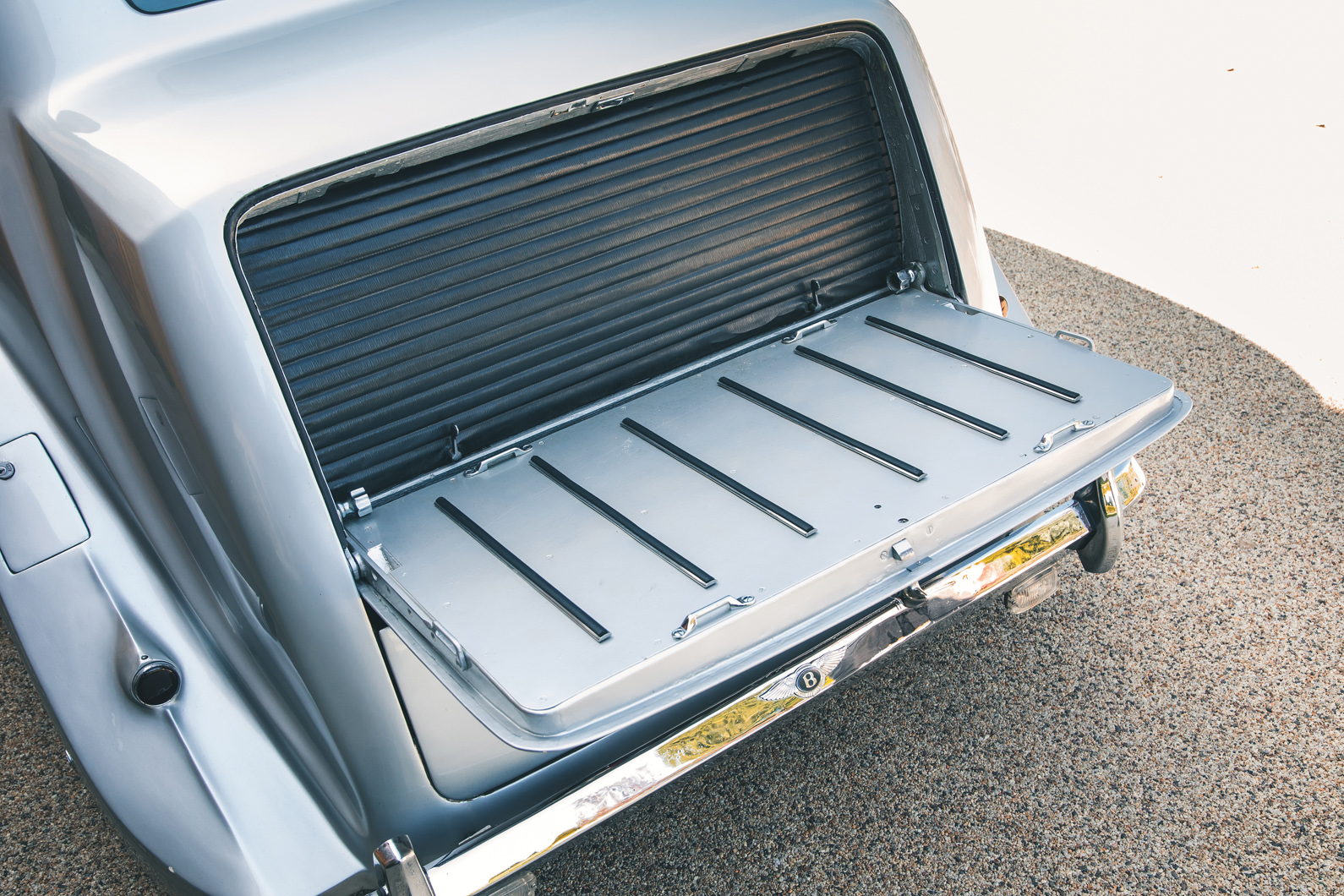
This Bentley MkVI has a dust blind which seals the boot when carrying a large trunk
The silver car featured here is the first production MkVI completed (chassis number B4AK), and is an HJ Mulliner-bodied four-door Sports Saloon in the razor-edge style.
It is the second production chassis by sequence (B2AK was the first), but B4AK was actually the third MkVI chassis ever built (after prototypes 1-B-VI and 2-B-VI), and HJ Mulliner refers to the car as a prototype in its records.
It is so early that Mulliner called it a ‘Cresta’ in internal correspondence – a legacy name from the Rationalised Range plan.
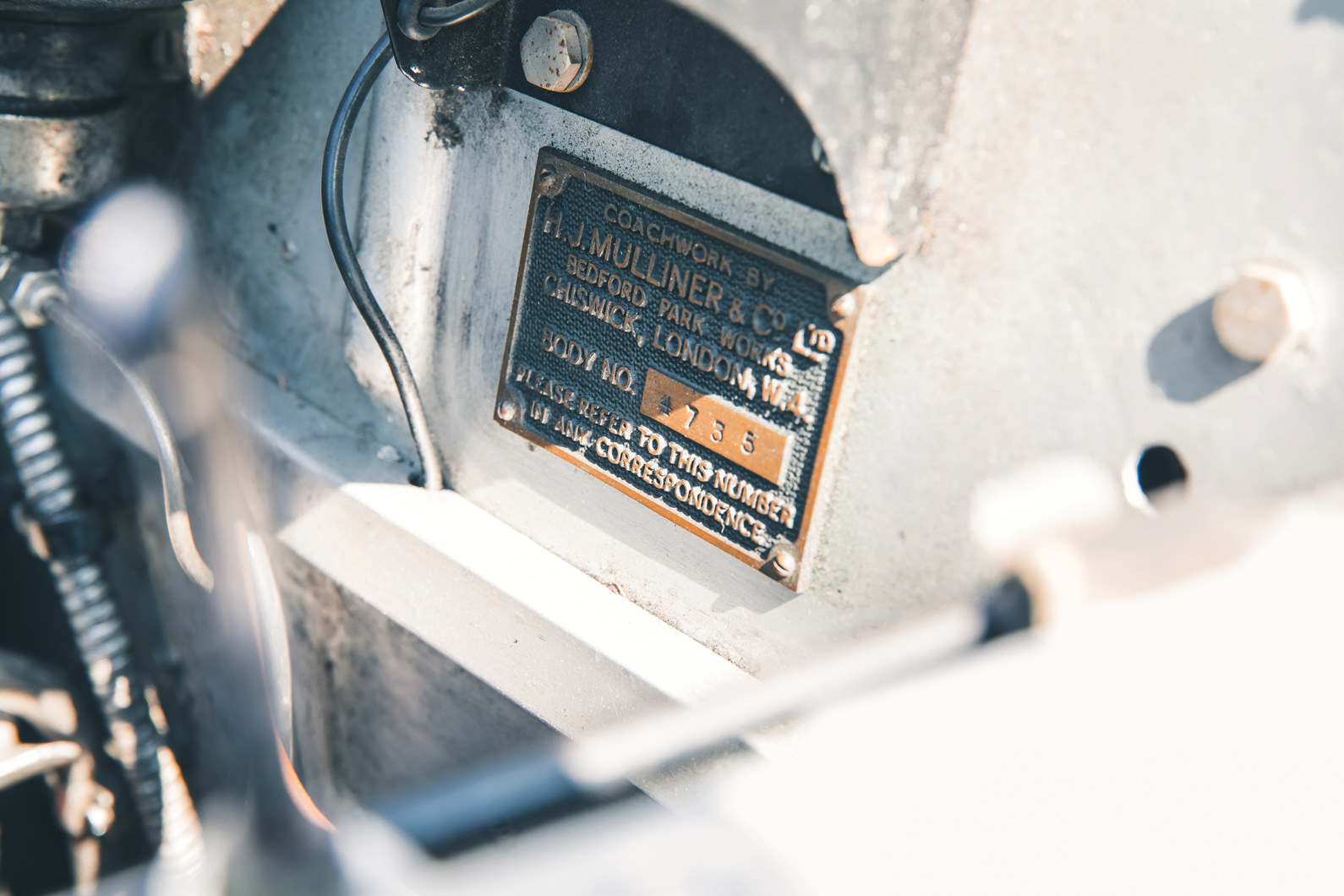
B4AK’s chassis was completed in February 1946 then dispatched to HJ Mulliner in Chiswick, West London, for fitment of a body (no 4735).
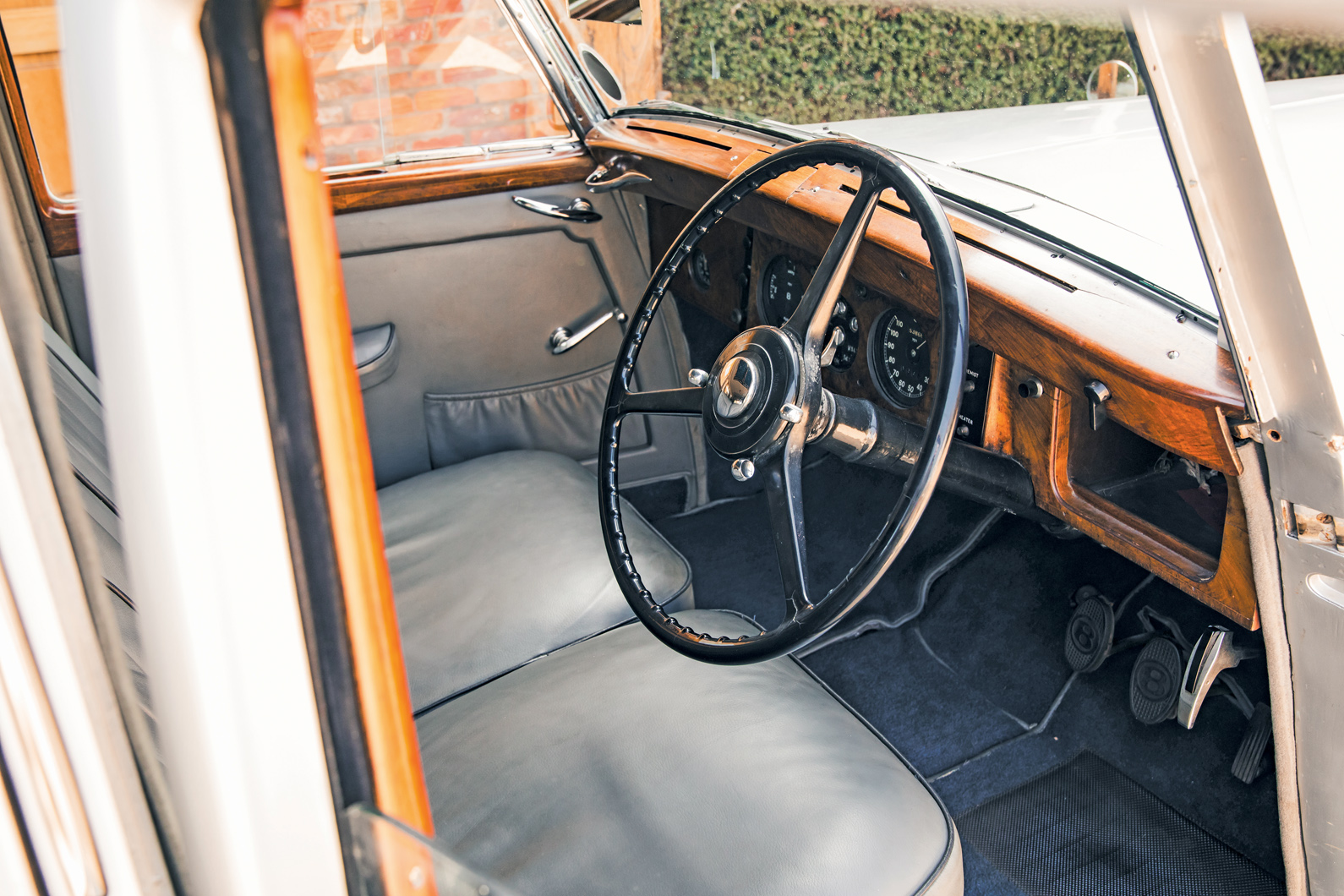
The Bentley MkVI’s luxuriously appointed driver’s ‘office’, as befits a showroom car
This was one of two cars used as Bentley showroom display models at 14-15 Conduit Street in Mayfair, from September 1946, before being sold to the local dealer Jack Olding & Co Ltd in April 1948.
It then passed through a series of other corporate owners, possibly as a director’s company car.
It disappeared from the records in 1958, before re-emerging in the early 2000s having been painstakingly rebuilt by master clockmaker Selwyn Crabtree.
On close examination, two things stand out: first is the quality of the restoration, which still looks superb some 20 years later; second, how it differs in all manner of details compared with later production cars – not least that it is fitted with an elevated level of equipment, as expected of a promotional show car.
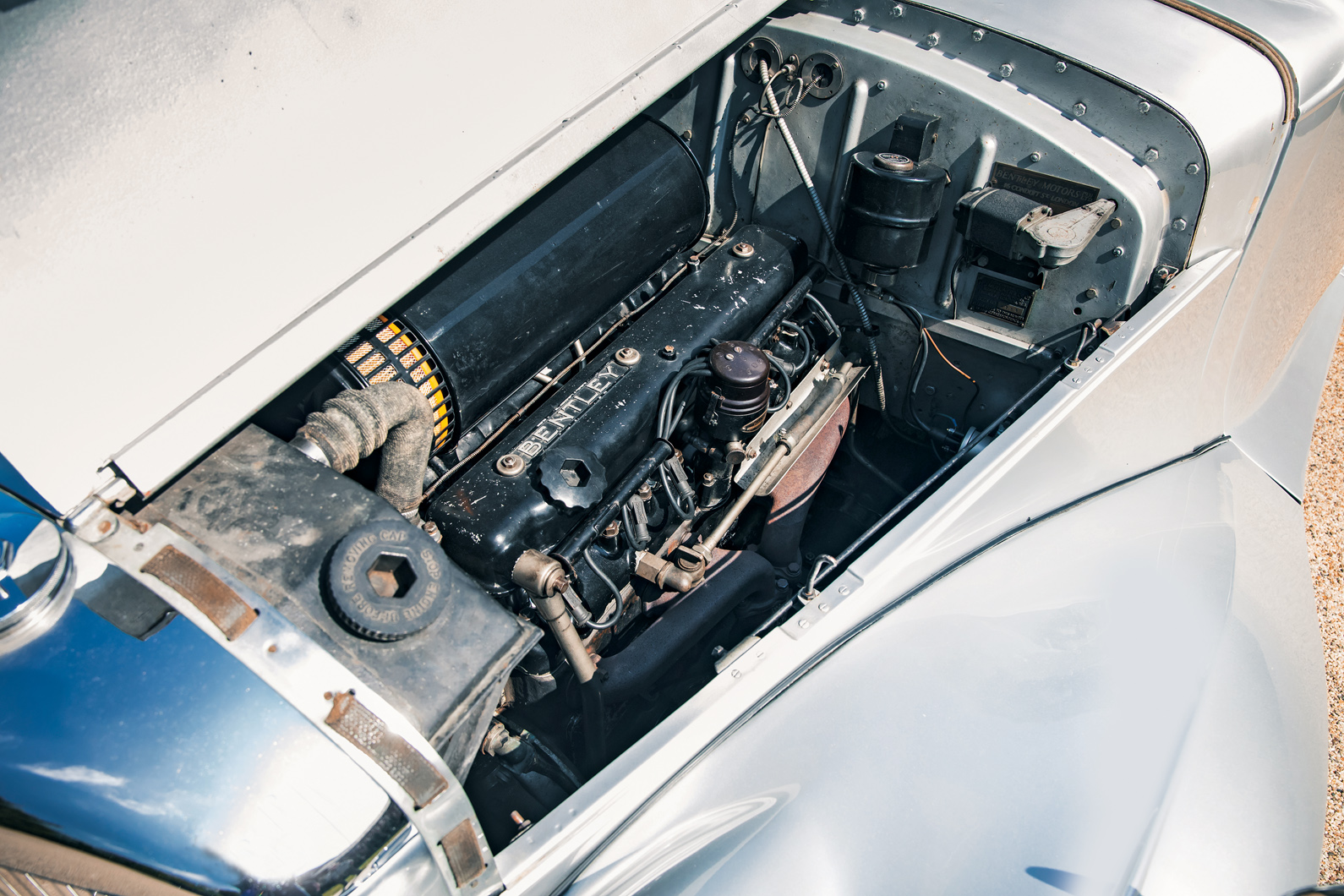
The Bentley MkVI’s low-mounted HT coil was later moved to avoid heat-soak
Viewing B4AK today gives an insight into how the first MkVI would have appeared.
The chassis of Bentley’s first MkVI experimental car – 1-B-VI – was completed by November 1945 and was then sent across to HJ Mulliner for a coachbuilt body.
In B4AK’s history file there is an instruction to make the body match that of 1-B-VI – so when B4AK is viewed alongside 3-B-50, we have not only the MkVI concept and the stylistic origin of the Standard Steel saloon, but also the first completed MkVI production car and a carbon copy of the very first MkVI prototype. Not bad in just two cars!
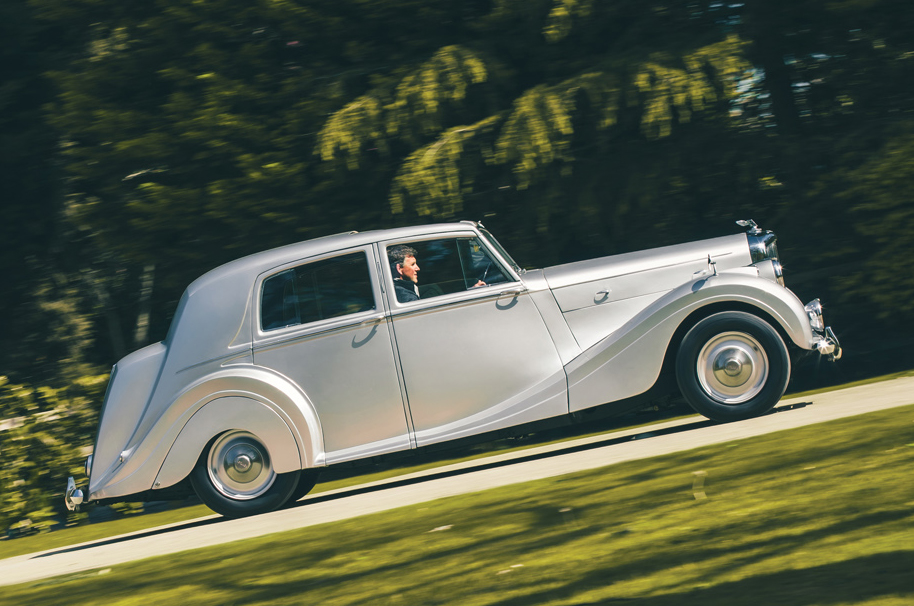
The first production Bentley MkVI’s graceful, semi-razor-edge body by HJ Mulliner took pre-war themes and updated them for the post-war world
The last of our trio, the black 1947 Standard Steel saloon, chassis B119BG, is perhaps a little reserved in comparison with the rather glitzy HJ Mulliner car.
Delivered in 1947 to its first owner, Sir Alfred Hammond Aykroyd, and finished in black with beige leather, B119BG is as discreet as B4AK is striking.
It is a textbook early example of the first Standard Steel saloon, with twin front-seat armrests and plain, rather than pleated, seat squabs.
The Standard Steel saloon body is stylistically an evolution of the 3-B-50 concept, mounted on a 10in-shorter chassis, but its construction was fundamentally different.
Gone was the pre-war ash frame wrapped in sheet-aluminium skins, replaced by an all-steel body and closures.
B4AK, the first completed production Bentley MkVI, wears an HJ Mulliner Sports Saloon body built in early 1946
The move from skilled, low-volume coachbuilding to high-investment, tooled bodies made by the Pressed Steel Company Ltd of Oxford marked a fundamental shift in company thinking.
When Robotham told Hives the tooling bill would be £250,000 for the new Standard Steel saloon, but the production of each body would cost approximately half that of a coachbuilt item from Park Ward, eyebrows were raised.
Rolls-Royce chairman Sir Arthur Sidgreaves made it clear that the board would not be signing off any large investment without first seeing a mock-up of the final design.
A huge effort was made to build a wooden styling model, with the team pulling a number of all-nighters to finish it in time to get approval and keep Rolls-Royce’s all-important place in the queue with Pressed Steel.
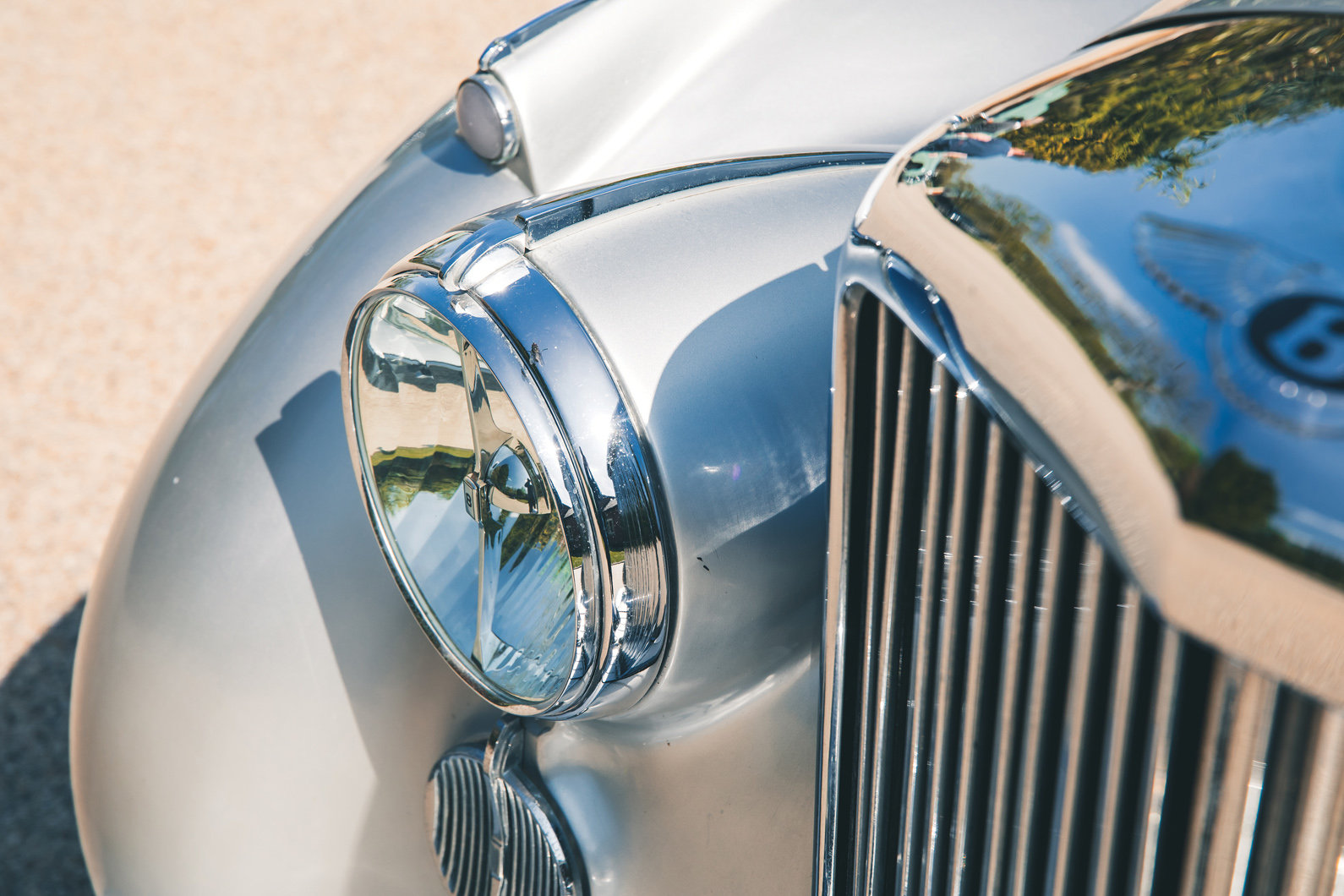
The Bentley MkVI is decorated with rich chrome and fine detailing
The only real concerns were around the integration of the headlights into the wings, as previewed on the sensational pre-war 4¼-litre ‘Embiricos’ coupé and the MkV Corniche, but in aesthetic terms this was exactly the right decision because it made the design so much more contemporary.
Today, the giveaway to this change in approach is found by closing the doors: a MkVI Standard Steel saloon shuts with a metallic clang rather than the traditional clunk of an ash-framed, aluminium-skinned coachbuilt panel.
To gain a full impression of driving a MkVI, it is instructive to compare the pre-war origins of the 1939 MkVI concept (3-B-50) with the fully finished production car of 1947 (B119BG).
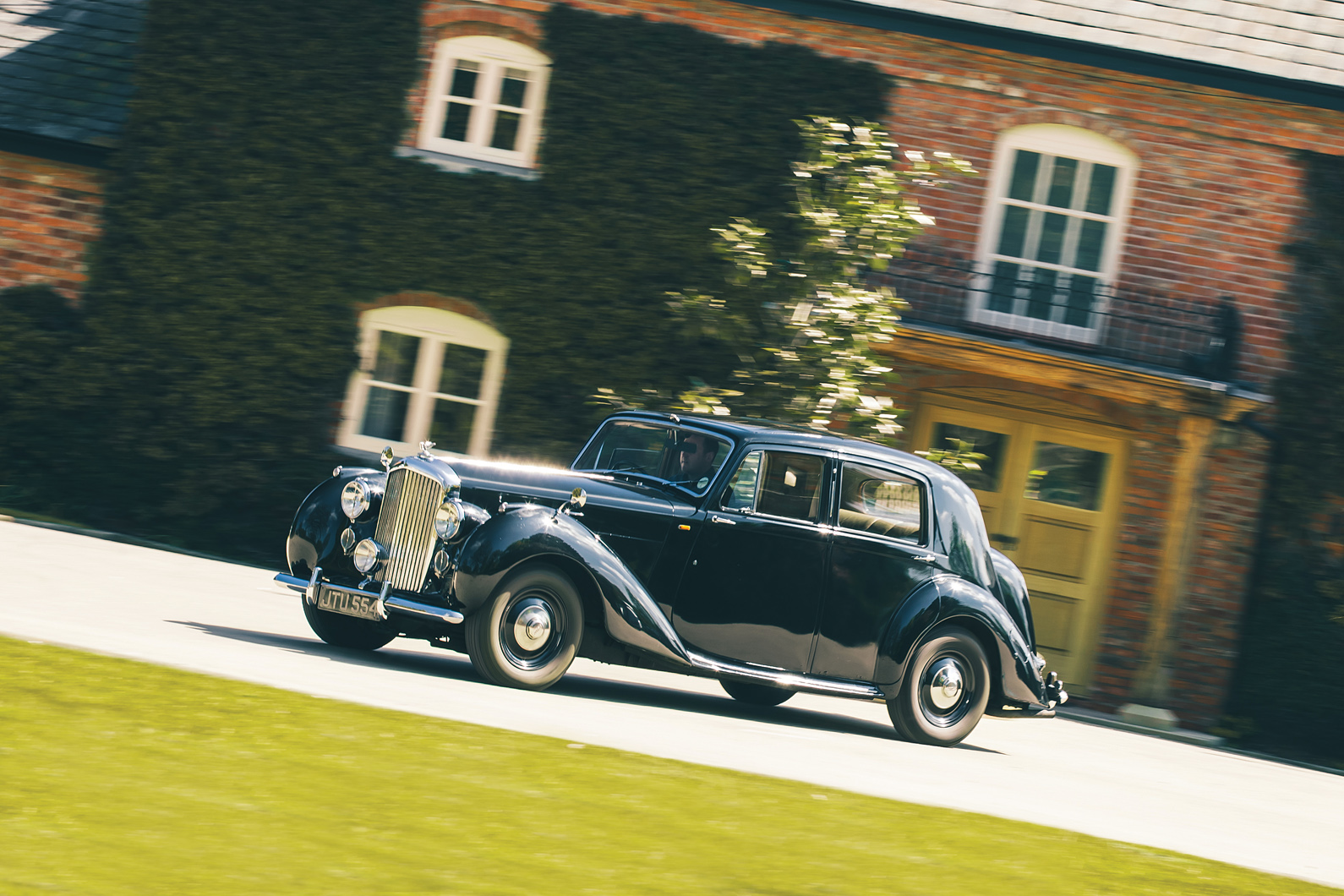
The Bentley MkVI – here in Standard Steel saloon guise – is a pleasure to drive, while the drum brakes inspire confidence for its age
From the driver’s chair, the dynastic link between the two is clear.
The low-speed torque and tractability of the B60 engine are a delight, making town and A-road driving a joy: it pulls cleanly from as low as 15mph in top gear.
This flexibility will comfortably take both cars to 60mph and beyond, so they can cope with motorway driving.
Some Bentley owners, being inveterate tinkerers, have uprated their own MkVIs with R-type Continental-spec rear axles and overdrives to make them even more long-legged, especially for use on lengthy pan-European runs.
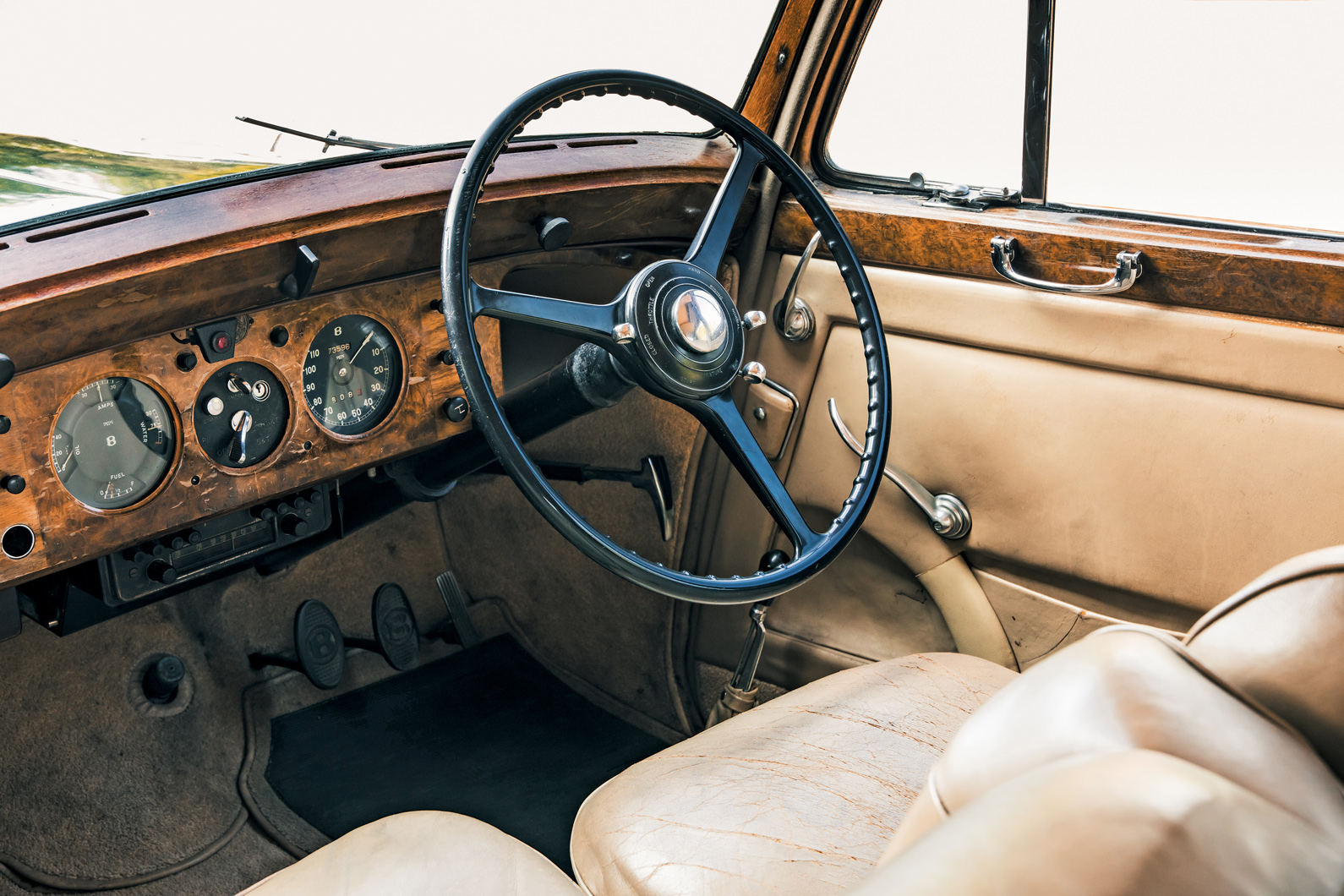
The Bentley MkVI’s steering is heavy at low speeds
Your right hand falls comfortably to the gearknob, but care must be taken when climbing aboard, to avoid the lever diving up your trouserleg.
Once the driver is in place, the ’box is very easy to use, with synchromesh on second, third and top, the smoothest changes coming from a slight pause as you move the lever between ratios and a healthy blip of the throttle to ease the downchanges.
The brakes inspire lots of confidence, with a mechanical servo aiding the hydraulically actuated front drums and cables pulling on the rear.
Mike Couper took a MkVI (B216DA) on the ’49 Rallye Monte-Carlo and said the brakes were: “The best ever – no fading, no grabbing when cold. They were only adjusted on our return to compete with the Paris taxis.”
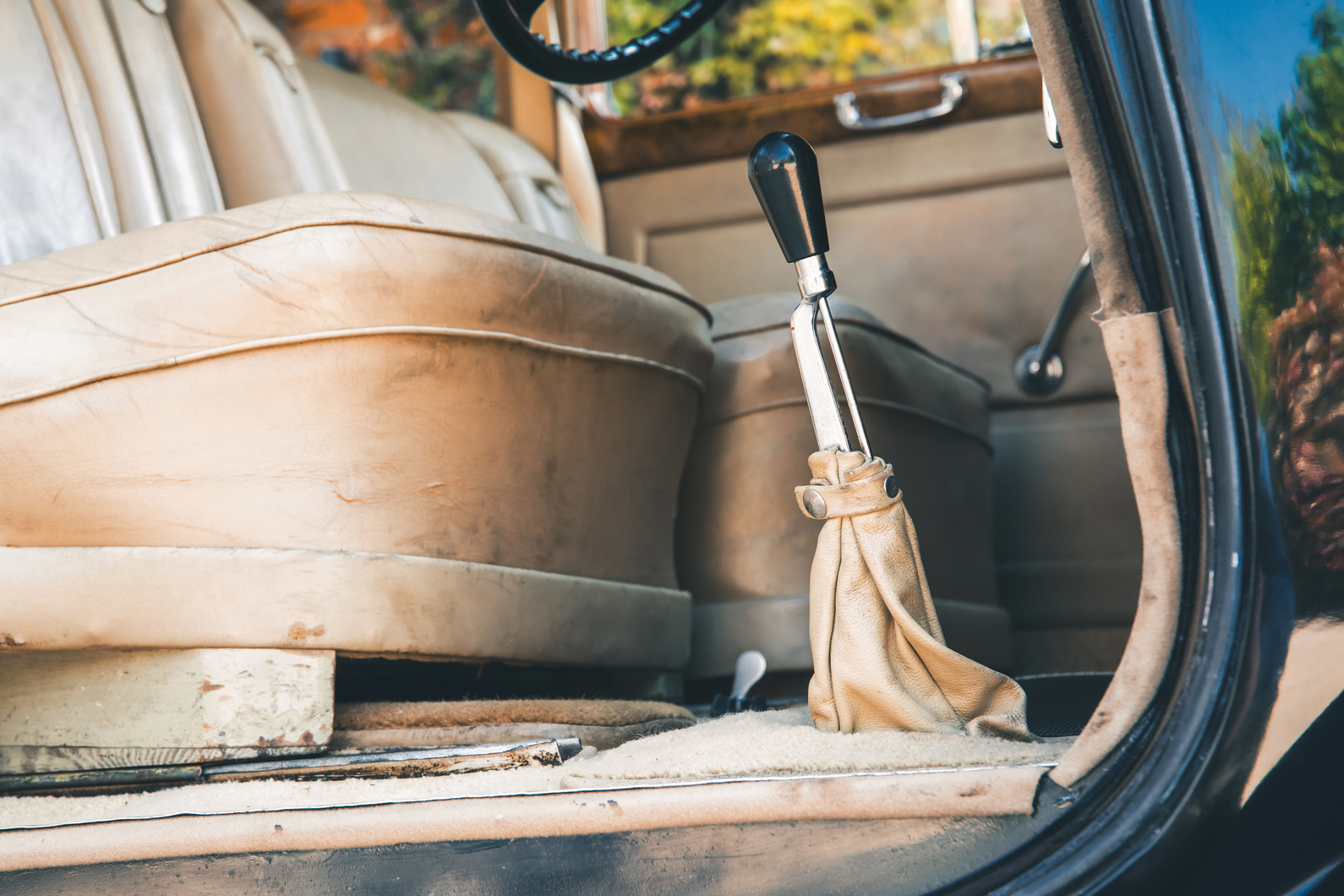
The Bentley MkVI’s gearlever must be avoided on entry
It is from a steering, ride and handling perspective that the two cars diverge the most.
Both do without power assistance, the action of the wheel being directed to the road wheels via a steering box and side-lever-arm arrangement.
While heavy at first, it lightens at higher speeds and gives progressive increases in load as you add greater steering angles.
However, it is the influence of their wheelbases that drives the differences in character. With its 10ft 10in wheelbase, 3-B-50 is very much the limousine and rides with serenity.
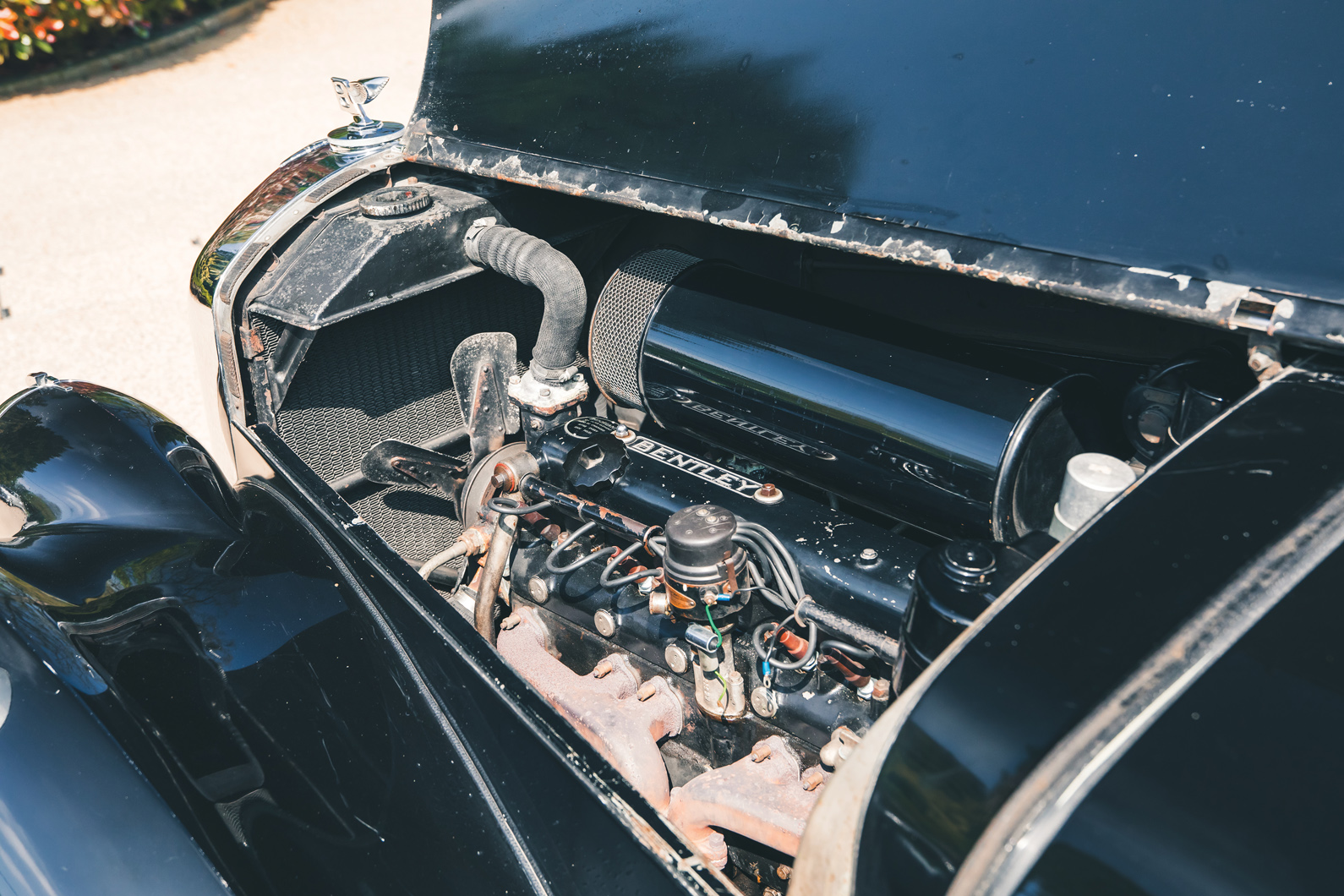
The Bentley MkVI’s B60 4257cc engine makes 146bhp
Shortened by 10in, the MkVI is a more wieldy motor car and feels as if it pivots around the driver when changing direction. So much so that you can’t help wondering how a MkVI would feel on the snow and ice of the Monte.
Couper gives us something of a clue, having recorded in his post-rally report: ‘The steering was first class, light and positive… Even on ice, if the car slid at all it was the back that broke away first, never the front.’
From a dynamic perspective, both cars respond best to a traditional approach: get the braking and gearchanging done in a straight line before the corner, roll off the brake pedal and turn in, allowing the car to settle, and then balance it on the throttle around the remainder of the turn to the exit.
Done this way, you can make real progress in a MkVI and easily keep up with modern traffic – you just have to remember that, even with some of the finest brakes of the time, everyone else can stop rather more quickly than you can.
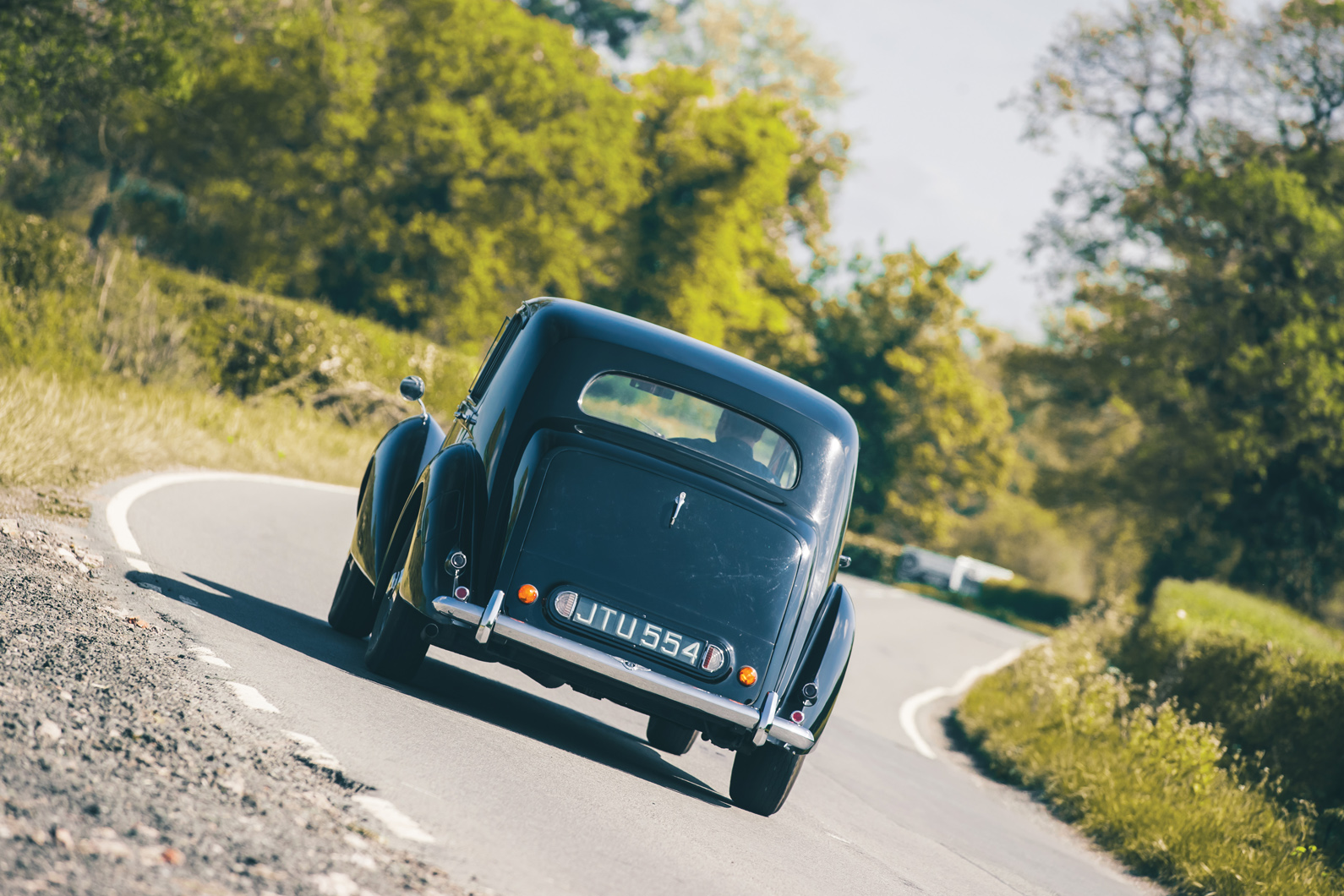
The production Bentley MkVI’s wheelbase was reduced by 10in from the prototype, aiding agility
The MkVI can rightfully take its place in history as one of Bentley’s great motor cars.
The product of rational thinking, while superbly engineered it remains an underappreciated model, having neither the noise and thunder of the Cricklewood era, nor the glamour of the later 1950s R-type Continental.
But I leave the final verdict to Andrew Wood, the ‘A’ of the renowned Rolls-Royce and Bentley specialist P&A Wood.
Andrew was asked in 2003 about his own cars – at the time he owned a Rolls-Royce Silver Ghost and a Bentley MkVI. He said: “They were the best two cars the company ever made.” So now you know.
Images: Jack Harrison
Thanks to: Stephen Cutts; Bentley Motors Ltd; H Horsfield & Son; The Real Car Co
Factfile
Bentley MkVI
- Sold/number built 1946-’52/5201
- Construction steel chassis, pressed-steel body
- Engine iron-block, alloy-head, inlet-over-exhaust 4257cc ‘six’ (4566cc from mid-1951), twin SU HD4 (later H6) carburettors
- Max power 146bhp @ 4000rpm (later 156bhp)
- Max torque n/a
- Transmission four-speed, three-synchro manual or Hydramatic four-speed automatic with fluid coupling, RWD
- Suspension: front independent, by double wishbones, coil springs rear live axle, semi-elliptic leaf springs; lever-arm dampers f/r
- Steering cam and roller
- Brakes drums, hydraulic at front, mechanical servo
- Length 15ft 11½in (4864mm)
- Width 5ft 9in (1753mm)
- Height 5ft 4½in (1638mm)
- Wheelbase 10ft (3048mm)
- Weight 3954lb (1793kg)
- 0-60mph 15.2 secs
- Top speed 100mph
- Mpg 17
- Price new £2997 (chassis £1785)
- Price now £20-40,000 (Standard Steel)*
*Price correct at date of original publication
Enjoy more of the world’s best classic car content every month when you subscribe to C&SC – get our latest deals here
READ MORE
Rolls-Royce Phantom III: excellence at all costs
How the other half lived: Bentley MkVI vs Armstrong Siddeley Sapphire 346