The Sotheby Special: Ogle’s reinvented Aston Martin

| 5 Feb 2026
Classic & Sports Car – The Sotheby Special: Ogle’s reinvented Aston Martin

Mrs Mary Agate had the right idea. On turning 60 in 1972 she chose not to dwell on receiving her bus pass.

Instead, this wealthy widow commissioned Ogle to build her a car, paying in the region of £29,000 for the privilege – roughly four times the price of a new Ferrari Daytona.

And what did Mrs Agate do when she received her new wheels? She hired Silverstone for the day and gave it a damn good seeing to.
Classic & Sports Car – The Sotheby Special: Ogle’s reinvented Aston Martin

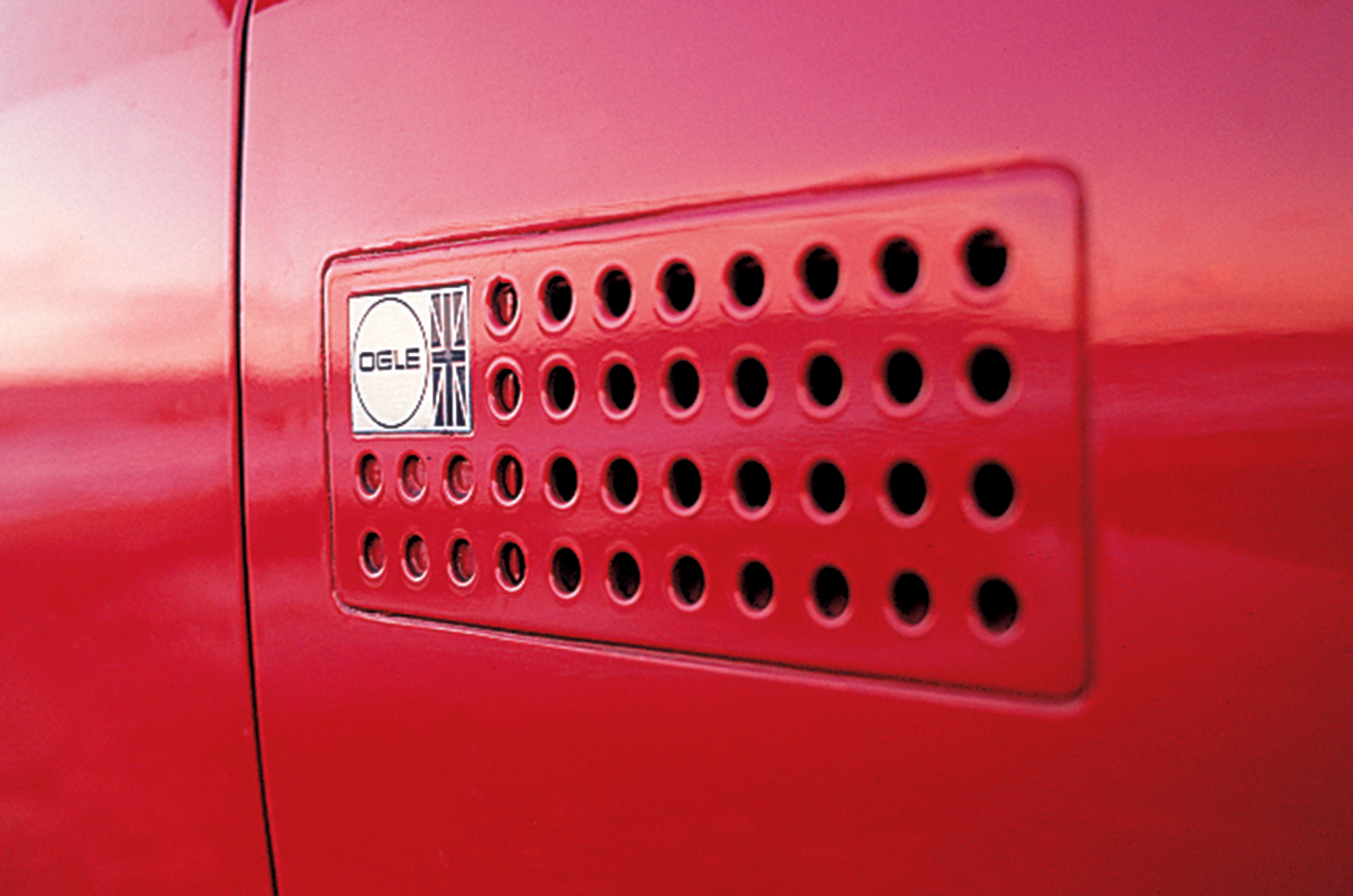
The Sotheby Special’s punctuated air vent is typical of the neat detailing

If money affords you the means to live out your dreams, then so be it.

Trouble is, fantasies are often fleeting, and never more so than in the shaky arena of dream cars. The Aston Martin Ogle Coupé is a case in point.

While this distinctive wedge was very ‘now’ back in the day, several decades on it’s still fabulous, if in an all-knowing, ironic sort of way.

It isn’t unique, either. Two were made – or, to be more accurate, two and a half.

The project was first mooted in the late ’60s. Following the death of David Ogle, his eponymous styling house flourished under the stewardship of Tom Karen.

The Letchworth outfit reanimated the proposal in early 1971 after tobacco company HO Wills was coerced by Ogle chairman John Ogier into picking up the tab.
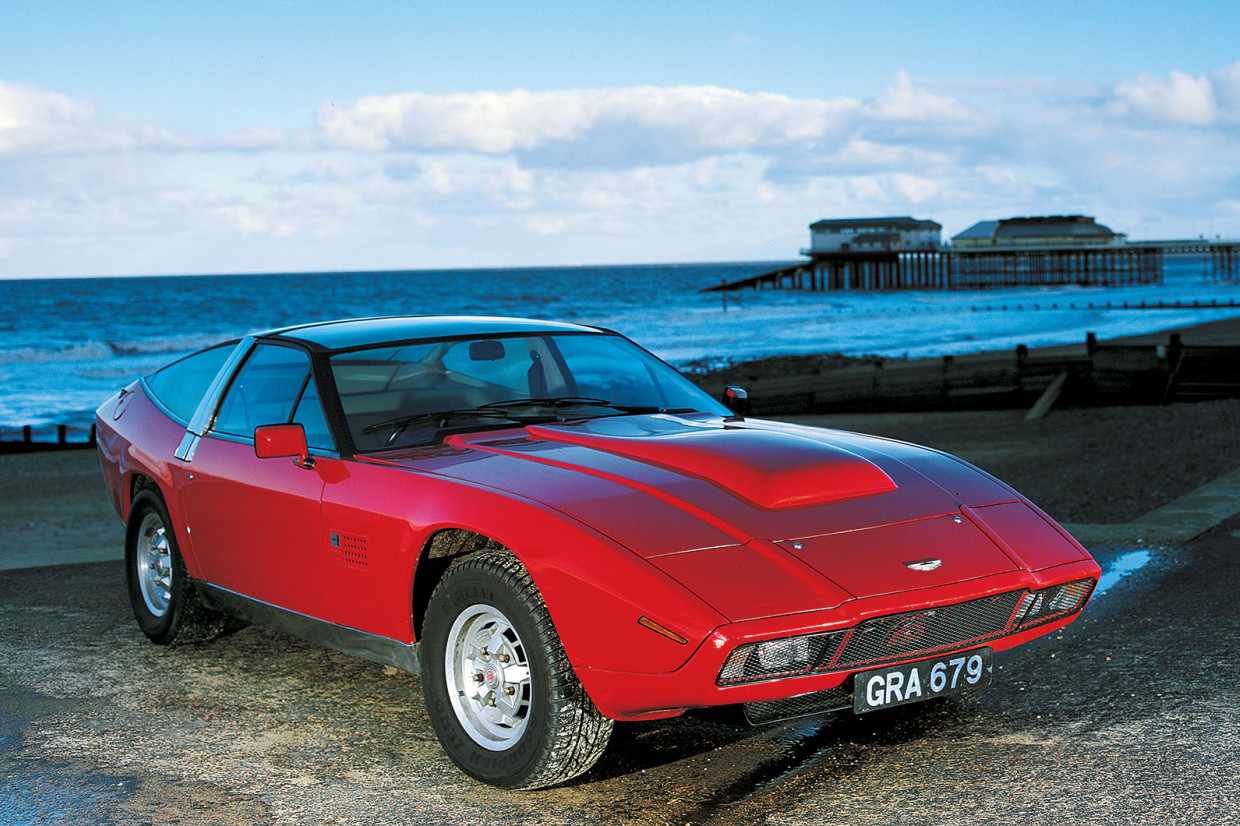
For promotional reasons, the car would be named The Sotheby Special, after its latest brand of cigarettes.

With further sponsorship from Aston Martin (which would later disown the car), Triplex, Lucas and others, the Special was to act as a platform for new ideas and be displayed within an all-British showcase at the 1972 Montreal motor show.

Classic & Sports Car – The Sotheby Special: Ogle’s reinvented Aston Martin

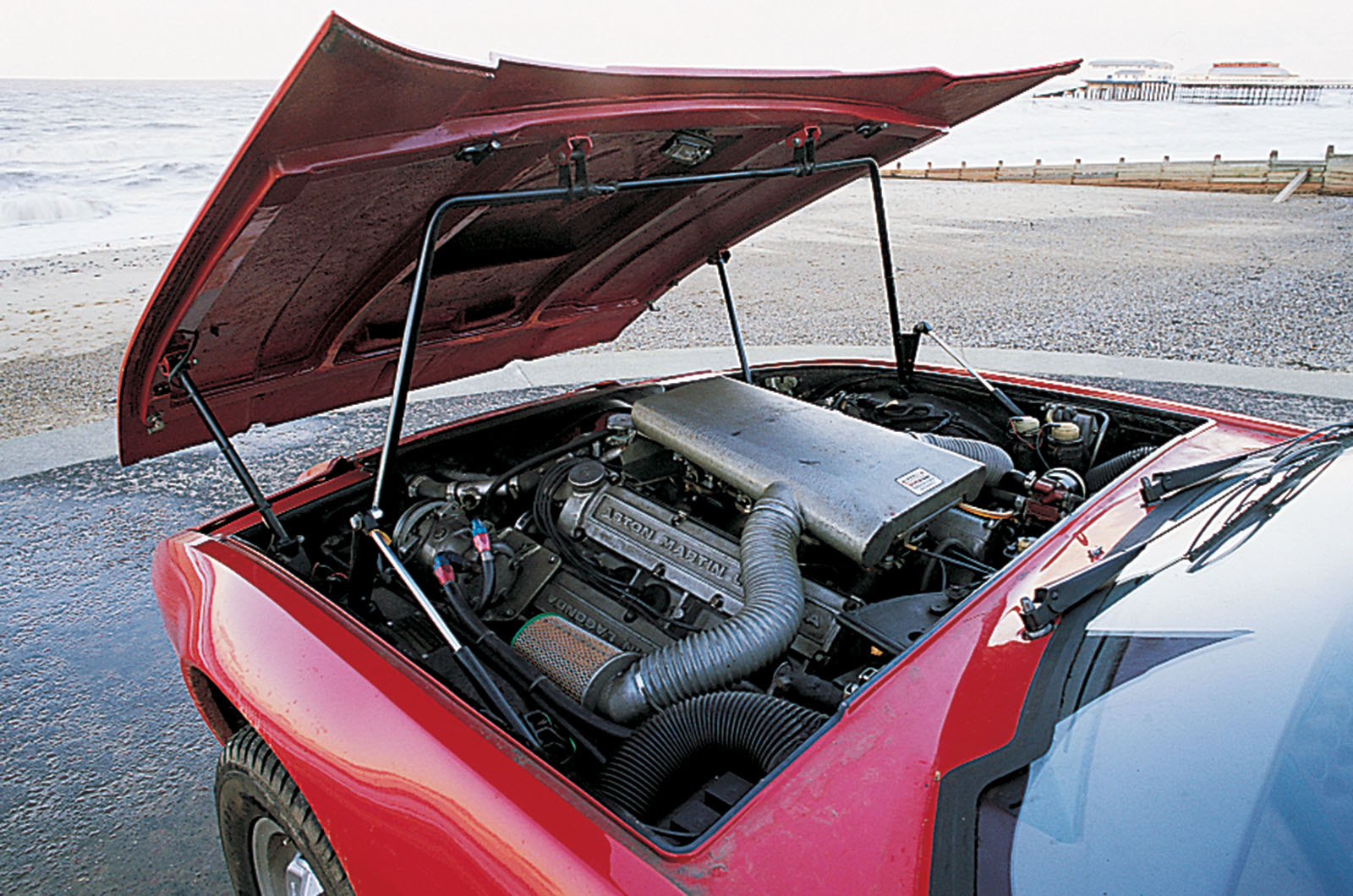
The Aston Martin V8 was converted to carburettors, hence The Sotheby Special’s unfortunate bonnet bulge

The car, a standard DBS V8 beneath the skin, was constructed of glassfibre – crafted by the imaginatively titled Fibreglass Ltd – as far as the waistline, above which it was entirely of glass supported by a steel frame that doubled as roll-over protection.

In an effort to prevent the sun’s harmful rays from slow-baking the occupants, Triplex Sundym glass, gold banded on the inside, was used forward of the centre roll hoop, with green-hued Lennig Oroglas to the rear.

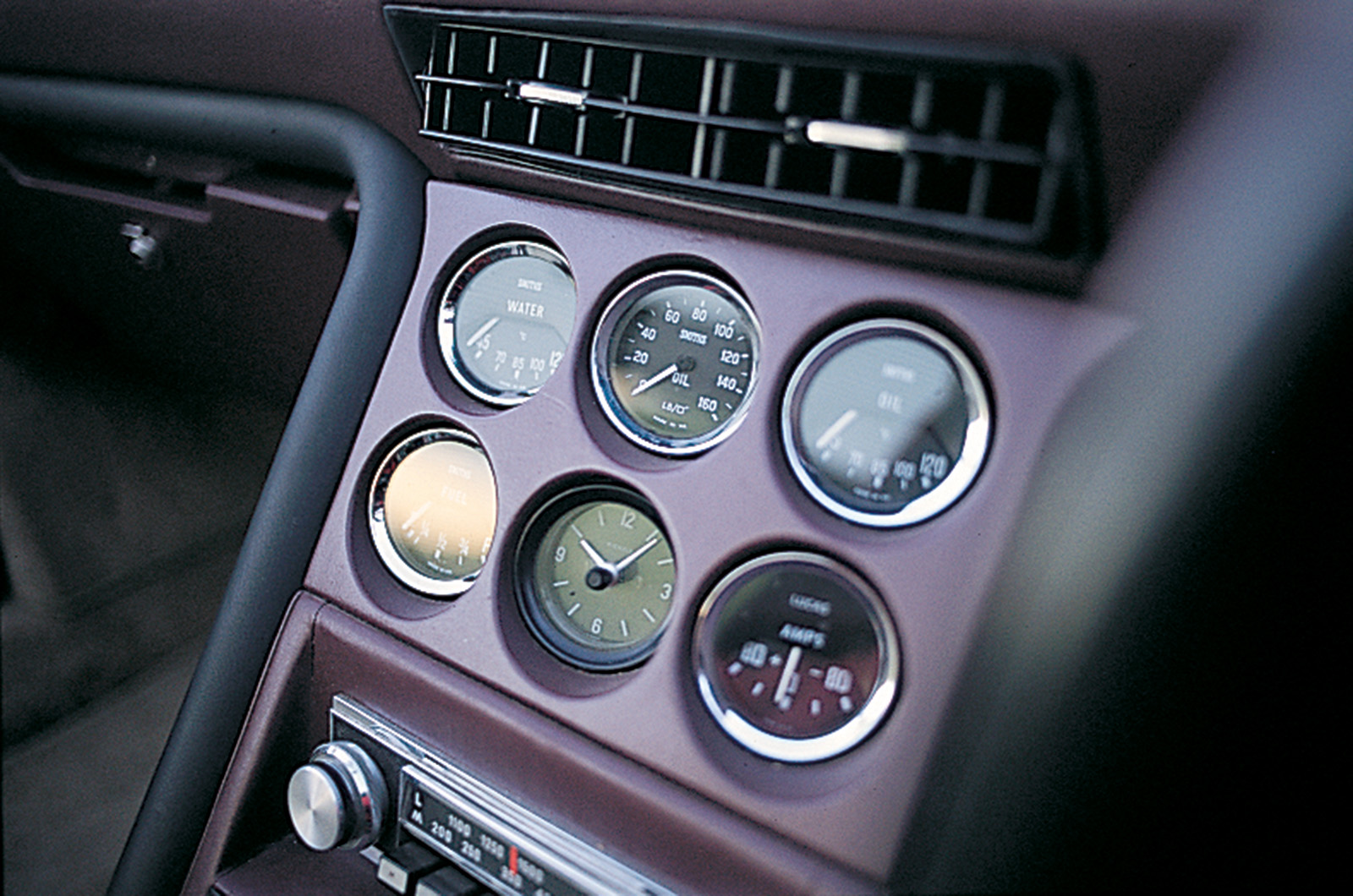
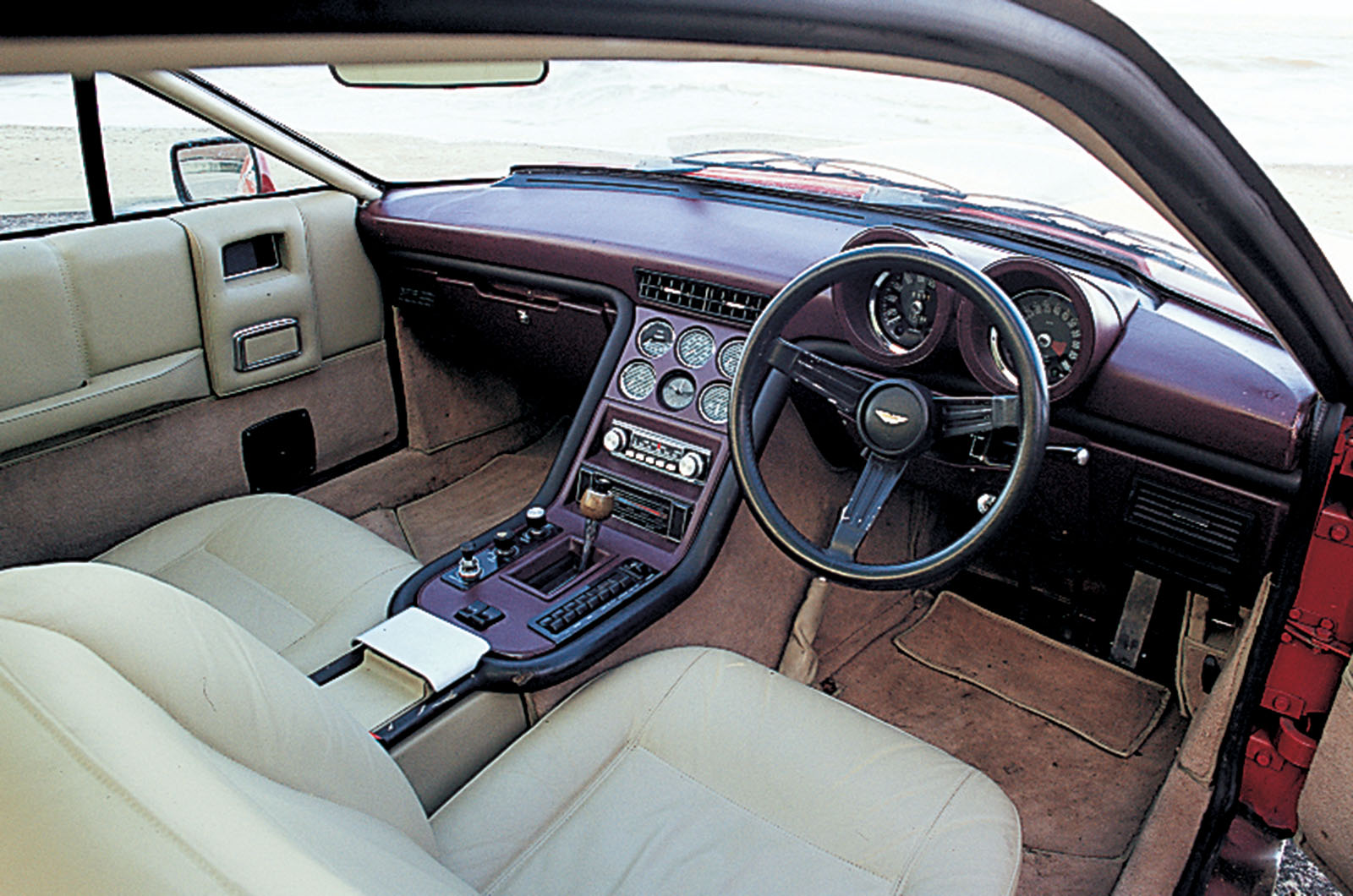
The glasshouse was bonded to the structure, and further arcs of steel tubing framed the dashboard and centre console.

Karen let rip his imagination, capitalising on the reflections cast in the windscreen by mounting a menagerie of warning lights flat above the cowled speedometer and rev counter to give a sort of primitive head-up display, complete with mirror-image labels.

Behind the front seats lay a chaise longue trimmed, like the rest of the cabin, in green corduroy.

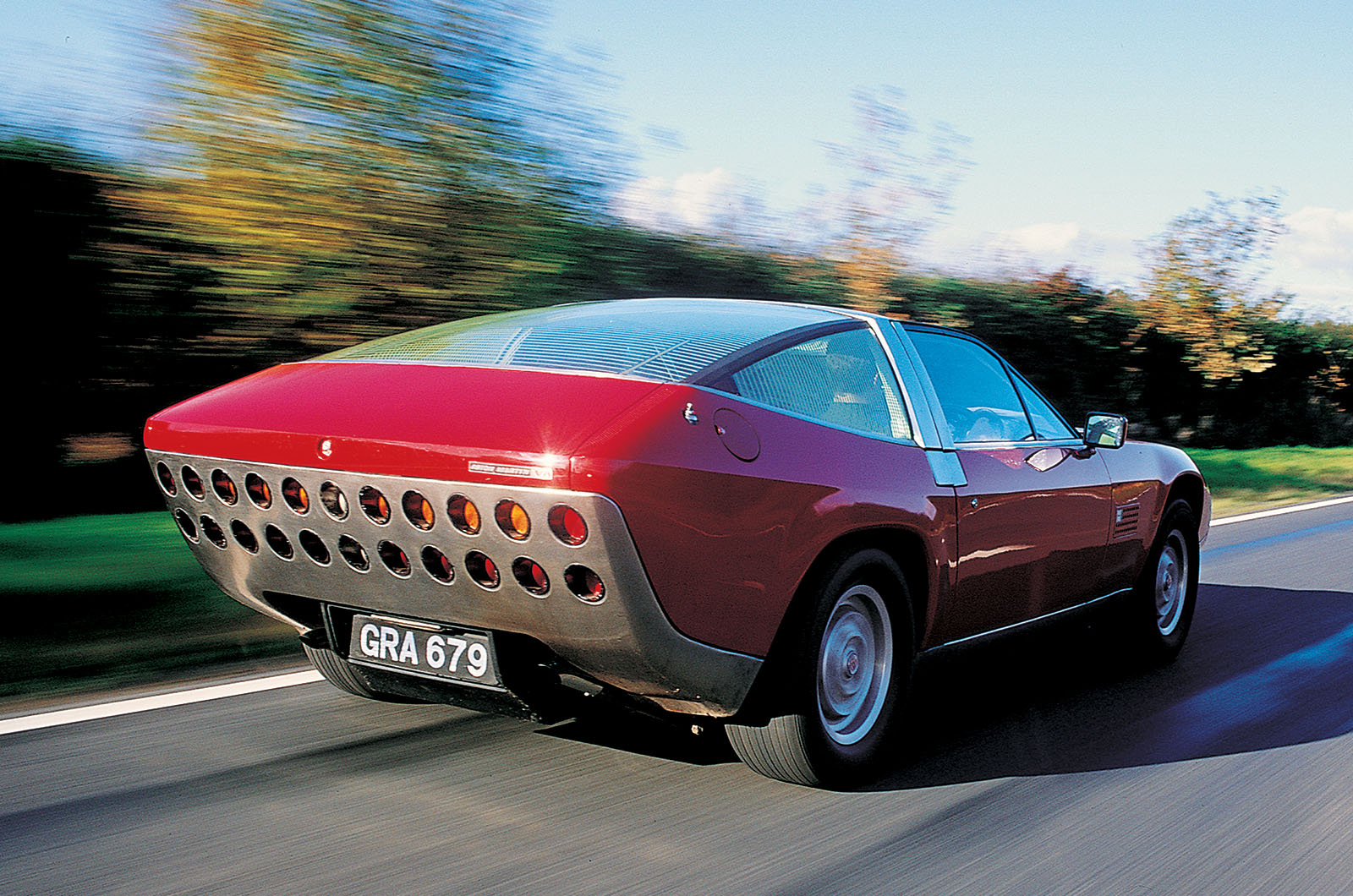
But the undoubted pièce de résistance was the stainless-steel-encased rump, home to no fewer than 22 tail-lights that, while whimsical in appearance, masked a more serious intent.

Indicators lit up sequentially from the centre outwards; braking intensity was signalled by the number of lights that lit up, six equating to an emergency stop.

Classic & Sports Car – The Sotheby Special: Ogle’s reinvented Aston Martin

The Aston Martin DBS V8-based car’s dazzling cockpit is let down by uncomfortable seats

In truth, the Montreal debutant was little more than a body buck – or ‘the half’; the definitive Sotheby Special appeared later at Geneva.

It was this car, in dark blue with gold pinstriping, that sent the British media into raptures.

Tomorrow’s World called it: ‘The most desirable object ever produced by the British motor industry.’ The Evening Post claimed the Ogle was: ‘So full of fascinating ideas that it is impossible to focus on one point for long.’

There was never any real talk of series manufacture. “It was far too expensive to make in volume,” recalls Tom Karen. “We really didn’t want to do any more.”

But Mrs Agate had other ideas. Despite being an Aston Martin lover, and living close to its Newport Pagnell factory, she nonetheless wanted a car that she couldn’t “see testing every day”, so contacted Royal-appointed car supplier Murkitt Brothers Ltd of Huntingdon to badger Ogle into making another one.

Which, after a great deal of persuasion, it did, handing chassis 002 to its expectant owner in March 1973.

Tragically, she didn’t live to enjoy the car much beyond that Silverstone adventure, dying shortly afterwards in an unrelated traffic accident.

Classic & Sports Car – The Sotheby Special: Ogle’s reinvented Aston Martin

The Sotheby Special’s supplementary console gauges are angled towards the driver

Tom recalls this, the second car, being markedly better made than the original: “The first was a prototype – inevitably, it was built in a bit of a hurry.

“The cigarette people were supposed to have given it to Graham Hill for promotional purposes – WO Wills sponsored his nascent Grand Prix team – but I don’t think he drove the car much, probably because it was sprayed in the colours of the cigarette livery, which wasn’t pretty.

“The car was not treated well and, before long, became quite shabby.

“The second machine was built by just one man – I can’t remember his name – who was a perfectionist. He did a lovely job.”

Today, this most remarkable Aston Martin is less of a car and more a ’70s time capsule.

Resplendent in a searing shade of Post Office red (it was originally a more sober burgundy, with subtle pinstriping), and topped with that green and gold roof, there’s no subtlety here, yet you can’t help but marvel at the boldness of it all.

This is exactly what dream cars are meant to be like: bold, daring and ever so slightly barking.

Classic & Sports Car – The Sotheby Special: Ogle’s reinvented Aston Martin

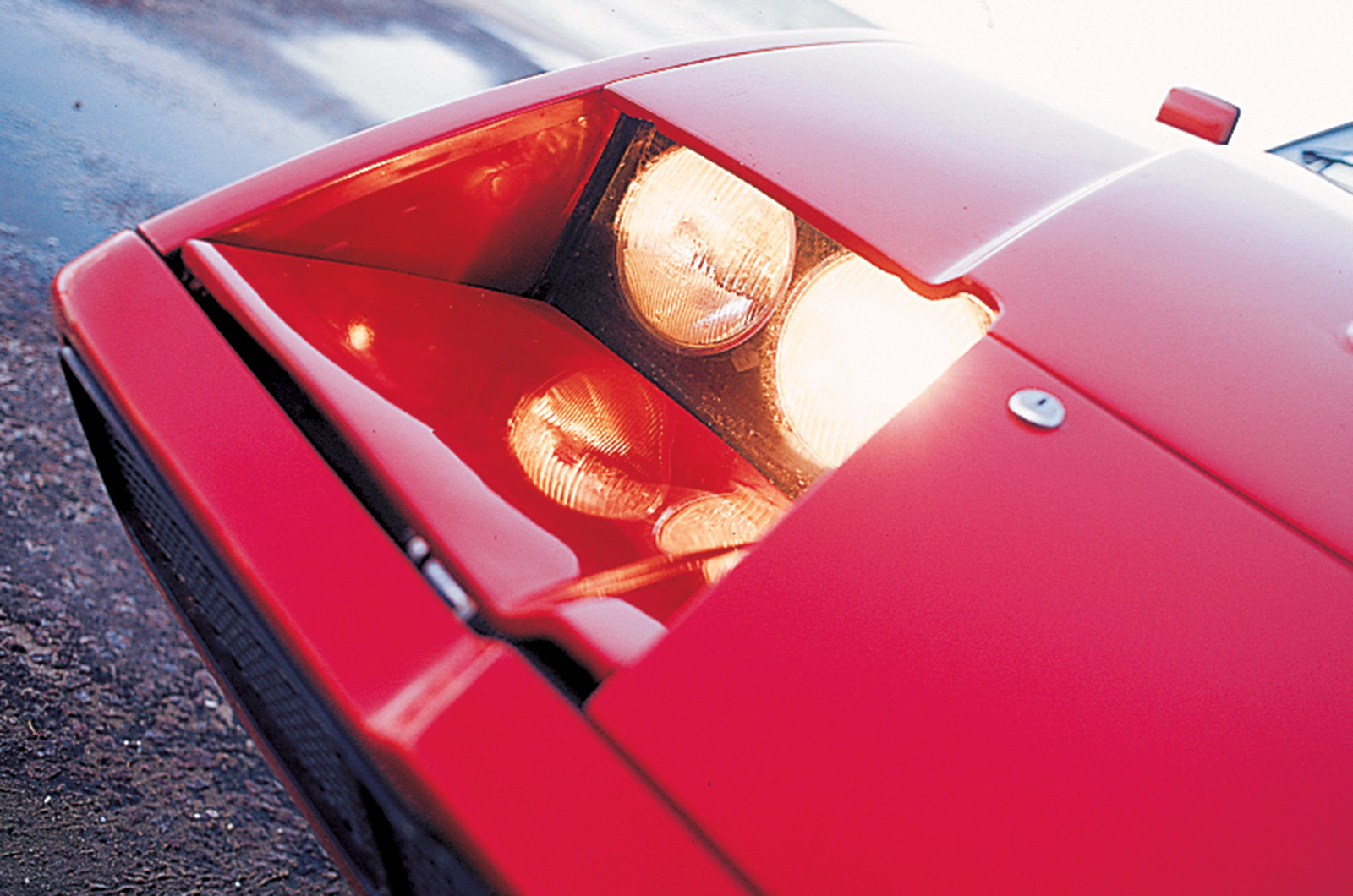
The Sotheby Special’s flip-down headlight covers remain open if they fail

At the time, Ogle’s PR puff talked of building a machine that was ‘Splendidly British, a sophisticated fast car with fresh, realistic ideas, good simple, elegant lines, excellent craftsmanship and lots of character.’

And it did just that. This wondrous device certainly has character. Beneath the extraneous clutter, the lines are handsome enough and it is certainly well made.

As for the ‘realistic ideas’, at least a couple have one foot in reality – it’s just that nobody chose to perpetuate them.

The frontal treatment is pleasing, the Lucas halogens fixed behind pneumatically operated flip-down lids.

“I’ve always had an aversion to pop-up lights,” says Tom. “They look ugly when in place, and if they stop working and won’t flip up, you’re in trouble.

“That is why I opted for fail-safe lids – even if the lids don’t go back up, you still have lights.”

The bonnet bulge is a later addition: the car was converted from injection to carbs in the late ’70s. “I was very unhappy when I saw that,” adds Tom. “The original bonnet was smooth with just a NACA duct.”

Classic & Sports Car – The Sotheby Special: Ogle’s reinvented Aston Martin

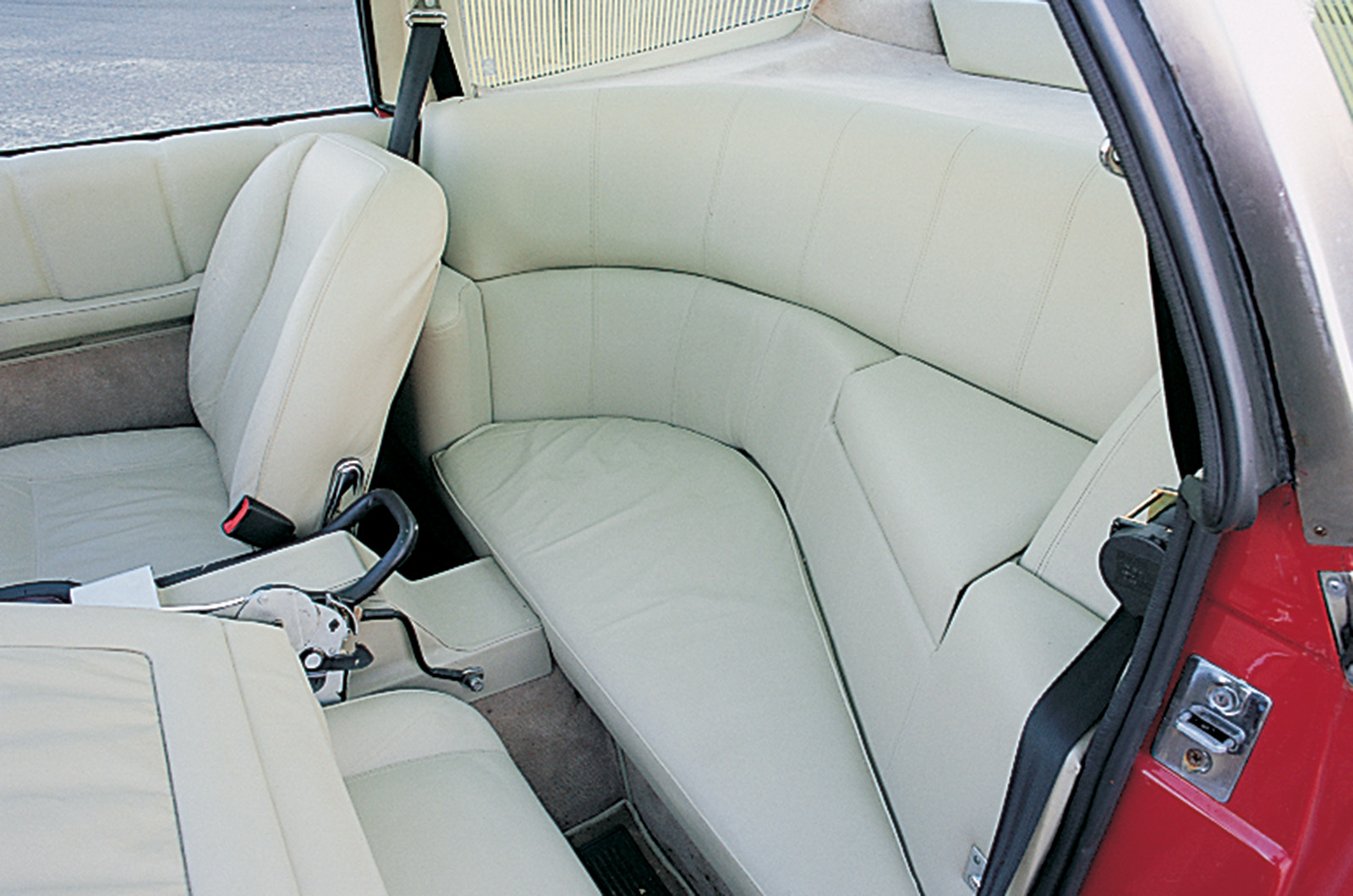
The chaise longue makes the Ogle-designed Aston Martin a two-plus-one

In profile, the car is well balanced, with Ogle’s trademark dramatically upswept waistline caricatured beyond that of its earlier Reliant Scimitar GTE. It’s only when you move to the rear that it goes all strange.

CAR likened the severely punctured rump to ‘a particularly succulent piece of Gruyère cheese’. And there can be no better description than that.

Inside, it looks equally bizarre: the single rear seat is there on the logical grounds of why ferry two doubled-up shorties when you can house a six-footer outstretched in comfort?

You simply cannot argue with a rationale like that. Once reclined on it, staring through the green-hued roof, maybe you can.

It’s comfortable – more so than in the front – but disconcerting. It’s this sense of starry-eyed futurism that makes the Ogle Aston so captivating.

Less so when you discover the fairly fundamental driving aspects that were forgotten. For a car that made so much of its light-absorbing glazing, why was it deemed unnecessary to fit sunvisors to the only area that didn’t receive this treatment: the windscreen?

In direct sunlight, even with shades on, you cannot see out of it. And this while motionless.

Classic & Sports Car – The Sotheby Special: Ogle’s reinvented Aston Martin

The Ogle-designed Sotheby Special is an Aston-ishing glass and glassfibre take on Newport Pagnell’s DBS V8

In truth, this endearing throwback drives much like any other DBS V8: the same glorious bellow from the Tadek Marek all-alloy motor, meaty rack-and-pinion steering that, despite hydraulic power assistance, still leaves you feeling as if you have undergone a thorough physical, and undernourished anchors that require all six brake lights to be illuminated before two tonnes of Tupperware and steel are finally arrested.

Unlike its sibling, 002 is an automatic, which makes it a hoot under kickdown as the tail squats and the nose rises.

In the corners, it’s a floaty old thing but faithful with it, even if the inhumane driver’s throne is less than embracing when pressing on with any conviction.

Driving, however, isn’t really what the Ogle Aston is all about. It’s a dream car and, as such, like most of its ilk, what matters are the visuals.

The fact that it drives at all only makes it all the more worthwhile.

Most concept cars are just that: ideas that hint towards a futurescope, with no real thought being given to the present.

This one, through the efforts of a persuasive pensioner and an unheralded artisan, grew from a dream car into a real car, so with that in mind you can forgive it the occasional foible. 

It really is quite marvellous – in a knowing, ironic sort of way, obviously.

Images: Tony Baker

This was first in our January 2003 magazine; all information was correct at the date of original publication. Tom Karen passed away in December 2022, at the age of 96


Ogle’s other cars

Classic & Sports Car – The Sotheby Special: Ogle’s reinvented Aston Martin

The Riley-based Ogle 1.5 © Autocar archive

Despite its relatively low profile, Ogle remains one of Britain’s leading design houses, responsible for a raft of award-winning creations from furniture to aeroplanes, crash-test dummies to truck cabs.

The company was founded in 1954 by David Ogle, a talented industrial designer who made a name for himself styling radios and TV sets for Bush.

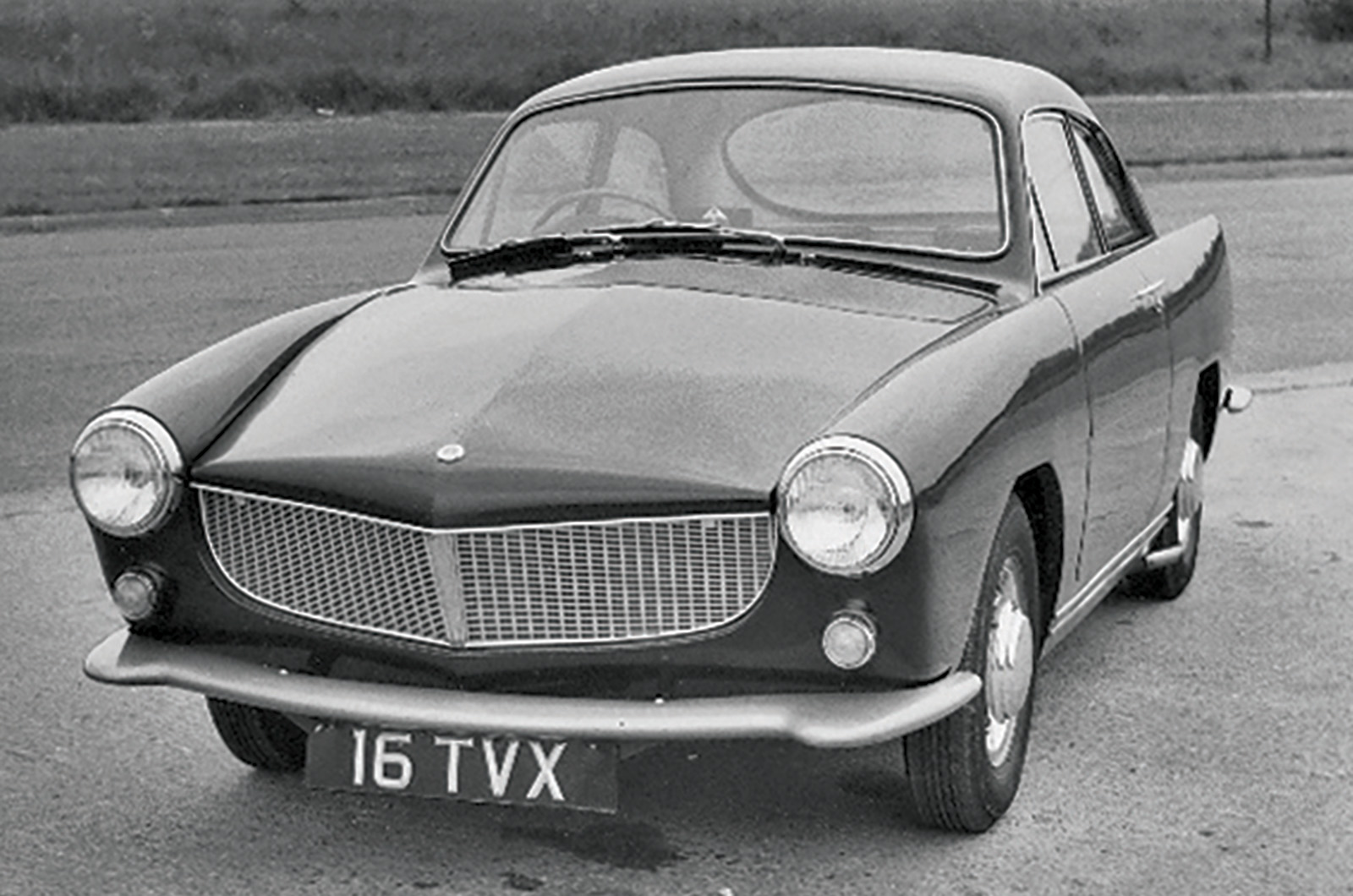
But his passion lay with cars, his first offering being the Ogle 1.5.

Classic & Sports Car – The Sotheby Special: Ogle’s reinvented Aston Martin

The Ogle SX1000 © Autocar archive

Trumpeted as ‘a new conception of the business executive’s personal car’, this glassfibre-bodied, Riley-based coupé found only eight takers by 1962, thanks in part to the crippling £1574 price-tag.

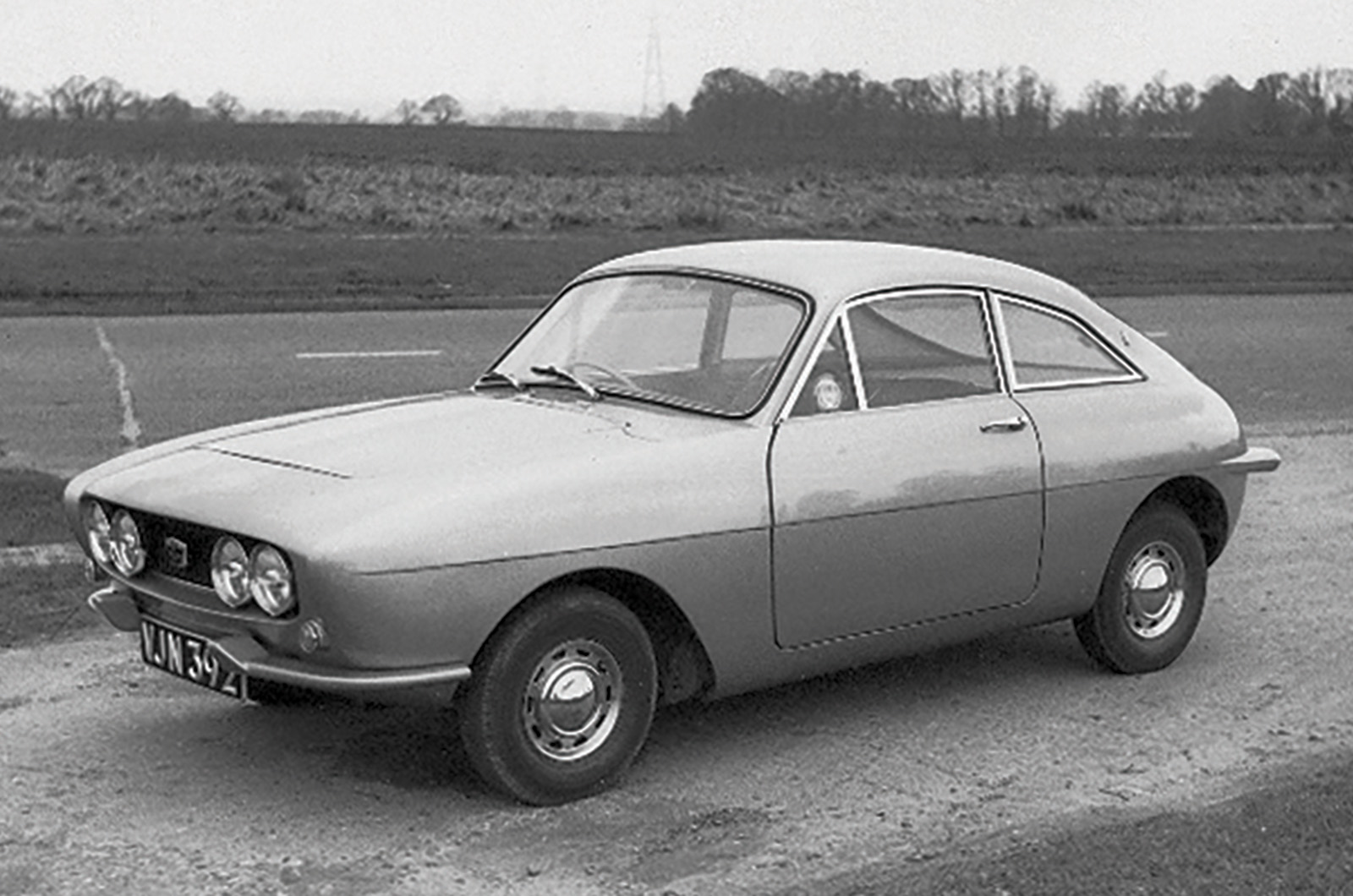
The SX1000, arguably the best-known Mini-based specialist sports car, arrived in the same year, with 66 being produced.

It was in one of these that Ogle lost his life following an accident in 1962 while returning from Brands Hatch circuit.

Classic & Sports Car – The Sotheby Special: Ogle’s reinvented Aston Martin

A project for Daimler eventually morphed into the Reliant Scimitar GT © Autocar archive

Into the breach stepped naturalised Czech Tom Karen.

He had intended staying for six months, just to keep the firm afloat, but remained at the helm 40 years on.

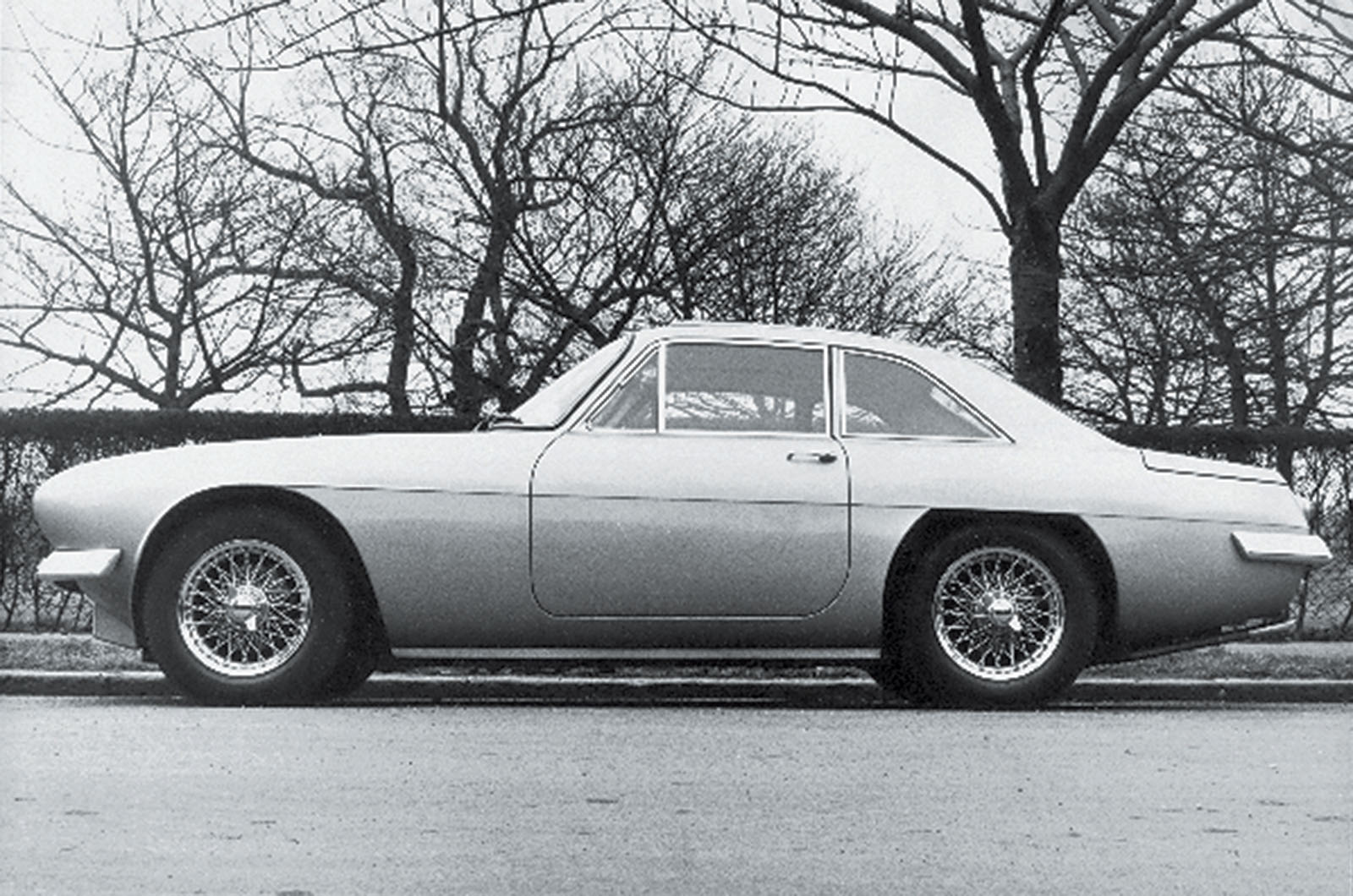
His first task was to complete a batch of rakish Daimler SP250-based coupés for the Helena Rubinstein cosmetics group, the design being adopted by Reliant for what, after a mild restyle, became the Reliant Scimitar GT.

Classic & Sports Car – The Sotheby Special: Ogle’s reinvented Aston Martin

The Triplex Princess estate © Autocar archive

This marked the beginning of a fruitful relationship that later spawned the Anadol, the niche-busting GTE sports estate, plus the Robin, Ant, Kitten, Fox and the outrageous but ultimately unsuccessful Bond Bug.

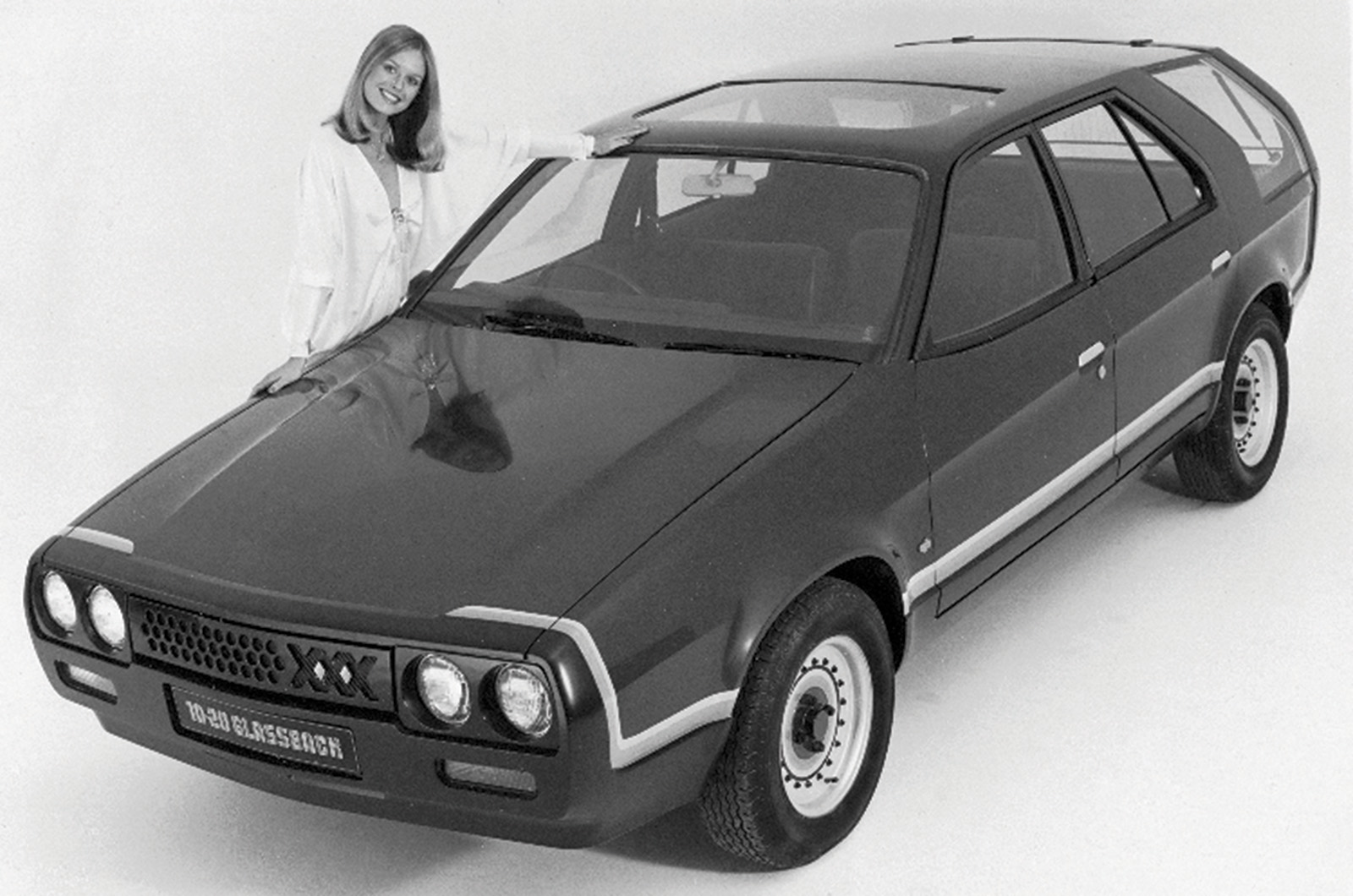
Throughout the ‘70s, Ogle continued to maintain a longstanding association with Triplex, designing concept cars to showcase its glazing technology, while also devising a sadly aborted Fiat X1/9 rival for Reliant and several proposals for Rolls-Royce.

Classic & Sports Car – The Sotheby Special: Ogle’s reinvented Aston Martin

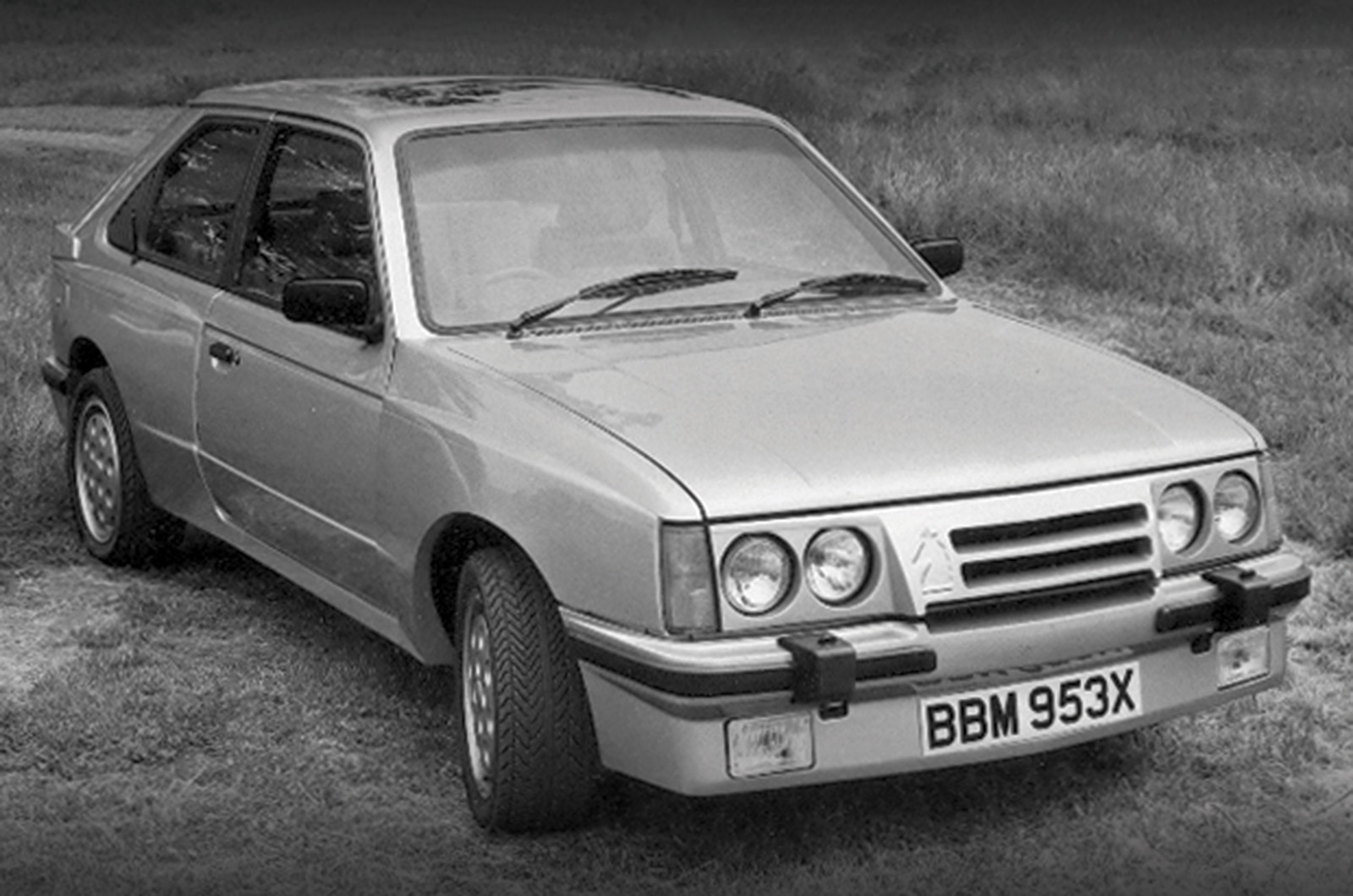
Ogle partnered with coachbuilder Avon to create a redesigned Vauxhall Astra © Avon

By the turn of the following decade, however, Ogle had pretty much vacated the automotive arena, aside from some best-forgotten bodykits for Avon and Wood & Pickett, and an advanced MPV concept car.

It continued to perform behind-the-scenes consultancy work for some of Europe’s major players.


Enjoy more of the world’s best classic car content every month when you subscribe to C&SC – get our latest deals here


READ MORE

Bond Bug: a fresh angle

Reliant Scimitar GTE: Tom Karen’s landmark sports estate

Aston Martin DBS V8 vs Jensen Interceptor SP vs Gordon-Keeble GK1: British beef