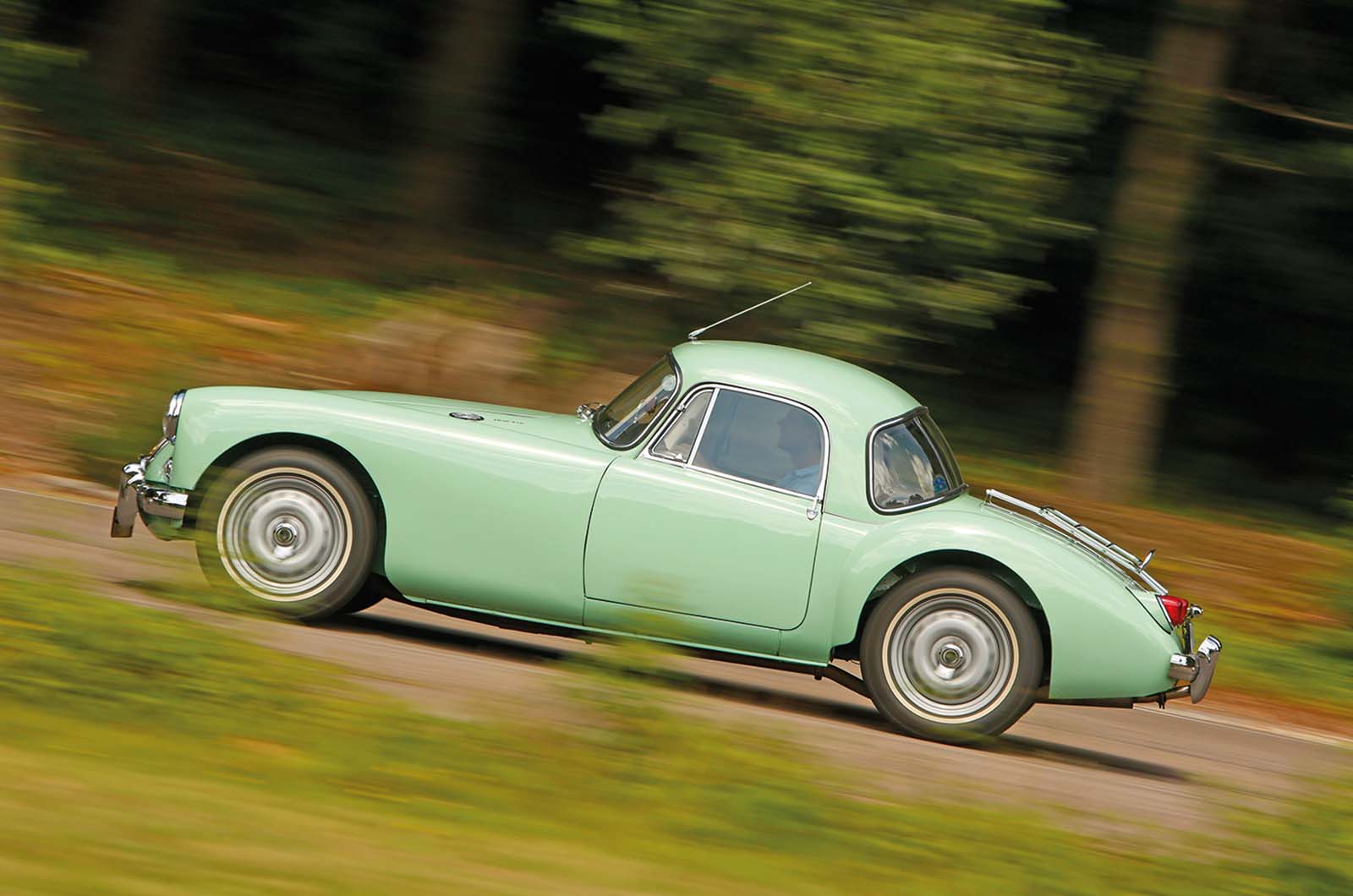
MGA Mk1 1600: exploring Abingdon’s original test routes

| 9 Apr 2025
Classic & Sports Car – MGA: exploring Abingdon’s original test routes
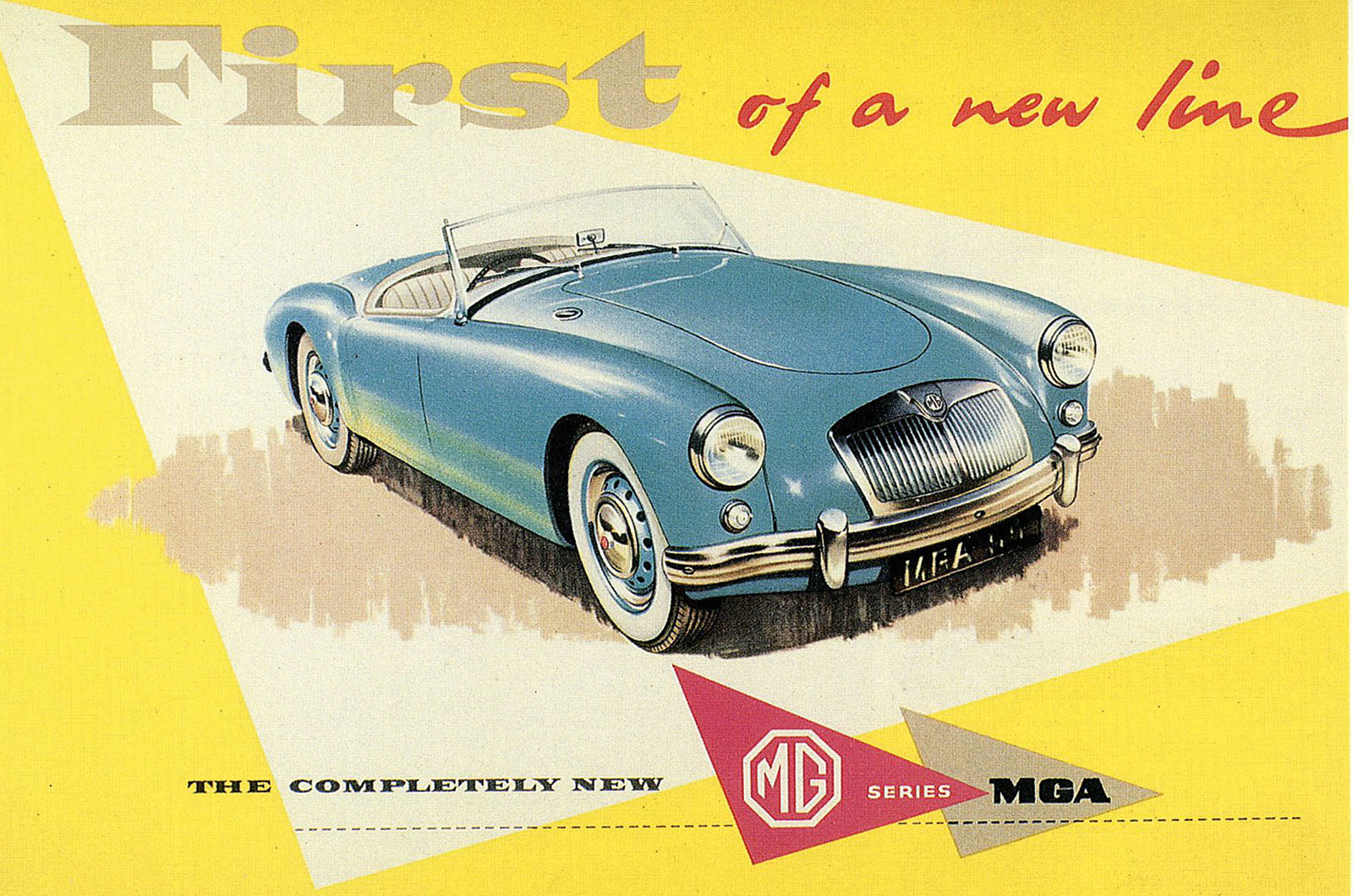
When the MGA first rolled out of the firm’s Abingdon factory, it must have seemed almost impossible that the famous site would have closed within a generation.

For a country supposedly mired in an age of austerity, it was a confident new design that subsequently led to a bountiful few years in which the MGB and MG Midget would firmly implant the octagon badge into the nation’s consciousness.

After the war, MG had relied heavily on the T-type.

The last of the line – the TF – still looked like a 1930s machine and, indeed, started life with the XPAG engine that had been doing service since 1938.

Classic & Sports Car – MGA: exploring Abingdon’s original test routes
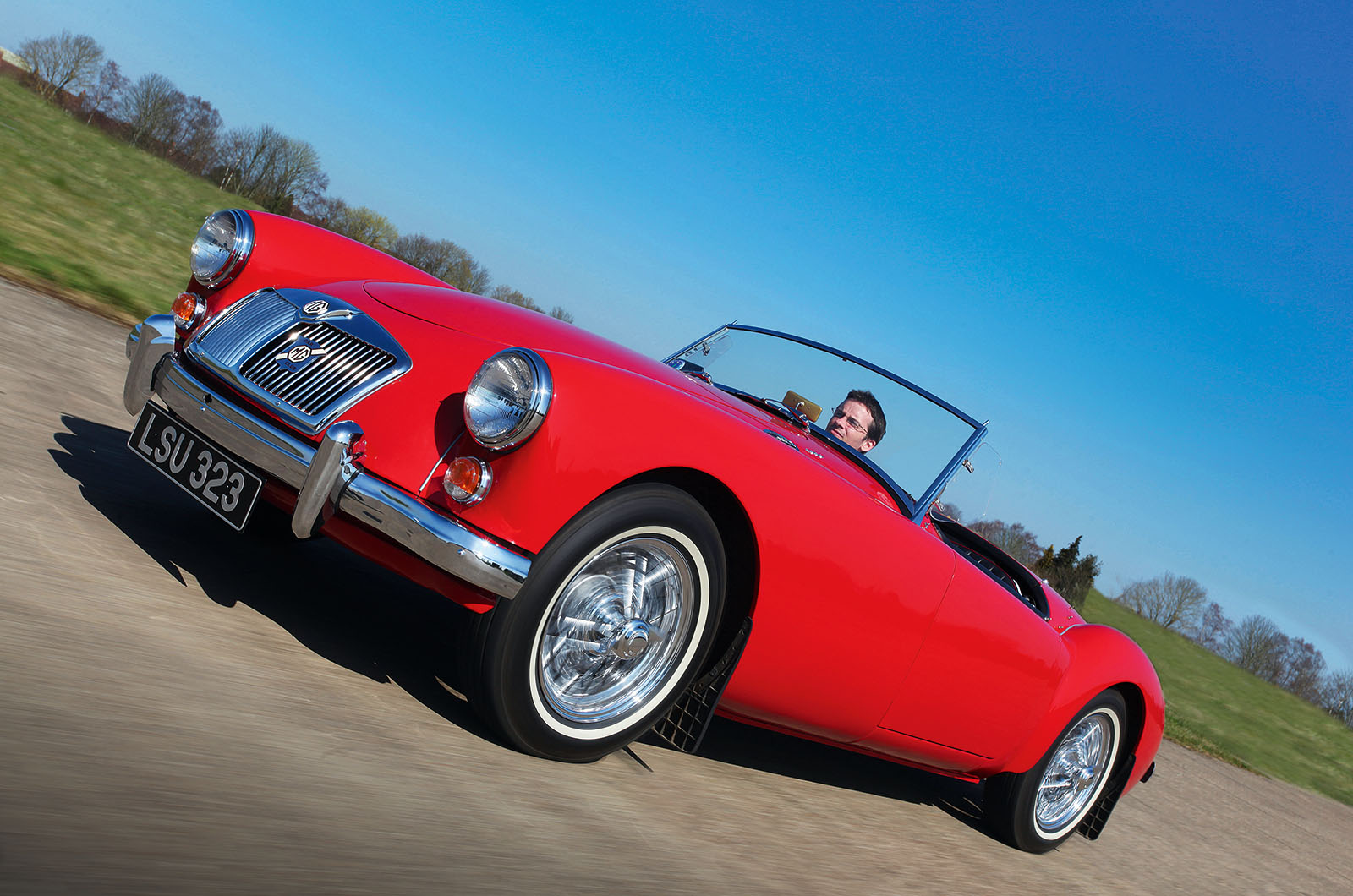
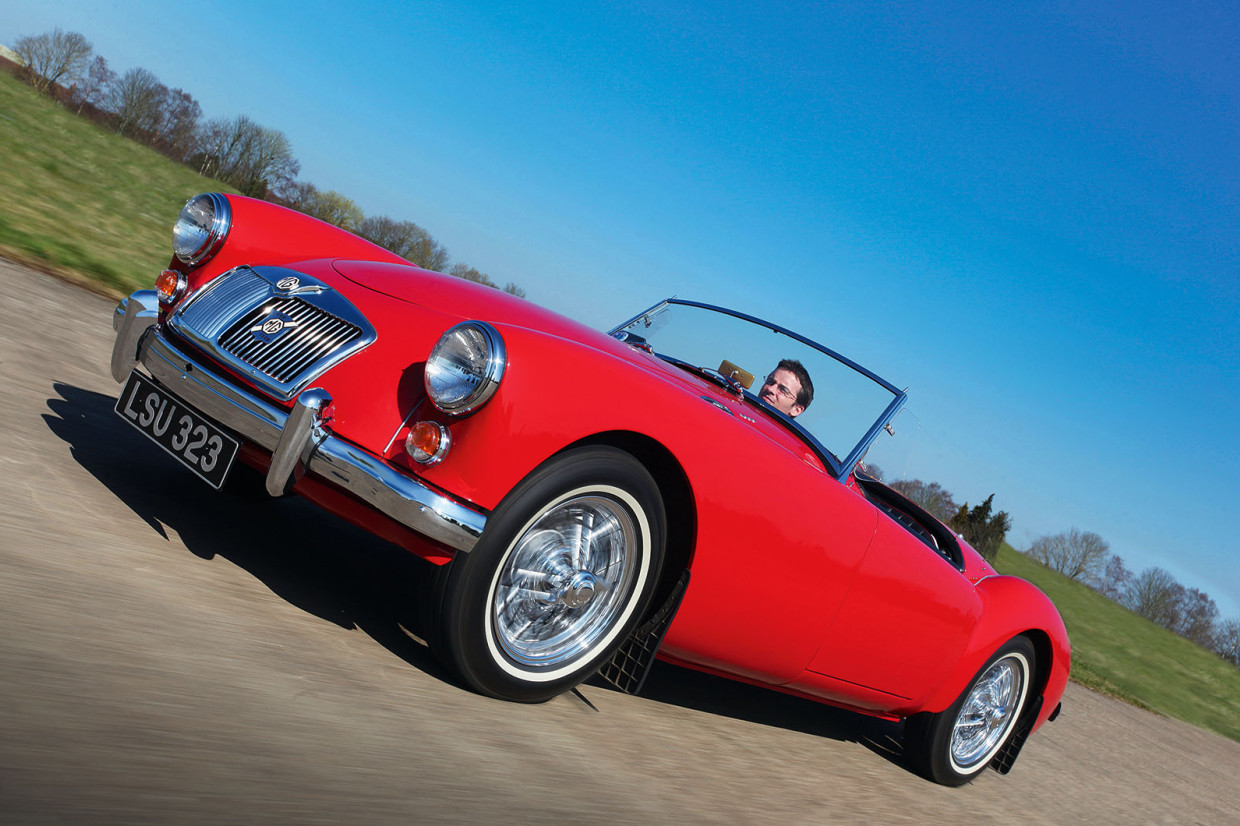
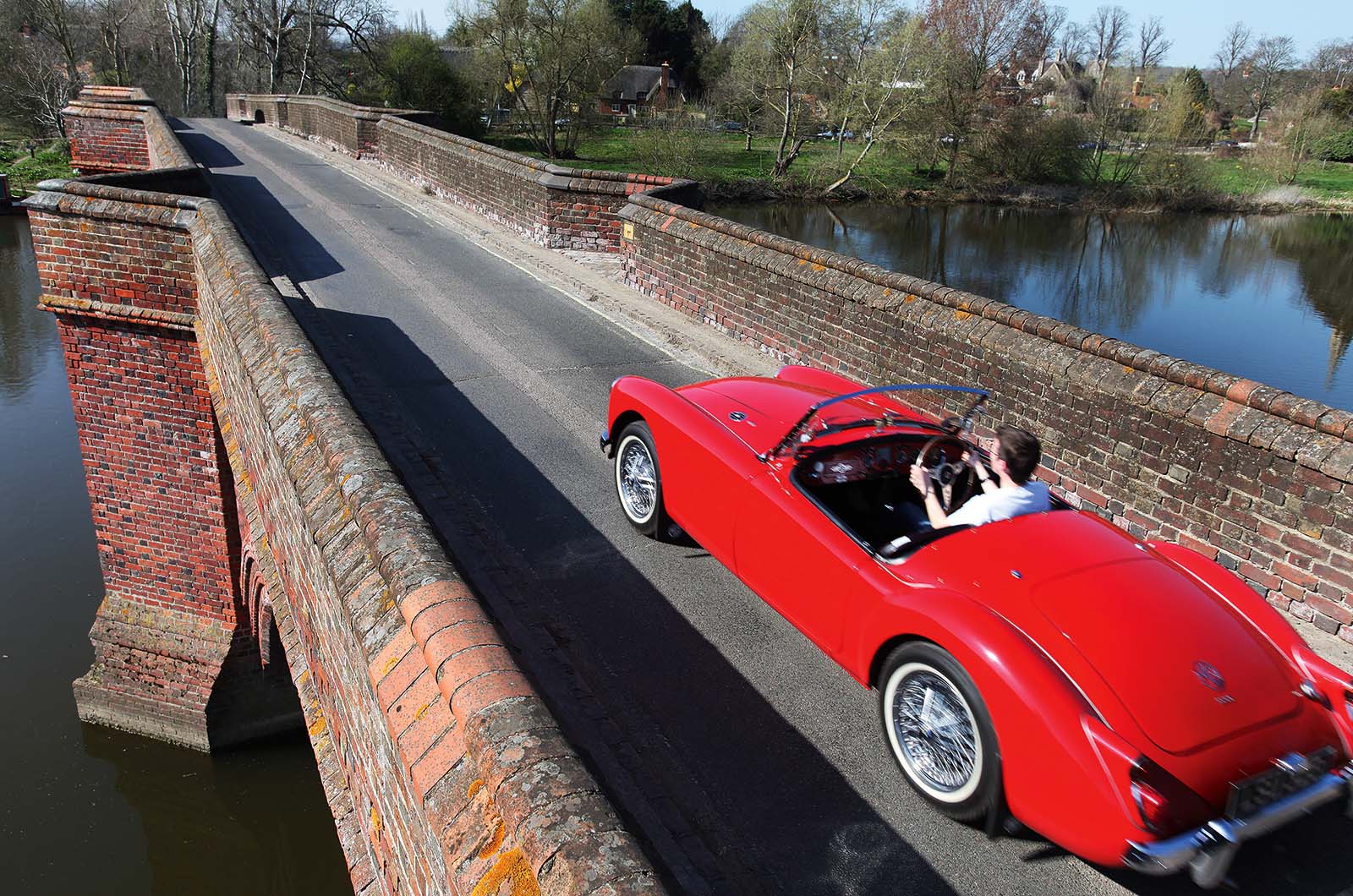
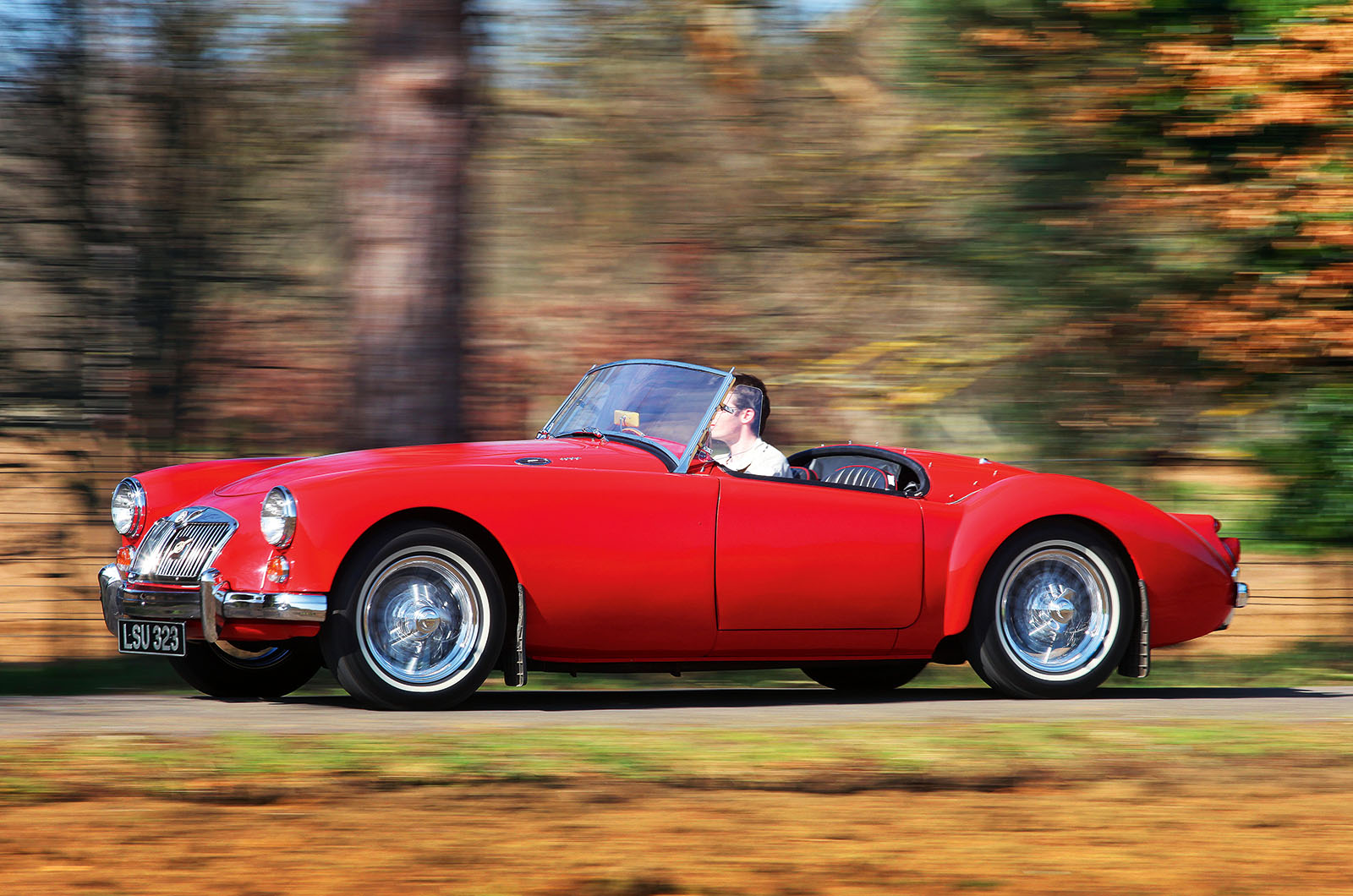
Driving an MGA Mk1 1600 around Abingdon, following in the wheeltracks of the marque’s test drivers

A clue to the style of the new car came in 1951, when George Phillips entered a rebodied MG TD at Le Mans.

The streamlined shape was down to MG itself, and a roadgoing prototype – fitted with a 1250cc XPAG engine and TD running gear, plus a redesigned chassis – was presented to BMC the following year, but the parent company turned it down.

By 1955, however, there had been a rethink, and a team of aluminium-bodied works MGAs was entered at Le Mans ahead of the model’s official launch.

By that time, the car was fitted with the 1489cc B-series that was first seen in the MG Magnette, and it shared the saloon’s transmission.

Although one of the Le Mans cars retired after being caught up in the terrible accident involving Pierre Levegh and Lance Macklin, the remaining MGAs finished fifth and sixth in their class, giving the model a useful boost when it went on sale later in the year – not that it needed much help in that respect.

Classic & Sports Car – MGA: exploring Abingdon’s original test routes

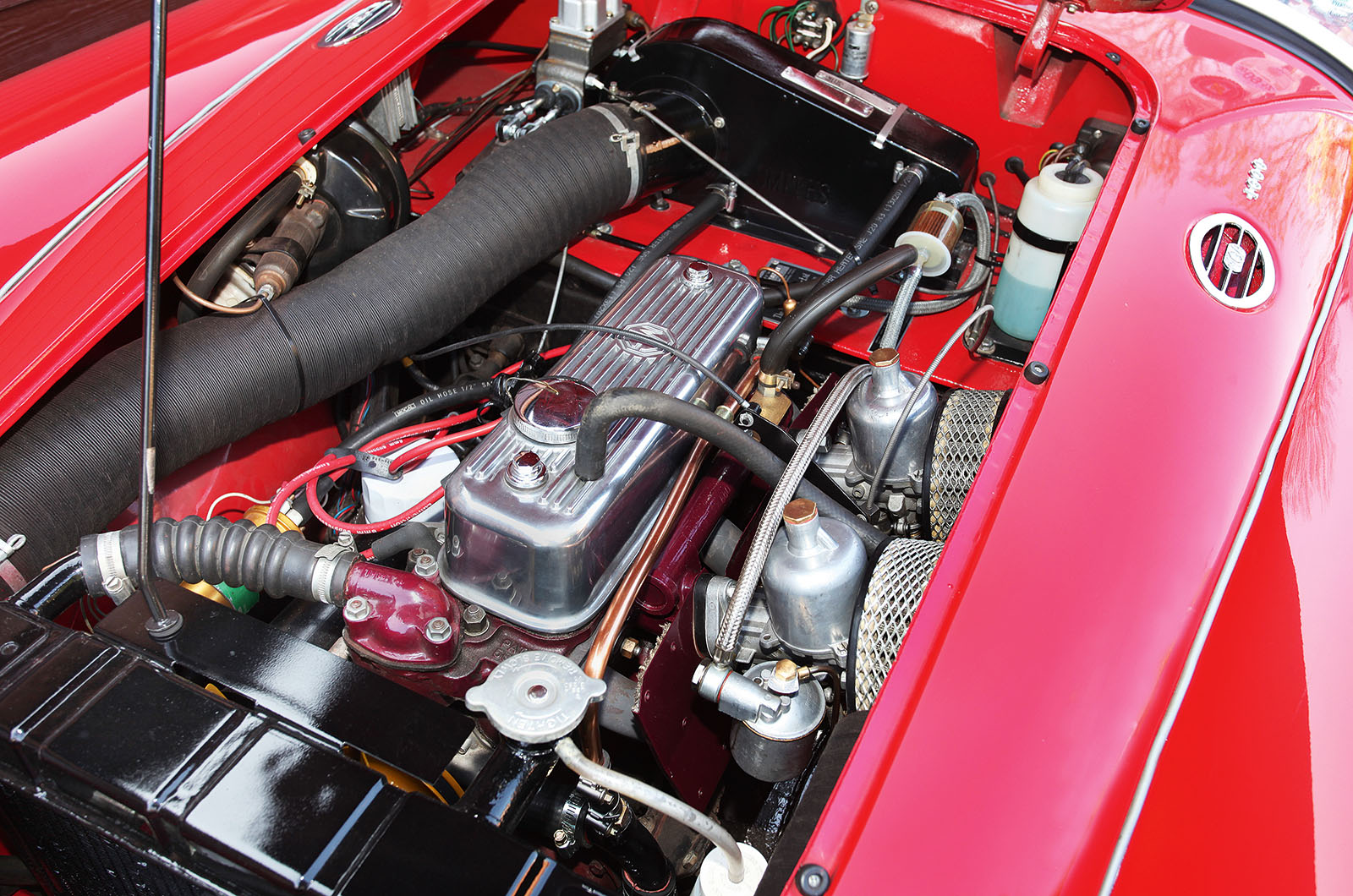
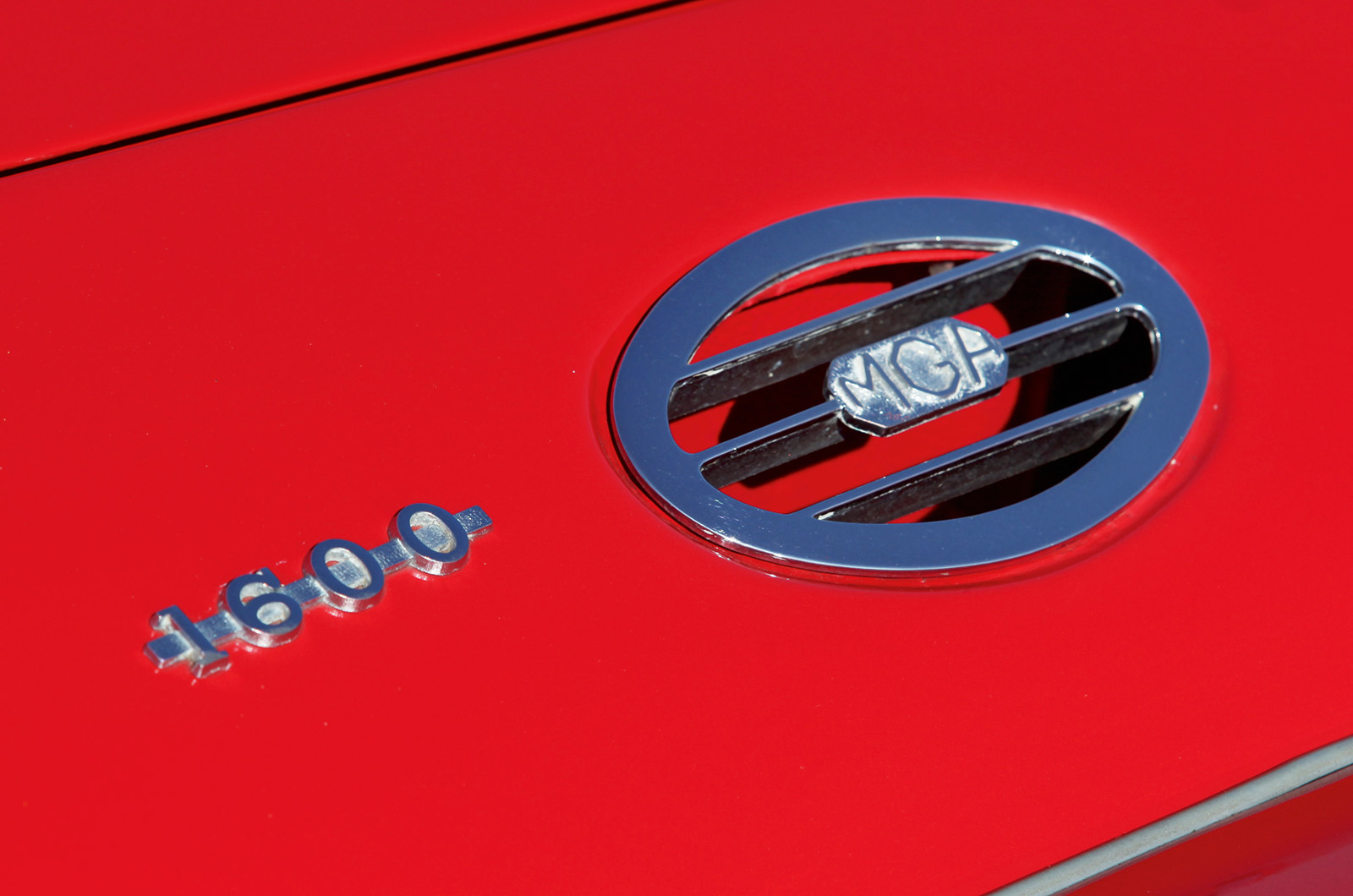
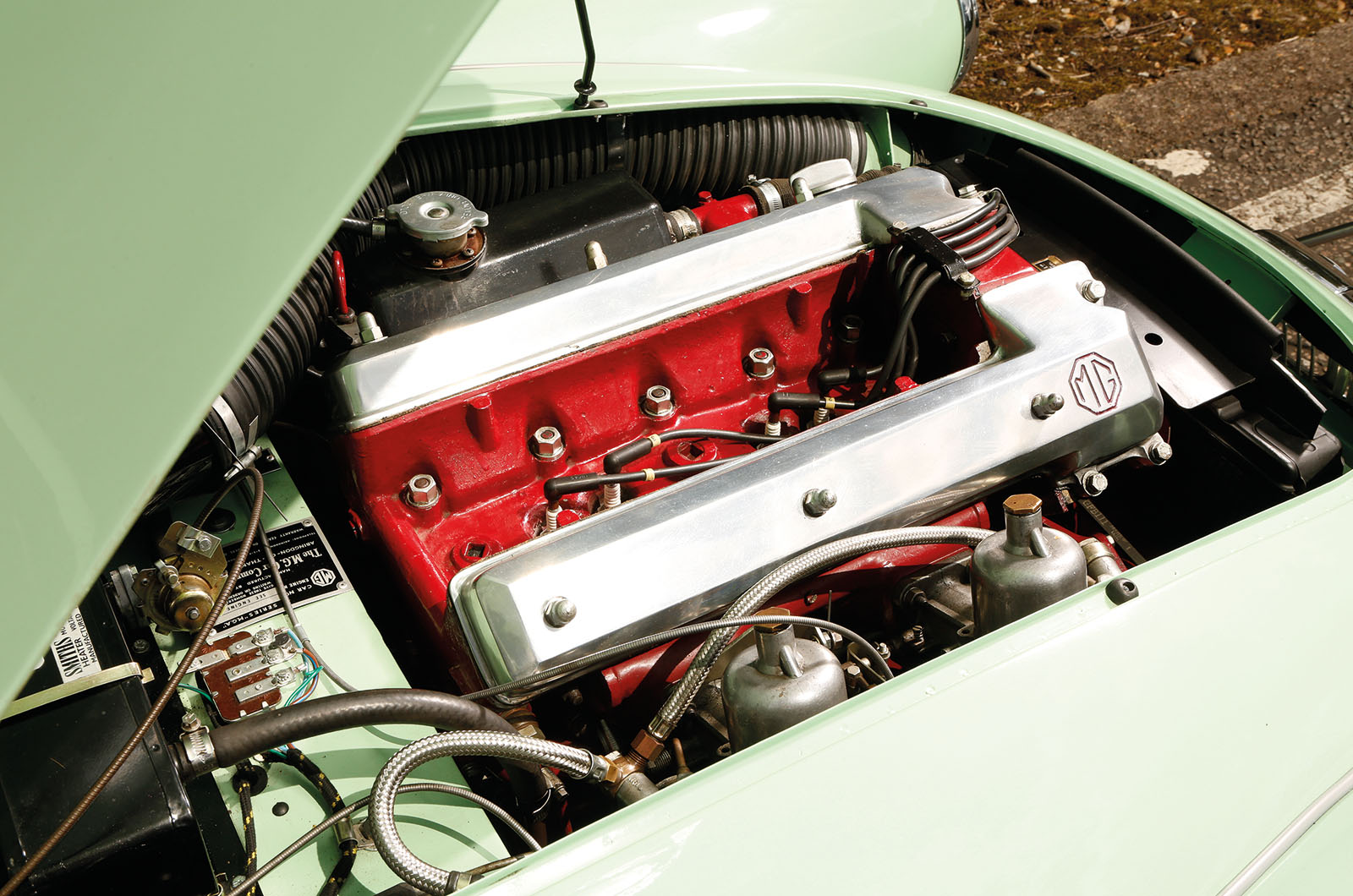
The MGA’s faithful twin-carburettor B-series engine grew from 1489 to 1588cc for the Mk1 1600

Its styling was a radical departure from the road cars that had gone before.

Whereas the MG T-type had been angular and upright, the MGA was low and curvaceous.

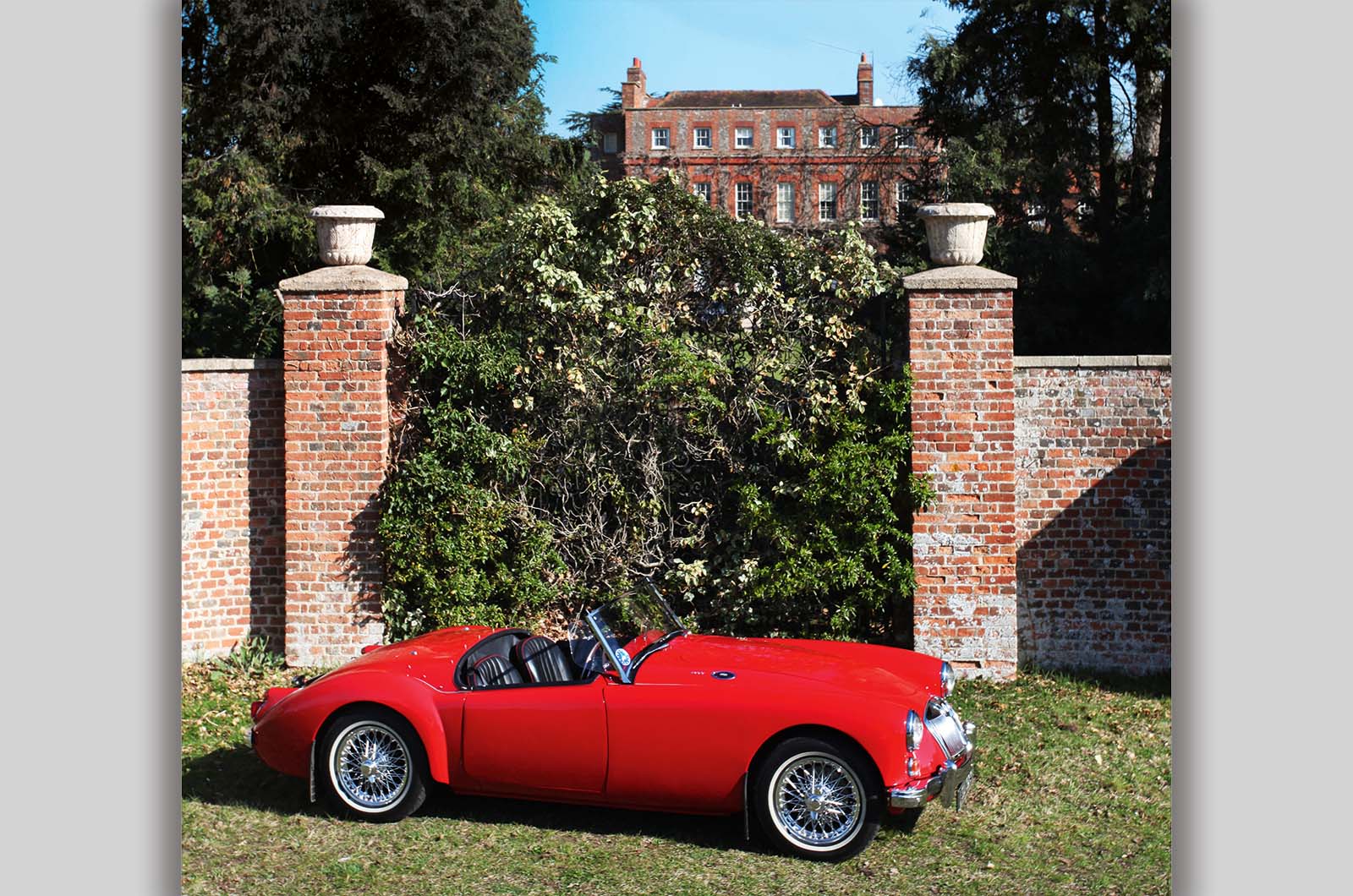
The widened chassis enabled the seating position to be dropped slightly, and the aerodynamic full-width body swept along from the laid-back grille to the compact rear end. It’s a wonderfully simple and pretty shape.

The 1489cc ‘four’ was soon uprated from 68bhp to 72bhp and, in 1959, the standard model received the 1588cc B-series, becoming the MGA 1600 in the process.

Disc brakes were fitted at the front, and the sports car continued to be available as a Coupé or soft-top.

The new 1600 extended the MGA’s sales success, with more than 31,000 being built in two years.

Classic & Sports Car – MGA: exploring Abingdon’s original test routes
The streamlined MGA took over from the MG T-type series in 1955

‘Our’ car is a MGA Mk1 1600; the shortlived Mk2 – which used a 1622cc engine and is most easily recognised by the inset grille with vertical bars – was introduced in 1961, but lasted only until the introduction of the MGB the following year.

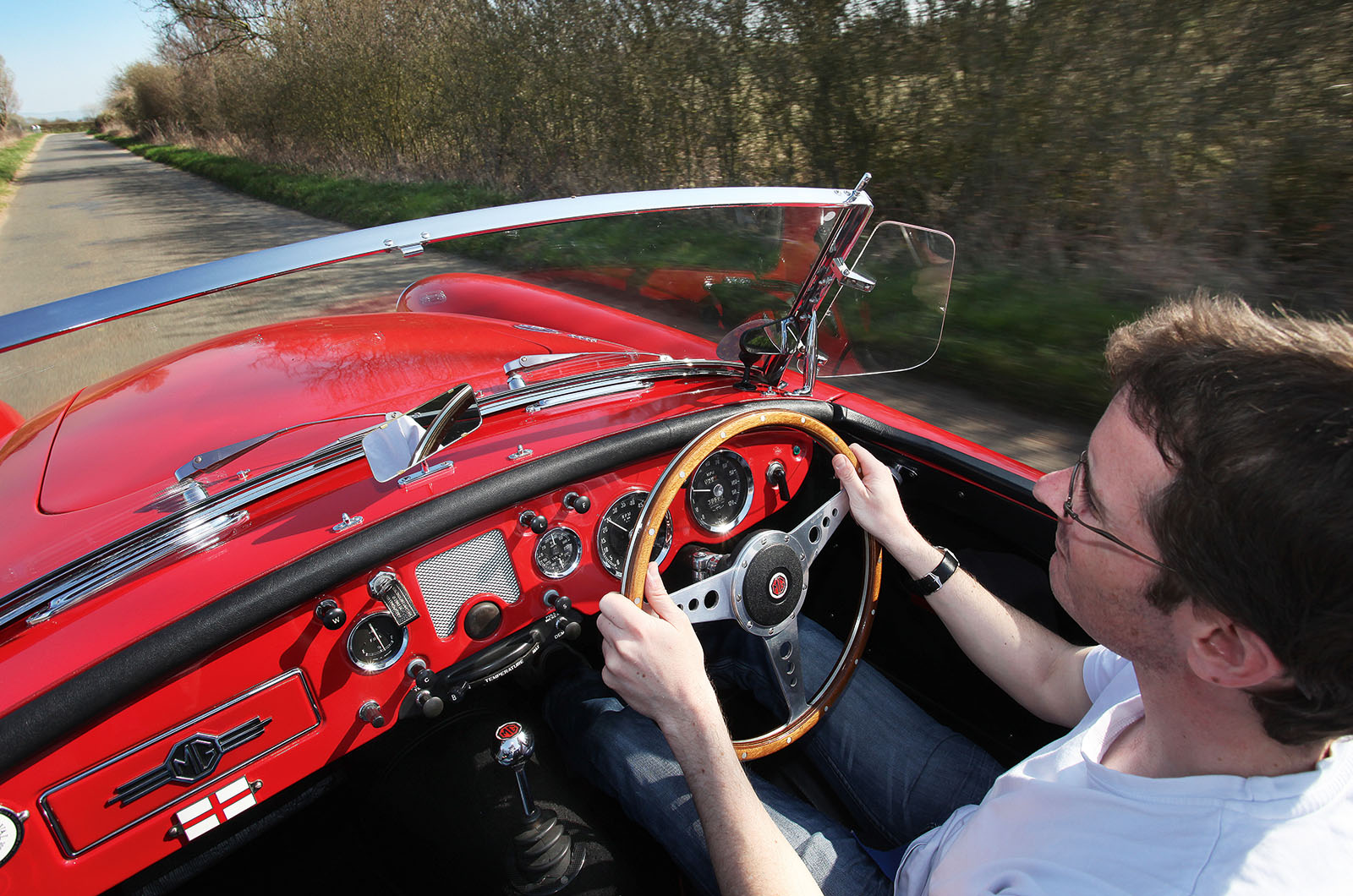
Inside the MGA Mk1 1600, the gauges and switchgear are arranged a little haphazardly across the painted-metal dashboard.

While the rev counter and speedo are directly ahead, various pull-switches operate the lights, wipers and suchlike.

The engine is awakened by turning the key in the ignition then pulling the starter. The indicators are operated via a lever on the far right.

Despite the car’s compact size, you would have to be of fairly extreme proportions not to find a comfortable seating position inside.

From behind the wheel, it’s one of the least intimidating sports cars you could ever wish to drive.

Classic & Sports Car – MGA: exploring Abingdon’s original test routes
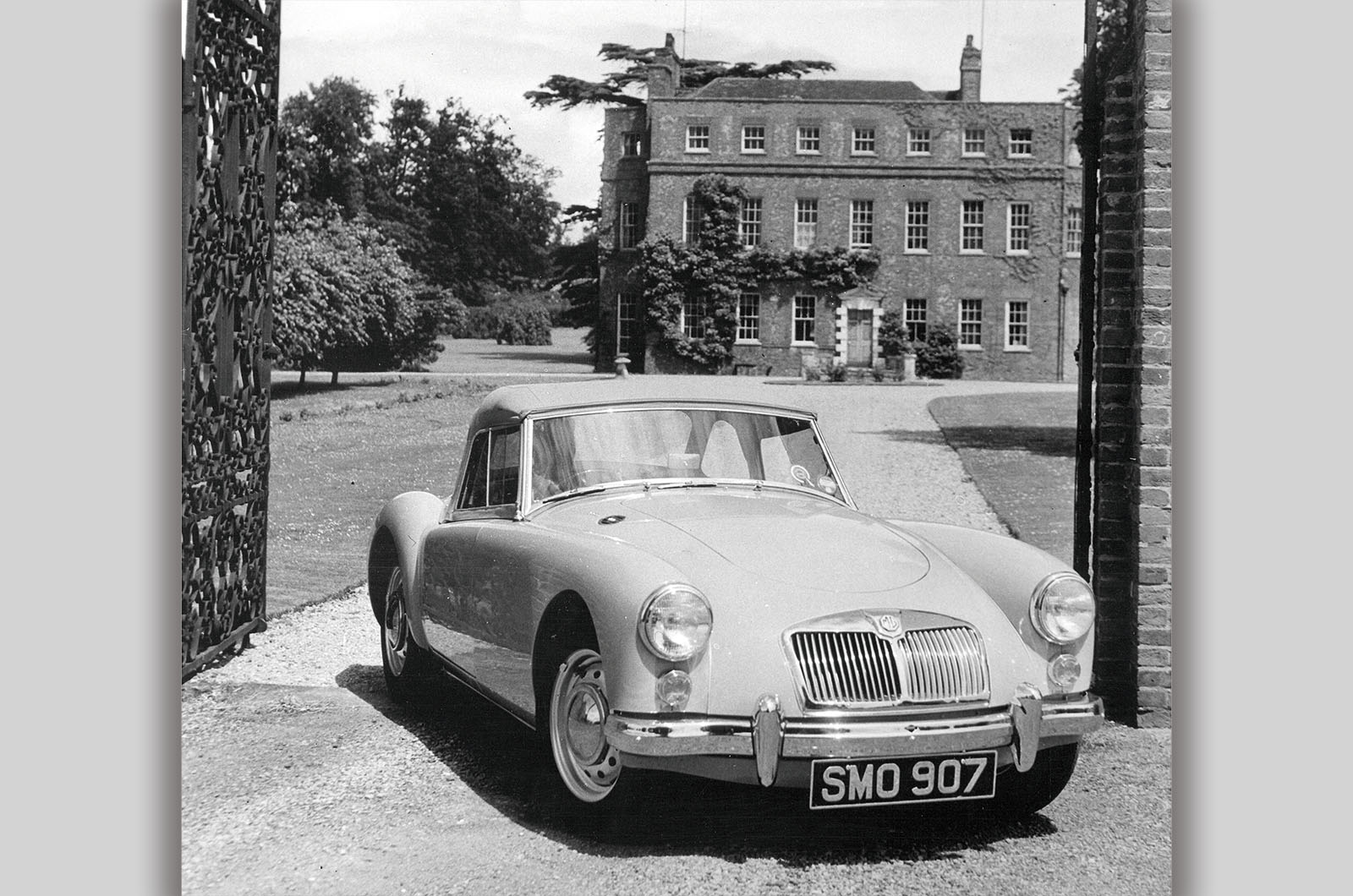
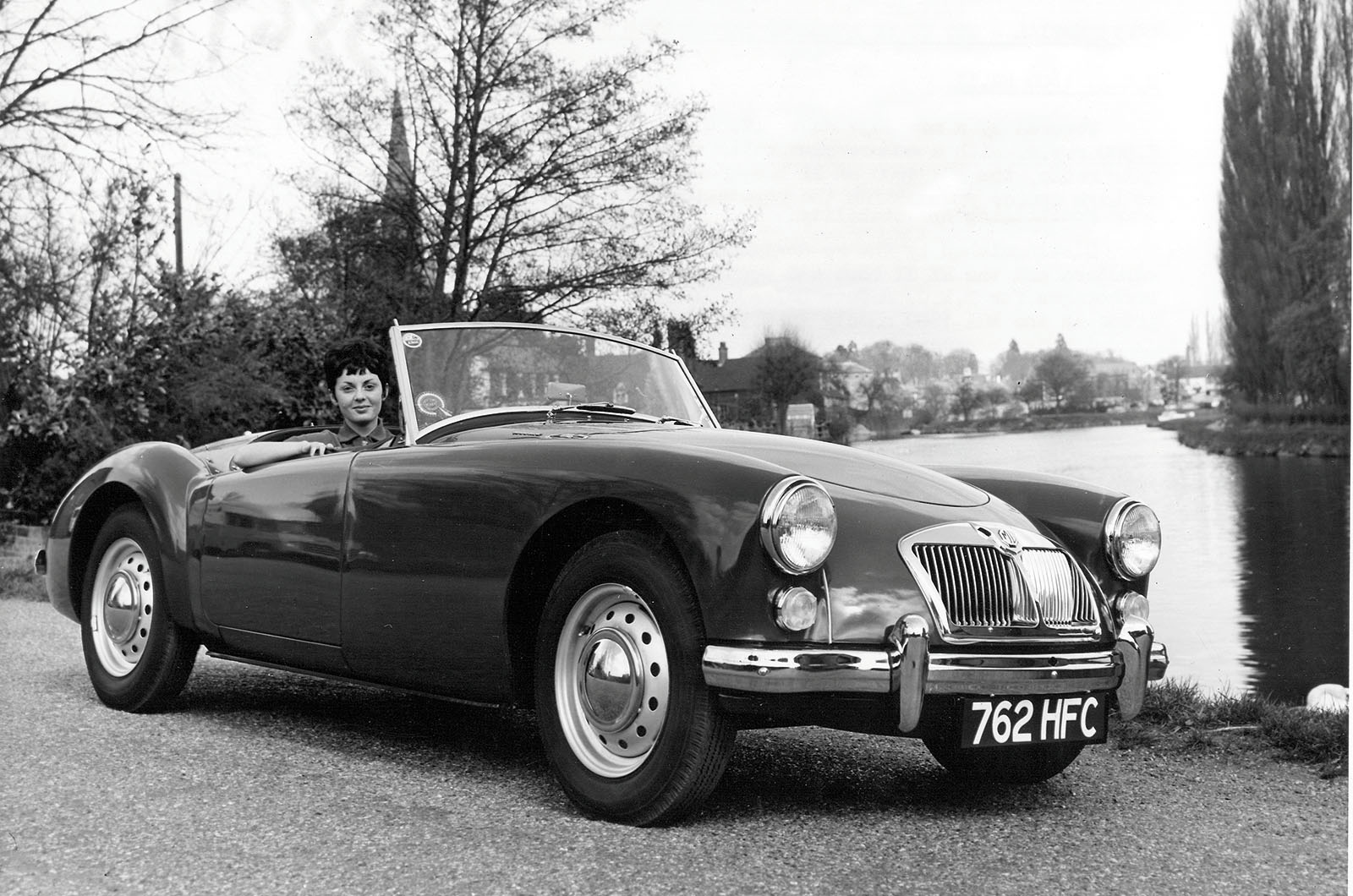
Recreating a period press photo (left) with this MGA

The driver’s door sits low against your right arm, and the view ahead is dominated by the front wings sweeping down to the headlights.

Whether you are looking at it from outside or sitting behind the wheel, you could only describe the MGA as ‘friendly’.

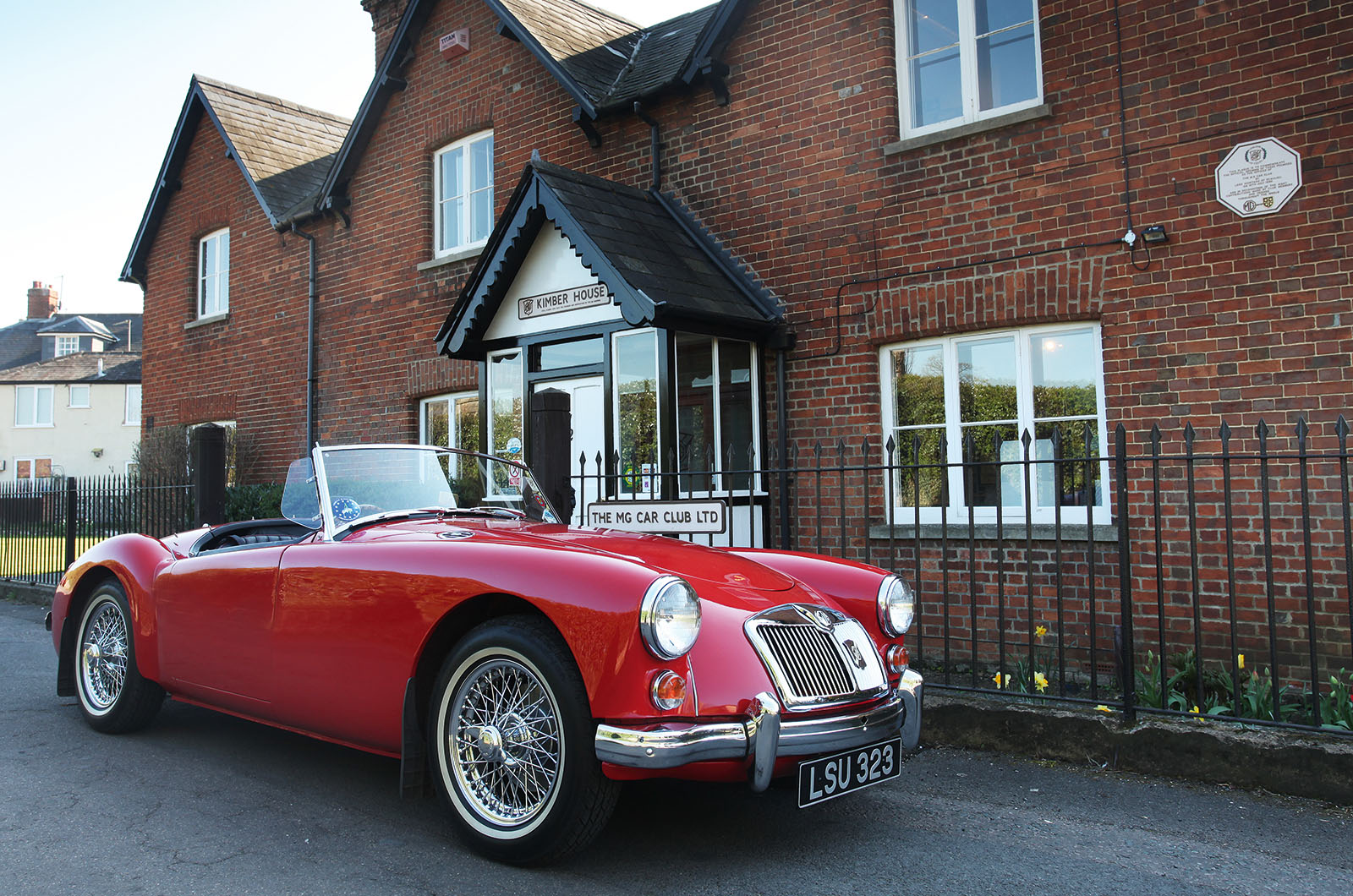
Our day starts at the MG Car Club’s HQ at Kimber House, which is on the edge of the old Abingdon site.

For many years, MGs would have been driven out of the factory and down the ominous-sounding Cemetery Lane, taking them past Kimber House’s front door.

If, from there, you head west out of Abingdon and drive underneath the later stretch of A34 bypass, you are soon on to MG’s factory test routes.

Classic & Sports Car – MGA: exploring Abingdon’s original test routes
‘On a fast B-road, freed from the constraints of town, this is the ideal MG experience’

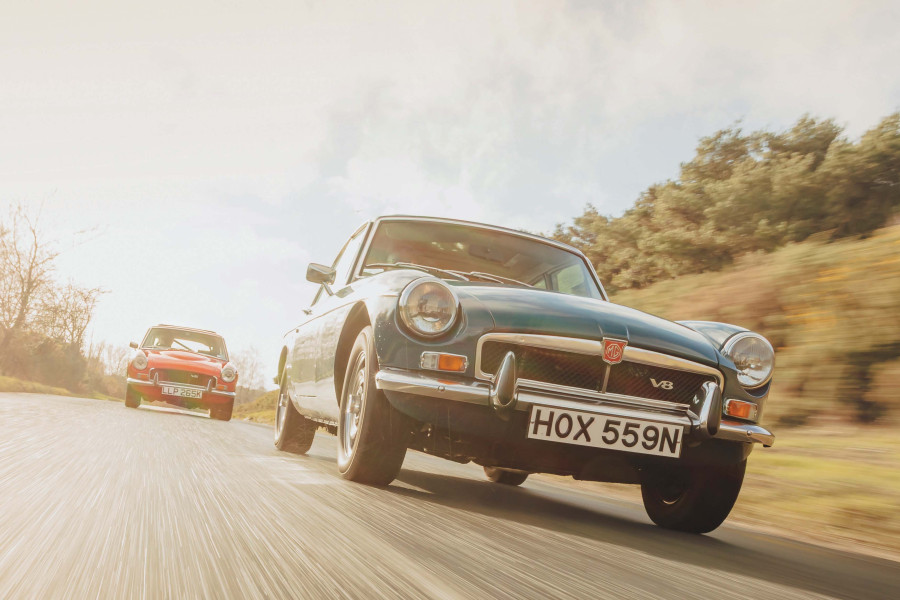
All of the firm’s cars had to complete a short loop in order to pass the final inspection, a practice that continued until 1975, when a rolling road was installed at the works.

Even then, the MGB GT V8 was still tested the old-fashioned way, albeit using an extended route that allowed for more high-speed driving.

The layouts that were used until the late 1940s were effectively circuits, but the later version that this MGA would have taken was slightly different.

It’s more of an ‘out and back’ route, turning off the A415 shortly after going under the A34 and heading to the Sheepstead crossroads before spinning around and returning to Abingdon the same way.

Covering only six or seven miles, it isn’t long and, even allowing for modern traffic, you can drive the whole thing in less than a quarter of an hour.

Classic & Sports Car – MGA: exploring Abingdon’s original test routes

The Mk1 MGA 1600 makes 80bhp

What it does do is give you the chance to stretch the MGA’s legs.

Once freed from the constraints of the main drag out of Abingdon, you turn north and can enjoy a couple of miles of fast B-roads, with gentle curves and the occasional crest.

When the sun is shining, this is close to the ideal MGA experience.

The B-series is not the sweetest of engines, but it is strong and, in a car of this diminutive size, offers willing performance.

Our chosen steed boasts a slightly tweaked 1652cc powerplant, so it feels particularly keen.

It handles nicely, too. Despite its modern styling, under the skin the MGA’s independent front suspension was closely related to that used in the MG TF, while the Magnette saloon donated its rear axle and semi-elliptic leaf springs.

Classic & Sports Car – MGA: exploring Abingdon’s original test routes

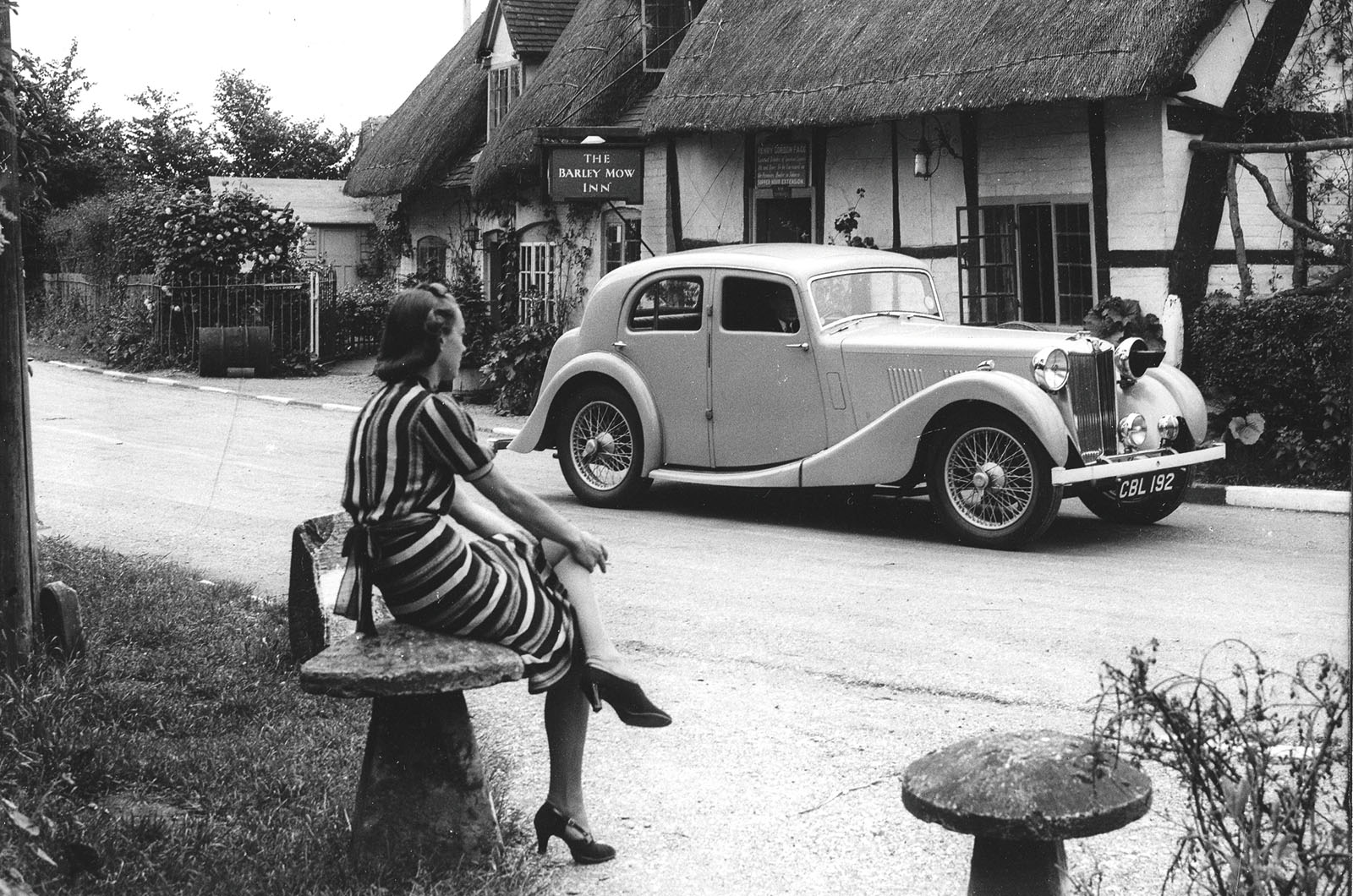
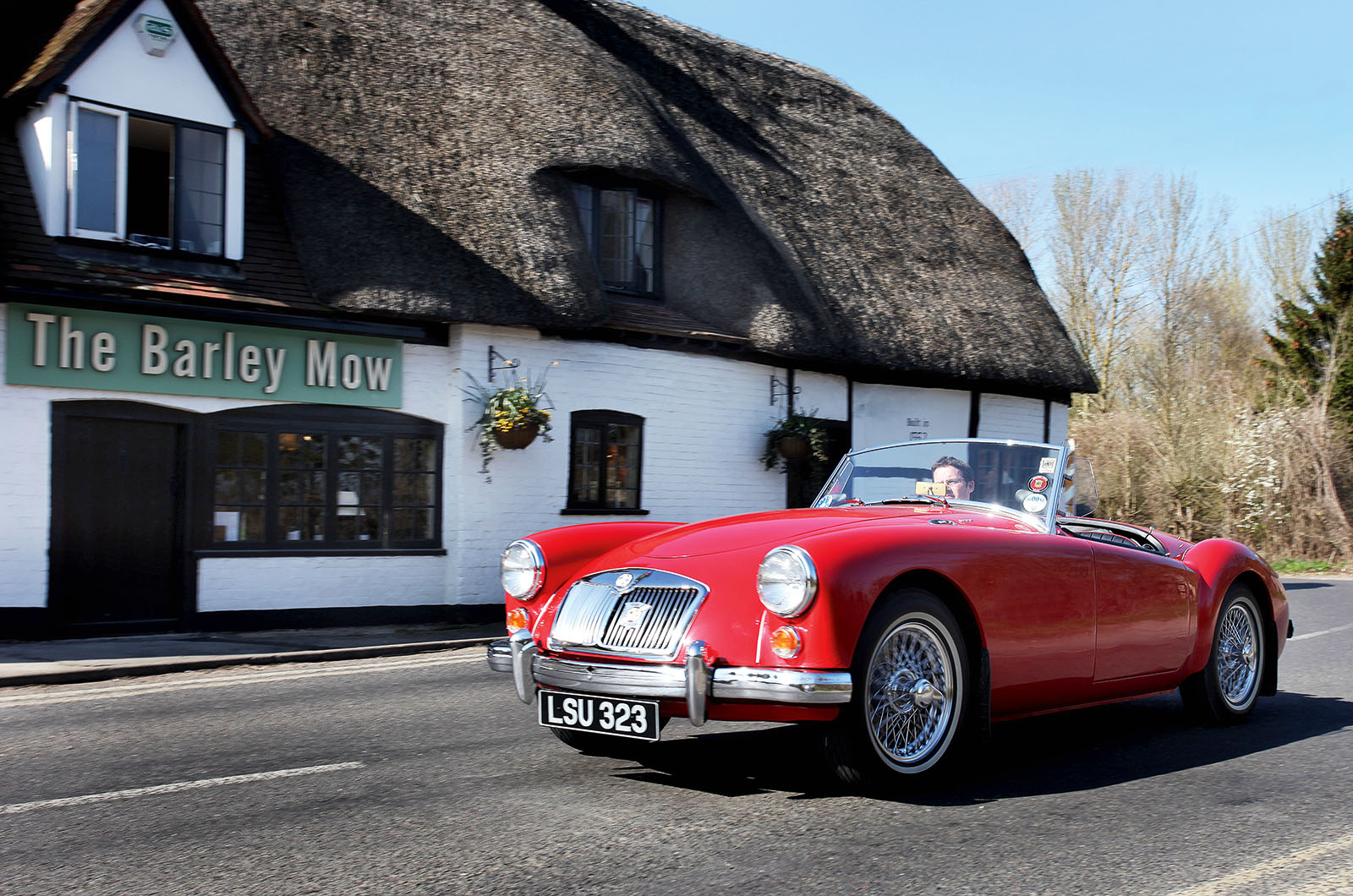
MG often visited The Barley Mow at Clifton Hampden, here in 1937, with a VA (left); ‘our’ MGA outside the pub in 2012

With lever-arm dampers all round, it might not sound like the most thrilling set-up, but the 1600 gained stiffer springs and uprated dampers over the earlier car.

Its steering is direct and the little MG adopts a composed stance even when cornering enthusiastically.

You can have an awful lot of fun in it without having to drive all that quickly.

We don’t restrict ourselves to this short stretch, however.

You can cover each of the four main layouts with ease and, as you would expect of test routes, they offer everything from quiet countryside to fast A-roads.

And the knowledge that you are following in the wheeltracks of so many famous models adds to the sense of occasion.

Classic & Sports Car – MGA: exploring Abingdon’s original test routes

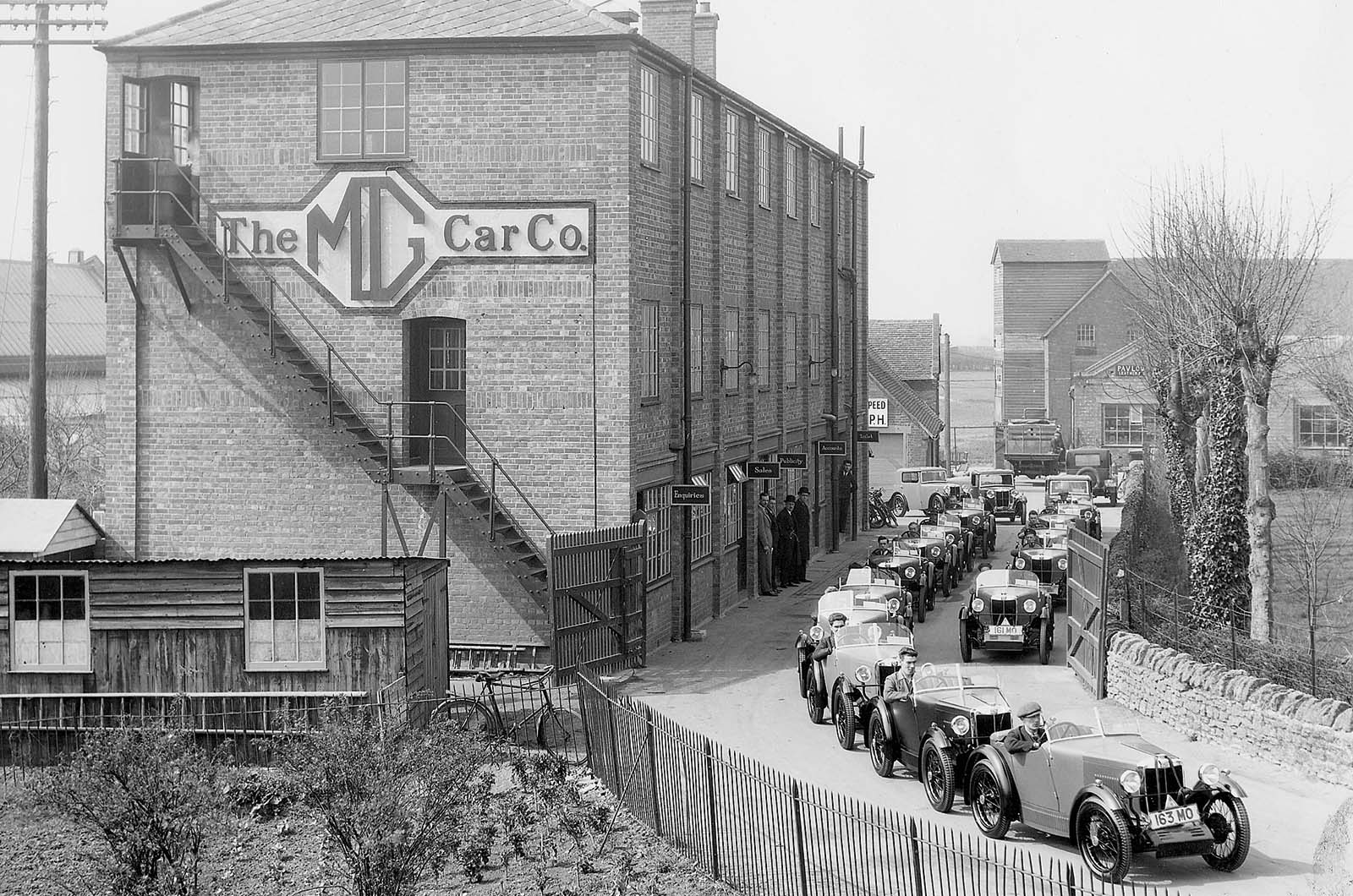
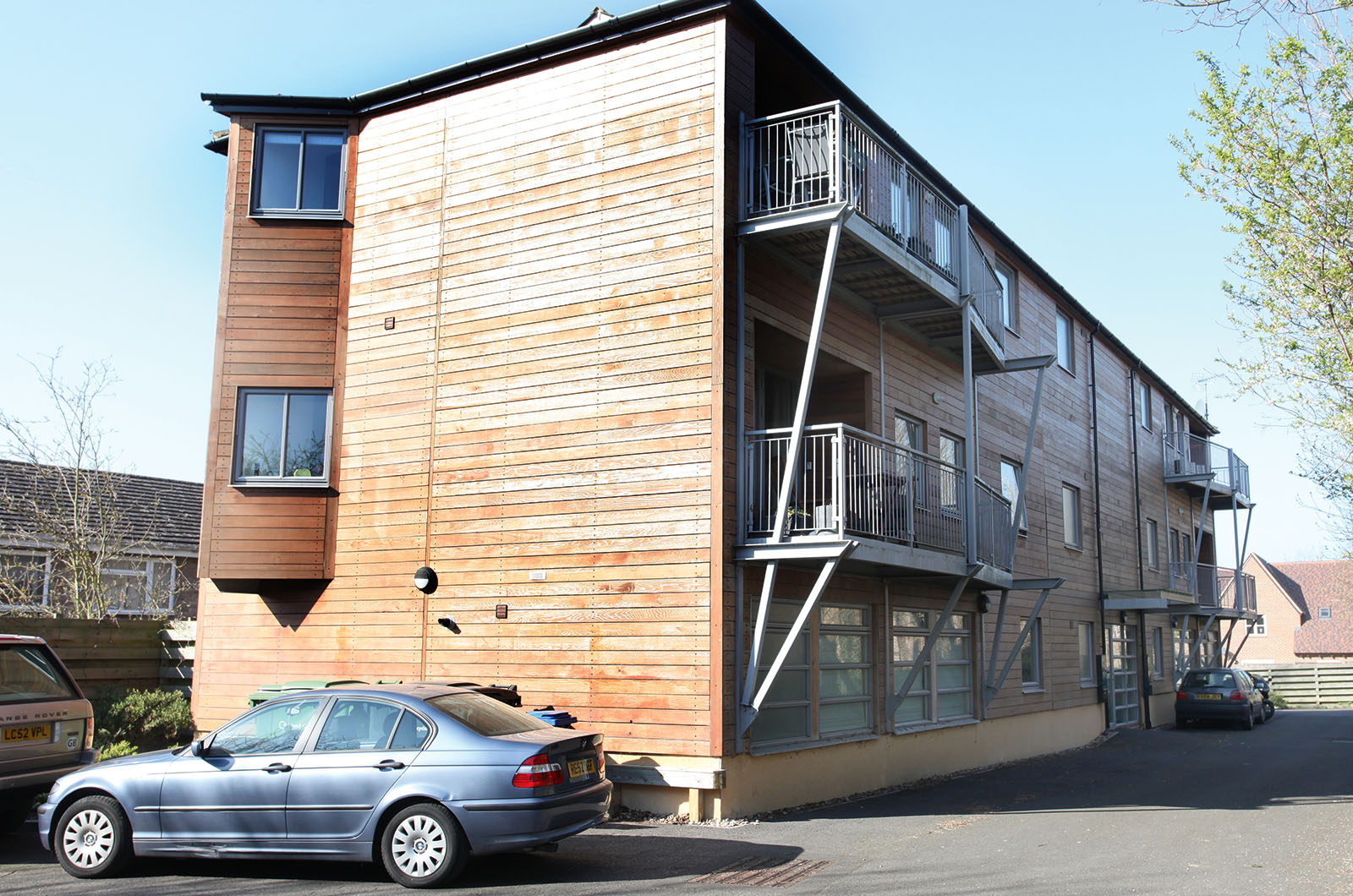
MGs pose outside the old Admin Block, which is still there (left); the Admin Block today, viewed from Kimber House

In period, MG’s road-testers did deviate from the prescribed route when they wanted to evaluate particular elements of a new car.

If, for example, a high-speed vibration had been identified, they might check it on a smooth, fast section that went south from the A415, nicknamed the ‘Marcham Road M1’.

Another variation was to add an easterly extension to the route as far as the wonderfully named Kingston Bagpuize. This longer layout was also used for all Rileys that were built at Abingdon.

MG production began here in 1929, in a disused factory that was formerly owned by the Pavlova Leather Company.

The main entrance was at the southern end of the site off the Marcham Road. You can now, if you feel so inclined, ‘enjoy’ a McDonald’s breakfast on this very spot.

Classic & Sports Car – MGA: exploring Abingdon’s original test routes

‘Our’ MGA outside Kimber House which now is home to the MG Car Club’s HQ

Houses and a police station have been built where MG’s ‘A’ block used to be.

This was where the press shop and the machine shop were, plus the service department and ‘show preparation shop’.

Opposite that, in ‘B’ block, were the design and development departments, the Competitions department, and final inspection.

This building remains, but it now features timber cladding.

‘C’ block – which was home to the Special Tuning Department – is also still there, albeit now swallowed up by Abingdon Business Park.

Just a hundred yards or so from Kimber House you can see the old Administration block, which has been converted into flats and, like ‘B’ block, sports a more modern wrapper.

Hopefully the new occupants are aware of their home’s place in British motoring history.

Classic & Sports Car – MGA: exploring Abingdon’s original test routes

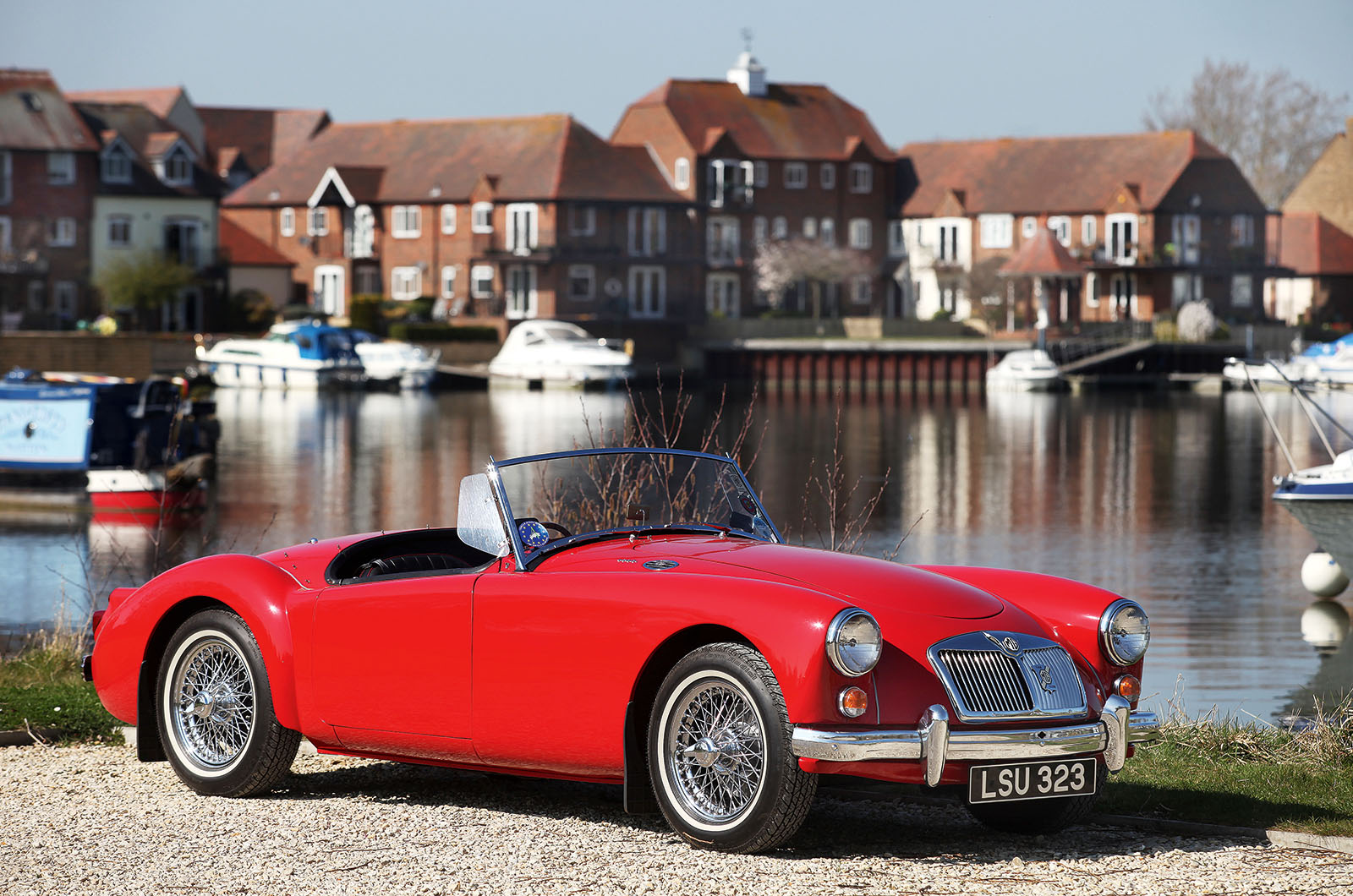
An MGA parked next to the River Thames for a period press photo (left); Abingdon Marina was an appropriate substitute for the busy riverside road

Many other parts of the site have been lost for good.

The Air Pollution Control Centre was the first of its kind when it was built in 1966-’67 but it’s now gone, along with the Barrier Impact Testing Facility, which was used to ensure that cars conformed to American safety legislation.

Abingdon’s closure was one of British Leyland’s more short-sighted ideas, and that’s saying something.

The factory was small but efficient, with good labour relations.

It was an integral part of Abingdon life, and you don’t have to look too hard to find, for example, the locations that MG used for its photography.

That said, the danger signs were there as soon as BL was formed and MG was brought under the same umbrella as Triumph, its natural rival.

Classic & Sports Car – MGA: exploring Abingdon’s original test routes

The MGA heralded a new era of sports cars from Abingdon

Having largely neglected the marque in the second half of the ’70s, BL pulled the plug on Abingdon in 1980, amid strong opposition from workers and the wider public alike.

Yet the MGA is from a very different era, and injected new life into the marque.

The years immediately following the war were good for MG, especially in terms of exports.

America, in particular, became a vital market – only 5% of total MGA production went to the UK.

Also, the sporting ethos that had always been right at the forefront of the company’s designs was still very much alive and well, even if MG no longer enjoyed the high-profile racing achievements that works entries had in the ’30s.

It paved the way for the runaway success of the MGB and Midget, while at the same time establishing itself as the apotheosis of how a 1950s British sports car should look and drive.

Images: James Mann/MG Car Club

Thanks to: Chris Seaward at the MG Car Club; Sophie Wilson

This was first in our July 2012 magazine; all information was correct at the date of original publication


MGA Twin-Cam: giving the B-series more power

Classic & Sports Car – MGA: exploring Abingdon’s original test routes

Just 2111 MGA Twin-Cams were built

The idea of a higher-performance MGA had been kicking around from the time the model was launched.

Stylist Gerald Palmer had suggested that a twin-cam engine would be ideal for a hot MG Magnette and, although that ultimately came to nothing, it set the ball rolling: both Austin and Morris submitted proposals for a twin-cam.

The latter option was accepted, and used an aluminium cylinder head on the existing B-series block, bored out to give a capacity of 1588cc.

When the 108bhp MGA Twin-Cam appeared in 1958, external changes were kept to a minimum.

Classic & Sports Car – MGA: exploring Abingdon’s original test routes

The MGA Twin-Cam made 108bhp from a modified B-series engine

Subtle badging was added, as were centre-lock Dunlop steel wheels.

Behind them were disc brakes all round, but unfortunately the impressive specification didn’t make up for the fact that the engine suffered from all sorts of teething troubles – serious ones, in fact, such as holed pistons, excessive oil consumption and coolant loss.

There was no doubting the performance gains offered by the new model, however.

The Motor achieved 0-60mph in 9.1 secs as part of its road test, although the top speed fell a little short of the claimed 120mph.

MG did finally get on top of the reliability problems, but sadly it was too late.

The Twin-Cam was withdrawn from sale in 1960 after only 2111 had been made.

Images: Tony Baker


Factfile

Classic & Sports Car – MGA: exploring Abingdon’s original test routes

MGA Mk1 1600

  • Sold/number built 1959-’61/31,501
  • Construction steel chassis, steel body
  • Engine all-iron, overhead-valve 1588cc ‘four’, twin SU carburettors
  • Max power 80bhp @ 5600rpm
  • Max torque 87lb ft @ 3800rpm
  • Transmission four-speed manual with no synchromesh on first, RWD
  • Suspension: front independent, by coil springs, wishbones rear live axle, semi-elliptic leaf springs; lever-arm dampers f/r
  • Steering rack and pinion
  • Brakes discs front, drums rear
  • Length 13ft (3962mm)
  • Width 4ft 10in (1473mm)
  • Height 4ft 2in (1270mm)
  • Wheelbase 7ft 10in (2388mm)
  • Weight 1988lb (902kg)
  • 0-60mph 13.3 secs
  • Top speed 96mph
  • Mpg 29.7
  • Price new £940 7s 6d (1959)

Enjoy more of the world’s best classic car content every month when you subscribe to C&SC – get our latest deals here


READ MORE

MGA Twin Cam: on track in an ex-works racer

MGB vs rivals: six alternatives take on Abingdon’s classic champion

MG Metro, Maestro and Montego: Octagon’s renaissance