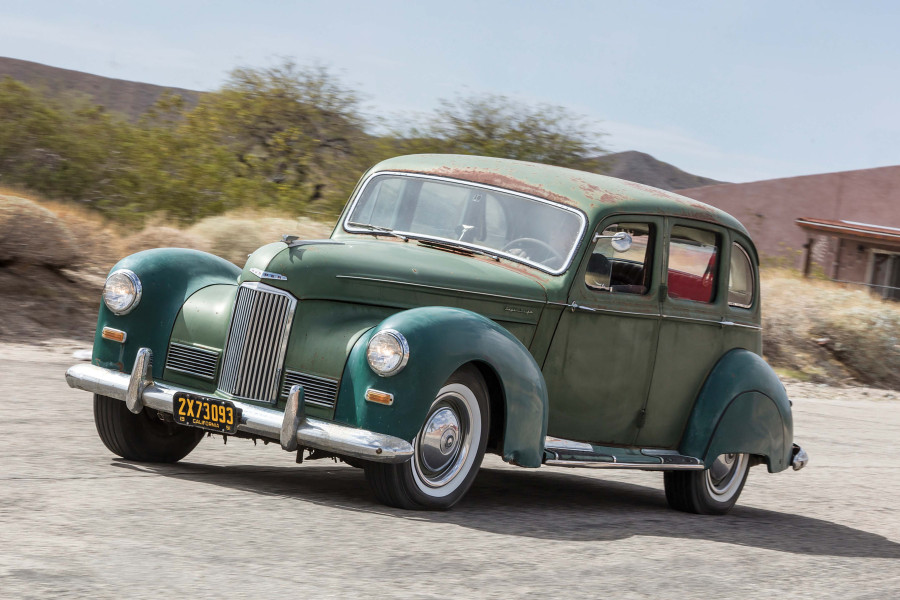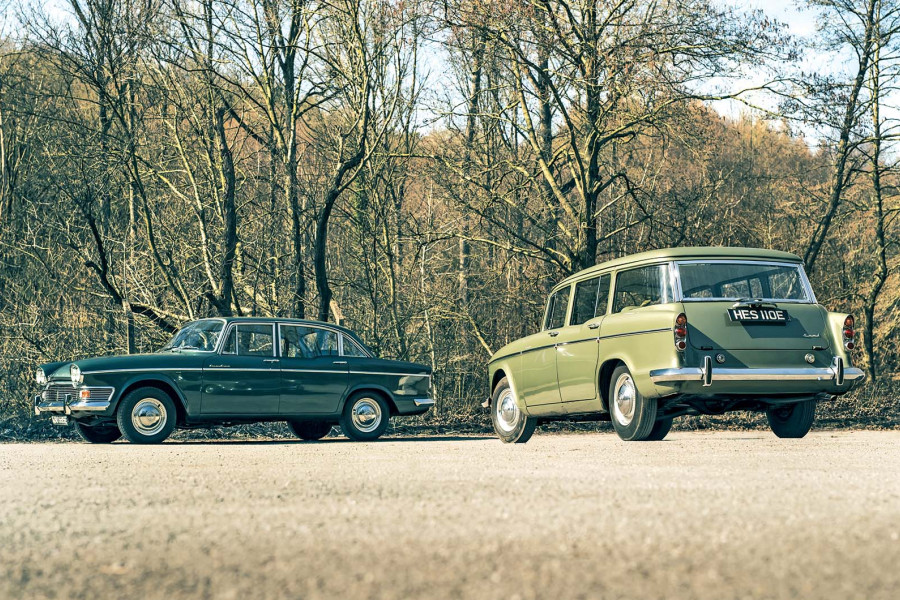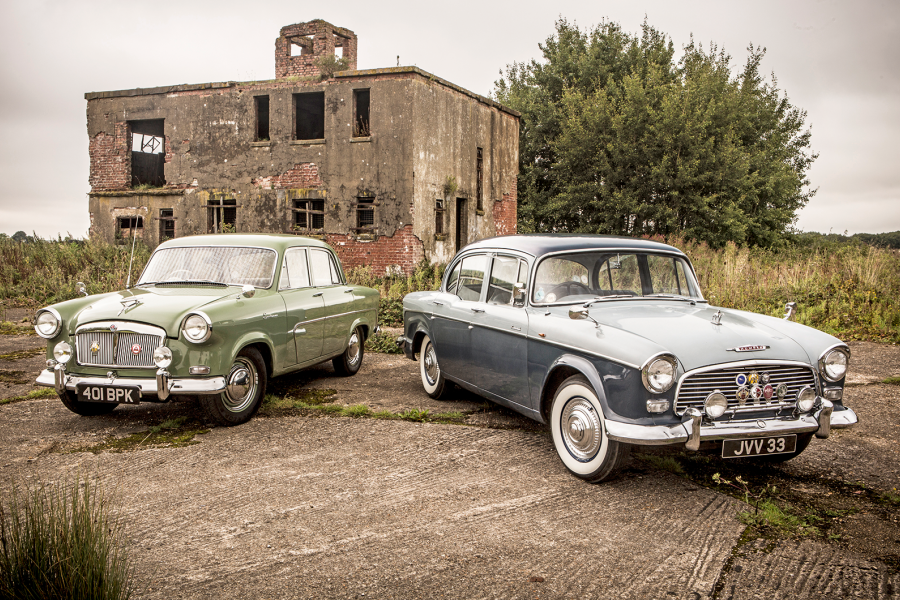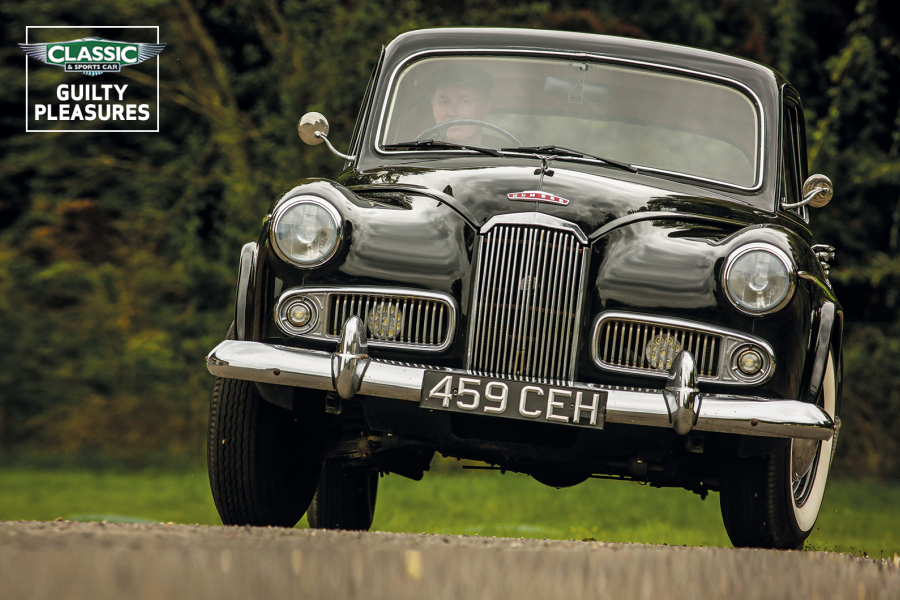
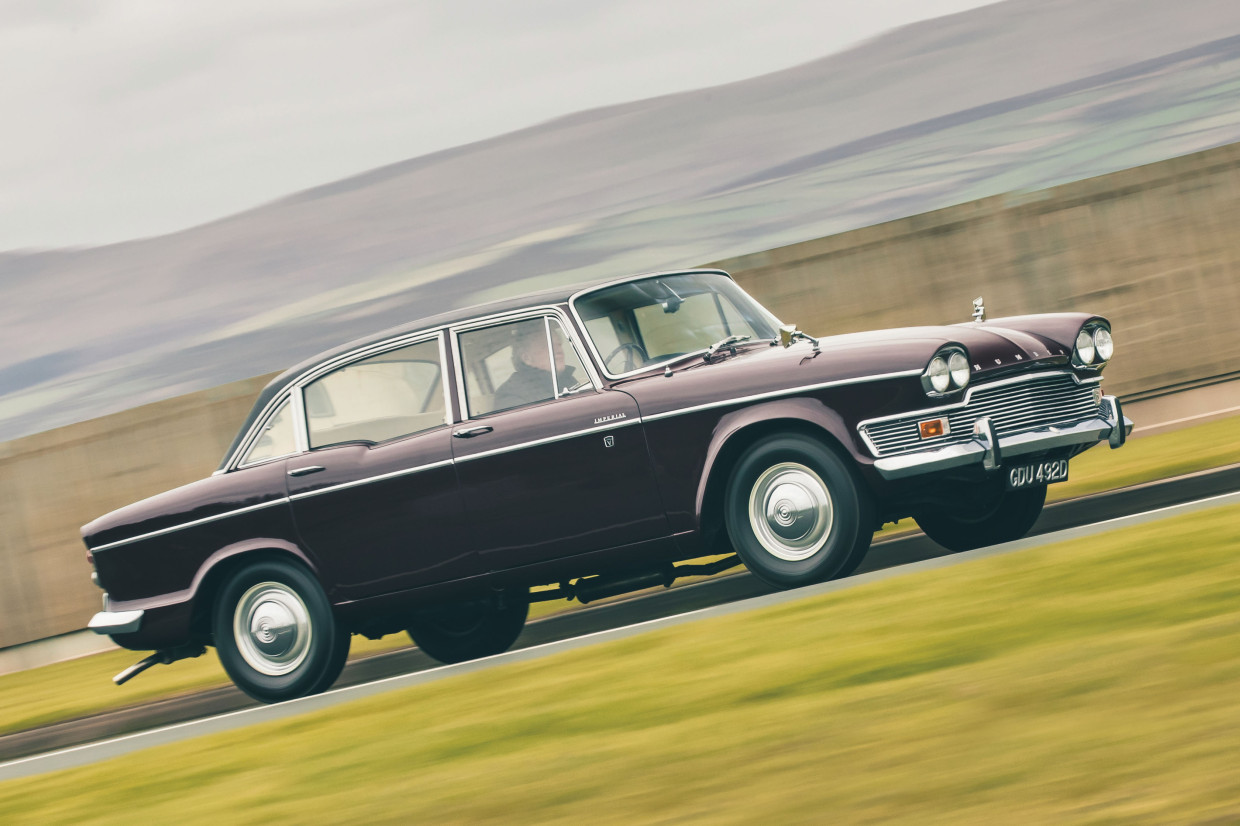
Humber made dignified cars, reliable cars, comfortable cars.
Prestigious, luxurious automobiles for status-conscious bank managers, for government service, tycoons with half an eye on the purse strings and businesspeople who liked the value factor of a respectable luxury saloon that suggested money well spent rather than squandered.
But what this flagship division of the Rootes Group never got around to making were fast or exciting cars.
Relaxing, effortless, even brisk vehicles, but ones lacking a certain authority as the motorway age dawned.
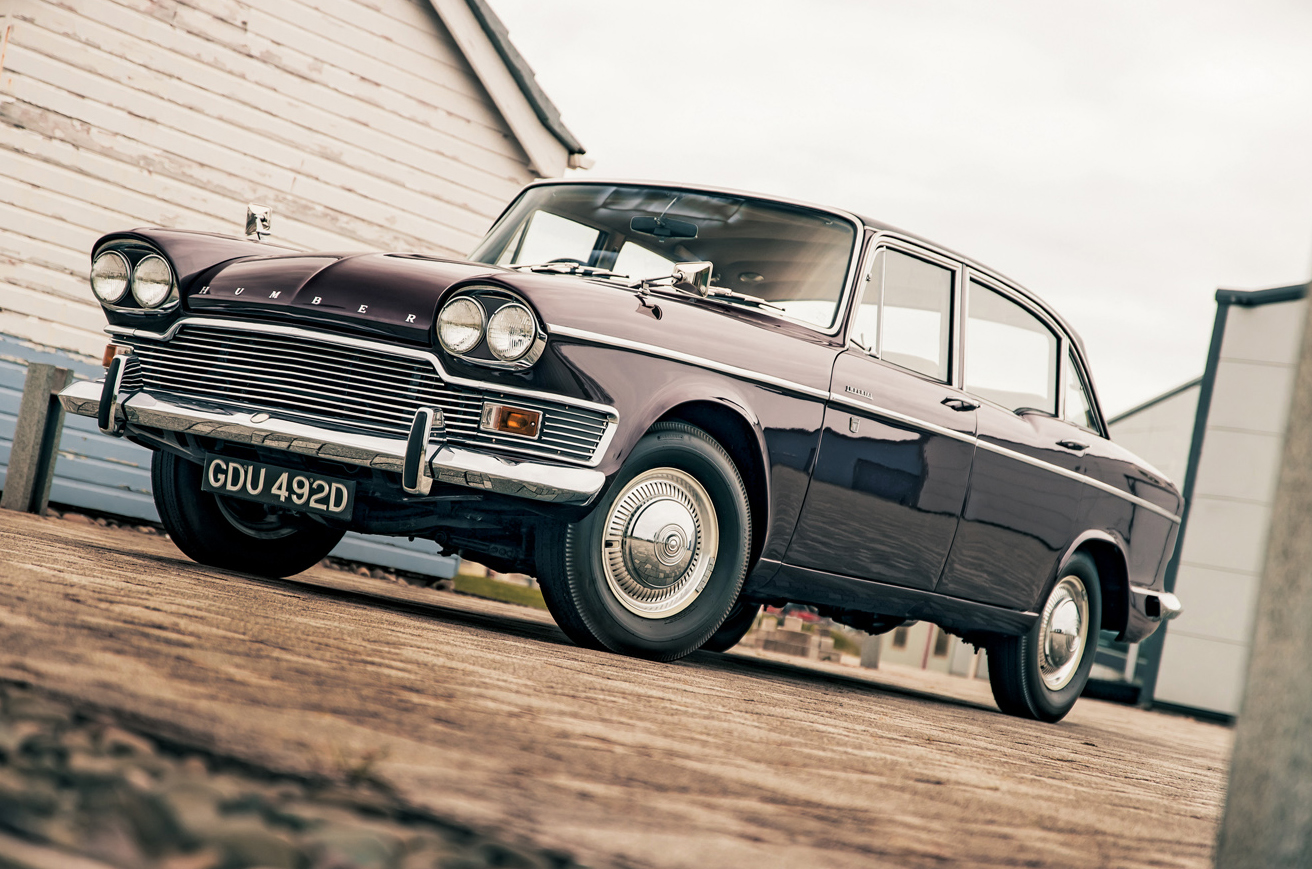
Restrained elegance was the order of the day for the Humber Imperial, both inside and out
In fairness, nobody ever bought a Humber for its red-blooded driver appeal.
But this conservative, almost pre-war approach was beginning to catch up with the firm by the early ’60s.
That the top speed of its 3-litre Series IV Super Snipe only inched over 100mph in 1961 was perhaps less significant than its ponderous acceleration: testing an Imperial in 1965, Autocar stated that this 128bhp automatic luxury saloon was ‘barely powerful enough’.
Its unresponsive, nose-heavy handling was equally at fault: such behaviour was no longer automatically accepted as a trade-off against luxury.
The Humber Imperial V8 could have altered the British marque’s trajectory
The power game was on, but Humber looked unwilling – or unable – to play it.
Smooth and quiet it might have been, but the Armstrong Siddeley-derived straight-six was long, heavy and under-tuned.
What sufficed when the first unitary Humber bodyshell had appeared in 1957 no longer satisfied anyone who had driven a modern Jaguar or experienced the verve of a V8 American car that could hit 80mph by the time the Humber had trotted up to 60.
What the author of that road test couldn’t have known was that Humber had an answer waiting in the wings, in the form of a Chrysler V8-engined version of the Super Snipe and Imperial.
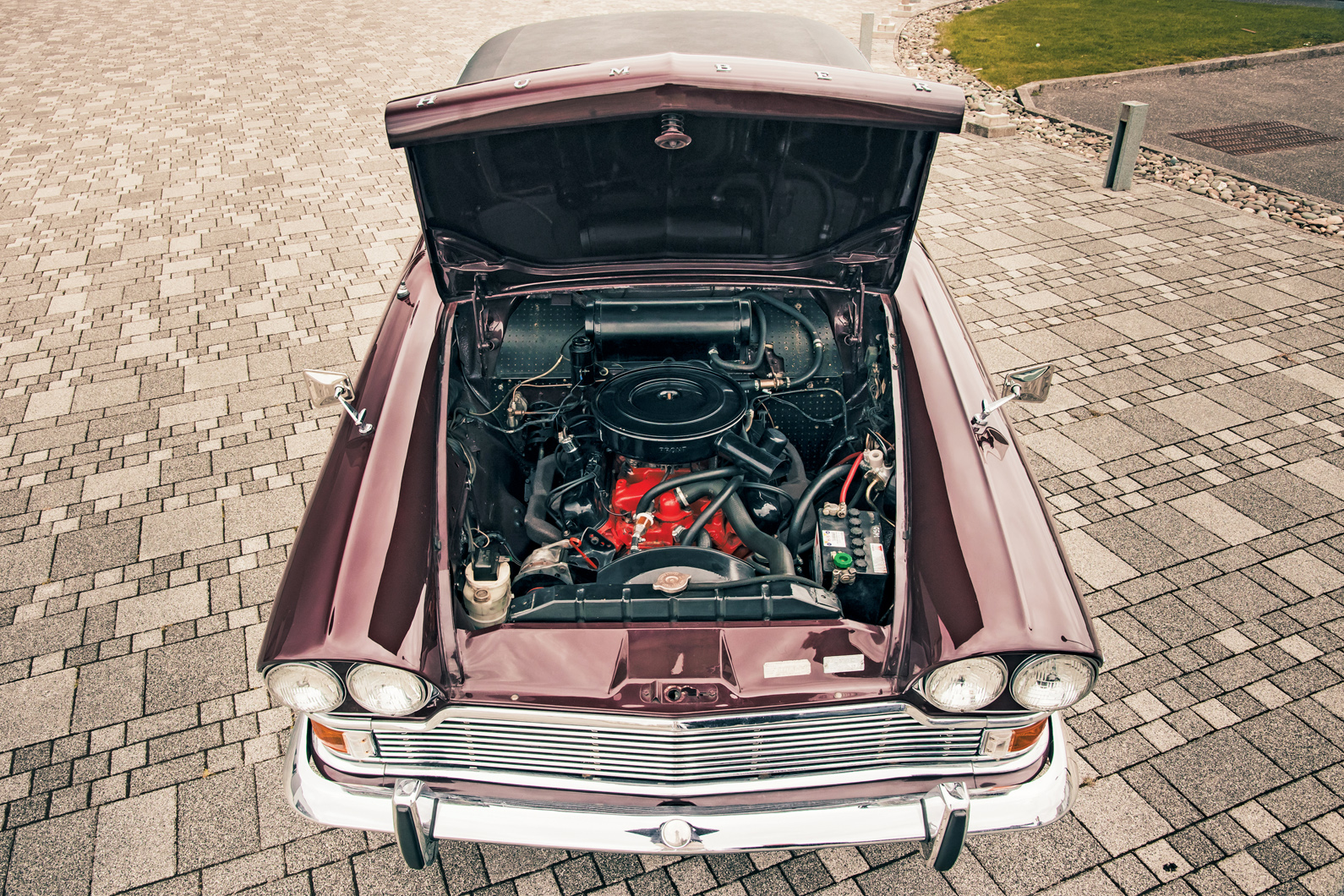
The Humber Imperial V8’s Chrysler engine fits comfortably
In the wake of the success of the Ford V8-powered Sunbeam Tiger, and in light of Chrysler’s newly acquired stake in Rootes, there was management-level enthusiasm for making existing models more competitive.
The big Humbers were prime candidates: it was thought their large bodies would not present the installation problems that blighted the V8 Tiger, but this was only partially true.
Rootes, unlike Rolls-Royce and Daimler, did not have the resources to create its own V8, but could now call on partner Chrysler to supply one.
It was almost certainly urged along this path in the knowledge that Rover had, since summer ’64, been in negotiations with General Motors over the licence to produce the light-alloy Buick V8.
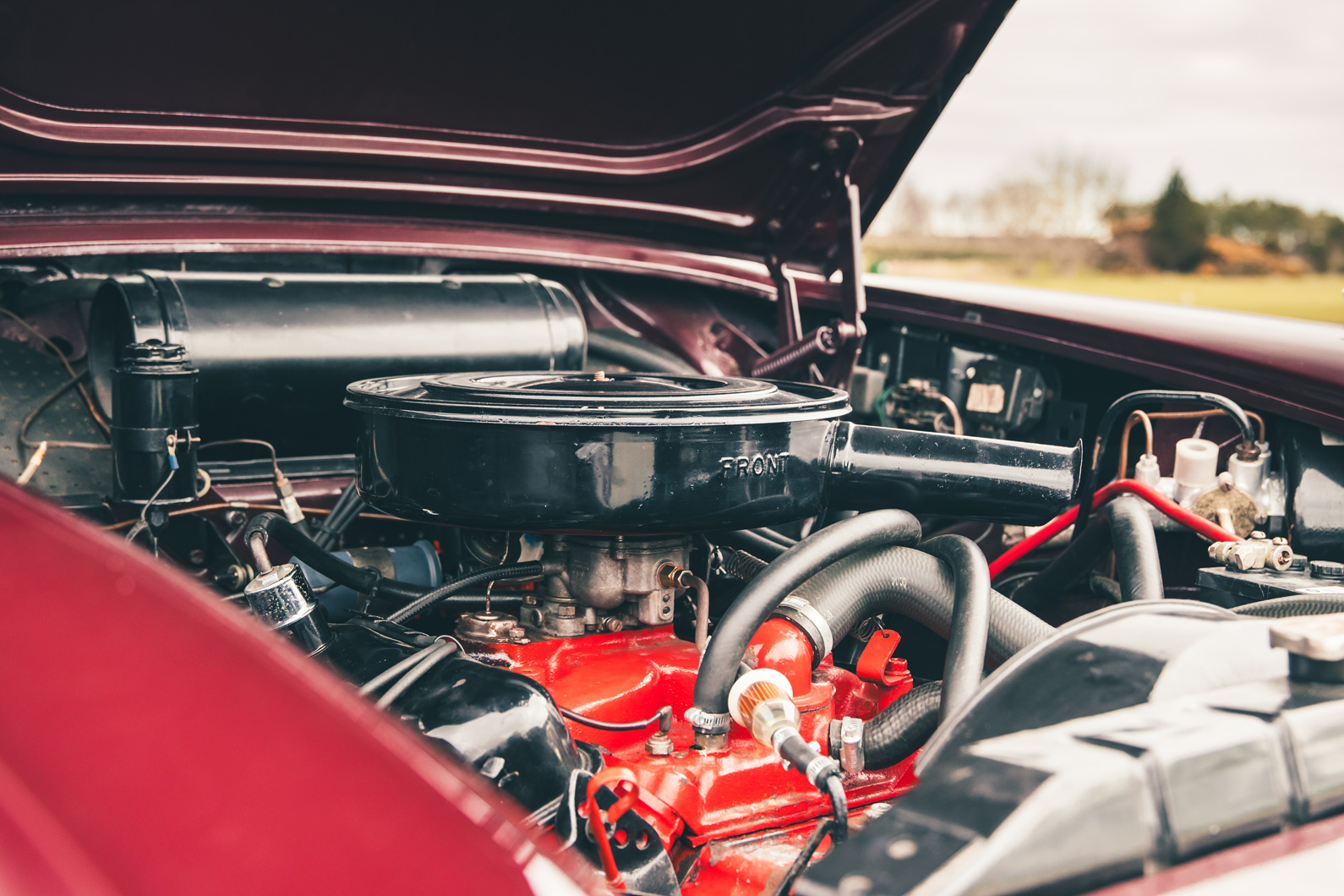
The Chrysler V8’s bright-red block is on the gaudy side
Yes, the Chrysler engine was heavier, but new thin-wall casting techniques had reduced the weight of all-iron American V8s: Rootes noted that the Chrysler block was almost 50lb lighter than the Humber’s ‘six’.
A V8 Super Snipe/Imperial would have seriously challenged the Rover P5B from 1967, while extending the life of a model whose sales had been slipping for years.
Strikes, and the expense of developing and putting the Hillman Imp into production in a remote Scottish factory, had broken the Rootes Group’s finances.
There would be a total of six ‘Snipe Chrysler’ prototypes, SC1 to SC6, and a further six pre-production cars: four Super Snipes and two Imperials.
Humber’s ambition to offer its Imperial and Super Snipe with V8 power was cut short, but this pre-production survivor reveals what could have been
SC1 had a 318cu in, 250bhp V8 and a manual gearbox, and would do 123mph.
Its 5.2-litre engine was significantly lighter than the Humber straight-six, but circulating MIRA at 115mph, it would wear out a set of Dunlop RS5 tyres after four laps with its doorhandles touching the trees at the top of the banking.
This was deemed, by Humber standards, a bit too exciting. So, at the beginning of 1965, a ‘project intention’ document was issued internally.
Its author proposed that a smaller Chrysler V8 would be an option in the Super Snipe and Imperial, using the 273cu in, 218bhp engine with a four-barrel Carter carburettor.
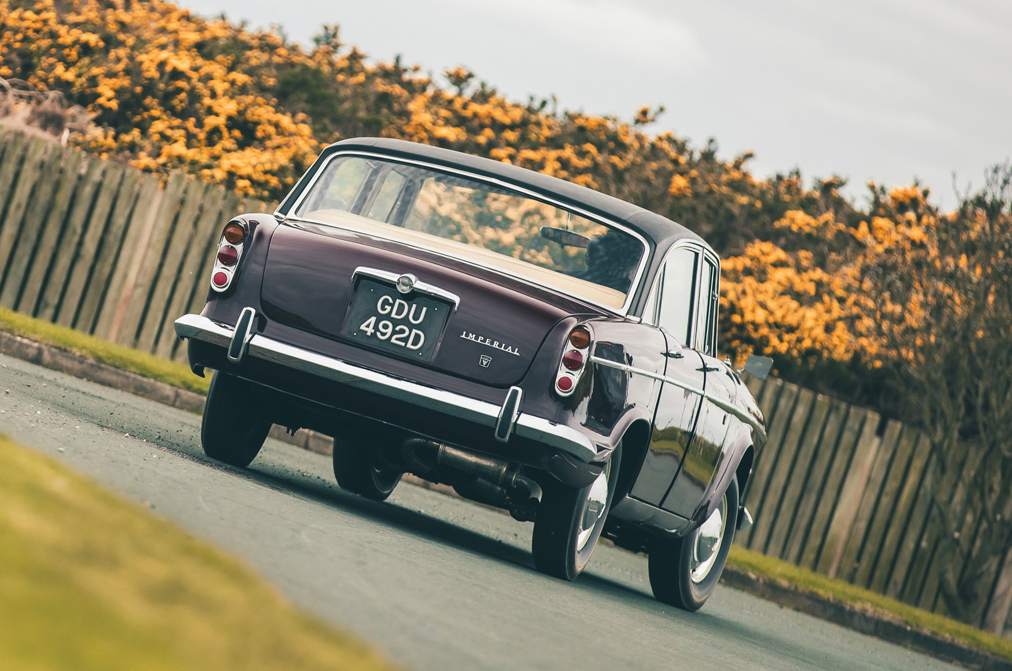
The Humber Imperial V8 understeers with little provocation, but controls its body quite well
In this form SC2 and SC3 were good for 118mph, but problems remained, burnt pistons and blown head gaskets among them.
Internal literature noted that the new models would only come as automatics (the excellent Torqueflite gearbox was supplied with the engine), have power steering as standard and a Lucas alternator rather than the Chrysler one that came with the engine, presumably for local servicing reasons.
It was speculated that a new radiator would be required, along with a replacement exhaust, stronger propshaft joints, an oil cooler and a repositioned, differently shaped battery.
New manifolds were needed, and the rear axle would have to be uprated to something bought in from Salisbury or of Chrysler origin, with wheel-hop-resistant radius arms.
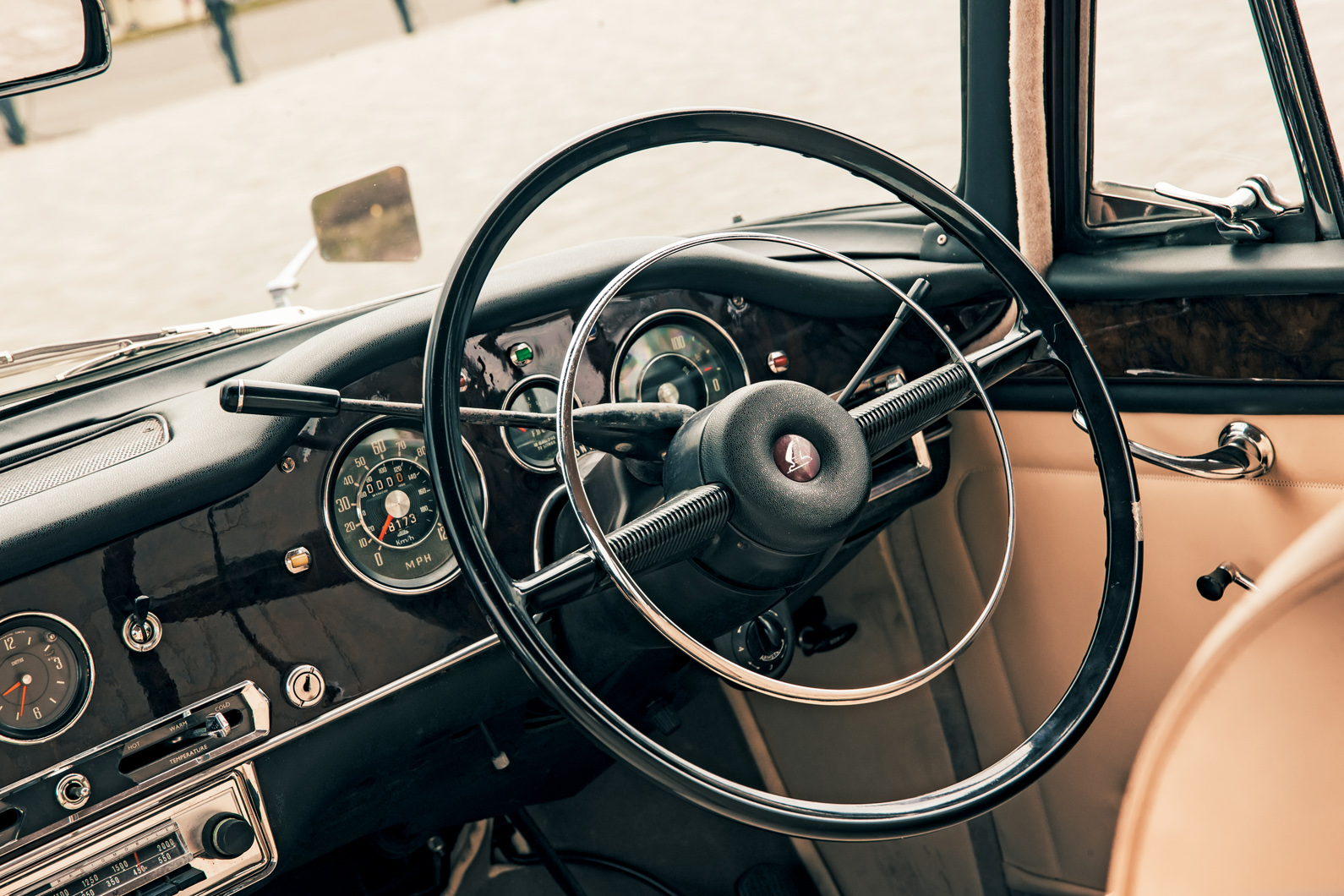
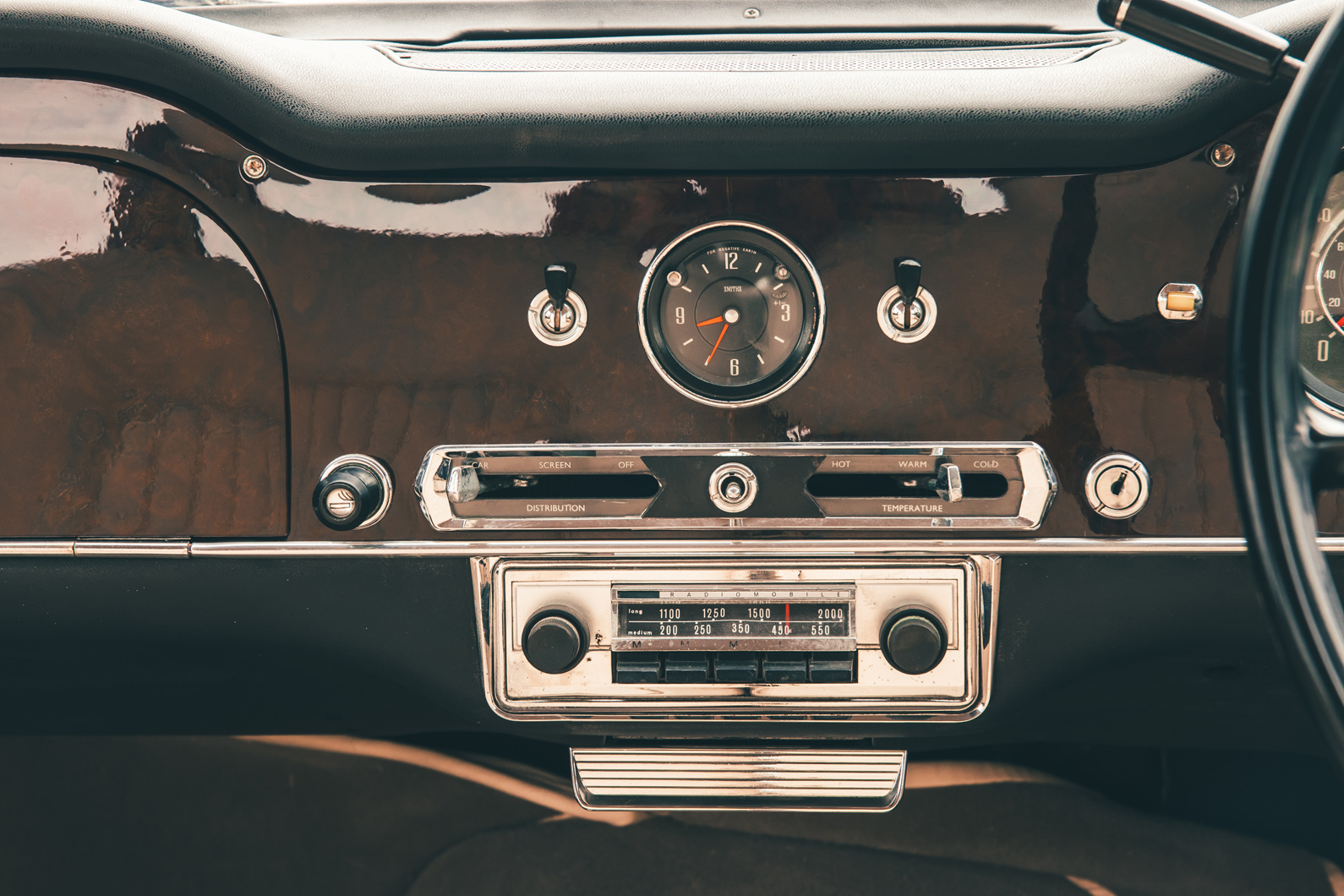
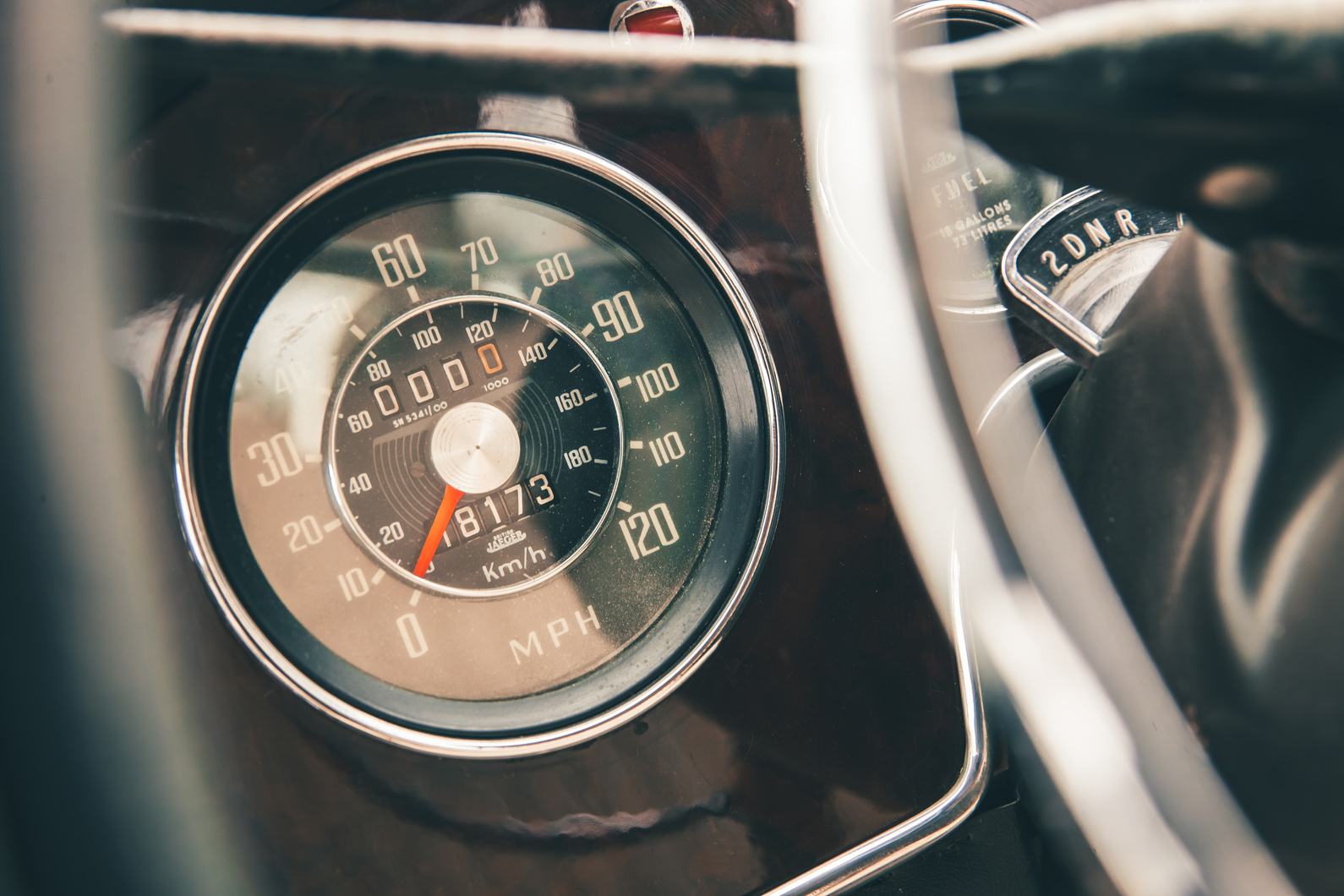
The Humber Imperial V8’s column shift is behind the large steering wheel, but a floor-mounted lever was planned for production
With suitably modified spring and damper rates, plus wider tyres and ‘Humber V8’ badges as the only external identification, the concept was already well thought out.
It was confidently announced that pre-production cars would be running by December 1965 or January ’66.
In October 1965 a ‘management instruction’ document stated that the V8 engine would be standardised in the Imperial and optional on the Super Snipe.
Intermittent wipers, an automatic dipping mirror, cruise control and electric windows were considered as part of the standard specification, plus optional air conditioning.
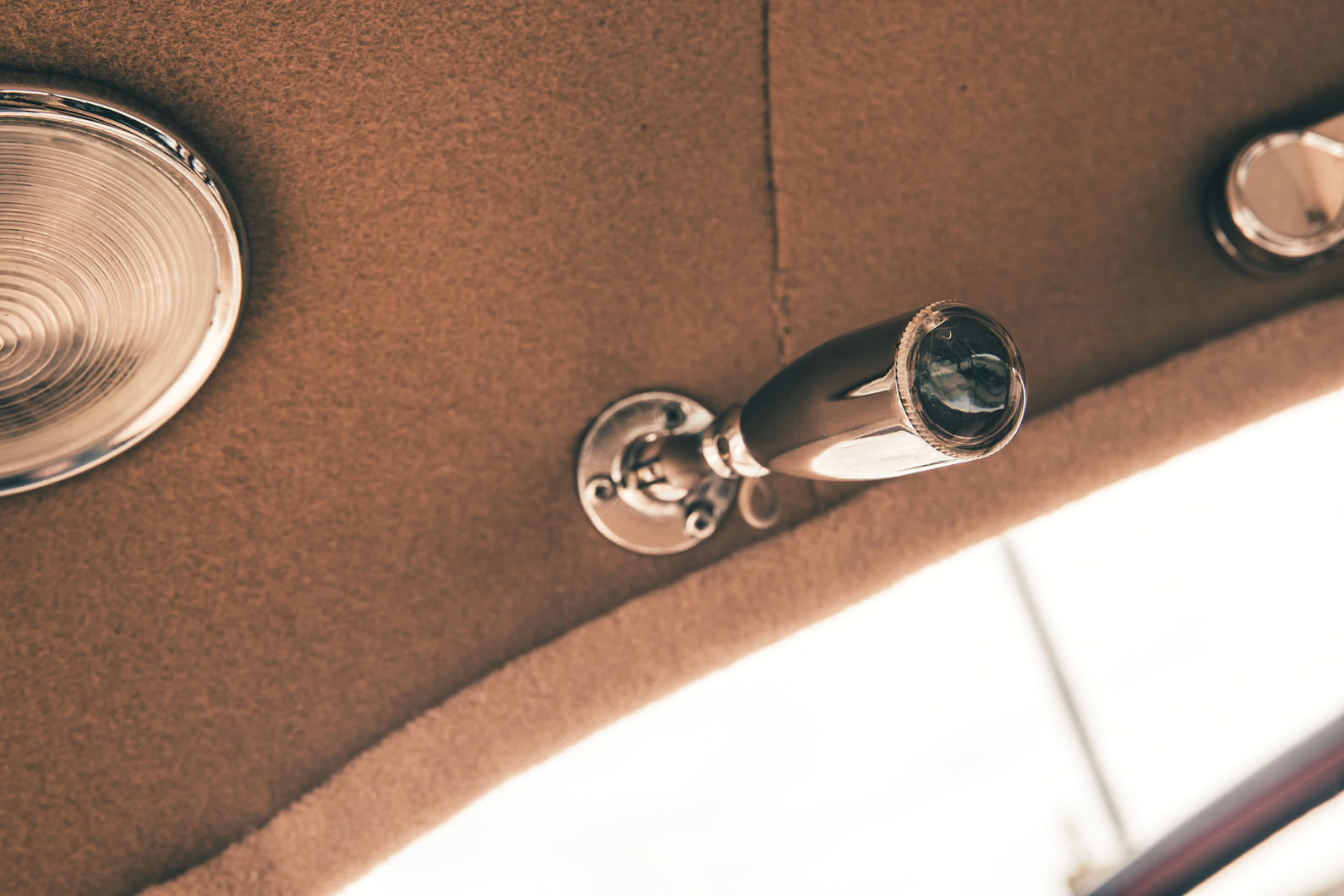
The reading light inside this pre-production Humber Imperial V8
January 1966 was still given as a date for the pre-production Humber V8s, with full manufacture in March, but there had been a rethink about engine choice.
A less powerful, lower-compression engine with a two-barrel carburettor was specified (the four-barrel was deemed unreliable), and fitted to an Imperial and a left-hand-drive Super Snipe for testing.
Rootes foresaw an export market for the V8s, although not to France, where punitive tax on large-engined cars would have made the Humber virtually unsaleable.
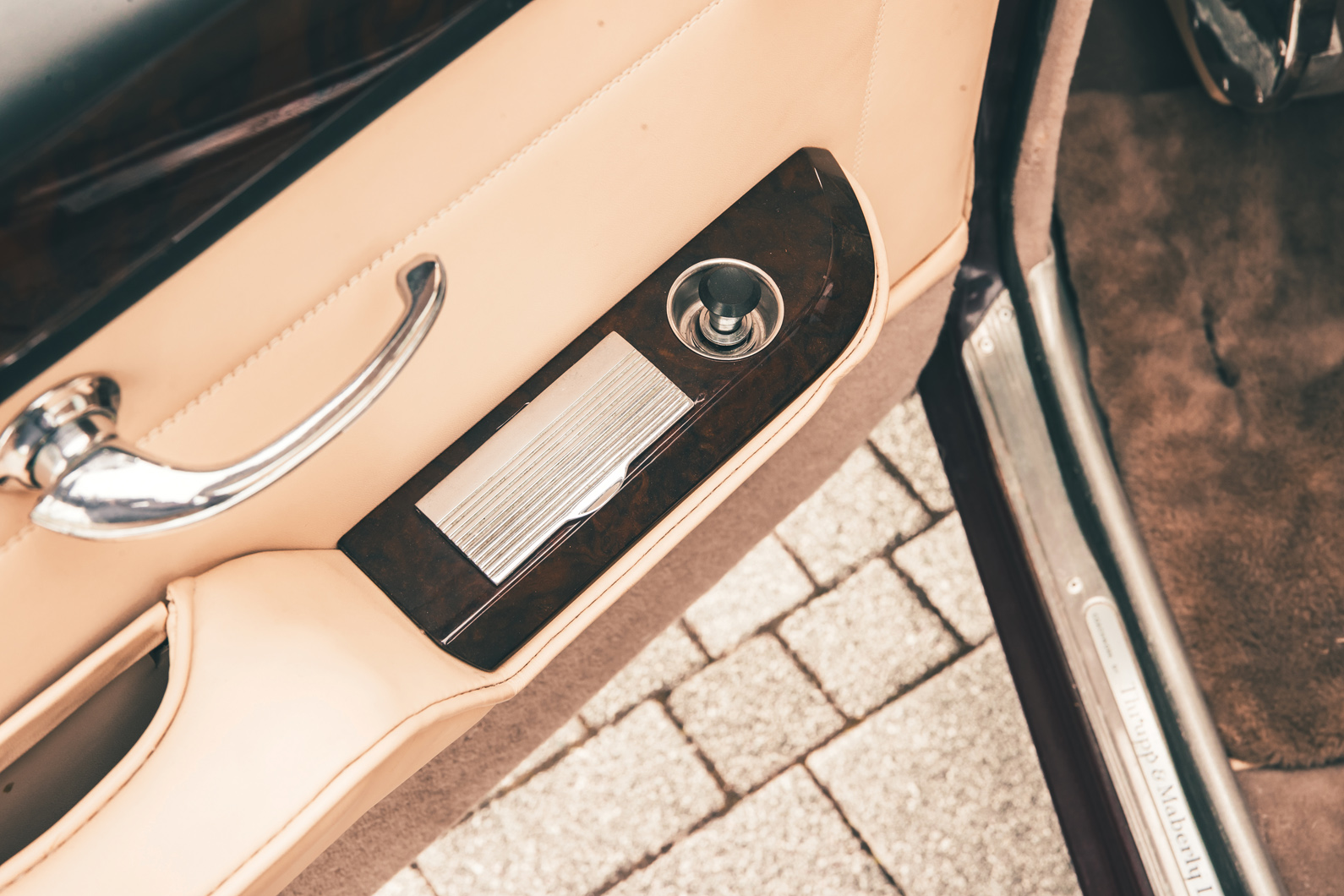
The Humber Imperial V8 didn’t stray far from its aristocratic roots: it kept the door-mounted lighter and ashtray
In January 1966 there was some further specification back-pedalling. It was advised that the cars, now only good for 150bhp, would not have electric windows or air-con.
There were also concerns about running costs: even with the two-barrel carburettor, the Chrysler Snipes were thirstier than the old straight-sixes while demanding 100-octane fuel.
This may have driven a decision to keep a six-cylinder version of the Imperial in production.
The truth was that the two-barrel Humber V8s were not even all that much faster than the standard cars – 104mph flat-out – even if a useful four seconds had been shaved from the 0-60 times.
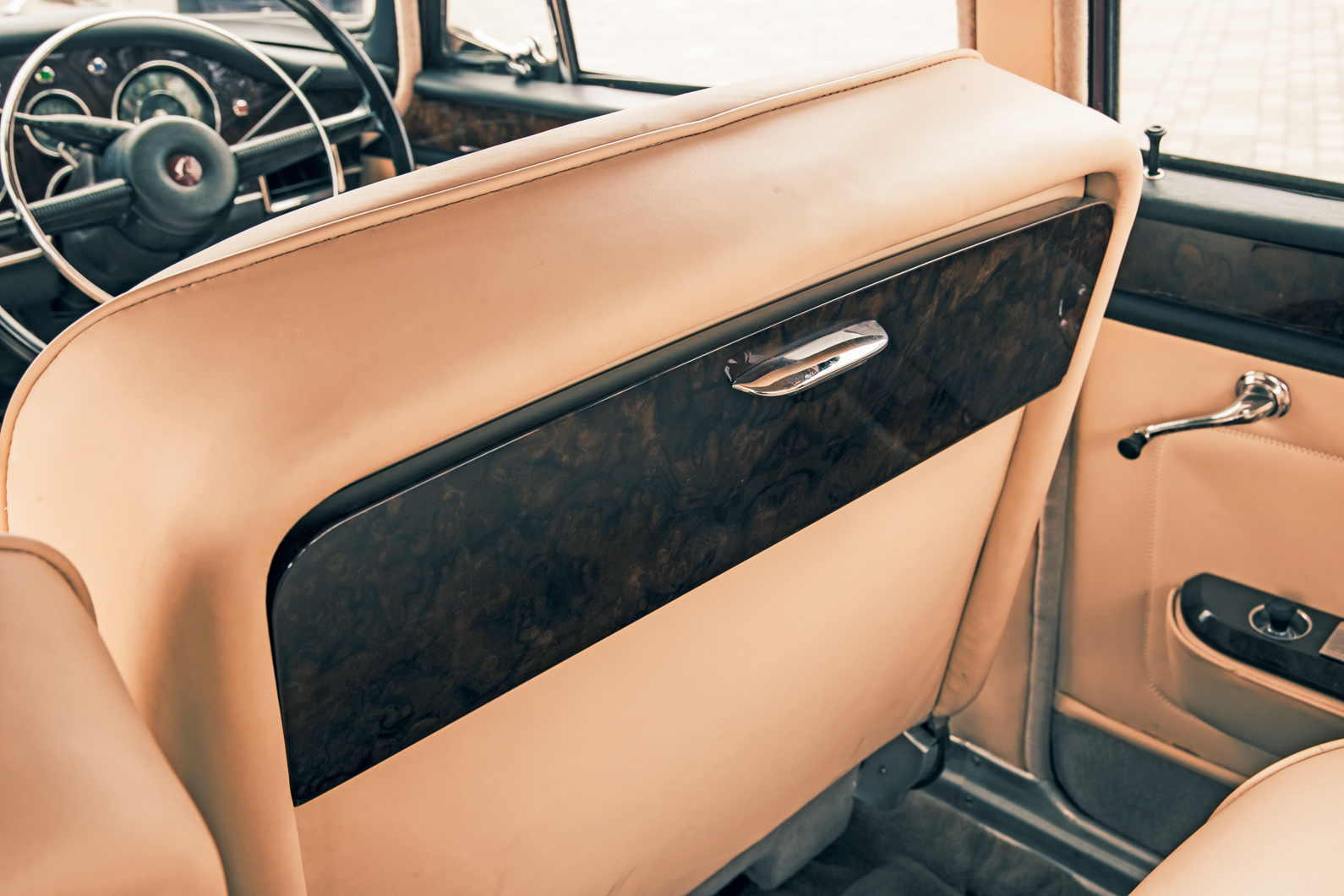
The Humber Imperial V8’s fold-down table
Despite these irritations, the project had now gained a certain momentum.
Problems with accelerator linkages, tie bars and transmission shudder were worked through as the launch date was moved on.
New metallic colours were planned and rationalisation of the six-cylinder and V8 shells was mooted to keep production as smooth as possible at the strike-prone British Light Steel Pressings factory in Acton.
By March 1966, Rootes was looking to start production in July and launch the cars at Earls Court in October, thus stealing Rover’s thunder: the P5B 3.5 Litre saloon wasn’t due until autumn 1967.
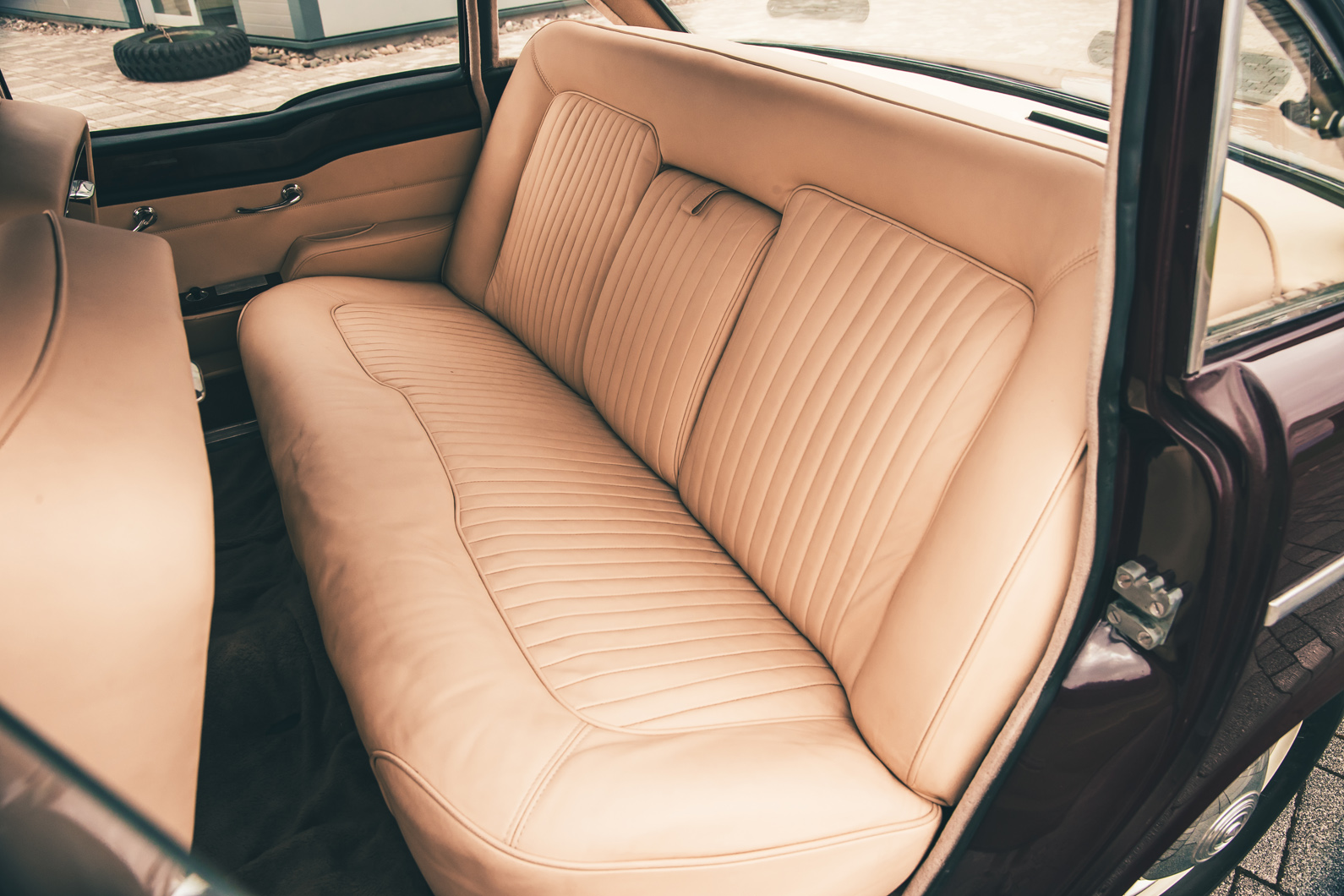
Plush rear seats in this pre-production Humber Imperial V8
An internal report said that with tools and a full tank the Super Snipe V8 weighed 3527lb (split 2016:1511 front to rear).
That was almost exactly the same as the Rover, which, on 160bhp, did 108mph and 0-60mph in 12.4 secs.
The Humber V8s got so close to going public that Rootes Group’s technical library issued instructions for publicity material.
I’ve only seen a single page detailing the engine and a ‘brief technical specification’, but even here some interesting details can be noted.
Gross power was quoted at 195bhp (net was 150bhp) with 0-60mph in 11.4 secs; a top speed of ‘over 100mph’ was all anyone would commit to, but at least the speedo went up to 120mph.
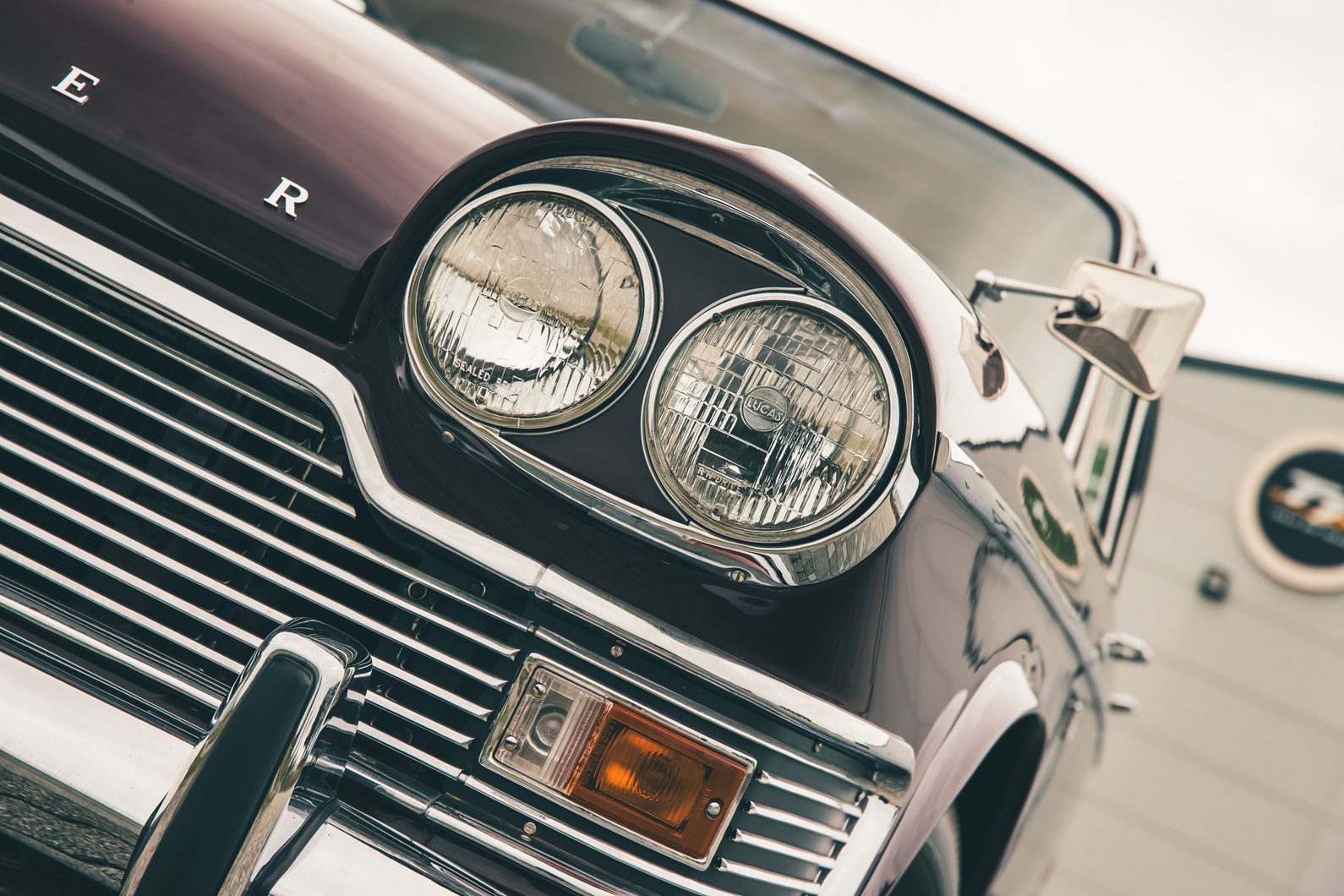
‘Maroon suits the shape, and the overall car is magnificent’
The power steering was ‘Chrysler Constant Control’, not Hydrosteer, and the gear selector for the Torqueflite auto was to be floor-mounted in a console, perhaps due to issues fitting a column and ‘speed change’ controls on a production line.
It was intended to offer the V8 in the Super Snipe Estate, in which case the gear selector, for some reason, stayed on the column.
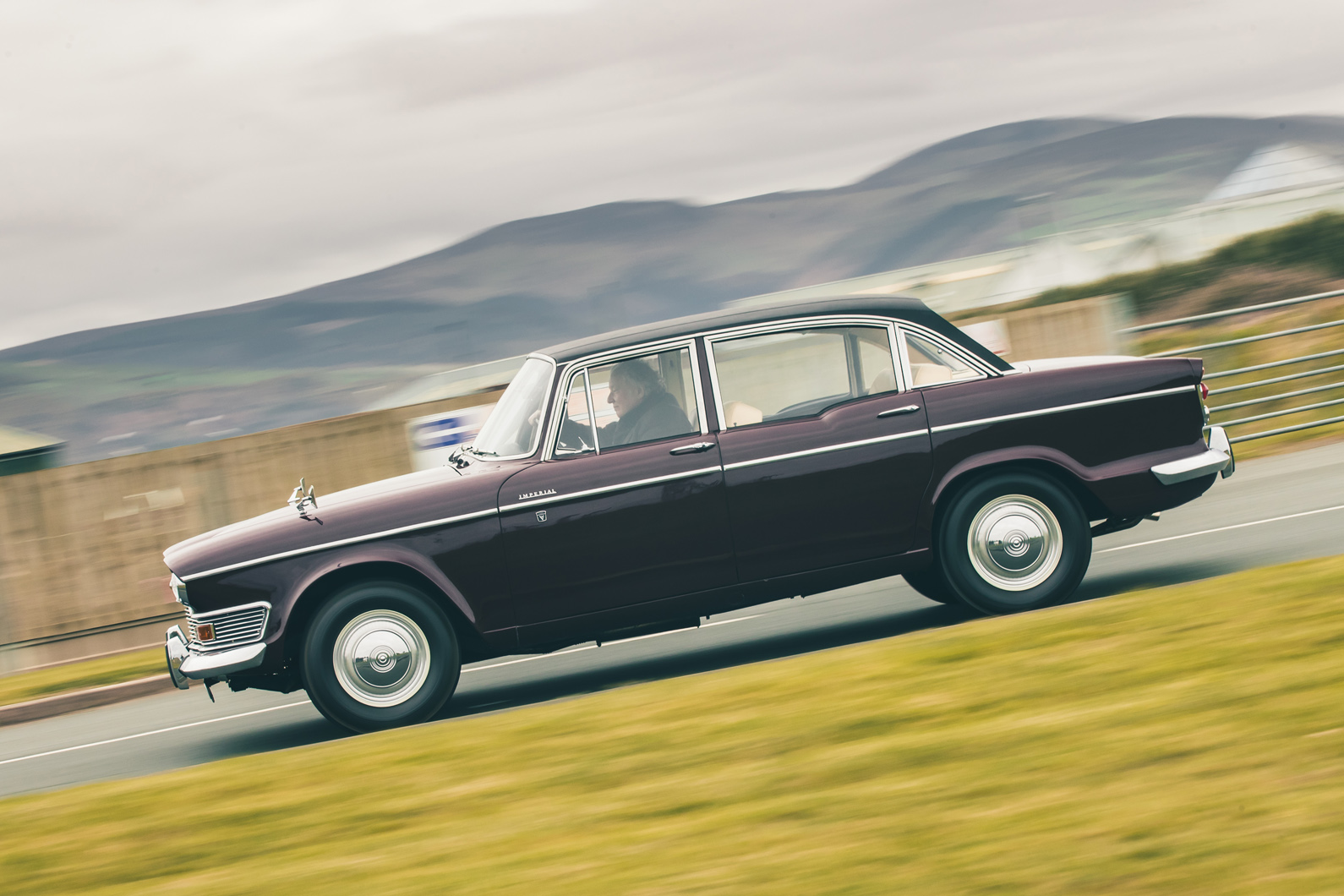
Humber Imperial GDU 492D was one of the pre-production cars.
It was used by Sir Reginald Rootes, brother of Lord William ‘Billy’ Rootes, from March 1968 to November ’73, having been registered new in April ’66.
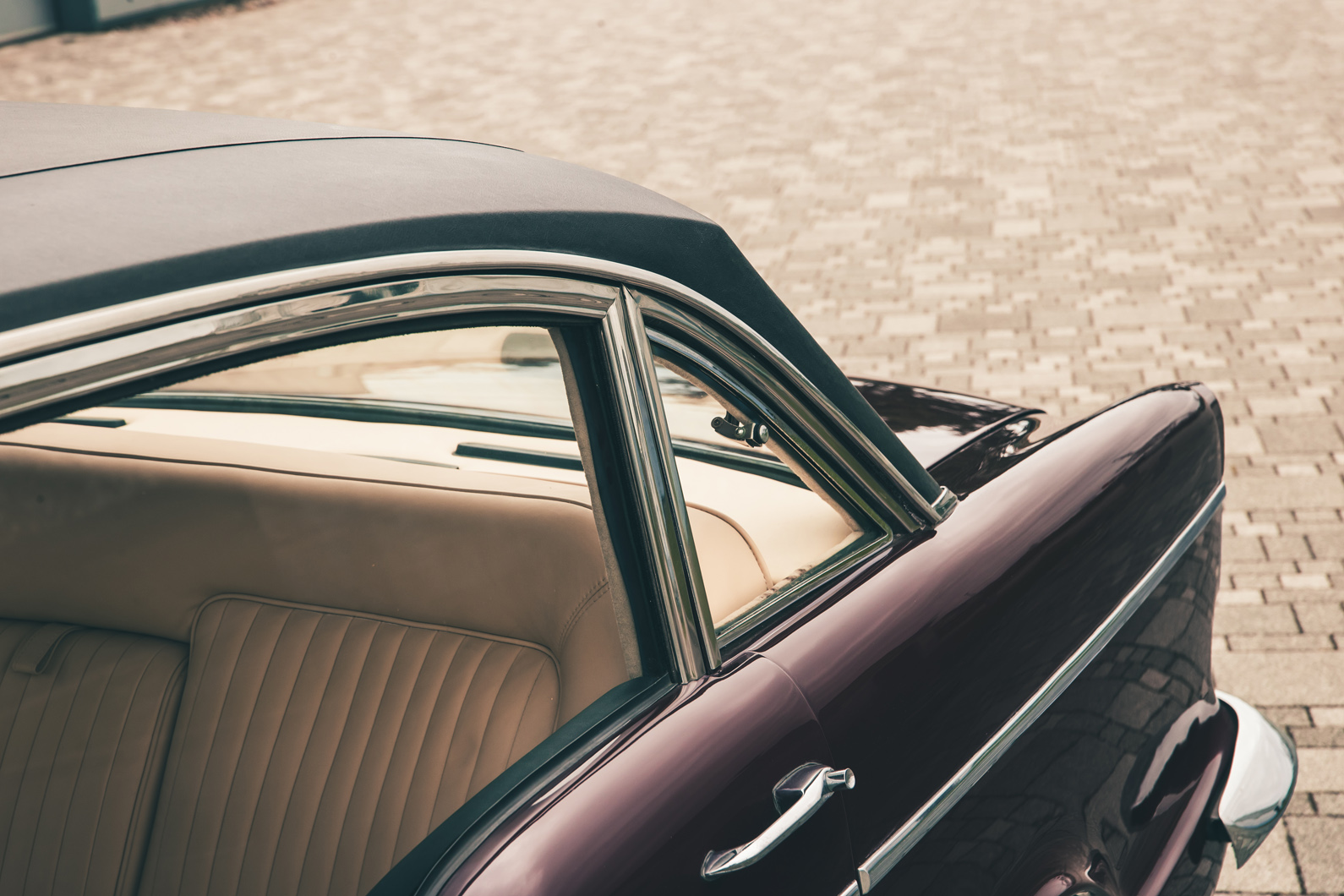
The Humber Imperial V8’s vinyl roof is very of its time
Via the Hon Brian Rootes, it was sold to loyal Humber customer Alex Sawyer, then to the owner of a DiY shop in Kent in 1973, then a man in Herne Bay.
It turned up in Classic & Sports Car’s Worthy column in 1986, having been found by Allan Barnes of the Post Vintage Humber Car Club.
After an epic restoration that began in 2008, it now takes pride of place among 15 other Humbers in Denis and Darren Cunningham’s Isle of Man Motor Museum.
Although not really big by modern standards, these Humbers have presence. Before the MkX Jaguar, they were the largest unitary bodies built in the UK.
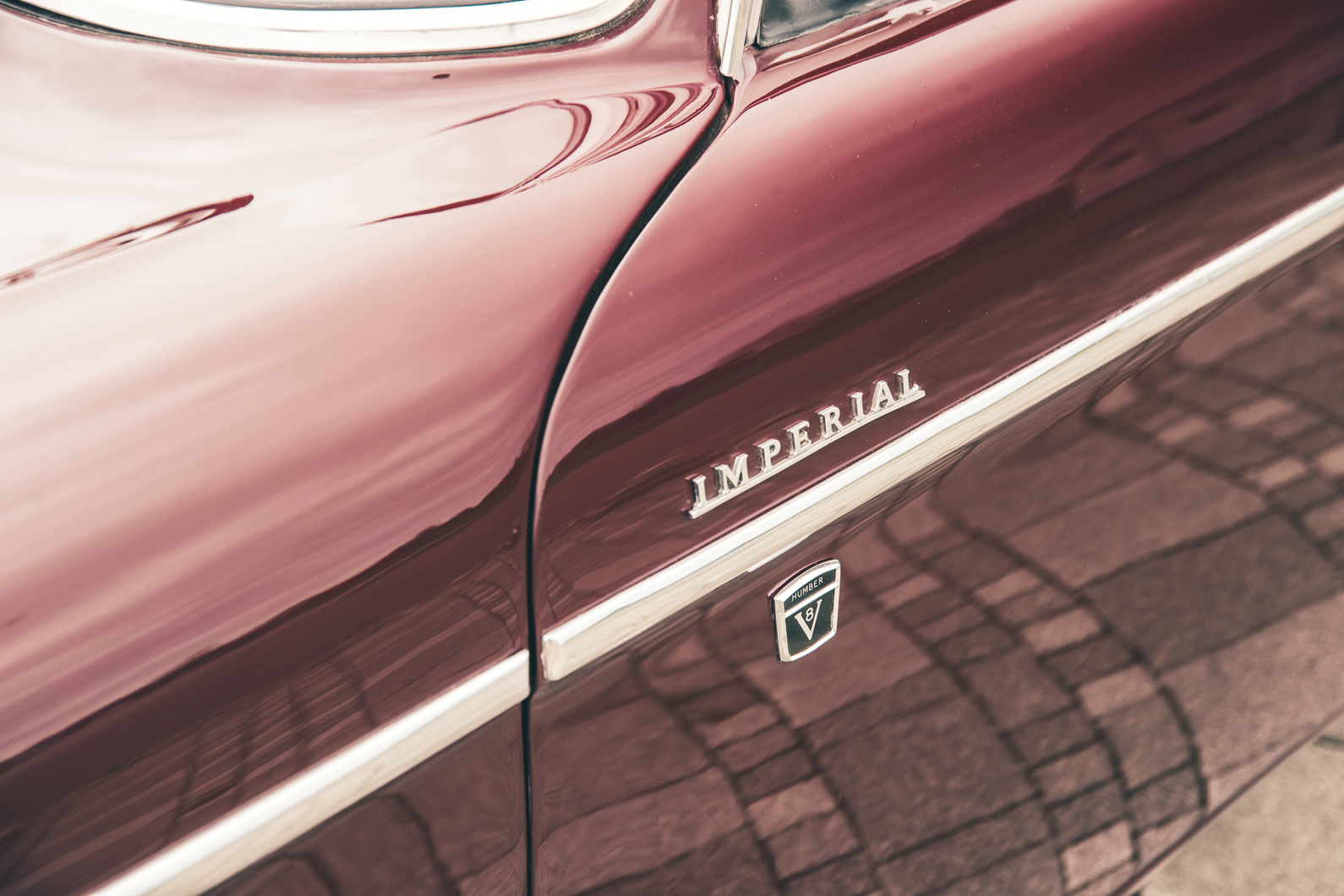
The extra badging on this Humber Imperial V8 couldn’t be much more subtle
I can never decide if I prefer the squared-off Series V roofline or the earlier, Chevrolet-inspired type, but in either case the quad headlights are a must.
Maroon suits the shape, and the overall car is magnificent.
There is room aplenty for the Chrysler V8 in the engine bay, with battery, brake servo and other ancillaries shuffled around.
The red block, black air-cleaner lid and black valve covers are true to what is depicted in the details leaked before the project was canned.
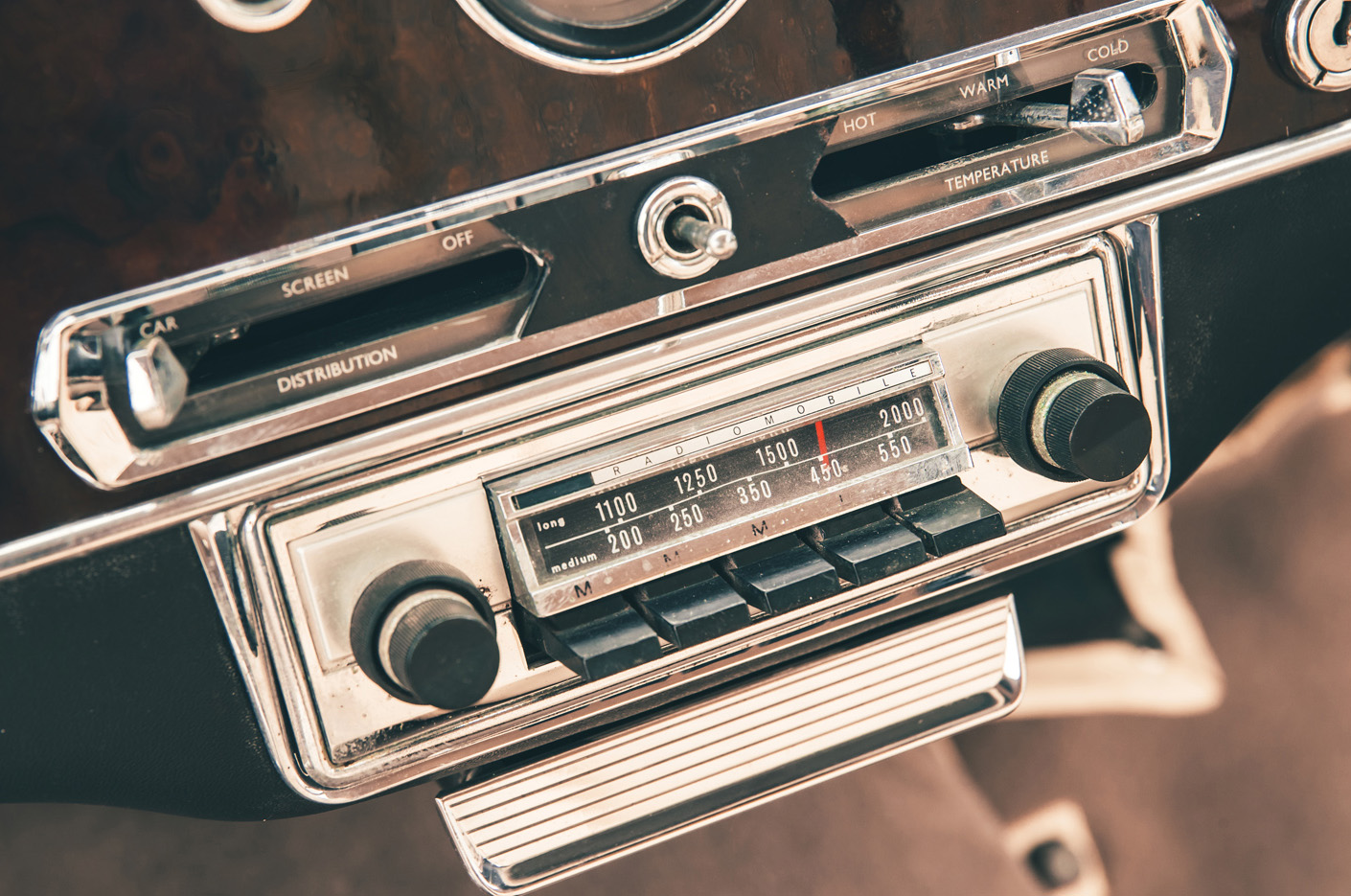
The Humber Imperial V8’s stereo must compete with the 4473cc V8 engine
Even without the V8 the Imperial was an upmarket barouche.
Separate reclining front seats, with ‘drop-leaf’ writing tables in the backrests, reading lights and separate front and rear heating/ventilation controls were standard.
Power steering and automatic transmission were standard on the Imperial, along with Selectaride dampers, but the lack of electric windows seems a shame.
This one has the column shift and the same massive steering wheel but, unlike most Imperials, GDU has leather rather than West of England cloth.
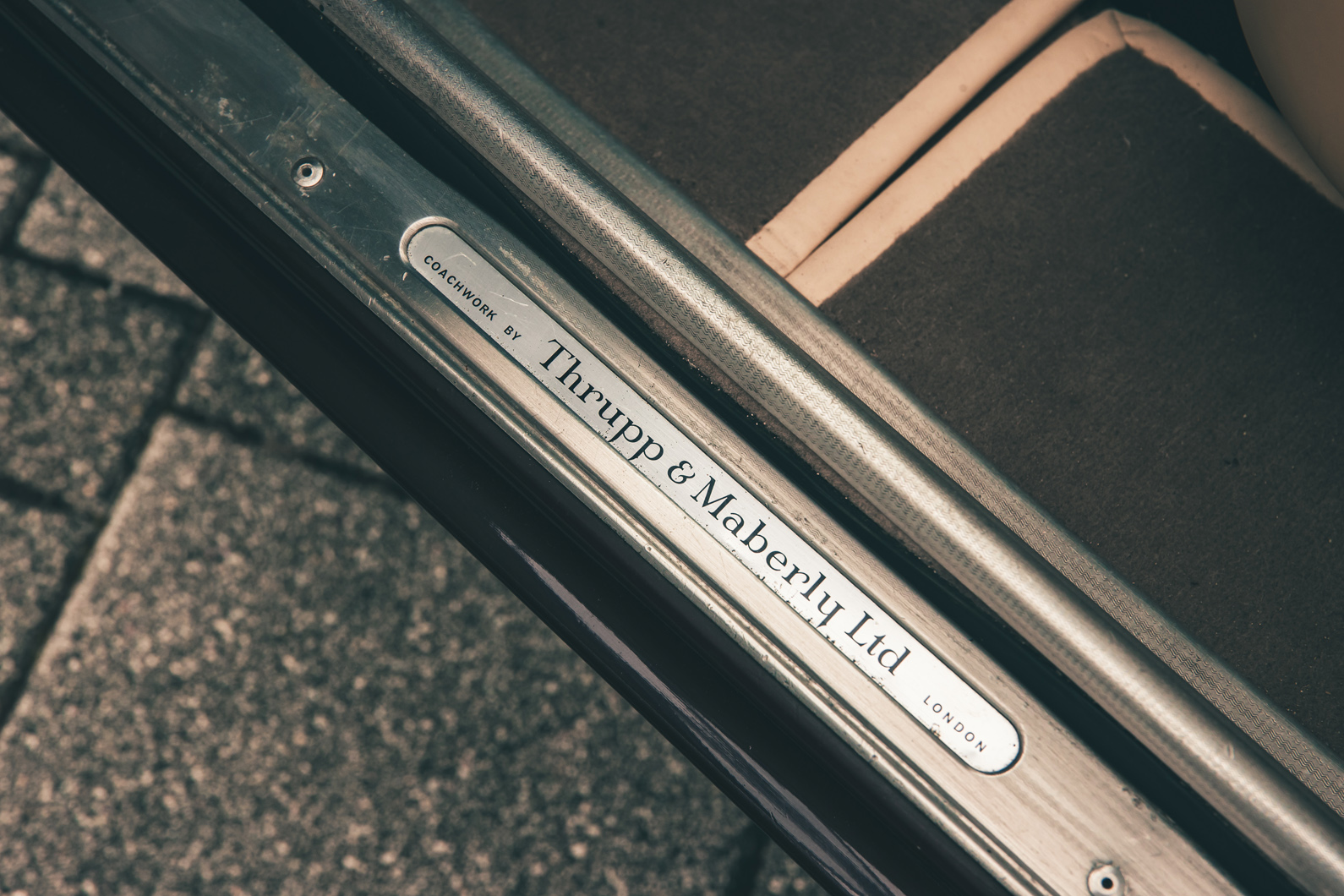
The Humber Imperial V8 carries the name of coachbuilder Thrupp & Maberly on its sill plates
The finish, effortless manoeuvrability and ride are everything Humber customers knew and expected. Big sidewalls, softish springs and sheer weight insulate you from the worst potholes.
But the American V8 does give a quite different and more appealing character.
Where the six-pot Imperial wafts away quite promisingly but loses the will to live above about 50mph, the Chrysler-engined car just keeps on pulling, its silky efforts assisted by a Torqueflite gearbox that was leagues ahead of the Borg-Warner DG in responsiveness and the smoothness of its changes.
Corners are arrived at more quickly than expected, at which point you soon realise this is not a four-door Jensen.
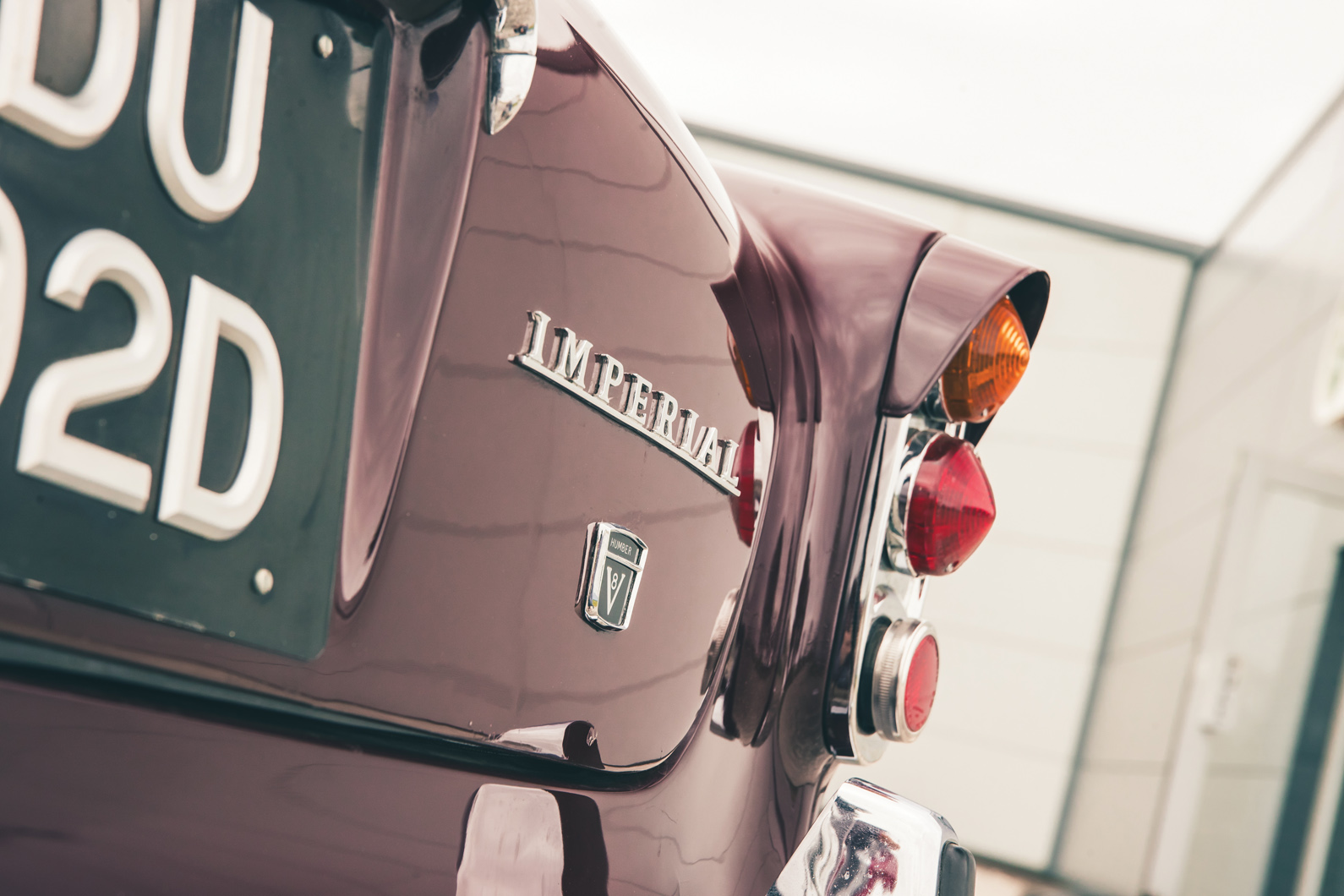
The Humber Imperial V8’s stacked tail-lights
The featherweight steering that makes the Humber so easy to palm around at low speeds is now too light and insensitive, so you place the Imperial to the foot not the inch against a build-up of understeer that you hear but don’t really feel. There is some tyre squeal, but not all that much roll.
Would the V8 have taken the car over the £2000 tax threshold? Possibly, but not if, as with Bristol, a source of Chrysler engines could have been secured in Canada at a lower ‘British Commonwealth’-friendly rate of import duty.
A V8 Super Snipe and Imperial would almost certainly have lifted Humber’s crusty image.
These cars would have attracted new, younger customers and extended the life of a body style that was only 10 years old.
They likely would have led to bigger, better and brighter things than the marque’s ignominious end as a posh version of a Hillman Hunter.
Images: Jack Harrison
Thanks to: Isle of Man Motor Museum
The V8 Humber Sceptre that never was
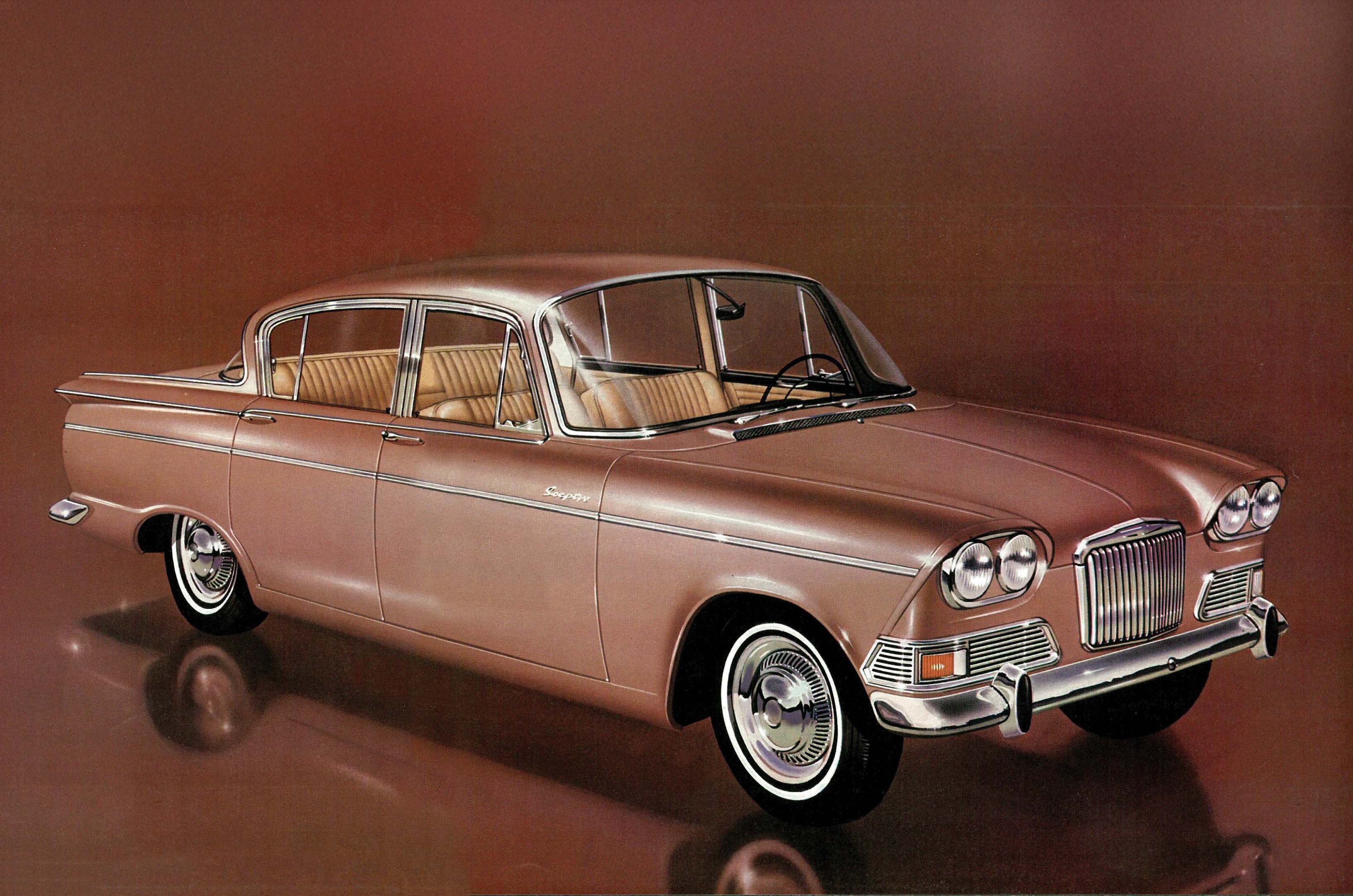
American power was set to give a boost to the Humber Sceptre
The 1963-’67 Humber Sceptre was a typical Rootesmobile in that it was nicely finished and attractive – in a slightly frumpy way – but rather heavy and slow.
That said, in 1965-’67 MkII form it upped its game with a 1725cc engine, and in this form it was the fastest-accelerating Humber Motor had tested, at 0-60mph in 12 secs.
It started life as a Sunbeam, but became a Humber because the fuel consumption was on the high side.
Behind the scenes, and emboldened by the success of the Sunbeam Tiger, Rootes engineers were experimenting with the idea of a Chrysler V8 version.
The prototype was a Super Minx with a Sceptre grille and fitted with a 4.4-litre Plymouth Barracuda engine.
The V8 was sited quite well forward but still intruded somewhat into the cabin; the suspension and brakes were from the Sunbeam Tiger.
Running a four-barrel carburettor and a 10.5:1 compression ratio, it made 196bhp at 5500rpm and, with the Torqueflite automatic ’box and a 3.07:1 differential, was reputed to hit 133mph.
Talking to Classic & Sports Car’s Jon Pressnell in 2008, Rootes Group chief development engineer Don Tarbun remembered it very fondly: “Why we didn’t make it I will never know. As far as I was concerned it outshone the Tiger and anything else we had made.
“I think it was the quickest Rootes car ever, and the finest Q-car on the roads of Britain. The engine just dropped into the hole. It handled well enough considering; we probably stiffened the front suspension, but nothing more.”
Tarbun lined himself up to buy the V8 Sceptre after the works had finished with it, but instead he was ordered to break it up.
Factfile
Humber Imperial V8
- Sold/number built 1966/12 (all V8s)
- Construction steel monocoque
- Engine all-iron, ohv 4473cc Chrysler V8, two-barrel carburettor
- Max power 195bhp @ 4400rpm
- Max torque 265lb ft @ 2000rpm
- Transmission three-speed Chrysler Torqueflite automatic, RWD
- Suspension: front independent, by wishbones, coil springs rear live axle, semi-elliptic leaf springs; Armstrong Selectaride dampers, anti-roll bar f/r
- Steering power-assisted recirculating ball
- Brakes discs front, drums rear, with servo
- Length 15ft 8in (4775mm)
- Width 5ft 9in (1753mm)
- Height 5ft 1in (1549mm)
- Wheelbase 9ft 2in (2794mm)
- Weight 3527lb (1600kg)
- 0-60mph 11.4 secs
- Top speed 104mph
- Mpg n/a
- Price new n/a
- Price now £10-25,000 (est)*
*Price correct at date of original publication
Enjoy more of the world’s best classic car content every month when you subscribe to C&SC – get our latest deals here
READ MORE
Keeping up appearances: Ford vs Vauxhall vs Hillman vs Singer vs Humber vs Riley
Rover P5B: yes, Prime Minister
Classic shrine: Isle of Man Motor Museum
Senior Contributor, Classic & Sports Car