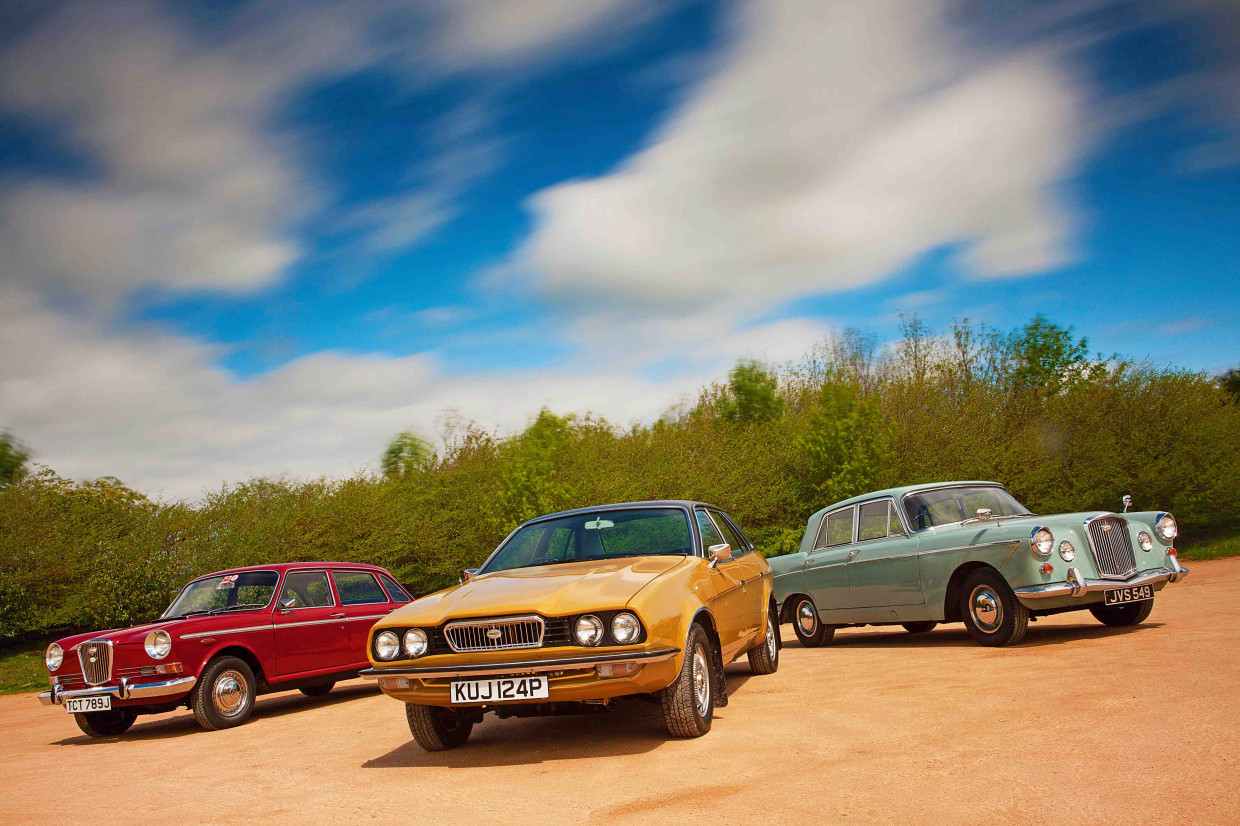
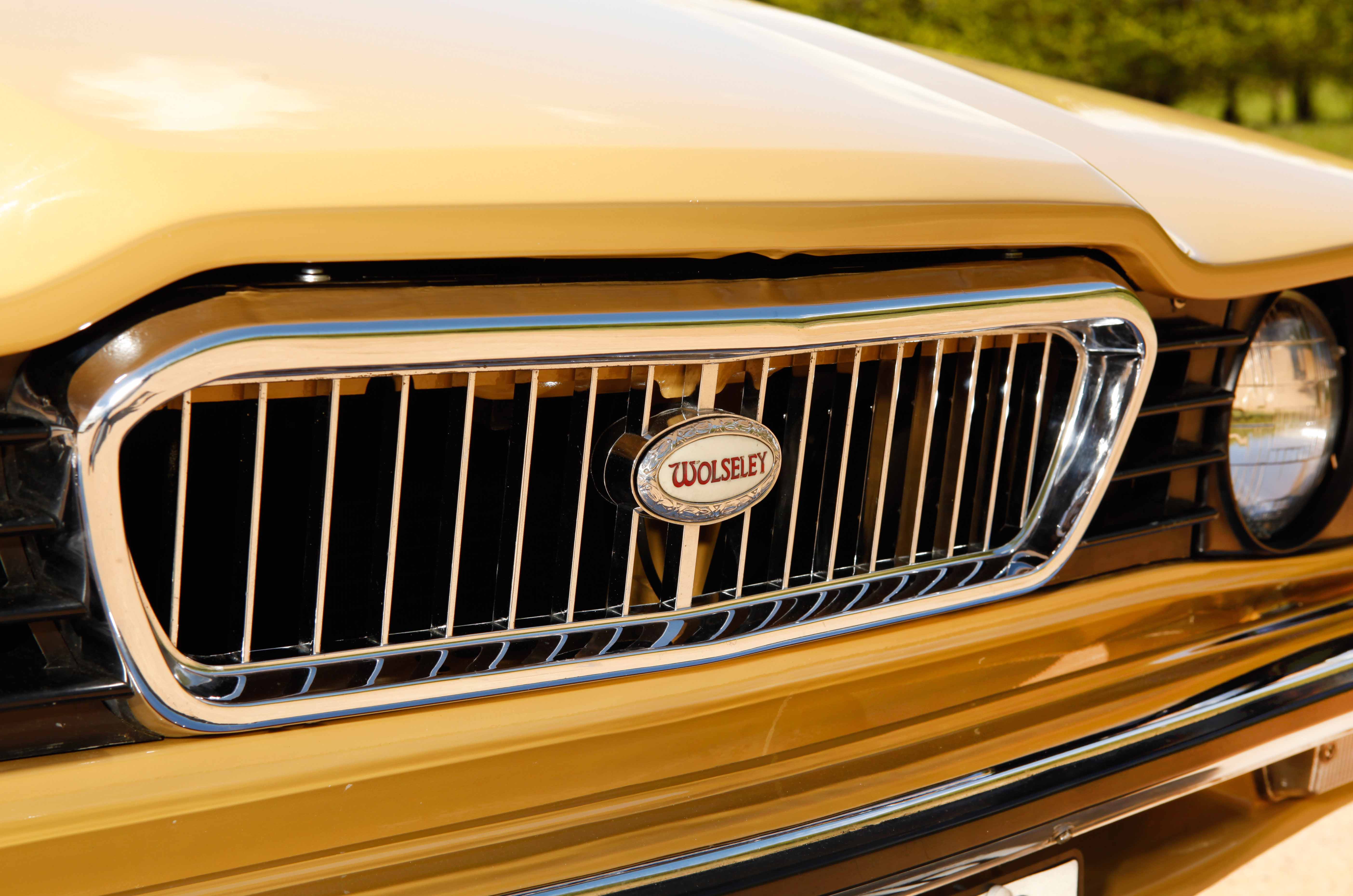
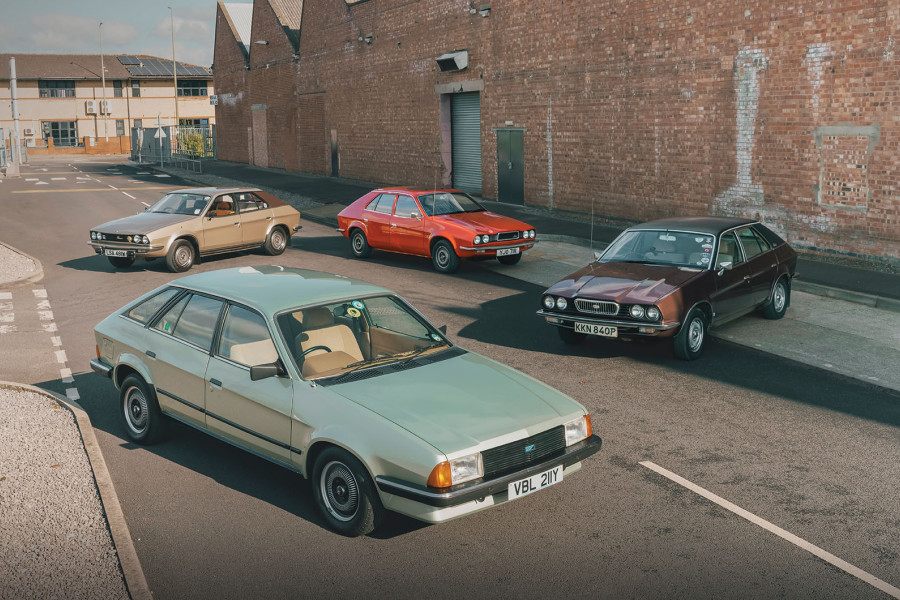
For three generations, Wolseley’s illuminated ‘ghost light’ – the grille-mounted logo that was wired to the sidelights – spoke of restraint and good taste for the nation’s chartered accountants.
The first car to carry the name was made in 1901, and in 1927 the firm was bought by Morris Motors.
The Austin/Morris merger of 1952, which led to the formation of the British Motor Corporation, was also the beginning of Wolseley’s decline.
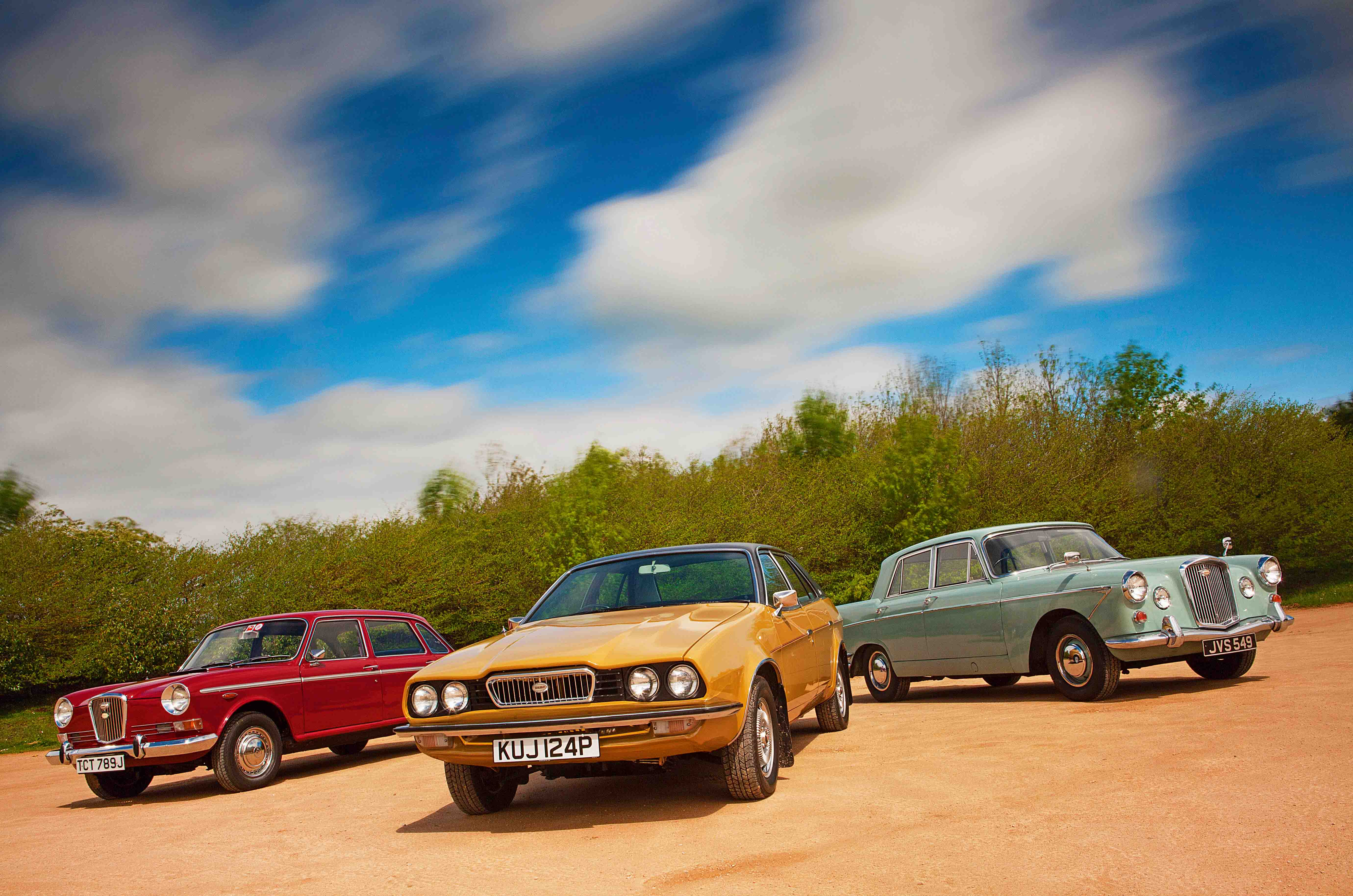
Today, the name is as evocative of distant England as Bakelite, but each of our featured cars represents a lost opportunity for the marque’s development.
The Wolseley 6/99 shared components with its Austin and Vanden Plas stablemates
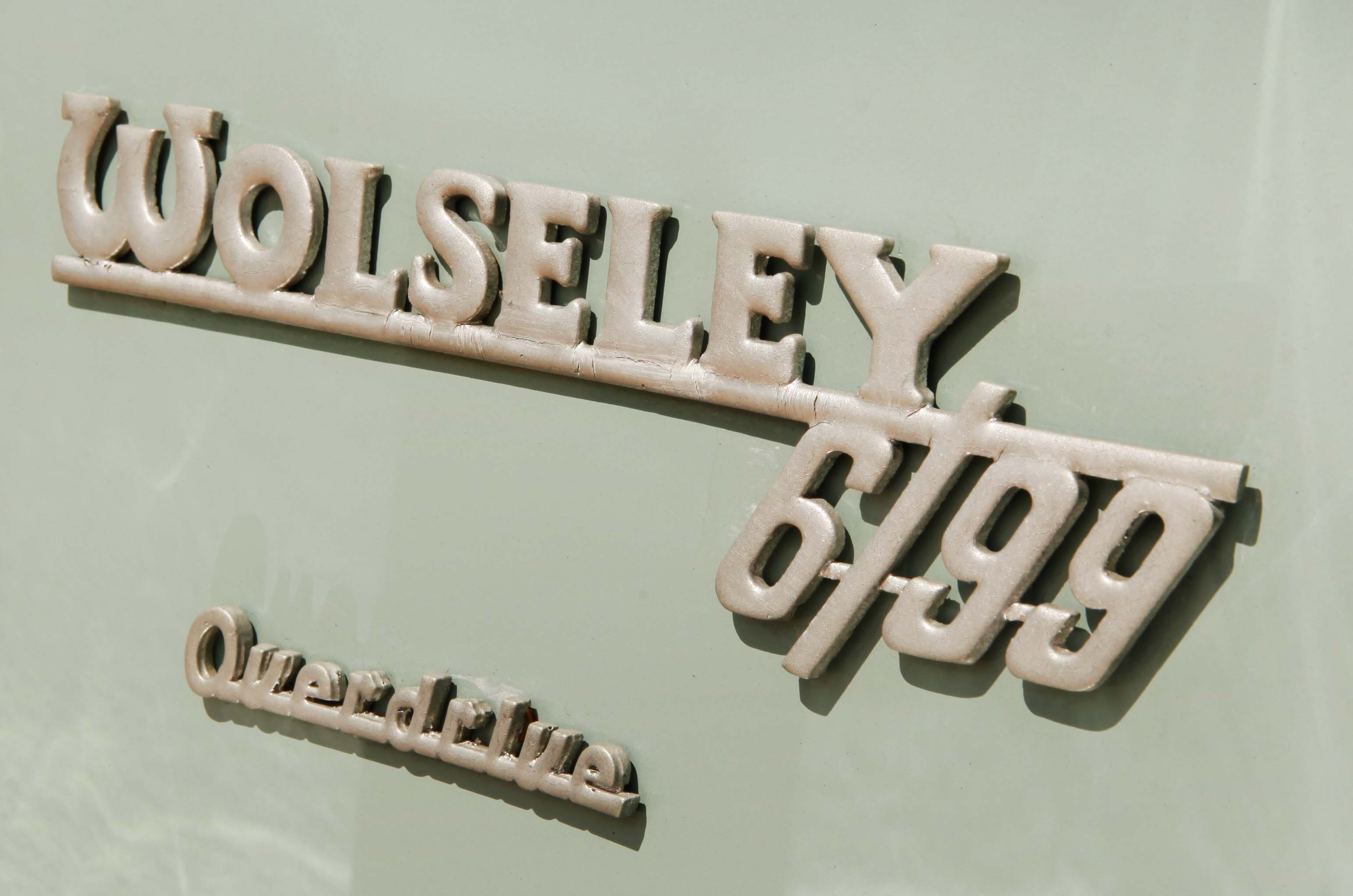
The oldest of this group is the 6/99, which made its debut in July 1959 as a replacement for the Gerald Palmer-styled 6/90.
‘Whenever this fine car appears, there’s an air of sophistication,’ as BMC’s advertising modestly – but not inaccurately – described the new Wolseley.
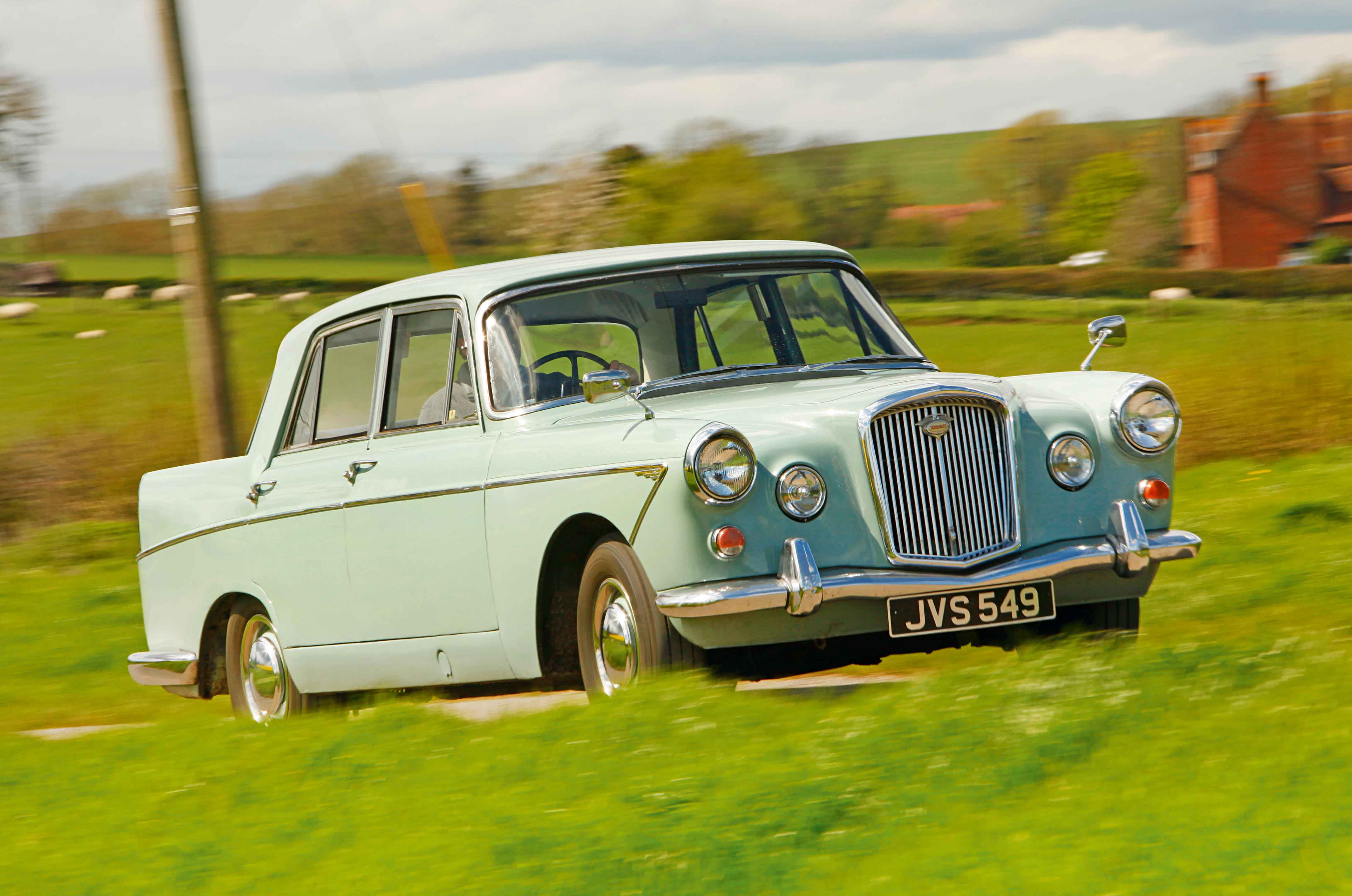
The 6/99 does indeed have an imposingly handsome presence, eschewing the Anglo-Americana of lesser Ford Zodiacs and Vauxhall Crestas with a stunning blend of Farina elegance and British-built solidity.
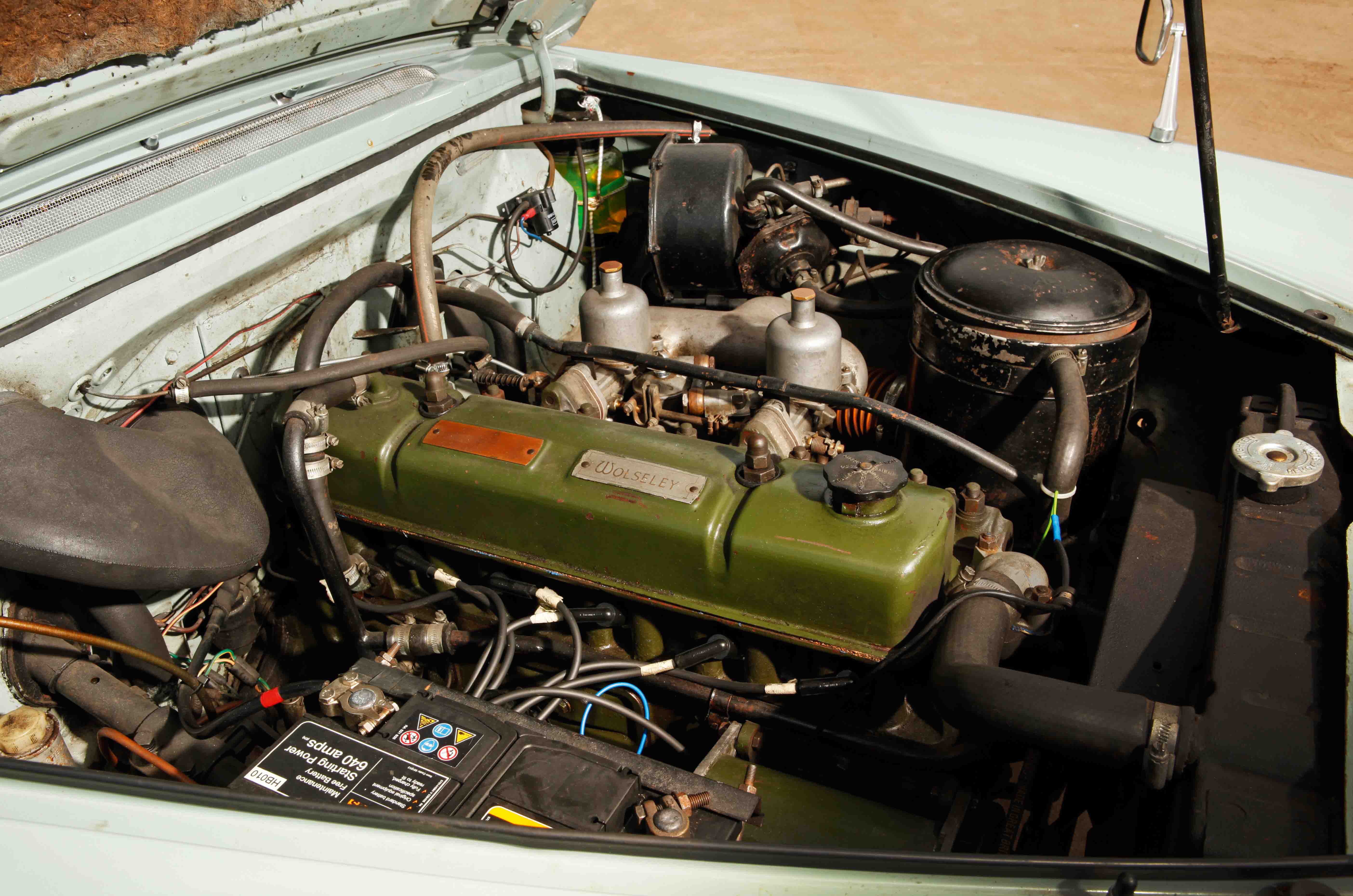
The ‘Big Farina’ used a 2912cc version of the C-series engine, and the 6/90’s vile right-hand column change had been replaced by a three-speed version that was augmented by overdrive on second and top.
The ‘Big Farina’ Wolseley 6/99 looks far more modern than its predecessor
The body and running gear were shared with the Austin A99 Westminster and the Vanden Plas Princess 3 Litre, as BMC’s various brand dealers demanded products to sell in their particular outlets.
Unfortunately, any savings from badge-engineering were negated by building the Wolseley and the Westminster in different plants.
BMC established a clear hierarchy with the Big Farina range via the media of grilles and interior trim.
The Wolseley was launched at a time when office furniture was a crucial indicator of one’s corporate status, and, just as only middle management was entitled to a hatstand, the Austin Westminster Deluxe sported a metal dash while the Princess 3 Litre boasted a hide-trimmed cabin.
The Wolseley 6/99’s C-series engine is also used in the Austin-Healey 3000
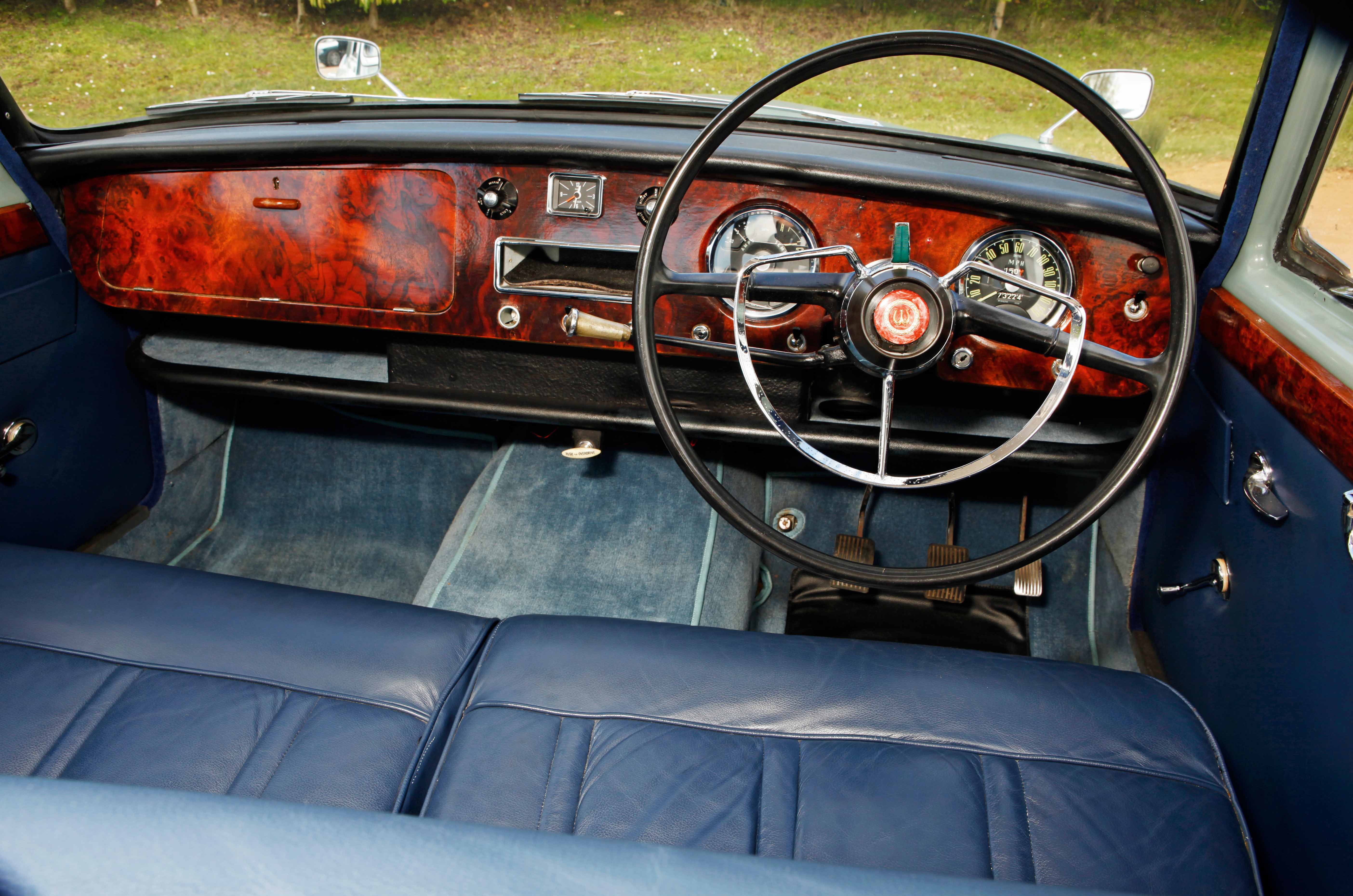
Occupying the middle ground was the 6/99, bearing a wooden fascia and door cappings that did not quite extend to the window ledges.
After all, there was no point in allowing the bourgeoisie to have ideas above their station.
But the real reason for choosing the Wolseley 6/99 over the Westminster – apart from the standard equipment of fog, spot and reversing lights, cigarette lighter and ammeter – was the shield-shaped grille.
That talismanic ghost light was an unequivocal sign that the boardroom beckoned for the proud owner.
The luxurious Wolseley 6/99 has acres of wood, plus generous, comfortable seats
Better still, there was the 6/99’s status as a minor icon of gritty post-war cinema, and even today, to fire up the C-series engine is to conjure memories of handsome black Wolseleys, their gongs pealing as they arrive to solve yet another B-movie murder filmed in Croydon on a budget of 3s 6d.
As you cruise along a rural A-road, Anglo-Amalgamated’s finest dialogue still resonates – “In your own time, Sergeant”.
For the civilian driver, the 6/99 is formidably enjoyable, and although it treats corners warily – radial tyres are vital unless you want your Wolseley to pay brief but interesting visits to the wrong side of the road – it is a magnificent beast.
In 1961 the 6/99 was superseded by the mildly facelifted 6/110, which, in turn, was phased out in 1968.
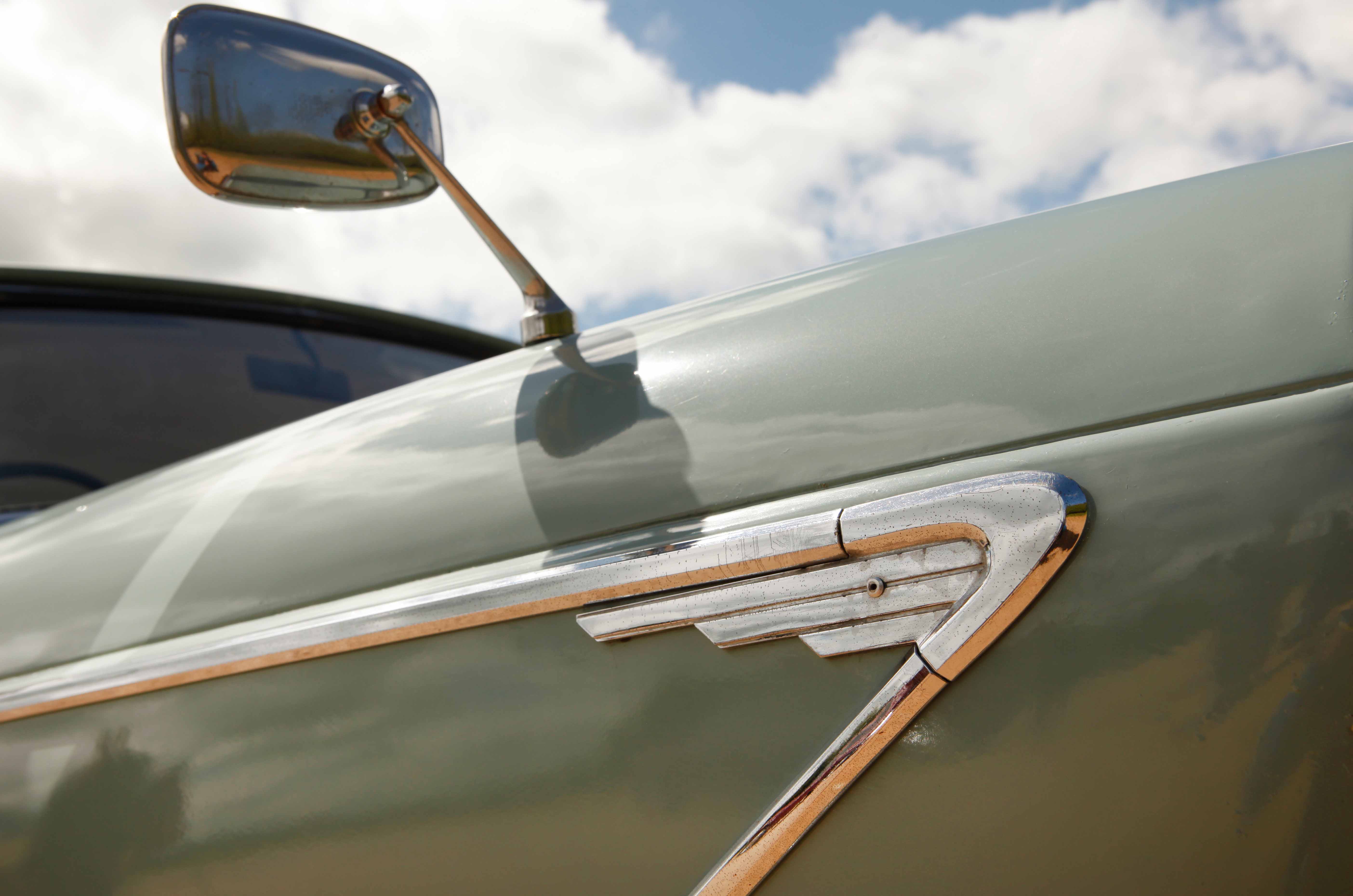
The Wolseley 6/99’s stylish chrome trim
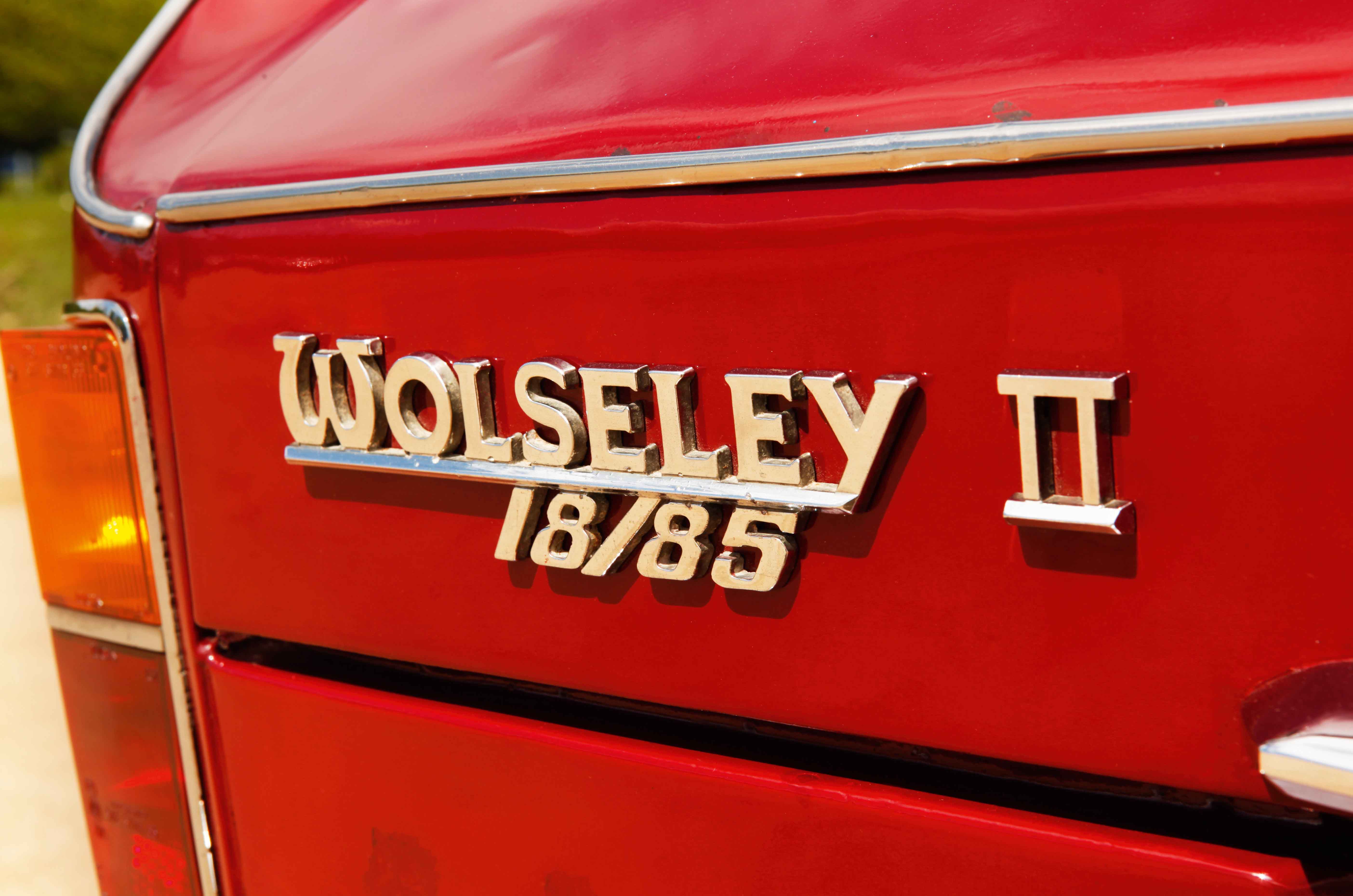
In the previous year BMC had launched the Wolseley 18/85, a vehicle that was a revelation to the large-car buyer.
The 18/85 was a badge-engineered version of the Austin 1800, the model that best encapsulates the strengths and weaknesses of the Alec Issigonis approach to car design.
The 1800 was a front-wheel-drive, transverse-engined saloon that bridged the gap between the medium-sized A60 Cambridge and the Westminster, with fluid suspension and space for a quintet of rugby prop forwards within its strong body.
The roadholding and handling received plaudits from the press, and the 1800 was made Car of the Year for 1965.
The Wolseley 6/99’s tailfins show off its 1950s origins
On the debit side, neither the 1800’s unorthodox lines nor its Minimalist cabin, along with ‘bus driver’ steering wheel, appealed to the average British business motorist.
There were also complaints about the stiff, cable-operated gearchange and some further unwelcome publicity regarding the 1800’s talent for burning oil.
The first batch of cars spent much of their time being returned to their dealers, but BMC persevered, introducing a Morris-badged version in 1966 and the Wolseley flagship a year later.
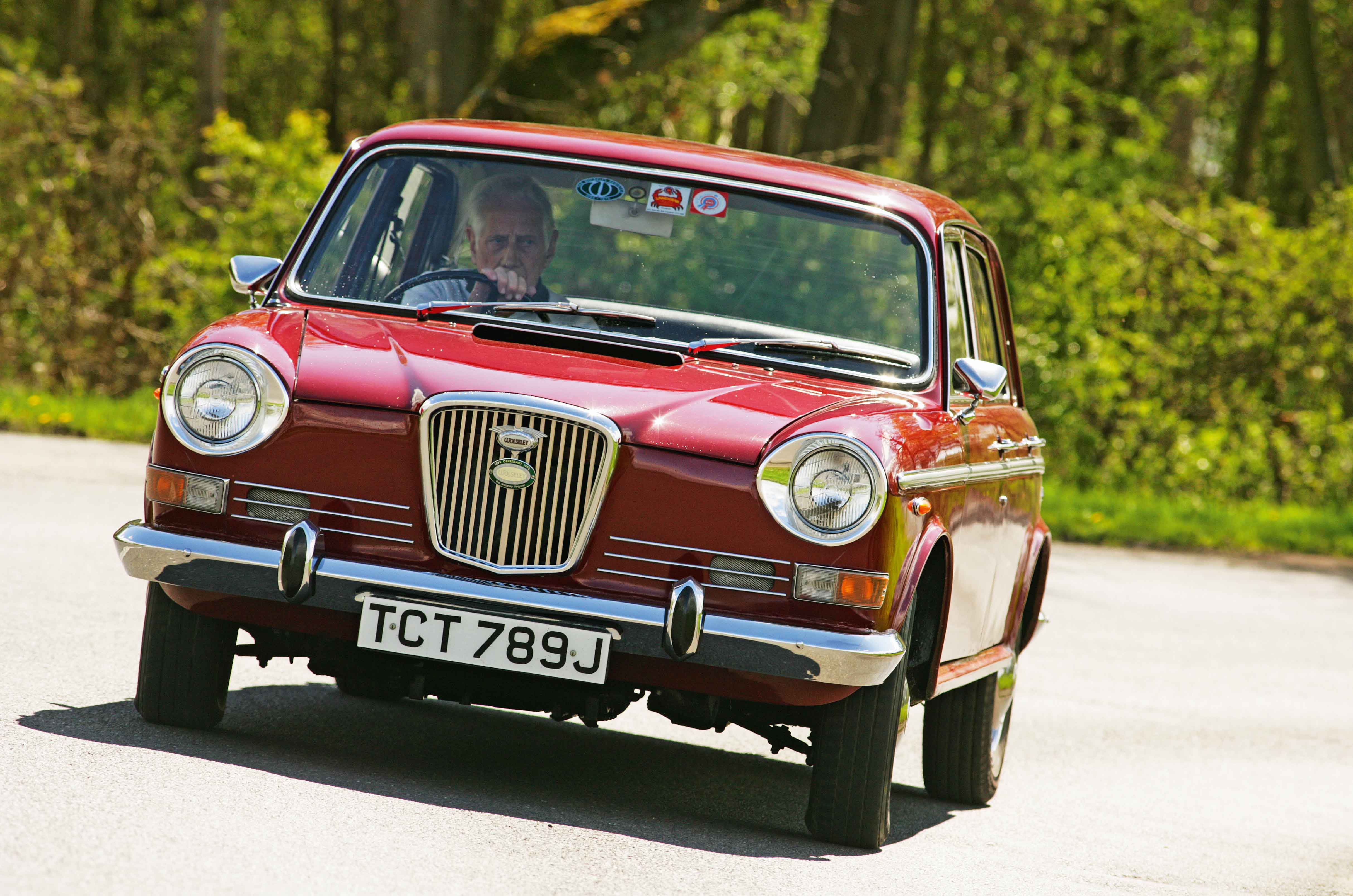
The 18/85S is Wolseley’s short, wide ‘Landcrab’
The 18/85 faced a number of British rivals – the Ford Corsair 2000E, the Humber Sceptre and the Rover and Triumph 2000s – all of which favoured slick three-box styling with which to tempt thrusting young executives.
Meanwhile, the Wolseley was created by a man who believed that styling “tends to date a car, and I hate designing cars that date”.
The net result of combining Issigonis’ design theories, plus cabin fittings that would have appealed to your typical go-ahead town clerk, with some of the most innovative engineering of its day was a truly surreal one.
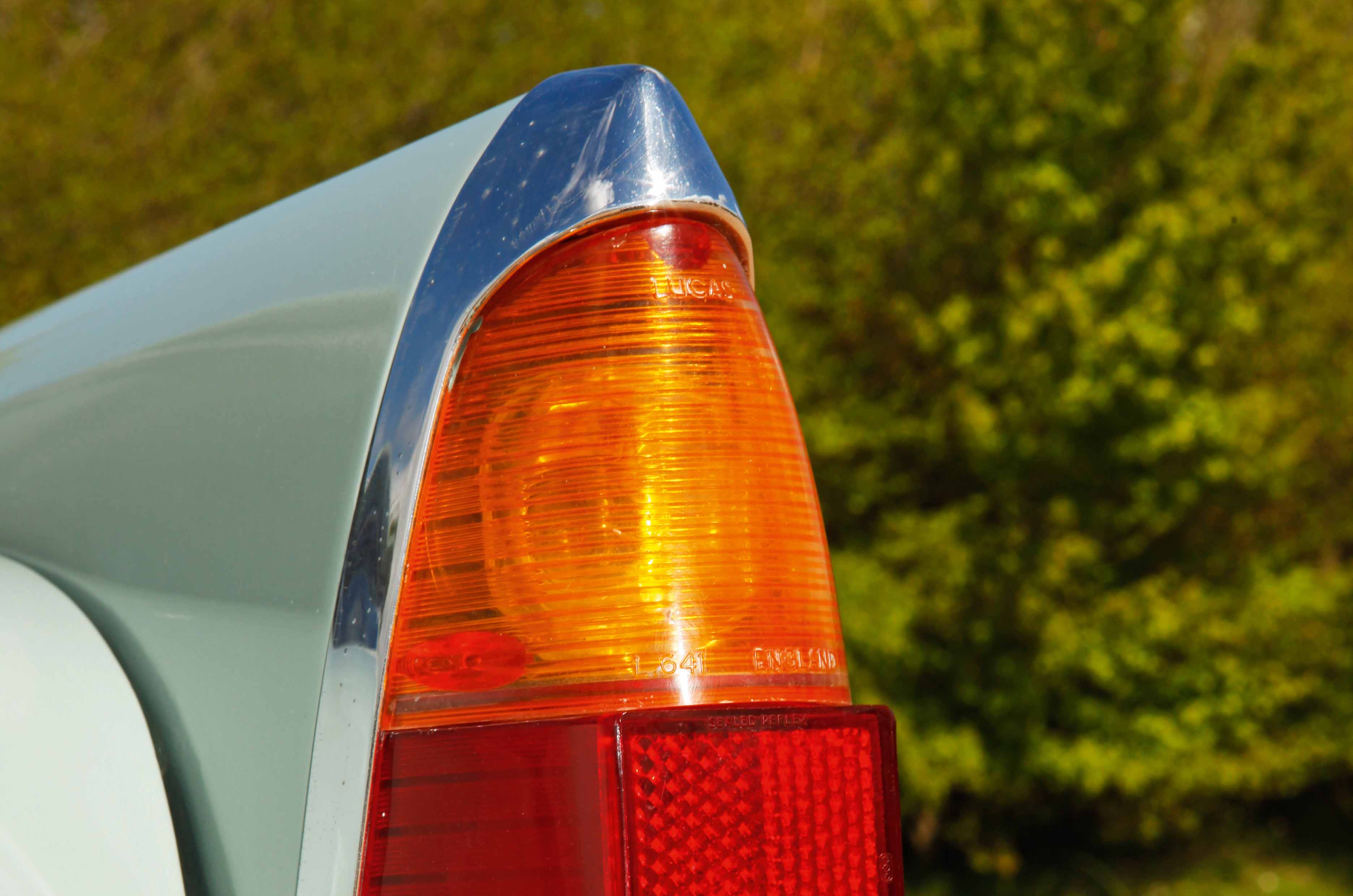
BMC lavished considerable care in elevating the Wolseley 18/85 above its lesser stablemates, giving it different tail-lights and a positively ostentatious interior, but such elaborate trimmings did not so much mask the 18/85’s idiosyncrasies as accentuate them.
The Wolseley 18/85S has plenty of good features, but it struggled against rivals
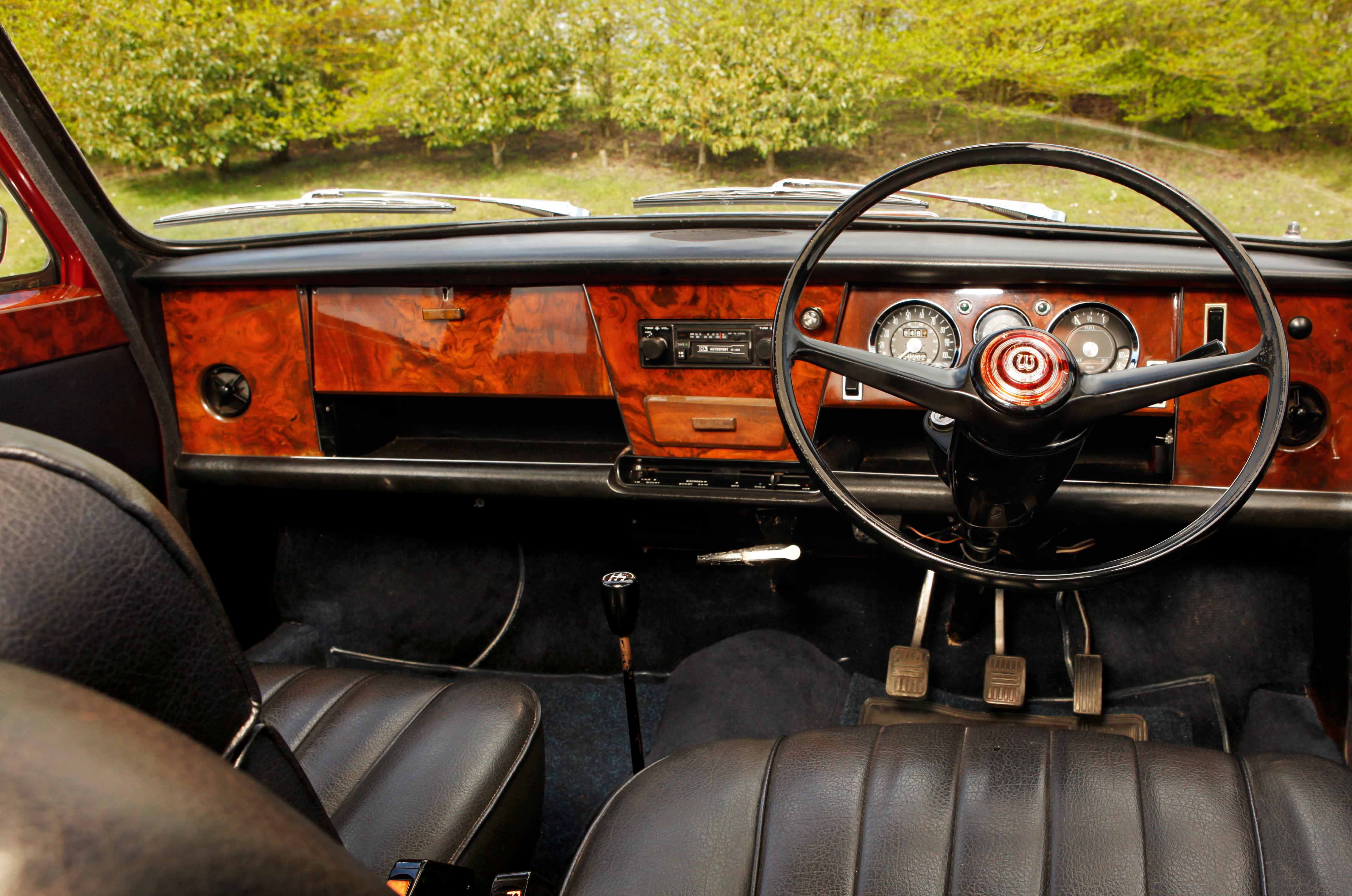
With its chrome-rimmed dials, the walnut-veneered dashboard could not distract from the awkward steering wheel and the Wolseley’s dimensions: it is nearly 2ft shorter than the 6/99, yet merely 1½in narrower.
In 1969 the Wolseley was offered as an ‘S’ model, powered by a tuned engine with twin carburettors and a cylinder head fettled by Daniel Richmond of Downton Engineering.
The 18/85S was produced for only three years before it was replaced by the 2.2-litre Wolseley Six, but it remains one of BMC’s more beguiling cars.
It is more comfortable than the standard Austin or Morris thanks to reclining front seats, and the Wolseley’s power-assisted steering transforms its road manners.
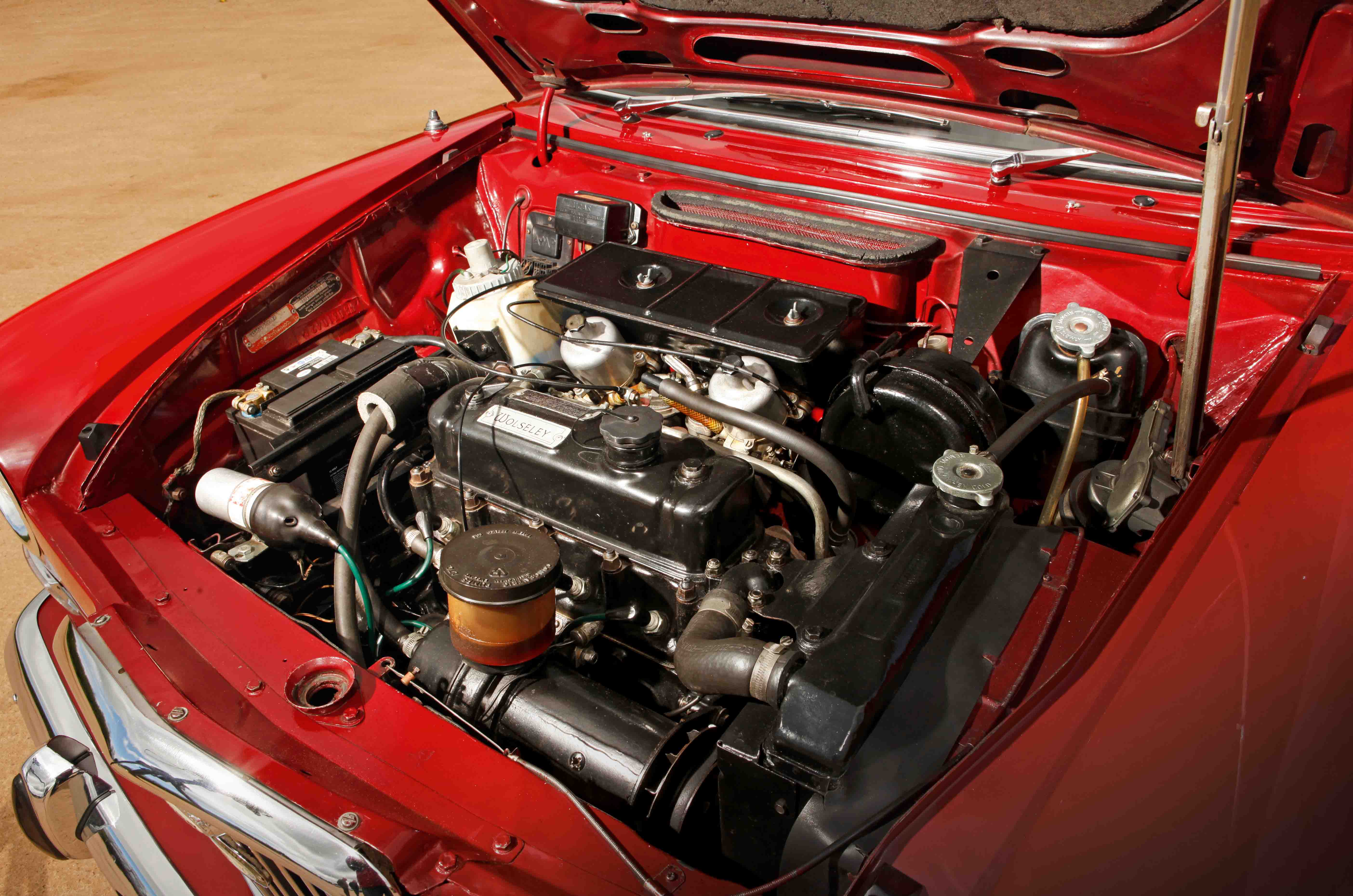
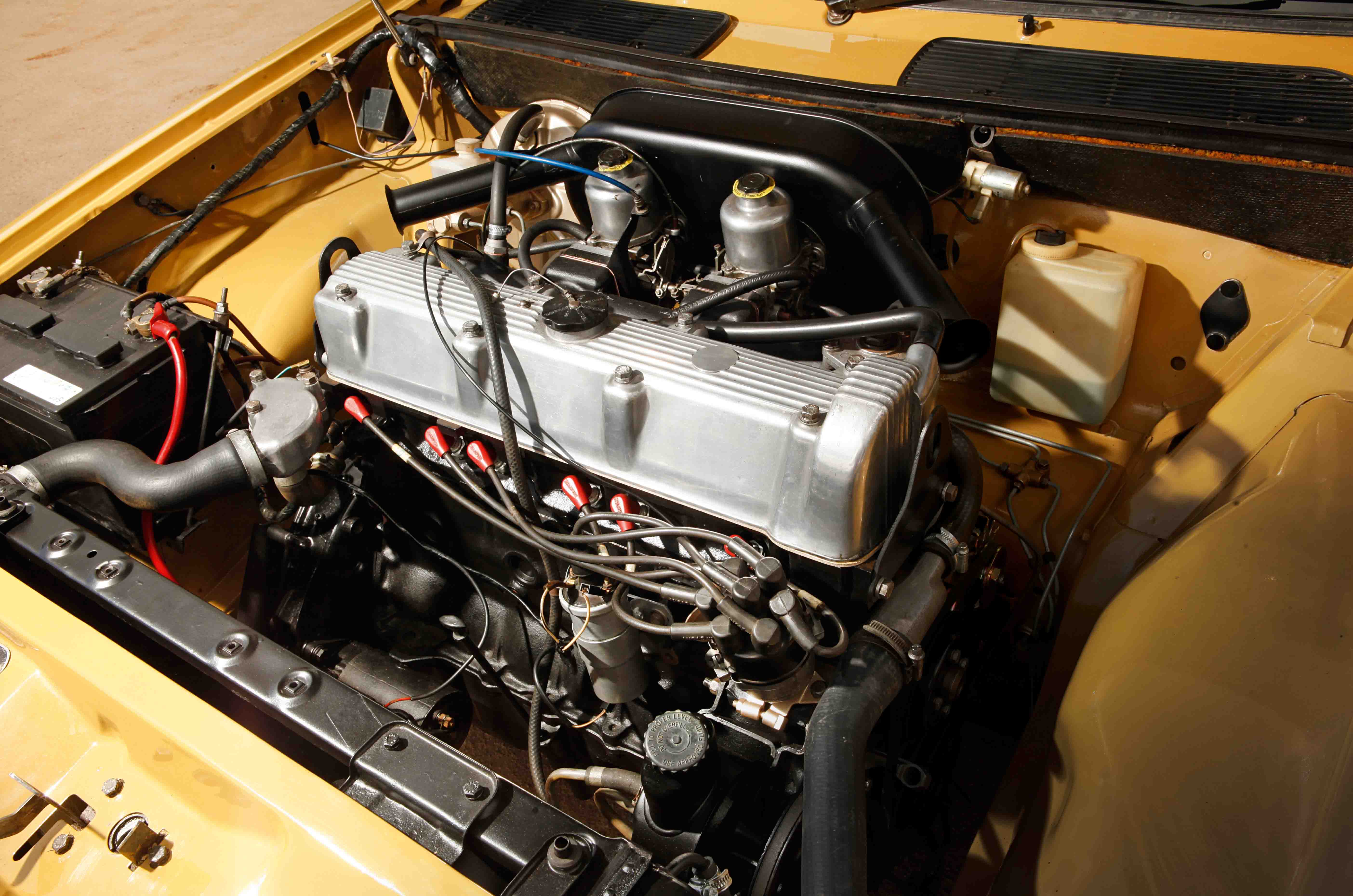
The Wolseley 18/85’s B-series motor, with twin carburettors and a modified cylinder head for the ‘S’ model
Once under way, the 18/85S displays its engineering heritage in the best possible light, as a business express that was also a larger alternative to the MG 1300.
It was the nearest that the British motor industry came in the ’60s to producing a rival for the Citroën DS, but at that time there were too few UK motorists who were familiar with large front-wheel-drive cars.
Perhaps that was the Wolseley’s main problem: there weren’t enough connoisseurs to appreciate its very real virtues.
As the 1970s progressed, badge engineering began to be phased out by British Leyland management, and so the final car to bear the Wolseley name was the 2200, which lasted a mere six months.
The bus-like rake of the Wolseley 18/85’s steering wheel will be familiar to owners of many BMC models
When BL commissioned a replacement for the ‘Landcrab’ range in 1970, the styling was the province of Harris Mann, who deliberately avoided the looks of a scaled-down American car in favour of a family saloon that would have “a distinctive flavour”.
The B- and E-series engines would be retained, but the 18-22 would lose the Landcrab’s infamous driving position and replace the fluid suspension with Hydragas units.
BL’s dealership networks had still not been streamlined, and the 18-22 would also be separately marketed as an Austin and a Morris.
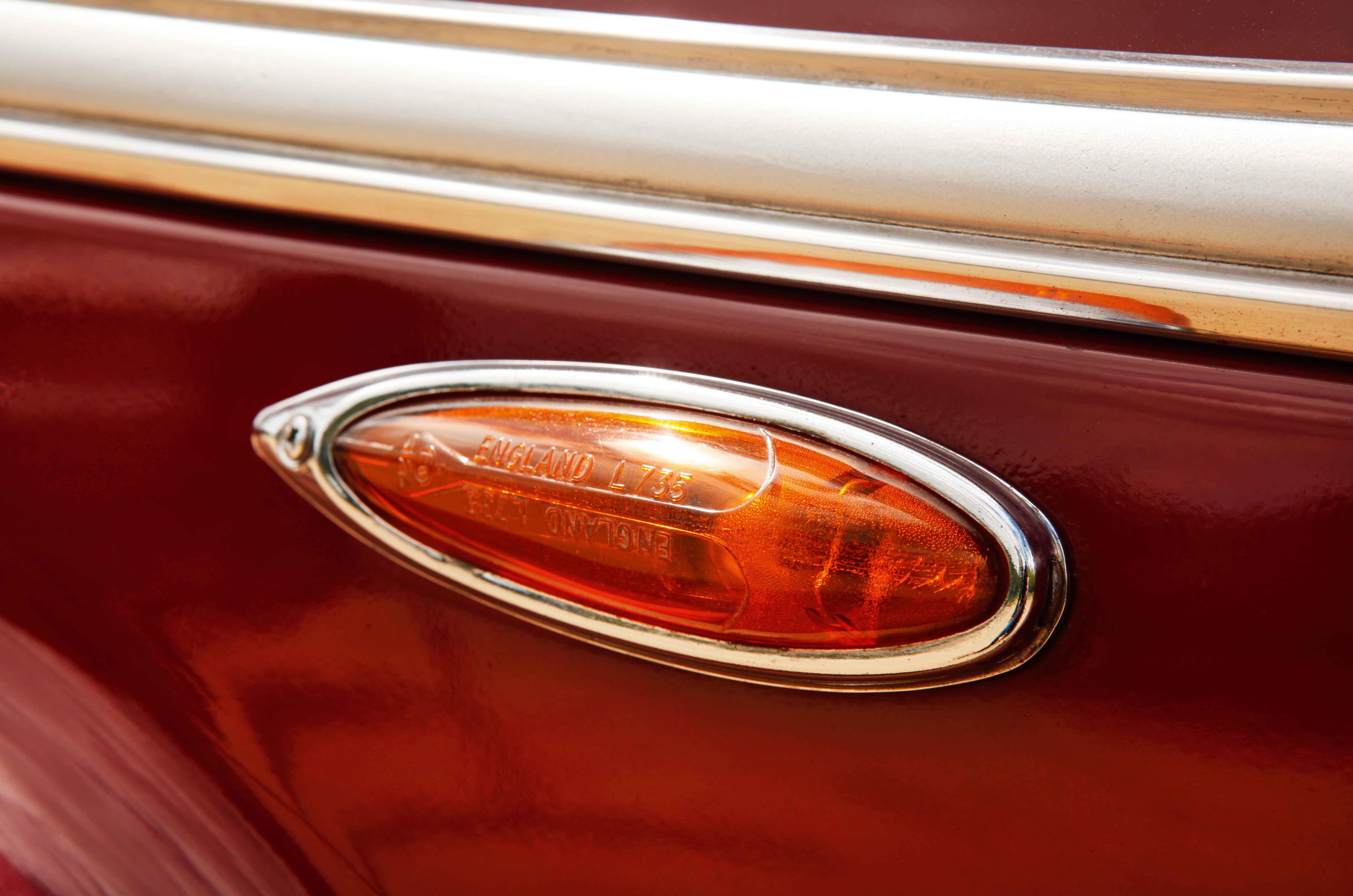
The Wolseley 18/85’s oval repeater
The ‘wedge’ is the Clint Eastwood of the marque – the car with no model name.
It is unofficially known as the 2200, but this description does not appear on the brochure, and BL was almost as coy about its corporate identity.
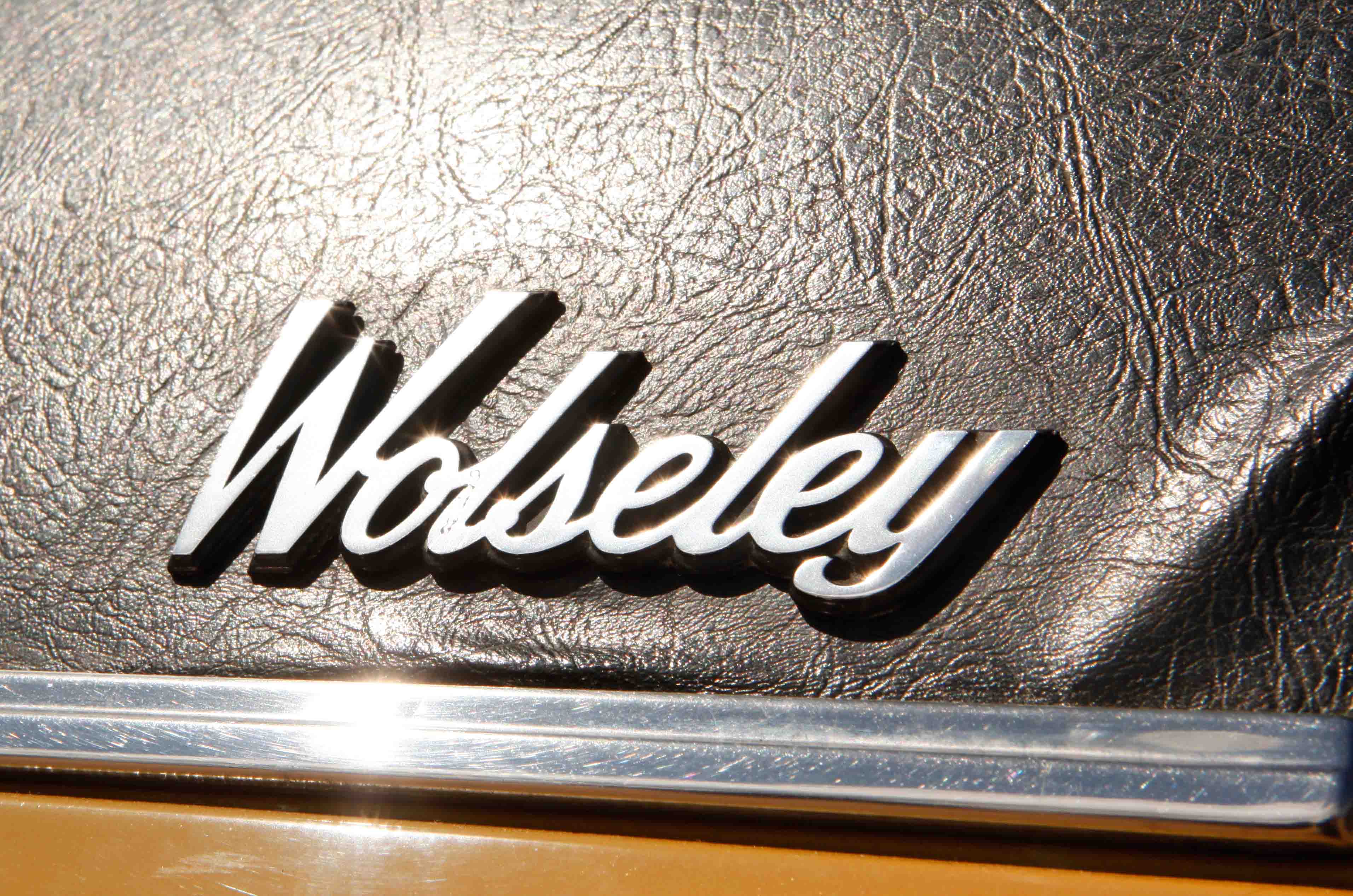
There is only one discreet ‘Leyland’ badge on the nearside front wing, as opposed to a plethora of Wolseley badging.
If this was not sufficient inducement to buy, there was the lengthy standard equipment list.
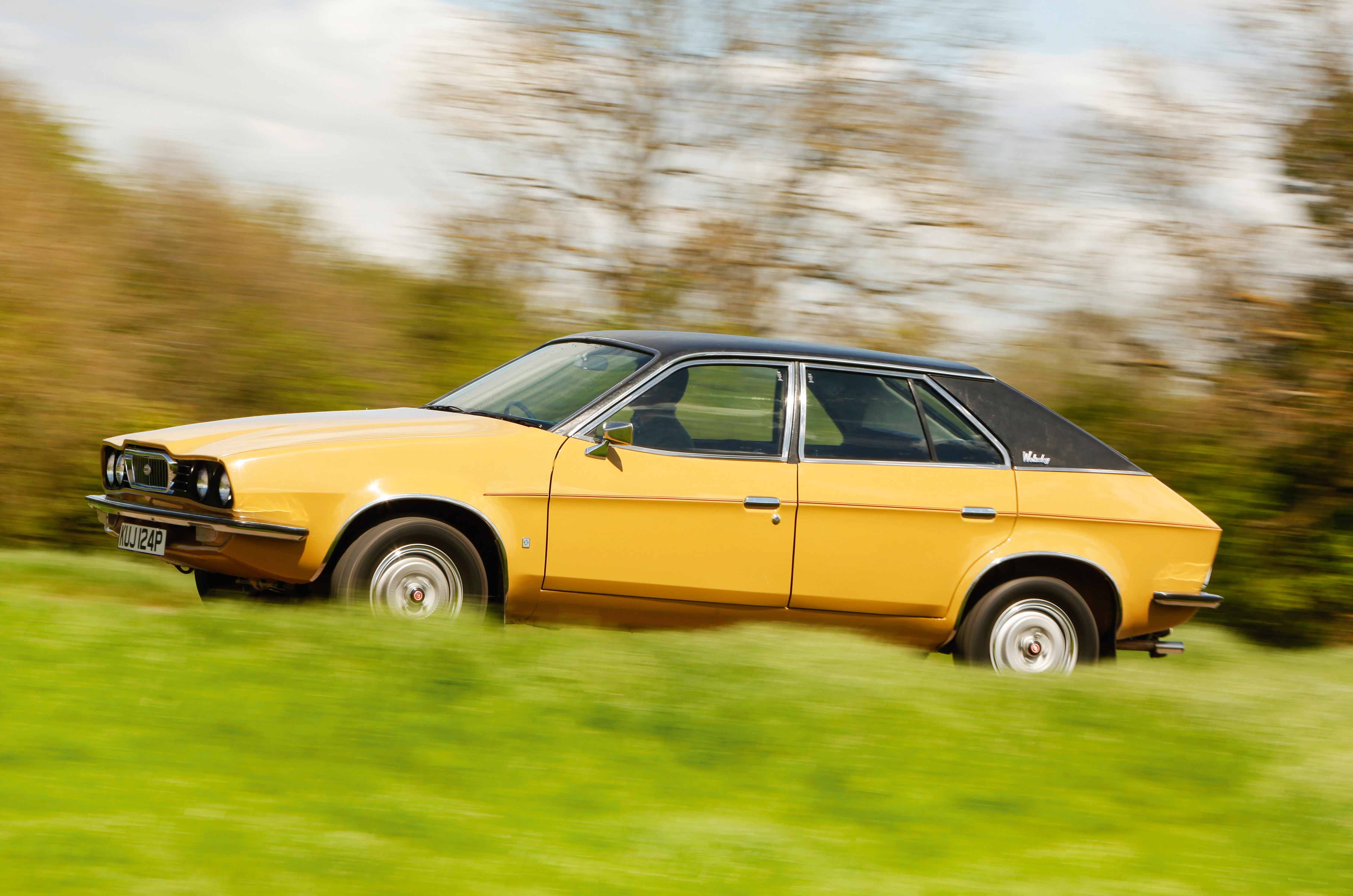
The Wolseley 2200’s wedge profile was a radical change
As befitting a car used by the government car pool for junior ministers, the 2200 has cigarette lighters front and rear, a MW/LW radio, power steering, rear reading lights and a driver’s seat that was adjustable through 240 positions.
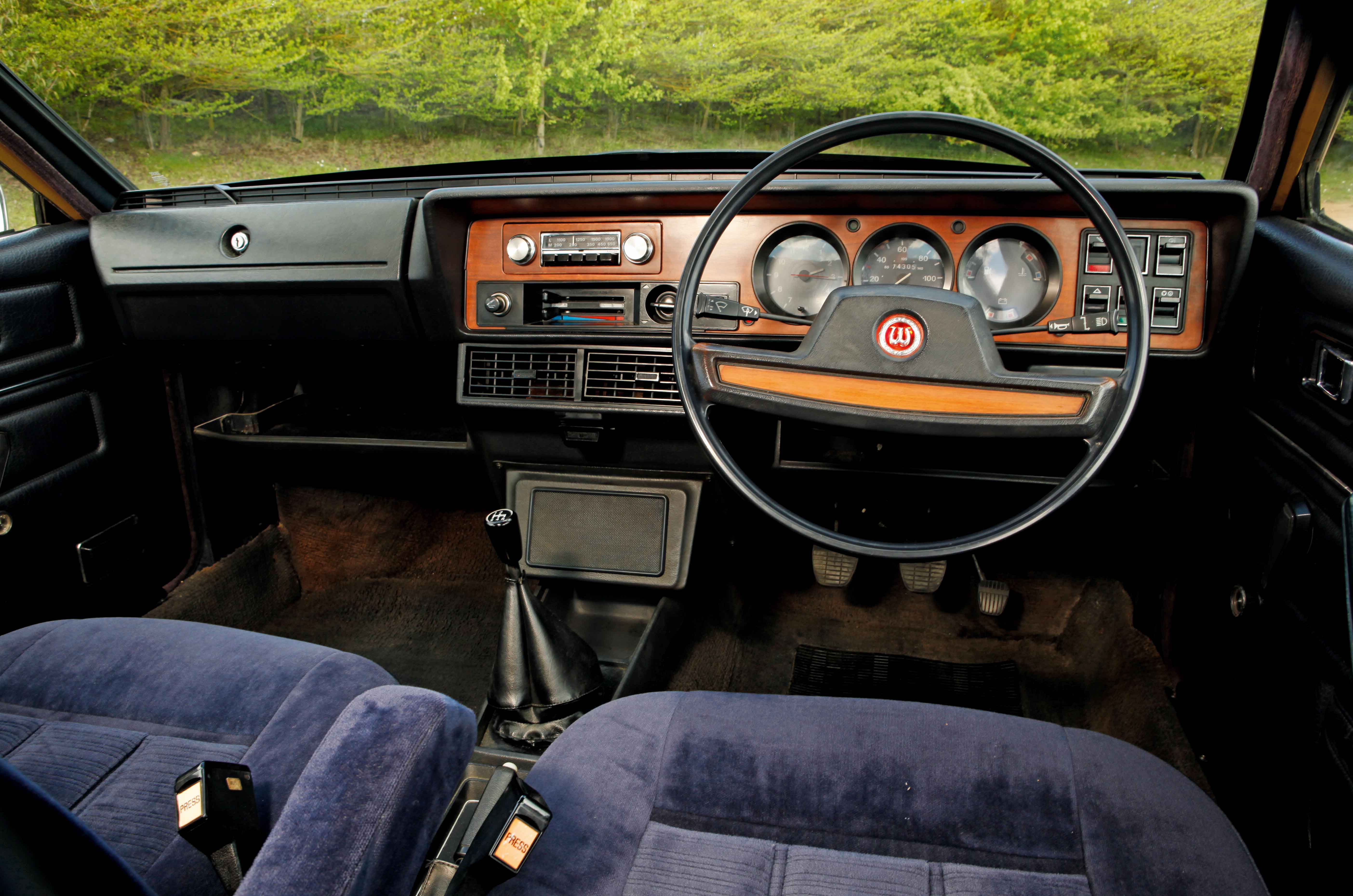
By the mid-’70s, the walnut dashboards of yore had been replaced by mock wood, but the upholstery was a veritable symphony in velour that was still the right side of über-chintz.
When encountering a rare surviving Wolseley wedge, the first impression is that the 1970s marked a low point in the art of colour co-ordination in British cars.
The second is that the 2200 has a smooth, effortless engine, very comfortable seats, a vastly superior gearchange to its predecessor, a cossetting ride and light steering.
The Wolseley 2200’s vinyl roof is very of its time
On its debut, the Wolseley was described by Motor as ‘much better than some more-expensive competitors’, an ‘excellent car’ and even ‘an outstanding stablemate’ to the Triumph 2500S.
Yet despite this praise – plus the fact that the 2200 was actually faster than the Triumph, and that the controversial styling is considered by some to be refreshingly unconventional – the Wolseley’s image is all too often that of a wedge-shaped joke.
Possibly the main reason for the disdain showed towards the British Leyland wedge range is that it is inextricably tainted by association with one of the most depressing epochs in the history of the British car industry.
The Wolseley 2200’s ‘six’ is a tight fit across the engine bay
When the 2200 was launched in early 1975, television comedians were using British Leyland as a guaranteed-laugh punchline, while desperate owners were seeking asylum in their local spares shops as news bulletin after news bulletin carried footage of industrial chaos.
By the mid-1970s BL had been nationalised in the face of impending bankruptcy following years of chaotic product planning, shambolic internal organisation and worker/management relations that bore a stark resemblance to I’m All Right, Jack.
Against such a background, it is not entirely surprising that the Wolseley was sold under the slogan: ‘If it were foreign, everyone would say “why can’t we make cars like that?”.’
A subconscious reminder that, by the mid-’70s, too many British executive motorists had discovered the joys of reliable European cars.
The last Wolseley has a far more ergonomic interior, but the ‘wood’ now looks altogether less convincing on the modern-style, black-plastic dashboard
In the autumn of 1975 the entire 18-22 range was marketed under the new Princess name as part of the company’s unification programme, and on 11 September 1975 the 80-year-old Wolseley badge passed into history.
Production of the Princess continued until 1982, when it was replaced by the five-door Ambassador.
BL had vague plans to revive the Wolseley grille at this point, but, given how unlovely the Ambassador proved to be, it was probably for the best that this never came to fruition.
The story of BMC/BL included the sad decline of several famous names, but the tragedy of the last Wolseley was that, had it been built to proper standards, it could have been a genuine executive-market contender.
The 2200 was the last hurrah for the famous Wolseley badge
A 2200 in all its velour glory was a car that could have lured the sort of executive who delighted in the latest Uranus Calculator watches away from their Saab 99, but it was not to be. The ghost light had been extinguished.
With three such different cars there can be no overall winner, but the 6/99 would have pride of place in my garage.
To see the Wolseley at its best, just forget those banger-racing individuals who think that Deliverance was a public-information film and watch the 1961 travelogue Westward Ho!
After just five minutes of this Technicolor fantasy of a Big Farina cruising through Devon, it takes a person of taste and decency using every inch of their restraint not to leap into the screen.
Images: Tony Baker
Thanks to: the Leyland Princess & Embassador Enthusiasts’ Club; The Cambridge-Oxford Owners’ Club; the Wolseley Register; the British Motor Museum. Further viewing: British Pathé: Westward Ho!
This was first in our August 2012 magazine; all information was correct at the date of original publication
Factfiles
Wolseley 6/99
- Sold/number built 1959-’61/13,108
- Construction steel monocoque
- Engine all-iron, ohv 2912cc ‘six’, twin SUs
- Max power 103bhp @ 4500rpm
- Max torque 158lb ft @ 2000rpm
- Transmission three-speed manual with overdrive, RWD
- Suspension: front independent, by wishbones, coil springs rear live axle, semi-elliptic leaf springs; lever-arm dampers, anti-roll bar f/r
- Steering cam and peg
- Brakes discs front, drums rear
- Length 15ft 8in (4775mm)
- Width 5ft 8½in (1740mm)
- Height 4ft 11in (1498mm)
- Wheelbase 9ft (2700mm)
- Weight 3415lb (1549kg)
- 0-60mph 14.4 secs
- Top speed 98mph
- Mpg 19
- Price new £1255
Wolseley 18/85S
- Sold/number built 1967-’72/35,597
- Construction steel monocoque
- Engine all-iron, ohv 1798cc ‘four’, twin SUs
- Max power 96bhp @ 5700rpm
- Max torque 106lb ft @ 3000rpm
- Transmission four-speed manual, FWD
- Suspension independent, at front by wishbones rear trailing arms; Hydrolastic displacers f/r
- Steering power-assisted rack and pinion
- Brakes discs front, drums rear
- Length 13ft 10in (4216mm)
- Width 5ft 7in (1702mm)
- Height 4ft 7½in (1409mm)
- Wheelbase 8ft 8in (2600mm)
- Weight 2549lb (1156kg)
- 0-60mph 12 secs
- Top speed 99mph
- Mpg 22
- Price new £1273
Wolseley 2200
- Sold/number built 1975/3800
- Construction steel monocoque
- Engine all-iron, sohc 2227cc ‘six’, twin SUs
- Max power 111bhp @ 5000rpm
- Max torque 124lb ft @ 3500rpm
- Transmission four-speed manual, FWD
- Suspension independent, at front by transverse links rear trailing arms; Hydragas units f/r
- Steering power-assisted rack and pinion
- Brakes discs front, drums rear
- Length 14ft 7½in (4458mm)
- Width 5ft 9in (1753mm)
- Height 4ft 7½in (1409mm)
- Wheelbase 8ft 9in (2667mm)
- Weight 2564lb (1163kg)
- 0-60mph 12 secs
- Top speed 105mph
- Mpg 22
- Price new £2838
Enjoy more of the world’s best classic car content every month when you subscribe to C&SC – get our latest deals here
READ MORE
Austin 3 Litre vs Wolseley Six: affordable luxury
The battle for middle England: Rover 3-Litre vs Wolseley 6/99