MGB GT V8 heroes: it’s Costello vs Abingdon

| 17 Aug 2026
Classic & Sports Car – MGB GT V8s: Costello’s conversion vs Abingdon’s answer
Amid the industrial agonies and political intrigues that dogged the British Leyland empire in the 1970s, the MGB GT V8 is definitely one of the brighter spots.

Rather like the Daimler SP250, it was a car in which the charms of its engine almost outweighed its shortcomings – or at least diverted attention from them.

Not all of those shortcomings can be laid at MG’s door. In truth, many elements conspired against the MGB GT V8 to make it a commercial failure.

Classic & Sports Car – MGB GT V8s: Costello’s conversion vs Abingdon’s answer
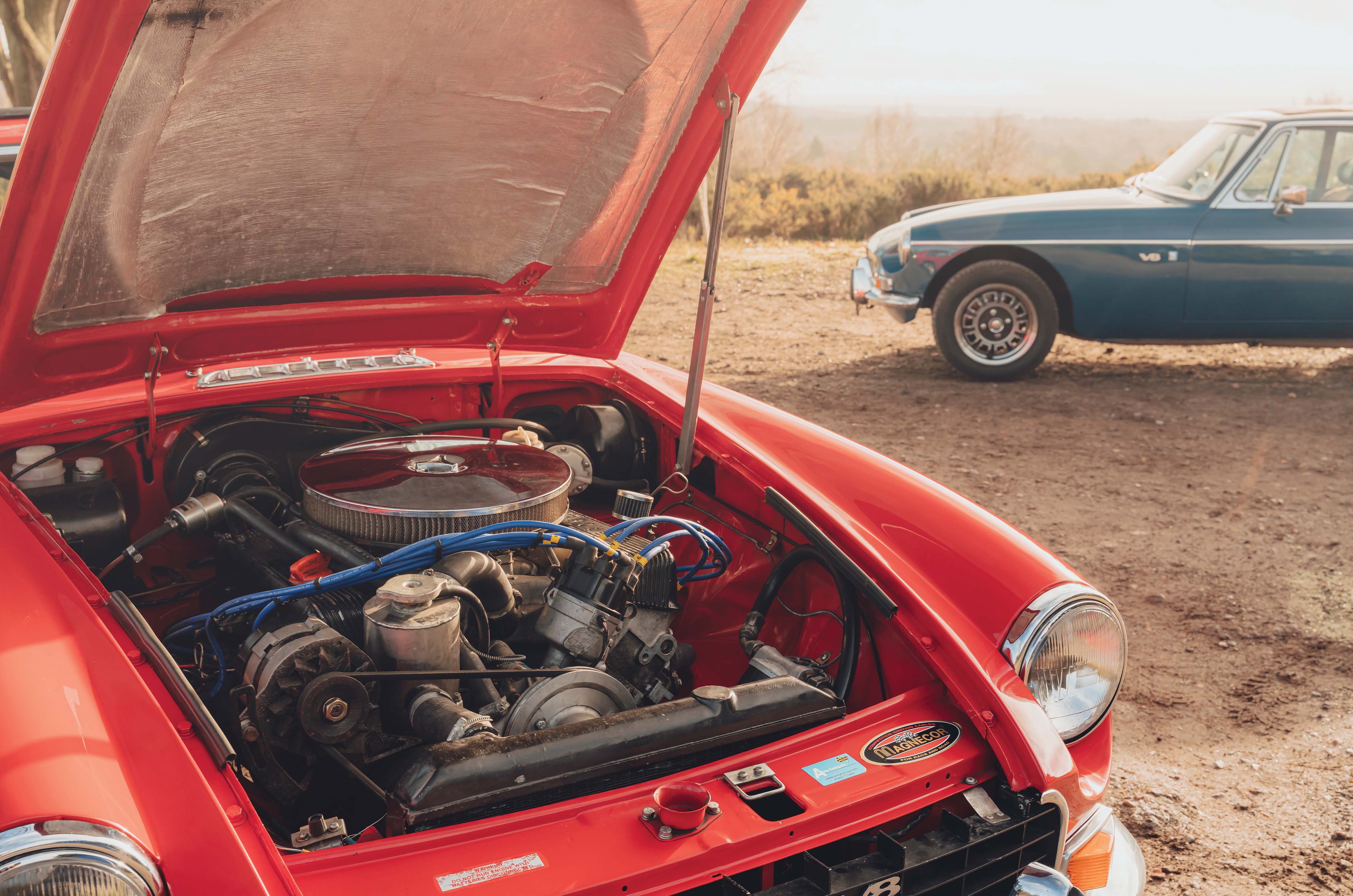
The MGB GT’s engine bay was modified to make the Rover unit fit

The blame for its downfall could be apportioned equally between self-sabotage on the part of its creators (it could, with a small amount of extra effort, have been a much better car) and external circumstances beyond their control.

Chief among the latter were spiralling early-’70s inflation (which rapidly priced the car out of its market) and a looming Fuel Crisis that made all large-engined vehicles next to unsaleable for quite a long time.

Understandably, BL was not keen to point out that its new 125mph flagship got the same 24mpg as the standard, four-cylinder MGB.

Classic & Sports Car – MGB GT V8s: Costello’s conversion vs Abingdon’s answer
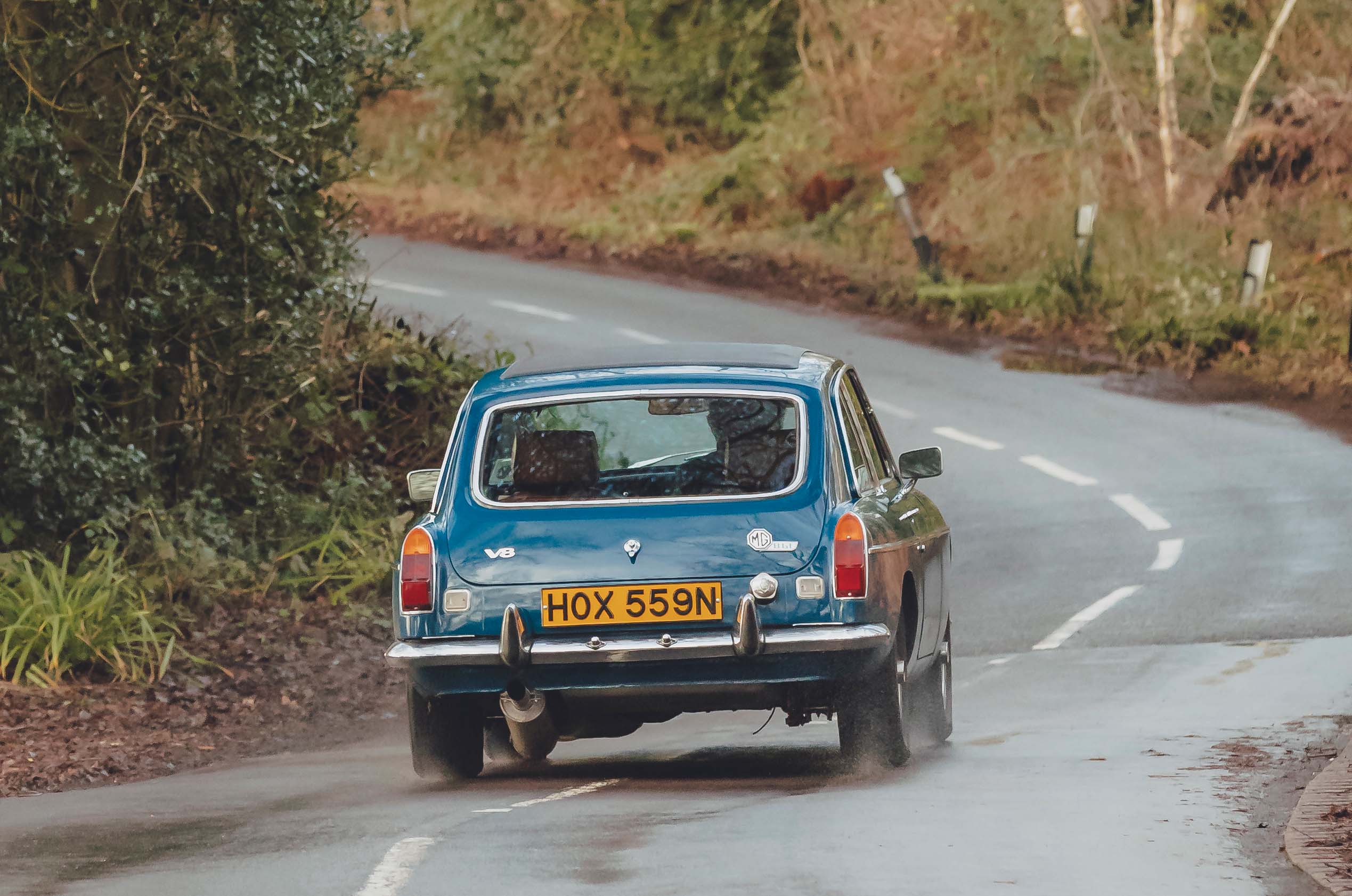
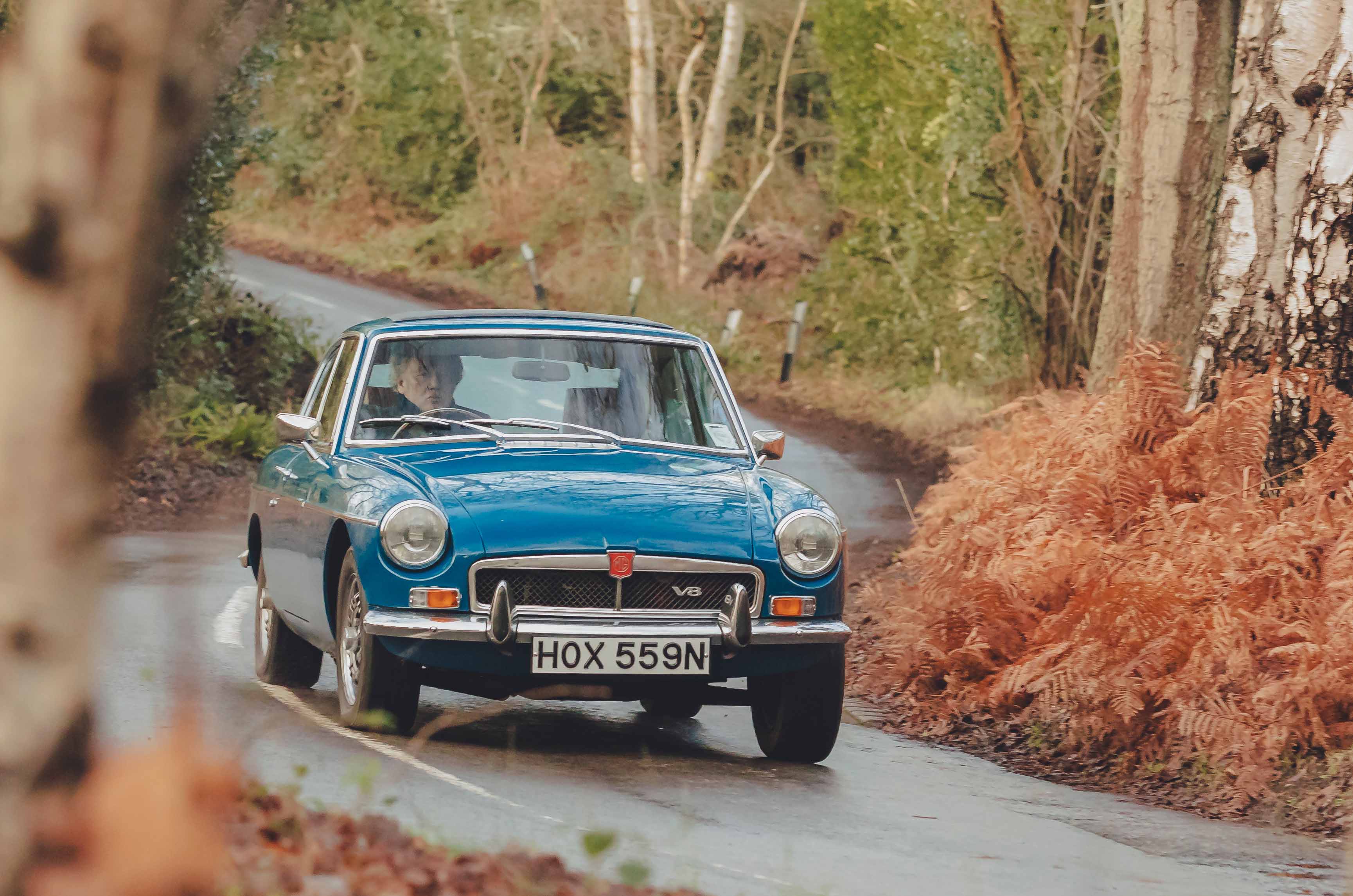
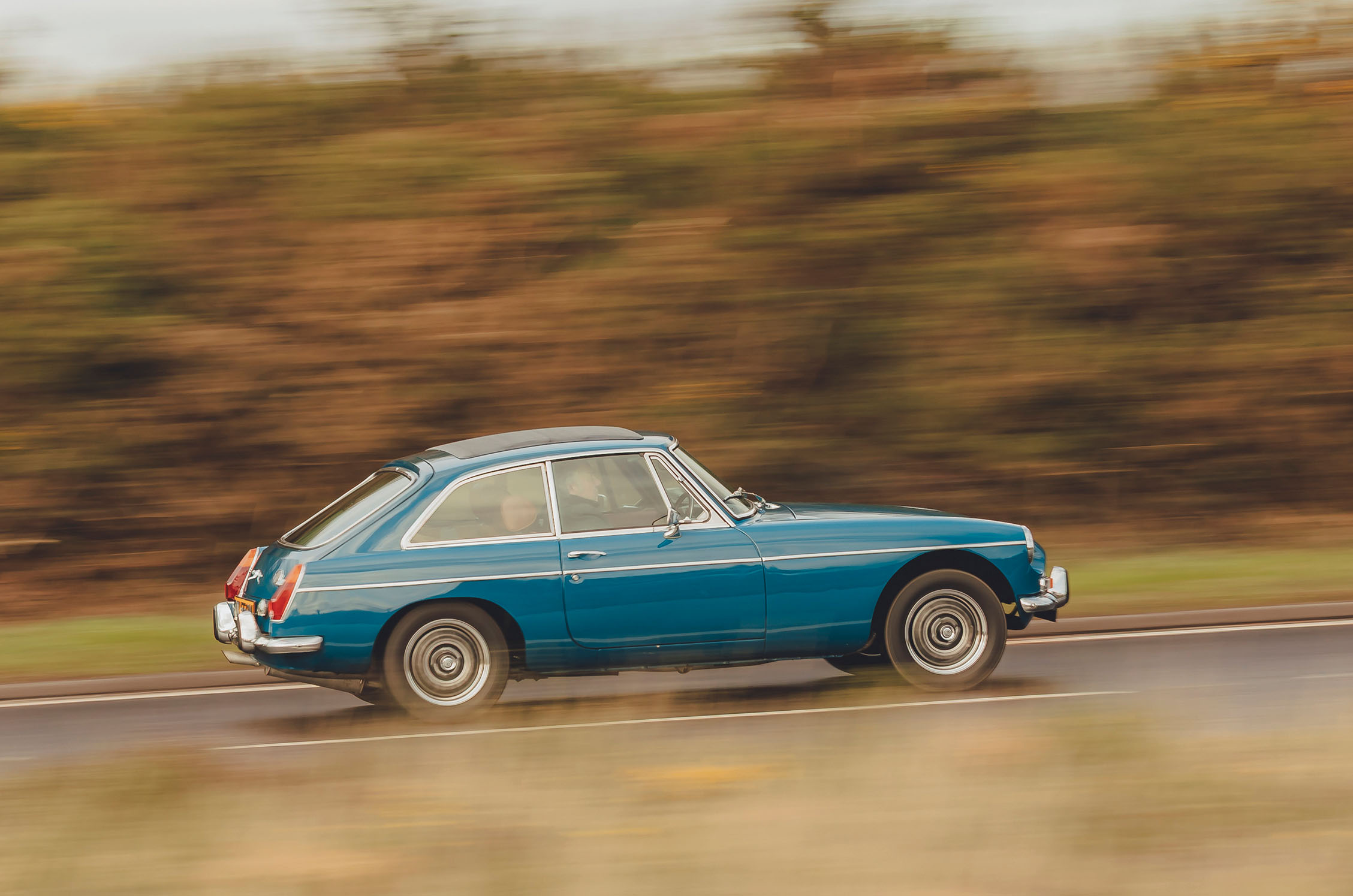
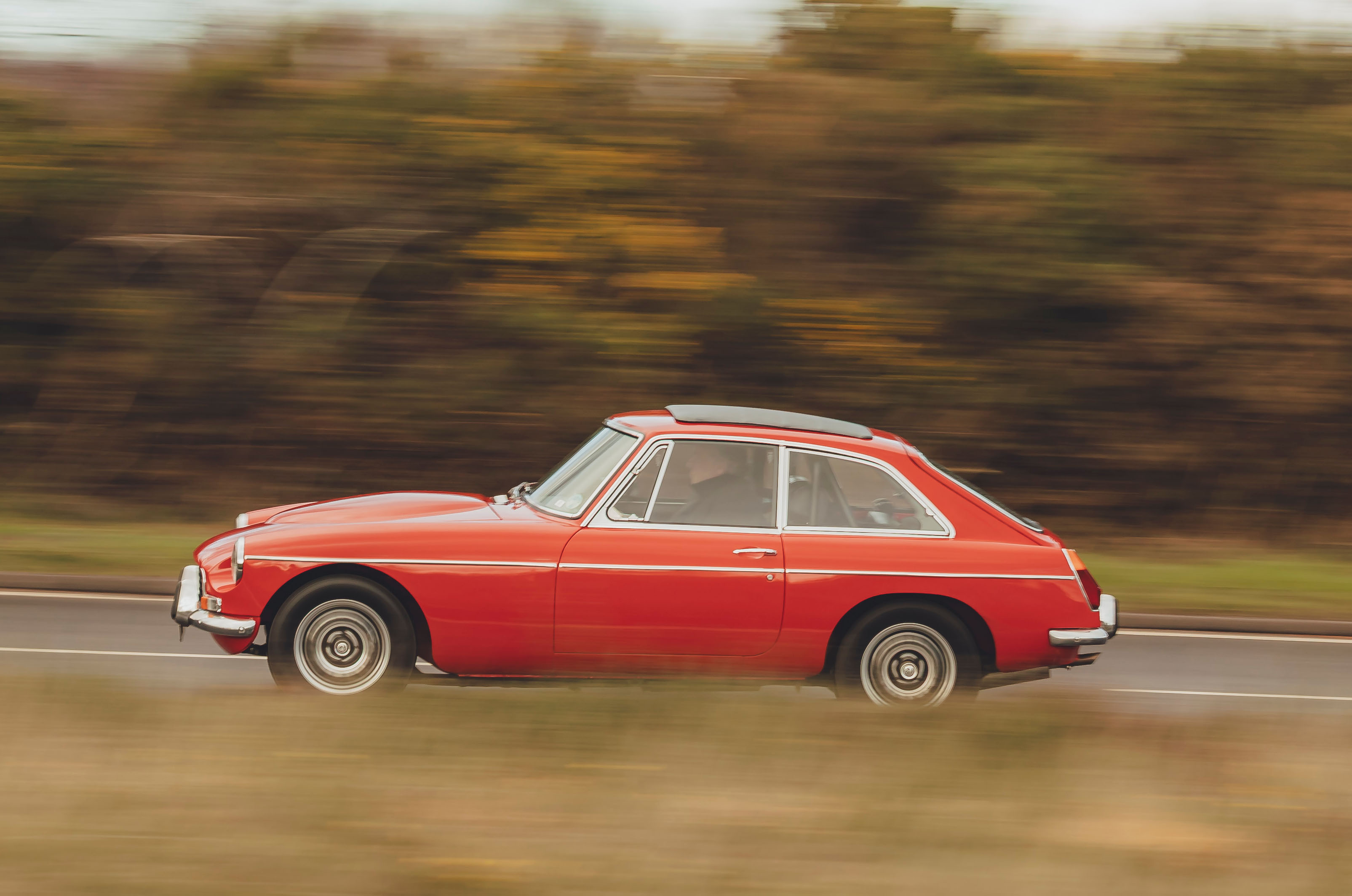
The MGB GT V8 looked much the same as its four-cylinder sibling

There are conflicting accounts of engine-supply problems hampering sales.

Some say Abingdon was only allotted 40 V8 engines per week; others claim there were powerplants aplenty but not the orders for the cars.

Even acknowledging that the MGB V8 was launched in a period of peak Leyland-bashing, the prospect of a 125mph GT with significantly more power, torque and smoothness than the standard car would, you’d think, have found many more friends than it did.

But it is a shock to rediscover just how rare these MGs are (2591 built) and for how short a period they were produced.

Classic & Sports Car – MGB GT V8s: Costello’s conversion vs Abingdon’s answer
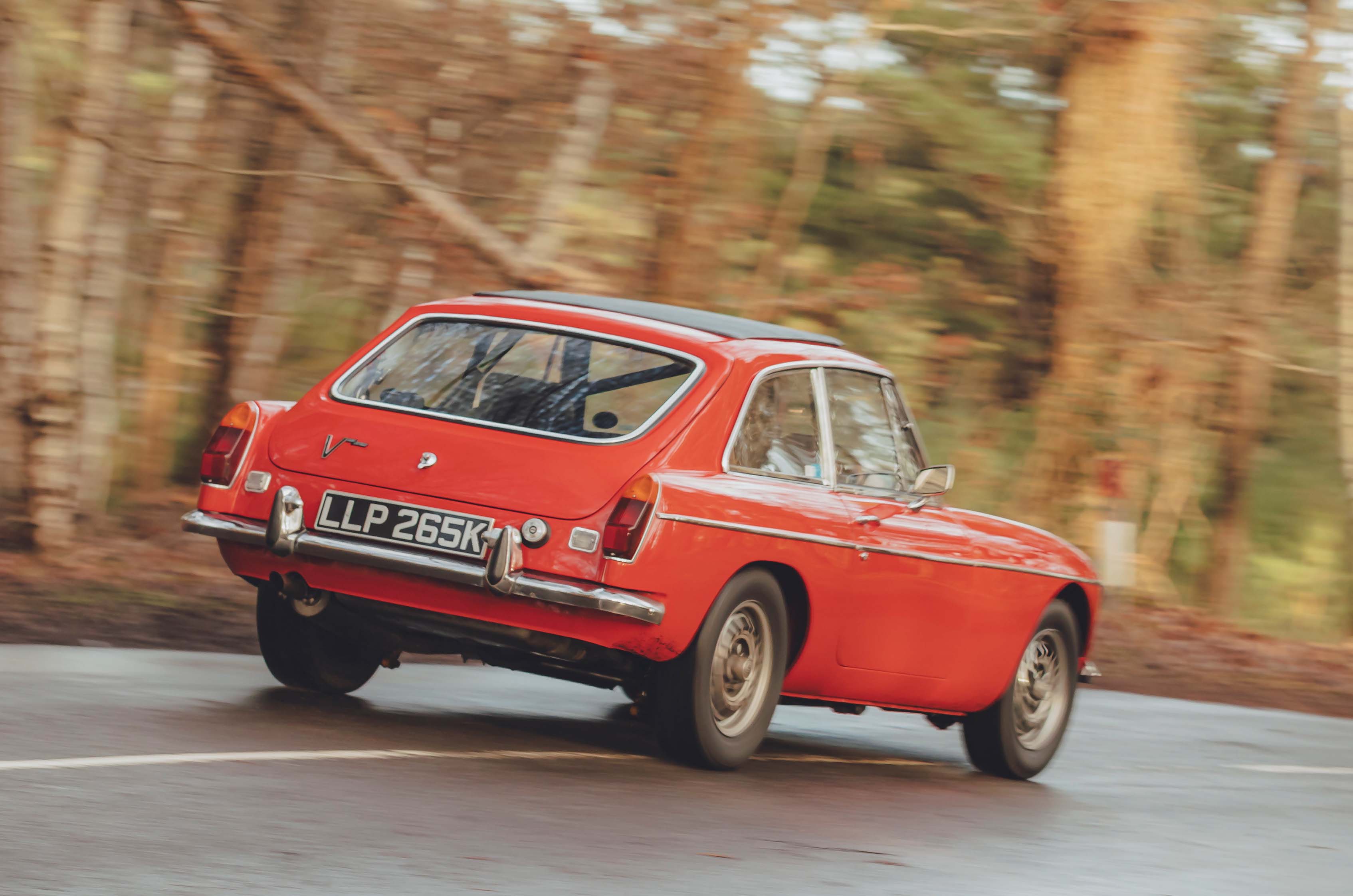
The MGB GT V8’s harsh ride spoils an otherwise good-handling package

Thankfully, the majority –1862 units – were chrome-bumpered; the demise of the V8 MG was already preordained when the final few were produced in rubber-bumper form between October 1974 and September ’76.

Officially it was killed off because Solihull needed all the V8s it could get for the new Rover SD1.

Make no mistake, the raw ingredients of this awkwardly named product of the unwieldy British Leyland colossus were compelling.

What was not to like about a large, refined, flexible, provenly reliable and lightweight V8 engine in a compact, practical 2+2?

Classic & Sports Car – MGB GT V8s: Costello’s conversion vs Abingdon’s answer
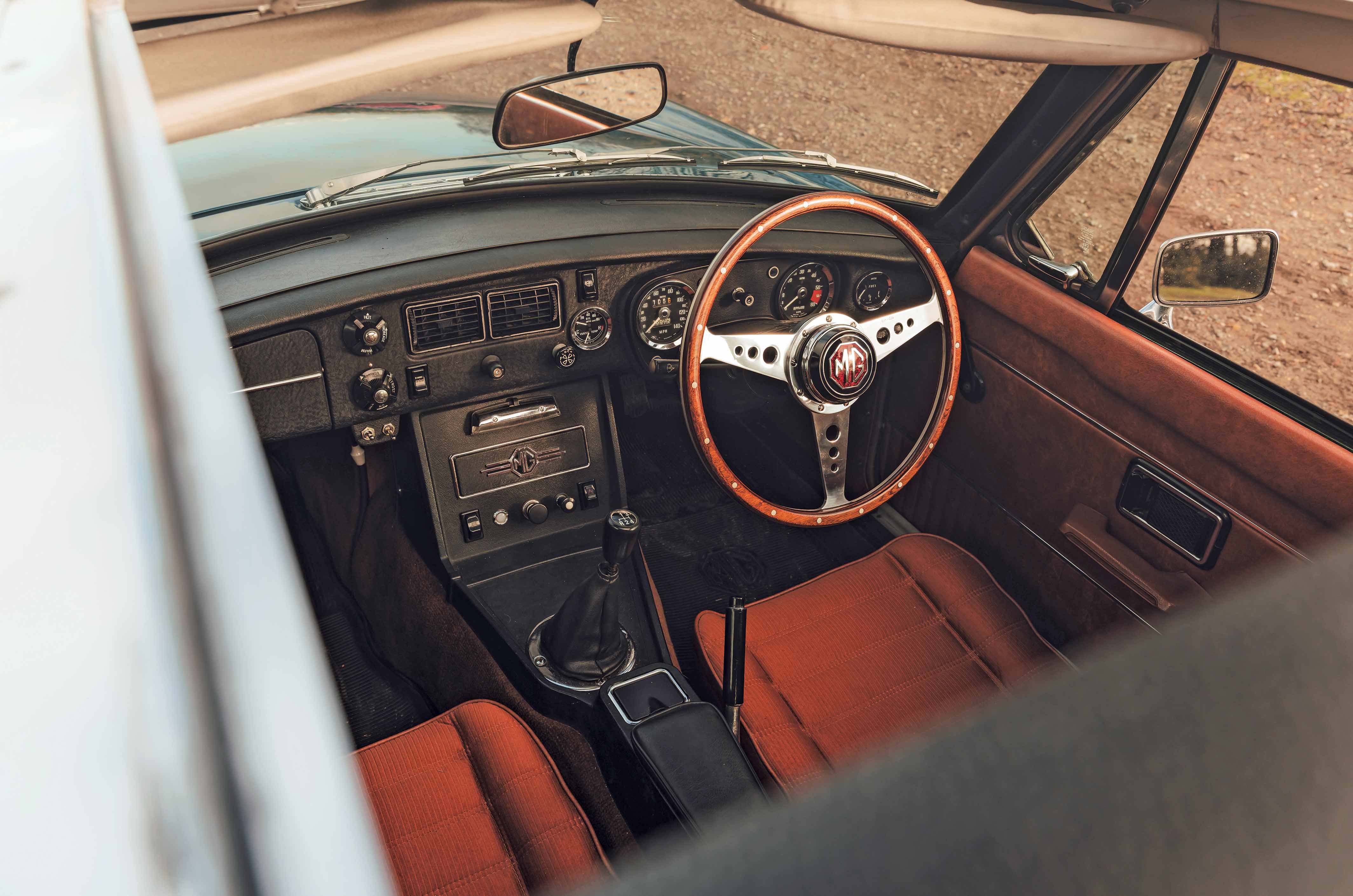
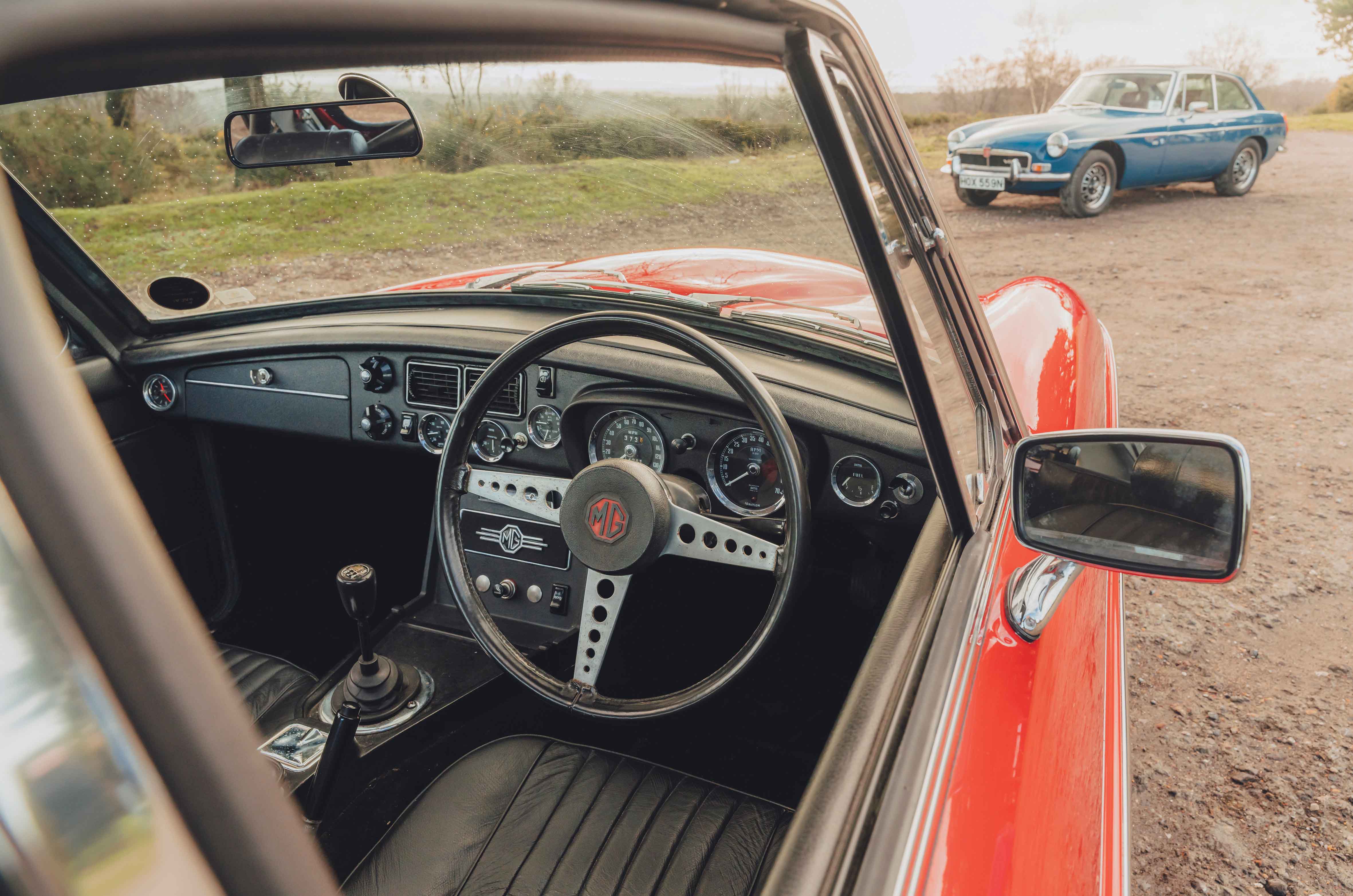
The MGB GT V8’s interior has smaller instruments than in the regular model

It was as pretty as many of its exotic European contemporaries, even if it was perhaps too familiar (total MGB sales were already nearing 500,000, and the GT shape dated from 1965) to be regarded as truly beautiful.

Perhaps the V8 was more mistimed than misconceived? The world had moved on in the years since the 1969 demise of the six-cylinder MGC, meaning the new car was left to square up to a litany of younger, sexier, more refined and more practical rivals.

Chief among them were the Datsun 240Z and Ford Capri 3-litre, plus a variety of more specialist sports and GT cars such as the Reliant Scimitar, Lotus Elan +2S and Jensen-Healey

Yet even in that company, the MGB GT V8 was usually among the fastest and seldom the most expensive.

Classic & Sports Car – MGB GT V8s: Costello’s conversion vs Abingdon’s answer
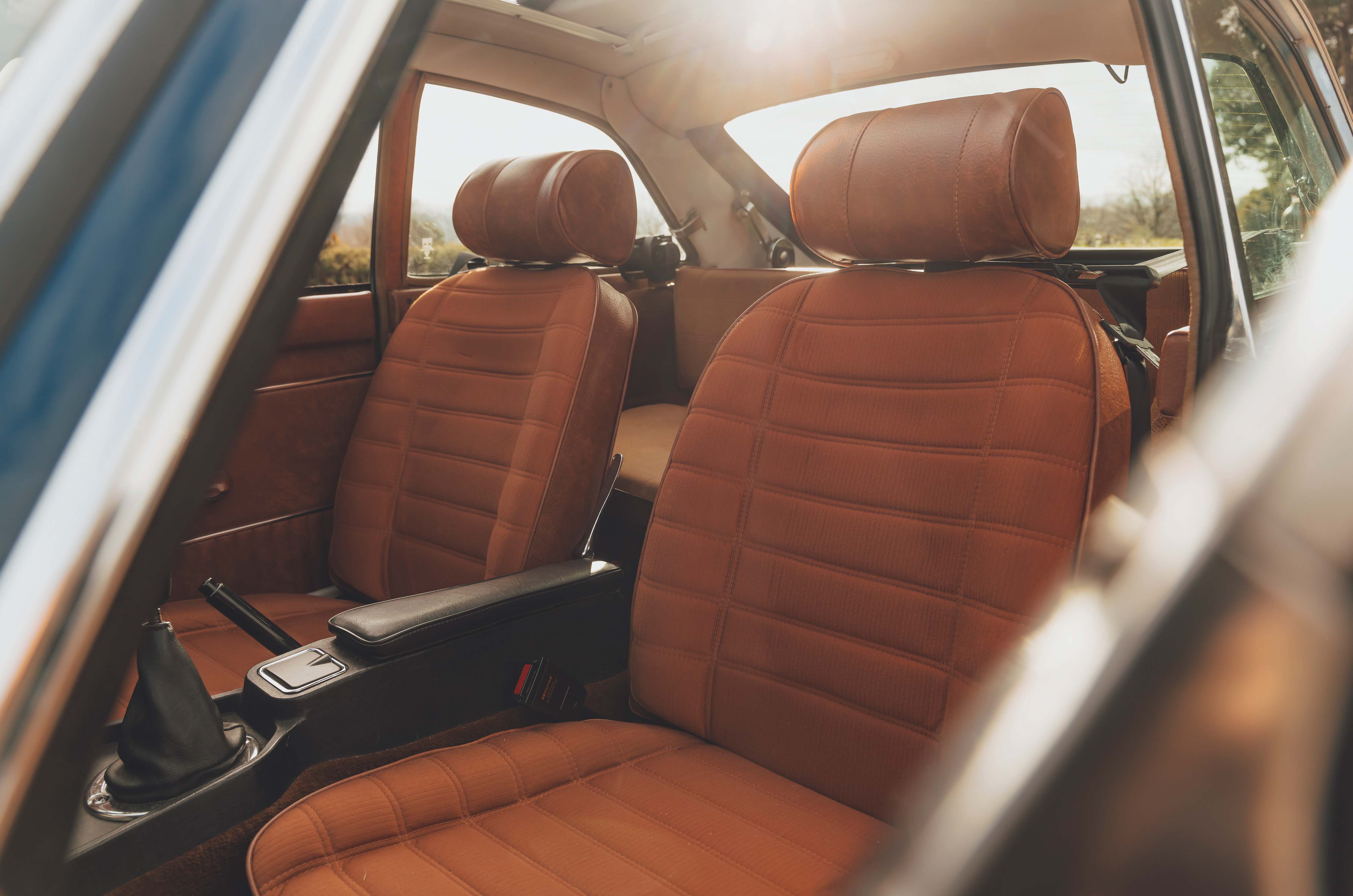
The MGB GT V8’s familiar cabin has a no-frills finish

The idea of the BGT V8 should have breathed new life into the concept of a really powerful MG in a complicated 1973 BL sports-car line-up that, even after the quiet demise of the Triumph GT6 that year, supported six separate models.

The first pre-production V8s were developed on a tight, £200,000 budget and on the road by late 1972, but the launch wasn’t until August ’73.

In many ways, the V8 got as rough a reception as the MGC was dealt in 1967, albeit for different reasons.

Faults that were forgivable in a £1500 sports car were less so in one costing north of two grand, especially in an enthusiast market where potential customers tended to take a lot more notice of reviews in the press.

Classic & Sports Car – MGB GT V8s: Costello’s conversion vs Abingdon’s answer
The MGB GT V8 has seamless torque and well-matched gear ratios

The BGT V8 was mauled for its high-speed wind noise, its low-speed ride quality and the austerity of its interior trimmed in Bri-Nylon. In every press notice, the understeering ghost of the MGC was invoked.

Yes, the V8 handled far better and went faster, but at least the six-cylinder C had also been available as a roadster.

Faces were pulled all round when it was learned there would be no V8 drophead.

The shell was not stiff enough, Abingdon said, but the decision to go tin-top-only might have had a more political origin than an engineering one.

Classic & Sports Car – MGB GT V8s: Costello’s conversion vs Abingdon’s answer
The MGB GT V8 has found more success as classic car than when it was new

Under Donald Stokes, Triumph was the favoured marque in the BL sports-car family, so why invent an in-house rival for the TR6 when it was still selling well?

Seemingly, with the Triumph Stag suffering in the United States, there was no appetite for exporting the new flagship MG to North America.

Only a handful of factory BGT V8s were ever manufactured in left-hand drive.

In the real world of the showrooms, the V8 MG immediately made salespeople’s lives difficult by costing £620 – about the basic price of an 850 Mini – more than the standard, four-cylinder BGT.

Classic & Sports Car – MGB GT V8s: Costello’s conversion vs Abingdon’s answer
The 137bhp MGB GT V8 is effortlessly quick

There had been plans to facelift the shape, but no budget to do it.

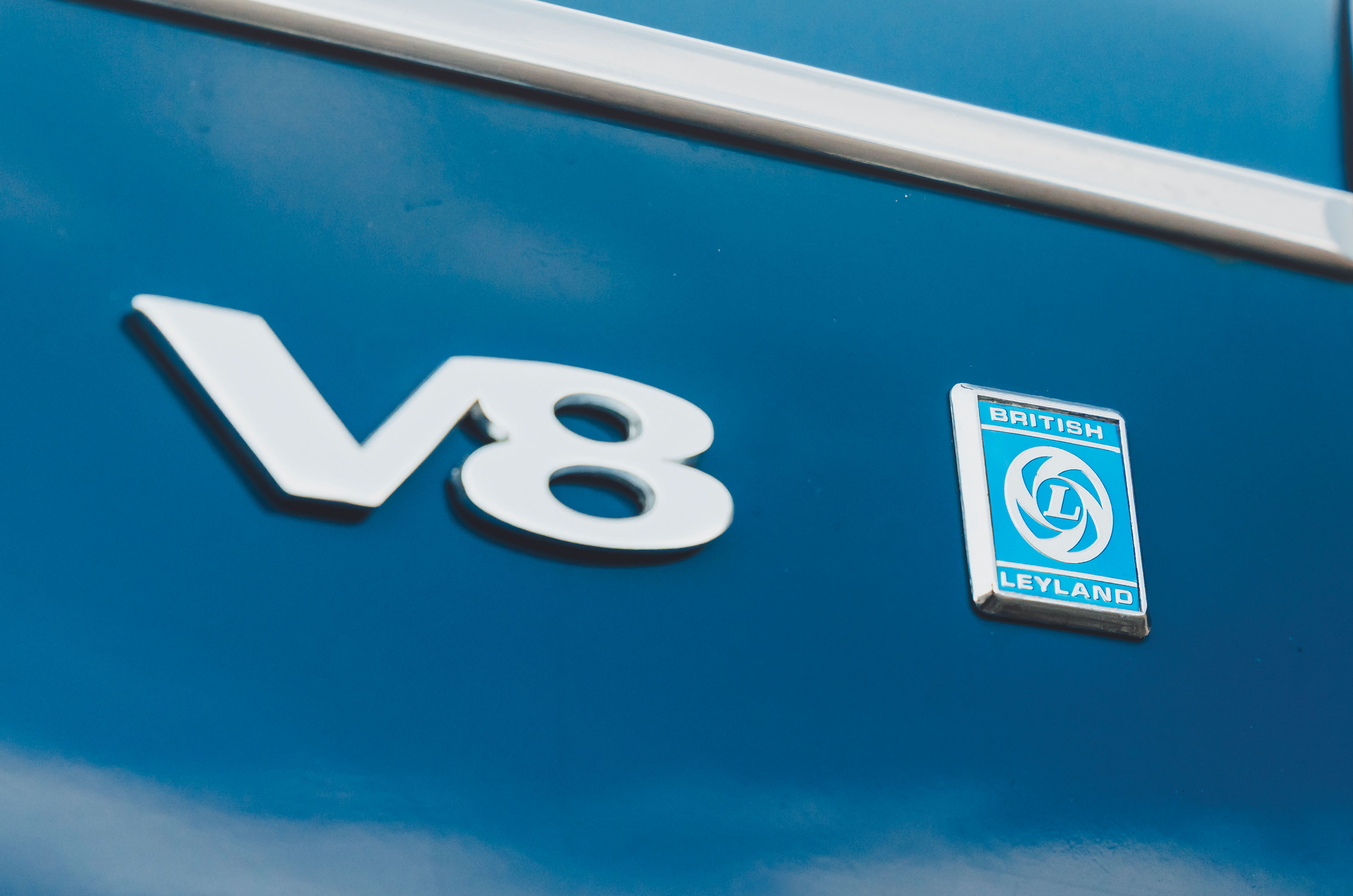
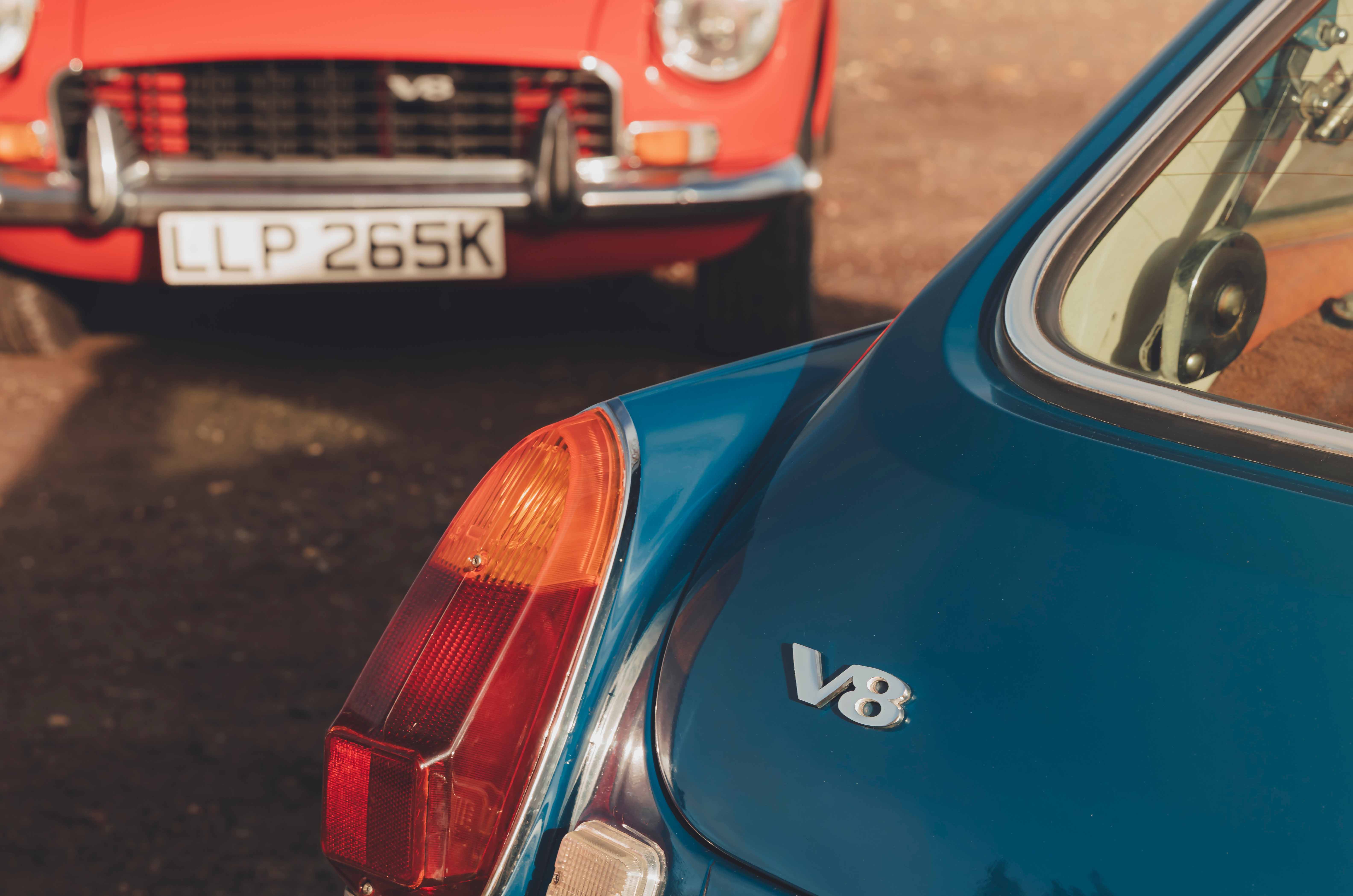
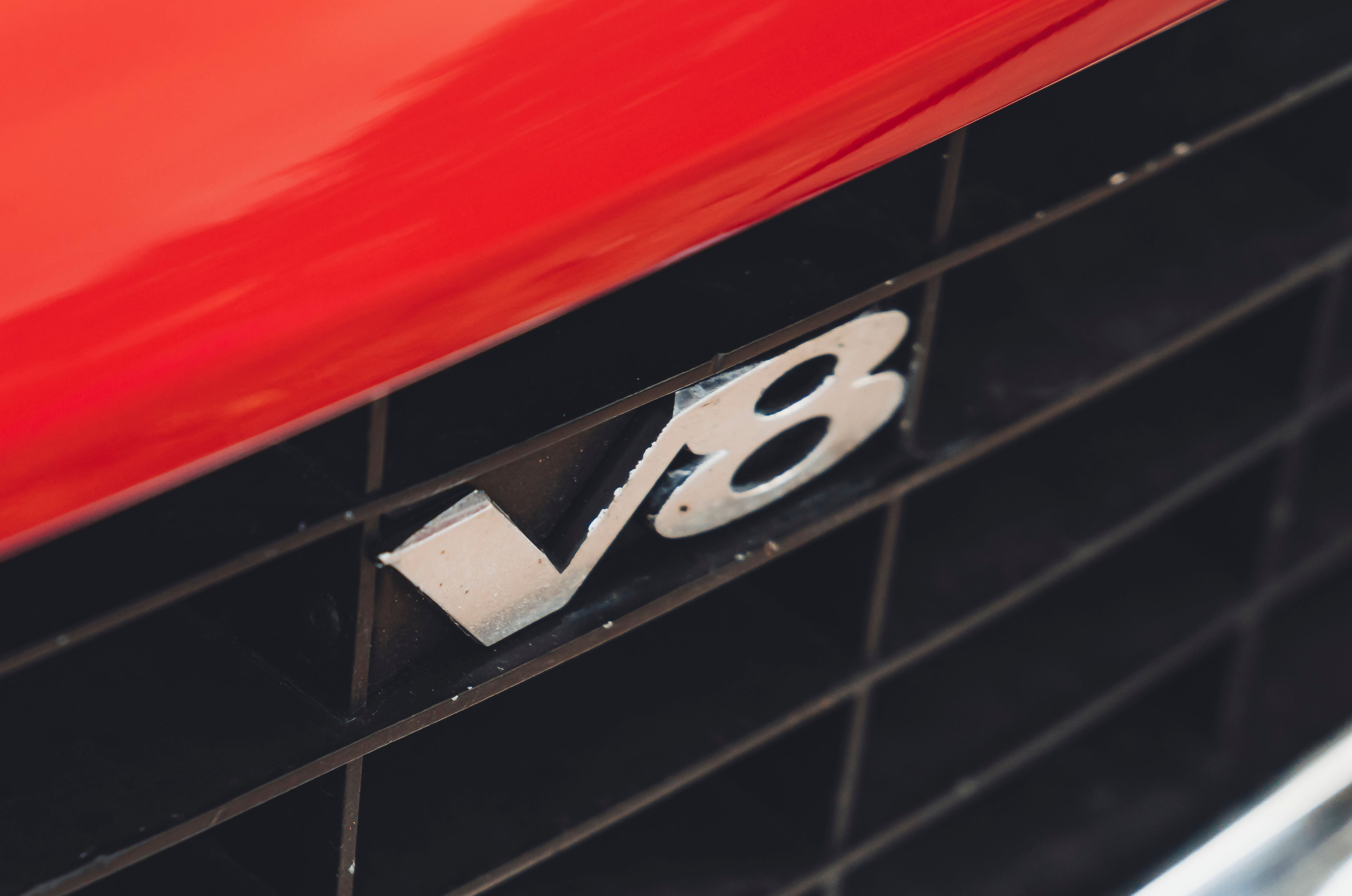
Beyond tinted glass, Dunlop steel-rim/alloy-centre wheels (not the same as a Scimitar GTE’s, although they looked very similar) and ‘V8’ badges, it was identical to the four-cylinder BGT.

It is only fair to mention that, other than static seatbelts, there were no options on the V8: its headrests, heated rear ’screen and brake servo were all chargeable extras on the standard B.

It sat slightly higher on beefed-up springs, still with lever-arm dampers all round, and came with overdrive as standard.

Classic & Sports Car – MGB GT V8s: Costello’s conversion vs Abingdon’s answer
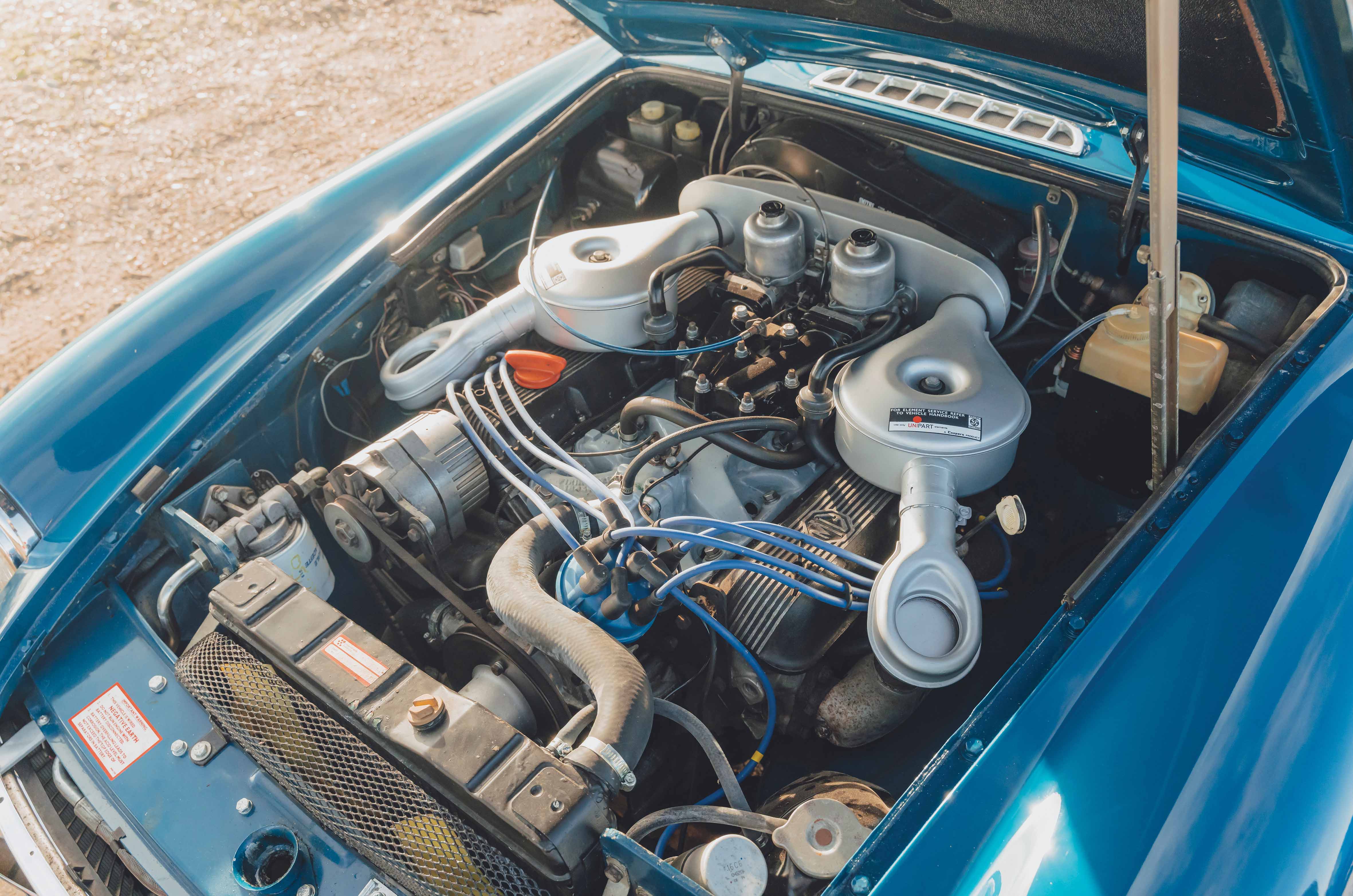
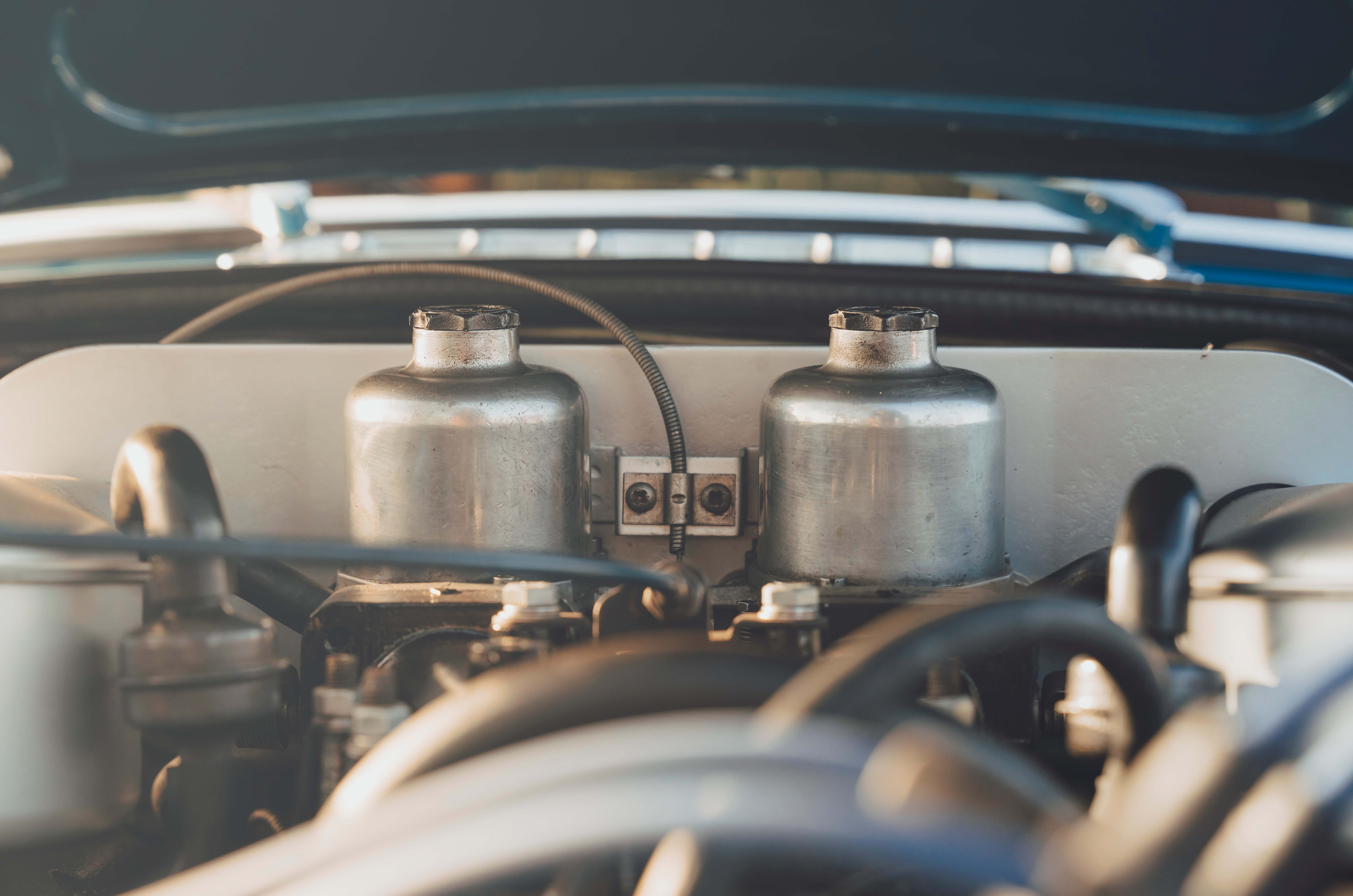
The MGB GT V8’s twin-carb set-up

The gearbox was a modified MGC unit (with a bigger clutch), which, allied to a longer, 3.07:1 differential, gave 29mph per 1000rpm in overdrive top.

The ex-Buick alloy V8 was only marginally heavier than the B-series ‘four’ with all its ancillaries.

It ran a bigger radiator (with two fans) and twin SUs on lowered manifolds, while dual ‘lobster-claw’ airboxes had bimetallic valves that switched between hot and cold air intakes.

Less obvious was that the bulkhead and inner arches were modified to get the V8 to fit.

Classic & Sports Car – MGB GT V8s: Costello’s conversion vs Abingdon’s answer

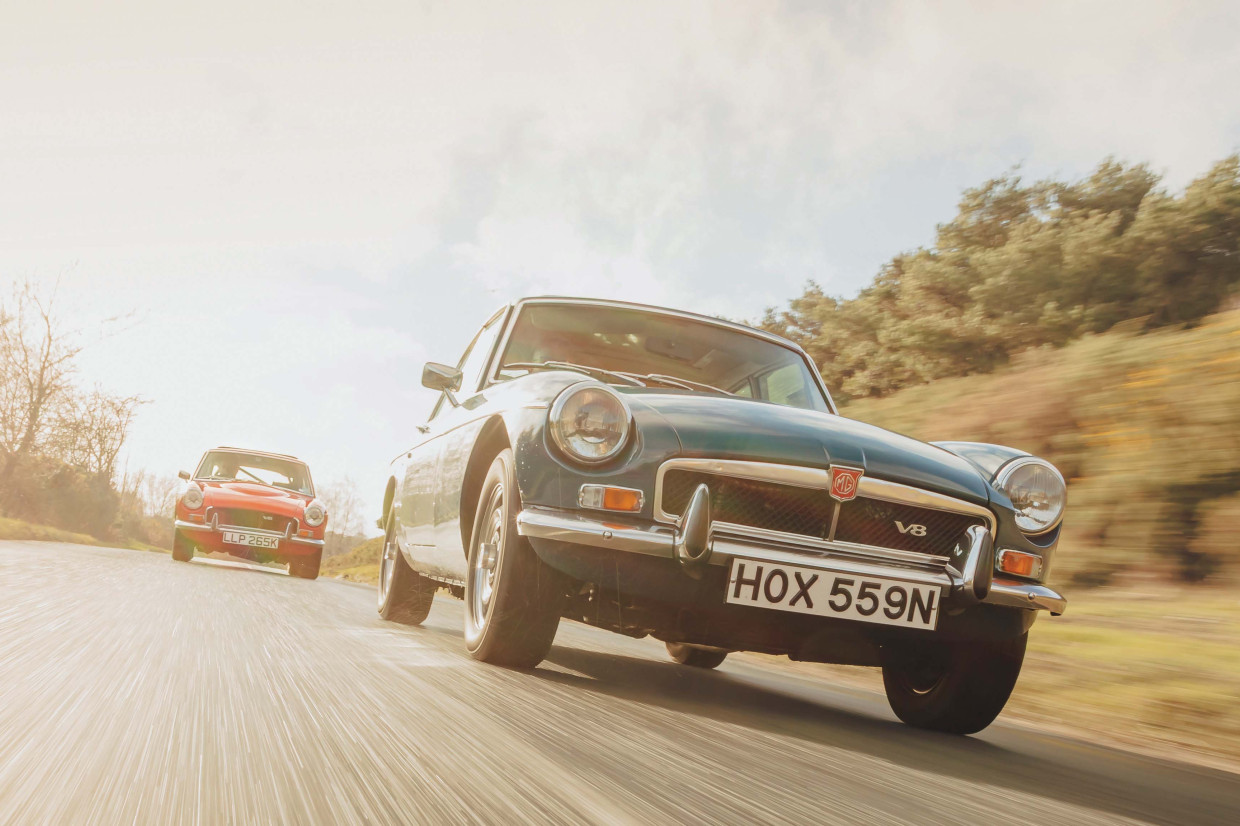
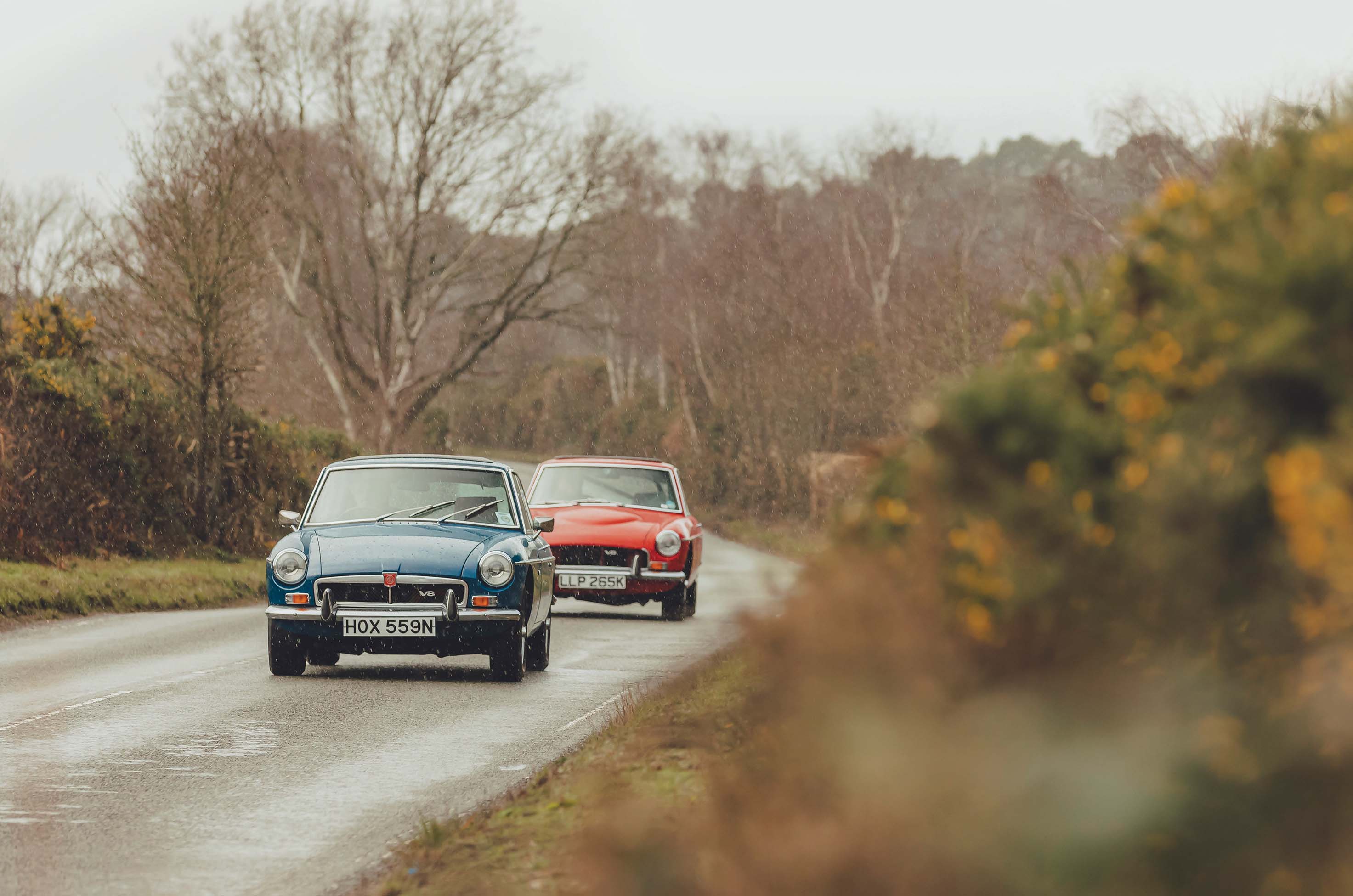
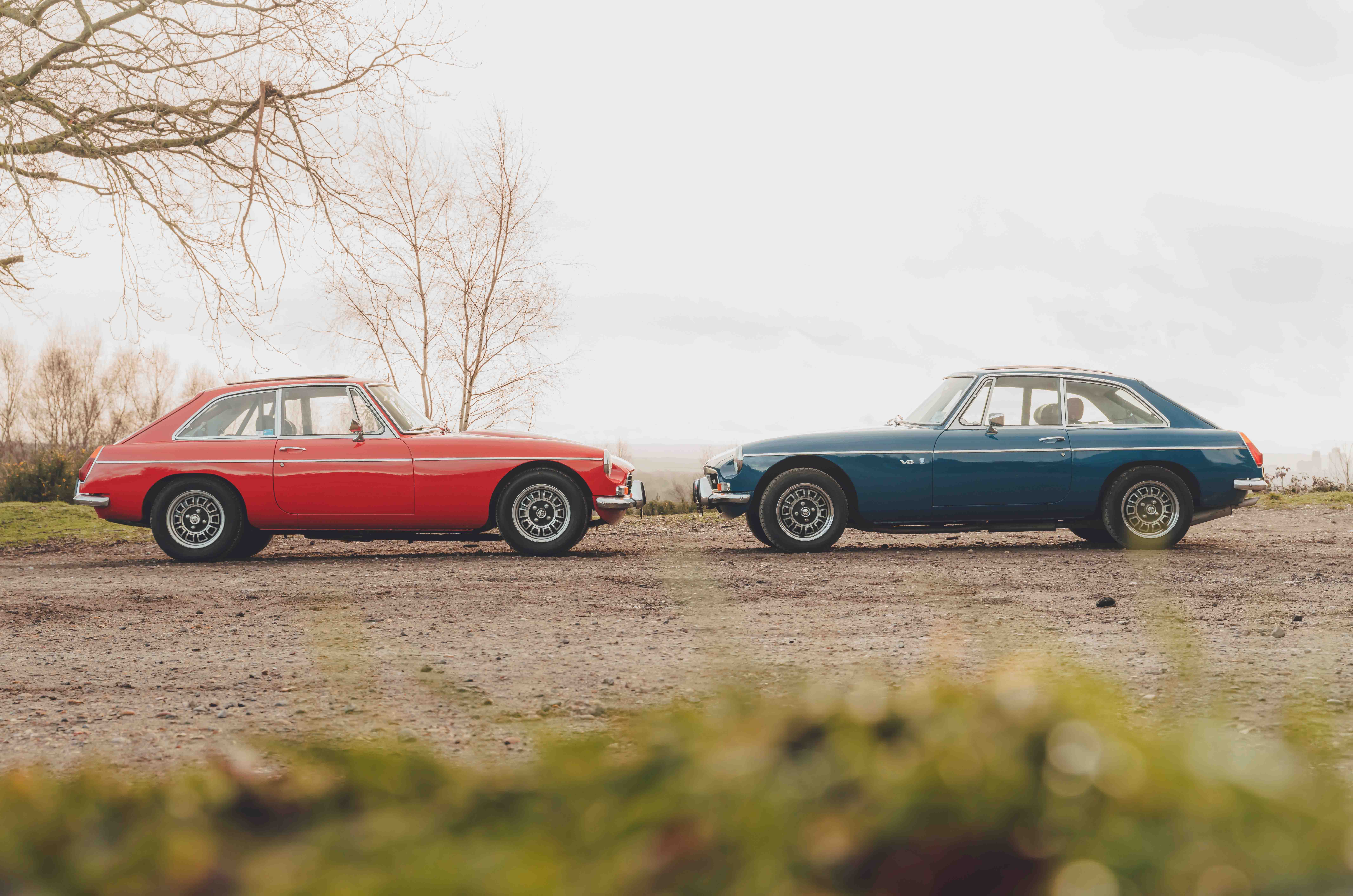
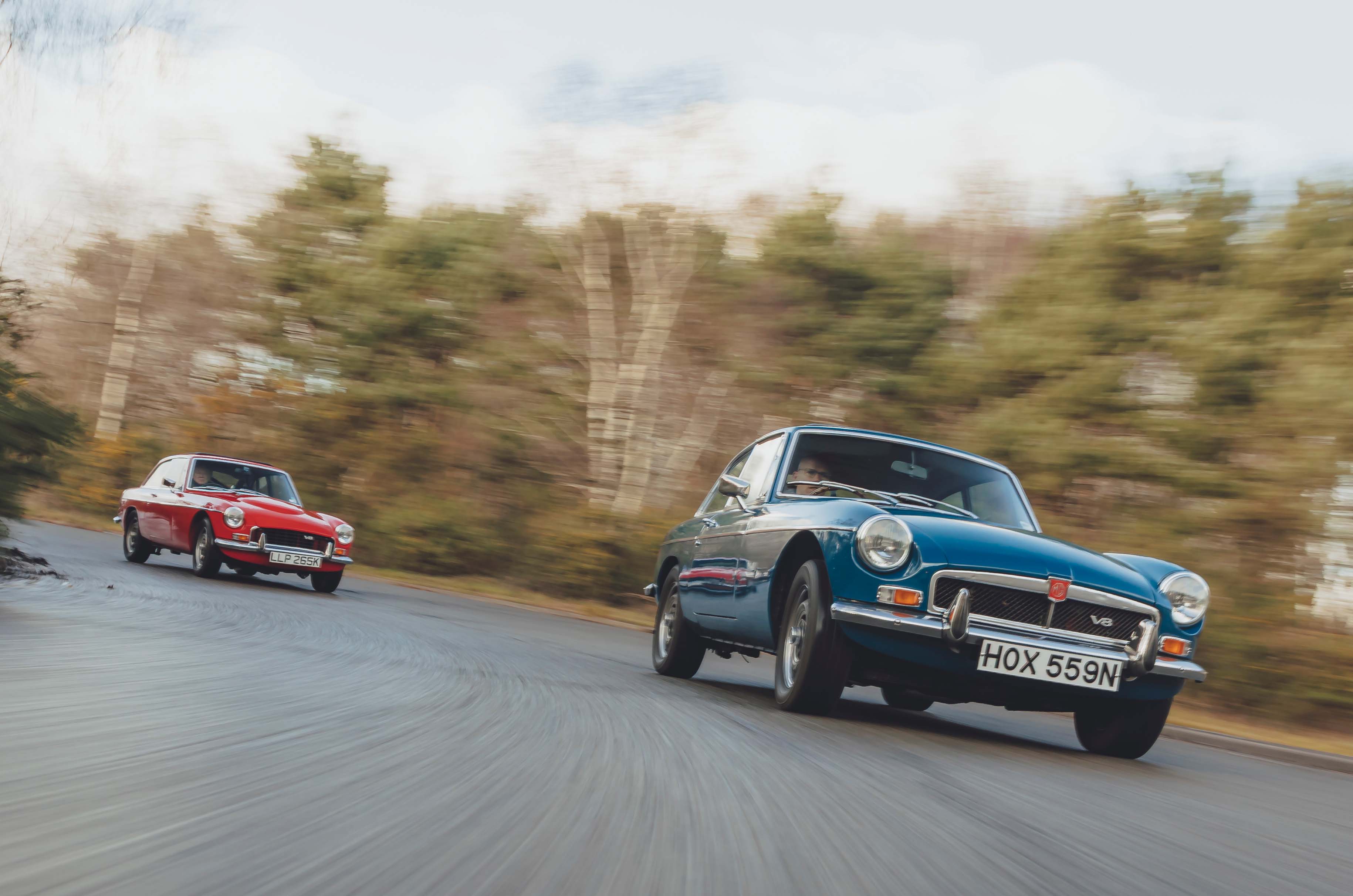
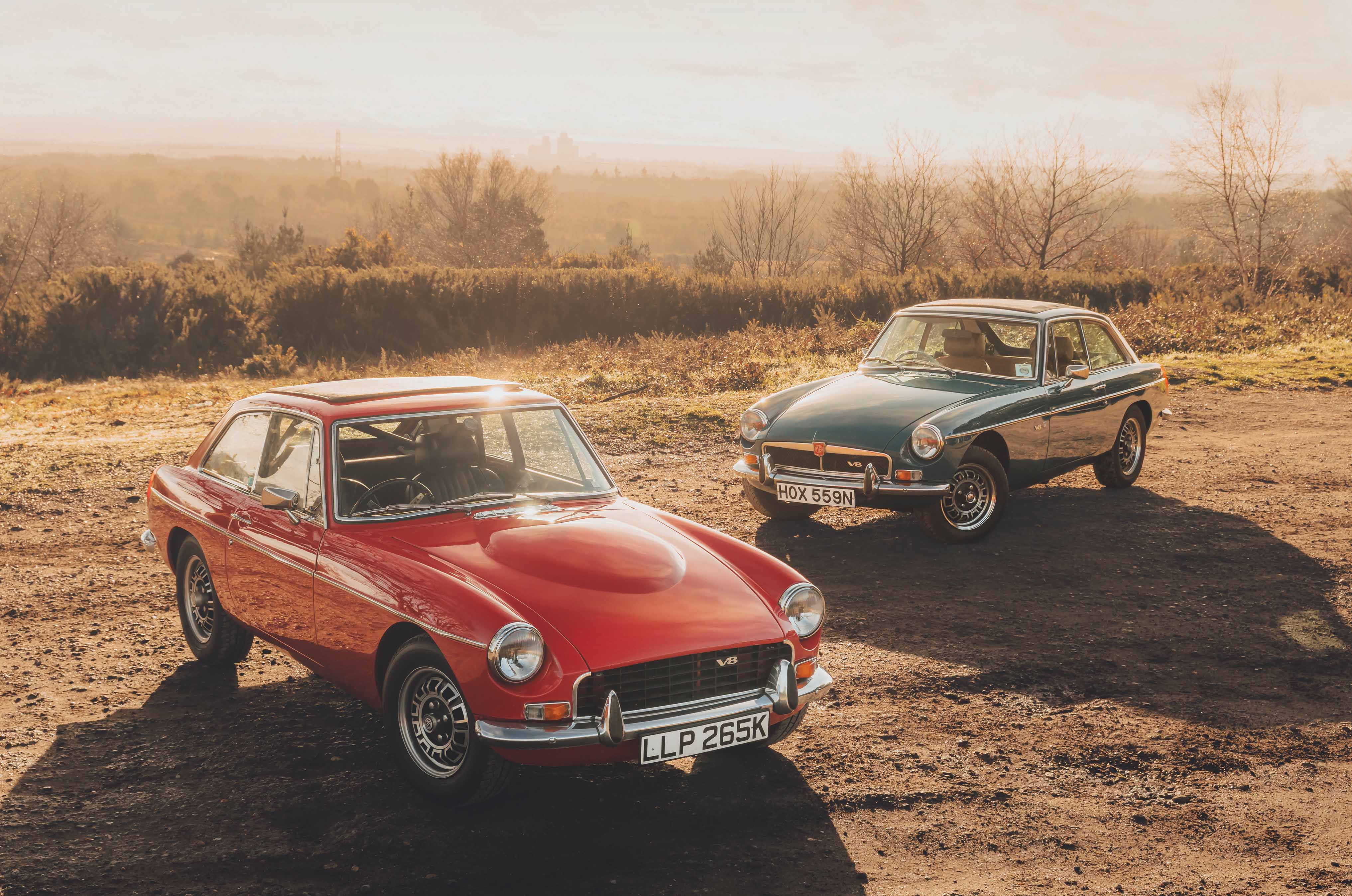
The factory MGB GT V8 (closest) faces its Costello inspiration

With 8.25:1 compression-ratio Range Rover pistons, the V8’s conservative 137bhp was supplemented by an impressive 193lb ft of torque at 2900rpm.

This meant 40mph in first, 60 in second, 100 in third and direct top giving 117mph.

Trouble was, where to achieve such exciting speeds in Britain of 1973, what with fuel shortages and a 50mph speed limit?

Ironically, modest sales hopes were for a while pinned on the idea of the V8 winning favour as a police motorway patrol car.

Two pre-production V8s went out as demonstrators to various constabularies, but orders from Thames Valley Police (as unmarked cars with ‘POLICE STOP’ signs in the rear window) didn’t do much to balance the books.

Classic & Sports Car – MGB GT V8s: Costello’s conversion vs Abingdon’s answer
‘The V8 was left to square up to a litany of younger, sexier rivals, chief among them the Datsun 240Z and Ford Capri 3-litre’

We can’t talk about MG V8s without talking about Ken Costello.

The ex-Mini racer and Formula Three competitor was not the first to put a V8 into an MGB: Abingdon had looked at the Daimler unit, and a privateer in Australia had proved a point by fitting a Buick engine in a roadster as early as 1967.

Costello’s claim to fame is that he made a cottage industry out of his drive-in, drive-out, five-day conversions. 

At £1000 a pop (on new or secondhand Bs), the swap was so warmly reviewed in the specialist press that British Leyland was virtually shamed into making its own version.

Classic & Sports Car – MGB GT V8s: Costello’s conversion vs Abingdon’s answer
Ken Costello’s road-burning MGB GT V8 conversions (left) prompted Abingdon to follow suit

Costello, an extra in John Frankenheimer’s Grand Prix, spotted a Rover engine on the floor of a local garage in 1969.

When he realised he could “virtually pick it up” (as he told me when I interviewed him in 1990), possibilities began to emerge.

With tubular exhaust manifolds, and modifications to the bulkhead and engine sidewalls, he fitted one to an MGB roadster.

Detail changes included high-performance Ferodo DS11 brake pads, plus a fabricated bellhousing and an adapter plate for the gearbox.

Classic & Sports Car – MGB GT V8s: Costello’s conversion vs Abingdon’s answer
This MGB GT V8 Costello’s engine tune includes an upgraded camshaft

The results were so spectacular that he soon received a commission to build a GT for the children’s author Lady Peggy Cripps.

That car featured refinements that included an MGC rear axle and an electric fan.

The orders rolled in.

By 1971, Costello had a stack of discarded B-series motors in his Kent workshop (MG refused to sell cars less engines), and an invitation from BL to bring a Costello V8 to Longbridge for George Turnbull and Harry Webster to inspect.

Classic & Sports Car – MGB GT V8s: Costello’s conversion vs Abingdon’s answer
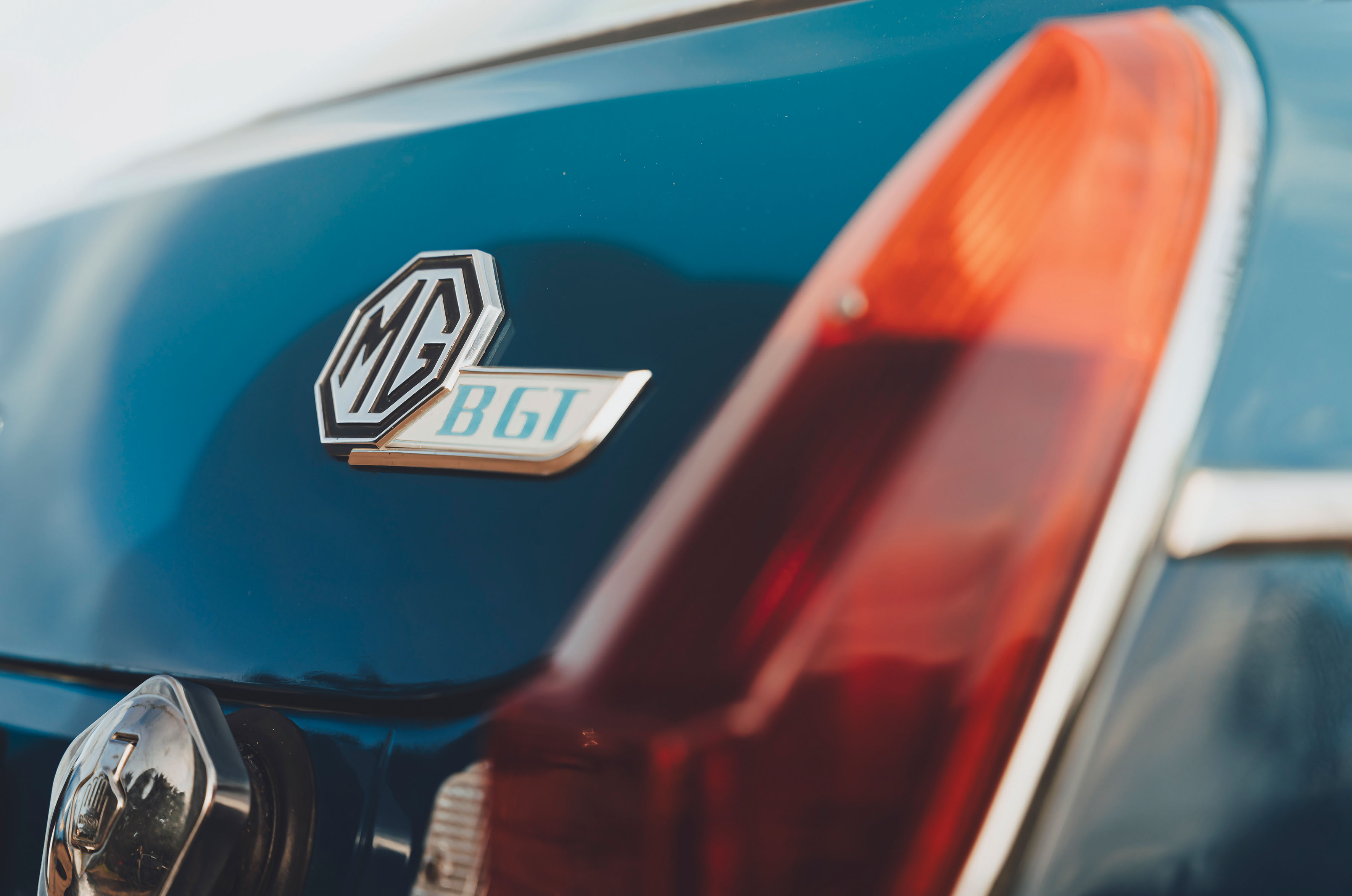
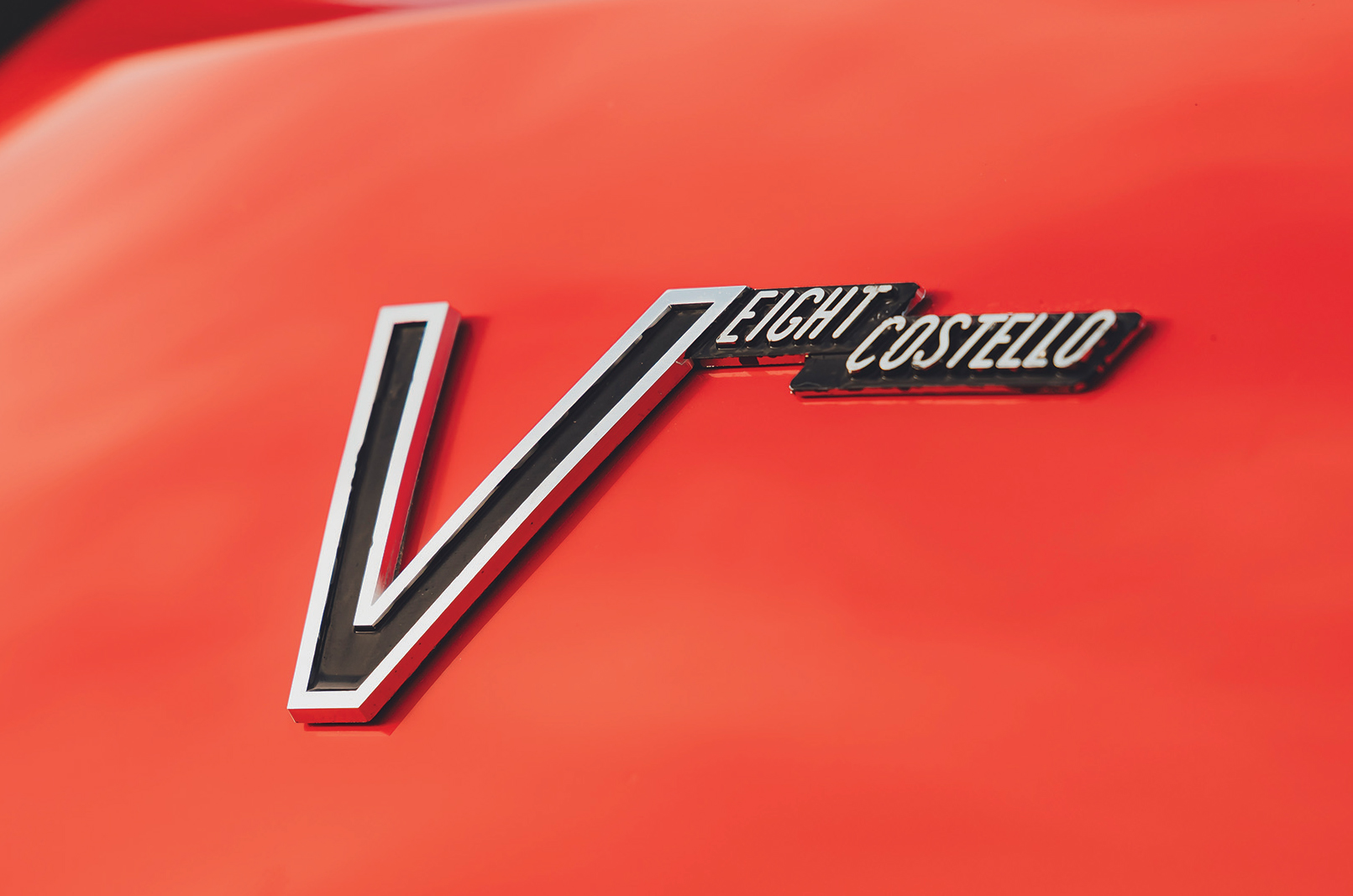
The MGB GT V8 Costello’s original badge

After a road test around Berkeley Square, Lord Stokes was so impressed that he tasked Costello with building a car for evaluation, while simultaneously asking his top engineers why they had not already created something similar.

A prototype was on the road in about six weeks, and it was this that caused the button to be pressed on getting an official BGT V8 on sale, if not for another two years.

More critically for Costello, a memo had gone out to dealers that Rover engines could only be supplied on an exchange basis – although he got around this, for a while, by means of using ex-Buick blocks found in the scrapyards of Belgium.

They were lighter, being die-cast, and could be rebuilt to full, high-compression, 150bhp form with Rover heads and internals.

Classic & Sports Car – MGB GT V8s: Costello’s conversion vs Abingdon’s answer

The MGB GT V8 Costello is more agile and eager than the factory car

A glowing Autocar road test in May 1972 pointed out that the 128mph Costello MG weighed 90lb less than a BGT and, critically, was 109lb lighter at the front.

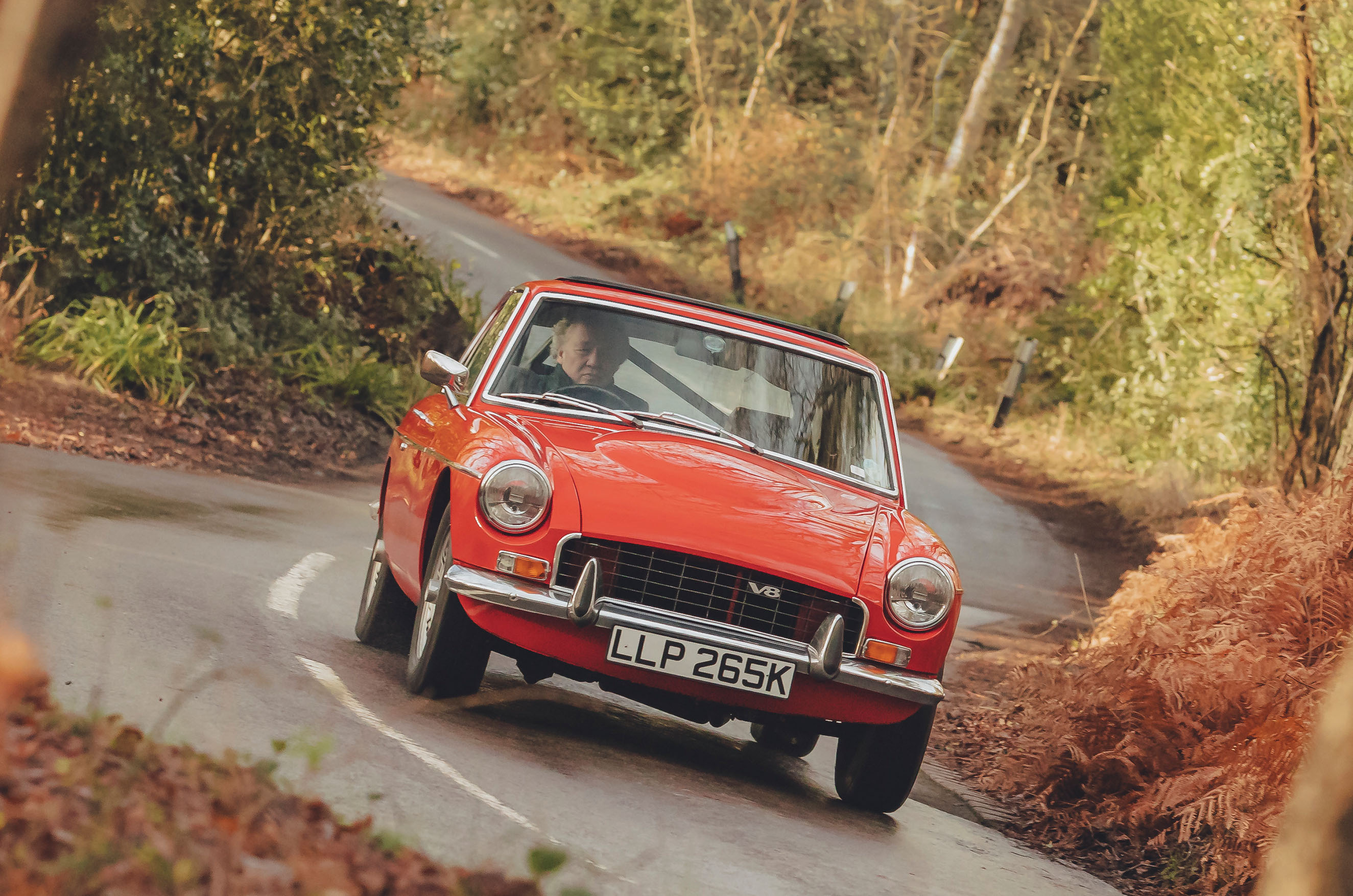
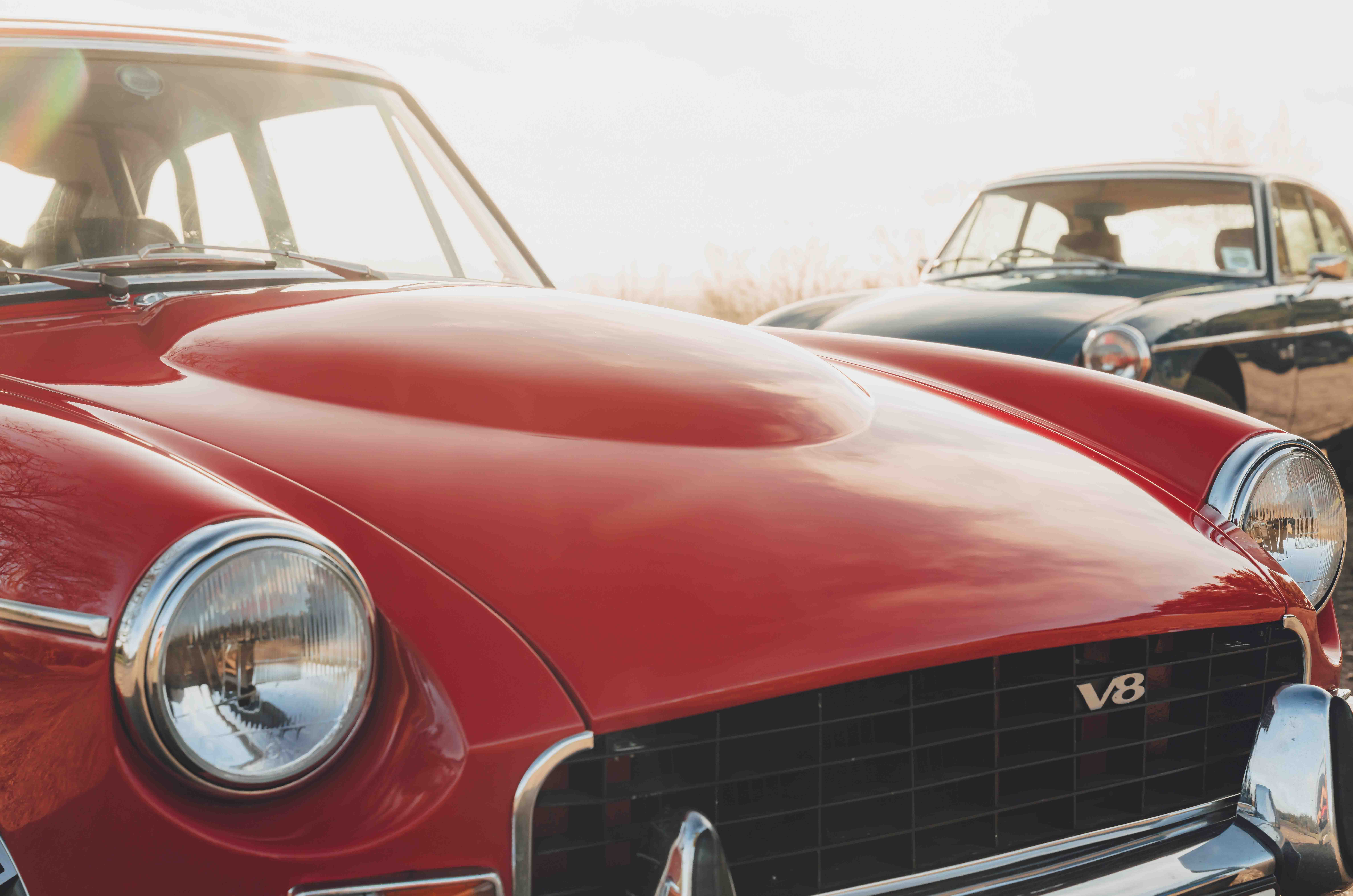
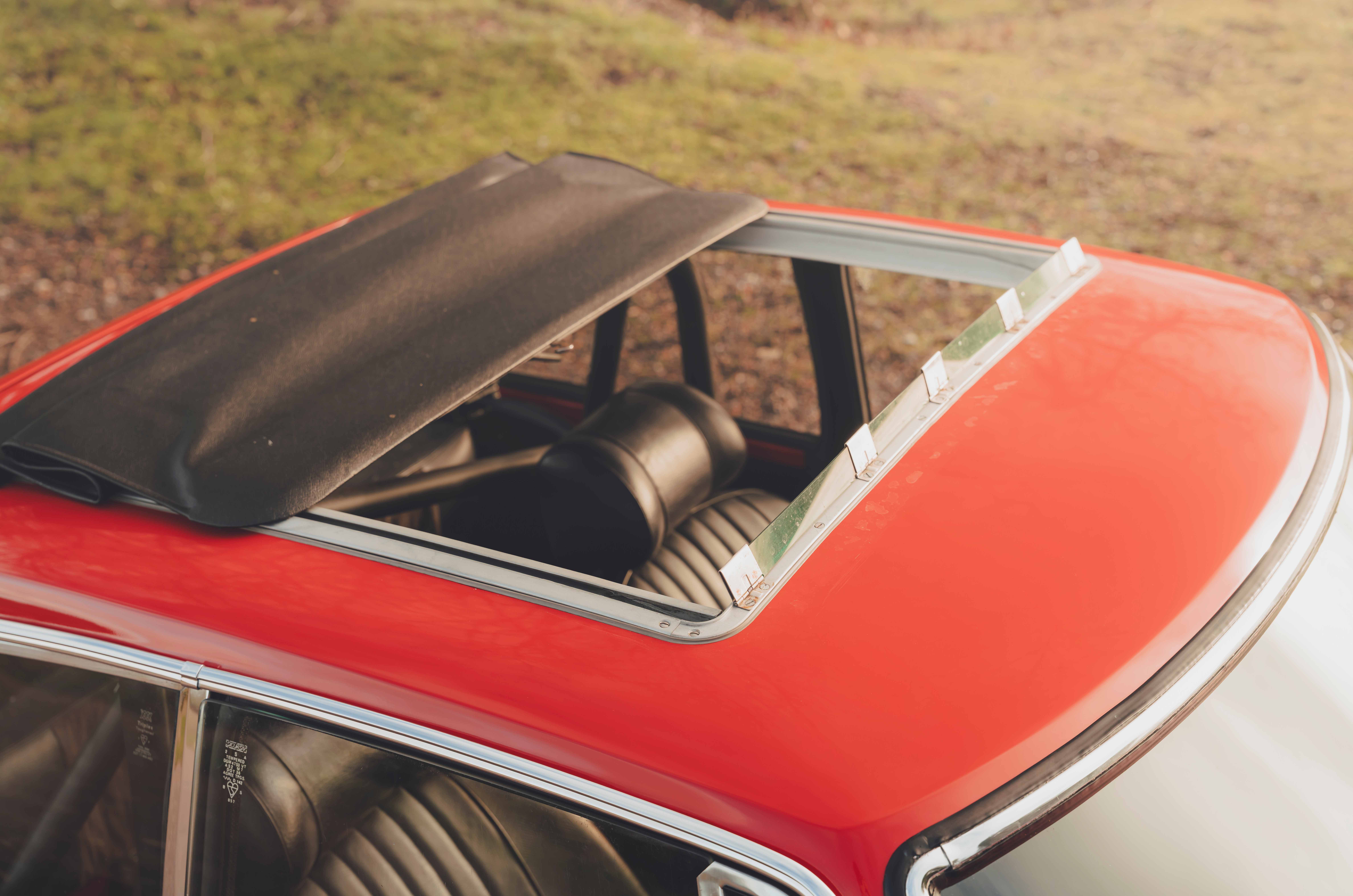
You can spot a Costello by the prominent lump in its specially moulded glassfibre bonnet and, on some versions, a bespoke, chip-cutter front grille – as on the example pictured here, property of Oliver Marchant and his dad, Clive.

“I bought it when Oliver was 12, as a project we could do together,” recalls Clive (Oliver is now 33 and about to buy a house in Brighton).

“We met Ken Costello at the first Costello Gathering in 2008, and we have a picture of him bending over the engine bay giving Oliver advice.

“It wasn’t finished then – we had brought it along on a trailer – but Ken really liked it because it was still so original.”

Classic & Sports Car – MGB GT V8s: Costello’s conversion vs Abingdon’s answer

The MGB GT V8 Costello’s bonnet bulge denotes an earlier MkI example

Their MG still proudly wears its ‘V Eight Costello’ badge on the back and runs factory V8 Dunlop wheels.

I’ve seen Costellos on Rostyles and tasty-looking Mag GT alloys, too. 

“It was prepared for racing in the early 1980s,” Clive continues, “and fitted with a spoiler, big flared wheelarches and a Holley carburettor, which we replaced with an Edelbrock. The engine number is just one Ken made up!”

Poke your head underneath at the back and you can spot a Panhard rod and telescopic dampers to better control the Salisbury rear axle, too.

Classic & Sports Car – MGB GT V8s: Costello’s conversion vs Abingdon’s answer

Opening the MGB GT V8 Costello’s sunroof intensifies the noise from the Rover engine

Oliver elaborates on how they found the Costello: “It belonged to a friend of my dad’s, who had owned it for several years and decided to have it restored, but then left the country. 

“It was completely in bits when we bought it. We had the bodywork done by Rees Bros Restorations in Aldershot, but did a lot of the other work ourselves. It took 12 years.

“I love driving it. I’ve never driven any other classic car. It’s amazing how small and easy to place on the road it is. And it’s fast!

“We had it tuned, and it was getting 265bhp at the rear wheels. They changed the camshaft, but we’re not sure what else they did to it.”

Classic & Sports Car – MGB GT V8s: Costello’s conversion vs Abingdon’s answer

The MGB GT V8 Costello is more powerful than the factory effort it inspired

Ed Talbot has only had his factory BGT V8 for a year. 

He says: “I was looking for a V8 – I had a Lancia Montecarlo when I was younger, but I want to do some touring rallies in this.

“We’ve driven it over the summer and autumn, and it has been fun. It’s understated and not in-your-face, but the V8 engine gives it real-world driver appeal.

“I’d like to get my daughter a normal MGB; they are really affordable and usable.”

Classic & Sports Car – MGB GT V8s: Costello’s conversion vs Abingdon’s answer

The MGB GT V8 Costello has a pushbutton starter

From the driving seats of these big-engined BGTs, you are very conscious of the close proximity of the extremities – the rear window is pretty much the back of the car.

Then there’s the fact that while a wrinkle-finish dashboard looked antiquated in 1973, it has a certain vintage charm in 2026, complete with 1950s heater controls apparently stolen from a Baby Belling stove.

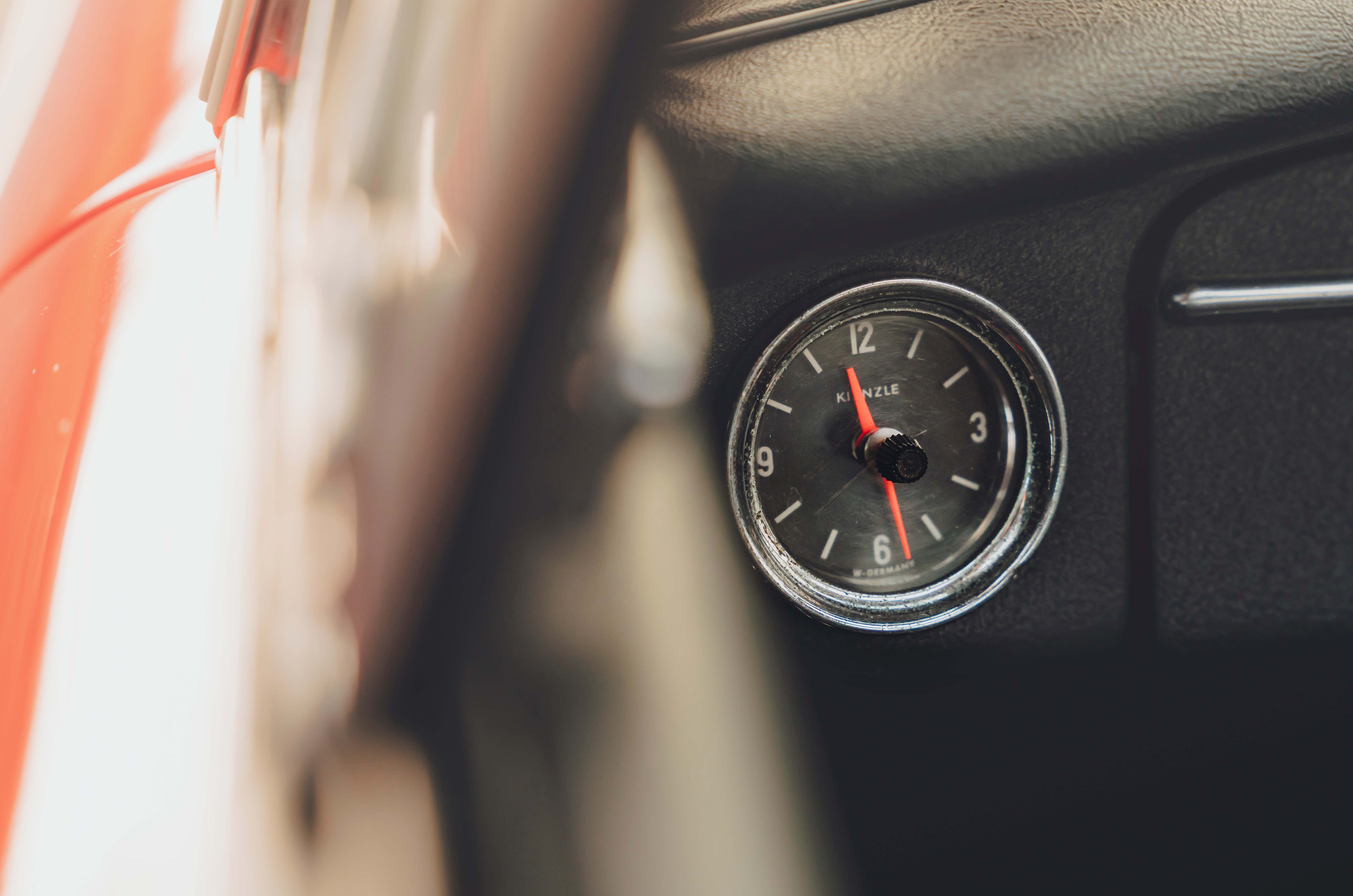
The factory V8 has a smaller speedo and rev counter than the ordinary B, whereas the Costello has additional minor gauges.

The latter’s roll-bar and pushbutton starter are hangovers from its racing career.

Classic & Sports Car – MGB GT V8s: Costello’s conversion vs Abingdon’s answer

The MGB GT V8 Costello’s cabin packs extra dials, including this passenger-side clock

The Costello needs a little more churning than the factory car to turn over, but revs more freely and goes harder through the gears. 

It makes all the right feral V8 sounds, while offering overtaking liberties more akin to those of a big motorcycle than a ’70s sports car.

Not that the factory V8 is slow. If 137bhp doesn’t sound like much, the reasons for this little car’s effortless muscle lie in mid-range torque, well-plotted gear ratios and the turbine hum of a silky engine that will get you up the road in a sustained surge that still feels genuinely quick.

This contrasts pleasingly with a limousine quality to the low-speed manners that the Costello cannot quite match, and its overdrive is useful from 40mph.

Classic & Sports Car – MGB GT V8s: Costello’s conversion vs Abingdon’s answer

“I love driving it. It’s amazing how easy it is to place on the road. And it’s fast! It was getting 265bhp at the rear wheels”

The clutch is not the lightest in either car, but has good progression in both cases.

Ditto the brakes – although the factory V8’s stoppers lock up a little too eagerly in the damp – and the throttle action.

It’s almost impossible not to drive the standard V8 smoothly.

If the gearchange, handily placed, is slightly notchy, then the drivetrain as a whole makes up for it by being beautifully refined, which is in contrast to the ride in both iterations: it can be unforgivingly crude, to the extent that you avoid potholes where possible and brace in anticipation when they can’t be circumvented.

Classic & Sports Car – MGB GT V8s: Costello’s conversion vs Abingdon’s answer

This MGB GT V8 Costello’s chip-cutter front grille adds presence

Experience of the ride colours your views of the handling.

In the factory V8 it is by no means poor, but nevertheless lives up to the mental image you have of hard springs, flailing lever-arm dampers and lots of sprung weight doing their worst.

It fights a lumpy, bumpy road rather than flowing with it, breaking the spell cast by that suavely muscular engine.

At least it improves with speed.

Classic & Sports Car – MGB GT V8s: Costello’s conversion vs Abingdon’s answer

Both MGB GT V8s have aged remarkably well and make fine, usable classic cars

Good straight-line stability adds to the impression of a relaxed and easy stride in a car that feels well balanced, hardly rolls and steers fairly precisely, but somehow falls short of feeling truly nimble.

Here the Costello scores. With less weight over the front, a lower ride height and greater power, it is much more alert and biddable, with lighter steering that doesn’t caster back so enthusiastically but turns in more keenly.

Today, 53 years on, the factory V8 feels like a prime example of a car that is a better classic than it ever was a modern.

That said, you have to wonder what people were expecting in 1973.

This big-engined MG is, with some reservations, a delightfully sweet and flexible thing. Likewise the Costello, only more so.

Images: Max Edleston

Thanks to: Clive and Oliver Marchant; Ed Talbot; the MG Car Club V8 Register


MG RV8: the comeback kid

Classic & Sports Car – MGB GT V8s: Costello’s conversion vs Abingdon’s answer

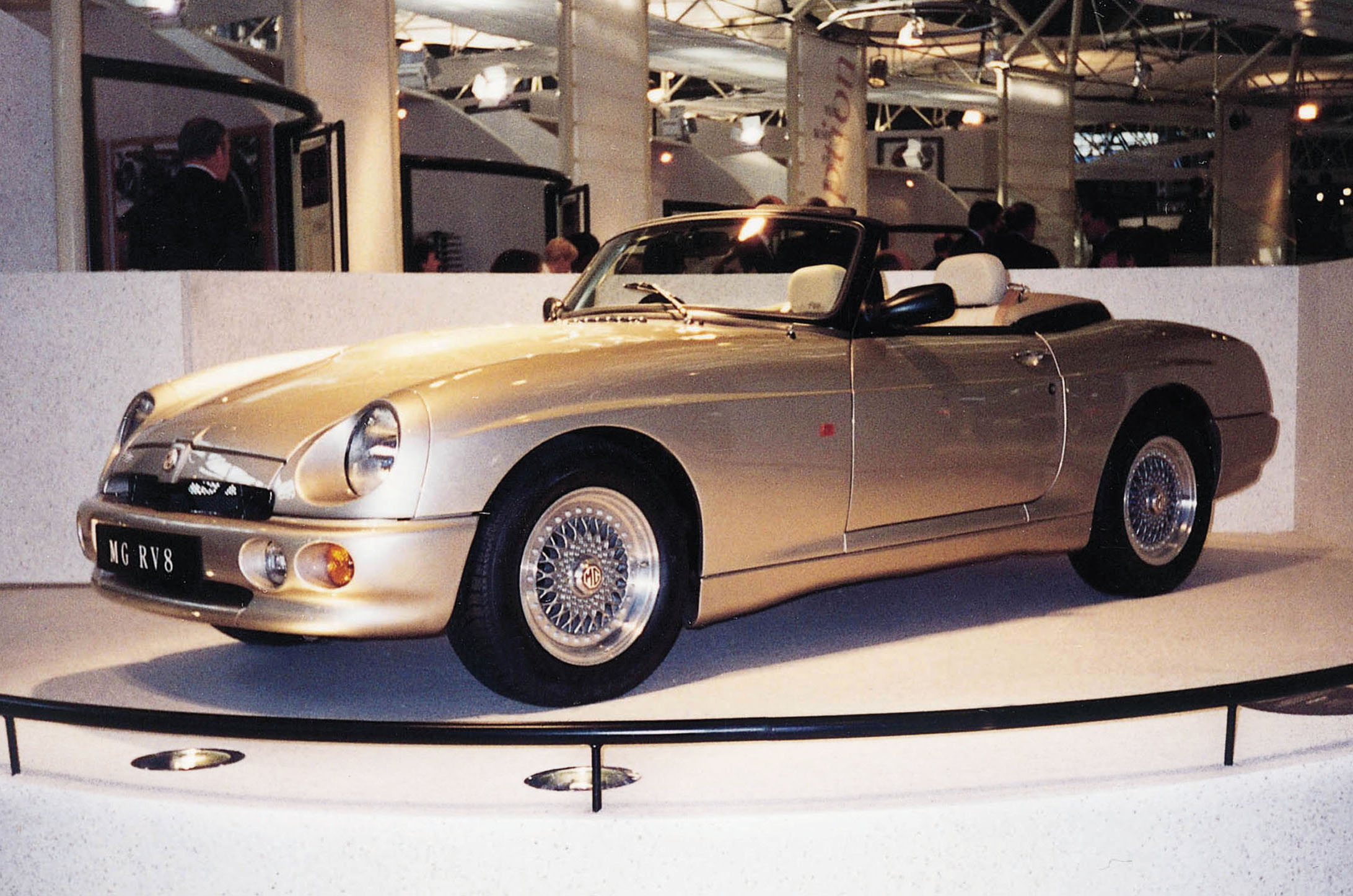
The MG RV8 at its 1992 British Motor Show launch

The stars aligned for a highly unlikely comeback for the V8 MGB in late 1992, when a gap between the discontinuation of the MG Maestro and the arrival of the new MGF roadster would have meant MG disappearing completely from the market.

At the same time, British Motor Heritage had just restarted low-volume production of MGB’s bodyshell, while the Rover V8 remained in production, primarily powering Land Rovers.

Rover Special Products, which had just revived the Mini Cooper after two decades off sale, proceeded at lightning pace to produce a low-volume stop-gap, the RV8, within just two years.

Most of the metalwork was carried over, although new pressings were made for the wings and bonnet to give the car an updated visage.

Its tail-lights were new, too, but made so the same unit could be employed on each side.

The headlights, meanwhile, were Porsche 911 items. Were it launched today, MG would have called it a factory restomod.

Classic & Sports Car – MGB GT V8s: Costello’s conversion vs Abingdon’s answer

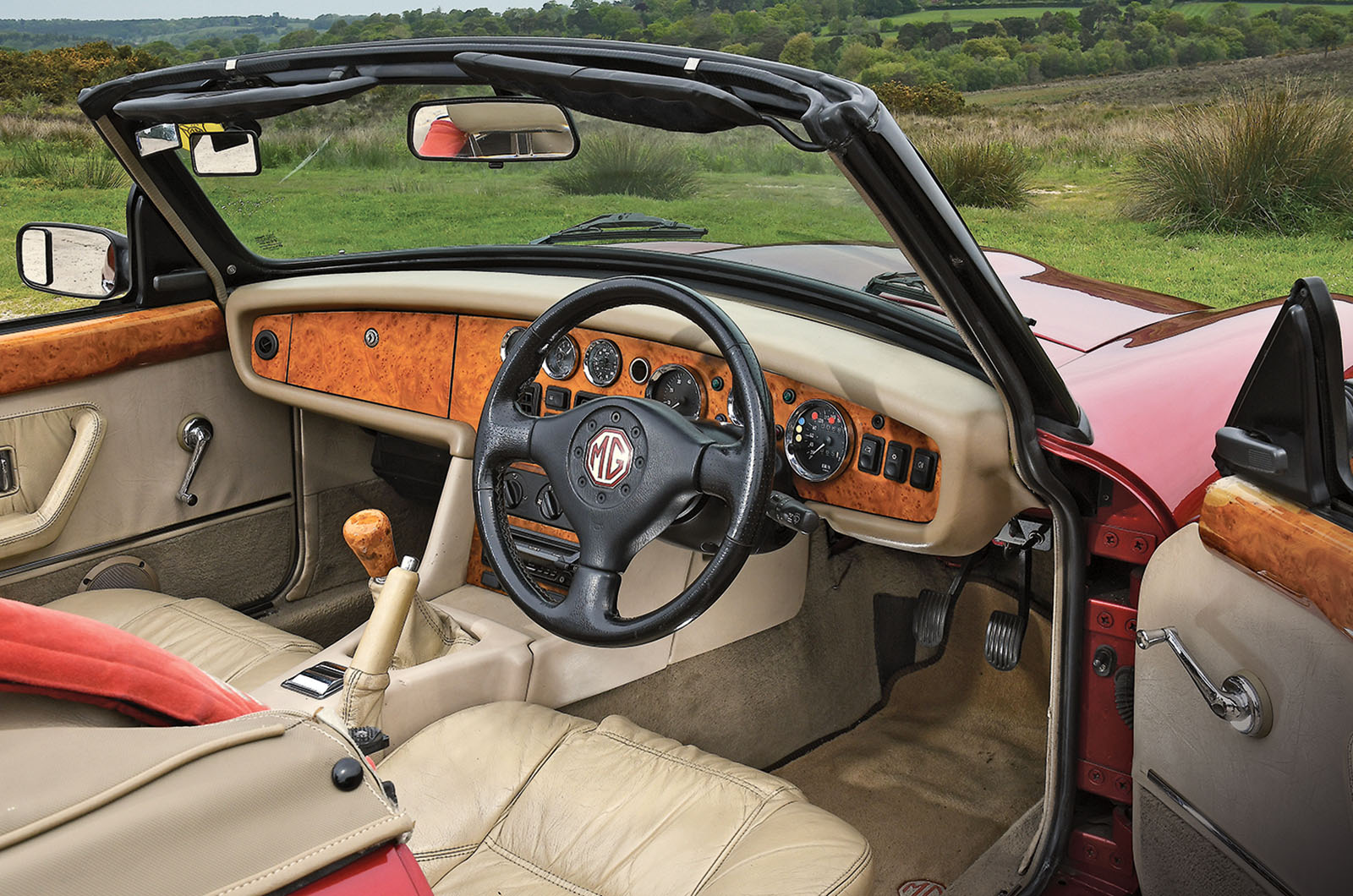
The MG RV8’s cabin is luxurious compared to the B GT V8’s

Its interior focused on luxury, with ruched-leather seats and a wooden dashboard, while the chassis set-up reflected that same focus on comfort.

A wider track and modern tyres gave the RV8 greater grip than its 1970s forebears, but many felt that it was too squishy and underdamped, and that it leaned more towards being a casual touring car, rather than a truly sporting one.

Autocar gave it a damning two stars in its 1993 road test, concluding: ‘It is a likeable if seriously flawed car that will certainly appeal to marque enthusiasts. Others may wonder its purpose.’

Even among British-based MG fans it struggled to find much of a market, its £25,440 price-tag putting it just beyond a Morgan Plus 8.

The project was saved by a ready Japanese audience, at that point in the throes of a mania for retro-styled cars in general and British ones in particular.

More than three-quarters of the 1983 RV8s built went to the Far East, although many have since returned.

Words: Charlie Calderwood


Factfiles

Classic & Sports Car – MGB GT V8s: Costello’s conversion vs Abingdon’s answer

MGB GT V8

  • Sold/number built 1973-’75/2591
  • Construction steel monocoque
  • Engine all-alloy, ohv 3528cc V8, twin SU carburettors
  • Max power 137bhp @ 5000rpm
  • Max torque 193lb ft @ 2900rpm
  • Transmission four-speed manual with overdrive, RWD
  • Suspension: front independent, by wishbones, coil springs rear live axle, semi-elliptic leaf springs; lever-arm dampers f/r
  • Steering rack and pinion
  • Brakes discs front, drums rear, with servo
  • Length 12ft 9in (3886mm)
  • Width 5ft (1524mm)
  • Height 4ft 1in (1245mm)
  • Wheelbase 7ft 7½in (2324mm)
  • Weight 2387lb (1083kg)
  • 0-60mph 8.6 secs
  • Top speed 125mph
  • Mpg 20-25
  • Price new £2309
  • Price now £30,000*


MGB GT V8 Costello
(Where different from factory car)

  • Sold/number built 1970-’73/220 (including 30 roadsters)
  • Max power 150bhp @ 5000rpm
  • Max torque 201lb ft @ 2750rpm
  • Weight 2292lb (1040kg)
  • 0-60mph 7.8 secs
  • Top speed 128mph
  • Mpg 18
  • Price new £2392
  • Price now £35,000*

*Prices correct at date of original publication


Enjoy more of the world’s best classic car content every month when you subscribe to C&SC – get our latest deals here


READ MORE

MGB vs rivals: six alternatives take on Abingdon’s classic champion

MGB GT V8 vs Triumph Stag: in-house rivals

MG RV8 vs TVR Griffith vs Marcos Mantara: power to the people