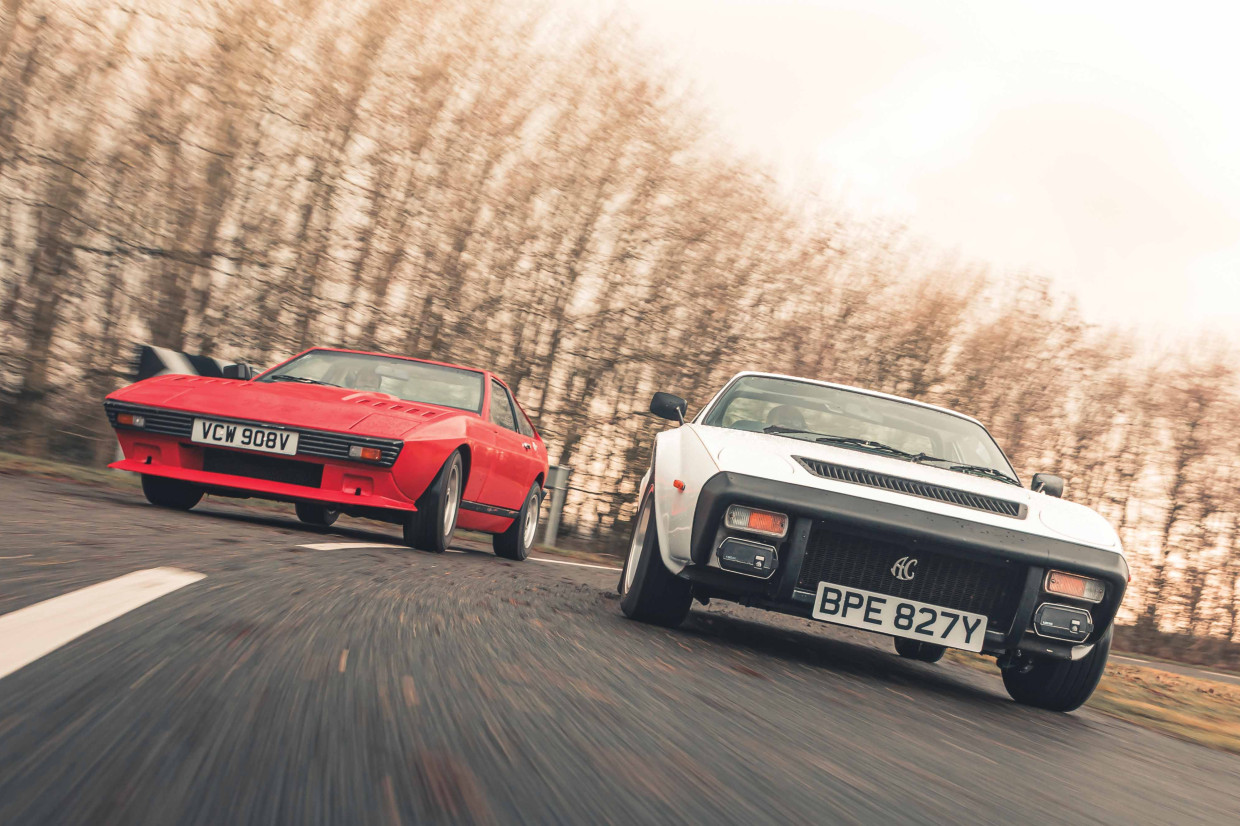
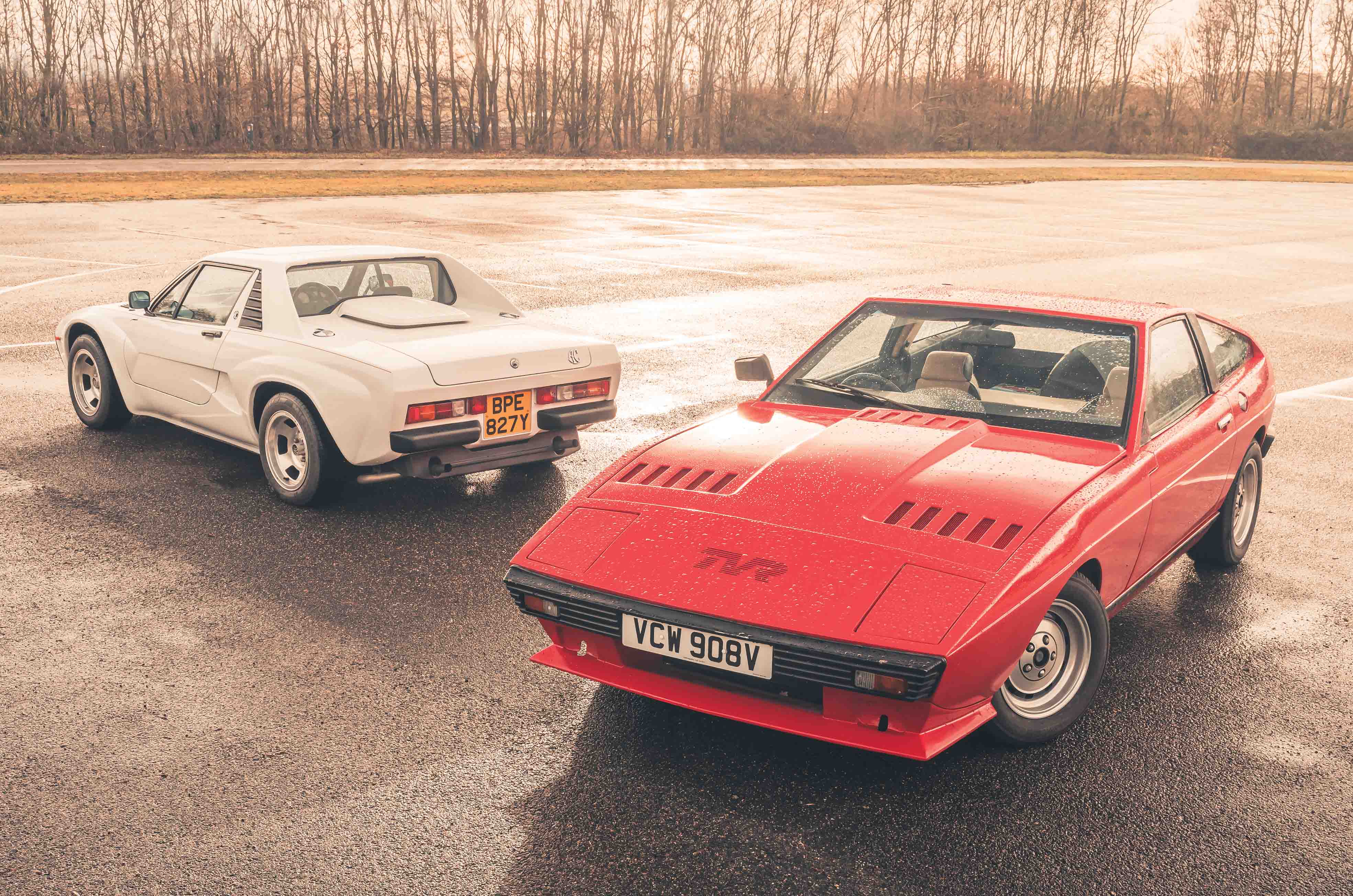
Believed to have been based on a design he’d previously pitched to Colin Chapman, Winterbottom’s future vision of a TVR was low, sharp-edged and unashamedly wedge-like – the diametric opposite of every production TVR that had gone before.
Sure, it would be an affront to the purists, but it would also chime with the brave new world Lilley had envisaged for TVR.
Power was to come from Ford’s 2.8-litre Cologne V6, which had replaced the outgoing 3-litre Essex.
Crashworthiness was prioritised, with Jones developing a strong glassfibre hull that incorporated the passenger cell and which was reinforced by a tubular spaceframe that provided decent side-impact protection.
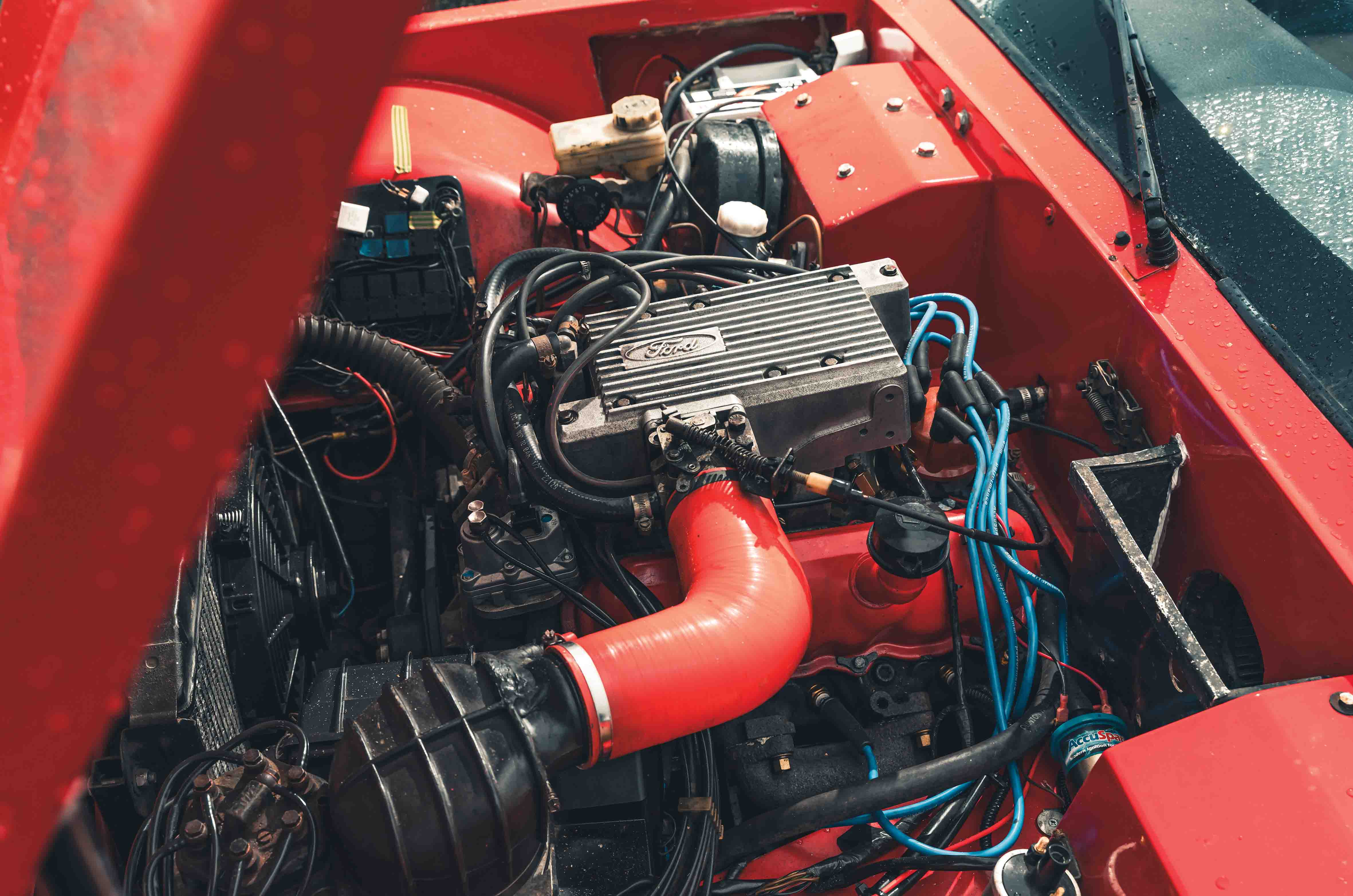
The TVR Tasmin’s Cologne V6 has 160bhp, but this car’s fuel injection needs fettling
All-independent suspension used mainly proprietary parts – Ford Cortina front wishbones and Granada uprights – with the rear assembly based around that of the Jaguar XJ, using a Salisbury limited-slip diff and inboard disc brakes.
In 1978, final development moved to Bamber Bridge, near Preston, along with a dedicated team.
Wind-tunnel testing at MIRA had achieved an impressive Cd of 0.36 – almost the same as the S1 Esprit – and many thousands of miles were driven by Lilley and his staff in undisguised but unbadged prototypes during durability testing.
The new car soon acquired a moniker, Tasmin, which was an amalgam of the girls’ name Tamsin and the Australian Tasman race series.
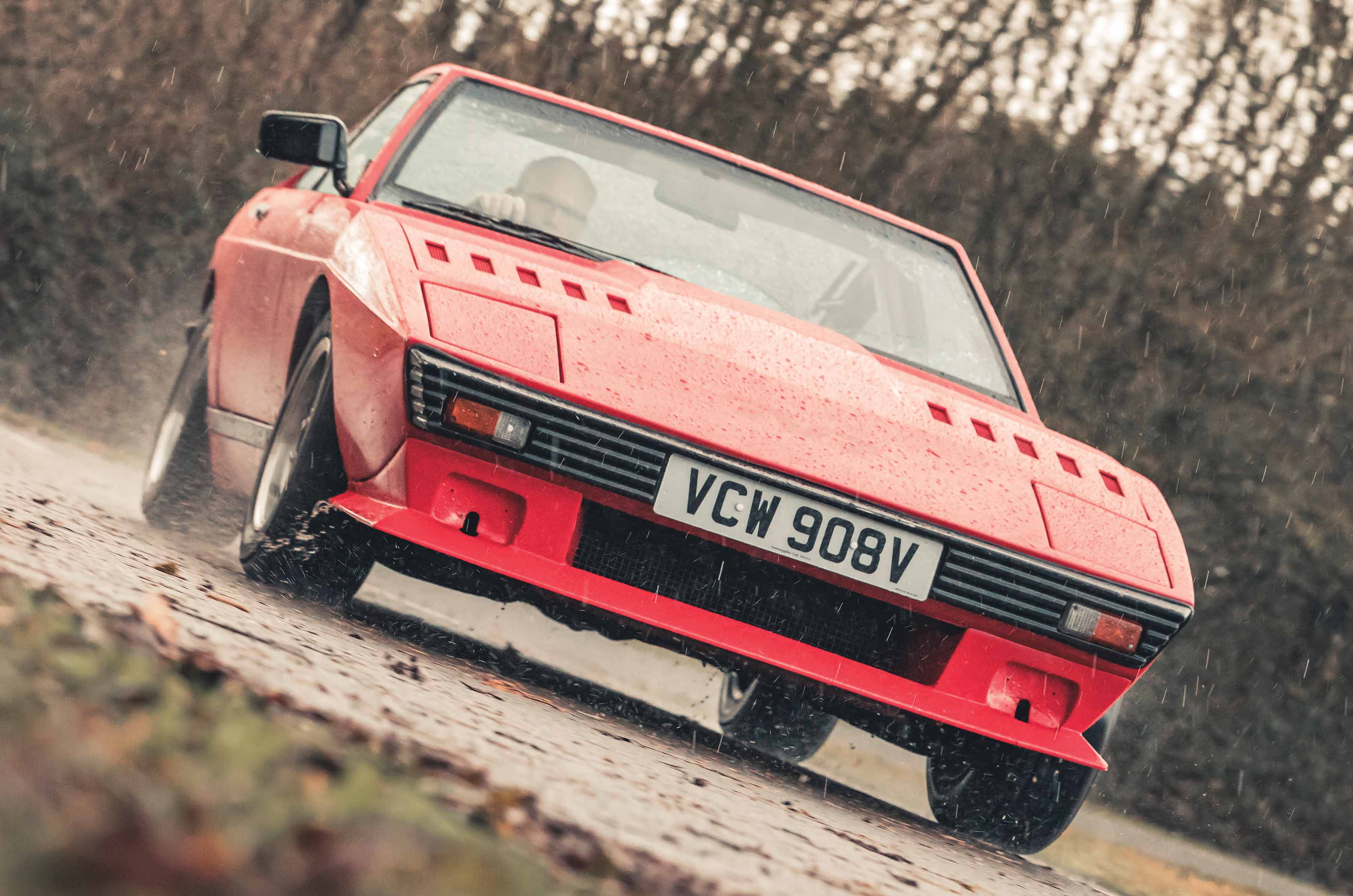
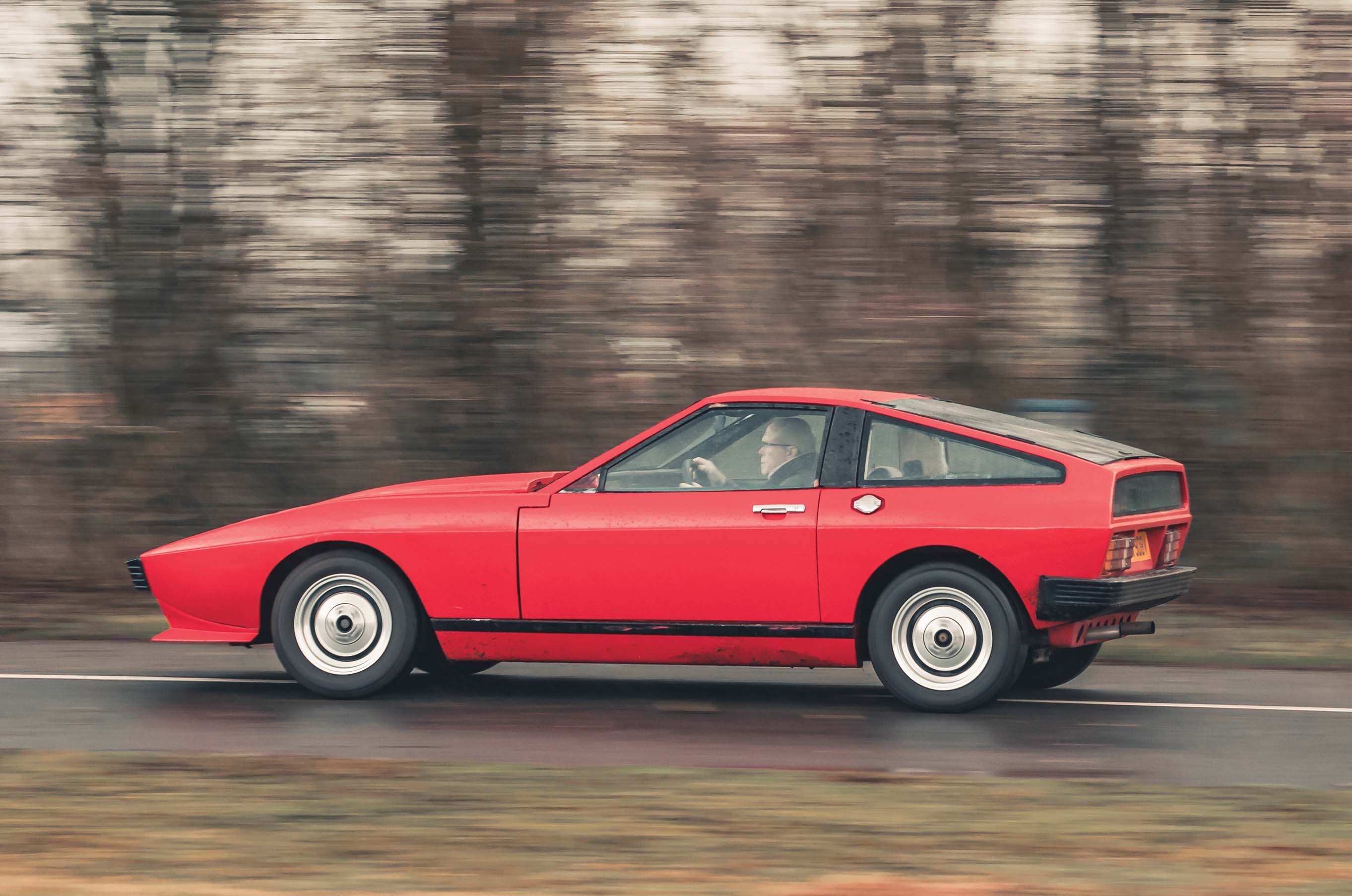
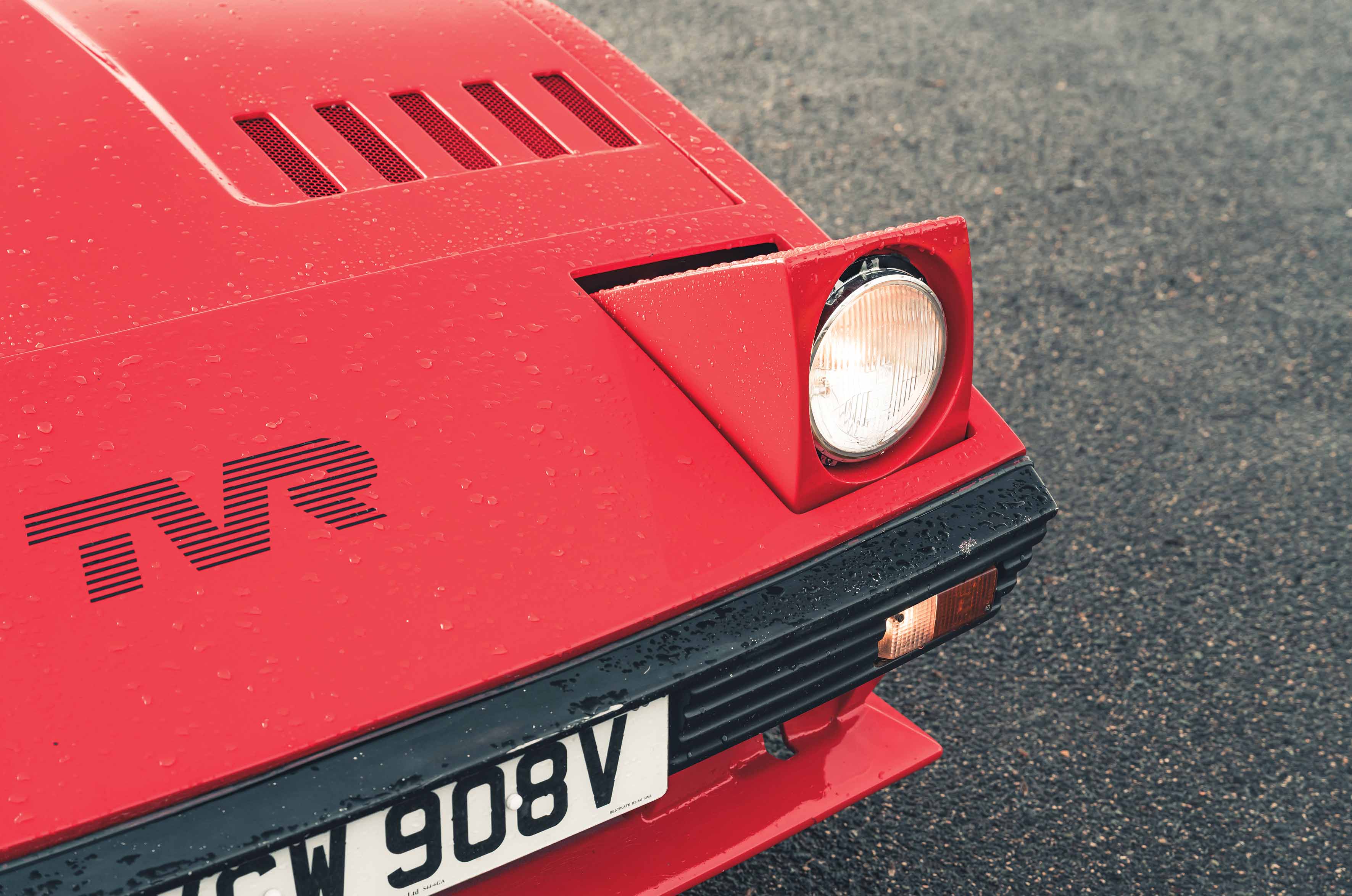
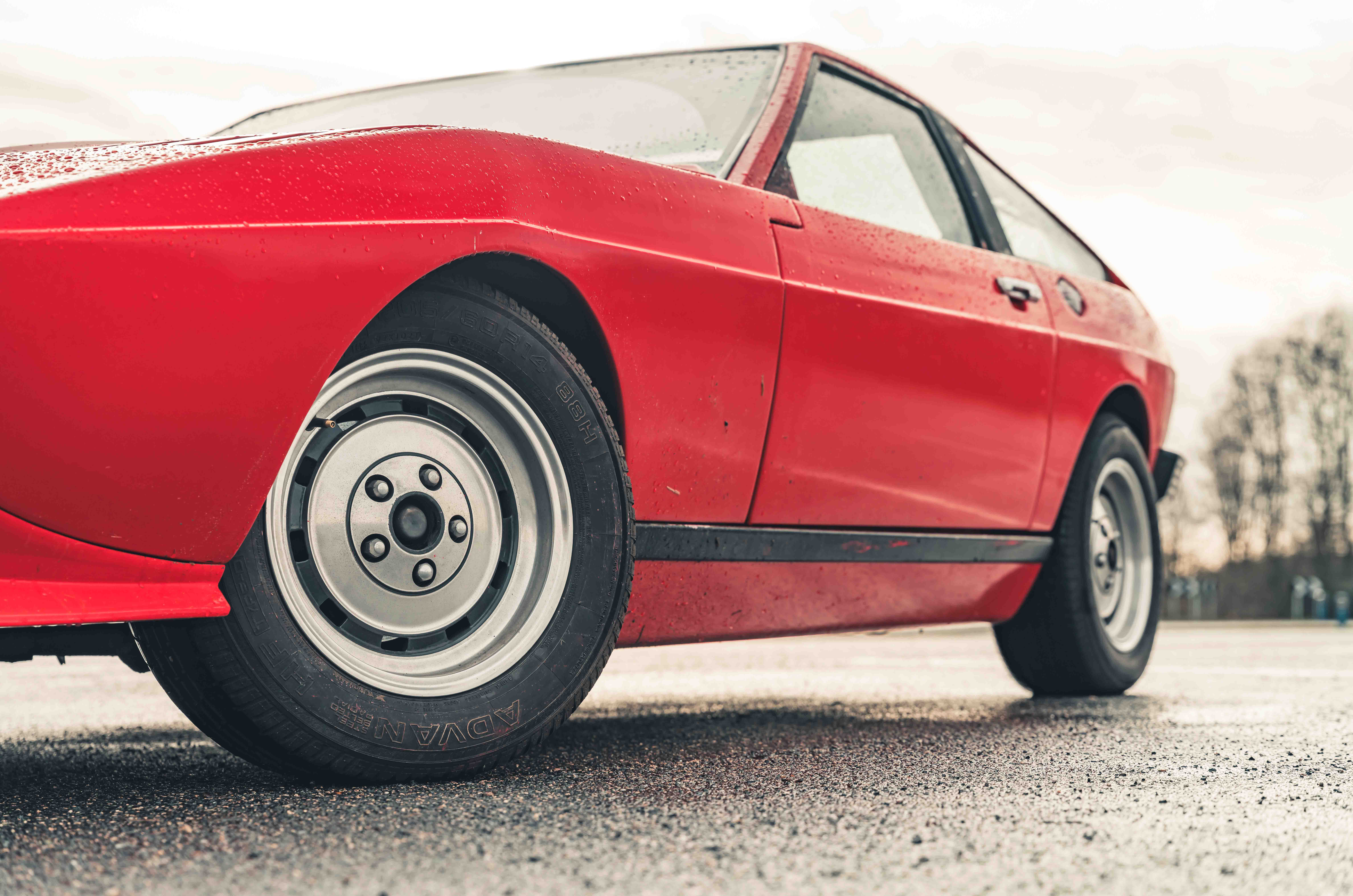
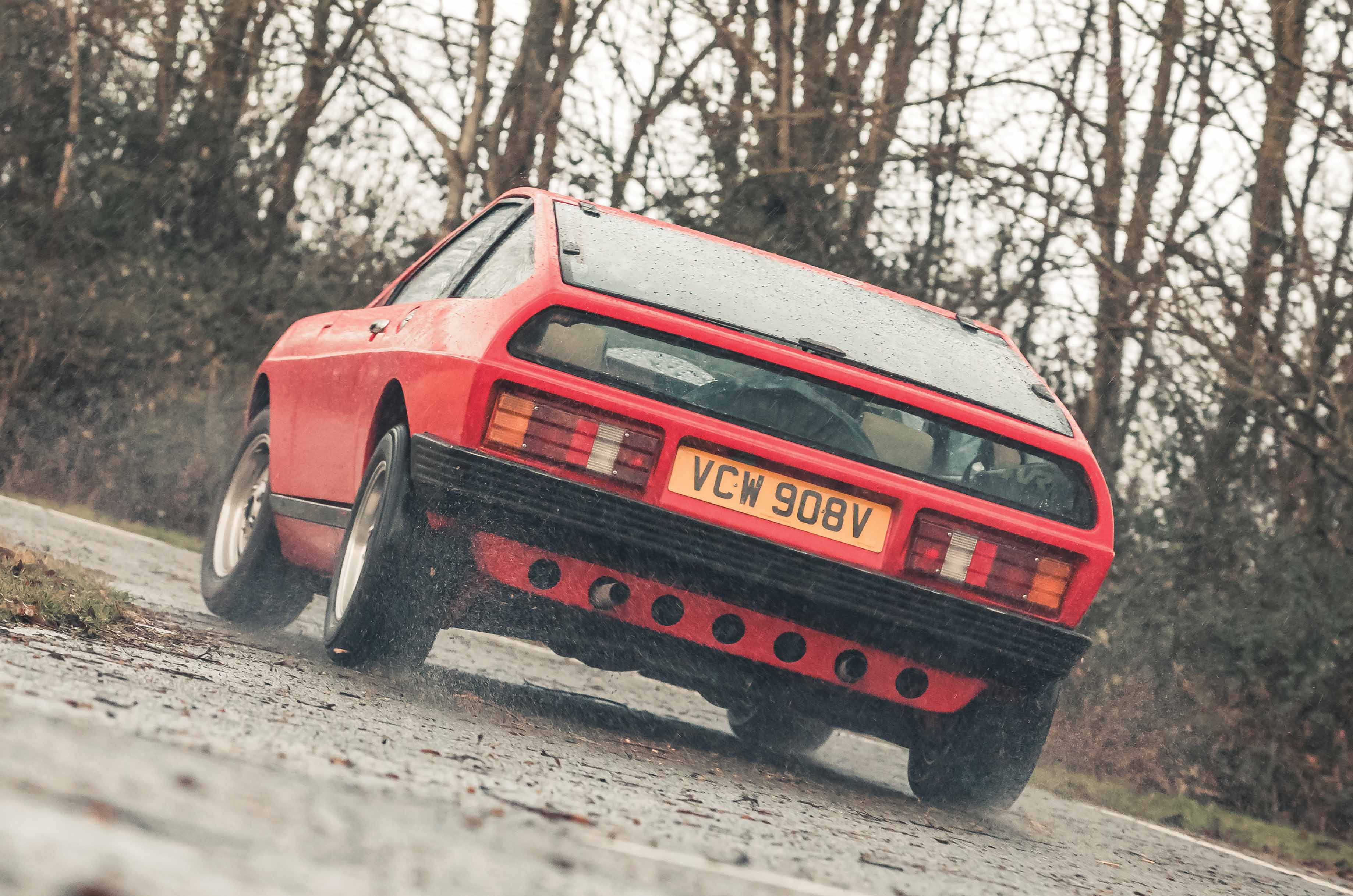
The TVR Tasmin’s sharp lines
The plan had been for a reveal at the 1979 British Motor Show, but delays pushed this back to the Belgian show in January 1980.
There, it was the talk of the event, despite Lilley’s reservations about the design, which he felt had evolved from drawing board to full-size prototype too quickly.
Autocar noted its ‘graceful styling and impeccable finish’, although in its road test said its performance wasn’t always as strong as the 3000M’s (0-60mph in 8.2 secs versus the older car’s 7.7 secs, for example).
The Tasmin was priced at £12,800.
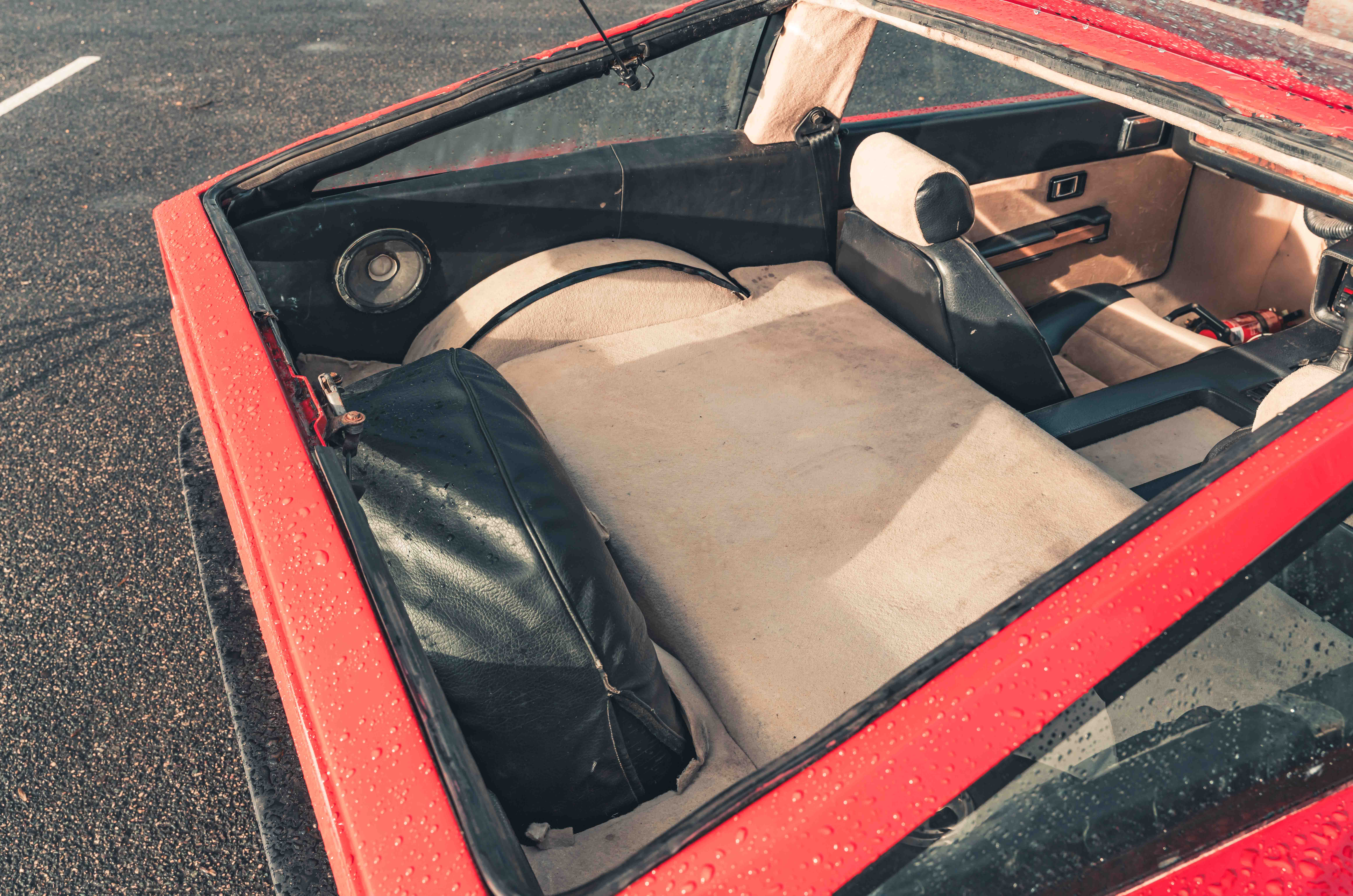
The TVR Tasmin is surprisingly practical
Matthew Lobb’s car was the 14th Tasmin built by the factory and one of only 122 ‘short-tail’ models produced between January 1980 and March ’81.
VCW 908V was delivered new to Peter Wheeler in March 1980, replacing his Taimar Turbo.
According to Matthew, Wheeler wrote to the factory complaining about its lack of performance; what response he received we will never know now, but a year later he had bought TVR from Martin Lilley.
The Tasmin, meanwhile, was sold and repainted red (it was originally blue) and had a body-off restoration in the early 2000s.
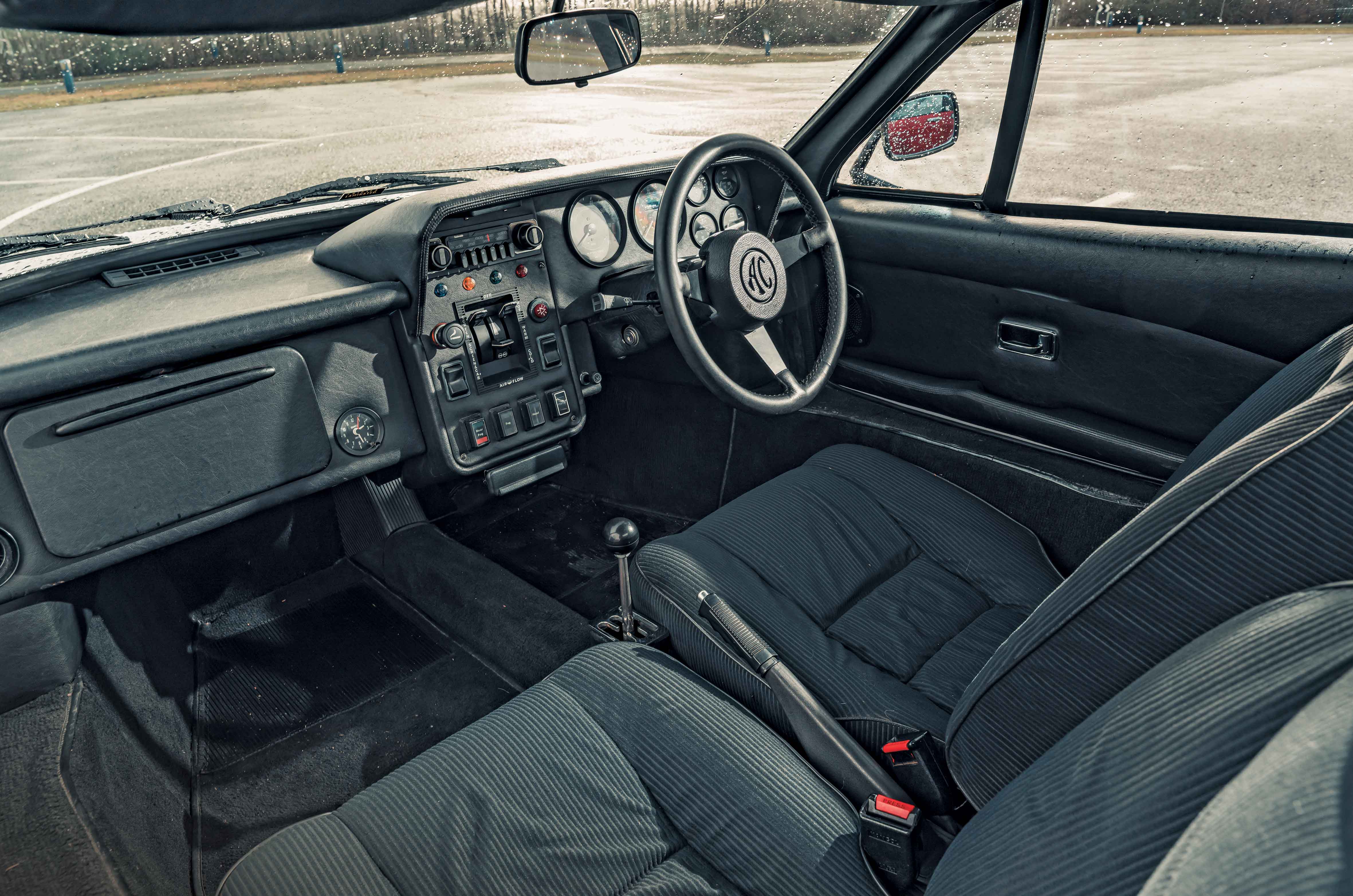
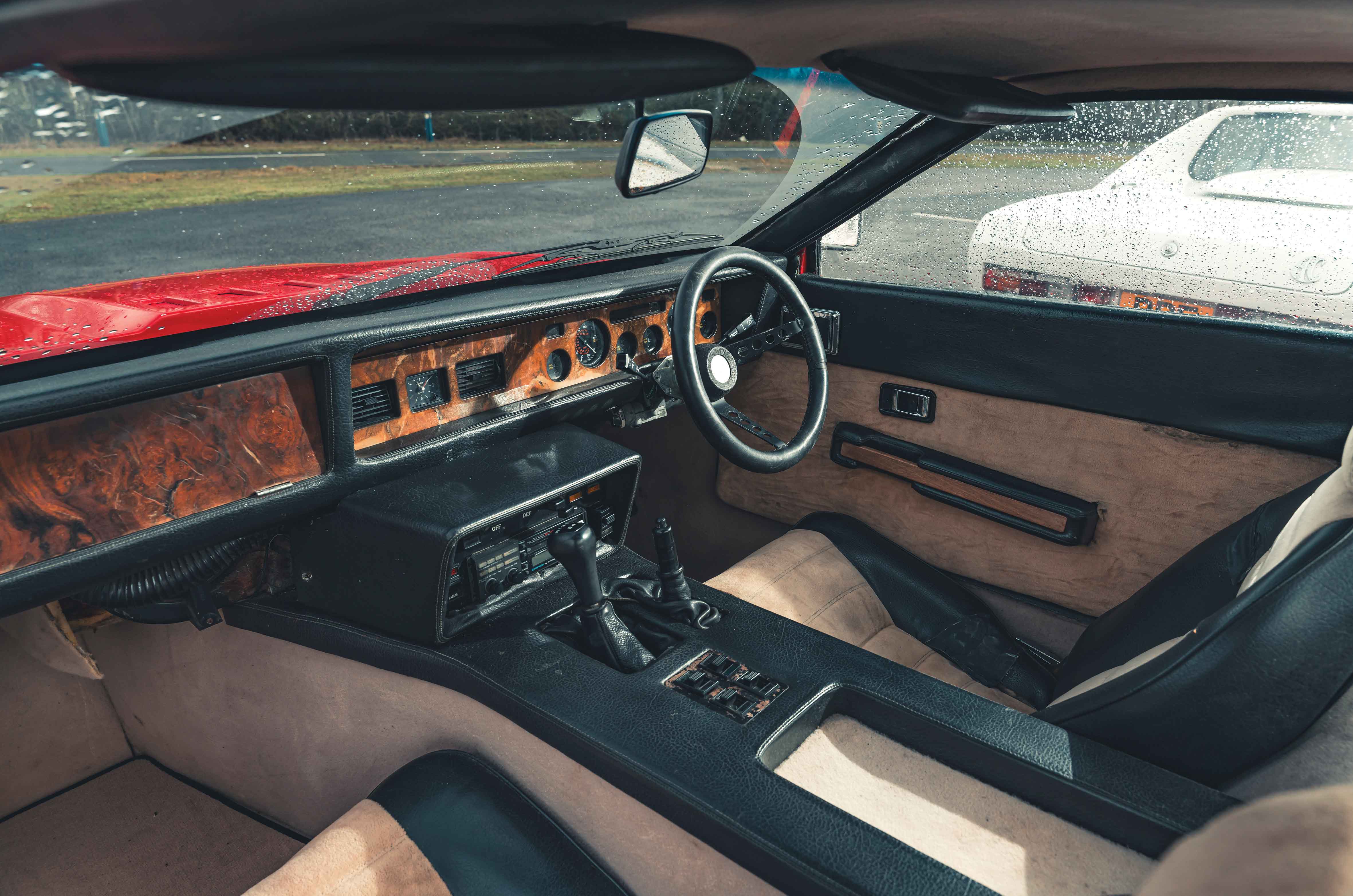
The TVR Tasmin’s spacious cabin is nicely finished
Matthew acquired the car in 2021, and while he admits to it being a little rough around the edges, a 200-mile round trip to our shoot proved how usable the car still is.
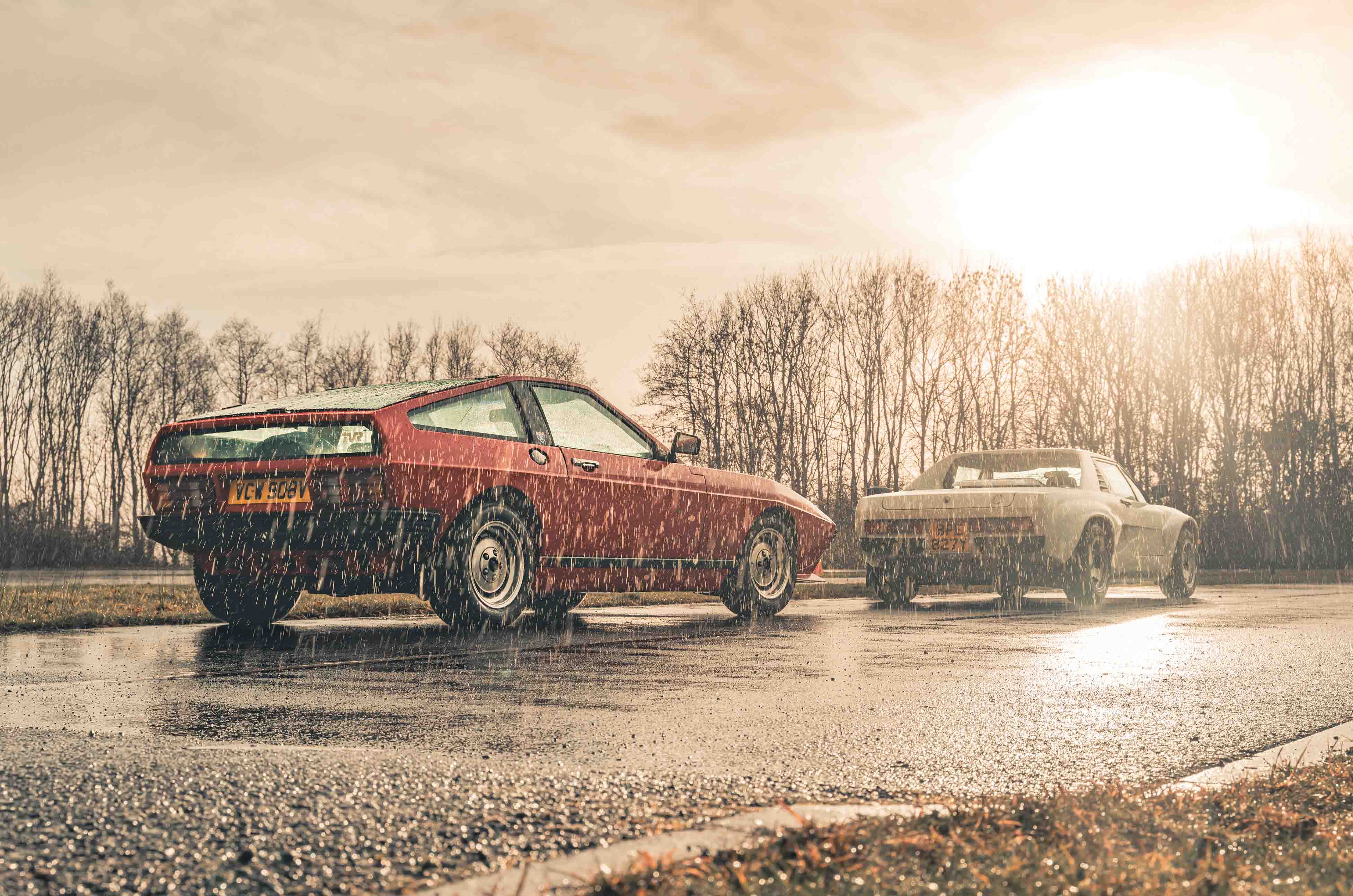
Viewed from outside, the Tasmin is a slice of 1980s New Wave, with hints of Alfasud Sprint and Maserati Khamsin (including its glazed rear panel), and a bonnet line so low you wonder how it manages to clear the Ford V6 beneath.
Inside, the cabin is light, spacious and well appointed, with six Stewart Warner dials set into a walnut-veneered dash, thick-pile carpets and deeply bolstered seats with Ambla facings.
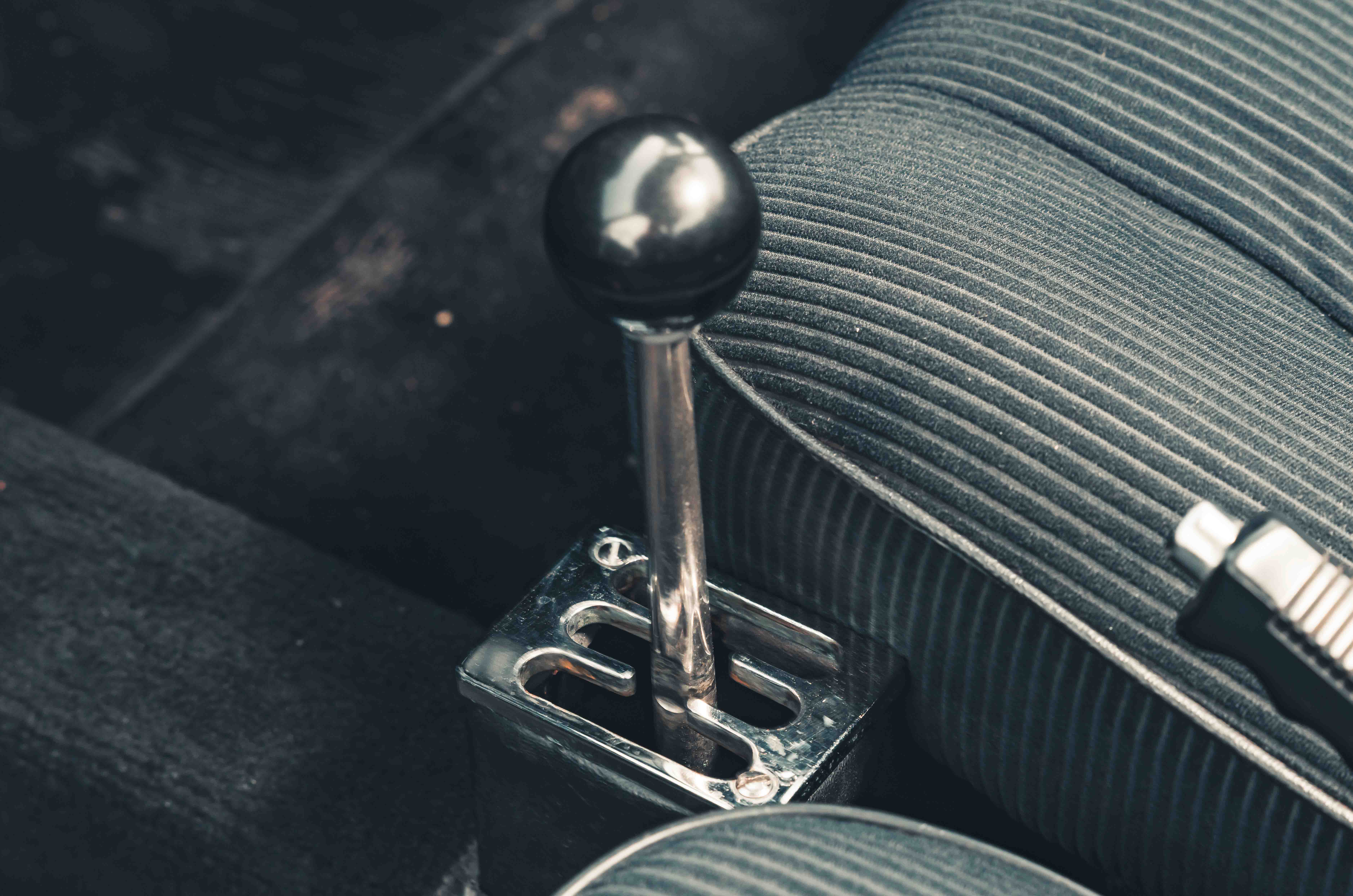
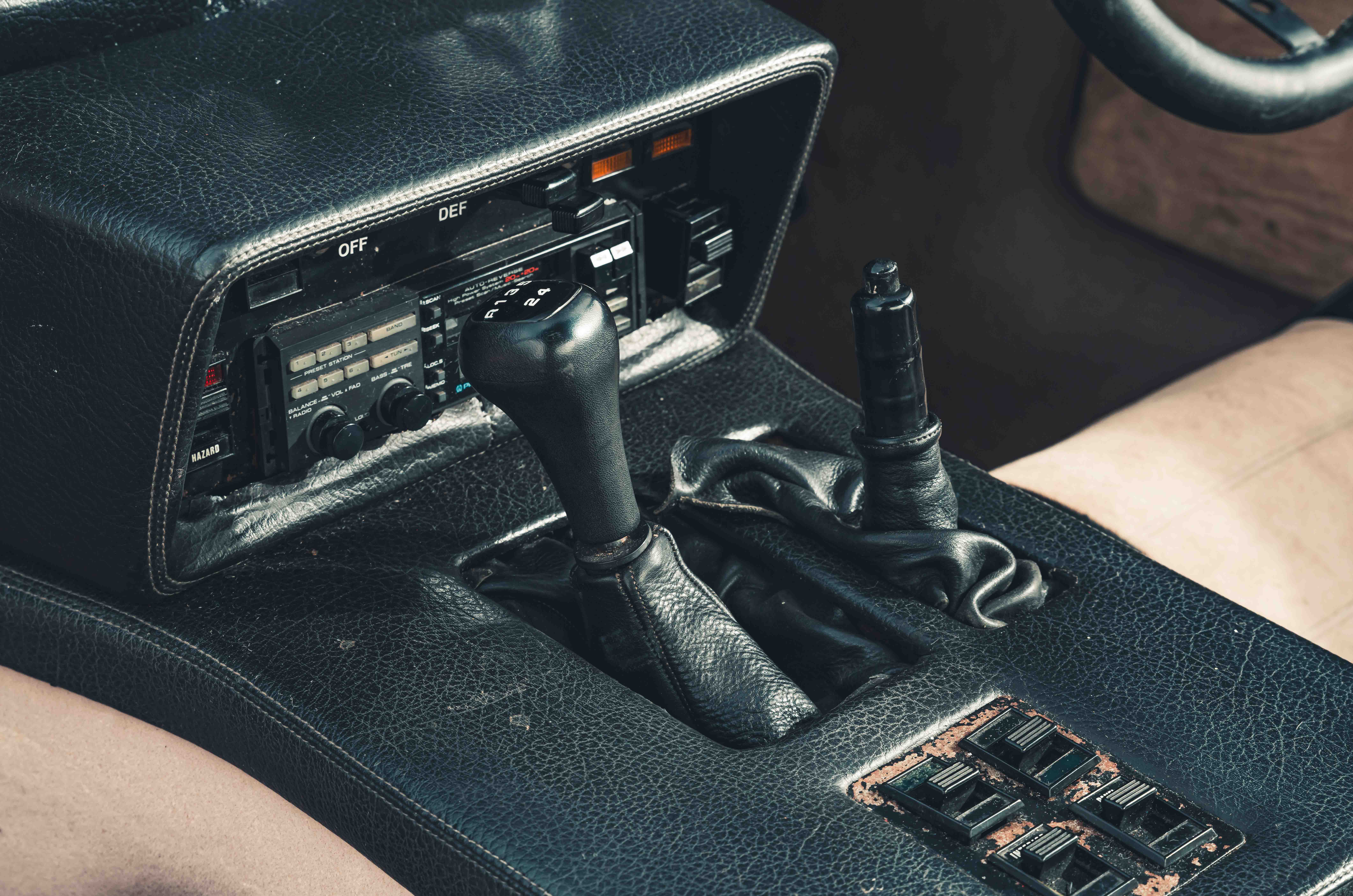
The TVR Tasmin has a five-speed gearbox
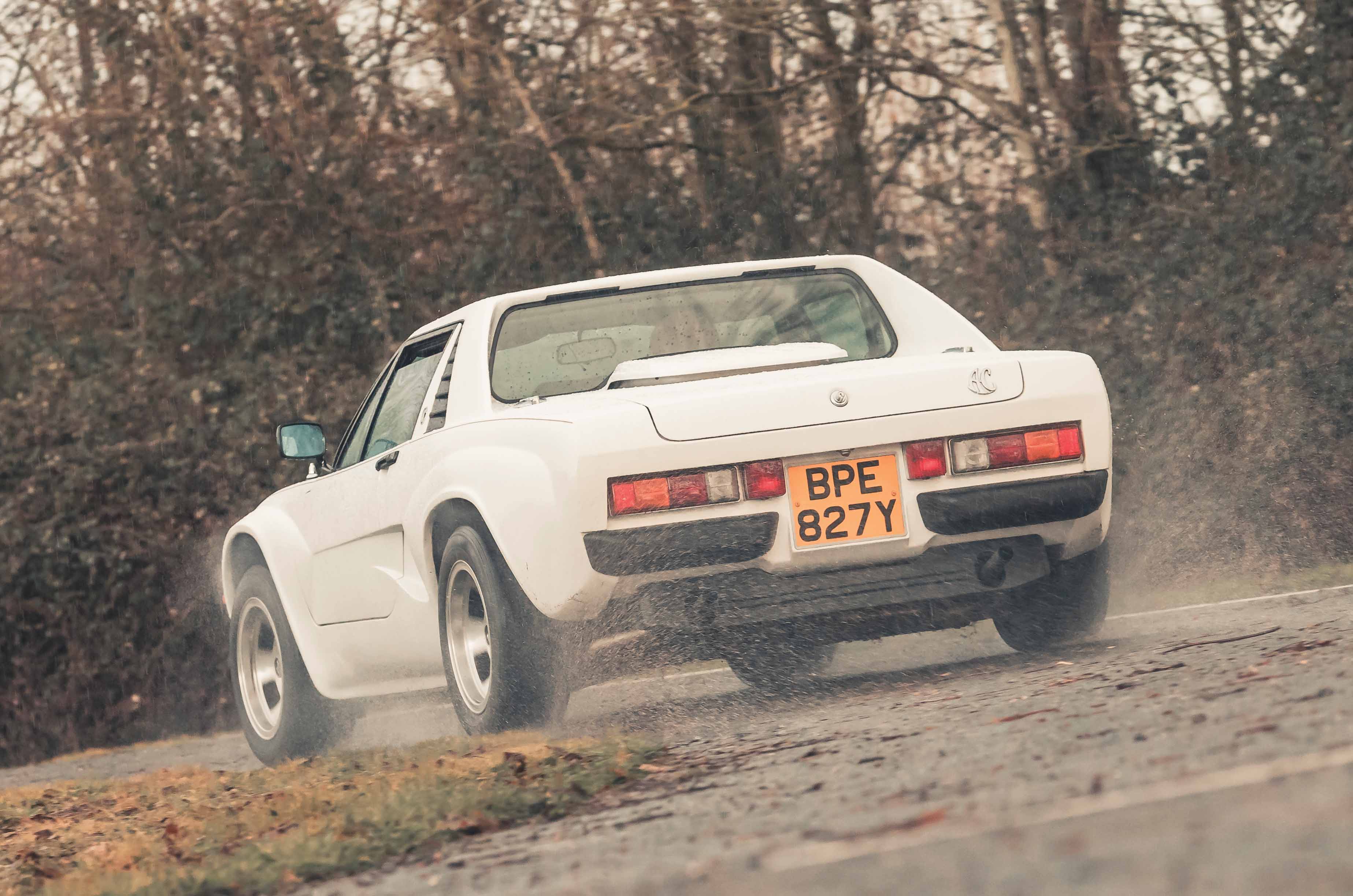
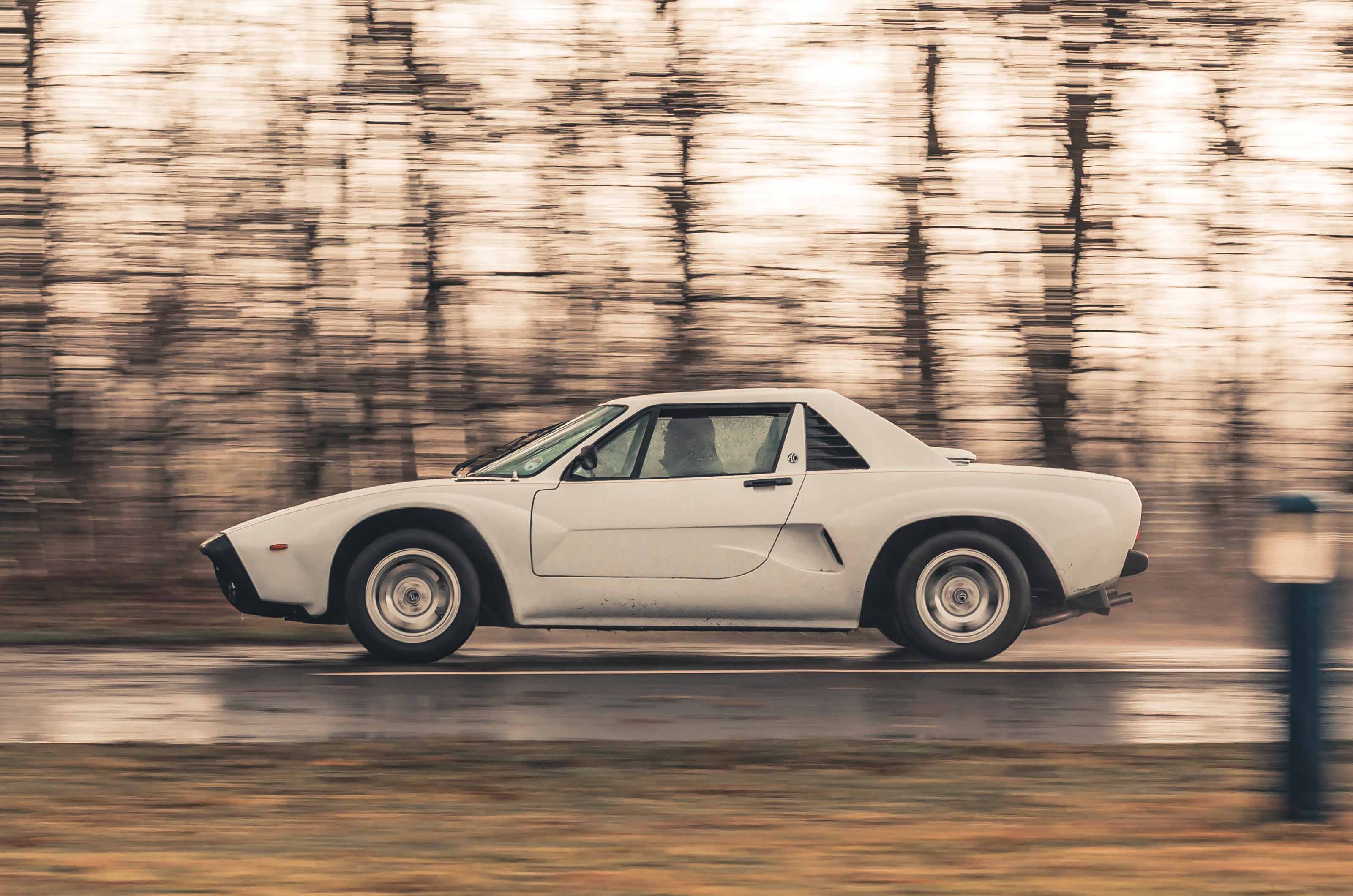
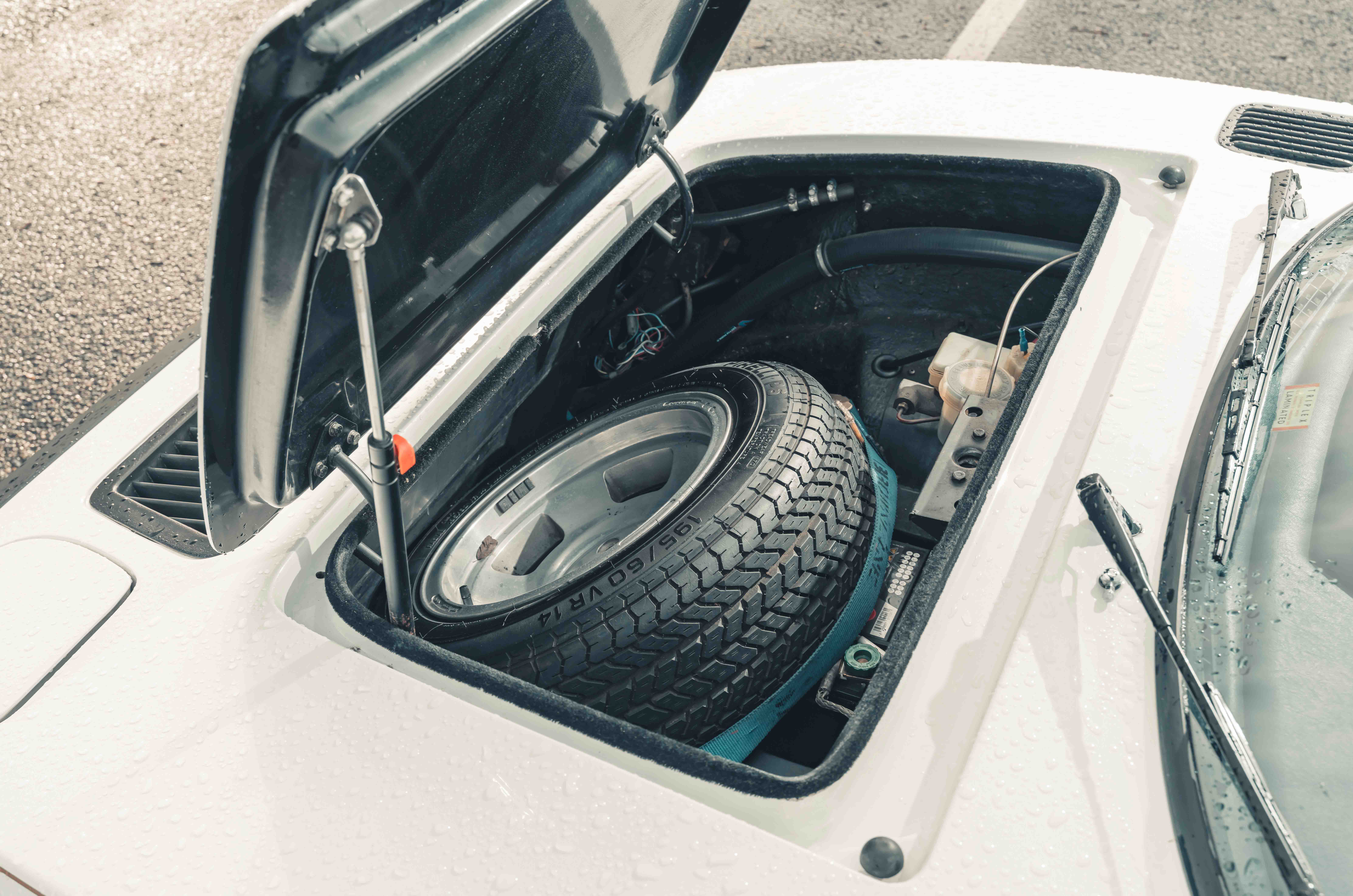
Like the AC, it boasts decent luggage space, this time in a carpeted area behind the seats, accessed through the large, glazed hatch.
Fire up the Cologne and the loud bark from the exhausts hints at how much this drive is likely to contrast with the AC’s. It doesn’t disappoint, either.
It would be unfair to compare each car’s build integrity, given that the Tasmin has covered nearly four times as many miles as the ME, but in all the right areas this TVR still feels like a tough piece of kit.
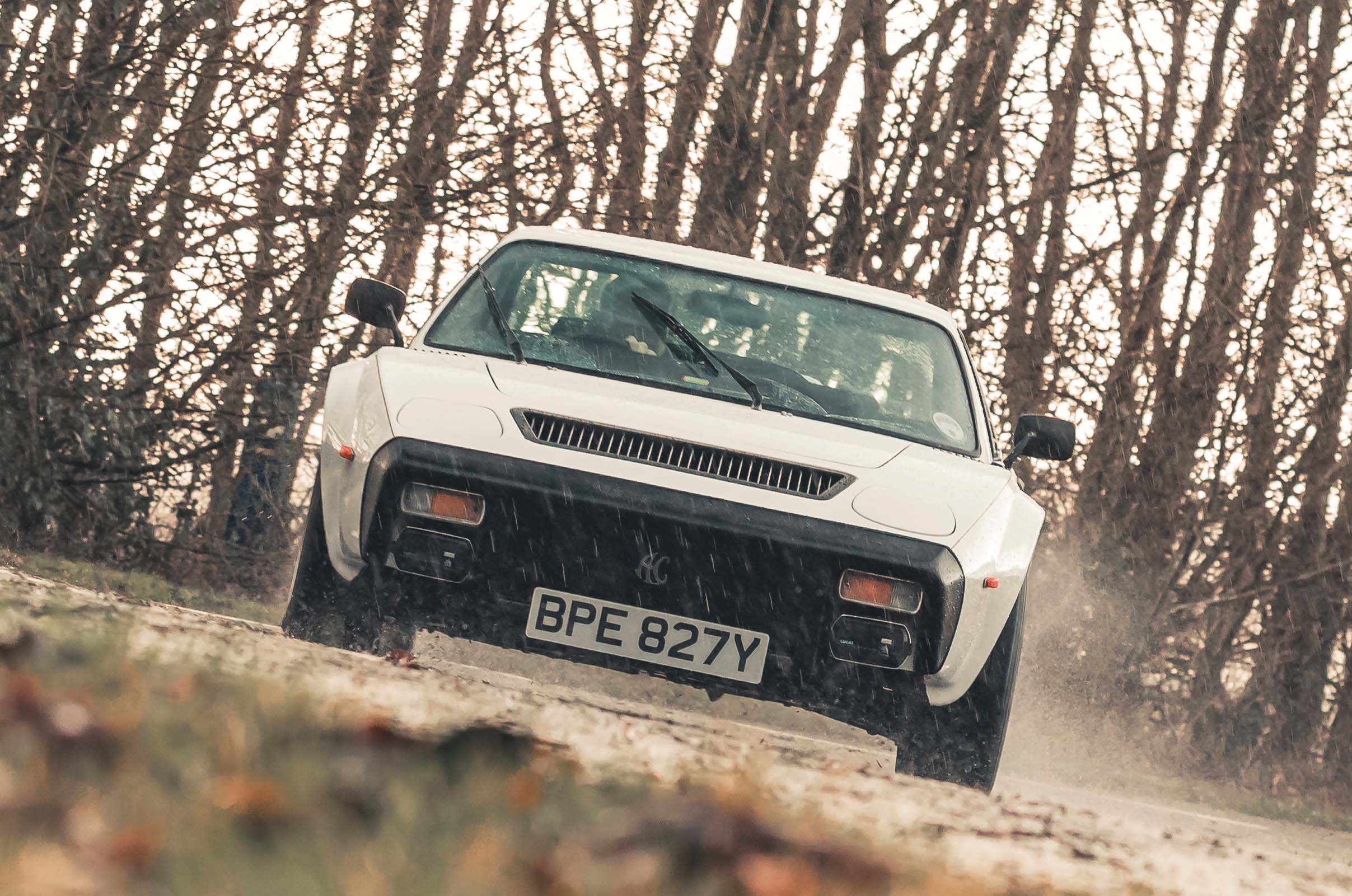
The unassisted steering is predictably heavier than the AC’s from the off, but it’s also blessed with a commendable stability and accuracy that the Thames Ditton car lacks; where you finesse the AC, you take the TVR by its scruff and drive the pants off it.
The TVR Tasmin’s steering feels heavy at first, but it’s accurate
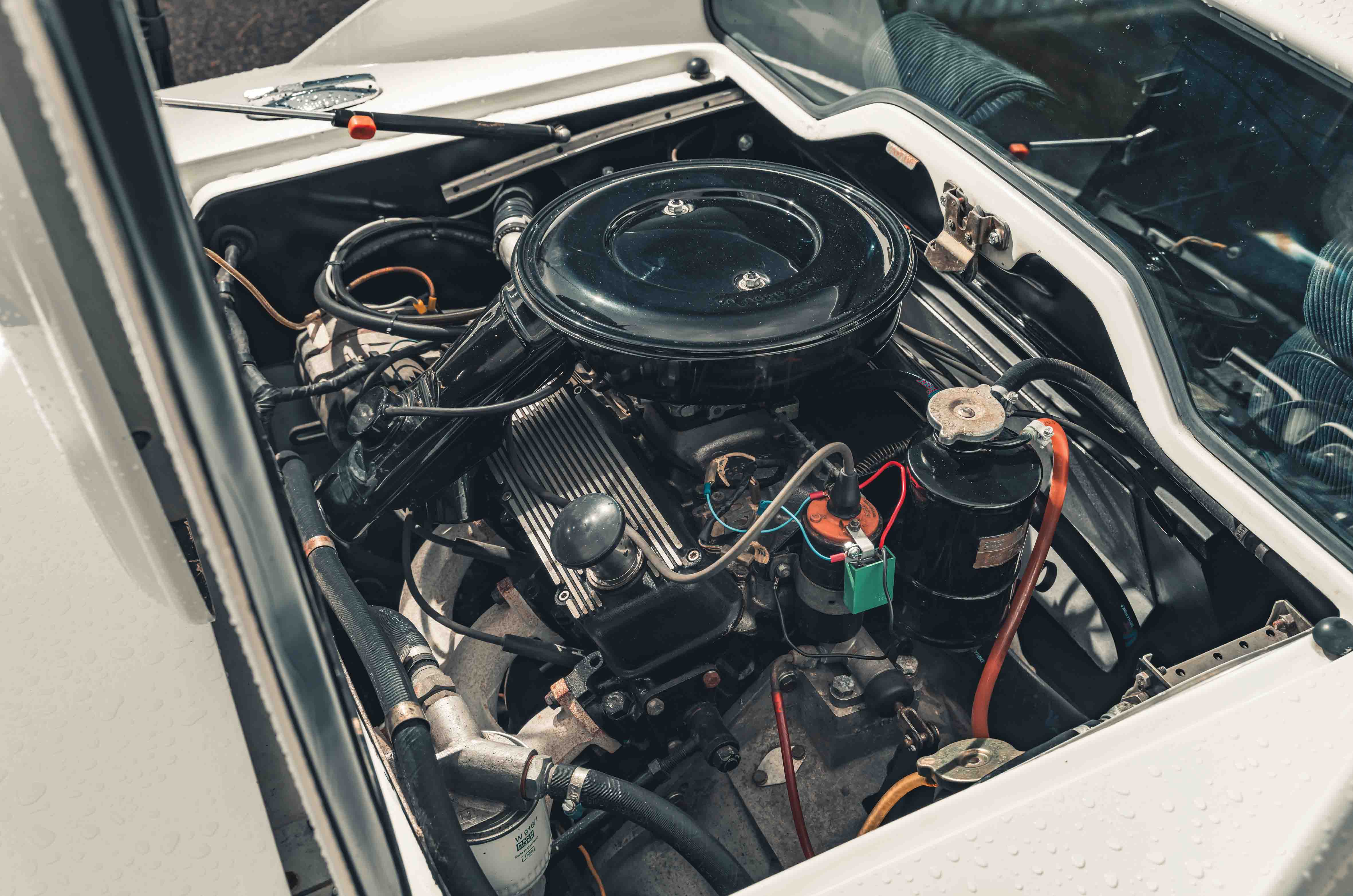
The high-mounted four-speed gearshift is fluid and quick, and throttle response is sharper than the AC’s – which is surprising given that it’s running Bosch mechanical injection versus the ME’s single Weber carburettor.
Accelerate hard and the car sounds faster than it is, emitting a guttural roar that doesn’t quite translate into heady velocities (Matthew reckons the Bosch system still needs some fettling).
The TVR’s chassis dynamics are more accomplished than the AC’s, although with an extra 120kg of heft (1163kg, compared with 1043kg) you sense that the suspension is having to work harder to contain its greater mass.
Grip is strong, and the servo-assisted discs are more powerful and confidence-inspiring than the AC’s unassisted discs, which are excellent but require plenty of effort.
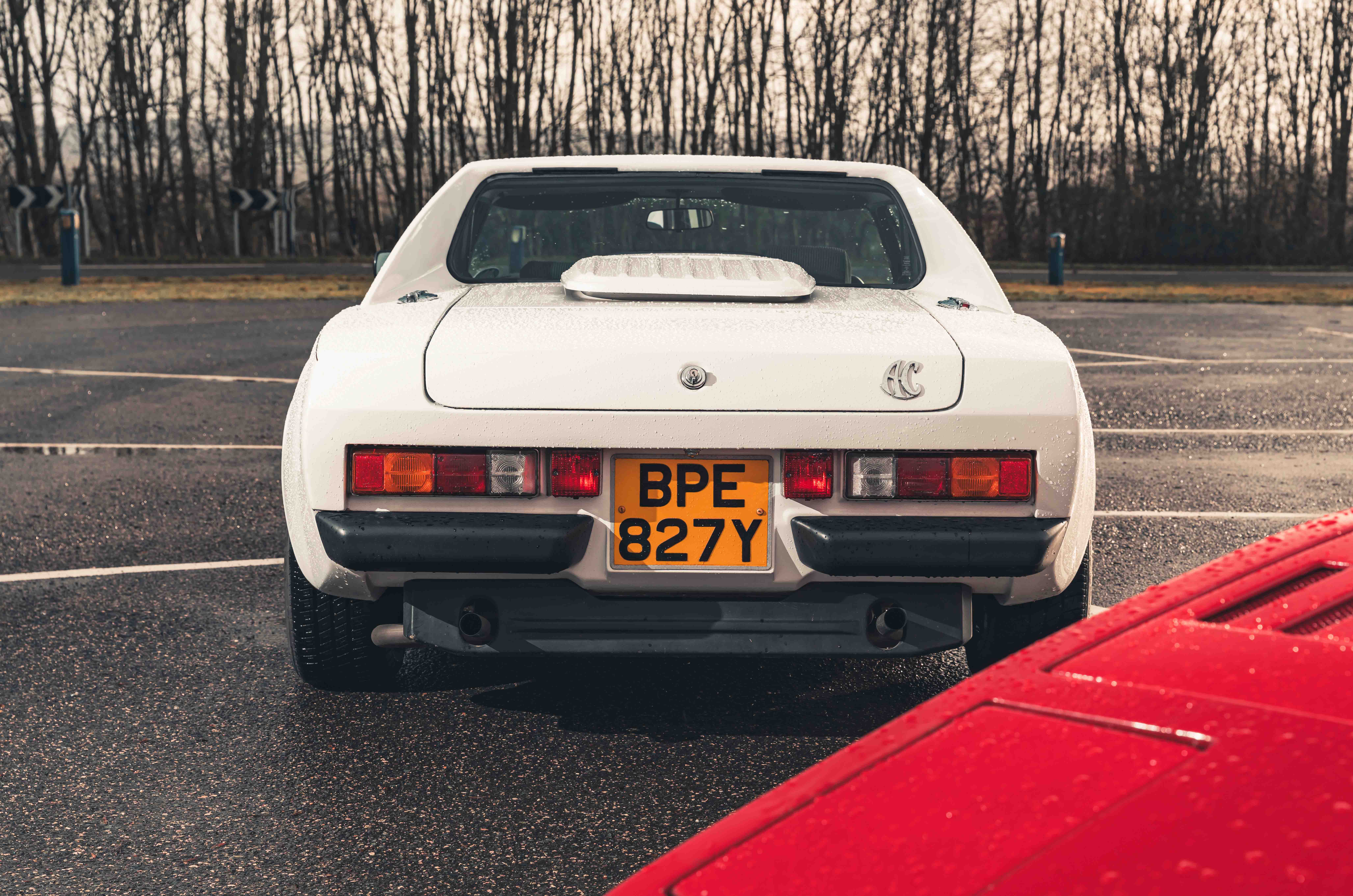
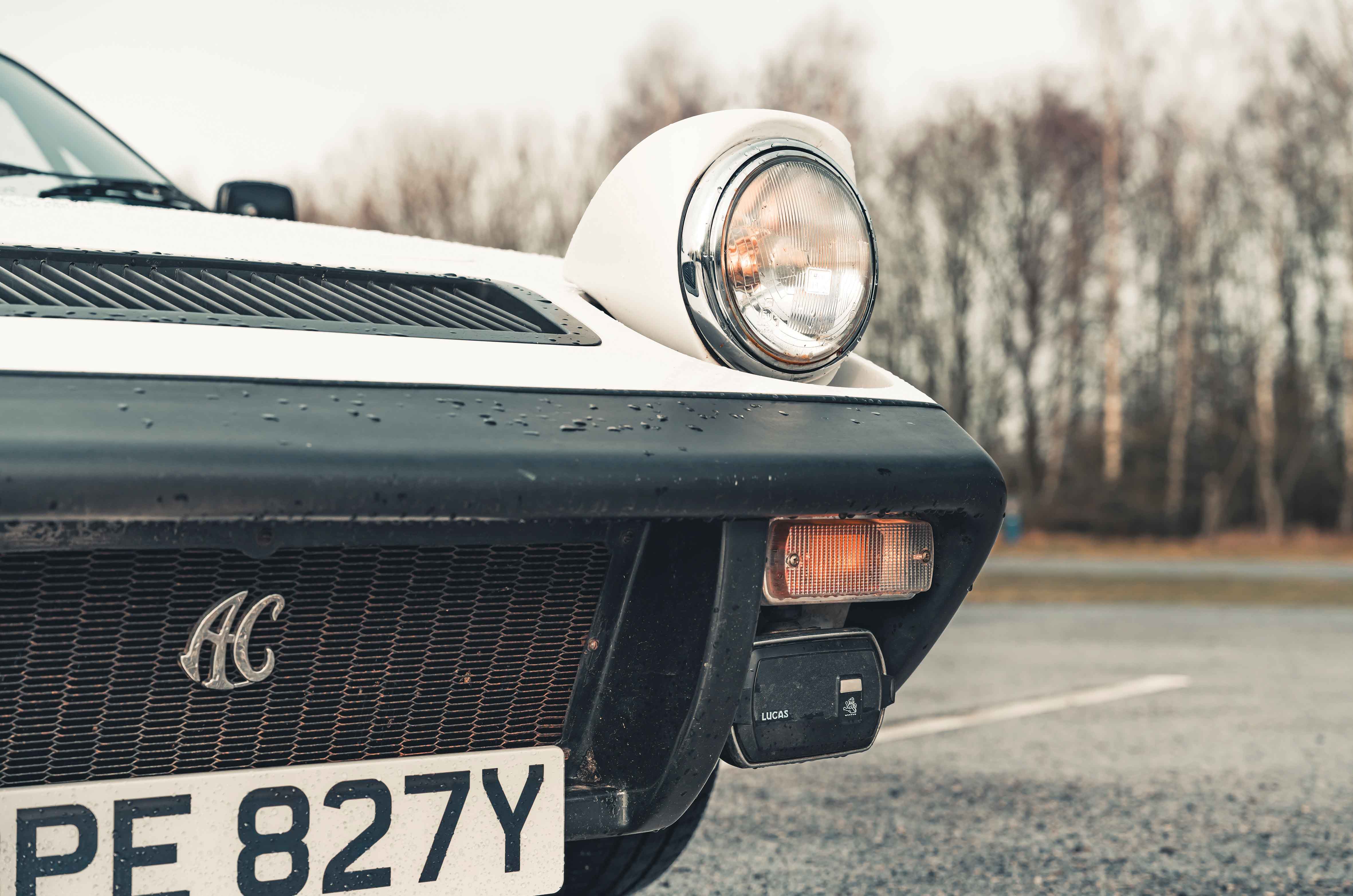
The AC 3000ME is remarkably refined
Truth be told, I enjoyed driving both of these cars far more than I’d expected.
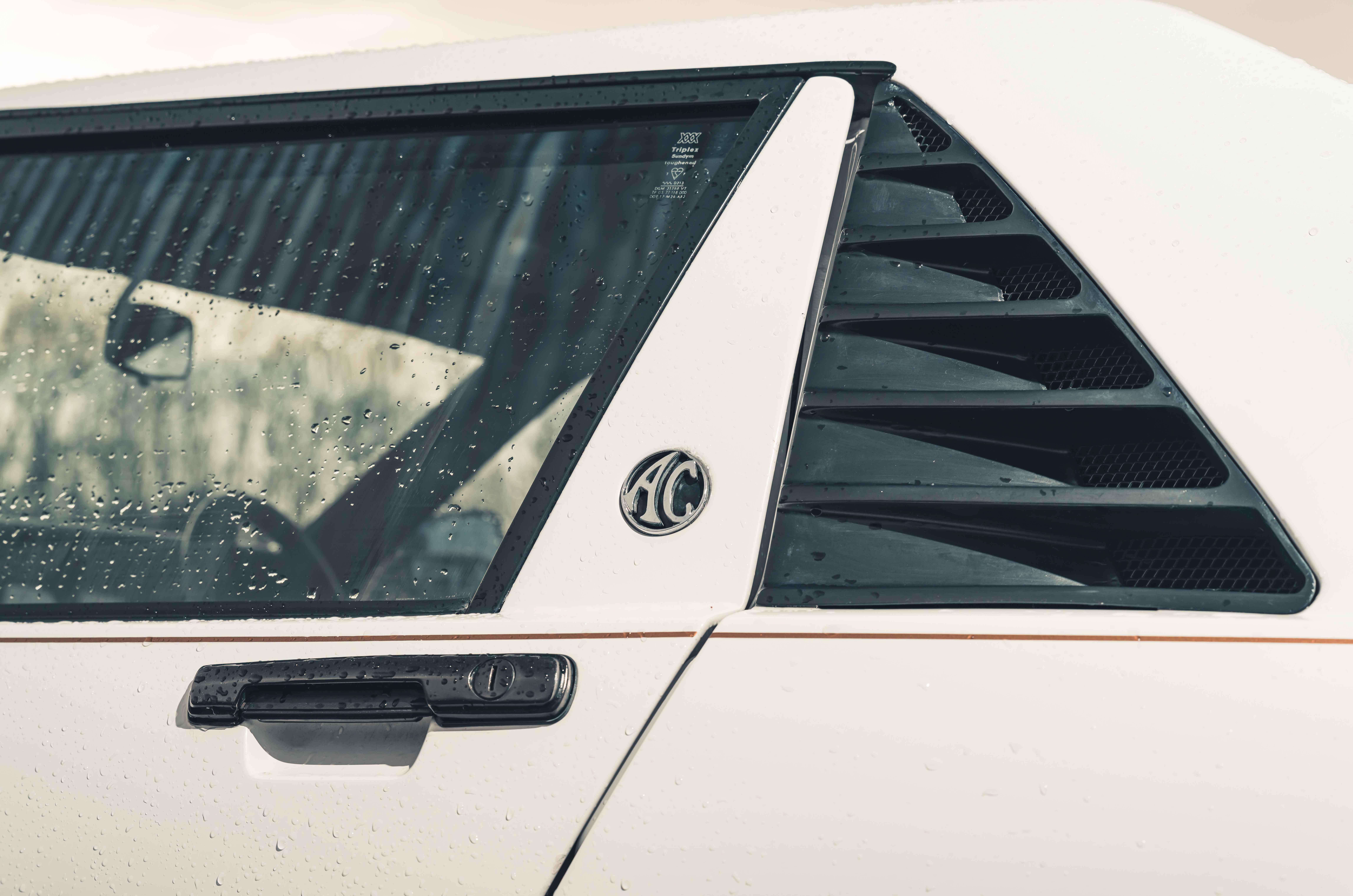
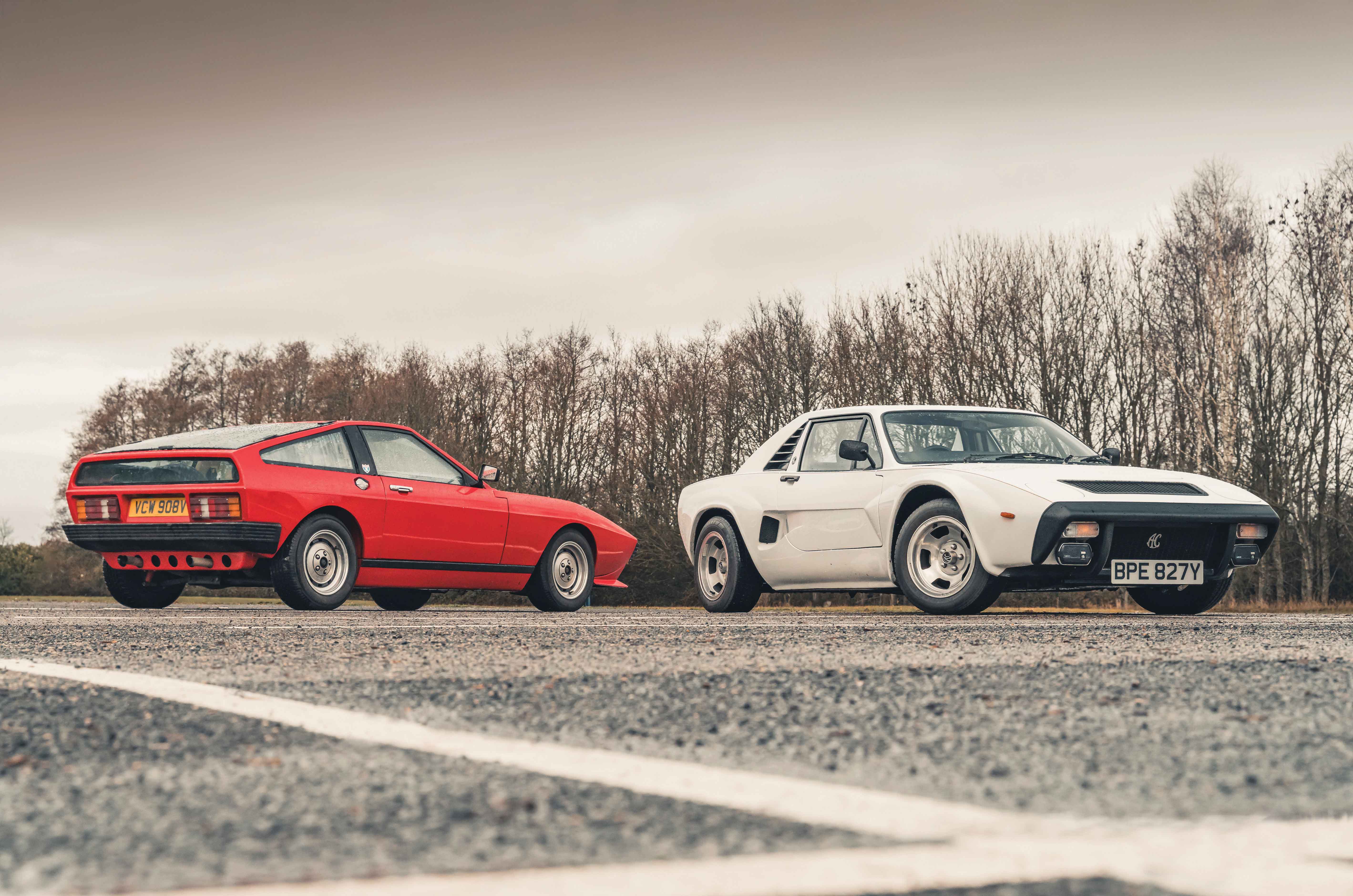
The AC may look like a Custom Car refugee, but its technical sophistication, well-resolved construction and bewilderingly good levels of refinement make it an exceptional GT, albeit one that lacks some aural drama and whose handling (in extremis) requires respect.
The TVR verges more towards being a sports car than a GT, despite its overall practicality and relative comfort.
It’s the car here that you can jump into and enjoy without having to think about it too much – and is all the better for it.
But the 3000ME would be my keeper, and the one I’d wager will command increasing reverence in the future.
Images: Max Edleston
Thanks to: the British Motor Museum; the TVR Car Club; Stone Cold Classics
Factfiles
AC 3000ME
- Sold/number built 1979-’85/101
- Construction central steel monocoque with tubular subframes, glassfibre body
- Engine all-iron, ohv 2994cc 60° V6, single Weber twin-choke 38DGAS carburettor
- Max power 138bhp @ 5000rpm
- Max torque 174lb ft @ 3000rpm
- Transmission five-speed manual, RWD
- Suspension independent, by double wishbones, coil springs, telescopic dampers f/r
- Steering rack and pinion
- Brakes discs
- Length 13ft 1in (3988mm)
- Width 5ft 5in (1651mm)
- Height 3ft 9in (1143mm)
- Wheelbase 7ft 6½in (2299mm)
- Weight 2299lb (1043kg)
- 0-60mph 6.5 secs
- Top speed 120mph
- Mpg 18.8
- Price new £13,301 (1980)
- Price now £22-30,000*
TVR Tasmin 2.8i S1
- Sold/number built 1980-’81/122
- Construction multi-tubular steel backbone chassis, glassfibre body
- Engine all-iron, ohv 2792cc 60° V6, Bosch K-Jetronic fuel injection
- Max power 160bhp @ 5700rpm
- Max torque 162lb ft @ 4300rpm
- Transmission four-speed manual, RWD
- Suspension independent, by double wishbones, coil springs, telescopic dampers f/r; front anti-roll-bar
- Steering rack and pinion
- Brakes discs, with servo
- Length 13ft 2in (4013mm)
- Width 5ft 8in (1728mm)
- Height 3ft 11in (1192mm)
- Wheelbase 7ft 10in (2387mm)
- Weight 2304lb (1163kg)
- 0-60mph 8.2 secs
- Top speed 130mph
- Mpg 21.6
- Price new £12,800 (1980)
- Price now £5-10,000*
*Prices correct at date of original publication
Enjoy more of the world’s best classic car content every month when you subscribe to C&SC – get our latest deals here
READ MORE
Roll of thunder: TVR 350i vs TVR Chimaera 400
MG RV8 vs TVR Griffith vs Marcos Mantara: power to the people
AC MA 200: missed opportunity
Simon Hucknall
Simon Hucknall is a senior contributor to Classic & Sports Car