Jaguar E-type 2+2 vs Lotus Elan +2S: more of a good thing?

| 10 Aug 2026
Classic & Sports Car – Jaguar E-type 2+2 vs Lotus Elan +2S: sports for all
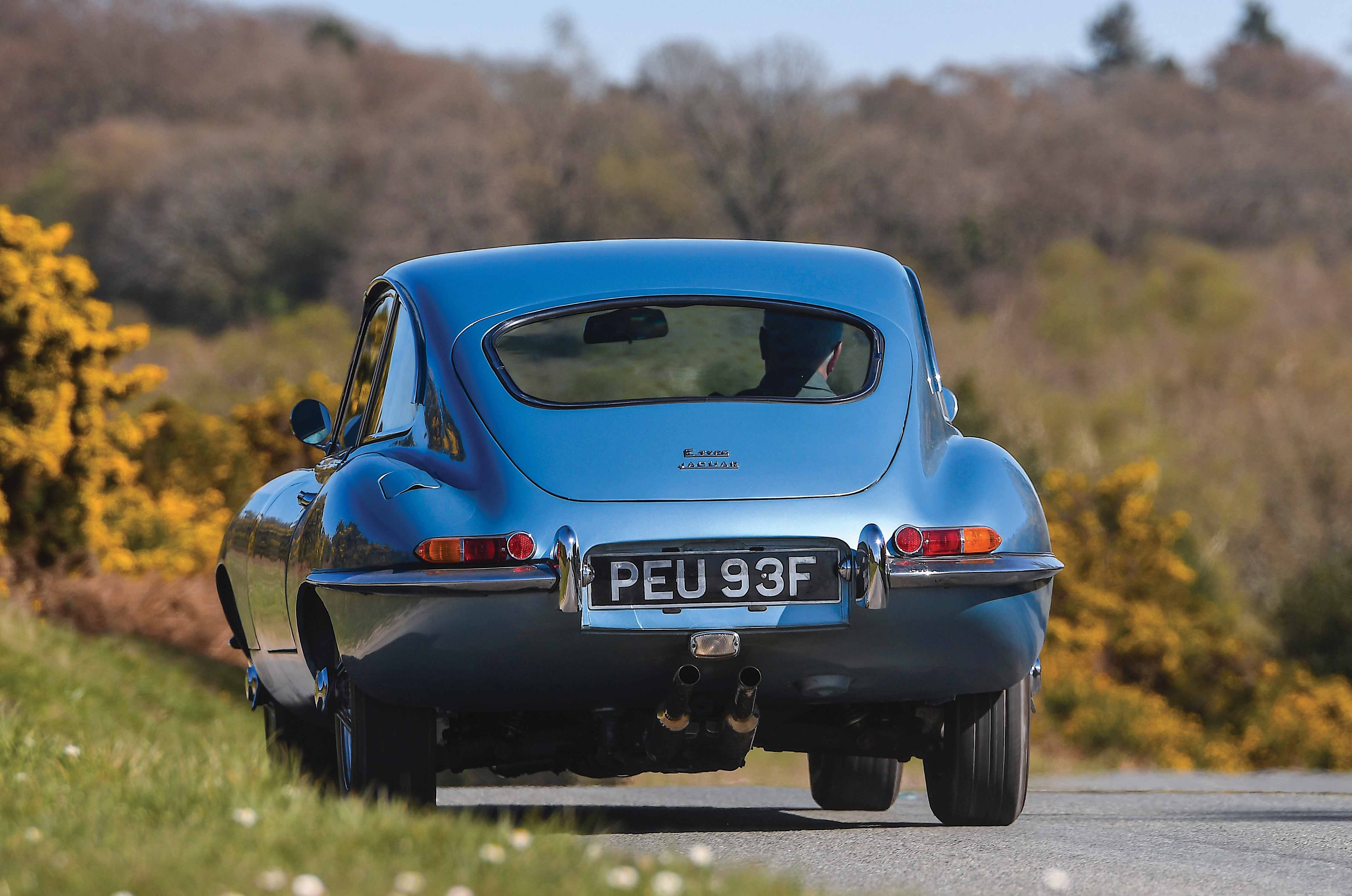
The story of the Jaguar E-type 2+2 tends to become conflated, perhaps unfairly, with the gradual emasculation of the Jaguar sports car from the mid-’60s onwards.

In a world that is obsessed by the early cars’ outside bonnet locks and flat floors, the mere existence of the 2+2, with its bloated roofline, additional nine inches of wheelbase and tiny rear seats, feels like an inconvenient footnote in the mythology of the most famous Jaguar of them all, eroding the innocence of a creation that had been born nearly perfect, at least visually.

You could be forgiven for thinking that, if the lean and beautiful two-seaters of 1961 were created from pure instinct, the 1966 2+2 was merely an E-type designed by committee, tweaked by a series of focus groups and signed off by the marketing department.

Classic & Sports Car – Jaguar E-type 2+2 vs Lotus Elan +2S: sports for all
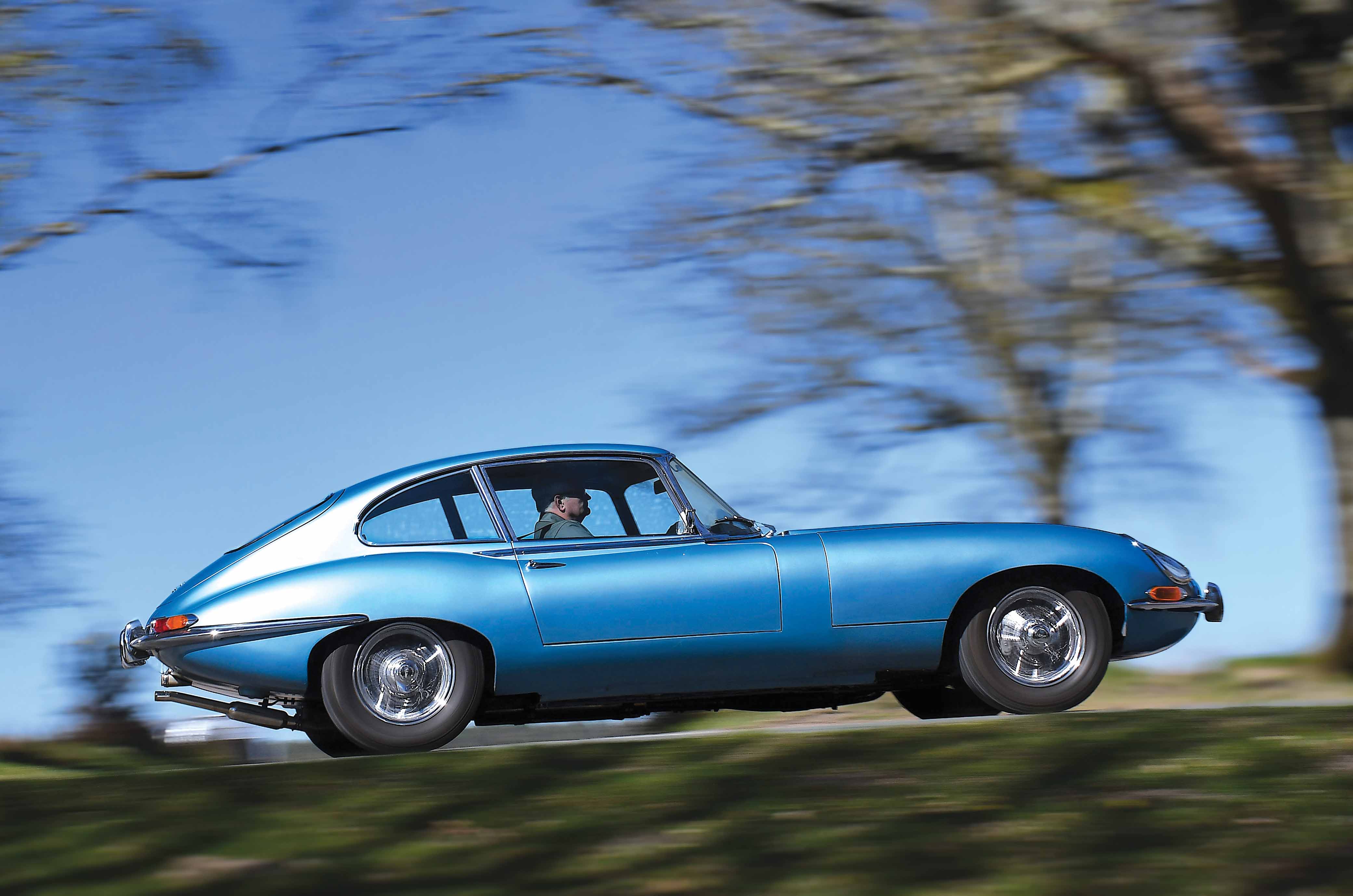
The Jaguar E-type S1 4.2 2+2 gained 9in in its wheelbase over the two-seater – longer doors are a giveaway

The end product? A domesticated, house-trained E-type that gave the public what it wanted – or at least what Jaguar thought it wanted.

In truth, the creation of the 2+2 E-type was as inevitable as night following day in an era during which the label ‘2+2’ was not by necessity the shorthand for compromise as we tend to see it 60 years later; Jaguar had been here before with the fixed-head XK150s, after all.

Foreseeing the need for a roomier car for generally taller, larger American drivers (and many European ones) in which to stretch out, Sir William Lyons had wanted a plus-size version of the closed Jaguar E-type from the very beginning.

He observed the way the European taste for luxury four-seater coupés was evolving and, for the US market, sensed a requirement in the coming years for a car to square up to the Ford Thunderbird.

Classic & Sports Car – Jaguar E-type 2+2 vs Lotus Elan +2S: sports for all
The Jaguar E-type 2+2 maintained the original’s driver appeal while adding back seats

Doing so would expand the appeal of a Jaguar that, on both sides of the Atlantic, had rapidly become a motoring phenomenon of the age.

Many different ideas were mooted for an occasional four-seater, but it would be true to say the Jaguar E-type proved resistant to aesthetic intervention, be it for practical or legislative purposes.

On the other hand, from a product development perspective, the 2+2 was a more important car than you might imagine in the Jaguar timeline: in creating it, the genesis of the XJ6 (and even the XJ-S) evolved.

Moreover, it was a commercially important car, outselling the fixed-head two-seater (in Series 2 form) and proving particularly successful, as Lyons predicted, in North America: of the nearly 11,000 4.2-litre 2+2s produced up to 1971, 8506 were left-hand drive.

Classic & Sports Car – Jaguar E-type 2+2 vs Lotus Elan +2S: sports for all
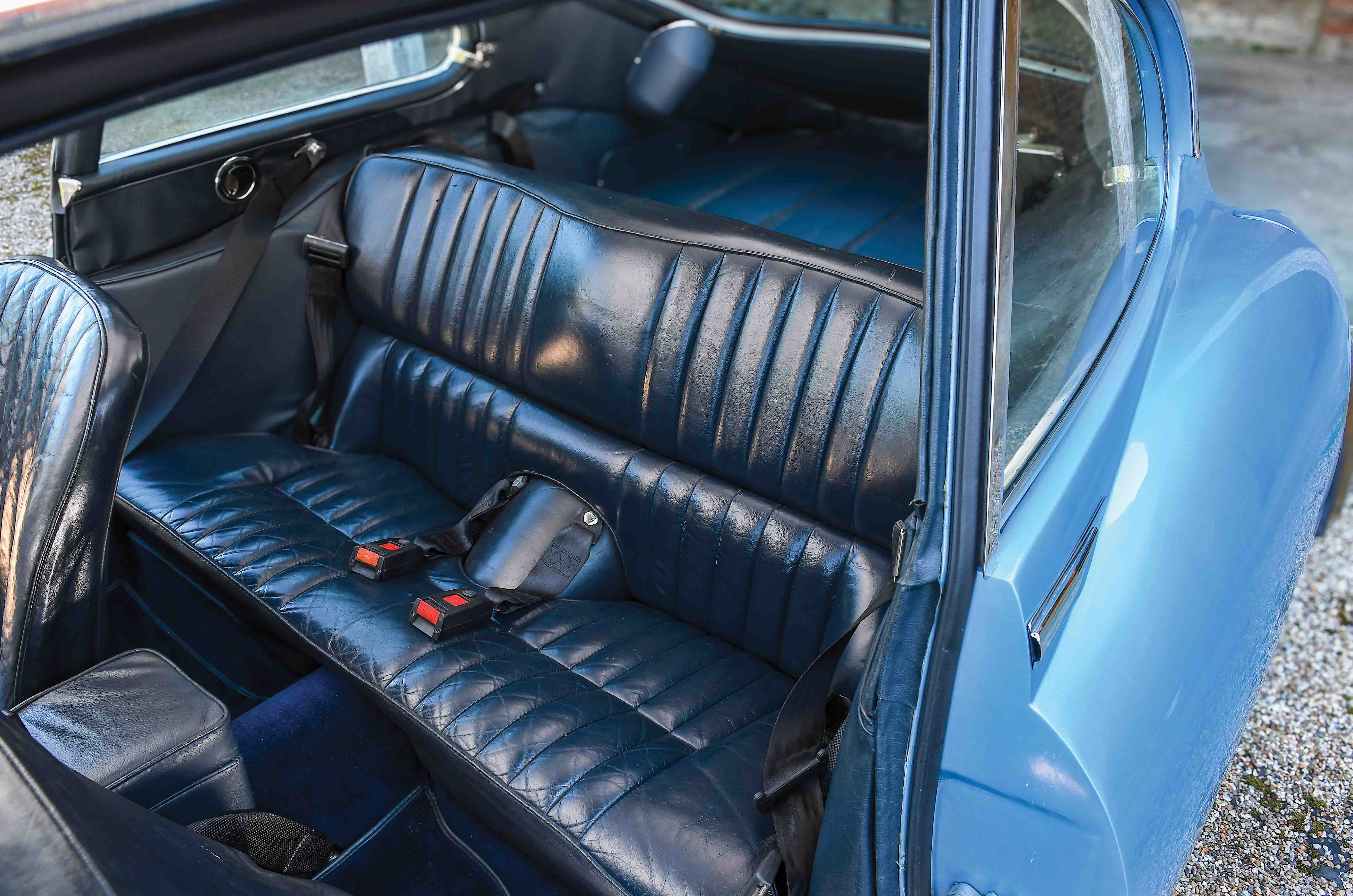
The Jaguar E-type 2+2’s front seats are raised to improve rear legroom

The basic shell outlived the original two-seater through to 1975; all of the V12s used the 2+2 platform.

This ‘family’ Jaguar E-type, launched at the Geneva Salon in 1966, was quite masterfully contrived when you review it in detail.

Lyons, true to form, had wanted to develop the 2+2 as inexpensively as possible, using as few new parts as was practicable, thus eschewing plans for distinguishing features such as quad headlights (which actually looked quite good on a couple of specially modified cars) and the greater body/track width that would have helped balance out the increase in length.

Classic & Sports Car – Jaguar E-type 2+2 vs Lotus Elan +2S: sports for all
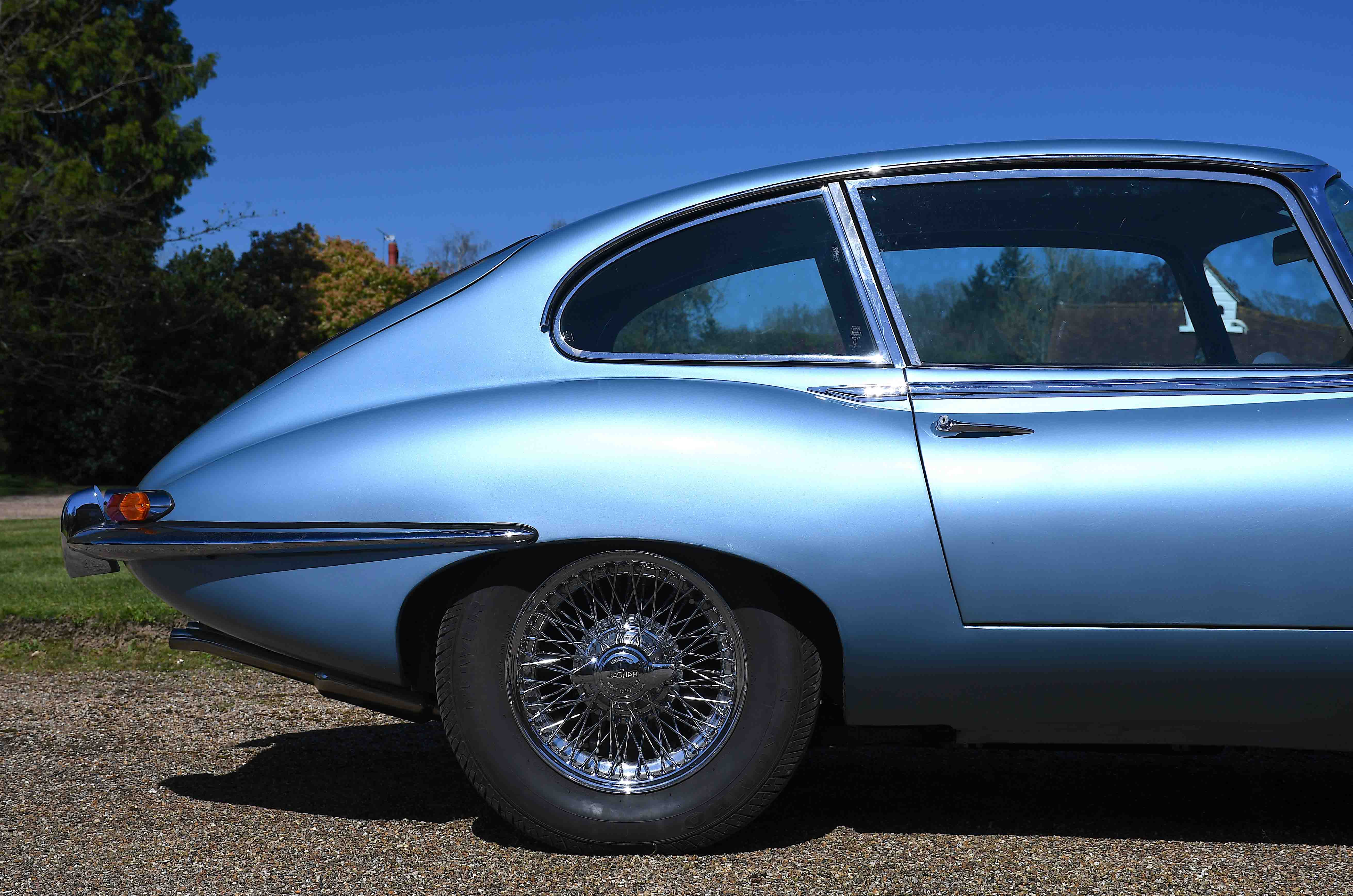
The Jaguar E-type 2+2’s flash of chrome below the side window creates a more svelte-looking profile

It would be hard to argue that the 2+2 did not lose something aesthetically compared with the two-seater.

Even so, Sir William and his team set about creating a Jaguar at which even seasoned car-spotters had to look twice in order to tell the difference.

The bright metal strip under the windows of the 8½in-longer doors was the instant telltale, but the extra 2in of height was harder to see – if necessary to get the headroom required for back-seat passengers.

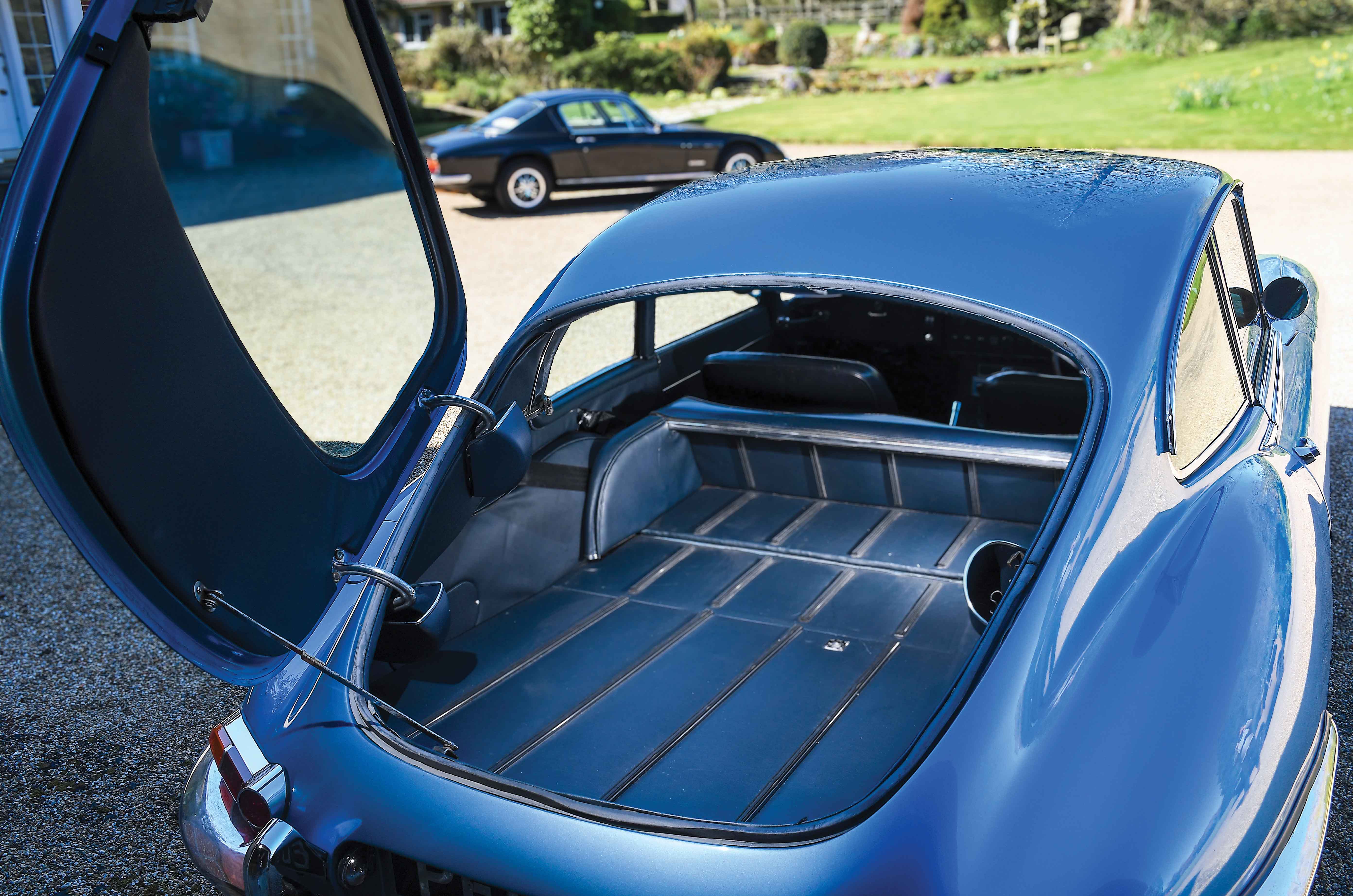
Jaguar had dropped the rear bulkhead to accommodate the bench, and the front seats were raised to give those in the rear a place to put their feet while providing 4ft 3in of load space with the backrest folded.

Classic & Sports Car – Jaguar E-type 2+2 vs Lotus Elan +2S: sports for all
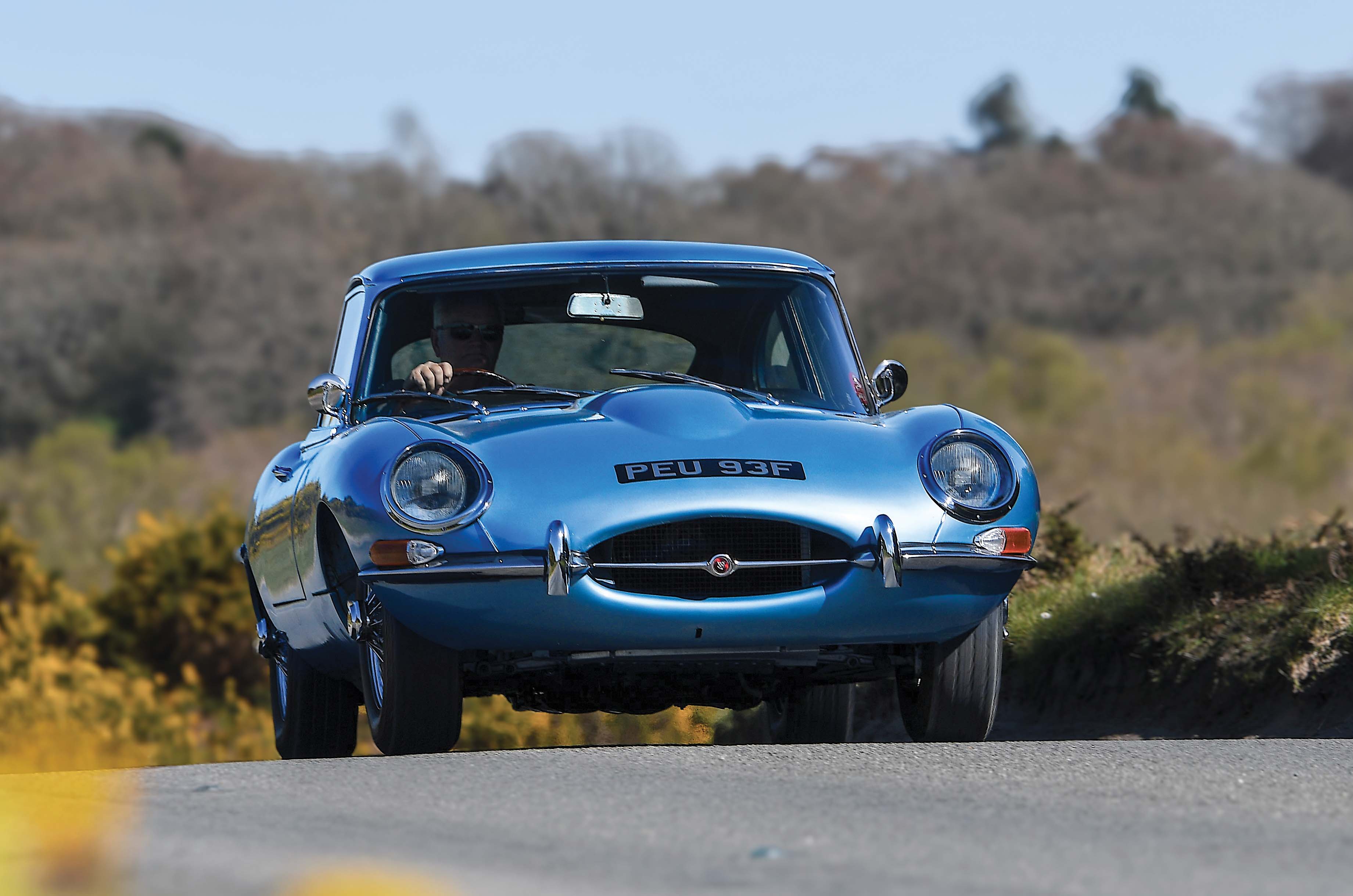
The Jaguar E-type 2+2’s taller windscreen is obvious from the front

From the front there was no hiding the 1½in-taller windscreen, although the effect was later softened on the Series 2 cars by bringing the base of the glass out to the edge of the scuttle, thus increasing the rake of the glass without altering the angle of the A-pillars.

Despite the increase in frontal area (and an additional 200lb in weight), the 2+2 was still a 140mph car, with a 100mph third gear.

By closing up the intermediate ratios, acceleration was not far adrift of the two-seater, and Autocar noted that its Jaguar E-type 2+2 test car was doing 20mpg when cruising at 100mph, so the aerodynamics can only have been affected marginally.

Classic & Sports Car – Jaguar E-type 2+2 vs Lotus Elan +2S: sports for all
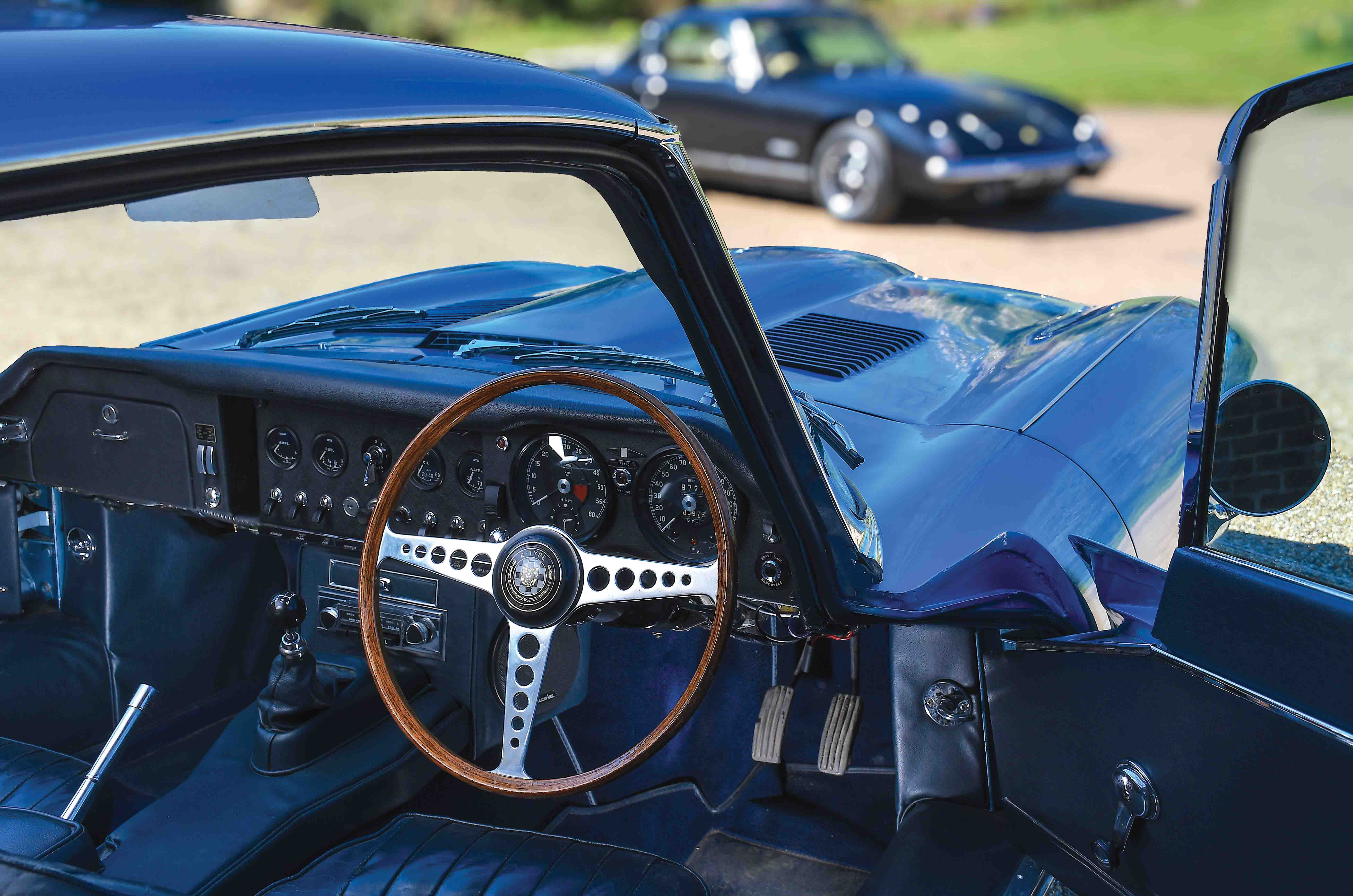
The Jaguar E-type 2+2’s steering wheel is larger than the car’s light and direct helm really needs

Additional user-friendly 2+2 features included a parcel shelf, burst-proof locks, extra heat insulation, better heating/ventilation and, for the first time, the possibility of two-pedal E-type motoring: the longer 2+2 had room for the £140 option of a Borg-Warner Type 8 three-speed automatic gearbox running a longer, 2.88:1 differential.

Motor said its 138mph 2+2, tested in April 1966, was the fastest automatic car to 100mph it had yet figured.

Automatic or manual, the only real dynamic downside was a fairly dramatic increase in turning circle, from 28ft to 43ft.

Classic & Sports Car – Jaguar E-type 2+2 vs Lotus Elan +2S: sports for all
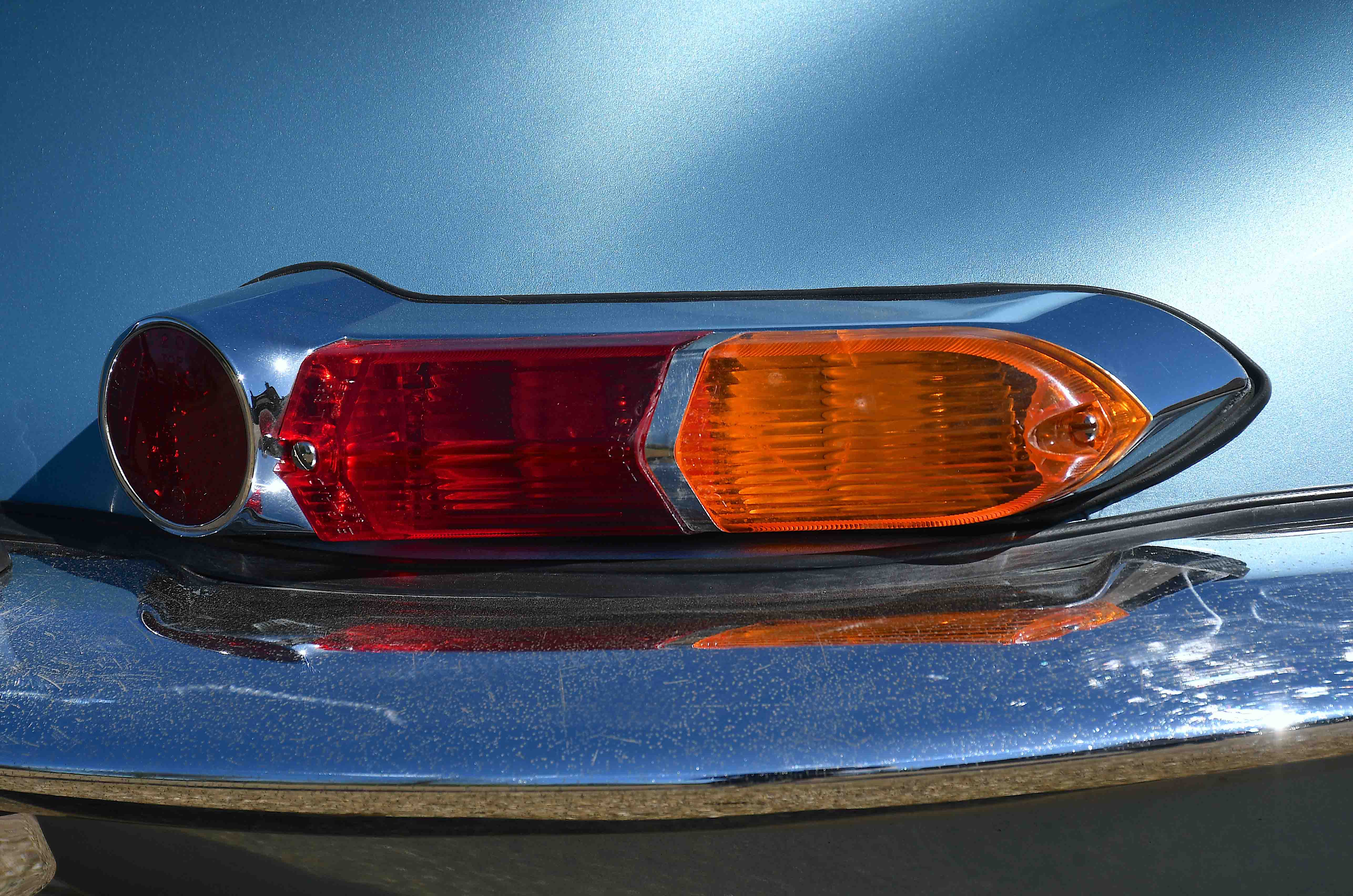
Rear lights above the bumper on the S1 Jaguar E-type 4.2 2+2

In short, the 2+2 looked like an E-type, drove like an E-type and caused contemporary reviewers to reach harder than ever for meaningful comparisons at anything like the £2245 Jaguar was asking.

Rival exotica, at twice the cost, really only had rarity – or novelty value – to offer.

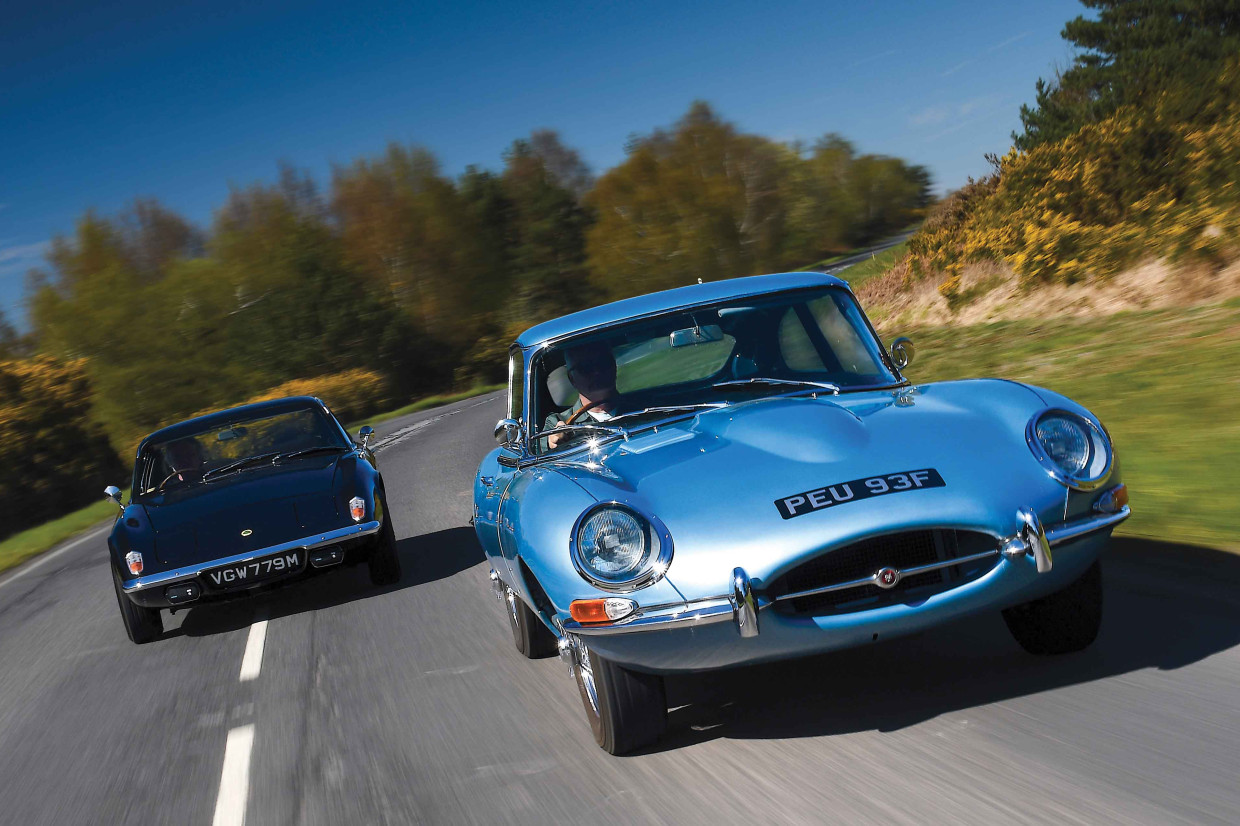
In creating the 1967 Elan +2, Colin Chapman must have had the 2+2 Jaguar E-type at least partially in his sights, even if the Lotus looked like a more natural rival for cars such as the Alfa Romeo Sprint GT, Scimitar Coupé or maybe a Gilbern.

Classic & Sports Car – Jaguar E-type 2+2 vs Lotus Elan +2S: sports for all
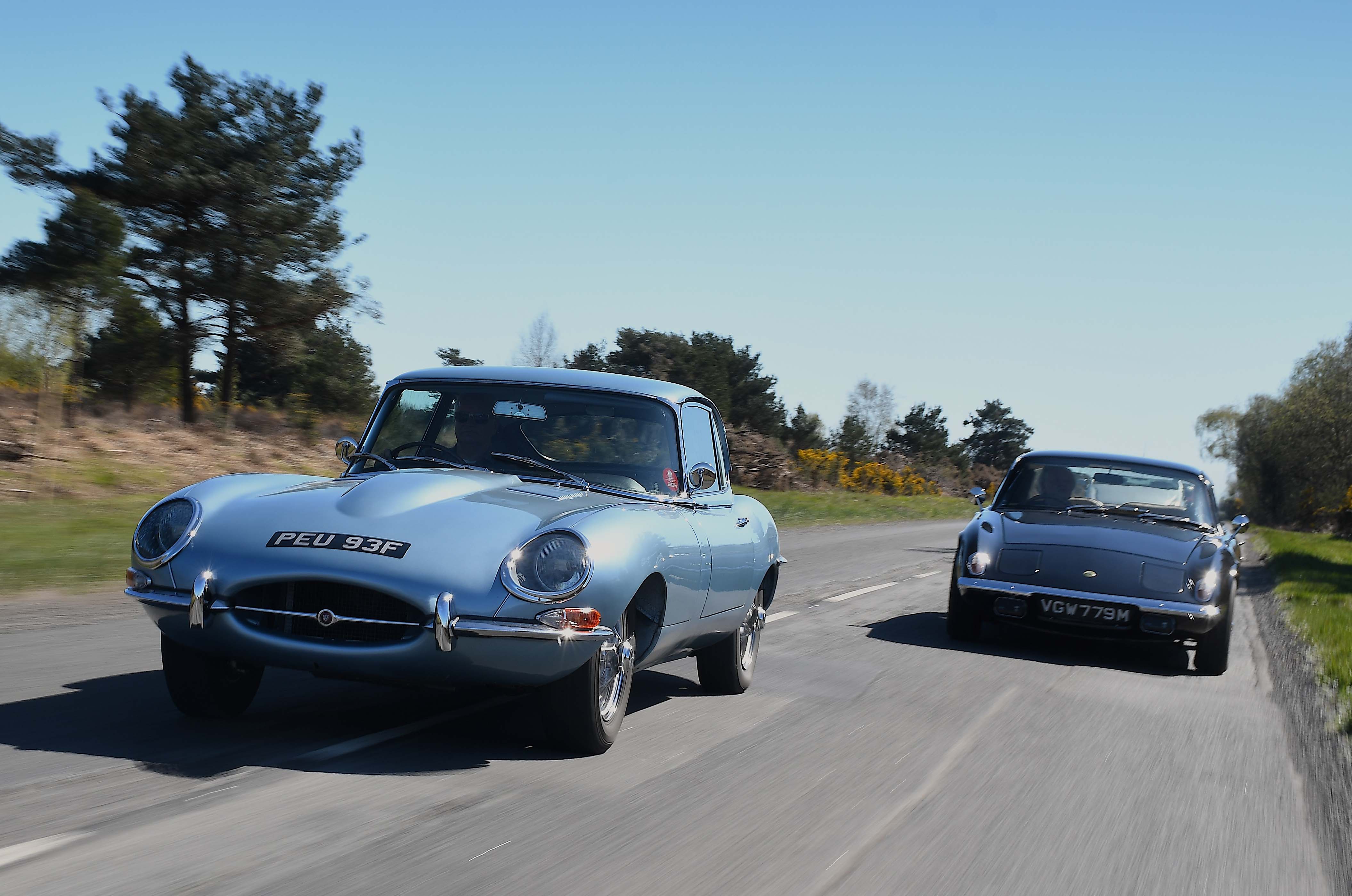
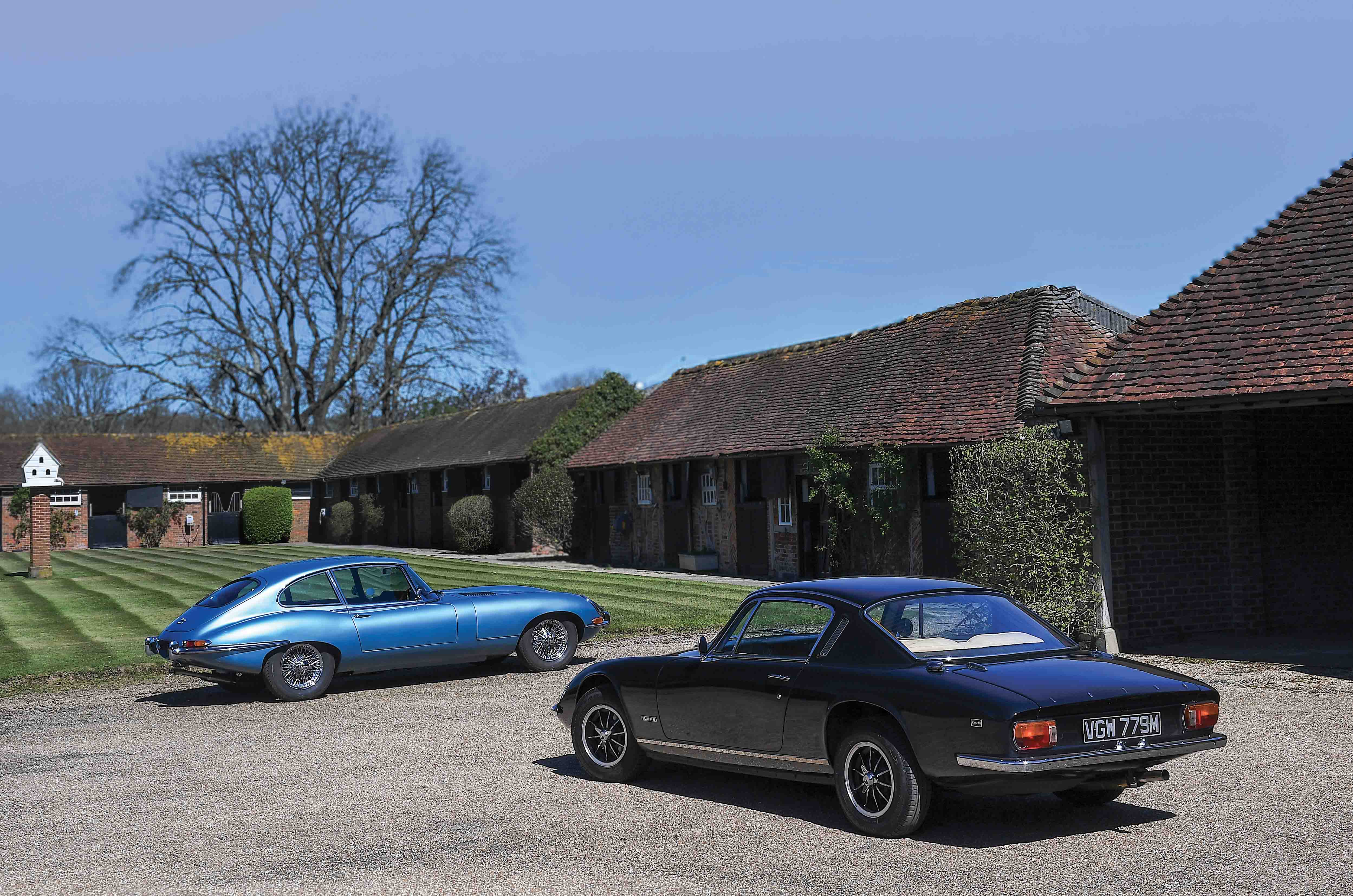
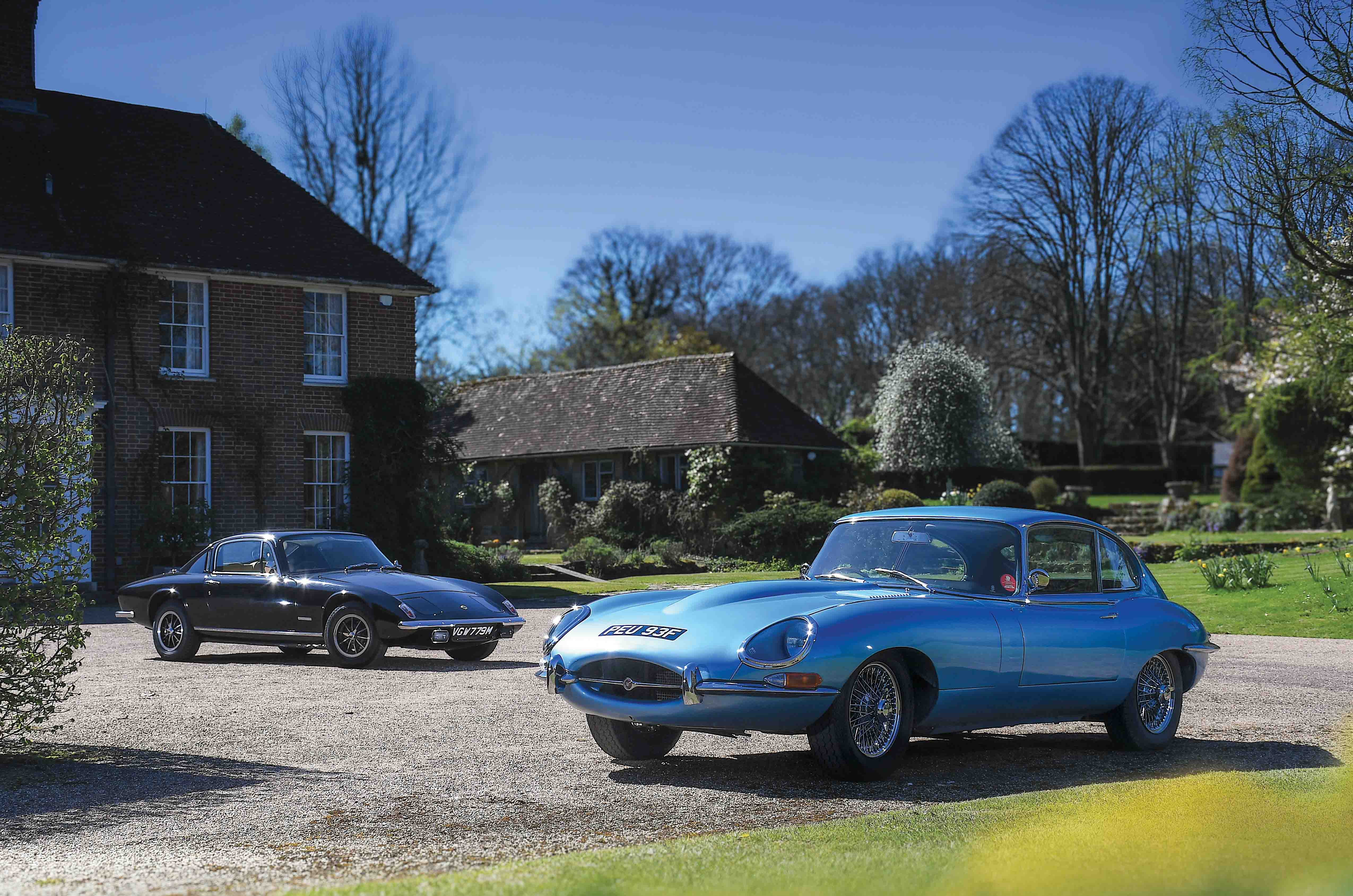
The Jaguar E-type 2+2 (left) and Lotus Elan +2S were once thought of as poor relations in their respective line-ups, but both hold plenty of appeal today

Having visited Browns Lane in c1963 to discuss a possible tie-up, he may even have spotted Jaguar’s E-type 2+2 prototype.

He and Elan +2 stylist Ron Hickman were more interested in the possibility of using the Daimler V8 engine in the big Elan.

It would have emerged a very different sort of car thus equipped.

On just 118bhp, the 125mph Lotus Elan +2 was a slippery marvel of a close-coupled GT that gave very little away to either the E-type or the baby Elan that spawned it.

Classic & Sports Car – Jaguar E-type 2+2 vs Lotus Elan +2S: sports for all
Does adding back seats to a Lotus Elan mean more of a good thing?

The +2 would become the first Lotus to shift 1000 cars in its first year on sale.

Chapman’s hunch was correct: there was pent-up demand for a four-seater Elan from people with young families who did not want to forgo the joys of owning a Lotus.

Motor considered that it set ‘new standards of roadholding and handling’, while being easily the fastest 1600cc car it had tested, hitting 60mph in 8.2 secs and 100mph in 24.2 secs – and it returned 35mpg when cruising at 60mph.

The Twin Cam engine was basically as fitted to the Lotus Cortina, but with revised piston crowns, larger exhaust ports and carburettor jets, and a more efficient exhaust.

Classic & Sports Car – Jaguar E-type 2+2 vs Lotus Elan +2S: sports for all

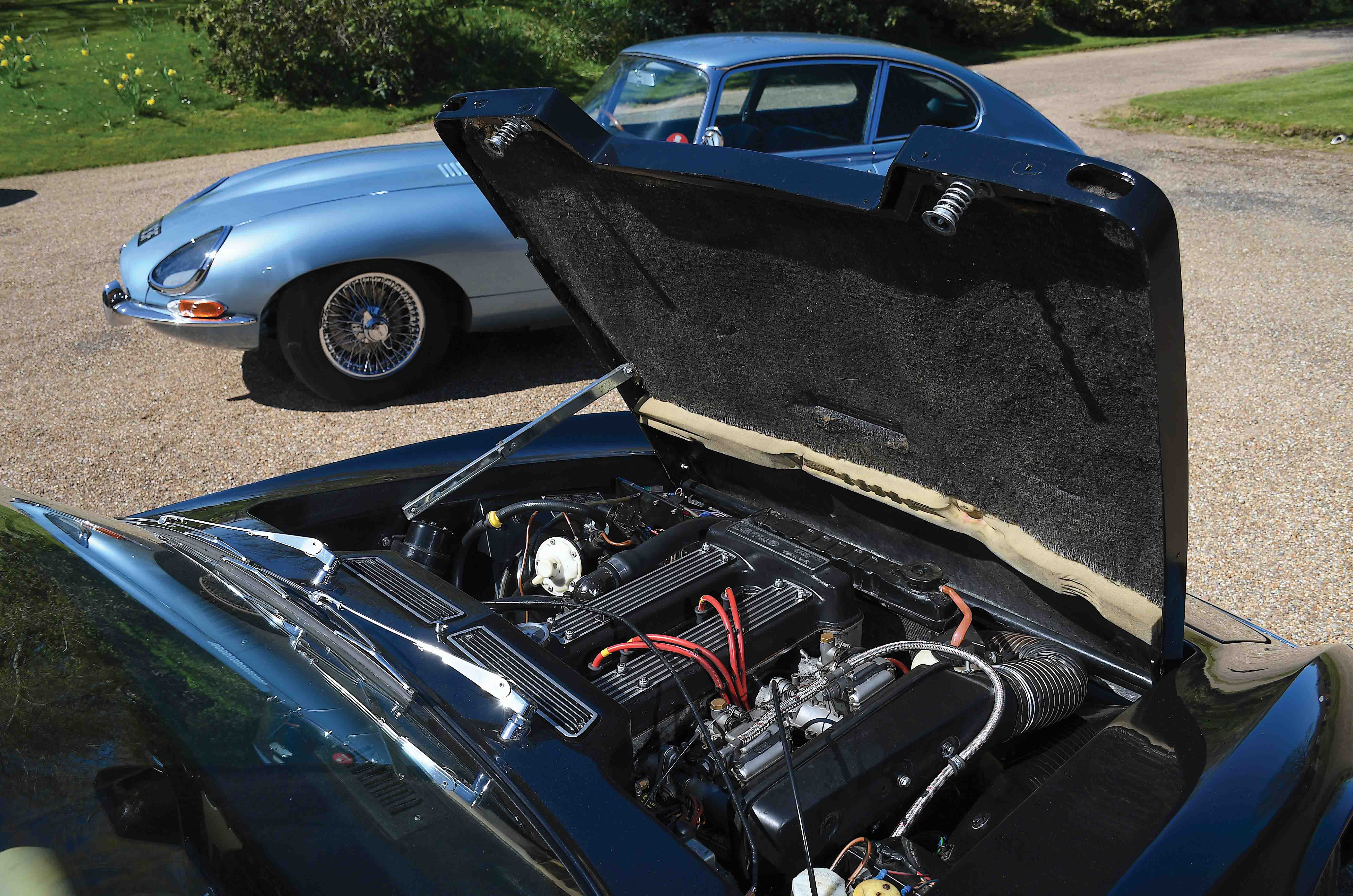
The Lotus Elan +2S 130/5 is powered by a 126bhp version of the Ford-based Twin Cam engine

Within an 8ft wheelbase and just over 14ft in length, this svelte coupé, still available in kit form for those who wanted to save £300, was less of a toy and much more an everyday car than any previous Lotus.

At a pinch, six-footers could sit in the rear seats and the +2 had more luggage room than, for instance, a Chevrolet Camaro.

It signalled strongly Chapman’s intention to move upmarket.

With Lotus planning to go public, the June 1967 +2 (variously codenamed Type 50 and M20) was the first Lotus signed off by committee.

Classic & Sports Car – Jaguar E-type 2+2 vs Lotus Elan +2S: sports for all
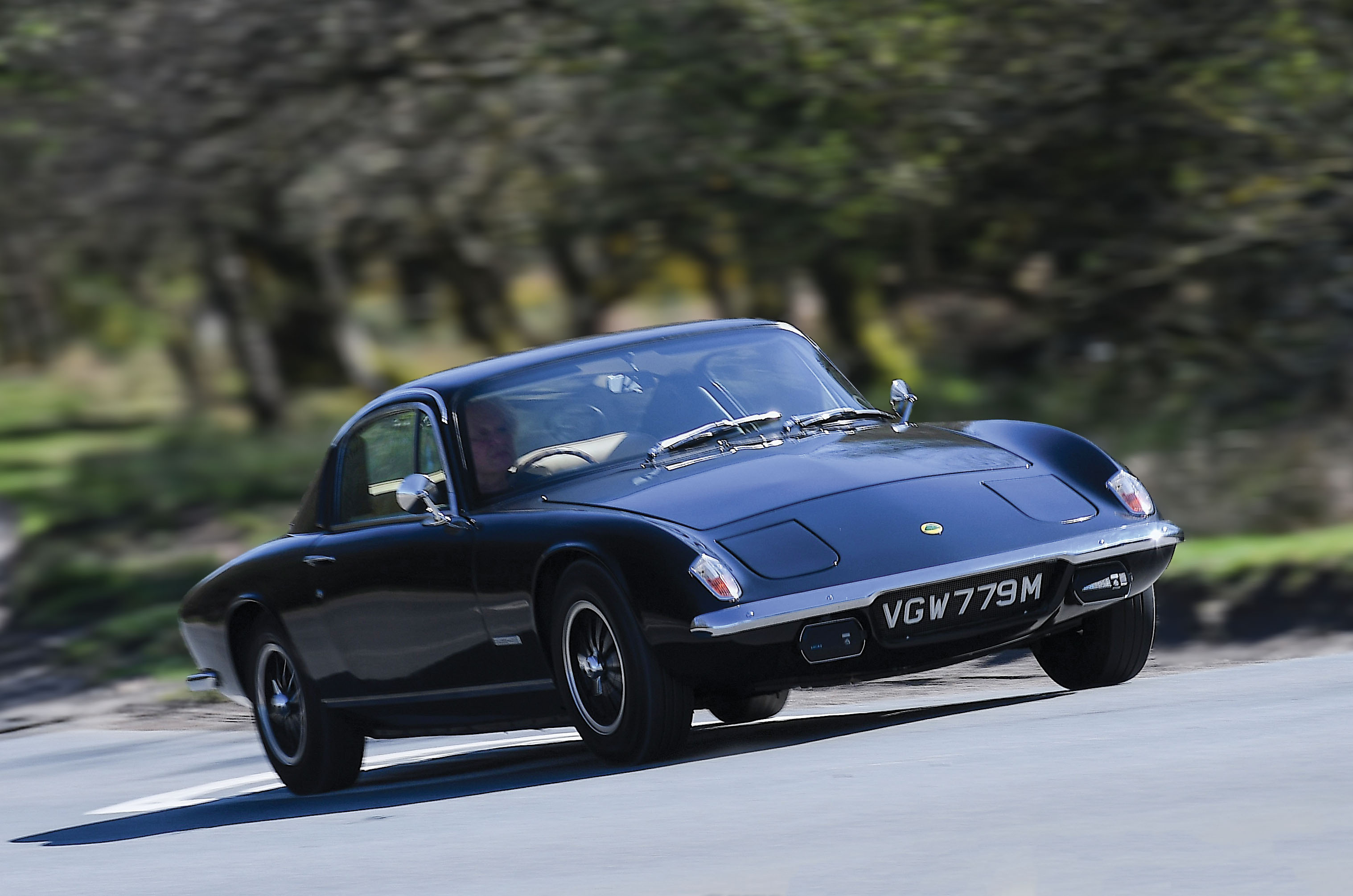
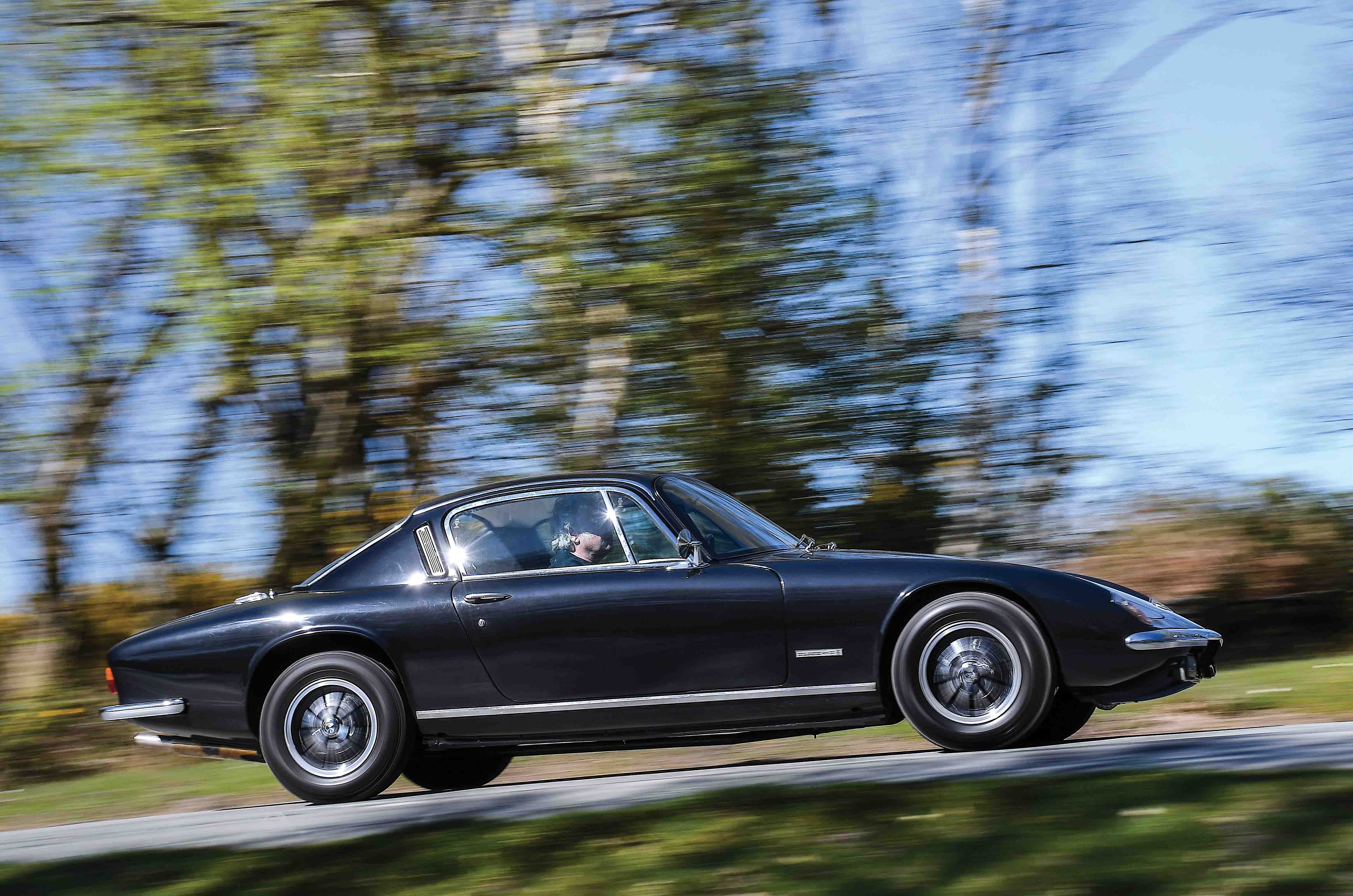
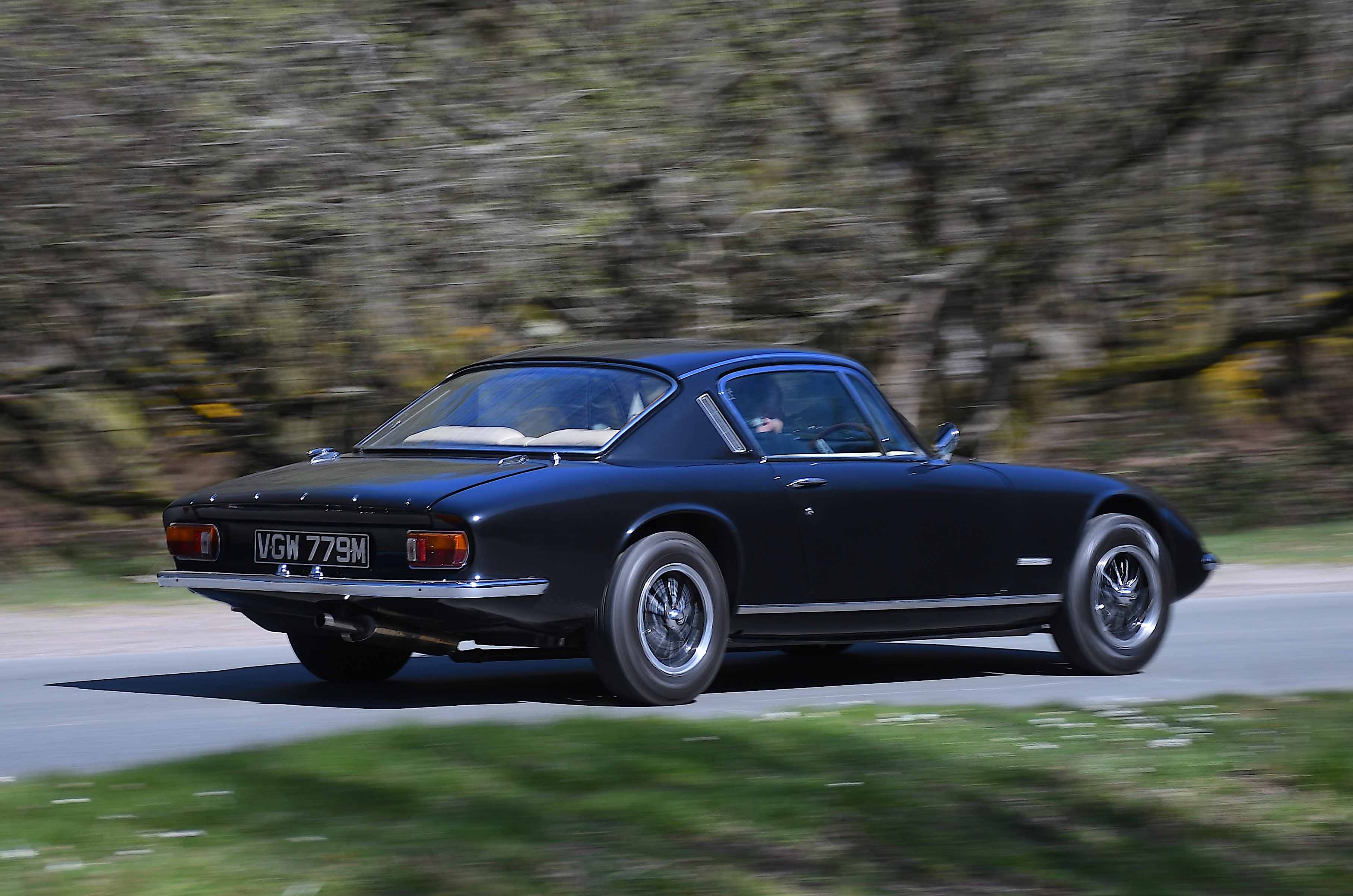
The Lotus Elan +2S has razor-sharp steering and minimal body roll

It was first envisaged as a family of convertible/coupé/estate models sharing a basic body on a 7in-wider, 1ft-longer-wheelbase Lotus Elan backbone chassis.

In total, the +2 was 1ft 11in longer than the baby Elan, but only 1in taller.

Triangulated steel sill reinforcements kept the longer glassfibre body rigid, and the propshaft was longer, the spring and damper rates higher, and the tyres wider.

Classic & Sports Car – Jaguar E-type 2+2 vs Lotus Elan +2S: sports for all
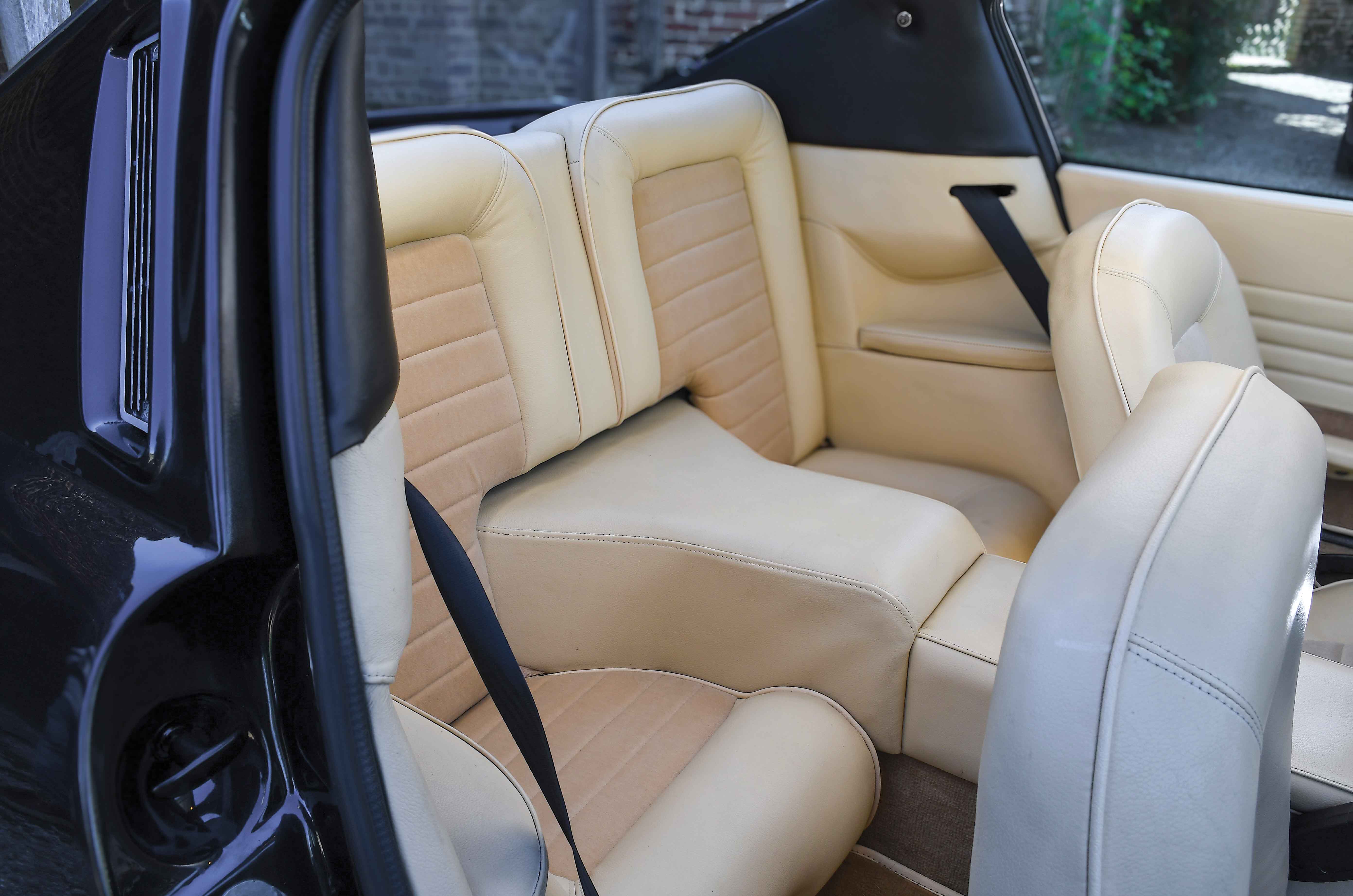
The Lotus Elan +2S has a surprisingly accommodating rear cabin

Lotus made no secret of the fact that the parts bins of the big manufacturers had been plundered with the usual inventiveness.

The windscreen was Ford Consul Capri, the front bumper Anglia and at the rear was a stretched Wolseley Hornet bumper.

The latest Cortina GT collapsible steering column was used (with an adapted Triumph Herald rack), plus a Cortina heater.

Its 2000lb kerbweight was distributed 48% front, 52% rear, and the +2 had a brake servo and electric windows as standard.

The door glasses were double curvature, helping to achieve a 0.30 drag coefficient that was as slippery as anything then in series production.

Classic & Sports Car – Jaguar E-type 2+2 vs Lotus Elan +2S: sports for all
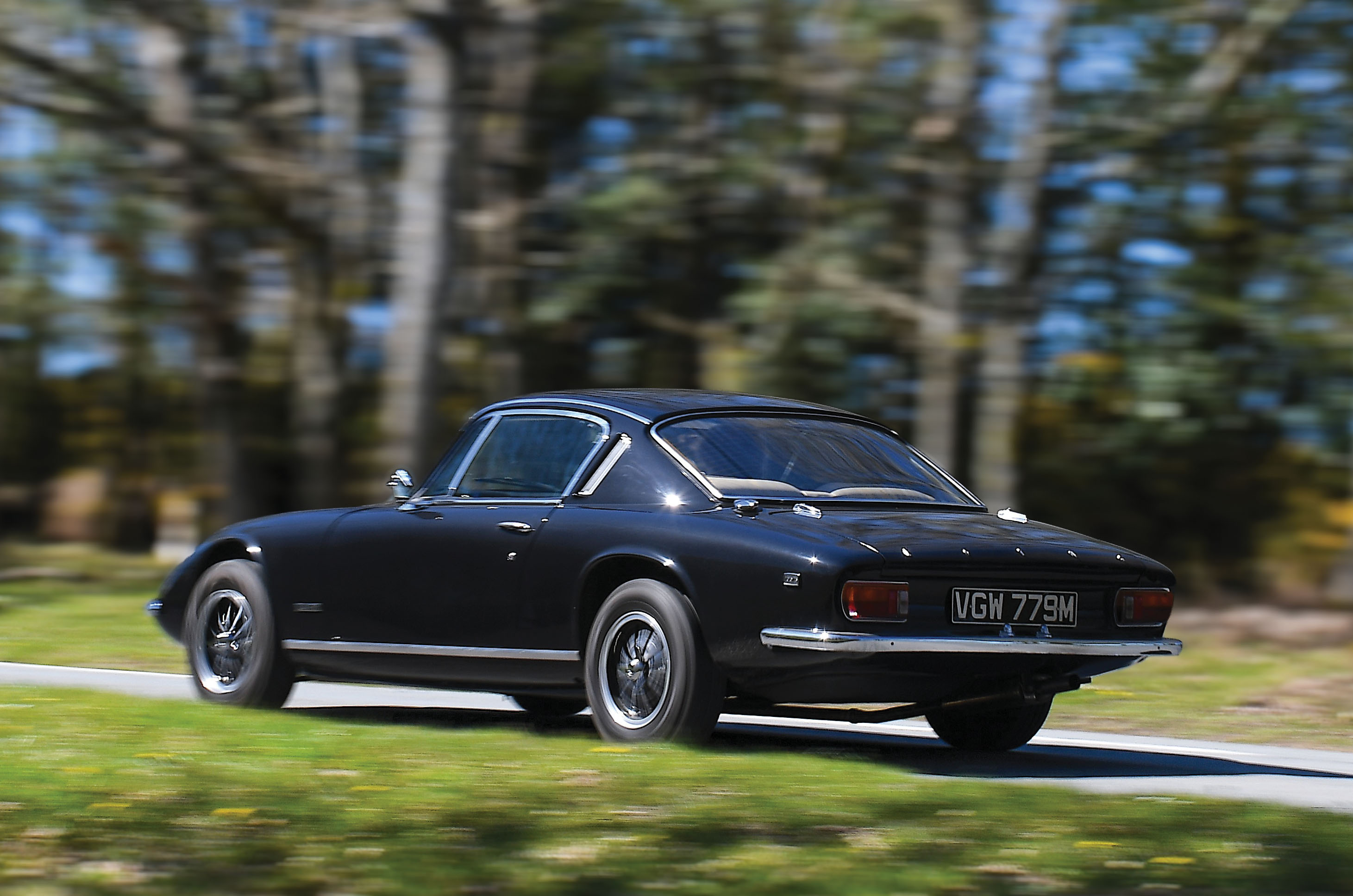
The Lotus Elan +2S has thick rear pillars, which impede the view out the back

Up to December 1969, 1600 +2s were built, then it was dropped in favour of the more luxurious Lotus Elan +2S with an improved interior, extra soundproofing and priced within £100 of the S2 Jaguar E-type 2+2.

Factory-assembled only, this model, running Weber carbs and strengthened rubber doughnuts in the driveshafts, had been available since March that year.

The +2S 130 Big Valve Elans, identifiable by their metallic silver roofs, would break cover in February ’71, with a five-speed option made available around motor-show time the following year.

Classic & Sports Car – Jaguar E-type 2+2 vs Lotus Elan +2S: sports for all
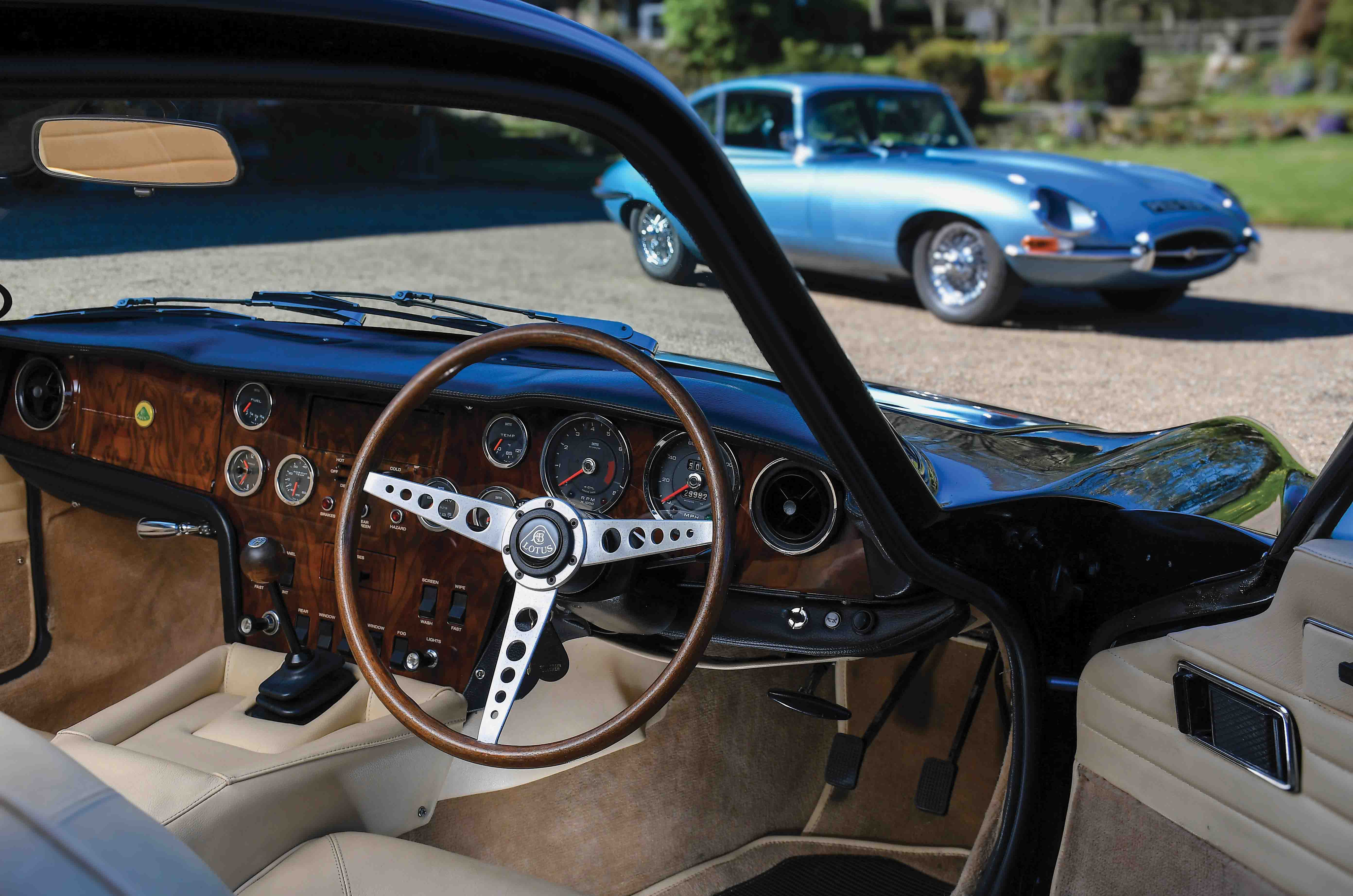
The driver sits low in the Lotus Elan +2S, facing a smart walnut dashboard

Incorporating Austin Maxi gear clusters in a Lotus casing, the gearbox had a higher top gear (it dropped revs by 1400rpm at maximum speed) and a lower first.

The ‘130’ nomenclature alluded to a rounding up of the advertised 126bhp at 6500rpm, achieved by way of 1.6in inlet and 1.32in exhaust valves, high-lift ‘D’ camshafts and a 10.3:1 compression ratio.

Tony Rudd’s attentions extracted 81bhp per litre and came with a beefed-up drivetrain featuring stronger driveshafts with Rotoflex couplings and a reinforced final-drive casing.

Collectively, these models would account for another 3000 or so sales through to the end of 1974; whichever way you slice it, the Lotus Elan is a much rarer car than the 2+2 Jaguar E-type.

Classic & Sports Car – Jaguar E-type 2+2 vs Lotus Elan +2S: sports for all

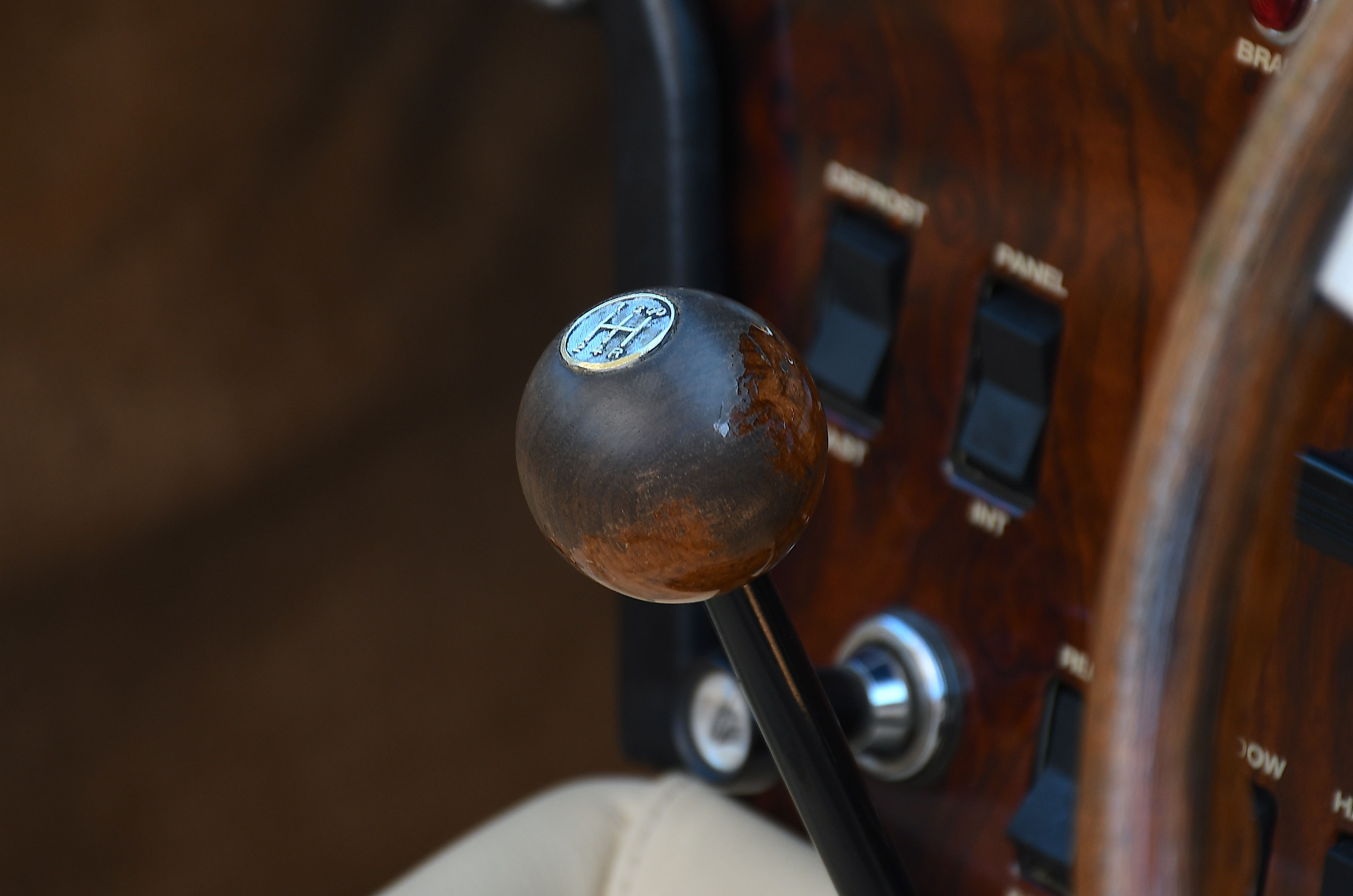
The Lotus Elan +2S has a sweet gearshift

The 2+2 may be the poor relation of the E-type family, but it is still very much one of the clan and a beautiful car by any normal measure.

That is particularly the case in light metallic blue, as here, this example bought as an unfinished project from a deceased estate five years ago by current keeper John Love.

John had specifically wanted a 2+2 to accommodate his 6ft 2in-tall wife – “I’m the short one in our family!” – and a large dog.

The latter has never been anywhere near the car to date, although his kids, and the occasional pal, have braved the rear bench for short outings.

Classic & Sports Car – Jaguar E-type 2+2 vs Lotus Elan +2S: sports for all

The Jaguar E-type 2+2’s ride is controlled but well cushioned on broken roads

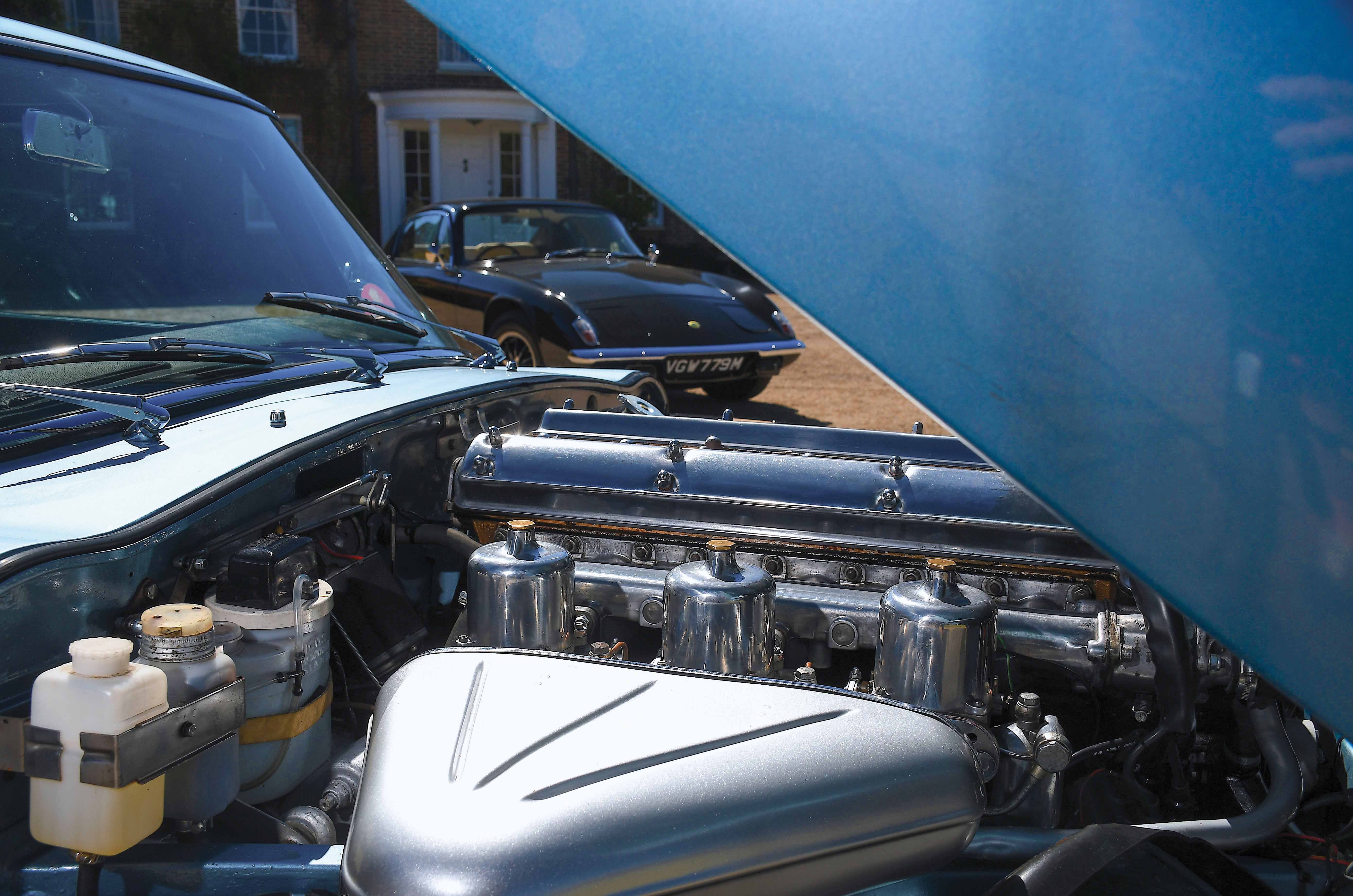
Half of the Jaguar E-type appears to be bonnet, which tips forward to view the magnificent XK engine, a handsome old friend.

It comes to life on command with a familiarly silky rumble, all polished cam boxes, enamelled exhaust headers and sucking triple SU HD8s, sitting in its nest of square-section subframe tubing.

Once over the broad sill, folding yourself in half, you realise that the point about the 2+2 was not so much the rear seats, but releasing head and elbow space for those in the front, where there is legroom to burn and saloon-car-type leather chairs for full-sized adults.

With the back seats folded, there really is a lot of space for luggage – or indeed a dog.

Classic & Sports Car – Jaguar E-type 2+2 vs Lotus Elan +2S: sports for all

This Jaguar E-type 2+2’s sonorous XK ‘six’ breathes through hotter camshafts and bigger valves

The driving position is good, if a little upright, and the wood-rimmed steering wheel larger than it needs to be, given how light and sensitive is the control.

The Jaguar E-type is very stable in a straight line and very responsive on lock, with a touch of understeer that is easily cancelled out with throttle.

You learn to caress it lightly in the hands and enjoy the feel and feedback rather than fight it.

The gears and clutch need a bit more effort, but slick changes mean full use of the clutch travel, whereas the brakes only need to be massaged.

Classic & Sports Car – Jaguar E-type 2+2 vs Lotus Elan +2S: sports for all

The Jaguar E-type 2+2’s back bench folds to make a decent load space

And then there is the ride. With its deep-sidewalled tyres and ample, well-controlled suspension travel (double wishbones up front, four coils at the back), modern potholes hold no fears for the E-type: it has decent ground clearance and doesn’t bounce or jolt its occupants, but feels solid and of a piece at all times.

Rough ground is traversed serenely, with merely a remote patter of the tyres and some slight reaction from the steering wheel.

With hotter cams and bigger valves, this E-type 2+2 goes well, storming through the gears in a rousing crescendo of power yet without any loss of torque or low-speed drivability.

Classic & Sports Car – Jaguar E-type 2+2 vs Lotus Elan +2S: sports for all

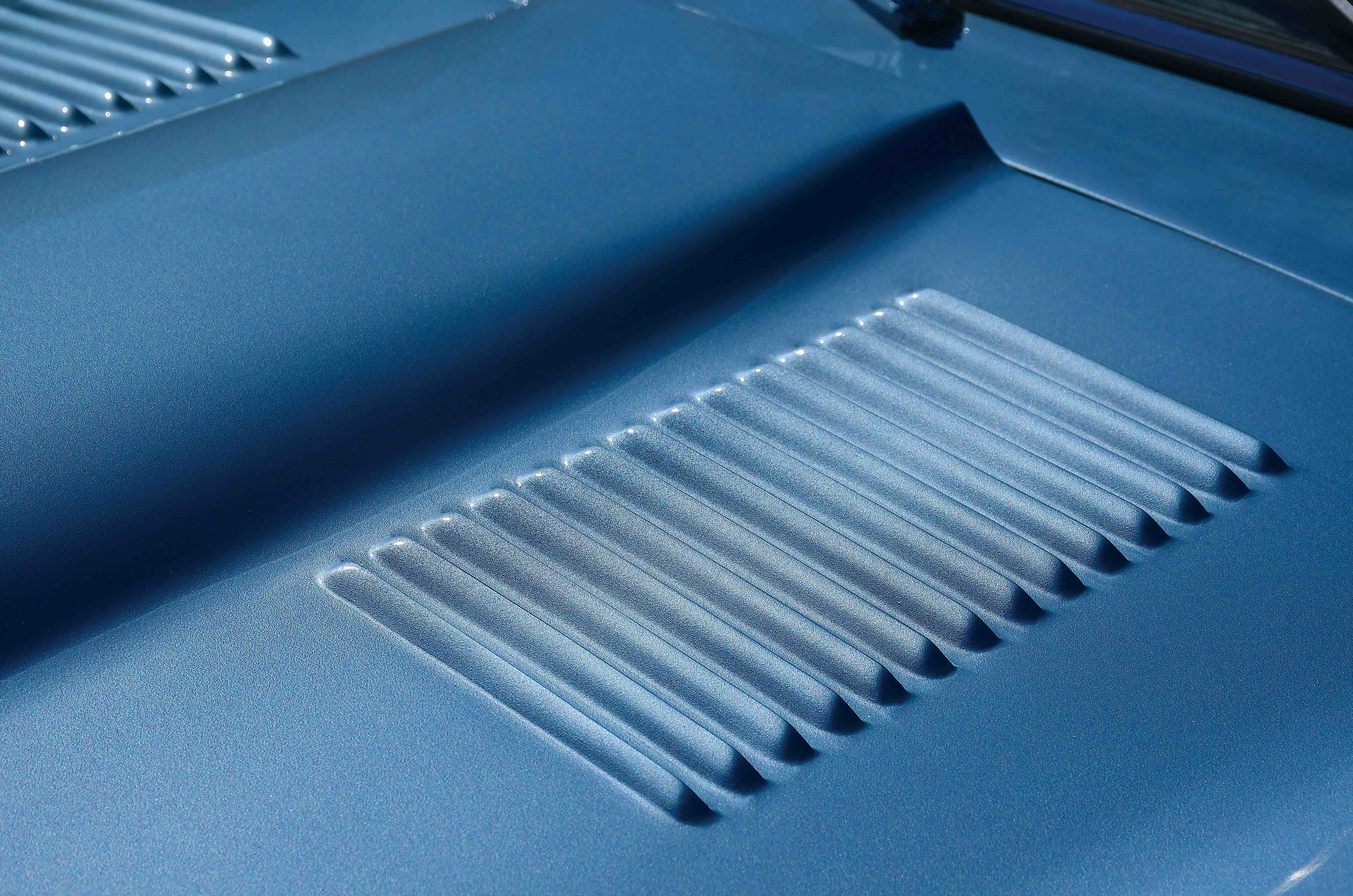
The E-type 2+2’s distinctive bonnet louvres

It feels as if it would happily pull a couple more gears beyond fourth, a ratio in which it will throttle down to a jogging pace and then pull seamlessly away.

But at 4000rpm in the intermediates it still delivers a thrilling degree of raw thrust: the tail squats, the bulging nose lifts and the road is yours.

Then again, a well-driven Lotus Elan +2 owes no piece of road to almost any car: many considered Hethel’s bigger Elan handled even more sweetly than the baby one.

I consider it a prettier car, for sure, in many ways one of the most beautiful British coupés of the 1960s.

Classic & Sports Car – Jaguar E-type 2+2 vs Lotus Elan +2S: sports for all

The Lotus Elan +2S (right) retains a more compact profile than the Jaguar E-type 2+2, and it’s only 1in taller than its two-seater sibling

Oli Heath’s five-speed Lotus Elan +2S 130/5 was brought along by his father, Peter.

Inside, you are lower-slung, almost skimming the ground, wearing the car rather than merely sitting in it.

Like the Jaguar, the last couple of feet of nose disappear and the window sills feel high, with poor three-quarter vision due to the chunky roof pillars.

On the plus side, the turning circle is tight, reverse is easily found and the clutch is light – civilising factors all in a sports car.

Classic & Sports Car – Jaguar E-type 2+2 vs Lotus Elan +2S: sports for all

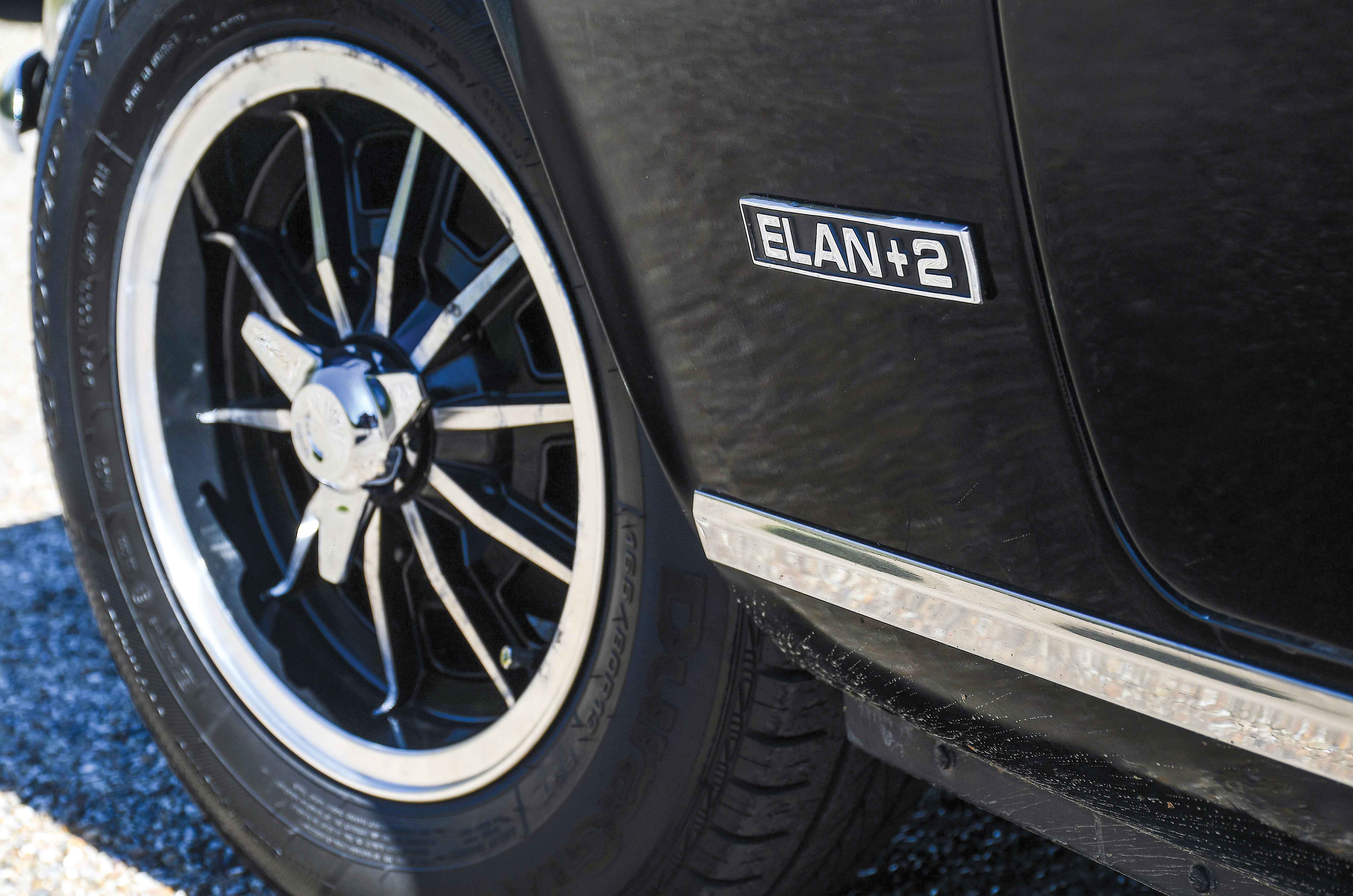
The Lotus Elan +2S has a wheelbase that is a full 12in longer than the two-seater’s

Driveshaft surge remains, but you learn to work around it.

With seven instruments and upwards of 15 switches, the walnut dashboard of the Lotus Elan appears contrived to impress Jaguar owners.

Other than the fascia, the cabin materials are entirely synthetic, but the rear seats look marginally more inviting than the Jaguar’s and, compared with the E-type’s oversized foot pedals, the Elan’s are dainty postage stamps.

Out on the road, steering the Elan – if you will permit me the cliché – really does seem to be more of a thought process than a physical action.

Classic & Sports Car – Jaguar E-type 2+2 vs Lotus Elan +2S: sports for all

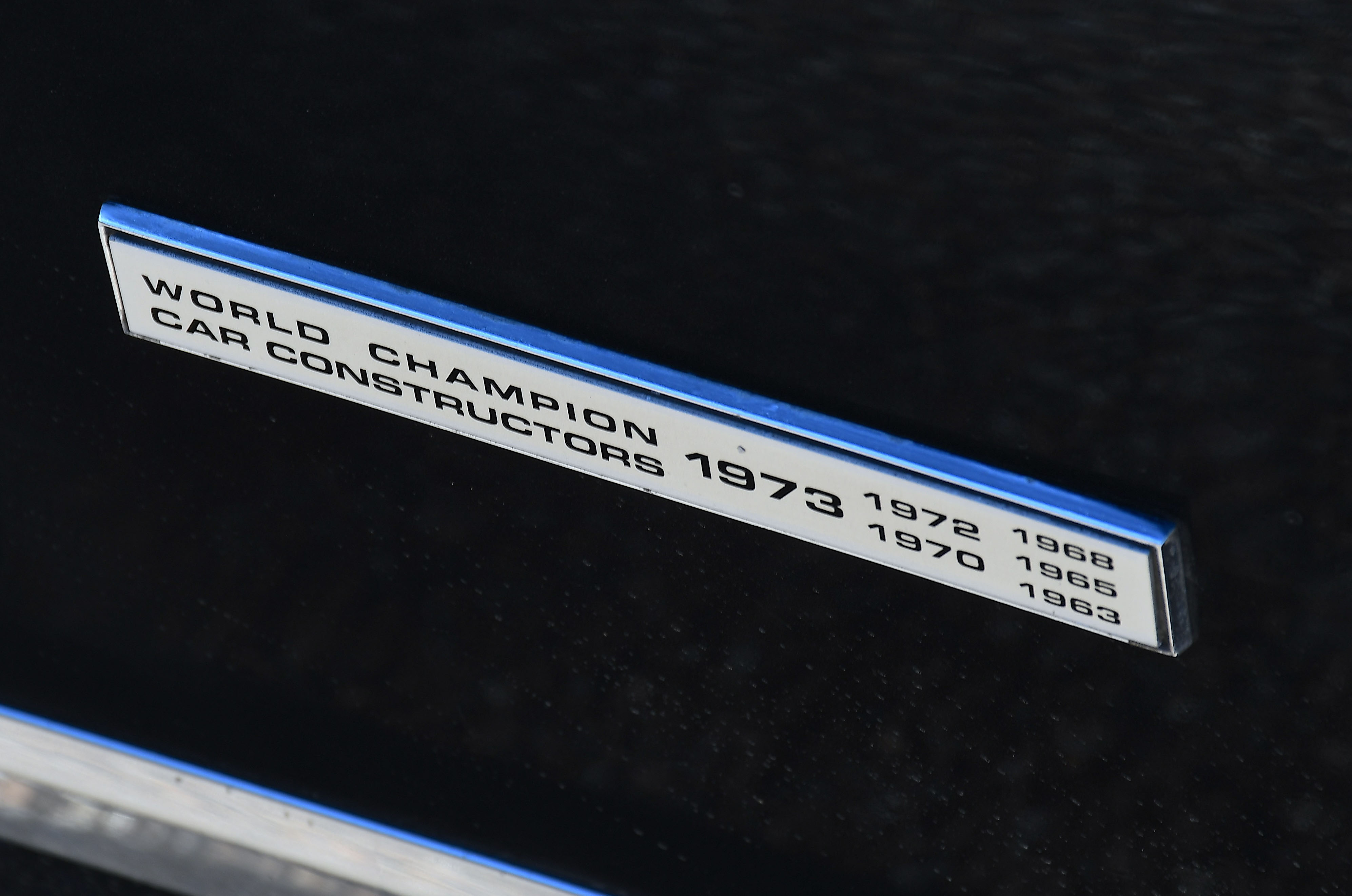
The Lotus Elan +2S has a plaque to celebrate the marque’s Formula One triumphs

The sense of cornering forces building is not relatable to body roll, protesting tyres or loading of the steering, simply because these characteristics are not present – or at least delayed to a degree you would never discover on the road.

The progressive, well-balanced, four-wheel disc brakes achieve the same standard, while the light footprint of the Elan’s supple ride, on those skinny tyres, is almost up there with the Jaguar in the comfort stakes.

In pure figures the Lotus Elan is not too far behind the Jaguar in a straight line, only trailing significantly beyond about 100mph.

Classic & Sports Car – Jaguar E-type 2+2 vs Lotus Elan +2S: sports for all

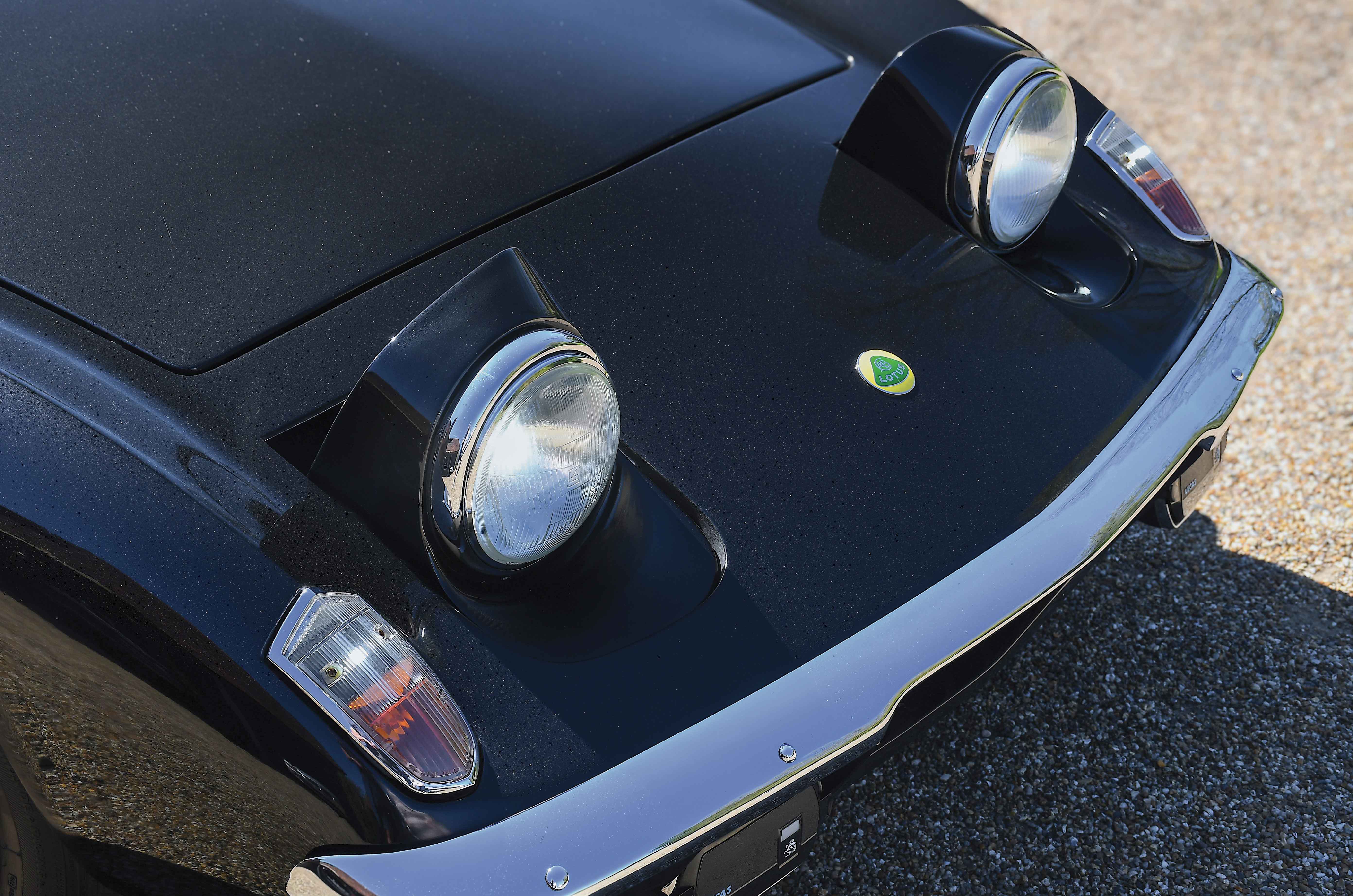
The Lotus Elan +2S has pop-up headlights and a Ford Anglia front bumper

But you have, naturally, to be much freer in your exploitation of revs and use of the gears.

The Twin Cam, sluicing cheerfully through its big-throated Webers, is tunefully aggressive in the way it pulls and revs out, but it is also surprisingly tractable.

The slightly notchy change has a narrow gate, but with familiarity is precise and light, with ratios well placed to extract the best from an engine that will spin freely, smoothly and noisily to 7000rpm.

Classic & Sports Car – Jaguar E-type 2+2 vs Lotus Elan +2S: sports for all

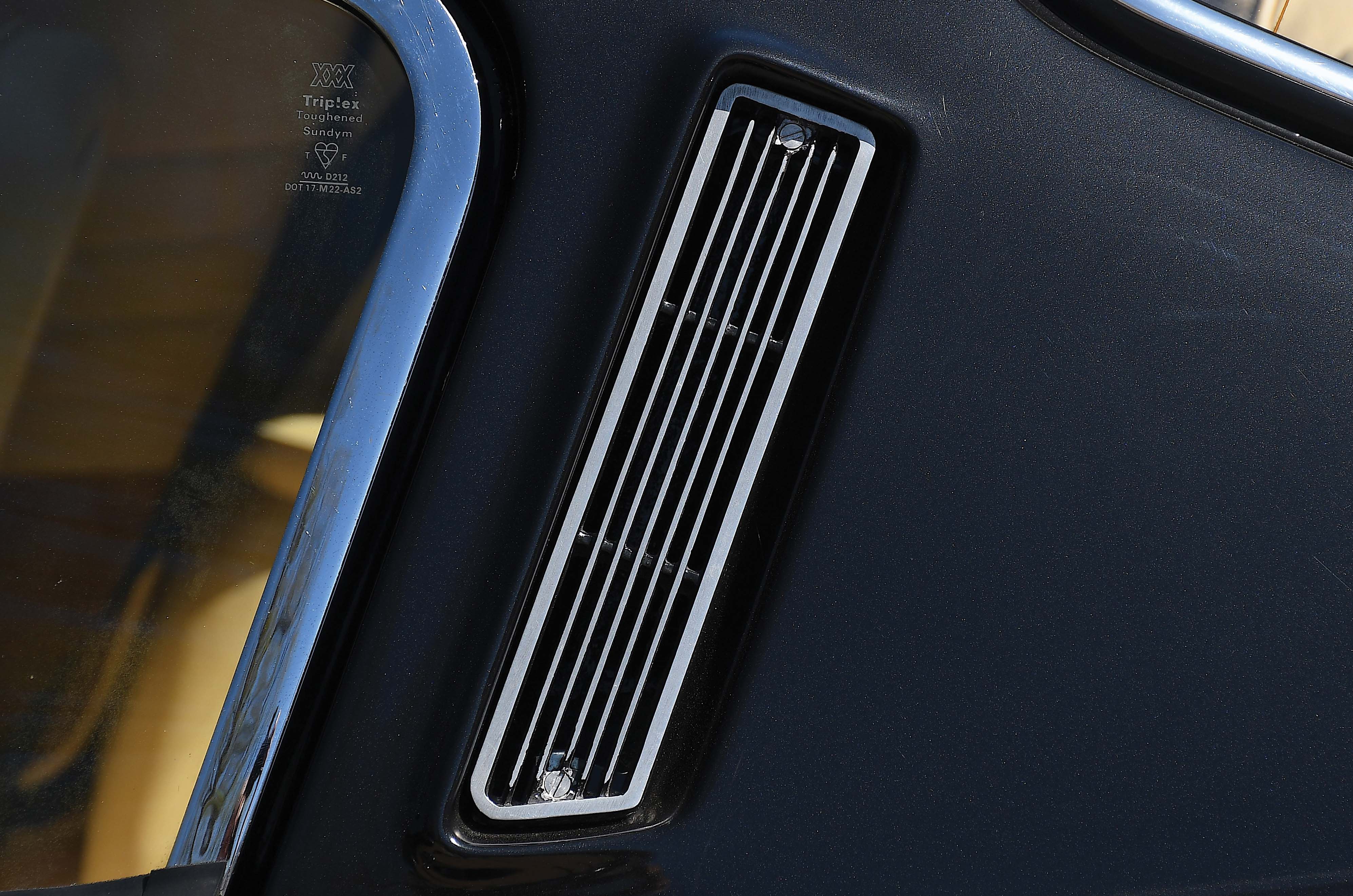
The Lotus Elan +2S 130/5’s stylish cabin vent

The fact that these two coupés are nominal 2+2s is incidental to the conclusion of this story.

My feeling is that anyone who could afford either car 60 years ago had the wherewithal to buy a full four-seater as back-up, even if it was a secondhand Morris Minor.

Today, the two appear on the enthusiast’s radar as inexpensive entry points to the world of Lotus Elans and Jaguar E-types, although the wind is taken out of the sails of that argument when values of the more desirable two-seater versions begin to falter: the ‘bargains’, sadly, have the same expensive tastes in specialists’ chargeable hours and parts.

Classic & Sports Car – Jaguar E-type 2+2 vs Lotus Elan +2S: sports for all

‘A well-driven +2 owes no piece of road to almost any car: many considered it handled more sweetly than the baby Elan’

But, on balance and with many caveats – including acknowledging the fact I probably don’t have the patience to own almost any sort of Lotus – I’d probably choose the Elan.

There is much to admire about this far from unloved but moderately sidelined model.

I like the shape, the uncompromising driver appeal, the fact that it achieves so much with so little – and the sheer ingenuity behind it that was uniquely Lotus, perhaps uniquely English.

Images: John Bradshaw

Thanks to: Simon Crockford of Stradale Icons for finding both cars and supplying the location


Factfiles

Classic & Sports Car – Jaguar E-type 2+2 vs Lotus Elan +2S: sports for all

Jaguar E-type S1 4.2 2+2

  • Sold/number built 1966-’71/10,924
  • Construction steel monocoque with tubular front subframe
  • Engine iron-block, alloy-head, dohc 4235cc ‘six’, triple SU carburettors
  • Max power 265bhp @ 5400rpm
  • Max torque 283lb ft @ 4000rpm
  • Transmission four-speed manual, RWD
  • Suspension independent, at front by wishbones, torsion bars, telescopic dampers rear twin coil-overs, lower wishbones, radius arms; anti-roll bar f/r
  • Steering rack and pinion
  • Brakes discs
  • Length 15ft 4½in (4684mm)
  • Width 5ft 5¼in (1656mm)
  • Height 4ft 2in (1270mm)
  • Wheelbase 8ft 9in (2670mm)
  • Weight 2744lb (1245kg)
  • 0-60mph 7.4 secs
  • Top speed 139mph
  • Mpg 18-22
  • Price new £2245
  • Price now £50,000 *


Lotus Elan +2S 130/5

  • Sold/number built 1967-’74/5244 (all)
  • Construction steel backbone chassis, glassfibre body
  • Engine iron-block, alloy-head, dohc 1558cc ‘four’, twin Dell’Orto carburettors
  • Max power 126bhp @ 6500rpm
  • Max torque 113lb ft @ 5500rpm
  • Transmission five-speed manual, RWD
  • Suspension independent, at front by wishbones, anti-roll bar rear struts, lower wishbones; coil springs, telescopic dampers f/r
  • Steering rack and pinion
  • Brakes discs
  • Length 14ft (4267mm)
  • Width 5ft 3in (1600mm)
  • Height 3ft 11in (1164mm)
  • Wheelbase 8ft (2438mm)
  • Weight 2086lb (946kg)
  • 0-60mph 7.7 secs
  • Top speed 121mph
  • Mpg 21-26
  • Price new £2626
  • Price now £25,000*

*Prices correct at date of original publication


Enjoy more of the world’s best classic car content every month when you subscribe to C&SC – get our latest deals here


READ MORE

Triumph Spitfire vs MGB vs Lotus Elan: a new dawn

Jaguar E-type V12: return of the silent sports car

Ferrari Mondial vs Porsche 911 vs Alpine GTA vs Lotus Excel: 2+2 equals phwoar