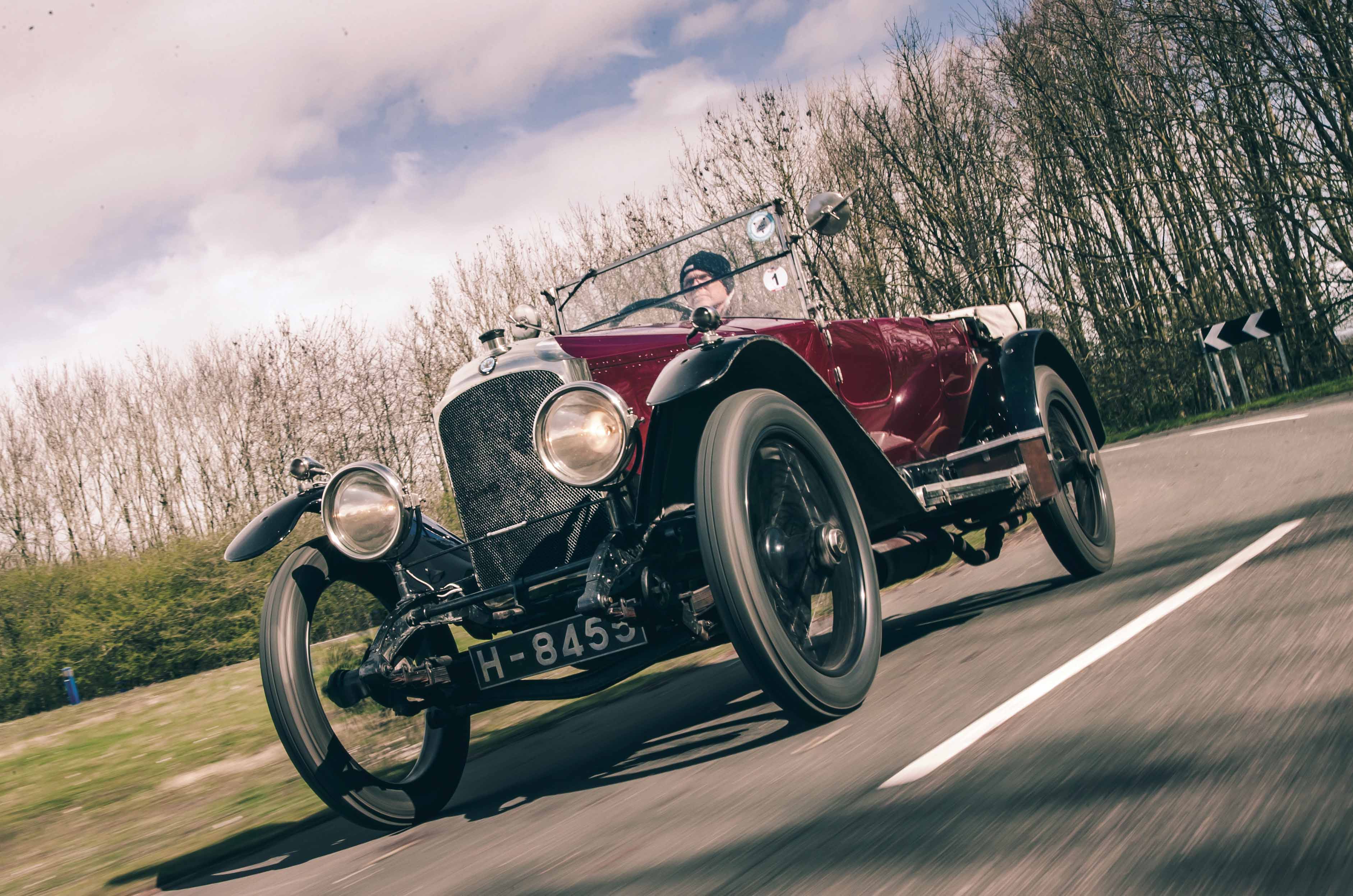
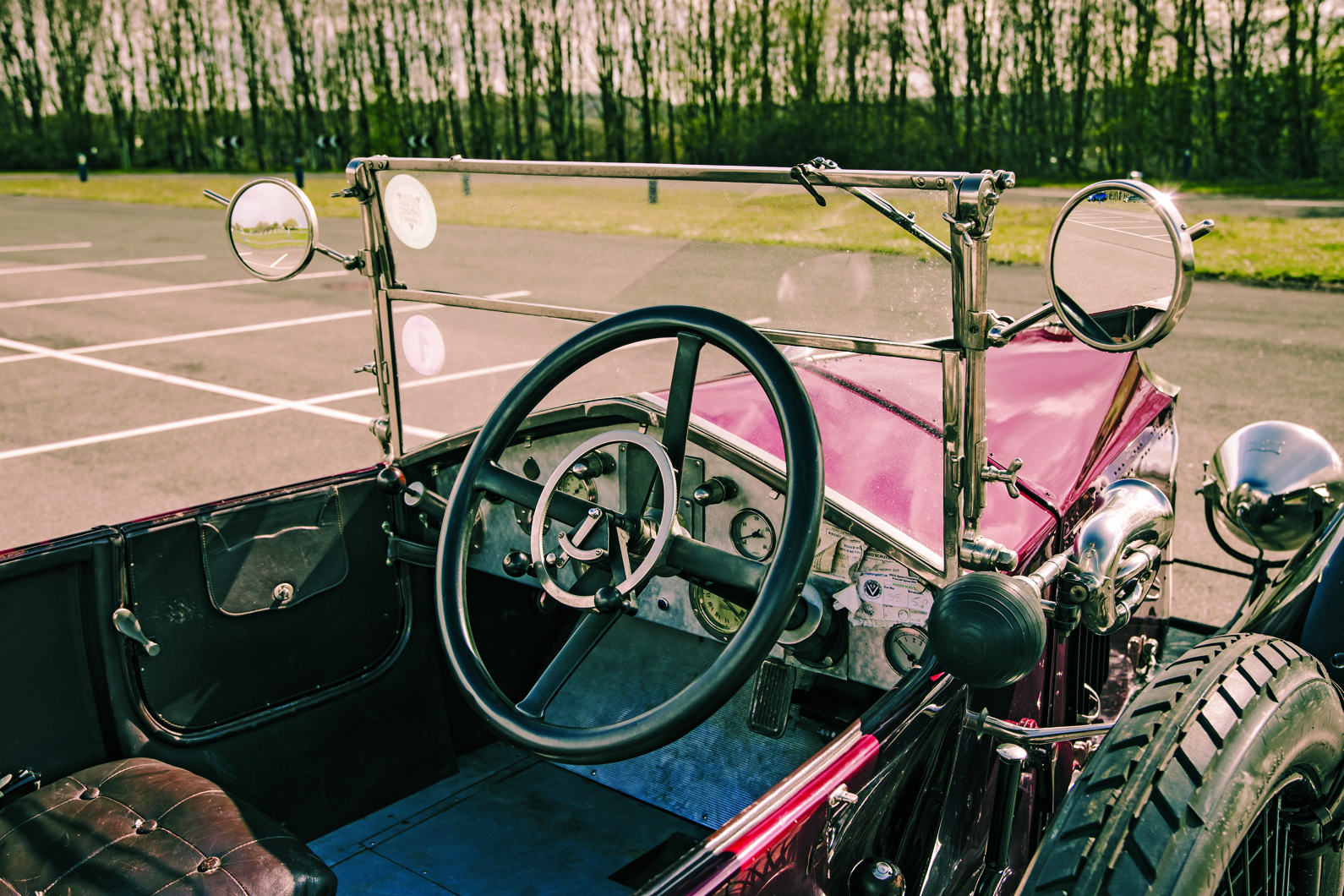
So it’s no surprise when Tania declares it “the finest of sporting cars”, and makes the valid point that the VSCC might not have existed today, had it not been for its early association with this model: “For the amateur racing driver in the 1920s, it was a really easy car to use – and that’s why so many survive now.”
Peter adds: “This was one of the earliest sporting cars… people took note if you were driving one. It gave you presence.”
Stephen agrees, but is also intrigued to find that the Vauxhall made our original list: “There are other cars that are much better known, but if you look at its capabilities, the 30-98 is far better than many of them.”
But it’s Steve who perhaps best sums up the Vauxhall 30-98’s influence, recalling his former colleague and fellow legendary journalist Ronald ‘Steady’ Barker referring to it as: “The greatest car in the world at the time for its comfort, speed, handling, reliability and capability on the track – a great all-rounder.”
Thanks to: Vauxhall 30-98 owner Tony Lees
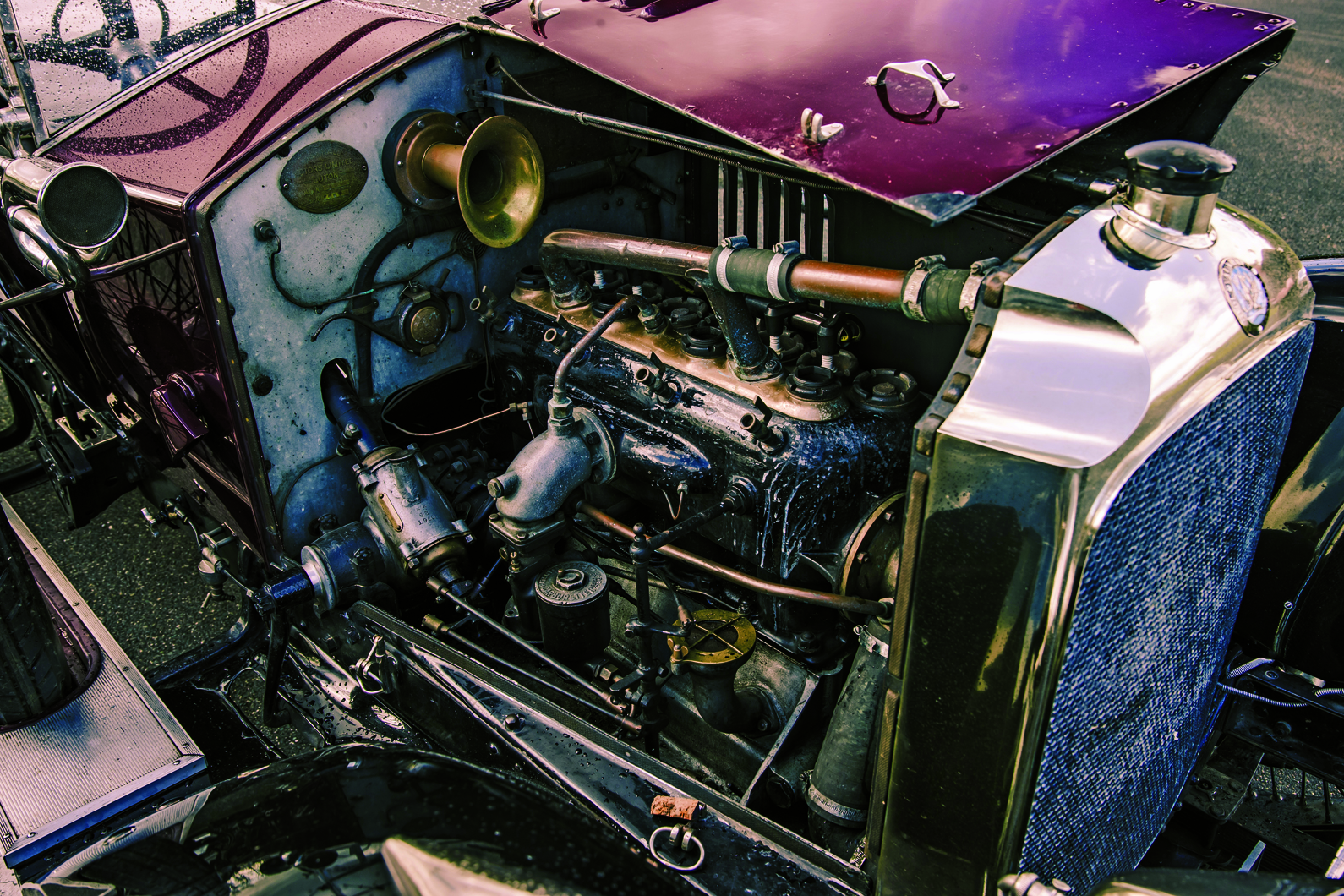
The Vauxhall 30-98’s sidevalve big ‘four’ later gained overhead valves
1910s shortlist
- Vauxhall C-10 ‘Prince Henry’ Arguably Britain’s first production sports car, the 1910 3-litre, four-cylinder ‘Prince Henry’ was a genuine 60mph machine that looked more vintage than Edwardian in design.
- Cadillac Type 51 Launched in 1915, the Type 51 was Cadillac’s first V8-engined car, based around General Motors’ A platform with a 10ft 2in wheelbase. It was also the company’s first LHD model.
- Austro-Daimler ‘Prince Henry’ Vying with Vauxhall’s C-10 as the first production sports car, the Austro-Daimler 27/80 was designed by Ferdinand Porsche and powered by a 5.7-litre ‘four’.
- Dodge 30/35 Revealed in 1914, the 30/35 was Dodge’s first motor car and used revolutionary, all-steel body construction. It was equipped with 12V electronics and an electric starter.
- Hispano-Suiza Type 15 Another claimant for the ‘world’s first sports car’ title, Hispano-Suiza’s 1912 T-15 was a lightweight racer powered by a 3.6-litre engine and capable of 75mph.
- Morris Oxford/Cowley William Morris’ breakthrough into mass production, the 1913 ‘Bullnose’ Morris was a small and affordable two-seat tourer plus dickey with a 1018cc White & Poppe ‘four’.
- Packard Twin Six Introduced in 1915, the Packard Twin Six was the world’s first V12 production car, renowned for its engine’s smoothness, silent running and 88bhp output.
- Peugeot Bébé Designed by Ettore Bugatti, the 1913 Peugeot Bébé was a small, practical and economical two-seater powered by an 855cc engine and capable of 38mph. More than 3000 were produced.
- Stutz Bearcat Introduced in 1912, the Stutz Bearcat became a performance legend in America. With pared-back bodywork and a 60hp, 6.4-litre engine, the model won 25 out of 30 races it entered in its launch year.
Austin Seven: 1920s finalist
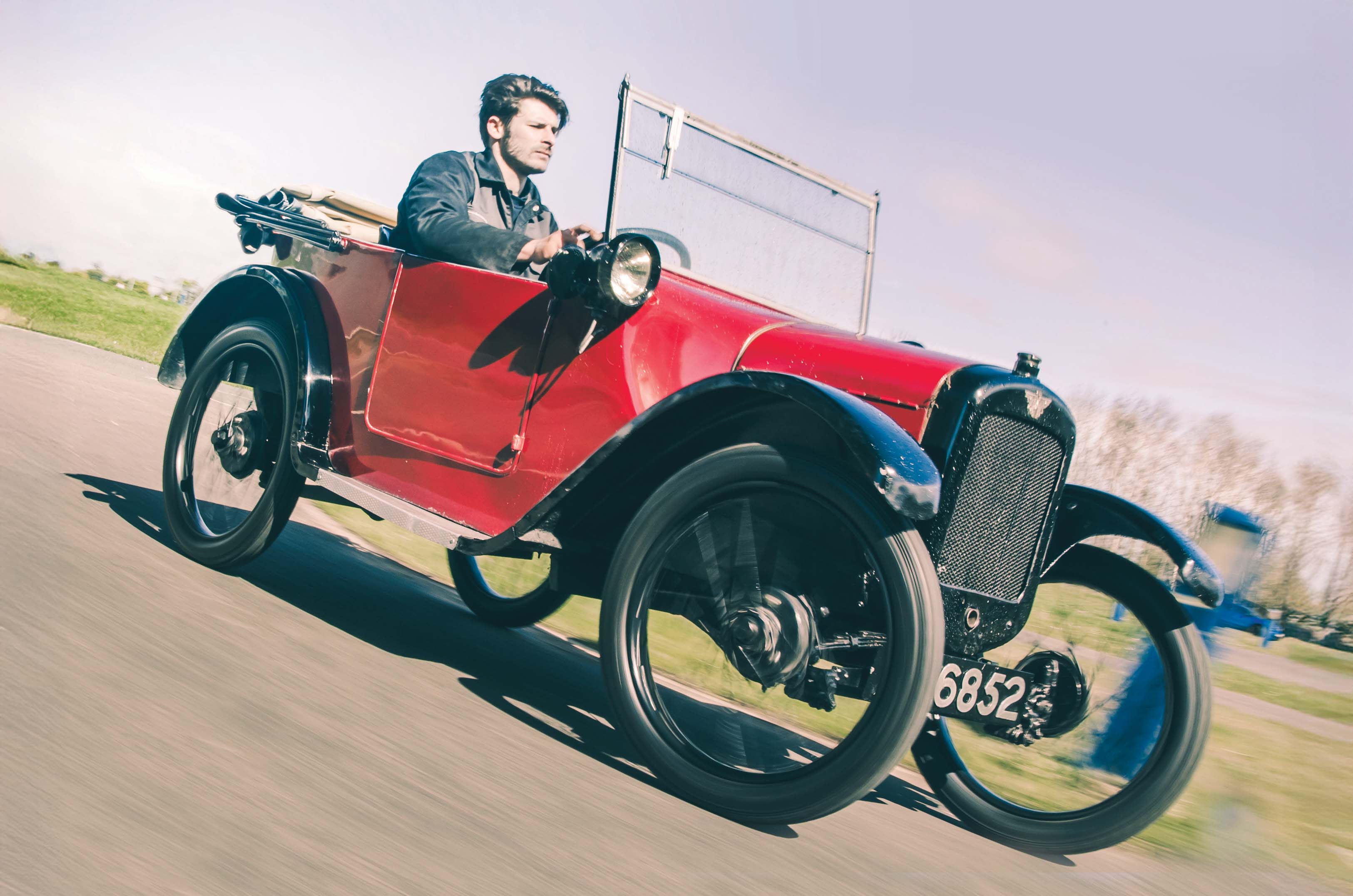
The back-to-basics Austin Seven democratised British motoring
The phrase ‘punching above its weight’ has never been more apt than when describing the Austin Seven.
In our judges’ view, this 9ft 2in, 840lb mouse of a car’s influence reached beyond that of a Bentley 3 Litre, Bugatti Type 35 and Lancia Lambda.
As Peter comments, the bicycle started spreading the gene pool, but the humble Seven proliferated it even further.
And yet the diminutive Austin was never conceived to change the motoring world, more to align with it during a period of economic strife that had sent its parent company into near-collapse.
After an initial – and very brief – boom period following the end of the First World War, Britain’s car industry was in decline, with production down 50% by 1920.
Adding fuel to the fire was a punitive taxation system that hit makers of mid- to large-engined cars hard.
Sir Herbert Austin saw the light and, with no support from his board, undertook an eight-month skunkworks project at his home, aided by one talented 18-year-old draughtsman named Stanley Edge.
The ‘Seven’ model that emerged – its name derived from the 7.2bhp output of the prototype’s 696cc engine – not only saved Austin’s company, but also changed the face of motoring in the UK.
Costing just £165 when it was launched in 1922, the Seven offered average working people the prospect of car ownership for the first time, broadening their horizons both geographically and metaphorically.
While the Model T had partially achieved this before the war, by the early ’20s the Ford was looking antiquated and unwieldy. In contrast, the Seven was nippy, agile, could seat four at a pinch, and was easy and cheap to maintain.
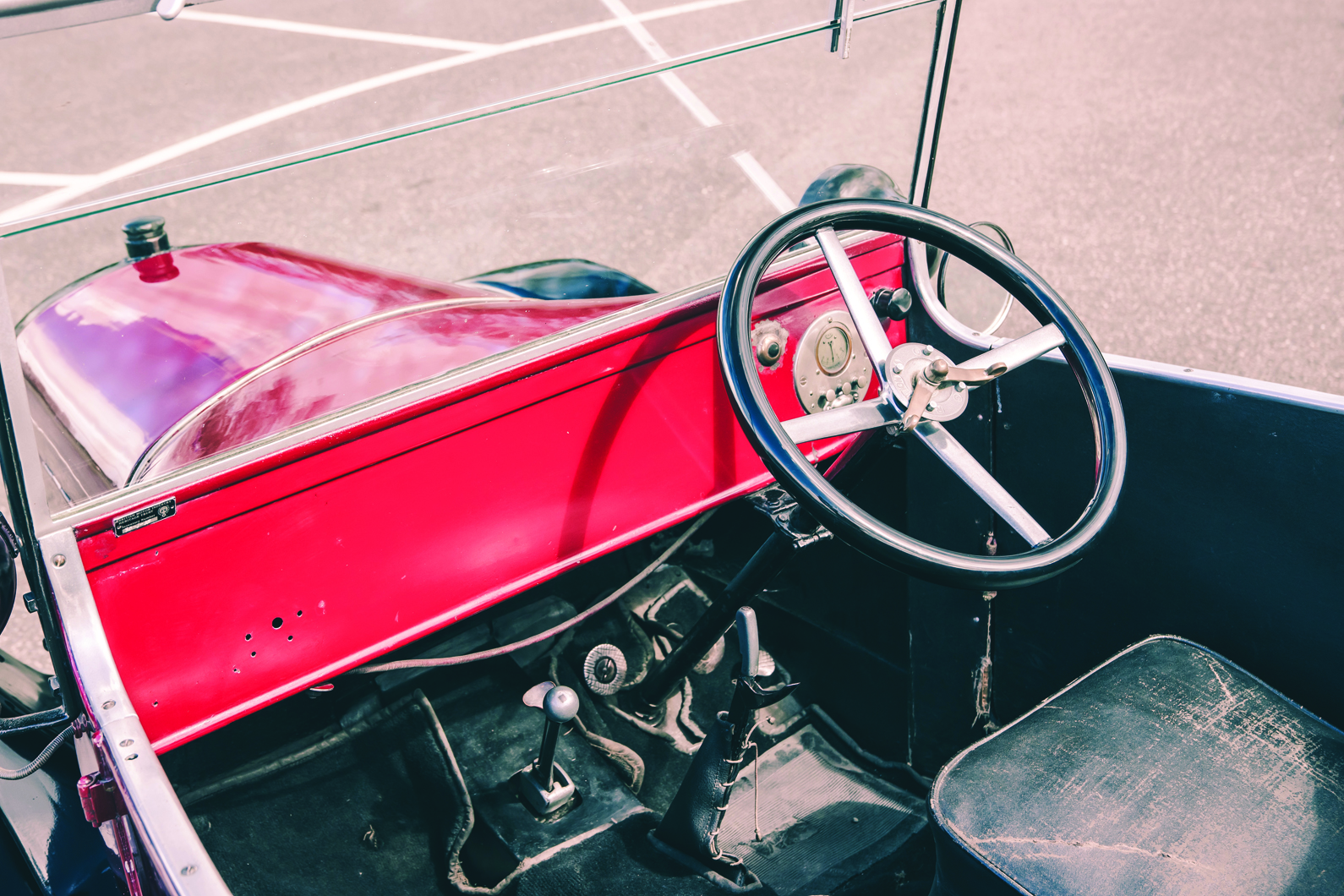
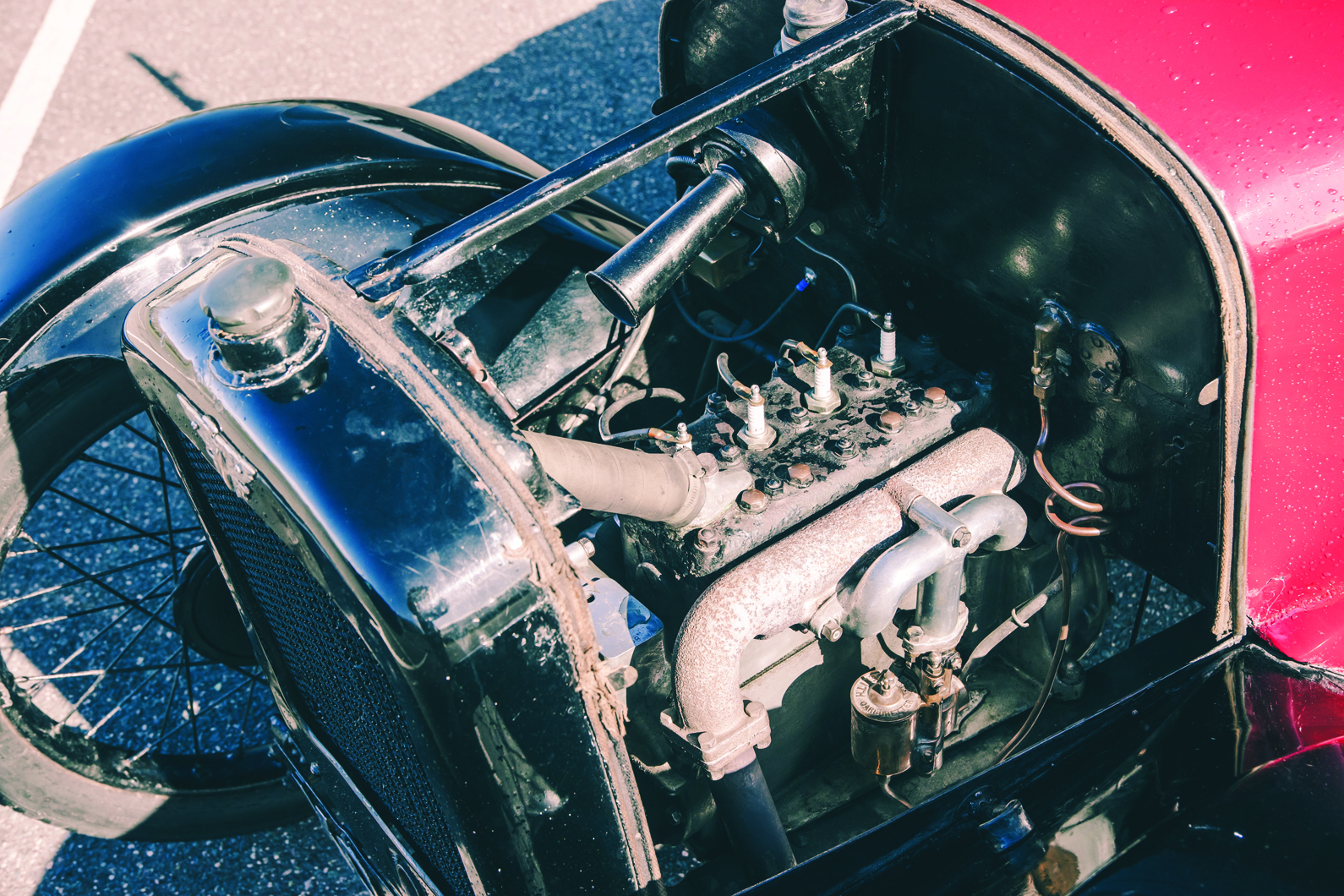
The Austin Seven’s cabin, with all the essentials and nothing more
It beat big-hitters such as Bentley to four-wheel-braking technology, and its tiny, Edge-designed engine, with splash-lubricated big ends, a detachable head and side-mounted valves, was ultra-frugal and, as it turned out, highly durable.
“We had been used to oddball small cars,” says Steve, “and then the Austin came along that could do everything economically, but could still accommodate adults – you could drive around the world in one.”
Today, we’re making do with the BMM test track, but it’s easy to see what Steve means.
Conventional by modern standards, with a central three-speed gearshift, right-hand throttle pedal and a small speedo before you, it would have been a scaled-down revelation at the dawn of the ’20s.
This early 1923 Chummy, normally on display at the museum, is a peppy performer and, for a century-old motor, simplicity itself to drive. No wonder nearly 300,000 were sold in the Austin Seven’s 17-year life.
“It was the first car in the UK that cost the average wage,” explains Stephen. “It was sold as ‘one of the family’ – a very clever way of presenting it to the public.”
And, as he points out, the Seven’s sphere of influence extended far outside the UK: “It was sold as the Rosengart in France, the Bantam in America, and BMW marketed it as the Dixi in Germany.”
Both Tania and Simon latch on to the Austin’s longer-term impact on motorsport, with the likes of Colin Chapman, Bruce McLaren and Arthur Mallock all cutting their teeth on Seven-based Specials.
And, as Tania reminds me, it was the car that gave birth to the 750 Motor Club in 1939, which acted as a springboard into racing for many an impecunious enthusiast.
“The Seven was also infinitely adaptable,” concludes Simon. “It was available in every guise to suit every need, from family saloons to bakers’ vans to tuned sports models: it’s hard to believe something the size of a go-kart could aim for 100mph at Brooklands!”
Thanks to: the British Motor Museum
The Austin Seven’s long-serving 747cc ‘four’
1920s shortlist
- Bugatti Type 35 The Type 35 became perhaps the ultimate Grand Prix car after the Bugatti was launched in 1924. Innovative and lightweight, it took more than 1000 race victories.
- Lancia Lambda Produced from 1922-’31, the Lancia Lambda was genuinely revolutionary, using a load-bearing unitary body, space-efficient V4 engine and independent front suspension.
- Bentley 3 Litre Bentley’s first car arrived in 1921, its advanced four-cylinder engine using an overhead camshaft and four valves per cylinder. Le Mans success followed, with wins in 1924 and ’27.
- Cord L-29 America’s first production front-drive automobile, the Cord L-29 was a large, sleek, glamorous, Art Deco-style machine on a 137½in wheelbase and powered by a 125bhp straight-eight.
- Duesenberg Model J Extravagant in every way, the 1928 Duesenberg Model J was America’s most expensive car. With a dohc, 6.9-litre straight-eight, it produced 265bhp and had a top speed of 116mph.
- Hispano-Suiza H6 Hugely advanced for its day, the H6 had an aircraft-derived, all-alloy, overhead-cam 6.6-litre engine. It was also the first production car to use a mechanical brake servo.
- Mercedes SSK Produced from 1928, the SSK was designed by Ferdinand Porsche, and dominated both hillclimb and endurance events. Its supercharged 7.1-litre engine gave a top speed of 125mph.
- MG M-type Renowned for its handling, the M-type used humble Morris Minor underpinnings, but with its cut-down two-seater body and ohc 847cc engine, it made sports-car ownership accessible.
- Rolls-Royce New Phantom Replacing the aged Silver Ghost, the New Phantom (Phantom I) was launched in 1925 with a larger, 7.7-litre ‘six’. It was produced in Derby, UK, and Springfield, USA.
Volkswagen Beetle: 1930s finalist
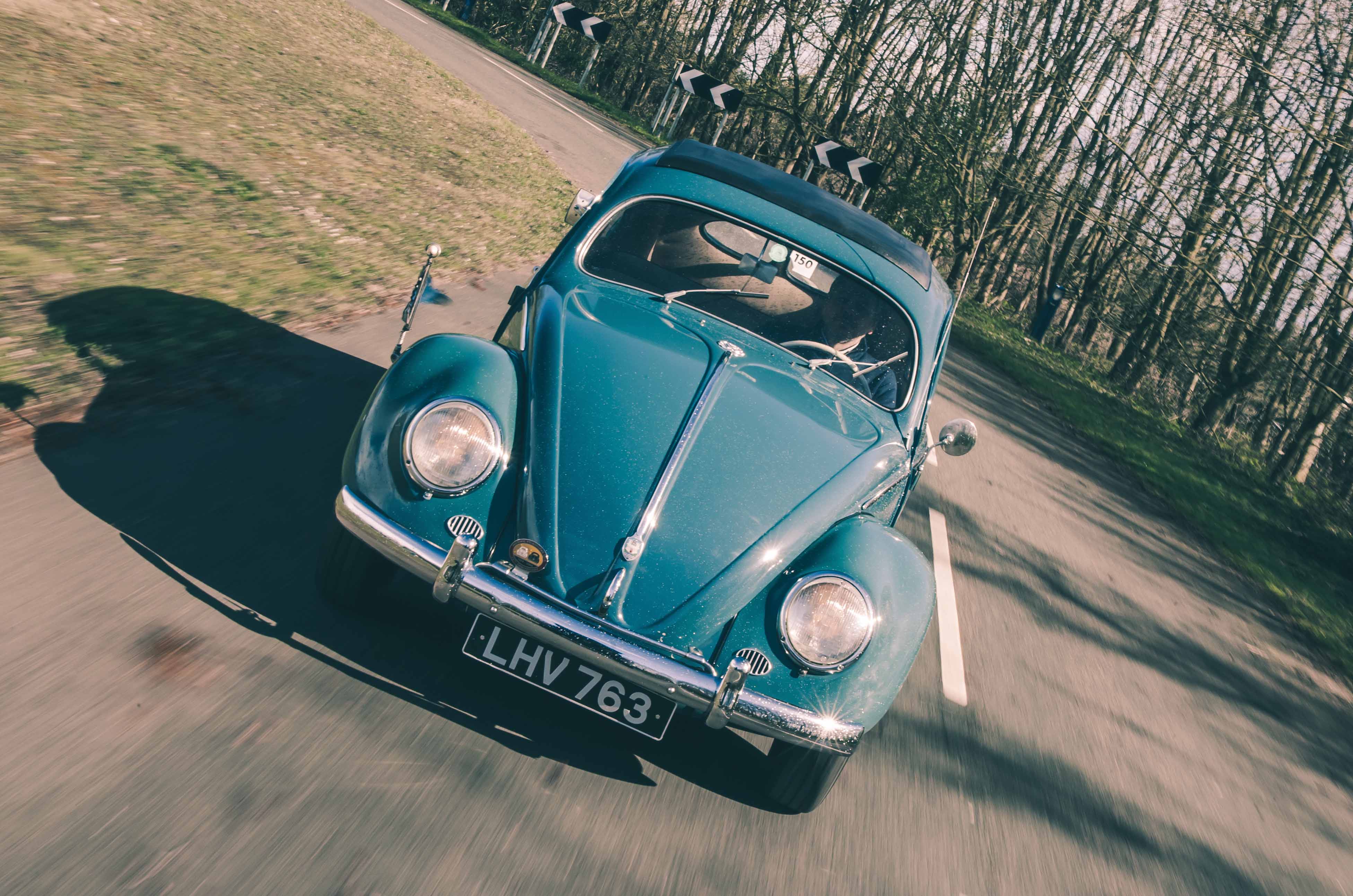
The Volkswagen Beetle’s iconic styling endured; the final cars were built in 2003
If this were a popularity contest, the Volkswagen Beetle – or ‘Type 1’, in its early years – would win by a country mile.
Even though our criteria for being influential don’t rely on sales numbers, there’s no denying that a car that sold more than 21.5 million units across a life of 60-plus years, and remained true to its original design and engineering throughout, made a near-incomparable impact on the motoring landscape.
We are treating the Beetle as a 1930s car, because that is when it was commissioned, developed and readied for production, with the first working prototypes on the road by 1935.
Adolf Hitler famously instigated the project after meeting with designer Ferdinand Porsche.
Hitler’s dream was to democratise car ownership for the German public with a ‘People’s Car’ – volkswagen – that could carry a family of five at 100kph along the country’s new autobahn network.
It would cost less than 1000 Reichsmarks, representing 31 weeks’ pay for the average German worker at the time.
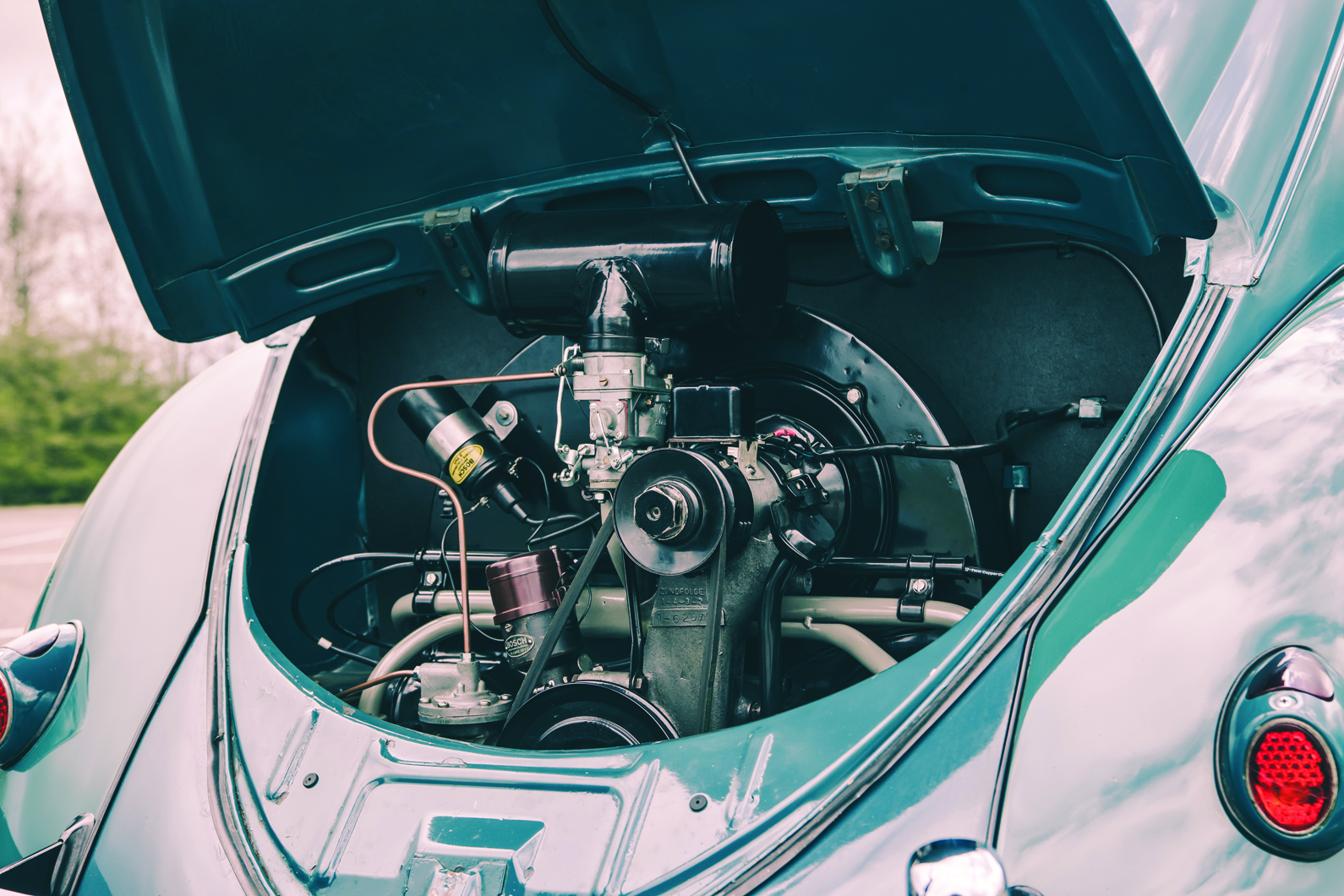
That this basic premise would result in such a radical design still beggars belief: its domed shape bucked convention; its rear-mounted, all-alloy, air-cooled flat-four was engineered for durability and ease of maintenance; and its all-independent suspension, with trailing arms and swing axles at the rear, was relatively advanced at the time.
Production of the Volkswagen was only reactivated post-war thanks to the British Army, and that it went on to epitomise the 1960s anti-establishment and surfer set is somewhat ironic, given its origins.
Nonetheless, the VW Beetle was – and still is – a cultural influencer par excellence.
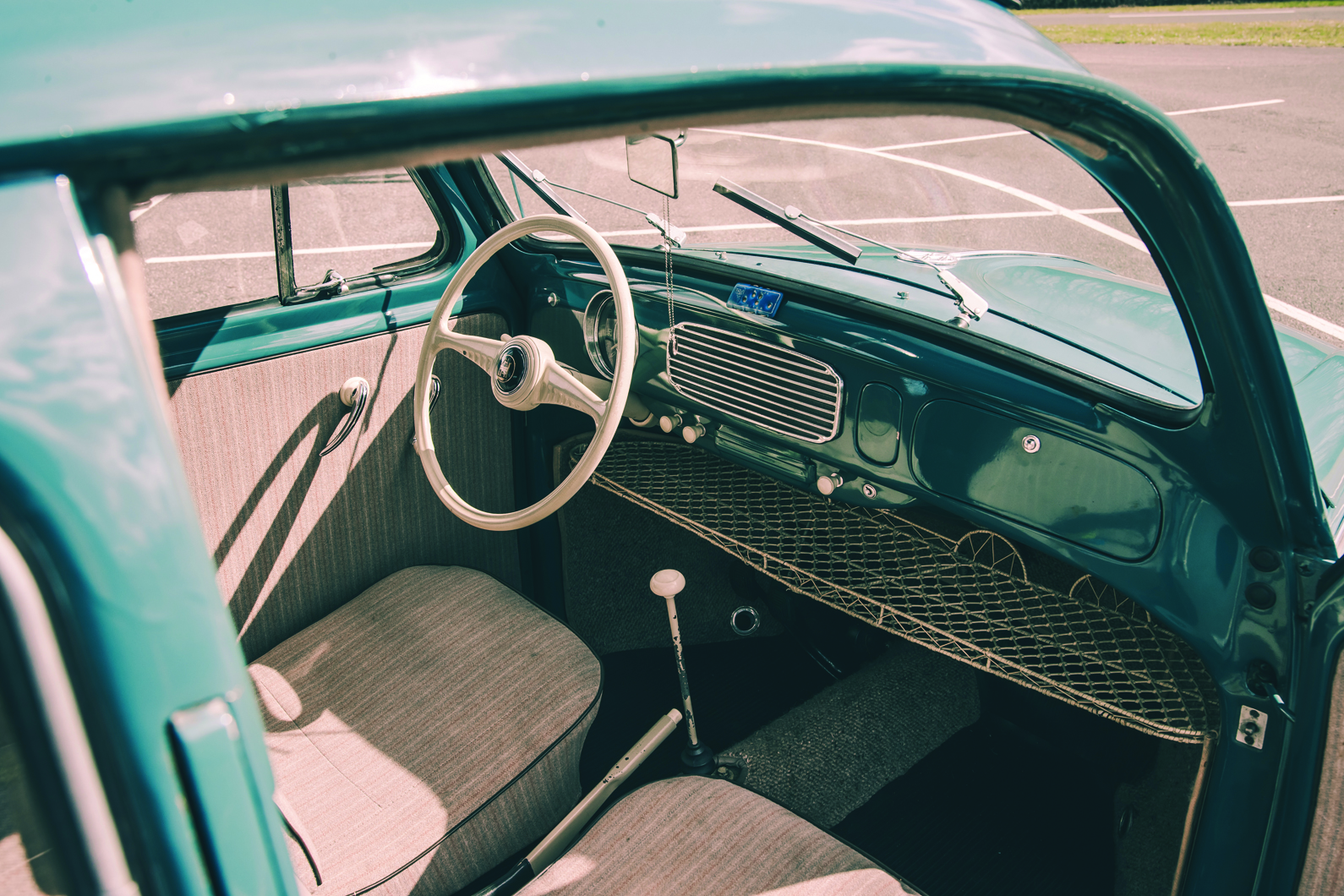
Peter is admiring Martin Jewell’s ultra-rare ‘Zwitter’ Type 1. This version was only built between October 1952 and March ’53, using the older body and 25bhp engine of the split-window Beetle, but with the dashboard, wings and floorpan from the later oval-window model.
The Volkswagen Beetle’s chic cabin
Martin’s car was originally registered in Switzerland in January 1953, and is thought to be one of only 13 still on the road today.
“It is purely an engineer’s car,” laments Peter. “It had all the compromises that don’t bother engineers at all – such as, why have the engine hanging out the back and have swinging-arm rear suspension that some people couldn’t cope with?
“It reminds me of the difference between the Messerschmitt and Spitfire aircraft: the Messerschmitt was a production-engineering masterpiece, because it could be built twice as fast as the Spitfire, but it wasn’t terribly good. The Beetle is the same, in a way.”
Steve is less sceptical: “I love the clean-sheet-of-paper aspect of this car. Where can we put the engine to make the cabin as big as possible? The attempt to make everything as efficient as it could be – it builds on the adverse lessons learned from previous cars that had big, bluff radiators, for example.
“Its influences were the mistakes made by cars from the earlier period. They also cracked the manufacturing standards – it was a quality car.”
The VW Beetle, Simon believes, spread the gospel of transportation far further than the Model T or Austin Seven, too.
“And it’s ironic,” he adds, “that a concept promoted by a dictator, and conceived by an engineer famed for sports cars associated with the rich and famous, should have become a symbol of ’60s counter-culture and a favourite of hippies.”
Stephen wonders if the Beetle would have existed at all, had it not been for post-war politics: “It goes to show that it had something about it that was worth developing into the People’s Car that it was going to be before the war. Its durability and ease of manufacturing went a long way towards its longevity.”
Thanks to: Beetle owner Martin Jewell
The VW Beetle’s 1.1-litre flat-four musters 25bhp, but it feels punchier
1930s shortlist
- Citroën Traction Avant A true revolutionary, the Citroën Traction Avant amalgamated the new technologies of front-drive, monocoque build, hydraulic brakes and independent suspension.
- Fiat 500 Topolino Brainchild of the legendary Dante Giacosa, few cars have suited their market better than the ‘little mouse’, with its tiny dimensions and ultra-frugal 569cc twin.
- Alfa Romeo 8C Designed by genius engineer Vittorio Jano, the 8C covered a range of road and race cars produced by Alfa Romeo from 1931. Originally powered by a 2.3-litre straight-eight engine.
- BMW 328 Built from 1936, the 328 was a lightweight sports car, its straight-six engine producing 80bhp and giving it a top speed of up to 93mph. Its dominance on track led to more than 200 victories.
- Bugatti Type 57 Jean Bugatti’s Type 57 was an elegant grand tourer powered by a 3.3-litre, twin-cam straight-eight that majored on silent running, thanks to the use of spur gears and fibre gear wheels.
- Chrysler Airflow While it proved a commercial failure – perhaps for being ahead of its time – the Airflow’s aerodynamic body and monocoque construction were genuinely influential.
- SS 100 Jaguar Elegant and powerful, with a claimed 100mph maximum, the two-seater 100 was the pinnacle of William Lyons’ SS Cars, using 2.7- or 3.5-litre engines. SS became Jaguar in 1945.
- Lagonda V12 With 100mph-plus capability, the V12 of 1938-’40 was a masterpiece by engineer WO Bentley. A pair of lightweight V12s finished third and fourth at Le Mans in 1939.
- Tatra T77 Introduced in 1934, the Tatra T77 was an aerodynamic pioneer, its streamlined body having a Cd of just 0.2455. Its rear-mounted, air-cooled 3-litre V8 produced 60bhp, giving 93mph.
Willys Jeep: 1940s finalist
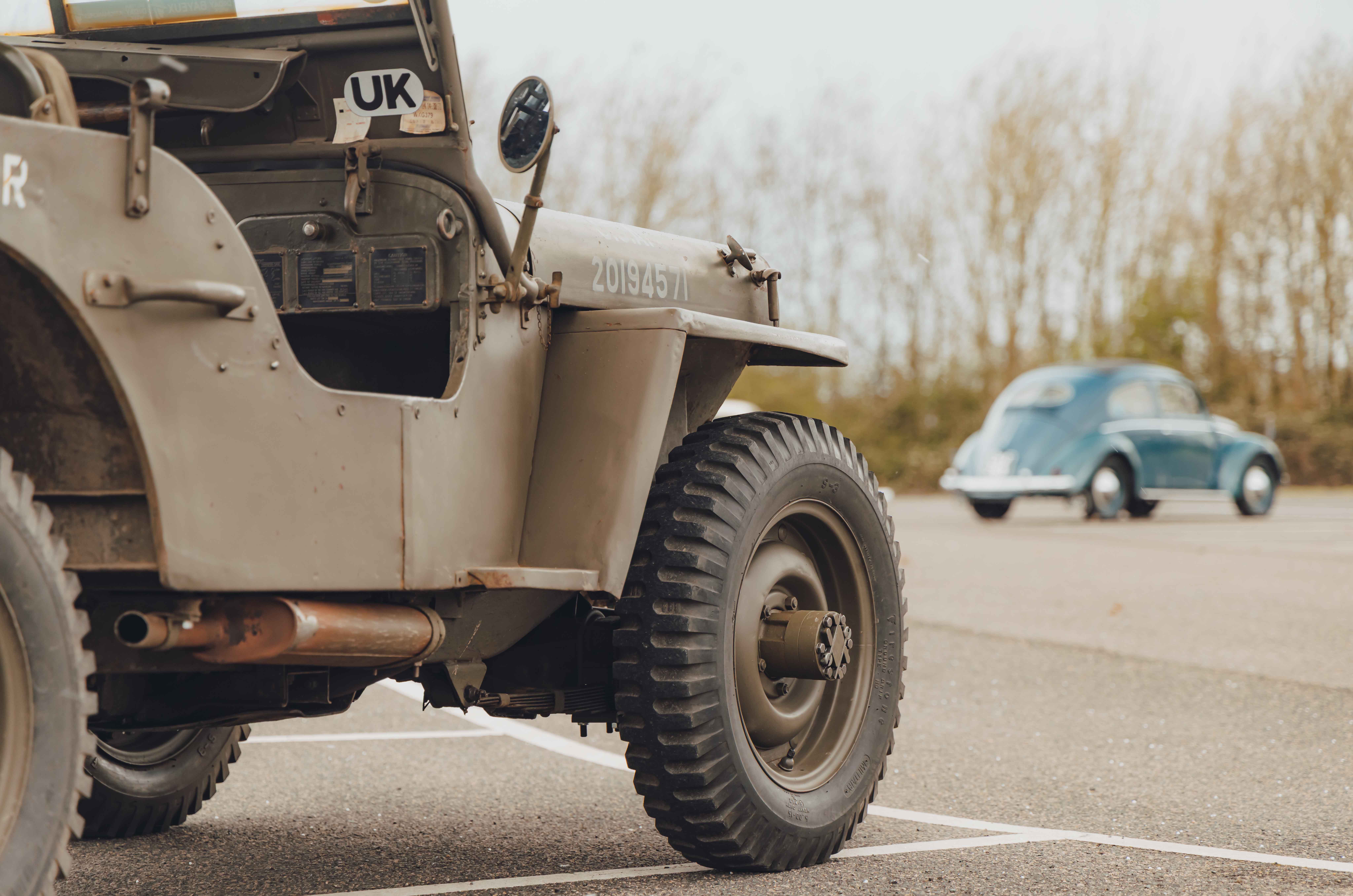
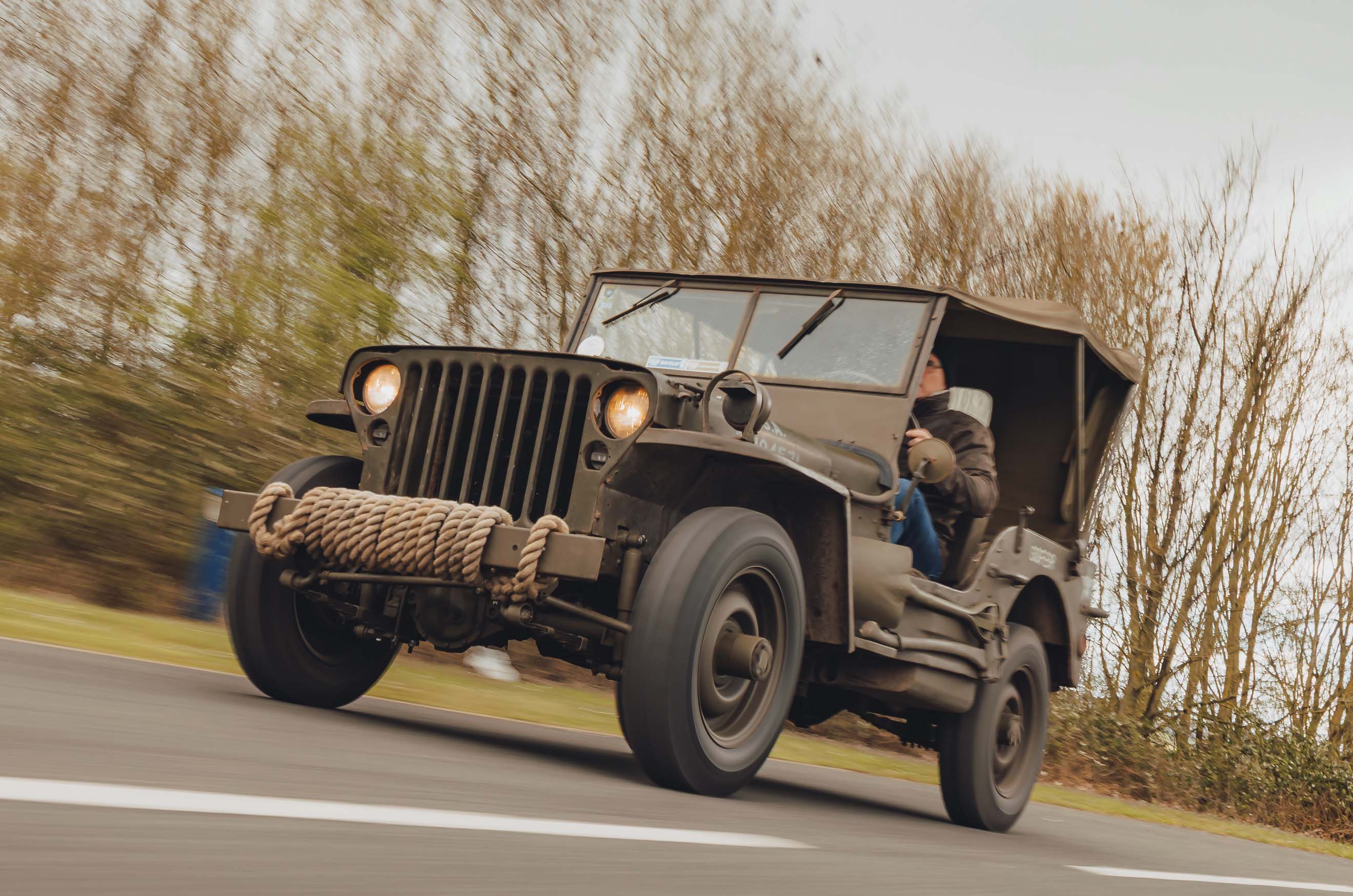
Simplicity and ruggedness were key to the Willys Jeep’s success
If you were brought up on a weekly diet of M*A*S*H on television during the 1970s and ’80s, the sight and sound of Jeeps careening in and out of a fictional US Army hospital base during the Korean War was almost as synonymous with the show as its soulful Suicide is Painless theme song.
For me, there was always something appealing about the way the workhorse Jeeps were never referred to in the storylines; they were strictly utilitarian devices: omnipresent, unloved and indestructible, but also utterly invaluable to whatever situation was unfolding.
That’s all very Hollywood, of course, but I can’t imagine the reality being far different because, of all our influencers, the Jeep is perhaps the least fêted – and yet, in the context of war, it is by far the most important finalist here.
Originally conceived and developed in the 1930s by American Bantam for the US Army, as a rugged and agile people- and equipment-mover, the vehicle soon acquired its ‘Jeep’ moniker, the name being military slang for anything untried or untested. (Although in military parlance it was always the ‘U.S. Army Truck, ¼-ton, 4x4, command reconnaissance’.)
With demand for the Jeep accelerating at the start of WW2, responsibility for manufacturing it was transferred to Willys-Overland and Ford, who between them had built 650,000 examples by the end of hostilities.
Over the following 30 years, hundreds of thousands more were produced for use in various theatres of war around the world, their sheer versatility, four-wheel-drive capability and inherent strength making them almost irreplaceable.
But the Jeep’s sphere of influence was twofold. In 1945, Willys-Overland began producing a civilian version, known as the Jeep CJ-2A, making it the world’s first mass-produced, non-military four-wheel-drive vehicle.
It gave birth to the Jeep brand as we know it today, but perhaps more significantly, it was the inspiration for the original 1948 Land-Rover, which is why it feels apt that here it pipped the British car to our final 10.
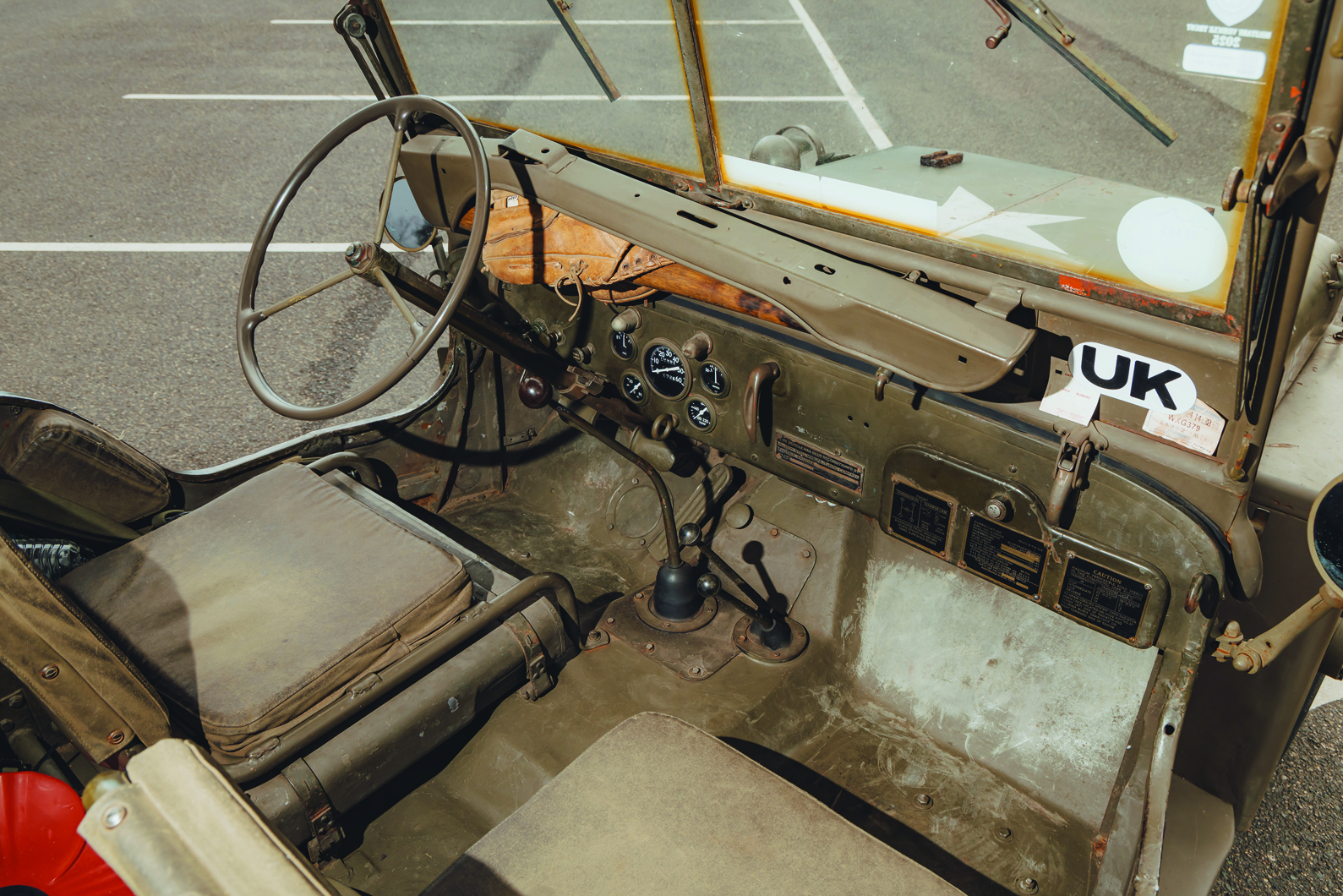
The Willys Jeep’s utilitarian cockpit
Eddie Hargrave bought his 1942 Jeep 11 years ago, when it was subjected to a sympathetic restoration.
Originally a Ford GPW model, it had been reconditioned by the Allison Manufacturing Company in 1945, when it acquired a 1943 Willys body and engine.
Inside, it is as basic as you’d expect and childishly simple to drive, with relatively light controls, a long-throw, dog-leg three-speed gearbox, and fairly accurate steering compared to the turn-and-guess system of an early Land-Rover.
Tania is the first to pick up on the Jeep’s long-term effect on the car industry: “It inspired the first Land-Rover, which is quite something in itself. But, because of how the wider Jeep marque grew in civilian life, you could say that it was responsible for the modern SUV, too.”
Simon grew up with two Jeeps on the farm where he lived, and for him it’s the vehicle’s historical legacy that resonates the most: “The liberation of Europe, dirty GIs, muddy battlefields and waving crowds – the Jeep has so many cultural references in history, and no WW2 film would be complete without one.”
“And it has the two grooves in the body [for the shovel and axe],” adds Peter. “That’s where the grooves on modern off-road vehicles derive from. It also has the seven slots on the grille, and people still try to copy that now.
“The Jeep demonstrated what an off-road vehicle should be and, in the long-term, it was to be more influential than any of these cars.”
Steve agrees, adding: “It was a car that was absolutely necessary and they are still capable today, they still do a good job. It is the simplest, most durable car you can imagine.”
Thanks to: Jeep owner Eddie Hargrave
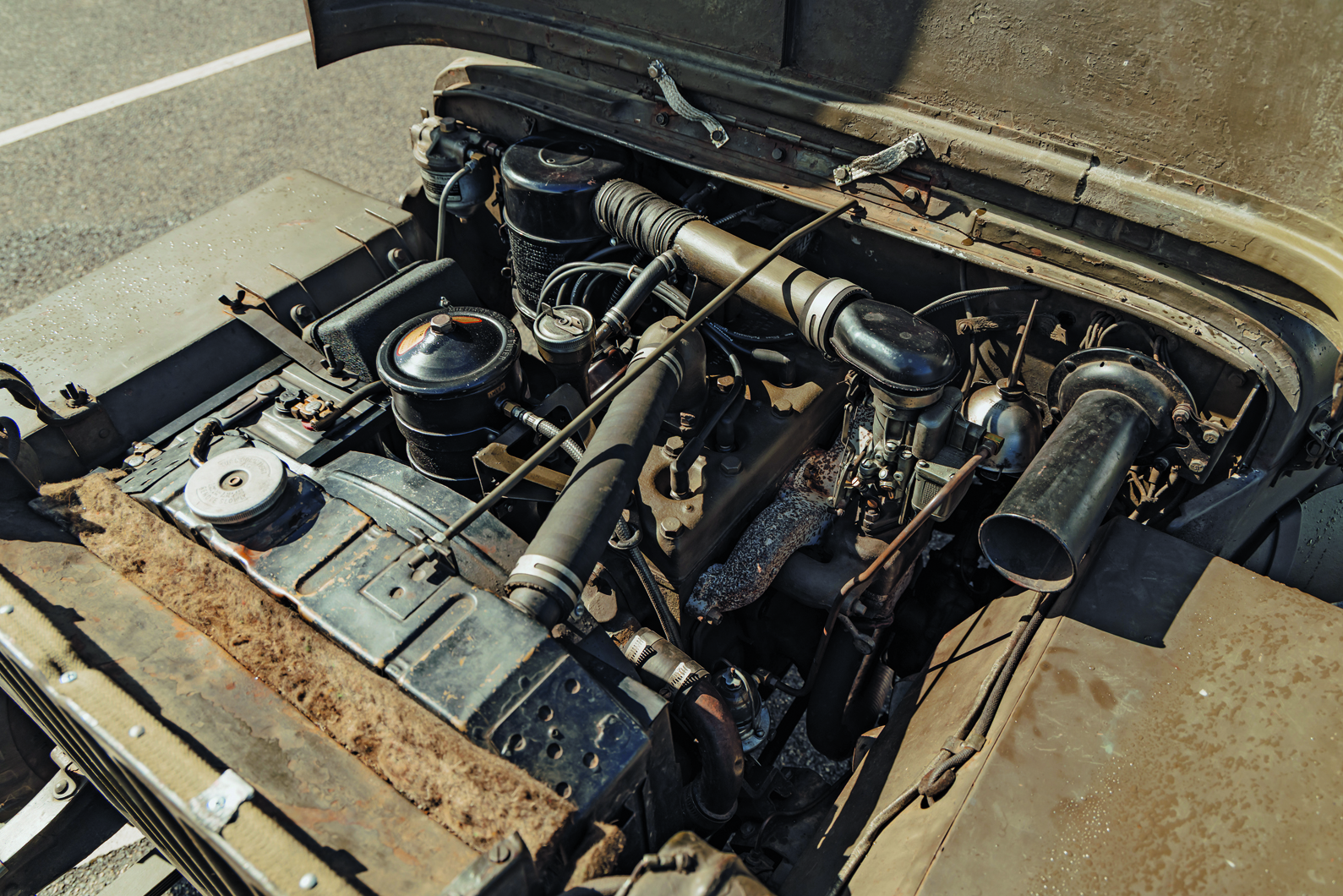
The Jeep’s ‘Go-Devil’ motor was used by both Willys and Ford versions
1940s shortlist
- Land-Rover Series One Rugged and versatile, with four-wheel drive and a lightweight aluminium body, the 1948 Landie became the default choice for post-war farming communities.
- Jaguar XK120 The fastest production car of the 1940s, with a top speed in excess of 120mph, the XK120 excelled in premier races and rallies, and was developed into the more powerful XK140 and 150.
- Cadillac Series 62 Legendary designer Harley Earl’s love affair with tailfins, inspired by the Lockheed P-38 Lightning fighter, started with the third-generation Series 62.
- Cisitalia 202 Revealed in 1946, the Cisitalia 202’s aluminium ‘pontoon’ body was designed by Pinin Farina and made in a single piece. Powered by a 1.1-litre Fiat engine, just 170 cars were produced.
- Citroën 2CV Made from 1948 to 1990, the Deux Chevaux was rugged, light and affordable thanks to its simple, Minimalist construction and air-cooled two-cylinder engine.
- Ferrari 166MM The car that really established Ferrari’s reputation on the race track, the 166MM (for Mille Miglia) was a V12 sports car with Touring ‘Superleggera’ barchetta coachwork, built from 1948-’53.
- Ford F-1 Launched in 1948, the F-1 was the first of what was to become the legendary F-series of trucks. A half-ton pick-up, with a distinctive rounded nose, it was powered by a flathead V8.
- Morris Minor MM The first UK car to exceed a million sales, the Alec Issigonis-designed Morris Minor was pivotal in getting Britain back on the road after WW2.
- Porsche 356 Porsche’s first production car, the 356 of 1948-’65 made much use of VW Beetle componentry, but established the company’s reputation for light and agile sports cars.
BMC Mini: 1950s finalist
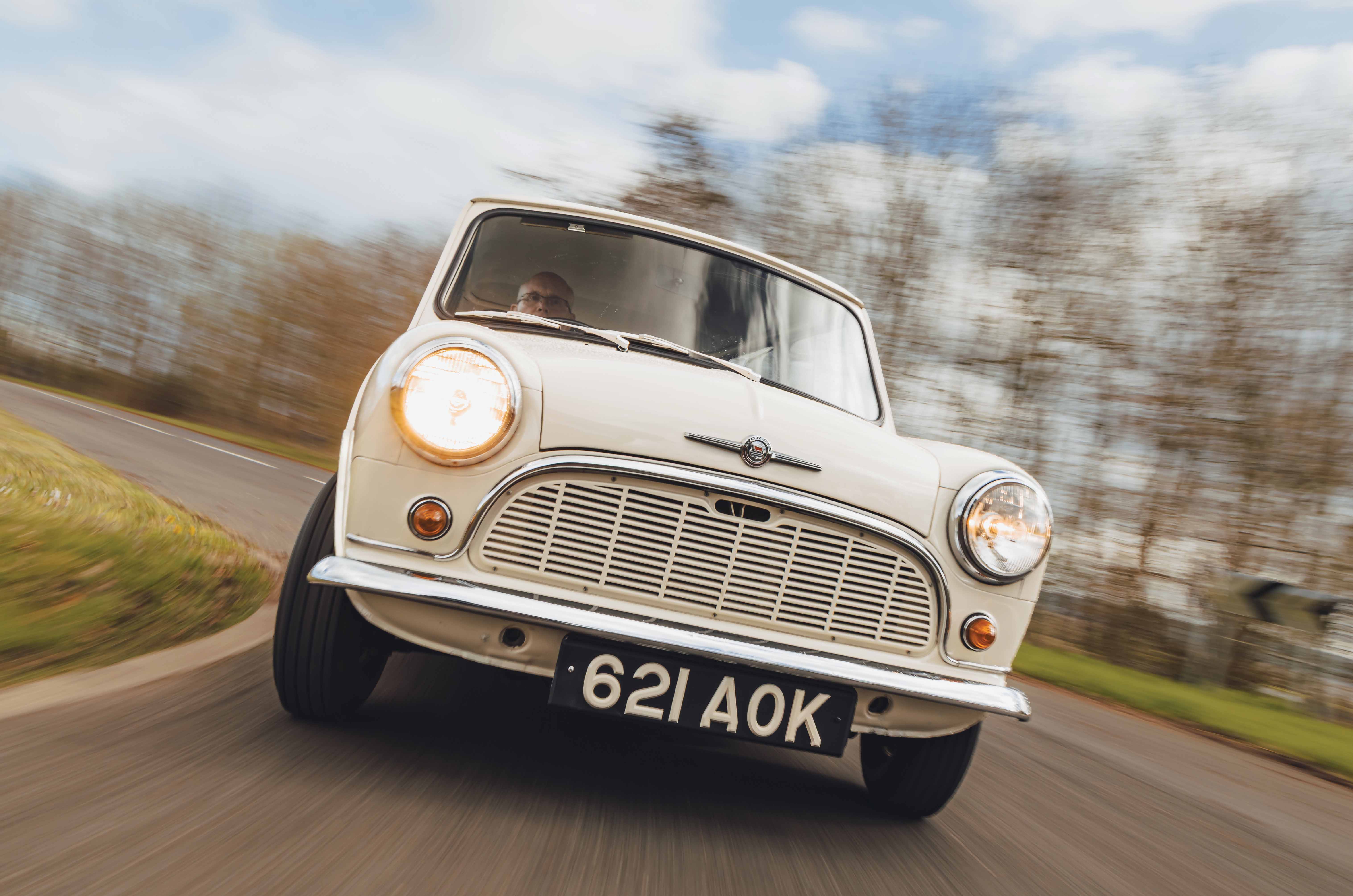
The painted grille of early Minis later gave way to chrome
It is perhaps no surprise that three out of our five judges awarded the BMC Mini top marks for the 1950s group, with Simon and Tania placing it third.
For Steve, it is a given: “I’ve got a liking for small and cheap cars – Beetle, MX-5, Golf, Seven and Mini – just because they deliver so much for so little.”
And, like the Austin from our 1920s group, once again a tiny innovator triumphs over the might of larger, much more complex machines – in this case our two runners-up, the Citroën DS and exotic Ferrari 250 series.
Classic & Sports Car has form when it comes to rating the Mini: in 1999 our readers, along with another panel of experts, declared it the ‘car of the century’.
And while that does not necessarily make it the greatest influencer, it certainly gives it the credibility to be judged as such.
And today we have not just any early Mini, but the very first Morris-badged production Mini-Minor, 621 AOK, which left the Cowley factory on 8 May 1959 and went on to serve time as a press demonstrator; it’s now a prized resident of the British Motor Museum.
Seeing an original Mini in its purest, most unadulterated guise also brings you closer to designer Alec Issigonis’ original vision.
He had been tasked by British Motor Corporation chief Leonard Lord to launch a retort to the German bubble cars that were invading the UK market in the wake of the 1956 Suez Crisis.
The brief was to use existing BMC mechanicals to power a car measuring 10x4x4ft, but one that could accommodate four adults plus their luggage.
His solution provided a blueprint (albeit much improved and refined over the years) for how a family saloon could be packaged: transversely mounted engine driving the front wheels; transmission situated in the sump, lubricated by the engine oil; side-mounted radiator; and specially developed rubber-cone suspension with progressive-rate springing.
All of which was integrated within the required dimensions, allowing 80% of the car’s footprint to be devoted solely to occupants and their luggage.
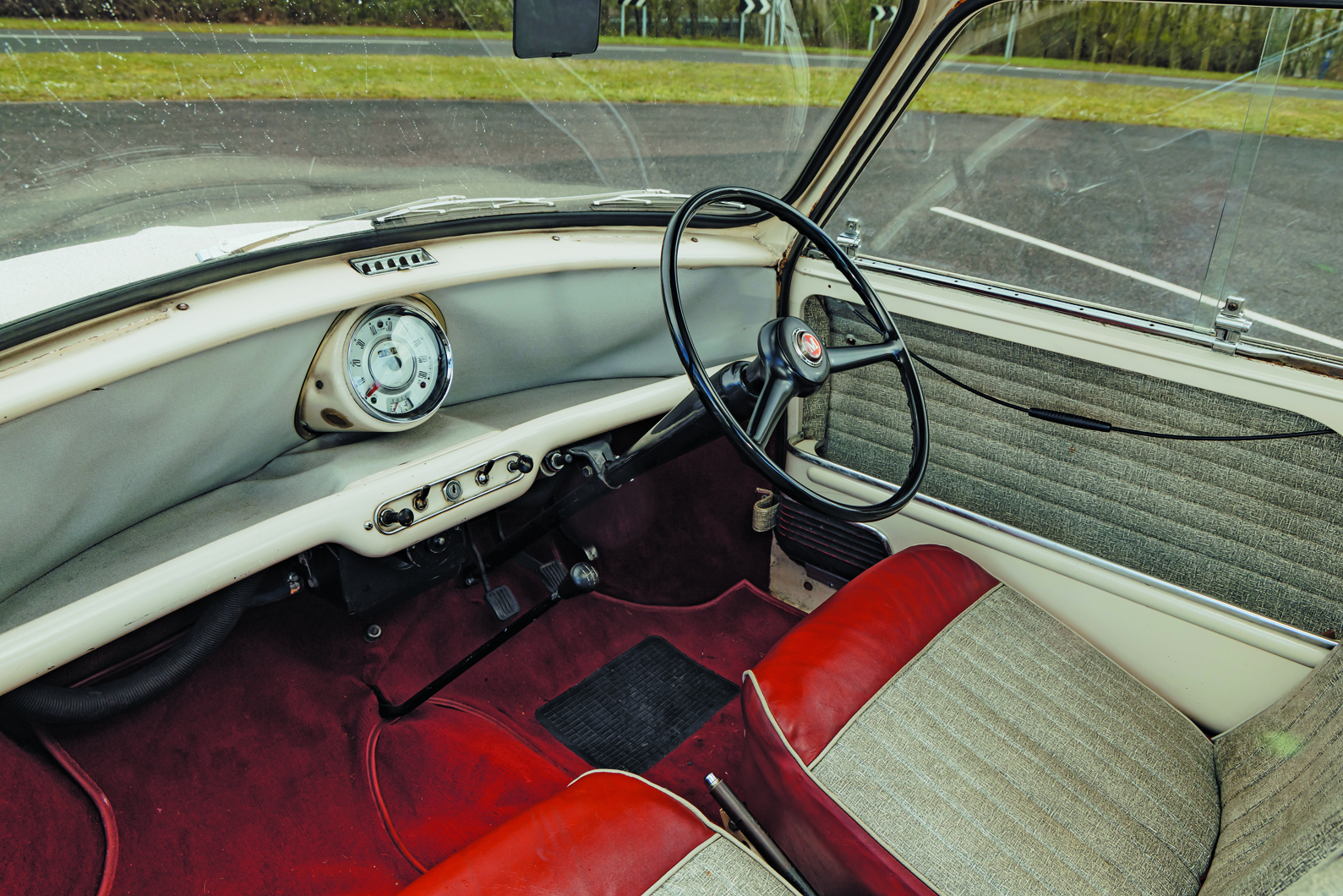
The Mini’s hugely spacious cabin
As it approaches its eighth decade, this Mini’s relative modernity is mesmerising.
The cabin is light, airy and feels salubrious, with its lack of a transmission tunnel, and cavernous levels of storage space in the doors and across the dash area.
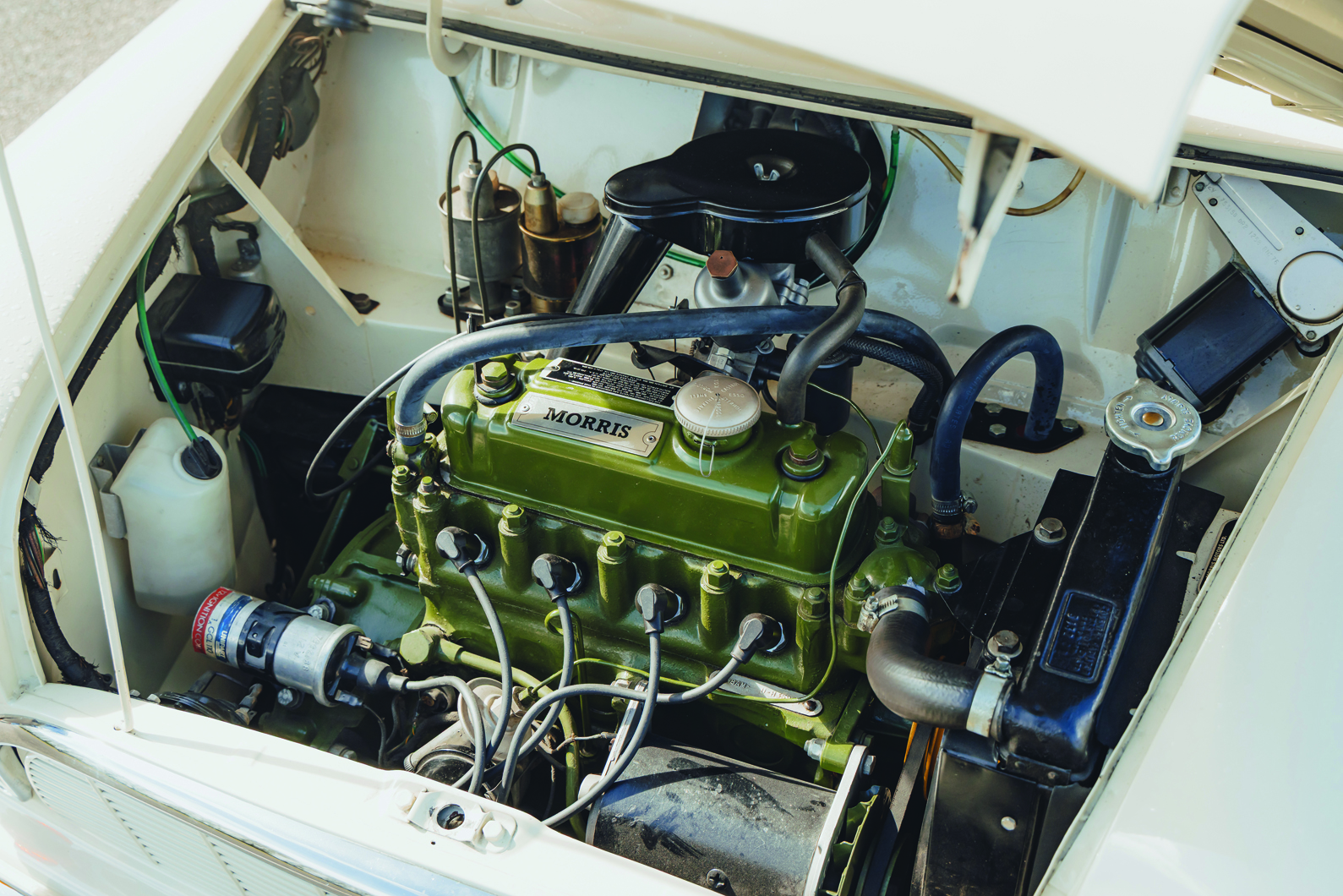
Fire up the 848cc A-series ‘four’ on the floor starter, pull away and the Mini feels brisk and biddable from the off, coursing through our test track’s tighter bends with minimal drama. It’s an absolute hoot.
“It’s a real sweet-spot of technology and packaging – the amount of space in that car is amazing,” ventures Stephen. “It was not perfect, by any means, but it was responsible for the birth of the city car.”
Steve goes further still: “It has influenced everything… even though it never made any money!”
Pondering Alex Moulton’s radical approach to suspension design at the time, Steve recalls being told by the engineer: “We’d just won the war – we could do anything!”
Tania believes that the Mini did more to elevate the status of women in motorsport than anything before it, highlighting Pat Moss scoring the model’s very first international rally victory, along with co-driver Ann Wisdom, on the 2500km Tulip Rally in 1962.
Simon runs with the theme, recalling the Mini’s famous Rallye Monte-Carlo wins: “And that’s before we even mention The Italian Job.”
But Peter feels that, in spite of its enduring success, the model was a missed opportunity: “For packaging, Issigonis was extraordinarily good, but BMC never really understood how to evolve the Mini. Others went on to do it better, such as Fiat with the 128 and 127.”
Thanks to: the British Motor Museum
The Mini’s A-series engine powered a generation of BMC products
1950s shortlist
- Citroën DS/ID A towering sales success when it was launched in 1955, the DS redefined class expectations with its hydropneumatic suspension, advanced aerodynamics and FWD powertrain.
- Ferrari 250 series Maranello’s defining model series was unveiled in 1952, with the 250GT SWB, perhaps the best known, launched at the Paris motor show in October 1959.
- Austin-Healey ‘Frogeye’ Sprite Built from 1958-’61, the Mk1 Austin-Healey Sprite was an Austin A35-based two-seater that epitomised affordable fun. Not fast, with a 948cc ‘four’, but light and nimble.
- Bentley R-type Continental The fastest four-seater of its era, the R-type could top 115mph, helped by its sleek HJ Mulliner body. Powered by a 4.6/4.9-litre ‘six’, with 208 cars from ’52-’55.
- Chevrolet Corvette C1 Nicknamed ‘America’s sports car’, the first ’Vette pioneered the glassfibre bodies that became a signature. Early ‘sixes’ were sluggish, but the V8’s arrival saved the day.
- Fiat 500 Dante Giacosa’s evergreen ‘Nuova’ 500 was conceived as an ultra-light, 10ft-long city car, capable of carrying four adults and powered by a 479cc air-cooled twin.
- Lancia Aurelia A Vittorio Jano classic, Lancia’s 1950 Aurelia employed the world’s first production V6 engine, delivering drive to its rear wheels via a transaxle for superior weight distribution.
- Lotus Seven Minimalist in the extreme, Colin Chapman’s Lotus Seven was sold as a kit, with a tubular frame, simple body and a choice of mechanicals. Some 70 years on, Caterham’s version is still on sale.
- Mercedes-Benz 300SL The 150mph 300SL was the world’s fastest production car in the 1950s and the first to employ fuel injection. Instantly recognisable by its roof-hinged, gullwing doors.
Porsche 911: 1960s finalist
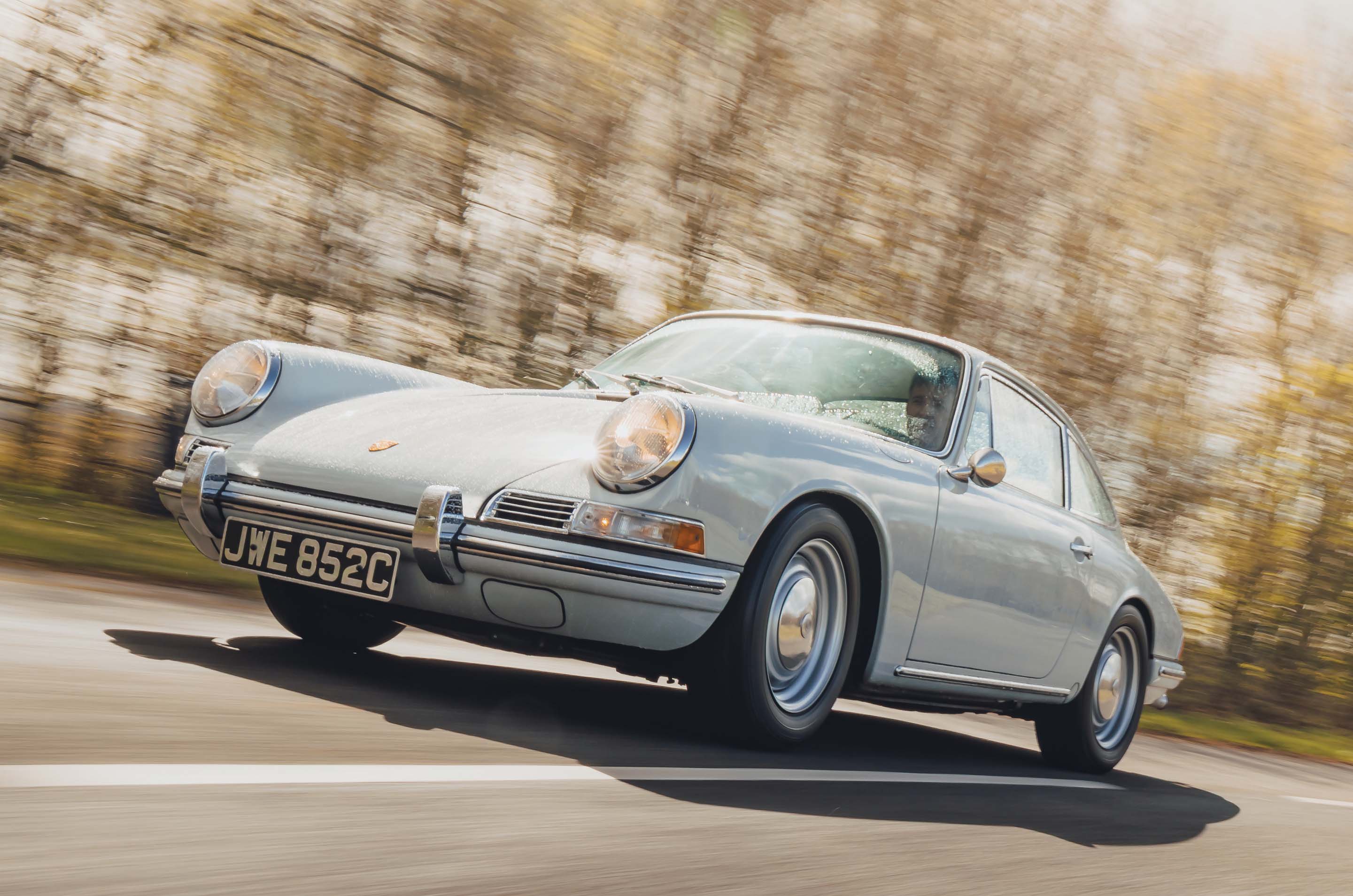
Today’s Porsche 911 has grown larger and more potent, but still shares this early car’s distinctive style
As Steve points out, had Porsche bosses had their way 50 years ago, the 911 would have been little more than an interesting footnote in the marque’s history – and certainly not the highly influential Swiss Army knife of a sports car that it remains today.
By the 1970s, some at Stuttgart believed that the technically more advanced, front-engined 924 and 928 models were the future, but the response from Porsche’s American buyers was a resounding “no” and, thanks to the foresight of then-new CEO Peter Schutz, the 911 survived – and as of 2026 is currently in its eighth generation.
Which means that no other model – let alone a sports car – has survived in continuous production with the same nomenclature and the same basic design for as long as the 911 (although you could just about argue that the Mini/MINI might also be a contender).
Does that make the enduring Porsche a gold-plated influencer, or simply a car that has successfully perpetuated its own unique formula?
Designed by Ferdinand ‘Ferry’ Porsche’s son, ‘Butzi’, and previewed at the 1963 Frankfurt motor show, the 911 was only Porsche’s second-ever model, conceived to replace the smaller, four-cylinder 356.
The first production 911s rolled off the Zuffenhausen line in September 1964, and offered a more generous 2+2 cabin and larger, 1991cc flat-six engine, though still mounted behind its rear axle.
Power output was a relatively modest 128bhp initially, but by 1966 the more potent 911S was launched with forged pistons, larger valves and new camshafts, and an output of 160bhp – enough for a 137mph maximum speed.
The delectable example that has joined us today, which belongs to enthusiast Mike Axon, is the original model, however.
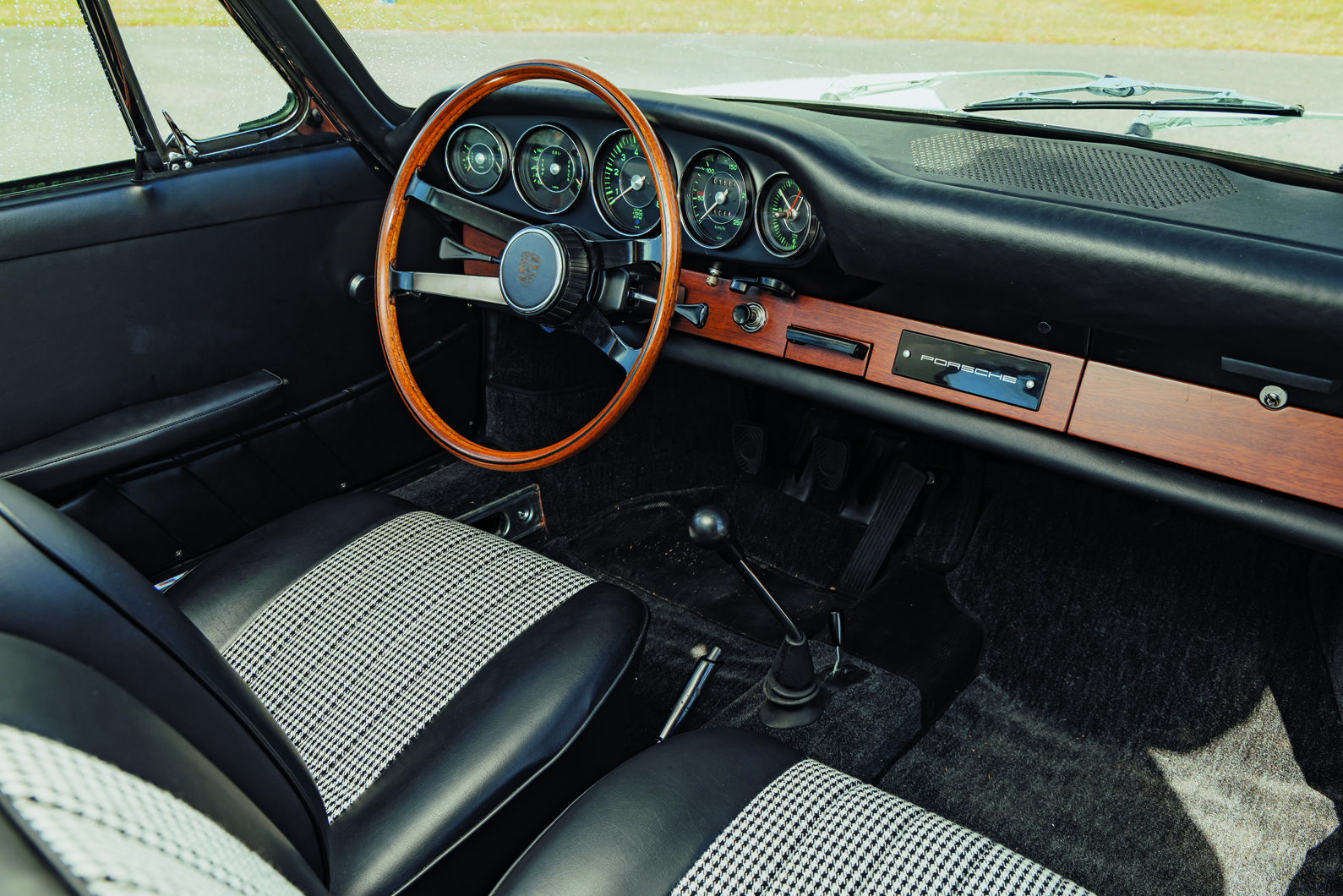
The Porsche 911’s roomy, practical cabin
Built in 1965, like so many 911s it was first registered in California, and many years later it found its way to Italy as a collection of components.
There, the bodyshell was completely refurbished and repainted in its original Dolphin Grey, before being sent to the UK – still in pieces – where Mike acquired it in 2020.
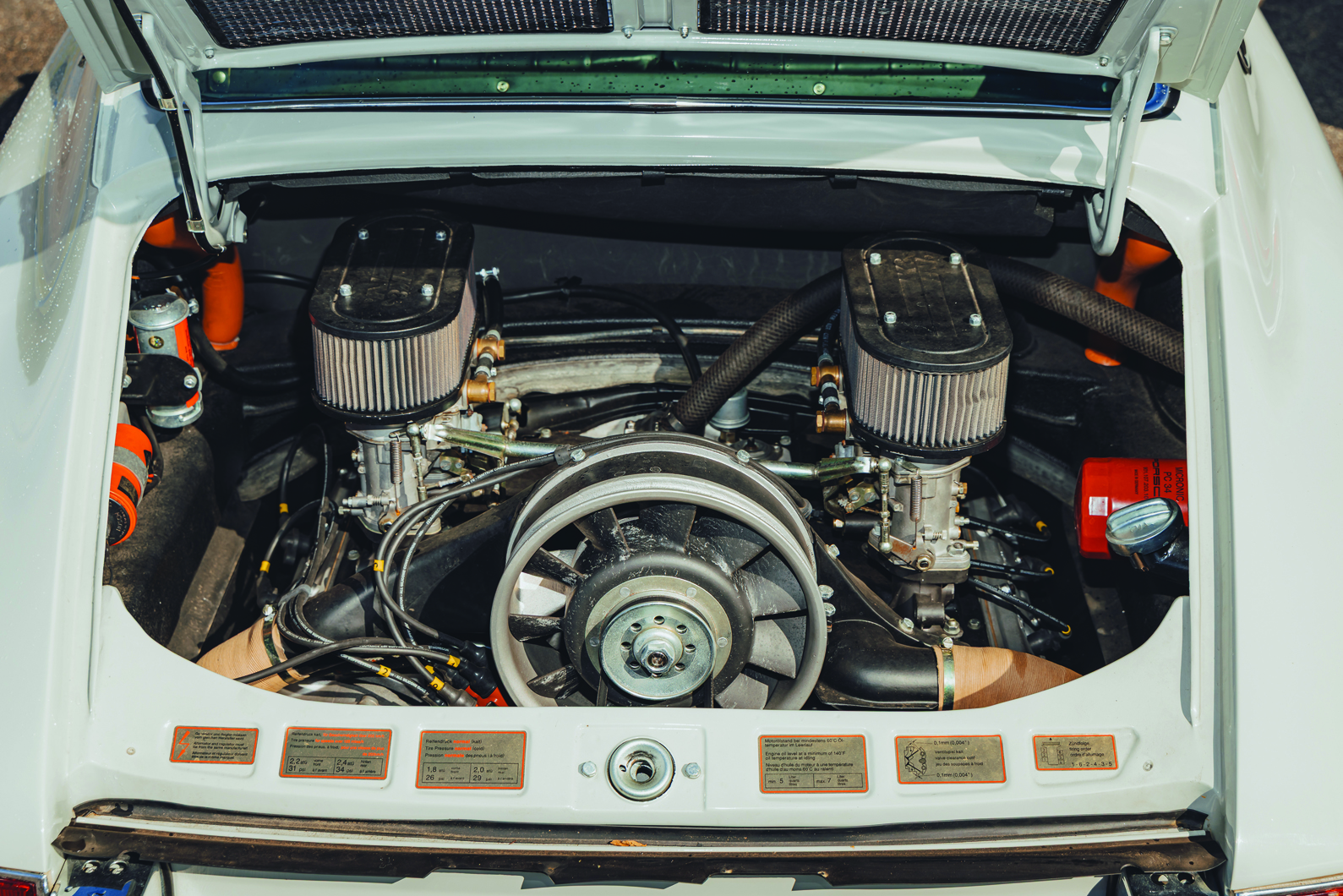
Marque specialist Steve Winter at Jaz Porsche then oversaw the car’s painstaking completion to factory specification – save the matching-numbers engine, which had previously been bored out to 2.7 litres and now makes 221bhp.
“We always had a 911 in the garage when I was a kid,” says Simon. “First a ’67 S, and then a ’73 RS. I still cherish memories of both: the distinctive metallic sound of the doorhandle; the unmistakable smell of the cockpit; that plain, flat dash with prominent instruments; and, best of all, the excitement when that flat-six came to life.
“Drive one now and you realise why they sold in millions: it does everything well, and never lets you down or bores you.”
Both Tania and Stephen are in agreement that the Porsche is the most usable sports/supercar, to which Stephen adds: “If you buy a 911, you know what you’re going to get – it’s another of those sweet-spot cars for me.”
Peter’s view remains a little more guarded: “Everything is in the wrong place, really, but clever engineering overcame the basic error [of its rear-mounted engine].”
There are no doubts from Steve as to why he made the 911 his top 1960s choice, though: “It starts for me with the clash between capability, usability and layout.
“The 911 has a fairly vertical windscreen, you can get four people in it at a pinch, and it’s not too long; the headlights are even mounted quite high so you can see further down the road.
“It’s normality delivered in a really lovely way, and I think it has influenced so many cars that followed.”
Thanks to: owner Mike Axon and Porsche Club Great Britain
This Porsche 911 has a tuned flat-six in its tapering tail
1960s shortlist
- Ford Mustang Introduced in April 1964, the first-generation Mustang created the ‘pony car’ class. With its wide range of engines, sleek design and competitive pricing, it was an immediate sales hit.
- Jaguar E-type Arguably the most revolutionary sports car of the 1960s, the Jaguar E-type was fast (posting a headline 150mph), relatively affordable at just under £2000, and undeniably beautiful.
- Alfa Romeo 105 series Produced from 1962 to ’77, the 105 series was sold with a choice of twin-cam engines from 1300-2000cc, mated to five-speed transmissions and all-disc brakes.
- BMW Neue Klasse Launched in 1962, the four-door Neue Klasse secured BMW’s future and established its reputation as a maker of sharp-handling compact saloons. Later spawned the classic 2002 series.
- Datsun 240Z A breakthrough model for Datsun, the 240Z’s Euro/US-friendly styling combined with Japanese reliability, 150bhp and 0-60mph in sub-8 secs revolutionised the sports-car market.
- Jaguar XJ6 Introduced in 1968, the XJ6 set new standards for ride comfort, handling and performance in a luxury car, helping it survive through three generations and for more than 20 years.
- Jensen FF A genuine innovator, the Jensen FF (for ‘Ferguson Formula’) was the first production car with four-wheel drive and anti-lock brakes. Powered by a 6.3-litre Chrysler V8, only 320 FFs were built.
- Lamborghini Miura The first supercar? With its transverse, mid-mounted 3.9-litre V12, the Miura stole Ferrari’s thunder at launch in 1966. At 174mph, it was the decade’s fastest car.
- NSU Ro80 Recognised for its innovative (but fragile) twin-rotor Wankel engine, clever vacuum-operated clutch and Modernist design, the Ro80 was crowned European Car of the Year for ’68.
Volkswagen Golf: 1970s finalist
The Volkswagen Golf’s Giorgetto Giugiaro-penned lines still look fresh after half a century
You could reasonably argue that the VW Golf was not an influencer at all when it arrived in 1974.
The idea of the model’s hatchback door had already been seen the previous decade in everything from an Austin A40 to a Jensen Interceptor.
But by the 1970s, the then novel rear opening had taken root in the mainstream, with a new breed of small and compact city cars such as the Renault 5 and Fiat 127 majoring on the versatility it bestowed, two years before the VW’s launch.
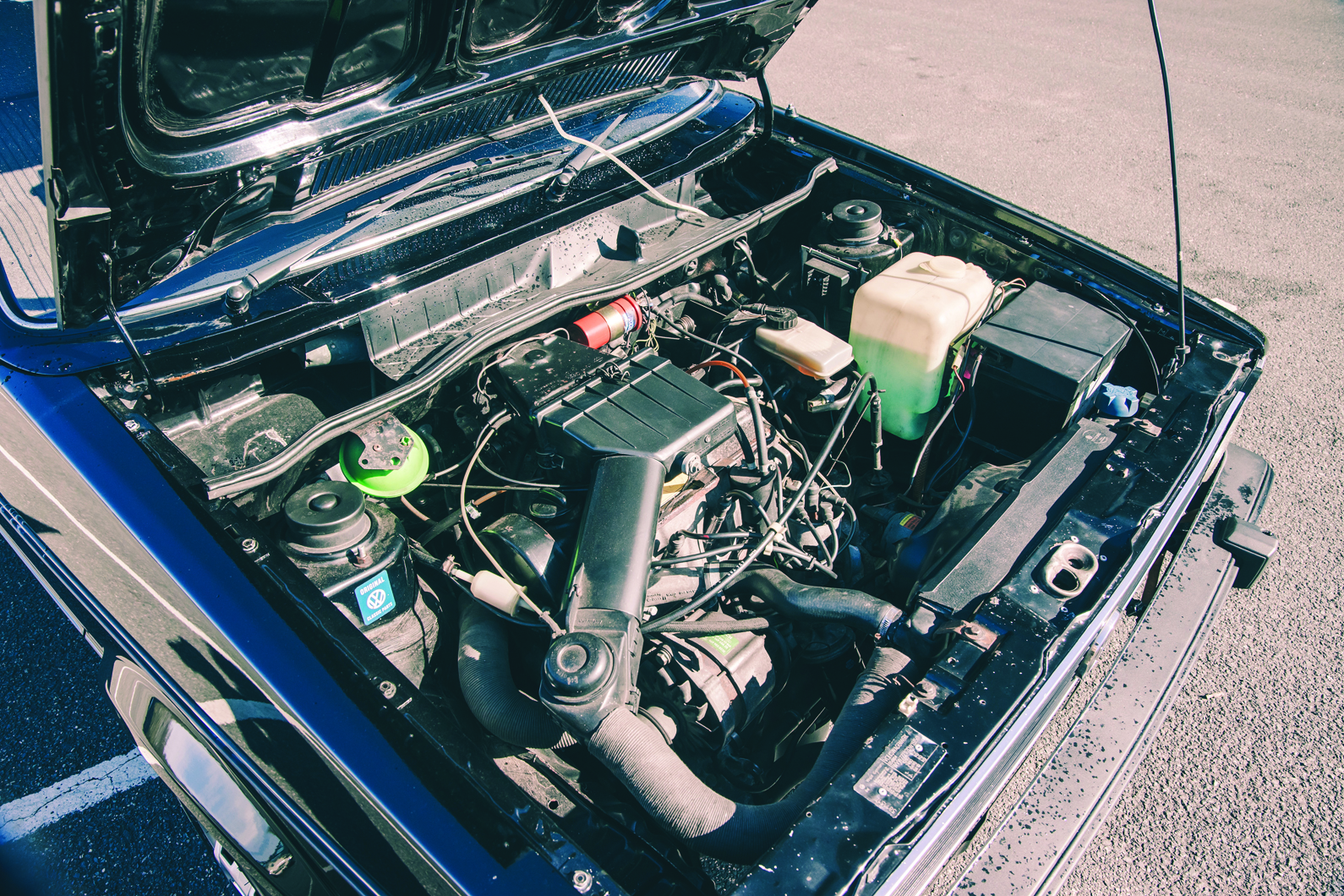
And then there was the Golf’s drivetrain: a transversely located, overhead-cam ‘four’, with its four-speed transmission in-unit at the side of the engine sending drive to the front wheels.
This was clever and space-efficient, but had already been popularised in the likes of Fiat’s 1970 128 (Golf designer Giorgetto Giugiaro even told me that when he first visited Wolfsburg to discuss the project, VW’s engineers had a 128 in bits, to analyse every component).
Why, then, has the Golf become so entrenched in our psyche across eight generations, as the definitive mid-sized hatchback? Interestingly, it was conceived to counter the falling sales of one of our other finalists, the Beetle.
A young Giugiaro was commissioned to create a two-box, front-engined, front-wheel-drive hatchback that would shore up VW’s mid-range offering and provide a sound riposte to class rivals.
What the Italian skilfully created was a design that was both modern and classy, with its crisply drawn ‘origami’ lines, but also wonderfully functional and – as it turned out – one that would stand the test of time.
And then came the GTI. Introduced a year later at the Frankfurt show, this breathed-on Golf, with its 1.6-litre motor boosted to 108bhp by the addition of Bosch K-Jetronic electro-mechanical fuel injection, effectively created the ‘hot hatch’ phenomenon that led to most rivals wanting to grab a piece of the action.
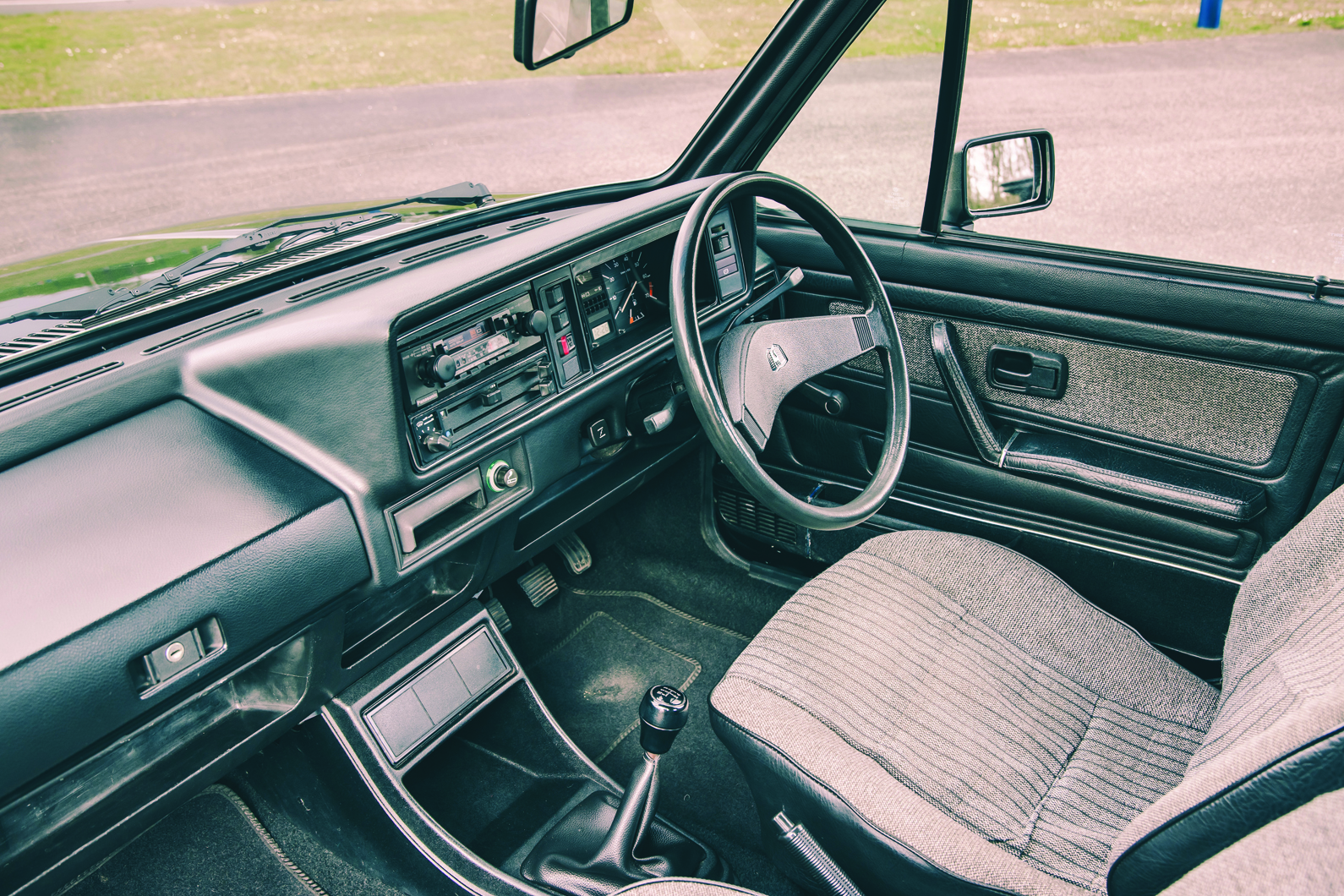
The Volkswagen Golf’s practical, rational interior
It instantly provided a halo over the regular Golf range, too, reinforcing its models’ performance and handling potential, and energising what was already a rather funky-looking car, even when equipped with a 50bhp, 1.1-litre engine.
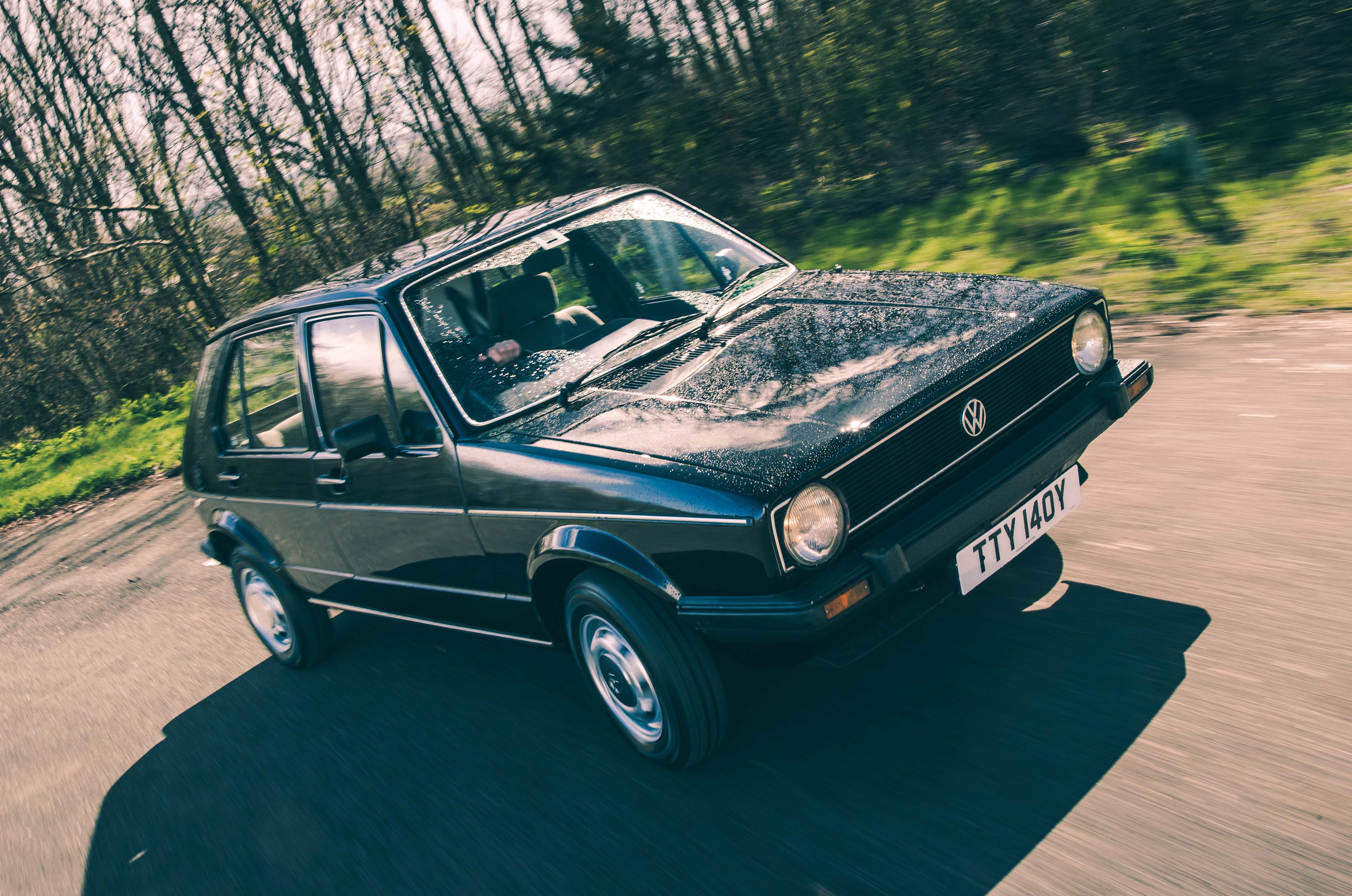
‘Our’ 1982 Golf 1.5 has been plucked from VW UK’s Heritage collection. A slightly later Mk1, it had already received two nip-and-tuck facelifts, adding thicker, wraparound bumpers, and a revised dashboard and instruments.
TTY 140Y was originally owned by a UK-based Volkswagen Audi Group employee, who was about to emigrate to Australia but couldn’t face the prospect of selling his pristine and factory-standard pride and joy to a modifier. He therefore sold the car to VW’s press office.
Given what I learnt from Giugiaro, Peter’s opening comments about the Volkswagen are somewhat ironic. “It was always the car that manufacturers would have in engineering workshops when they wanted to take rivals apart to see how they were costed,” he says.
“It definitely set a standard, and if you saw the Austin Seven as getting people mobile for the first time, the Golf gave them their first experience of a properly modern car.”
Interestingly, Tania sees it as one of the few ‘moderns’ with real driver appeal: “Not only does it do everything right, but it still has bags of character – almost like a vintage car.”
Steve likes its “design economy”, especially around the headlights and grille: “It takes hold of the advantages brought by the Mini and expresses them in a car that people can really use. A slightly bigger package, a better engine, but the same simplicity and practicality.”
“It’s very Germanic,” concludes Stephen, “but was so much more accomplished than a contemporary Ford, Renault or Vauxhall.”
Thanks to: Volkswagen UK
The Volkswagen Golf’s sweet 1.5-litre ‘four’
1970s finalists
- Range Rover The precursor to all modern luxury SUVs, but with bags more class, the first-series Rangie combined immense four-wheel-drive off-roading talent with motorway cruising ability.
- Lamborghini Countach Marcello Gandini’s jaw-dropping Countach became the ultimate ’70s poster car for an aspirational generation, beloved for its mid-mounted V12 and scissor doors.
- Citroën CX Bucking pretty much every large-car convention, the front-wheel-drive CX was aerodynamic, luxurious and soft-riding thanks to clever hydropneumatic self-levelling suspension.
- Fiat 128 Another European Car of the Year, the sharp-handling 128 provided the template for every small and mid-sized front-drive car. Boxy and functional, it was to be Dante Giacosa’s final design.
- Lotus Esprit From Giorgetto Giugiaro’s original wedge, the Esprit evolved through a 28-year life, selling more than 10,000 cars with power outputs ranging from 160-350bhp.
- Mercedes-Benz S-Class The W116 rapidly became a new luxury benchmark, with its vault-like quality, pioneering safety – including ABS – and the epic 6.9-litre SEL range-topper.
- Porsche 928 Famed for being the only sports car to be European Car of the Year (in 1978), the 240bhp, V8-powered 928 was intended as a 911 replacement, but was outlived by its rear-engined sibling.
- Renault 5 The stylish 5 defined the supermini class in the early ‘70s. With its en vogue hatchback, practical plastic bumpers and peppy motor, its influence has now extended to a 21st-century EV.
- Saab 99 turbo Not the first turbo production model (America got there first, with Oldsmobile and Chevrolet), but the punchy yet safety-conscious 145bhp 99 popularised the concept.
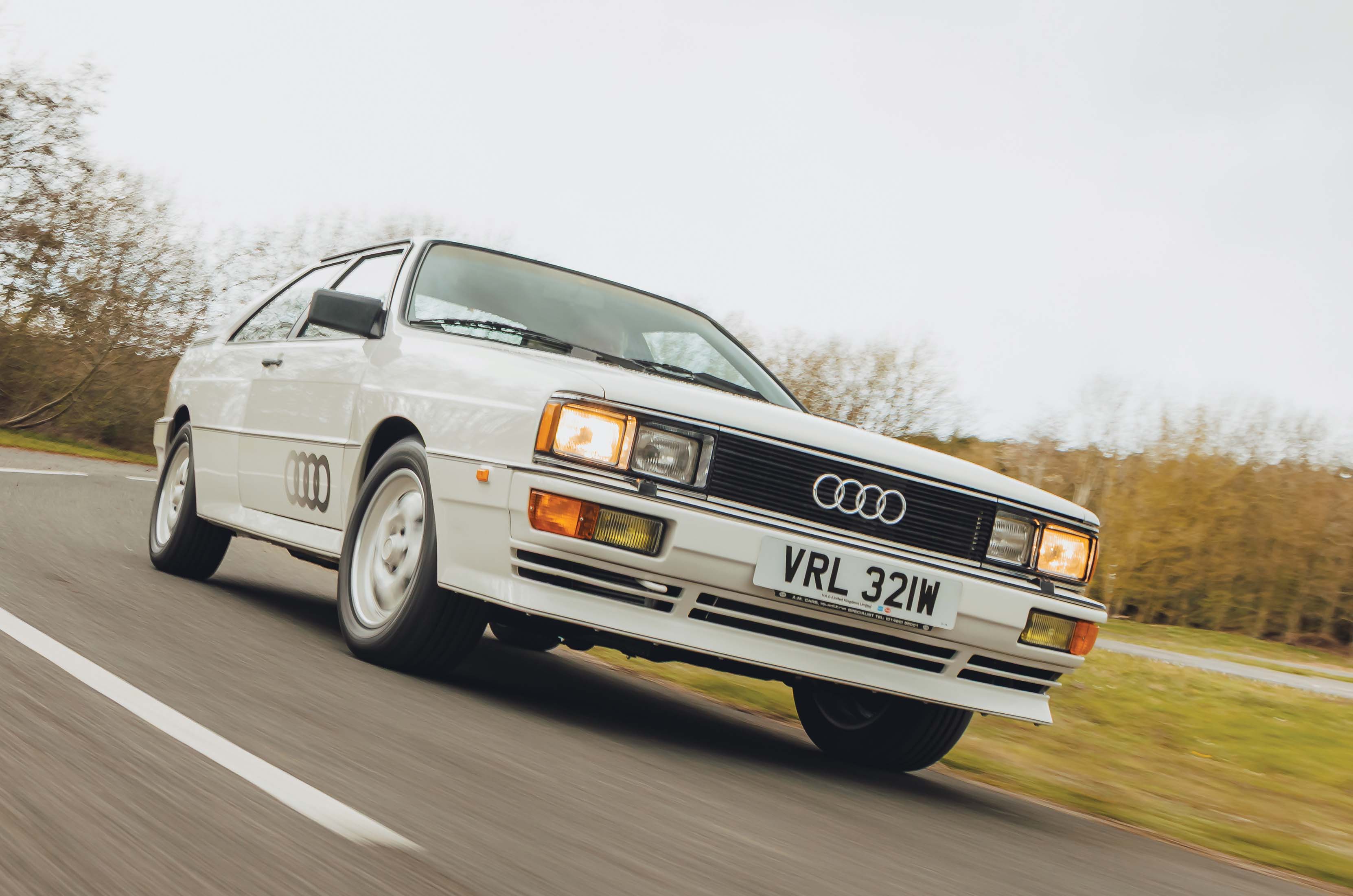
Audi quattro: 1980s finalist
The Audi quattro brought rally-stage technology to the road
At the start of the 1970s, no one would have bet on Audi releasing a car that was to transform its reputation from relative minnow to big hitter, while changing the face of international rallying.
The quattro was neither the first production car to be turbocharged nor to use four-wheel-drive technology, but combining these two features in a refined, attractive and blisteringly rapid coupé was a trick that no other manufacturer had pulled off before.
Had it not been for the determined efforts of Audi engineer Jörg Bensinger back in the early ’70s, it’s likely the quattro would never have existed.
Bensinger took his original inspiration from a small Volkswagen military vehicle called the Iltis, and built an Audi 80-based prototype using that car’s four-wheel-drive system and the 160bhp five-cylinder motor from a 200 Turbo.
So effective was it across icy and snowy roads that it was cleared for production, but on the condition that it would be homologated for international rallying as a means of raising the road car’s profile.
After being reimagined using Audi’s Coupé as a base, some clever refinements were made to its transmission system, making it more comfortable to drive in urban environments.
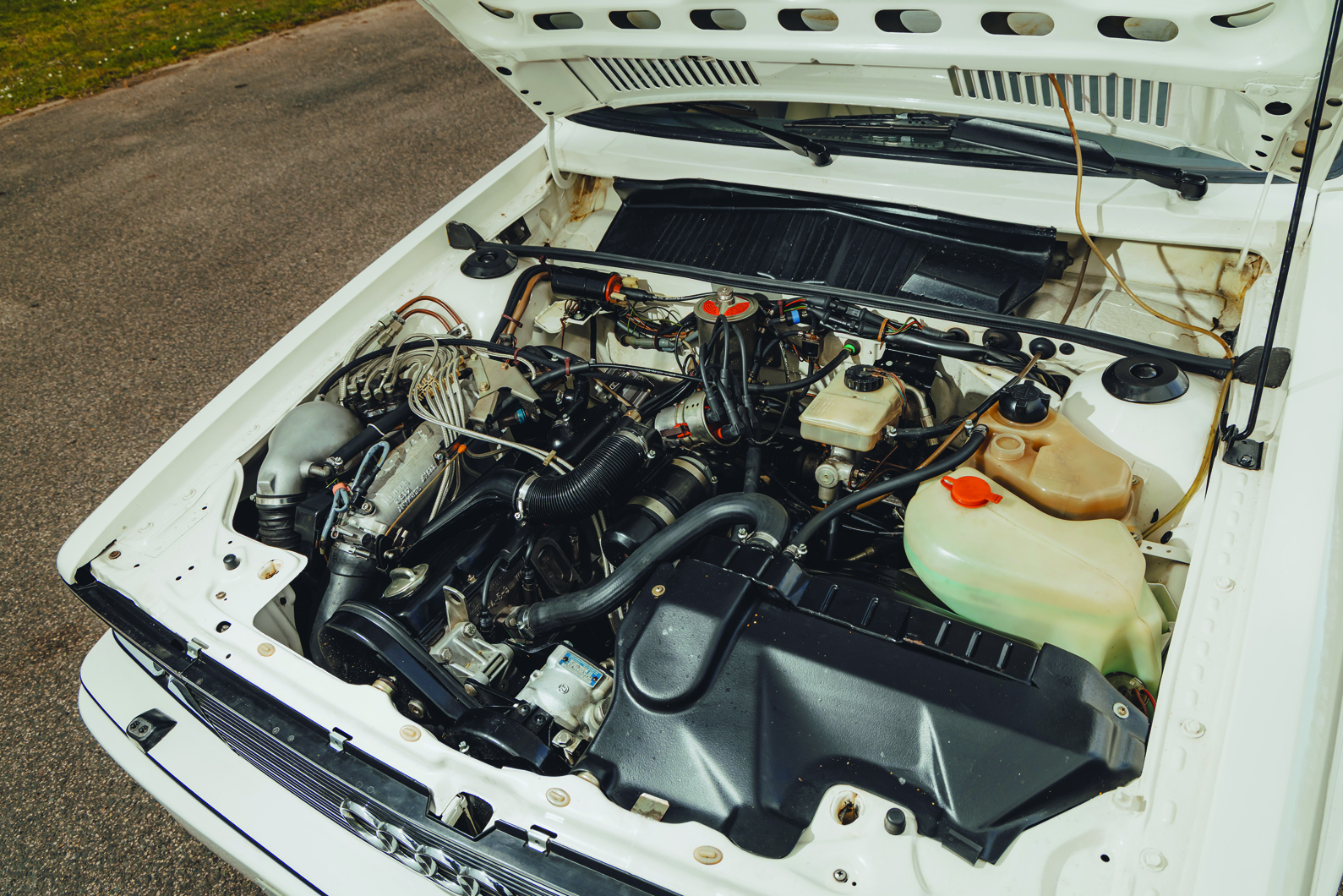
These included fitting a modified VW Polo differential, taking its drive from a five-speed gearbox through a hollow output shaft, in which a rotating pinion shaft then took drive forward again to the front wheels.
The output of the blown 2144cc ‘five’ was also increased to 200bhp, its evocative exhaust timbre going on to provide the soundtrack of 1980s rallying.
Early Audi quattros were all left-hand drive
And nothing could touch the quattro on the stages in the early years. After Franz Wittmann and Kurt Nestinger won its debut Jänner Rallye in January ’81, Hannu Mikkola/Arne Hertz took the car’s maiden World Championship round in Sweden, followed by teammates Michèle Mouton and Fabrizia Pons winning in Sanremo the same year.
Audi’s new warrior was raising the bar so high that other teams had no choice but to arrive at their own 4WD/turbo solutions in order to compete. Few cars had transformed the rallying landscape in such short order.
As a road car it was equally formidable, as former Classic & Sports Car editorial director Mel Nichols recalls after driving one at its Geneva press launch: “On the wet, icy and snowy Swiss roads it was a revelation. Most who drove it that day loved it and hailed it as a revolution.”
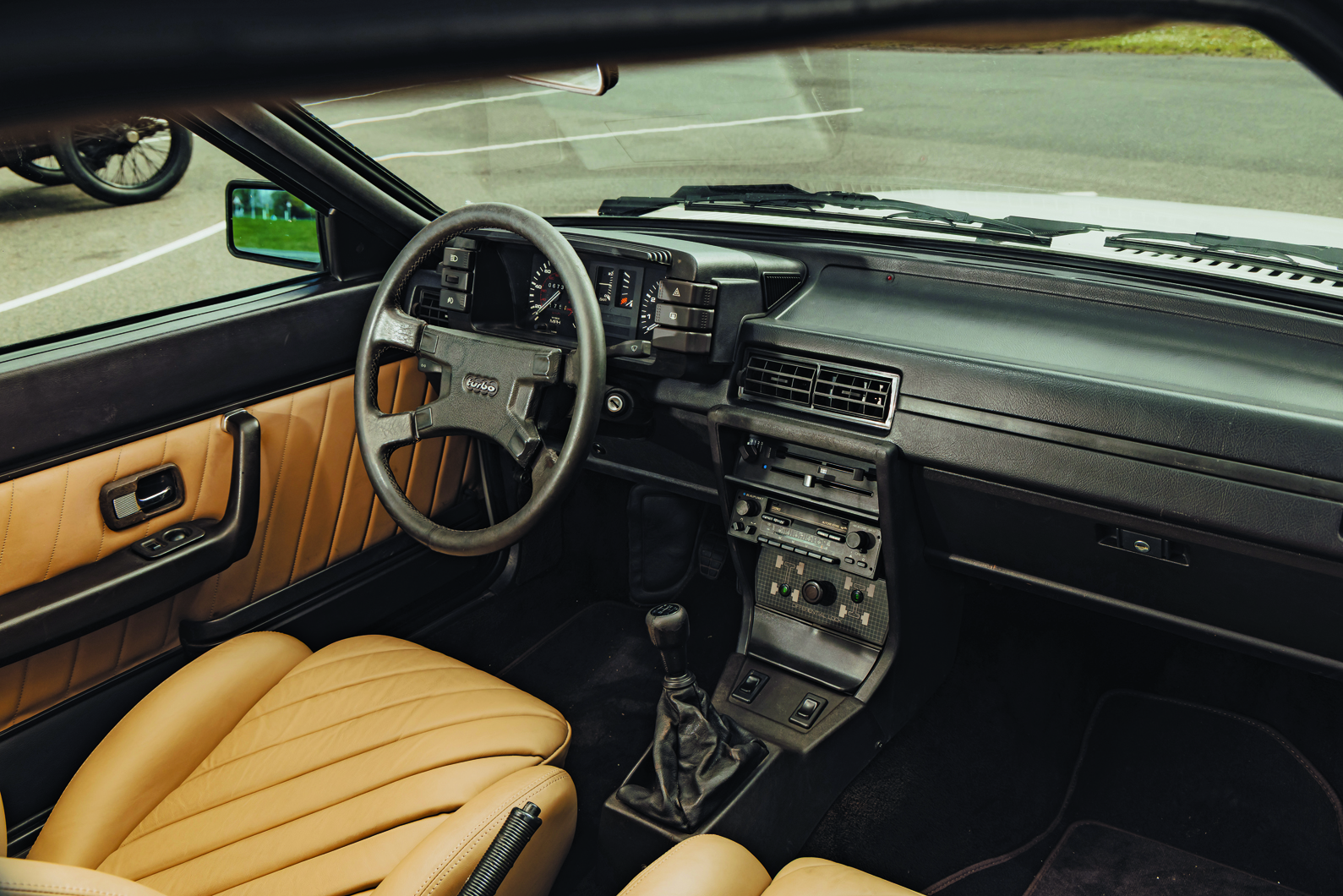
Having owned an early, rather dog-eared quattro at the start of the ’90s, I can concur, and happily Adam Marsden’s superb Alpine White 1981 example with us today is in another league to my old car.
Wearing optional Fuchs five-spoke alloys, it’s a twin for Audi’s Geneva display car and, save a repaint eight years ago, remains in highly original condition.
Tania is clearly impressed, and Adam’s car has obviously triggered motorsport memories: “Michèle Mouton was achingly cool in the quattro. Seeing her in that car and watching an all-female team beat the men at their own game had a huge influence on me.”
Stephen believes the quattro’s strength was the seamlessness of its advances: “Somehow cars that had [4WD] systems had to justify why they had them – even those such as the Jensen FF. The quattro didn’t need to; its technology was just integrated so much better.”
“I came to the quattro thinking of a transfer case, gear whine, no performance and crude suspension,” admits Steve. “But it proved that you could have all of that in a sophisticated package.
“There was enough poke, without going mad, and that combination made it such a fantastic car for covering ground.”
Thanks to: Adam Marsden of quattro specialist AM Cars
The Audi quattro’s turbo ‘five’ sits well forward
1980s shortlist
- Mazda MX-5 Light, affordable, reliable and rear-wheel drive, Mazda’s two-seater sports car was the trick that BL had missed. Launched in 1989, the model is now in its fourth generation.
- Renault Espace Matra-designed and manufactured, this 1984 people carrier had a galvanised steel frame, glassfibre body, swivel front seats and rear chairs that could be removed to create a small van.
- BMW E30 The second 3 Series, built from 1982-’94, offered the usual blend of rear-drive, four- and six-cylinder engines, plus a choice of saloon, estate and cabrio bodies. Topped by the M3.
- Ferrari F40 The last model to be approved by Enzo, the mid-engined, rear-drive, limited-run F40 had a carbonfibre body and twin-turbo V8, making it the first production car to exceed 200mph.
- Fiat Panda The first and purest interpretation of the Panda was designed by Giugiaro and became Fiat’s own Citroën 2CV, with removable hammock seats, a flat windscreen and ultra-low running costs.
- Ford Sierra RS Cosworth Homologated for Group A touring-car racing, the Cossie was based on the three-door Sierra body and powered by a 2-litre turbo engine, giving 204bhp and 150mph.
- Nissan Skyline GT-R Another homologation special, the R32 used all-wheel-drive tech to deploy power from its twin-turbo, 2.6-litre ‘six’. The Skyline dominated Japanese touring-car racing.
- Peugeot 205 GTI Built from 1984-’94, the hot 205 was renowned for its biddable chassis and superb driver engagement. Initially sold with a 1.6-litre engine, later models had a 130bhp 1.9.
- Porsche 959 Conceived for Group B rallying, the 959 was a low-volume (337 built), sophisticated all-wheel-drive supercar capable of 197mph, thanks to its twin-turbocharged, 450bhp flat-six.
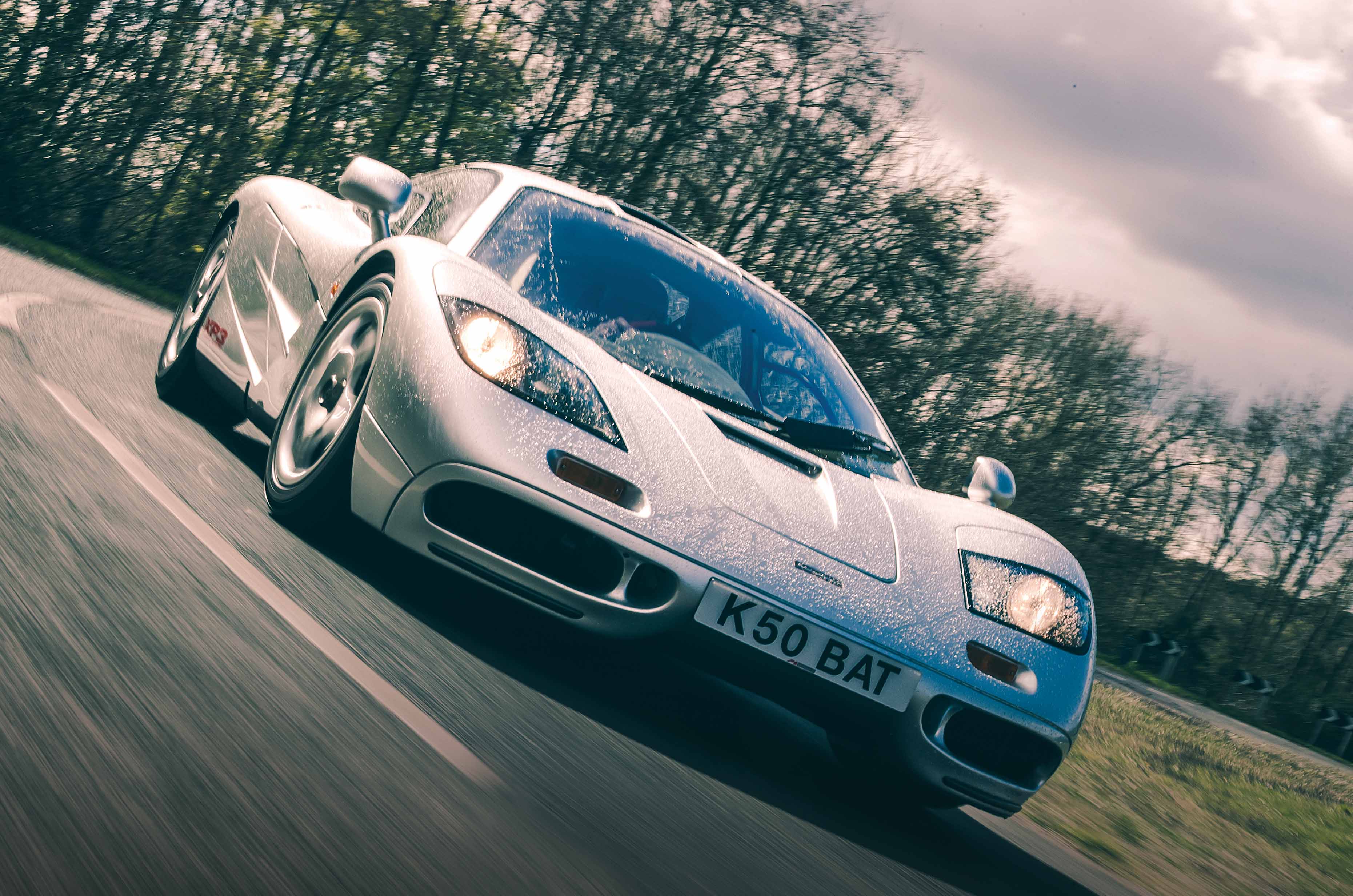
McLaren F1: 1990s finalist
The McLaren F1 – the definitive modern hypercar – has been beaten, but not bettered
Maybe it’s just his natural modesty, but when asked to vote for the most influential car of the 1990s, Peter Stevens awards the Subaru Impreza Turbo top marks, with the McLaren F1 – a design for which he was responsible – as runner-up.
Then again, Peter’s view appears to be tempered by what the F1’s influence begat. “We who worked on it wanted to create the best-possible performance car,” he says. “There was nothing unpretentious in that thinking… What we all started, though, was this obsession with hypercars that all have to be faster than the last one.”
While those words contain a cynical edge, he is correct: 34 years later, the F1 has not in any meaningful way influenced the cars most of us drive today, but it did create an entirely new genre of super-fast machines that pushed the maximum-speed envelope further than ever before.
So, yes, the McLaren is immensely influential, but in a rarefied way – and there is nothing wrong with that.
The F1’s history is littered with extremes. Gordon Murray’s early concept for a three-seat McLaren road car impressed company boss Ron Dennis enough to give the green light for its production.
Peter was commissioned to style the car’s exterior and cabin, while BMW was contracted to develop a bespoke V12 capable of propelling it into the stratosphere.
The car that materialised was a wingless, mid-engined, rear-drive torpedo weighing just 1138kg thanks to its carbonfibre monocoque construction, which could accommodate a driver flanked by two passengers.
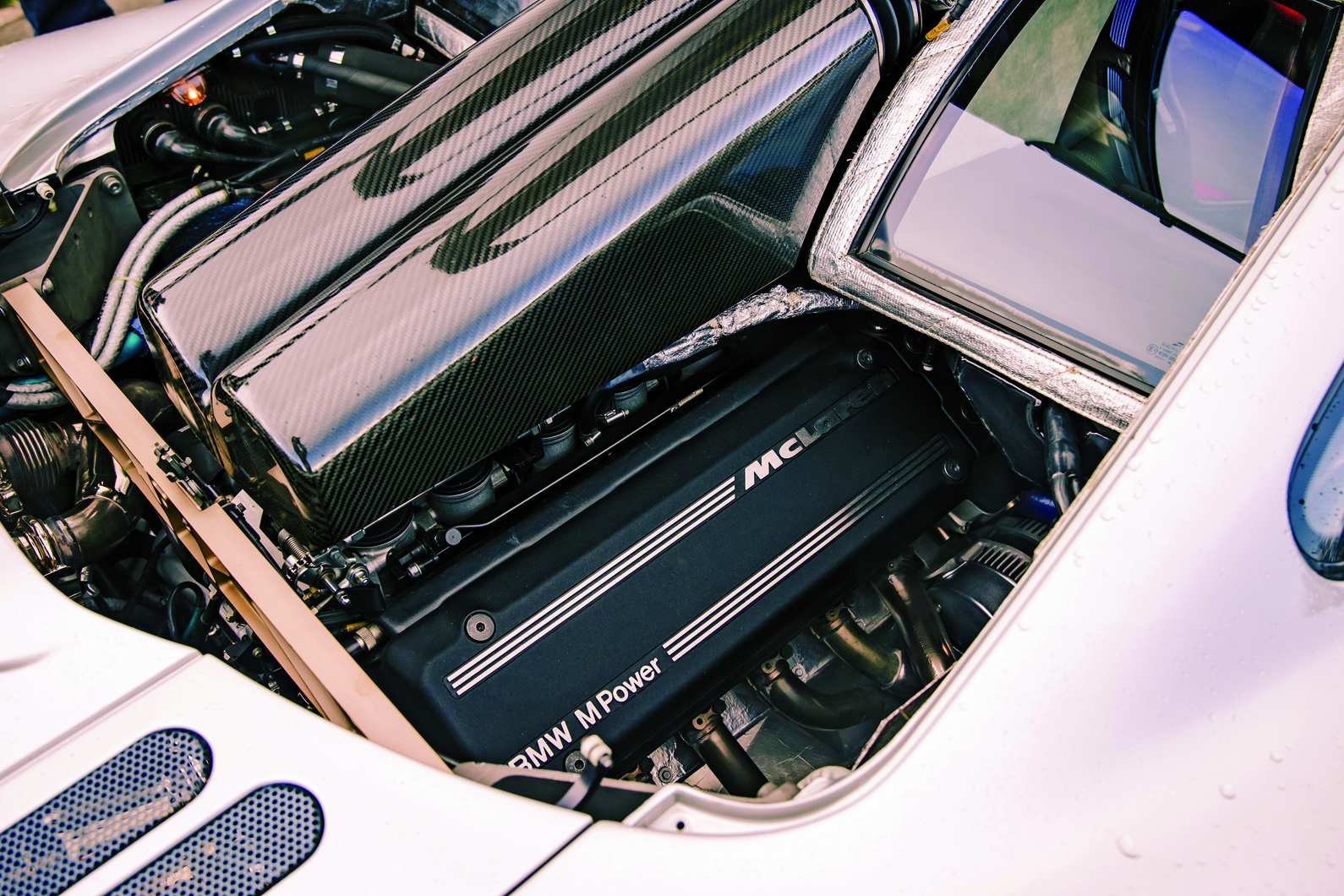
BMW’s all-aluminium V12 masterpiece, with its twin overhead cams per bank, variable valve timing and four valves per cylinder, displaced 6064cc and generated a scarcely imaginable 627bhp.
Famously, 16g of gold foil was used to line each car, insulating the carbonfibre body panels from the exhausts’ intense heat.
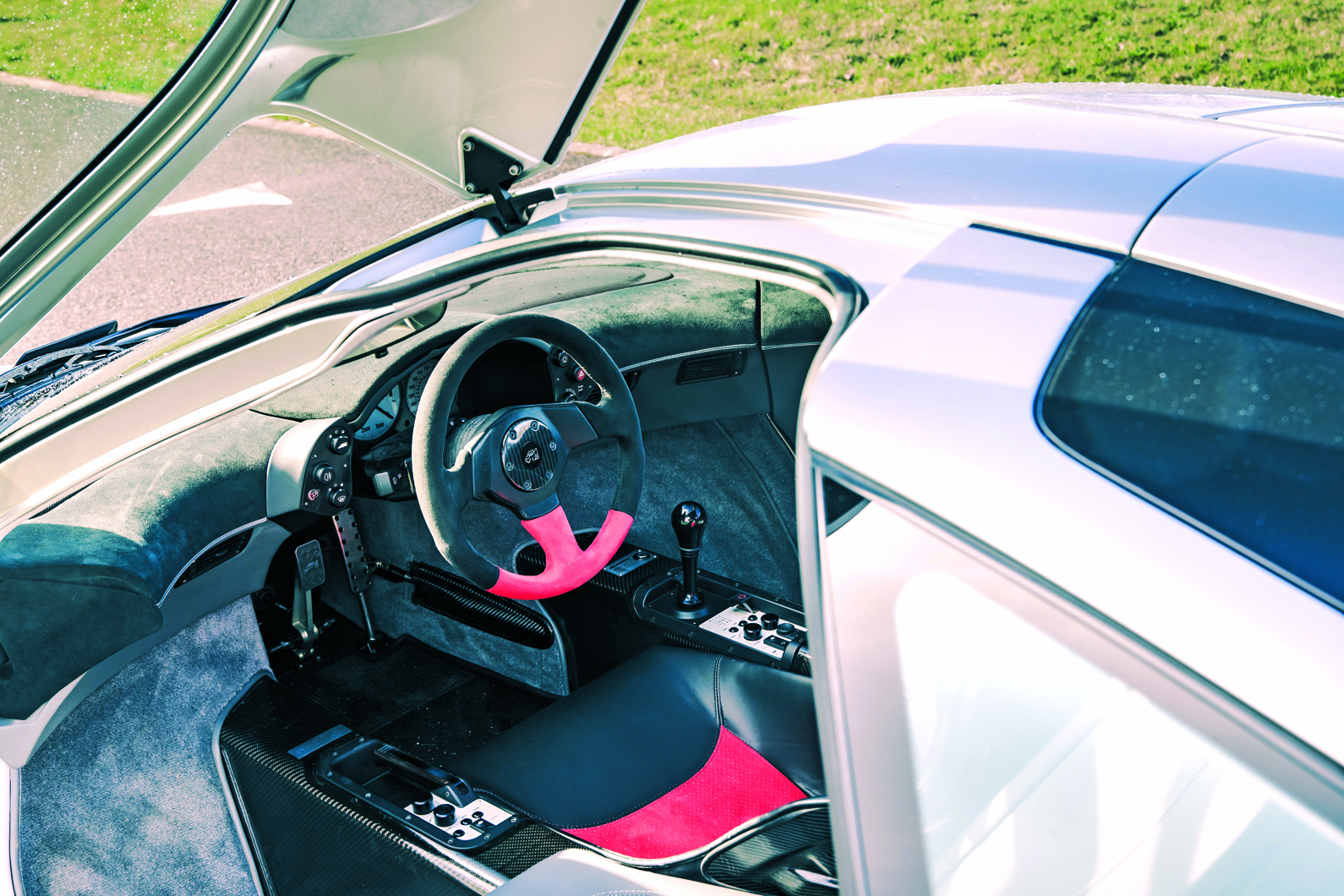
The McLaren F1’s central driving position, accessed through dihedral doors
Autocar was the only magazine permitted a full road test of the new car, and in May 1994 it recorded acceleration figures of 0-60mph in 3.2 secs, 0-100mph in 6.3 secs and 0-200mph in 28 secs dead, concluding: ‘We are convinced that the F1 will be remembered as one of the great events in the history of the car.’
And while its testers never broached the F1’s top speed, in 1998 McLaren’s XP5 prototype, shorn of its speed limiter, set a new Guinness record as the world’s fastest production car, with a top speed of 240.1mph at VW’s Ehra-Lessien test track.
Oh, to be there right now. As I stretch through the F1’s dihedral door and into its central seat for a brief test drive, never has there been more pressure to return a car in one piece.
‘Our’ car is the oldest pre-production prototype, XP3, originally retained by Gordon Murray and now in private ownership. This is the first time (save a display at Rétromobile a few years back) in a decade that it has been seen – let alone driven – in public.
It’s also the same car in which F1 World Champion Mika Häkkinen circulated Nardò test track at 231mph in 1993.
Simon is a former F1 owner and has arranged for XP3 to be with us today, so he’s well qualified to talk about the McLaren’s importance: “Nothing else has so towered over its rivals in terms of price, performance and user-friendliness.
“The F1 is the complete package and, crucially, was conceived by engineers, not marketeers, as ‘the greatest’ from the start.”
Steve concurs, adding that Murray loved absolutes: “Absolute lightness, absolute quality – which was a new concept, that watch-like character. And even today, if someone says ‘It’s faster than a McLaren F1’, that still counts.”
Thanks to: the F1’s generous owner; McLaren guru Kidston SA; and Alistair Konig, Konig Cars
The McLaren F1’s sensational BMW V12
1990s shortlist
- Toyota Prius The world’s first mass-produced hybrid, Toyota’s original Prius was a genuine innovator, its concept of a petrol/electric powertrain now used across the industry.
- Subaru Impreza Turbo The superb Impreza revolutionised the concept of rally-bred road cars, with its turbocharged flat-four, all-wheel drive and 0-60mph in under 6 secs.
- Audi TT The Bauhaus-inspired design for the TT disguised its humble Golf underpinnings when it arrived in 1998. Performance was strong, too, with up to 225bhp on tap from its blown ‘four’.
- Ford Focus The 1999 European Car of the Year (and winner of Classic & Sports Car’s ECotY tribute), the Focus was a revelation with its New Edge styling and clever ‘control blade’ rear suspension.
- GM EV-1 The first mass-produced electric vehicle from a major US manufacturer, the EV-1 was an aerodynamic two-seater coupé. Limited 50-100-mile range dented its popularity.
- Honda NSX Famously ‘developed’ by F1 hero Ayrton Senna, the NSX gave Ferrari-rivalling pace combined with Honda reliability. The first production car to use an all-aluminium monocoque chassis.
- Lexus LS400 Supremely refined and precision-engineered, the LS400 took the fight to Mercedes’ S-Class. Its ultra-smooth and quiet 4-litre V8 engine was a hard act for rivals to follow.
- Lotus Elise The diminutive Elise embraced Colin Chapman’s ‘add lightness’ ethos when launched in 1996. Using an innovative extruded/bonded aluminium chassis, it weighed just 723kg.
- Toyota RAV4 The genesis of the popular ‘soft-roader’ segment, the RAV4 employed simple, light monocoque build, a 2-litre, four-cylinder engine and front- or four-wheel drive when launched in 1994.
The podium
Never mind YouTubers wielding selfie sticks, in the automotive world these are the true celebrities well worthy of the moniker
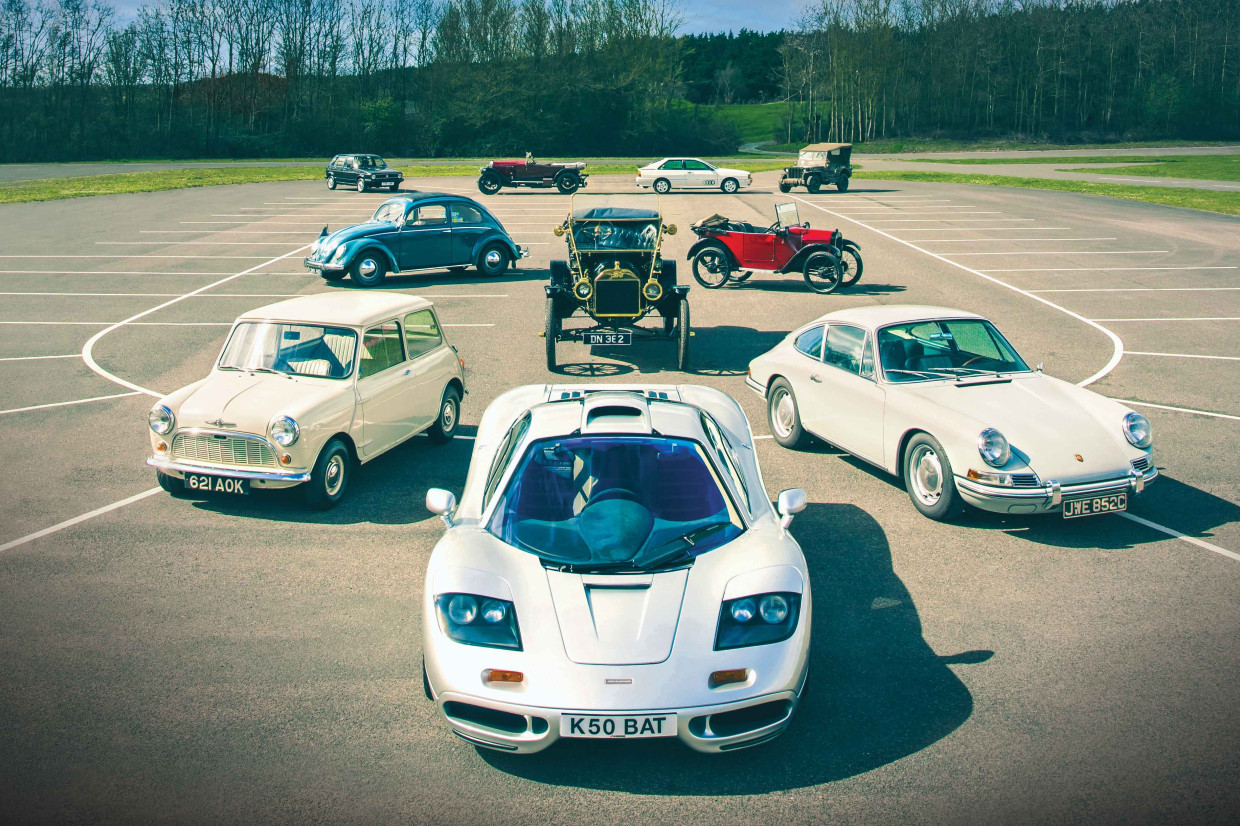
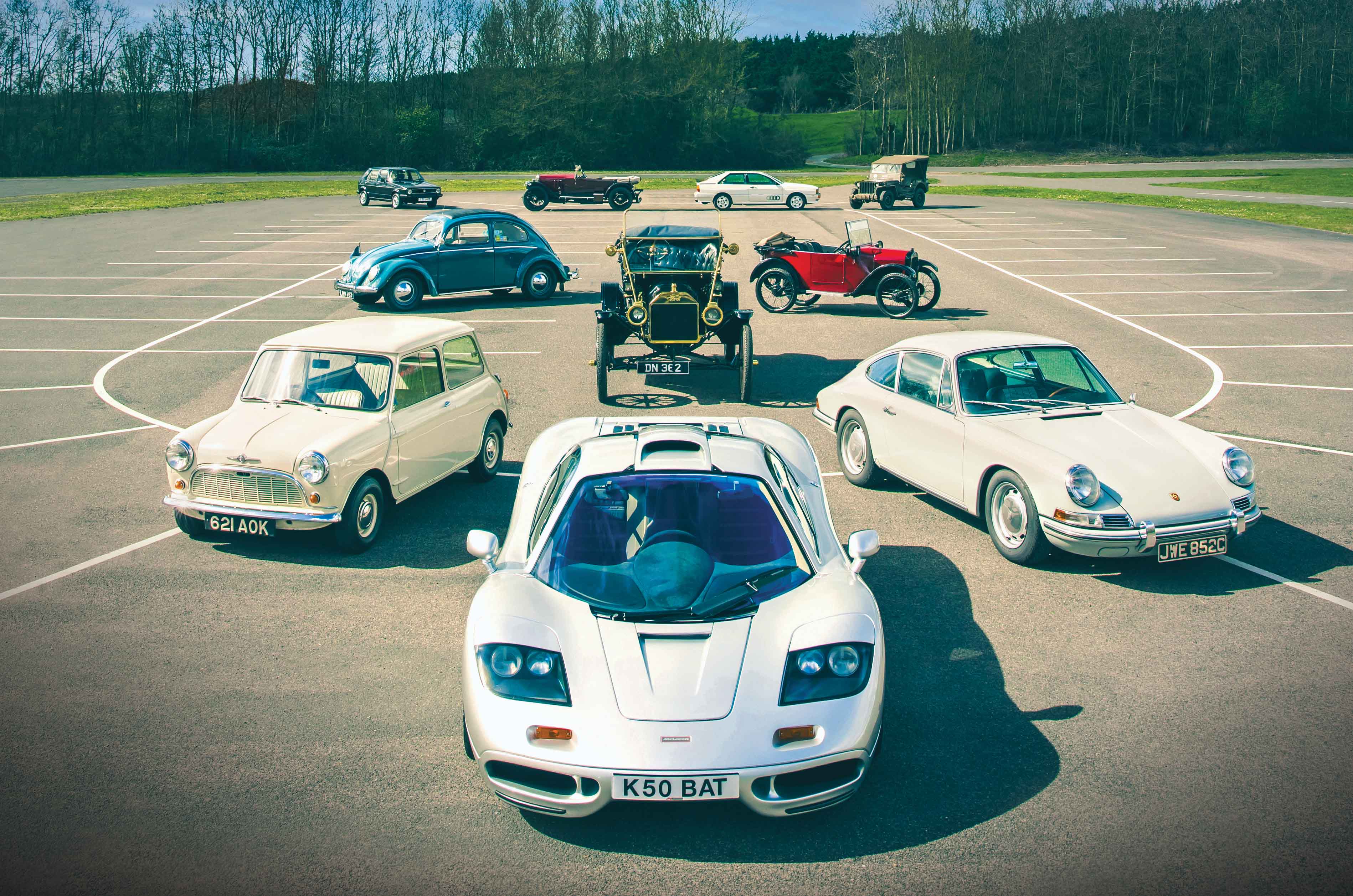
After whittling down our 100 20th-century influencers to just 10 cars, the even tougher challenge for our panel is to select not only two runners-up, but one car above all that has made the biggest impact to our motoring lives.
We’re not just talking about specific innovations, either.
The Vauxhall 30-98 was simply the greatest sporting all-rounder of its day, agree our judges, and while the Porsche 911’s rear-engined configuration has always been inherently flawed, the model’s all-season, all-reason usability and quality have spurred on its rivals to improve their own products.
Then there are the Austin Seven and Volkswagen Golf, both of which, by incorporating the latest technologies and keeping their prices to a minimum, democratised motoring for the masses. You can include the Beetle here, too, though its cultural influence has been felt far wider than the sum of its parts.
Voting for the podium finishers includes points for the quattro – from Steve and Tania, both of whom admire its integration of 4WD technology into such a fleet and refined package – and for the Jeep, from Peter, who applauds its long-term design influence in the civilian sector.
But the first model on to our podium, with 16 points, is the Mini. Stephen gives it a maximum score, believing that its “amazing interior space” versus its tiny footprint is what makes it a real game-changer.
It is Steve’s second choice for much the same reasons, while Peter loves that it is the product of “a perverse mind who could think out of the box”.
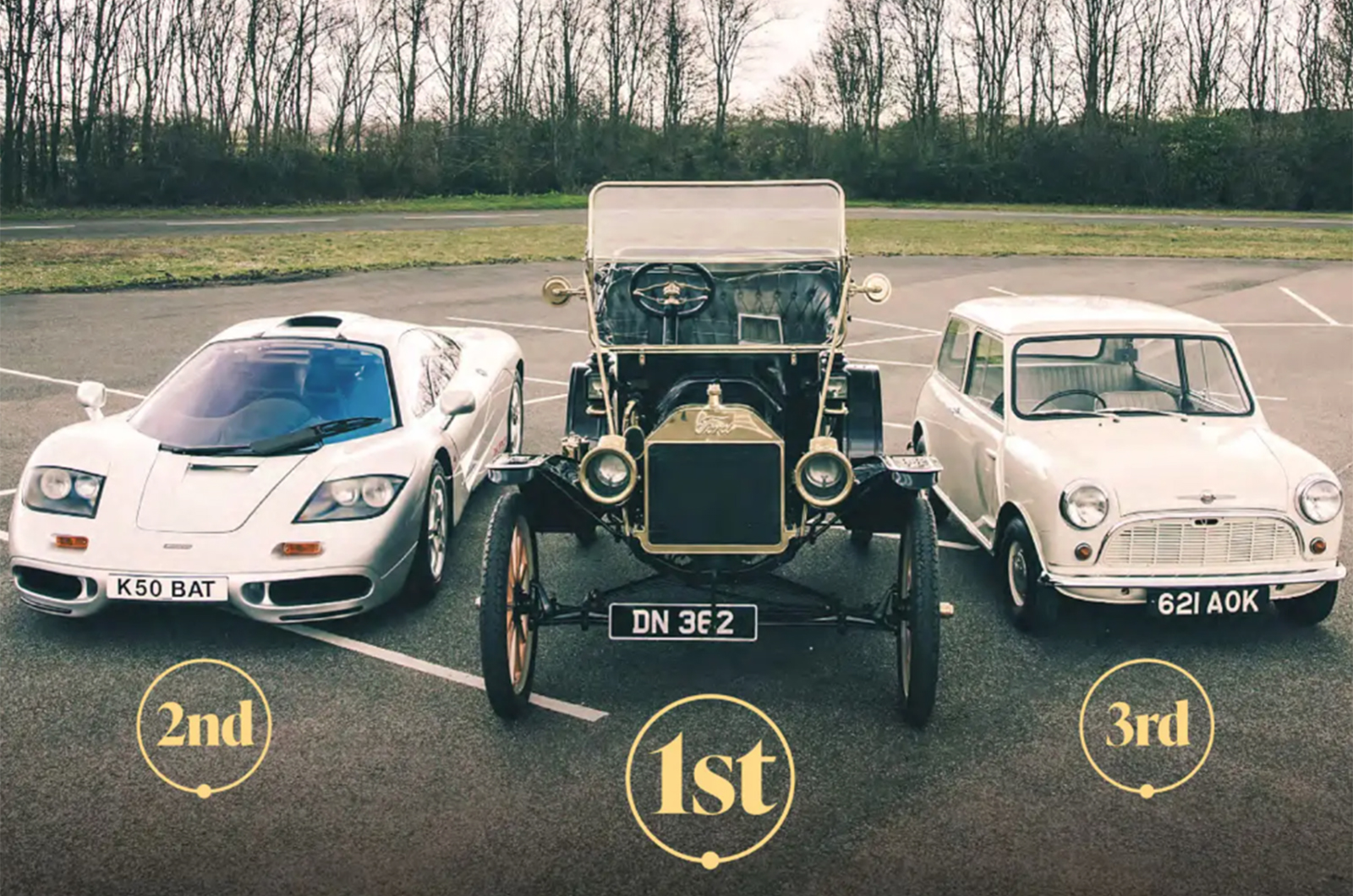
Next, with a score of 26, comes the McLaren F1. Simon rates the hypercar above the Ferrari F40, Bugatti Veyron and Porsche Carrera GT; it is “The One”, in his opinion.
Peter believes it set a standard that people aspired to, and Stephen compliments it on its intelligent conception: “There was some thought given to the fact that somebody is going to drive this car slowly as well as quickly.”
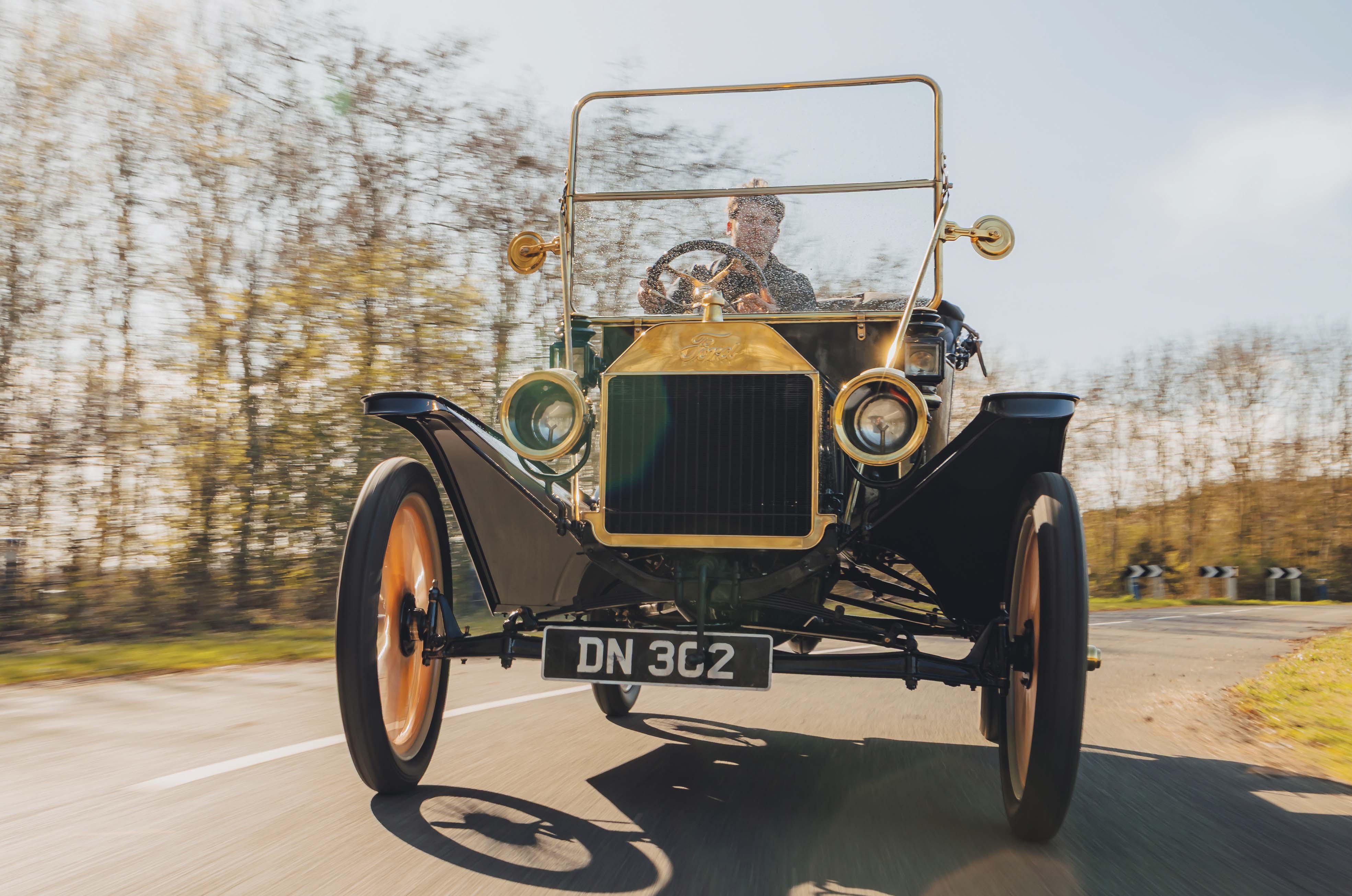
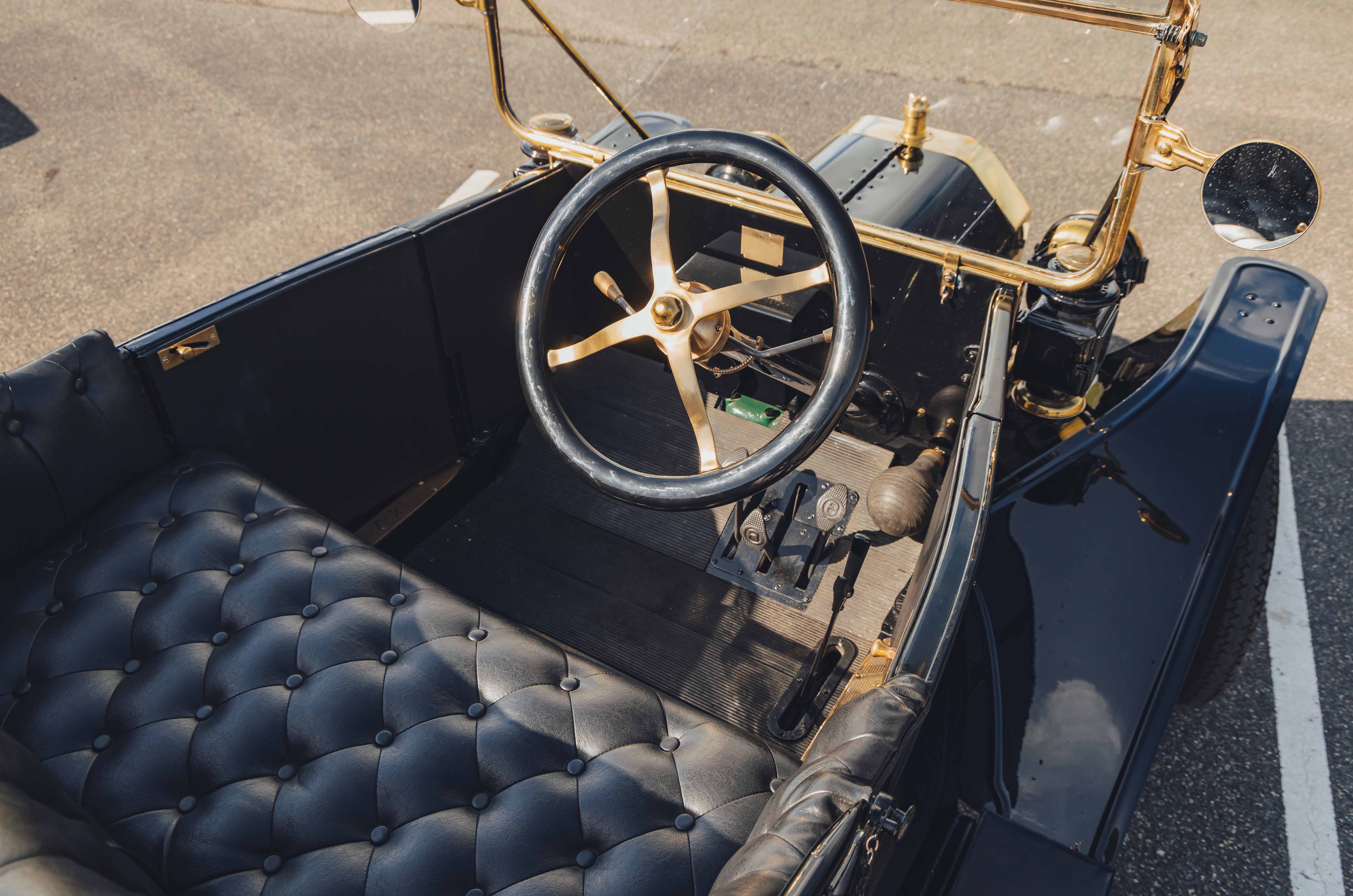
But one stands high (both literally and metaphorically) above all the others at our gathering, as the seminal influencer of the previous century: the Ford Model T.
Collecting 37 points, it is a decisive win, too, and the only machine that all five judges placed in their top three.
Our oldest finalist receives top honours and, as Peter concludes, its biggest influence was its accessibility: “It made people realise they could have a car cheaply, and that it would transform their lives.”
Thanks to: the entire team at the brilliant British Motor Museum
Factfiles
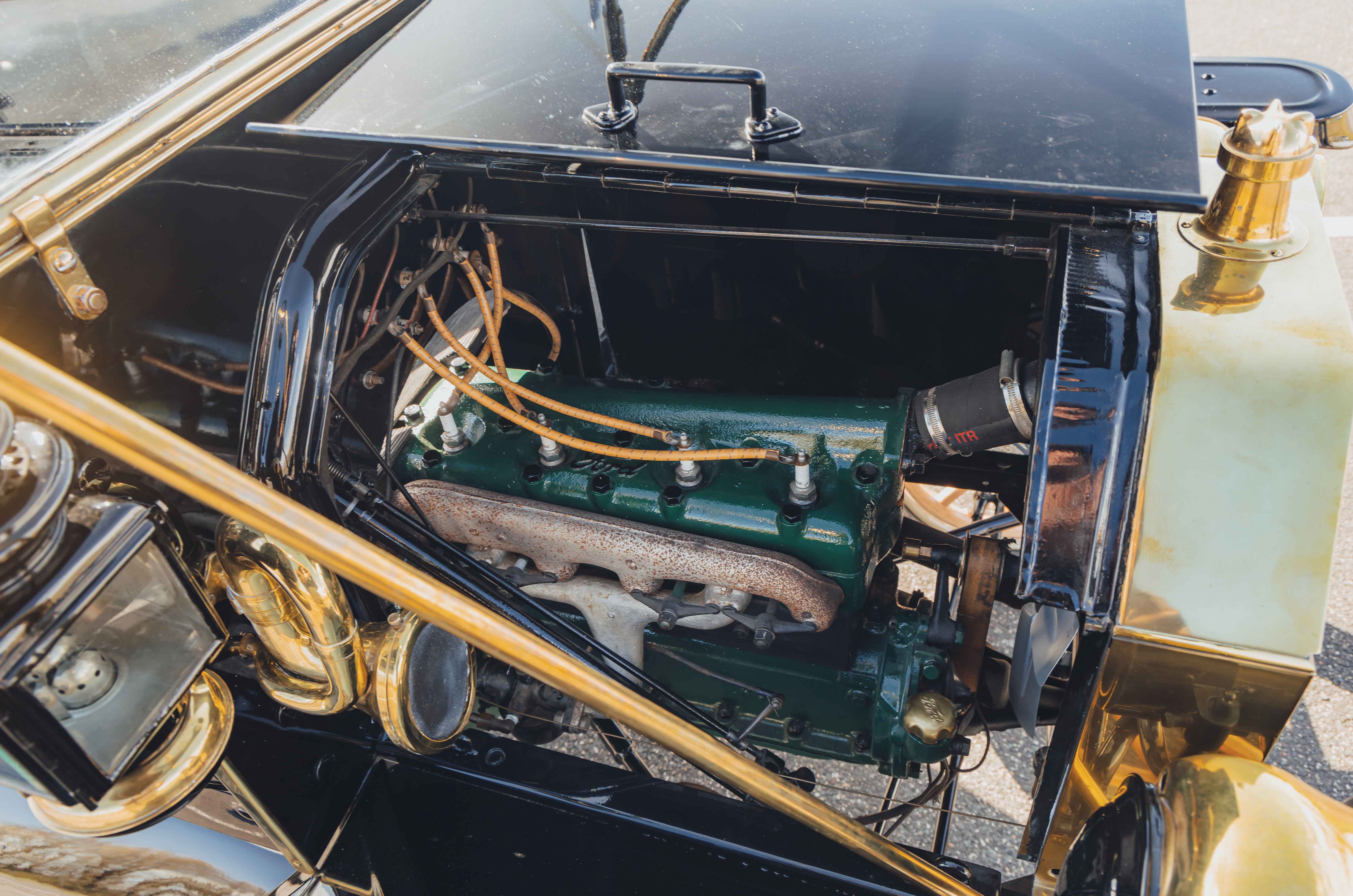
Ford Model T
- Sold/number built 1908-’27/15m-plus
- Construction pressed-steel twin-rail chassis with engine as centre crossmember, steel body over wooden frame
- Engine all-iron, L-head sidevalve 2890cc ‘four’, single updraught carburettor
- Max power 20bhp
- Max torque n/a
- Transmission two-speed epicyclic manual, RWD
- Suspension transverse leaf spring f/r
- Steering epicyclic gear reduction acting directly on track rods
- Brakes transmission drum, plus rear drums on hand lever
- Weight 1200-1650lb (540-750kg)
- 0-60mph n/a
- Top speed 42mph
- Mpg 16-25
- Price new $780 (1910)
- Price now £8-25,000*
Vauxhall 30-98
(Data for E-type)
- Sold/number built 1913-’27/598
- Construction pressed-steel chassis, aluminium body
- Engine all-iron, monobloc, sidevalve 4526cc ‘four’, single Zenith carburettor
- Max power 98bhp @ 2750rpm
- Max torque n/a
- Transmission four-speed manual with multi-plate clutch, RWD
- Suspension semi-elliptic springs f/r, Derihon shock absorbers
- Steering worm and wheel
- Brakes transmission footbrake, hand lever to rear drums
- Weight c3300lb (1500kg)
- 0-60mph n/a
- Top speed 85mph
- Mpg 15
- Price new £1675 (Velox body)
- Price now £150-350,000*
Austin Seven
- Sold/number built 1922-’39/290,924
- Construction steel A-frame chassis, steel body
- Engine iron-block/head, alloy-crankcase 747cc ‘four’, Zenith carburettor
- Max power 10.5bhp @ 2400rpm
- Max torque n/a
- Transmission three-speed manual, RWD
- Suspension: front forged axle, leading arms, transverse leaf spring rear live axle, torque tube, quarter-elliptic leaf springs
- Steering worm and wheel
- Brakes cable drums f/r
- Weight 840lb (381kg)
- 0-60mph n/a
- Top speed 50mph
- Mpg 42
- Price new £165 (1923)
- Price now £5-20,000*
Volkswagen Beetle
- Sold/number built 1938-2003/21,529,464
- Construction steel platform chassis, pressed-steel body
- Engine all-alloy, ohv 1131cc flat-four, Solex carburettor
- Max power 25bhp @ 3300rpm
- Max torque 49lb ft @ 2000rpm
- Transmission four-speed manual, RWD
- Suspension independent, at front by trailing arms, anti-roll bar rear swing axles; torsion bars, telescopic dampers f/r
- Steering worm and nut
- Brakes drums f/r
- Weight 1967lb (892kg)
- 0-60mph n/a
- Top speed 65mph
- Mpg 30-37
- Price new £600 (est)
- Price now £18-45,000*
Willys Jeep
(Data for Willys MB)
- Sold/number built 1941-’45/359,489
- Construction steel ladder chassis, steel body
- Engine all-iron, sidevalve 2199cc ‘four’, single Carter carburettor
- Max power 60bhp @ 3600rpm
- Max torque 105lb ft @ 2000rpm
- Transmission three-speed manual with transfer box, 4WD
- Suspension live axle, semi-elliptic leaf springs, telescopic dampers f/r
- Steering cam and lever
- Brakes drums f/r
- Weight 2453lb (1112kg)
- 0-60mph n/a
- Top speed 60mph
- Mpg n/a
- Price new c$900
- Price now £17-35,000*
BMC Mini
- Sold/number built 1959-2000/5.38m
- Construction steel monocoque, subframes f/r
- Engine all-iron, ohv 848cc ‘four’, single SU HS2 carburettor
- Max power 34bhp @ 5500rpm
- Max torque 44lb ft @ 2900rpm
- Transmission four-speed manual, FWD
- Suspension independent, by rubber-cone springs, telescopic dampers f/r
- Steering rack and pinion
- Brakes drums f/r
- Weight 1290lb (590kg)
- 0-60mph n/a
- Top speed 72mph
- Mpg 40-50
- Price new £497
- Price now £12-25,000*
Porsche 911
- Sold/number built 1964-’73/89,652 (first-generation)
- Construction steel monocoque
- Engine all-alloy, sohc-per-bank 1991cc flat-six, twin Solex 40 PI-1 carburettors
- Max power 128bhp @ 6100rpm
- Max torque 129lb ft @ 4200rpm
- Transmission five-speed manual, RWD
- Suspension independent, at front by struts rear semi-trailing arms; torsion bars, telescopic dampers, anti-roll bar f/r
- Steering rack and pinion
- Brakes discs f/r
- Weight 2381lb (1080kg)
- 0-60mph 8.7 secs
- Top speed 130mph
- Mpg 21
- Price new £1990
- Price now £80-150,000*
Volkswagen Golf
(Data for 1982 car)
- Sold/number built 1974-’83/c7m
- Construction steel monocoque
- Engine iron-block, alloy-head, sohc 1457cc ‘four’, single Solex carburettor
- Max power 70bhp @ 5600rpm
- Max torque 80lb ft @ 2500rpm
- Transmission four-speed manual, FWD
- Suspension: front independent, by MacPherson struts, lower wishbones rear torsion beam, trailing arms, coil-over dampers
- Steering rack and pinion
- Brakes discs front, drums rear
- Weight 1720lb (780kg)
- 0-60mph 14 secs
- Top speed 97mph
- Mpg 27
- Price new £5539 (1982)
- Price now £4-12,000*
Audi quattro
- Sold/number built 1980-’91/11,452
- Construction steel monocoque
- Engine iron-block, alloy-head, sohc 2144cc ‘five’, KKK turbo, Bosch K-Jetronic injection
- Max power 200bhp @ 5500rpm
- Max torque 210lb ft @ 3500rpm
- Transmission five-speed manual, 4WD
- Suspension independent, by MacPherson struts, anti-roll bar f/r (front only from 1983)
- Steering power-assisted rack and pinion
- Brakes ventilated front, solid rear discs, with servo and ABS
- Weight 2844lb (1290kg)
- 0-60mph 7.3 secs
- Top speed 135mph
- Mpg 19
- Price new £24,204 (’86)
- Price now £30-60,000*
McLaren F1
- Sold/number built 1993-’98/65 (road cars)
- Construction carbonfibre-reinforced-polymer monocoque
- Engine all-alloy, dohc-per-bank 6064cc V12, two computer-controlled injectors per cylinder
- Max power 627bhp @ 7400rpm
- Max torque 479lb ft @ 4000-7000rpm
- Transmission six-speed manual, RWD
- Suspension independent, by double wishbones, coil springs, telescopic dampers f/r; front anti-roll bar
- Steering rack and pinion
- Brakes ventilated discs
- Weight 2509lb (1138kg)
- 0-60mph 3.2 secs
- Top speed 240mph
- Mpg 15.2
- Price new £540,000 (1994)
- Price now £15-23m*
*Prices correct at date of original publication
Enjoy more of the world’s best classic car content every month when you subscribe to C&SC – get our latest deals here
READ MORE
Remembering when Classic & Sports Car revealed its Car of the Century
A century of speed: Britain’s fastest cars
Mini masterclass: from Cooper to ERA Turbo
Simon Hucknall
Simon Hucknall is a senior contributor to Classic & Sports Car